Korca: The City of Serenades
In the southeastern corner of Albania, at an altitude of 869 metres in a broad highland basin ringed by mountains, Korca is unlike any other Albanian city. It is cooler, greener, more French in its urban planning (a French military presence during World War I left lasting architectural influence), and has a cultural self-consciousness — a local pride in literature, music, and craft — that sets it apart from more commercially oriented Albanian centres.
The city is called the City of Serenades for the musical tradition of romantic songs known as serenades that developed here and became one of the defining genres of southern Albanian urban folk culture. It is also associated with some of the most important milestones in Albanian intellectual history: the first Albanian-language school was opened in Korca in 1887, a pivotal moment in the national awakening. The first Albanian girl’s school opened here in 1891. A tradition of intellectual and cultural ambition has persisted ever since.
Today, Korca offers a genuinely distinctive experience for travellers who have covered the main Albanian circuit and want something less tramped. The old bazaar, the National Museum of Medieval Art, the Orthodox Cathedral, the brewery, and the sophisticated cafe culture of the main boulevard make for a rich day or two. And the gateway position to Pogradec and Lake Ohrid adds value for those continuing east. Korca and Pogradec together form the classic eastern Albania off the beaten path circuit that remains one of the country’s best travel secrets.
| Where | Southeastern Albania, ~180 km / 2.5-3hrs from Tirana |
| Getting there | Bus from Tirana’s South Bus Terminal, or via Elbasan by car |
| Time needed | 1-2 days |
| Museum entry | Around 300 ALL |
| Best time | April-October; notably cooler than the coast in summer |
A Brief History
Korca’s documented history begins in the late medieval period, though evidence of much earlier settlement exists. The city grew significantly under Ottoman rule from the sixteenth century, developing as a commercial and artisanal centre producing textiles, metalwork, and foodstuffs for wider regional trade. Its position on routes connecting the Adriatic coast with the Macedonian interior made it commercially significant.
The Orthodox Christian tradition was strongly maintained here throughout the Ottoman period, giving rise to the distinctive school of icon painting for which the region became known. The Korca school of iconography, centred on artists working from the seventeenth through the nineteenth century, produced some of the finest examples of Orthodox religious art in the Balkans — and many of the best examples are now in the National Museum of Medieval Art within the city.
The French military administration during World War I brought both physical infrastructure and a cultural influence that persists in the city’s boulevard planning and architectural character. French street names, neo-classical facades, and a cafe culture more reminiscent of Provence than the Balkans are legacies of this period.
The communist period (1944-1991) brought industrialisation and expansion. The brewery, established in 1928, survived nationalisation and became one of the most productive in the country. The cultural institutions — museums, theatre, university — were maintained and in some cases expanded. The historical sites guide places Korca in the context of eastern Albania’s broader heritage.
The Old Bazaar
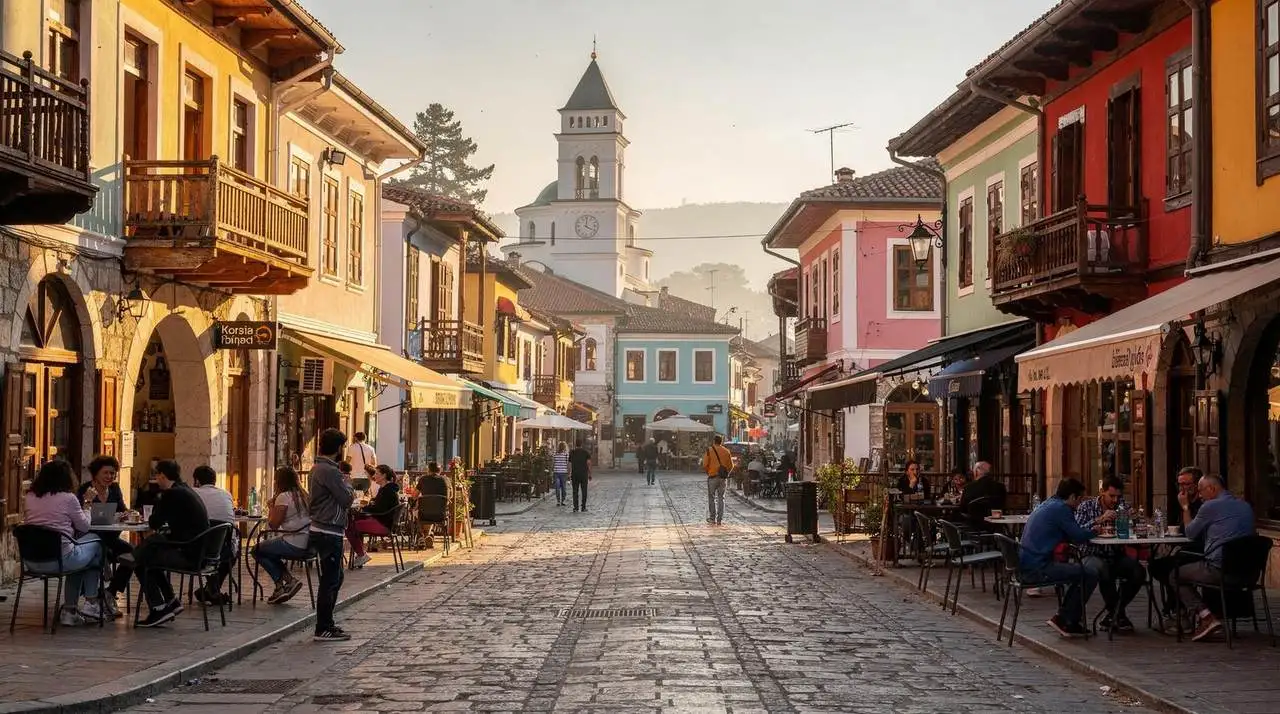
The old bazaar of Korca is the most visually atmospheric part of the city. The covered market area and the surrounding lanes of traditional Ottoman-era shops and workshops preserve a character that is increasingly rare in Albanian cities. Stone-built shopfronts, wooden shutters, the smell of coffee roasting and copper being worked — the bazaar is still a functioning commercial district rather than a museum piece.
Crafts for sale include hand-embroidered textiles in the Korca tradition (distinctive geometric patterns in red and black on white cloth), copper and silver jewellery, carved wooden objects, and the local speciality of bakllava and other pastries made by shops that have been in the same location for generations. The embroidery in particular is of exceptional quality — Korca has maintained this craft tradition more consistently than most Albanian cities, and the pieces are genuinely handmade rather than imported.
The street food in the bazaar area is excellent. Byrek shops open from early morning; grilled meat vendors set up from midday. The combination of architectural integrity and commercial life makes this one of the better bazaar experiences in the country. Budget an hour to explore properly; longer if you are shopping seriously.
For a guided introduction to the bazaar and the city’s other landmarks: this Korce Walking Tour with Old Bazaar and Cathedral covers the city’s landmarks with an English-speaking guide, connecting the bazaar history with the broader story of Korca as a cultural centre. The walking tour typically takes two to three hours and includes the key sites within easy walking distance of each other.
The National Museum of Medieval Art
Housed in an eighteenth-century Ottoman building in the centre of the city, the National Museum of Medieval Art contains the most important collection of Albanian Orthodox icons and religious artefacts in the country. The collection spans from the twelfth through the nineteenth century, with particular strength in the works of the Korca school of iconography.
The icons themselves — painted on wooden panels in the Byzantine tradition, often with gilded backgrounds and figures rendered with distinctive stylistic grace — are remarkable objects. The colour preservation in many pieces is extraordinary, reflecting the quality of the original pigments and the relatively stable temperature and humidity of the museum’s thick-walled rooms.
Practical details: Entry costs approximately 300 ALL. Open Tuesday to Sunday, 9am to 5pm. Allow an hour to an hour and a half for a thorough visit. English-language labels provide adequate context; an audio guide is also available.
For visitors with any interest in Byzantine art, Orthodox religious culture, or Albanian material history, this museum is a genuine discovery. It is rarely crowded, the display is thoughtful, and the quality of the collection rivals any in the western Balkans. The museum is the single best reason to make the journey east to Korca.
The Orthodox Cathedral
The Cathedral of the Resurrection of Christ is the dominant architectural presence in the centre of Korca. The current structure dates from the late nineteenth century, though it was severely damaged and partially demolished during the communist atheist campaign of 1967. The cathedral was restored and reconsecrated in 1992 after the fall of communism.
The interior frescoes — restored in the 1990s and 2000s — combine the Byzantine iconographic tradition with more recent Albanian Orthodox artistic practice. The overall effect is dignified and genuinely impressive. The cathedral is open to visitors outside service hours and represents an important site of Albanian Orthodox identity. Entry is free; a donation is appropriate. Morning services on Sundays draw a sizeable congregation from Korca’s devout Orthodox population.
The Korce Brewery and Beer Culture
Birra Korce — Korca Beer — is the most famous Albanian beer brand and one of the few Albanian commercial products with genuine pan-Albanian cultural recognition. The brewery was established in 1928 by a returning diaspora Albanian who had learned brewing in Romania, and it has been producing beer continuously since then despite nationalisation, privatisation, and eventual acquisition by Heineken International.
The brewery offers tours and tastings, and this is the best way to understand both the production process and the cultural significance of the brand: this Korca Brewery Tour with Traditional Beer Tasting includes the brewing facility, the history of Albanian brewing, and multiple tastings of the various Korça beer styles. Budget around 90 minutes for the tour. Book ahead as capacity is limited, particularly in summer.
The Korca Beer Festival, held annually in late July or early August, is one of the best-attended festivals in Albania, drawing visitors from across the country and from the Albanian diaspora in Europe. If your visit coincides, it is worth attending for the atmosphere alone — live music, local food, and a genuinely celebratory atmosphere around the city’s most beloved export. Accommodation books up well in advance for the festival weekend.
The Boulevard and Cafe Culture
The main boulevard of Korca — Boulevard Republika — was laid out in French urban planning style during the early twentieth century, with plane tree-lined pavements, a central pedestrian zone, and cafe terraces that come alive from the late afternoon. The evening promenade (xhiro) is a serious social institution here, with families, young people, and couples parading the boulevard in a way that is more consciously social than in most Albanian cities.
The cafe scene is notably sophisticated. Korca has a tradition of roasting and preparing coffee that predates most Albanian cities, and the espresso standards are among the best in the country. Sit at a boulevard cafe at 6pm with a Korca beer or a coffee and watch the evening begin to unfold. This is one of Albania’s finest urban evening experiences — the combination of the wide, leafy boulevard, the mountain air at this altitude, and the exceptionally social Albanian approach to public space.
The city also has several wine bars and cocktail venues that reflect a growing sophistication in the out-of-home drinks culture. Combined with the beer tradition, this makes Korca unusually pleasant for evening social activity compared with smaller Albanian provincial centres.
Where to Eat
Restorant Era (boulevard area) — The most consistently recommended restaurant in Korca, serving traditional Albanian highland cooking with excellent stuffed peppers and slow-cooked lamb. The menu changes seasonally based on local produce. Budget EUR 8-14 per person.
Pizzeria Marco (city center) — Korca has a stronger Italian influence than most Albanian cities, and this is the best pizza in the east of the country. Budget EUR 6-10 per person.
Korça Beer Garden (brewery area) — Open-air beer garden adjacent to the brewery, serving cold Korça beer and traditional Albanian grilled food. The atmosphere on a summer evening is excellent — large communal tables, live music on weekends, and the brewery itself illuminated behind the garden. Budget EUR 6-12 per person.
Old bazaar bakeries — For breakfast, the bakeries in the bazaar area serve fresh byrek, spinach pies, and local pastries from early morning. Budget EUR 2-5 per person.
Regional cooking reflects the highland plateau location. The stuffed pepper (speca te mbushura) is a local speciality. Korca’s dairy tradition is strong — the local white cheese and sheep’s milk yogurt are exceptional. For the sweet tooth: sheqerpare (syrup-soaked semolina cakes), baklava made with local walnuts, and the distinctive Korca bakllava are the key desserts. Our Albanian food guide explains the regional variations in Albanian cooking, including the eastern highlands style and the strong Ottoman-era pastry tradition.
Getting to Korca
By bus from Tirana. Daily buses run from Tirana’s South Bus Terminal to Korca, taking approximately three to four hours. The road crosses the mountain pass at Qafe e Thanes and offers dramatic landscape views en route. The pass section can be closed in winter snow.
By car. The drive from Tirana via Elbasan and the Qafe e Thanes pass takes around three hours. The mountain section is winding but fully paved. See our car rental in Albania guide for vehicle recommendations. The drive is particularly beautiful in spring when the pass meadows are flowering.
From the North Macedonia border. Korca is thirty kilometres from the Kapshtice border crossing into North Macedonia, making it a natural entry/exit point for travellers combining Albania with Ohrid. Regular furgons run to the border; onward transport to Ohrid takes about forty-five minutes.
From Pogradec. Pogradec on Lake Ohrid is about fifty-five kilometres northwest of Korca, connected by a good road. The two cities pair naturally for a two-day eastern Albania loop. The drive between them passes through the Devolli valley with fine mountain views.
Where to Stay
Korca has several guesthouses and hotels in the city center. Most are family-run and offer breakfast. Expect EUR 25-50 per night for a comfortable double room.
City center options — the best choice for walking access to the cathedral, bazaar, and brewery. The boulevard area has the highest concentration of mid-range accommodation with the best evening access to the promenade and cafe culture.
Budget guesthouses — available from EUR 15-25 per night for simple rooms in the residential neighborhoods. Perfectly adequate for most travelers who plan to spend most of their time exploring.
Booking ahead is advisable during the Beer Festival (late July/August) when the city fills rapidly and accommodation doubles in price. The Albania travel budget guide covers accommodation cost expectations across different Albanian cities.
Combining Korca with the Eastern Circuit
The eastern Albania circuit — Korca, Pogradec, and Lake Ohrid — is the classic off-beaten-path supplement to the main Albanian tourist trail and is covered in detail in our Albania off the beaten path guide.
Korca sits naturally at the southern end of this circuit. Travellers arriving from the south (via Gjirokastra or Permet) typically spend two nights in Korca, then continue north to Pogradec and Lake Ohrid before heading west to Tirana or continuing into North Macedonia. The UNESCO sites in Albania guide explains how Lake Ohrid (shared with North Macedonia) fits into the Albanian heritage context and why the Ohrid region received UNESCO designation in 2019.
Best Time to Visit
April through October covers the main season, with particular appeal in spring and autumn when the highland climate is at its most pleasant. July and August in Korca are notably cooler than coastal or lowland Albania (the altitude provides genuine relief from the national summer heat), making it a viable destination when the coast is at peak heat and peak crowds.
The Beer Festival in late summer is a specific reason to visit in July-August. The winter is genuine — snow is not unusual at this altitude — and while the city remains functional year-round, visitor infrastructure is reduced between November and March. The cathedral and museum maintain year-round hours.
Korca vs Pogradec
| Korca | Pogradec | |
|---|---|---|
| Setting | Highland basin, 869m altitude | Lakeside on Lake Ohrid |
| Character | Cultural capital, museums, brewery | Resort town, lake swimming |
| Time needed | 1-2 days | 1 day |
| Signature experience | Medieval Art Museum, boulevard xhiro | Lake Ohrid shoreline, Lin village |
| Best season | April-October, cool summer relief | June-September for swimming |
Most eastern Albania itineraries combine both — Korca for culture and cooler air, Pogradec for a lakeside finish — connected by about 55 km of good road through the Devolli valley.
The Serenade Tradition
The musical genre that gave Korca its nickname — the “City of Serenades” — is a form of urban romantic song that developed here in the late Ottoman and early independence periods, blending Ottoman-Balkan melodic structures with Western harmonic influence absorbed through the city’s early exposure to European culture. Serenades were traditionally performed by small ensembles serenading beneath a lover’s window in the evening, a courtship custom that has largely faded but left behind a repertoire still sung at Korca weddings, festivals, and family gatherings. The tradition is celebrated annually and remains a genuine point of civic pride — ask locally about small venues or cafe performances if your visit coincides with a festival, as live serenade performances are far more atmospheric than any recording.
Practical Tips
Currency. Standard Albanian lek throughout; euro acceptance is more limited than in tourist-heavy coastal destinations. ATMs are available in the city centre.
Language. Greek is spoken by a portion of the population, reflecting the proximity to Greece and historical cross-border connections. English is understood in most tourist-facing contexts.
Safety. Korca is a safe, relaxed city. The unhurried pace of the evening promenade gives the centre a pleasant atmosphere at all hours. See our Albania safety guide for general information.
Elevation. At 869 metres, Korca is noticeably cooler than coastal Albania. Pack a layer for evenings even in summer — the temperature can drop significantly after sunset, particularly from September onwards.
Korca is the sort of place that many visitors describe as a pleasant surprise — they came expecting a provincial city and found a cultural personality unlike anywhere else in Albania. That is precisely what it is, and it rewards the traveller who comes without overspecific expectations. The 14-day Albania itinerary includes Korca as the eastern highlight of a complete country circuit, giving context for how it fits into a broader Albanian journey.
Frequently Asked Questions About Korca
What is Korca known for?
Korca is known as Albania’s cultural and intellectual capital — the “City of Serenades” in local tradition. The city houses Albania’s oldest secular school, a nationally celebrated beer brewery, the finest collection of medieval Albanian iconography (at the National Museum of Medieval Art), and an Orthodox cathedral rebuilt after communist-era demolition. Korca also has a distinctive architectural character from its early 20th-century nationalist period, and the highest-quality cafe and restaurant culture outside Tirana.
Is Korca beer famous?
Yes — Korca beer is genuinely the most respected domestic Albanian beer and is sold across the country. The Korca Brewery, founded in 1928, has become something of a national institution, and Albanian beer enthusiasts make a point of drinking it in situ. The brewery is located in the city and tours are occasionally available. Korca beer on draught in the city’s cafe-bars is a simple pleasure with genuine local significance.
How do you get to Korca from Tirana?
Korca is approximately 180 km southeast of Tirana, reached in 2.5-3 hours by car via the SH3 highway through Elbasan. Regular buses run from Tirana’s terminal throughout the day, with the journey taking approximately 3-3.5 hours and costing around 600-700 ALL. Korca is also accessible from the Greek border crossing at Kapshtica (around 15 km), making it a natural stop for travelers entering Albania from Greece.
Is Korca worth visiting?
Korca is worth visiting for travelers interested in Albanian culture beyond the obvious tourist circuits. The medieval art museum is one of the finest museums in the country. The old bazaar area has genuine character. The cooler highland climate (elevation 869 meters) makes Korca a practical summer escape from coastal heat. It is best appreciated as part of an eastern Albania circuit combining Elbasan, Korca, and Pogradec rather than as a standalone destination — the combination gives a complete picture of a very different Albania from the Riviera.
Can you combine Korca with Lake Ohrid?
Yes — Korca is approximately 80 km from Lake Ohrid, with the crossing into North Macedonia available at the Sveti Naum border crossing (seasonal) or via the main Macedonian border. Pogradec on the Albanian shore of Lake Ohrid is about 35 km from Korca and easily combined as a day trip or overnight stop. The eastern Albania circuit of Elbasan-Korca-Pogradec covers the best of this region in two to three days.
Is Korca cooler than the rest of Albania in summer?
Yes, noticeably. At 869 metres of elevation, Korca sits well above the coastal plain and lowland cities, and July-August temperatures here run several degrees cooler than Tirana or the Riviera. This makes it a genuine summer escape option for travelers who find the coastal heat oppressive, though evenings can be cool enough to need a light jacket even in peak summer.
What should you not miss in Korca?
The National Museum of Medieval Art is the single strongest reason to visit — its collection of Byzantine icons rivals anything in the western Balkans and is rarely crowded. Beyond that, walking the old bazaar in the morning, visiting the Orthodox Cathedral, and sitting on Boulevard Republika for the evening xhiro with a Korça beer round out a complete visit. If your timing allows, the Beer Festival in late July or early August adds a genuinely festive layer to the city.