Albania is already one of Europe’s cheapest destinations. It also has an unusually long list of experiences that cost nothing at all. This is partly the nature of the country — beaches are public, mountains are open, springs flow free — and partly a cultural tradition where the paid experience has not yet fully colonised everything.
This guide covers the best free experiences in Albania, from the unmissable to the hidden gems that backpackers and slow travelers tend to discover for themselves. Albania rewards the traveler who moves slowly and keeps costs low, because the country’s greatest pleasures are largely accessible without spending anything.
| Cost | EUR 0, aside from optional entry fees at castle interiors/museums |
| Best free nature | Beaches, Blue Eye spring, Benja thermal baths |
| Best free culture | Skanderbeg Square, Blloku street art, old bazaars |
| Best free hiking | Theth and Valbona trails, no park entry fee |
| Where it isn’t quite free | Castle museum interiors (EUR 3-5), Apollonia (EUR 3-5) |
The Beaches: Always Free
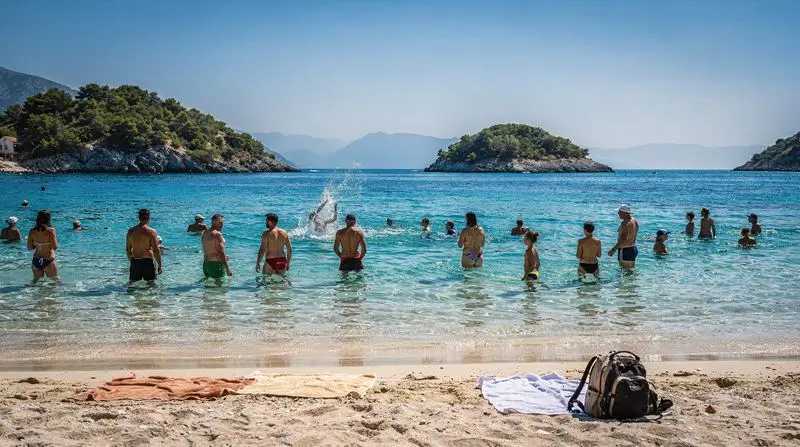
Albania’s beaches are public. The foreshore is accessible along the entire Albanian coastline, and while beach clubs operate with paid sunbeds and umbrellas at the most popular spots, every beach has a free zone where you can lay a towel and swim without spending anything.
The Albanian Riviera has some of the clearest water in the Mediterranean. The Ionian Sea is exactly as beautiful from a free section of beach as from a paid sunbed. The difference is shade and furniture; the sea is identical and the view costs nothing.
Particularly good free beach options:
Gjipe Beach: Accessible only by foot or boat, meaning no beach clubs have set up here. The 40-minute walk through the Gjipe gorge from the Himara-Dhermi road costs nothing and delivers one of the finest beaches on the coast — a wide sweep of pale pebbles at the mouth of a limestone canyon.
Jale Beach: A short walk from the main road, with a free zone alongside the paid beach club areas.
Drymades Beach: Accessible by steep track from the coastal road near Dhermi. Quieter than Dhermi’s main beach, mountain-framed, with a small bar but a substantial free section.
The beaches north of Shkodra (Velipoja, Shëngjin): Long, flat Adriatic beaches with minimal development. Largely free by default, and genuinely uncrowded compared to the Riviera.
Divjaka National Park: The northern end of the park beach, where pelicans fish in the lagoon channel beyond the shoreline, is entirely free and extraordinary for birdwatchers and nature lovers.
Qeparo and Borshi: Less-visited Riviera beaches south of Himara with substantial free sections and good water.
The Blue Eye Spring: Free Entry to the Spring
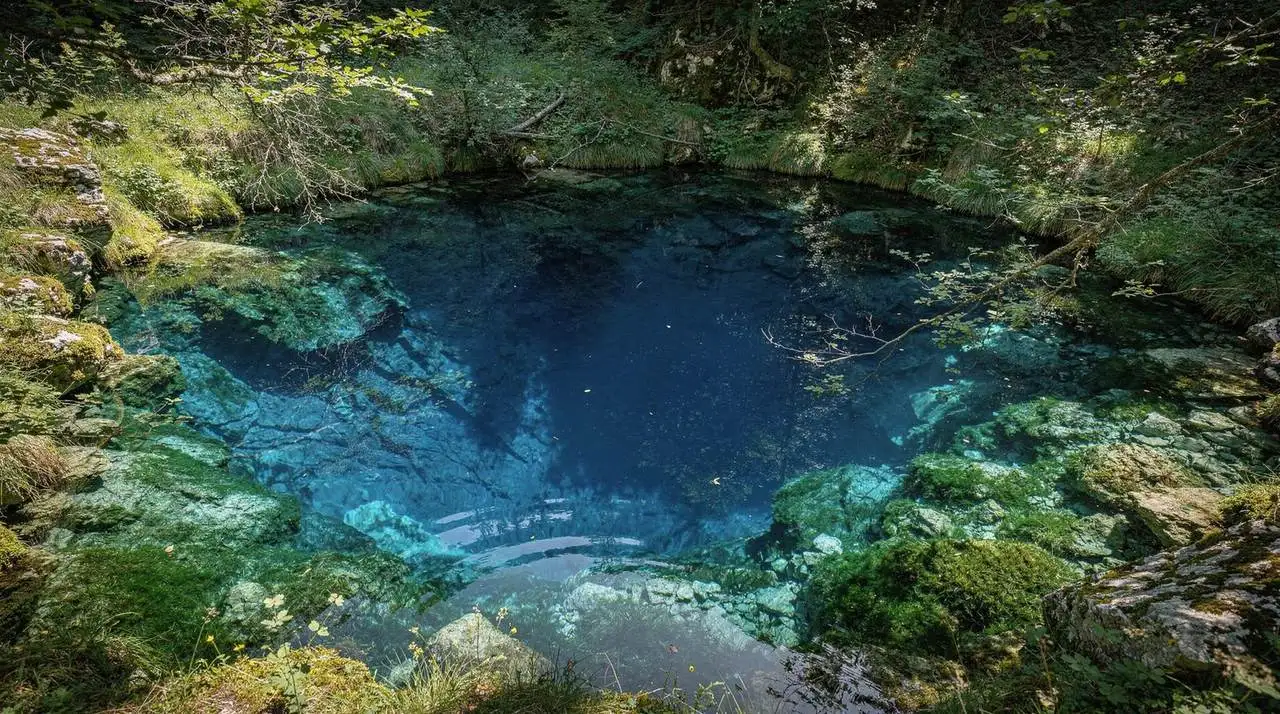
The Blue Eye (Syri i Kaltër) near Saranda is one of Albania’s most spectacular natural phenomena — a spring where cold water wells up from the earth with such force that the pool turns an improbable dark blue at its centre, ringed by turquoise. Entry to the short nature walk through the plane tree forest to the spring is free. Parking and toilet facilities have a small charge; the spring itself does not.
In spring and early summer, when snowmelt is keeping the flow at maximum, the Blue Eye is at its most powerful. The walk through the forest along the river channel is itself beautiful — cool, green, and loud with birdsong — and entirely free. Arrive early in the morning (before 9am) to beat the tour groups that descend from Saranda at mid-morning.
Benja Thermal Baths: Free Soaking in a Canyon
The Benja thermal baths near Permet are geothermal springs in a river gorge that cost nothing to use. The springs bubble up at around 29-32 degrees Celsius along the banks of the Lengarica River, mixing with the cooler river water to create pools of varying temperatures. A natural stone arch spans the canyon above, and the surrounding landscape is dramatic in every season.
Accessing the baths involves a short walk through the gorge, past the ruins of a medieval castle (the Bekat Castle), which is itself free and worthwhile. The baths are a working part of local life — Permet residents use them throughout the year — and the experience of soaking in naturally heated water in a limestone gorge with no entrance fee is one of Albania’s genuine gifts.
Skanderbeg Square, Tirana: Free Urban Spectacle
Skanderbeg Square in the centre of Tirana has been redeveloped into one of the most expansive and pleasant central squares in the Balkans. The equestrian statue of Gjergj Kastrioti Skanderbeg — Albania’s 15th-century national hero — dominates the centre, surrounded by the National History Museum with its famous socialist-realist mosaic facade, the Et’hem Bey Mosque, the Clock Tower, and the neoclassical communist-era buildings.
Watching Tirana life from a bench in Skanderbeg Square costs nothing and is highly entertaining. The square is simultaneously a gathering point for political demonstrations, national celebrations, families on Sunday morning strolls, and tourists trying to understand where they are. In the evening, the square lights up and the surrounding cafes fill.
The Et’hem Bey Mosque on the square is free to enter (modest dress is appreciated; remove shoes at the entrance). Built in the late 18th century with unusual floral murals on its exterior arches, it is one of the finest Ottoman buildings in Tirana and largely overlooked by visitors focused on the communist monuments.
For an oriented introduction to Tirana’s square and history, free walking tours of Tirana start at Skanderbeg Square and provide historical context for everything you see — an excellent complement to your own exploration.
The Blloku Neighbourhood Walk
The Blloku neighbourhood in central Tirana — once the exclusive compound of the communist leadership, now the city’s most fashionable quarter — is a pleasure to explore on foot at any time of day. The streets are lined with cafes, street art, independent bookshops, and restaurants. The architecture is an unexpectedly pleasant mix of communist-era villas (many of which belonged to Hoxha’s inner circle) and contemporary infill.
The street art circuit through Blloku and the adjacent streets has become a destination in itself. Albanian and international artists have transformed blank walls throughout the neighbourhood into an outdoor gallery. Walking the street art route — maps available at tourist information points — is a free and genuinely interesting way to spend a morning in Tirana.
Enver Hoxha’s former villa is visible from the street (a solid, unremarkable structure by the standards of Communist-era leader residences) and the Tirana House of Leaves museum is nearby. The House of Leaves (Sigurimi secret police headquarters) has a small entry fee but the approach and exterior are free.
Rozafa Castle Views, Shkodra
The exterior circuit of Rozafa Castle in Shkodra — walking the outer walls and taking in the panorama of three rivers converging, Lake Shkodra, and the Albanian Alps — can be enjoyed without paying the entry fee to the castle museum interior. The views from the outer approaches and the castle base are extraordinary.
The legend attached to Rozafa is one of Albania’s most haunting: the castle was built by three brothers whose construction kept collapsing; an oracle told them they must wall up a woman within the foundations. The brothers agreed to entomb whichever of their wives brought lunch the next day. The youngest brother’s wife, Rozafa, agreed to be sacrificed on the condition that her right breast, hand, and foot be left exposed to nurse her infant son. Albanian storytelling at its most characteristically bittersweet.
The full castle interior (museum, upper ramparts) has a modest entry fee; the walk to the castle base and around the outer walls is free.
Hiking in the Albanian Alps: No Entry Fees
The hiking trails in the Albanian Alps — including the day walks around Theth to the Grunas waterfall and the canyon, and the trails in the Valbona Valley — are free. There are no national park entry fees for most of the Albanian Alps, and the trail network is open to all who arrive.
The Grunas waterfall walk from Theth village takes about 90 minutes return and passes through some of the finest mountain scenery in Albania. Cold water cascades down a limestone cliff into a pool — in summer, the pool is swimmable and the waterfall provides natural air conditioning. The walk into the Grunas canyon below the village — following the river through the gorge — is equally beautiful.
In Valbona, the valley walk through to the end of the accessible trail takes several hours and is free. The only costs are the accommodation in Theth or Valbona (which brings you there) and food.
See the hiking in the Albanian Alps guide for detailed trail information and route options.
Kruja Bazaar: Free to Browse
The restored Ottoman bazaar in Kruja — the fortress town above Tirana where Skanderbeg made his legendary stand against the Ottomans — is free to walk through. The wooden-fronted craft shops and antique dealers along the cobbled lane sell Albanian textiles, metalwork, old communist-era memorabilia (a genuine collector’s market), and handmade crafts. Browsing is free; buying is optional and enjoyable.
The castle ruins above the bazaar are partially free (the exterior walls and approach) with a fee for the museum interior. The view from the outer castle walls over the valley and toward the sea is spectacular.
Kruja is 30 kilometers from Tirana and reachable by furgon; the drive through the foothills of the Skanderbeg Mountains is scenically enjoyable in itself.
The Gjirokastra Bazaar and Street Wandering
Gjirokastra’s old city is free to walk. The stone-paved lanes, arched house facades, and the general drama of the city built on a steep ridge below an Ottoman fortress cost nothing to explore. The bazaar — a row of stone-arched shops below the castle path — is free to walk and mixes practical household goods with craft shops.
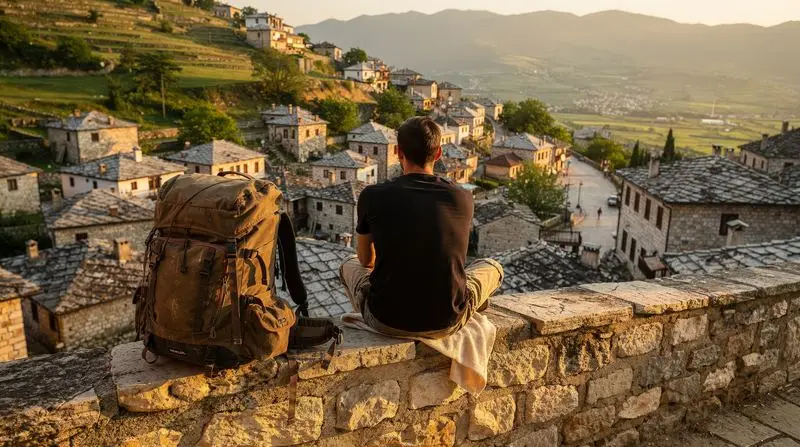
Walking the streets of Gjirokastra’s old town (the UNESCO-listed Gjirokastër district) in the morning before tour groups arrive is one of the better free experiences in Albania. The quality of the light on the grey stone houses, the views down into the valley, and the atmosphere of a functioning historic city that has not been converted entirely into a tourist performance are all freely available.
The Gjirokastra Castle has an entry fee; the approach walk and the view from below the castle walls are free.
Berat’s Old City Walking
Similarly, Berat (the City of a Thousand Windows) is free to walk. The Mangalem and Gorica neighborhoods, with their Ottoman houses climbing the hillside above the river, can be explored freely. The climb to the Berat Castle (Kalaja) involves walking through the castle’s inhabited neighborhood — still home to families who have lived within the fortress walls for generations — which is free.
The interior museums within the castle complex have small entry fees; walking the cobbled streets, visiting the functioning churches, and experiencing the inhabited fortress is free and is the most valuable part of a Berat visit.
Tirana’s Grand Park and Lake
Parku Rinia (Youth Park) and the adjacent Grand Park around the artificial lake south of Tirana’s center are both free and pleasant for a morning or afternoon walk. The lake has rowing boats for hire at a modest cost (optional), a promenade popular with local families, and views back toward the city and the mountains beyond.
On summer evenings, the park fills with Tirana residents in a way that feels genuinely local. This is not a destination attraction but it is an excellent free way to understand how Tirana residents use their city when they are not being tourists.
Apollonia Archaeological Site: Affordable, Nearly Free
The archaeological site of Apollonia near Fier — a remarkably well-preserved ancient Greek city with a theater, extensive ruins, and a museum in a converted Byzantine monastery — has a small entry fee (about 500-700 ALL). It is not technically free but is so cheap that it belongs in any budget Albania list.
The approach road and exterior of the site give some flavor of the location for free; the interior is worth the modest fee.
Free Coffee Culture: Albania’s Hidden Cost
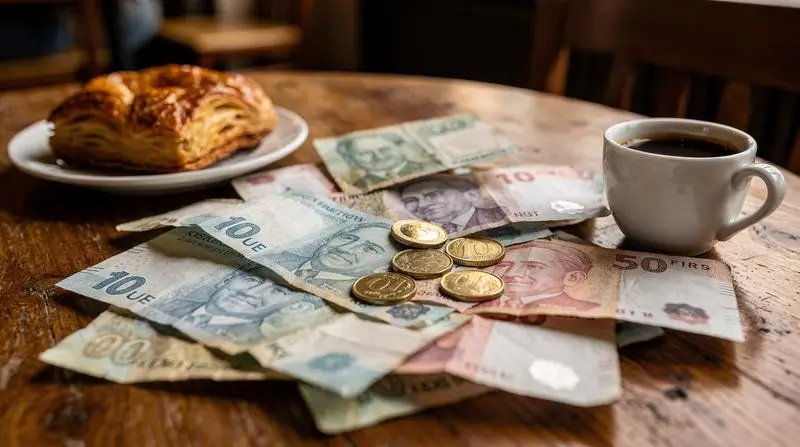
One technically not-free but almost-free experience deserves mention: the Albanian coffee culture. An espresso in a Tirana or Shkodra cafe costs EUR 1-1.50. In provincial towns, sometimes less. Sitting in a cafe for an hour over one coffee — which is entirely normal and expected behavior in Albanian cafe culture — costs barely anything and provides unlimited access to the rhythms of Albanian social life.
The Albanian coffee ritual is itself an experience worth understanding. It is not transactional in the Northern European sense; a cafe visit is expected to last as long as you want. See the Albanian coffee culture guide for more on this distinctly Albanian institution.
The Bottom Line on Free Albania
Albania’s best free experiences — beaches, mountains, springs, city squares, ancient bazaars — are free not because they are inferior but because they are natural, public, and part of a culture that has not yet fully monetised access to everything.
The genuinely paid experiences in Albania (museum entry, boat tours, guided hikes, restaurant meals) are also very affordable by European standards. But a day in Albania that costs almost nothing — morning at a free beach, afternoon at the Blue Eye or Benja, evening in Skanderbeg Square — is not a compromise. It is one of the legitimate pleasures of traveling in a country where the best things are still available to everyone.
See the Albania travel budget guide for a full picture of what things cost at every price level, and the Albania backpacking guide for how to travel the country on a minimal daily budget.
Free Viewpoints Worth Seeking Out
Beyond the well-known free sights, Albania has a scattering of viewpoints that cost nothing but a short walk or drive:
Lekuresi Castle, Saranda: The hilltop above Saranda has castle ruins with a small taverna, but the view itself — across the bay to Corfu — costs nothing to enjoy from the approach road at sunset.
Llogara Pass: The dramatic mountain pass on the road between Vlora and the Riviera has pull-off viewpoints looking down to the coast thousands of feet below — one of the best free panoramas in the country, reachable by car, bus, or furgon.
Ksamil’s rocky headlands: While the islands themselves are best reached by boat, the free coastal path around Ksamil’s headlands gives views across the same turquoise water without paying for a boat trip.
Bunk’Art hillside, Tirana: The approach to Bunk’Art 1 on the edge of Tirana, in the wooded hills, is a pleasant free walk even without paying the museum entry fee, and if you decide you want the history behind it, a Communist Albania tour with the Bunk’Art museum adds guided context.
Frequently Asked Questions About Free Things to Do in Albania
Are Albania’s beaches really free?
Yes. The entire Albanian coastline has public foreshore access — beach clubs only control paid sunbeds and umbrellas at specific stretches, never the sea itself or a right to swim. Every popular beach, including on the Albanian Riviera, has a free zone where you can lay a towel.
What is the best completely free day in Albania?
A free day built around Tirana works well: walk Skanderbeg Square and the Et’hem Bey Mosque in the morning, explore the Blloku street art in the afternoon, and finish at Parku Rinia and the Grand Park lake in the evening. Outside the capital, a free beach morning followed by the Blue Eye spring near Saranda in the afternoon is equally rewarding and costs only transport.