Elbasan: History, Industry, and the Road East
Elbasan is an honest city. Where other Albanian destinations present a curated face — the restored old bazaar, the postcard castle, the crystal sea — Elbasan shows you everything: the Ottoman walls still standing in the city centre, the post-communist industrial sprawl on the outskirts, the vibrant Thursday market that has been operating for centuries, and the thermal springs that have attracted weary travellers since Roman times.
It is not the most immediately appealing destination in Albania, but it rewards those who look. Elbasan is one of the country’s larger cities, an important economic and educational centre, and a place with genuine historical depth that rarely makes it into mainstream travel itineraries. That relative obscurity is both a challenge and an opportunity: you will not fight crowds here, prices are very local, and the experience of walking through an Albanian city going about its ordinary business — rather than a town performing for tourism — has its own distinctive value.
The city sits at the junction of several important routes: the road east from Tirana passes through here on the way to Pogradec and Lake Ohrid; the road south leads towards Gramsh and the Osum Canyon country; the road north climbs towards the Mat river valley. Elbasan is a natural pause on any eastern Albania itinerary, and the Albania off the beaten path guide covers the eastern circuit in detail. The 14-day Albania itinerary uses Elbasan as a transitional stop between Tirana and the eastern lake district.
| Where | Central Albania, ~55 km / 45-60 min east of Tirana |
| Getting there | Furgon from Tirana (Qafë Kashar terminal, 200-300 ALL) |
| Time needed | Half a day; a full day if timed for the Thursday market |
| Thermal bath entry | Around EUR 2-5 per session |
| Best day to visit | Thursday, for the Pazari i Elbasan market |
History of Elbasan
The site of Elbasan has been occupied since antiquity. Roman records mention a settlement here, and the thermal springs — known since Roman times as Aquae Albanicae — suggest it was a place of significance for rest and recovery along the ancient road network that connected the Adriatic coast to the interior. The Via Egnatia, the great Roman highway linking Dyrrachium (modern Durres) to Constantinople, passed through this valley, and the spring waters would have provided welcome relief to soldiers and travellers on the long march between the two seas.
The Ottoman period transformed Elbasan into the city it remains today. Sultan Mehmed II ordered the construction of a substantial fortress here in 1466 — just three years after the fall of Constantinople — as part of the campaign to consolidate Ottoman control over the Albanian interior. The fortress was built remarkably quickly, apparently in just 25 days according to Ottoman chronicles. Whether or not the timeline is accurate, the result was a substantial walled city that became one of the most important Ottoman administrative and commercial centres in central Albania.
At its Ottoman peak, Elbasan was a significant city by Balkan standards — a centre of craft production, trade, and Islamic scholarship. The bazaar quarter attracted merchants from across the empire. Mosques, hans (caravanserais for travellers and traders), and baths were built within and around the fortress walls.
In the 20th century, Elbasan’s identity was transformed again by communist industrialisation. The construction of the “Steel of the Party” metallurgical plant in the 1970s turned Elbasan into an industrial city and brought substantial population migration from rural areas. The plant — which employed much of the city’s workforce — has largely shut down since 1990, leaving a legacy of industrial infrastructure visible from the road approaching the city from the west.
Modern Elbasan is navigating the transition between industrial past and uncertain future — a transition that gives it a rawness and energy quite different from cities whose economies have been more smoothly redirected towards tourism. The historical sites guide covers the Via Egnatia corridor and Elbasan’s significance within it.
The Ottoman Fortress and Old Town
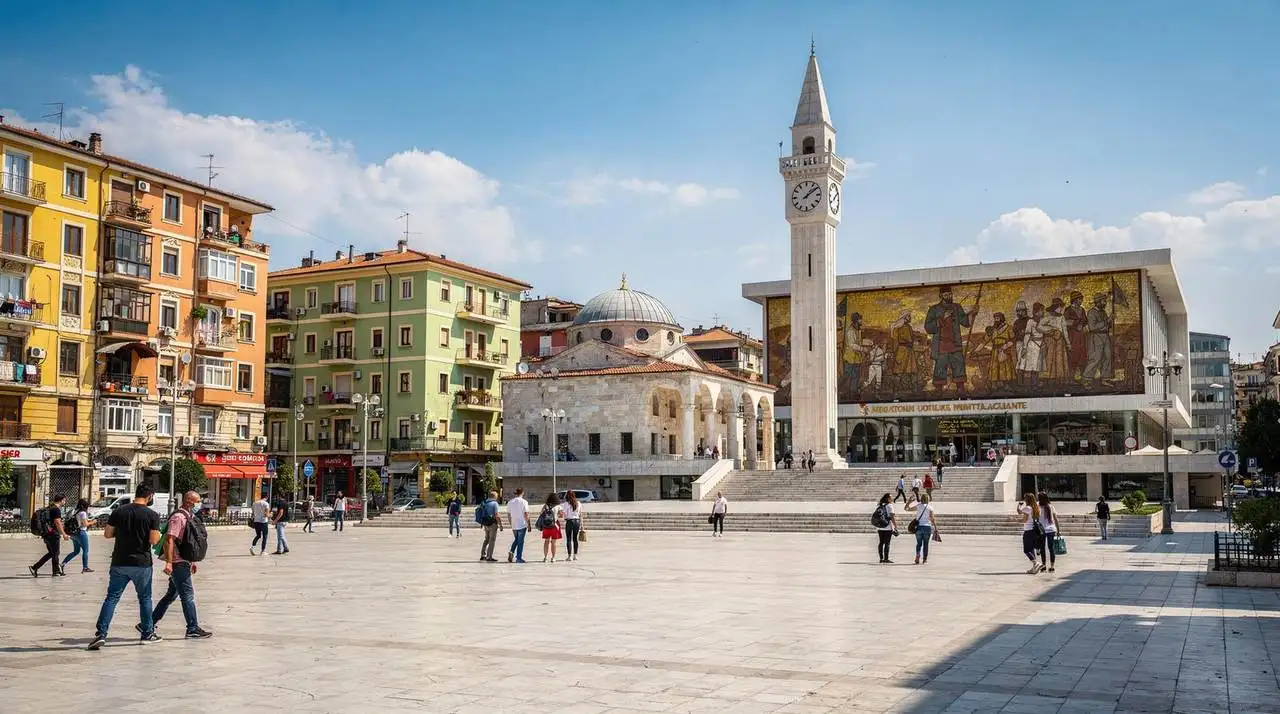
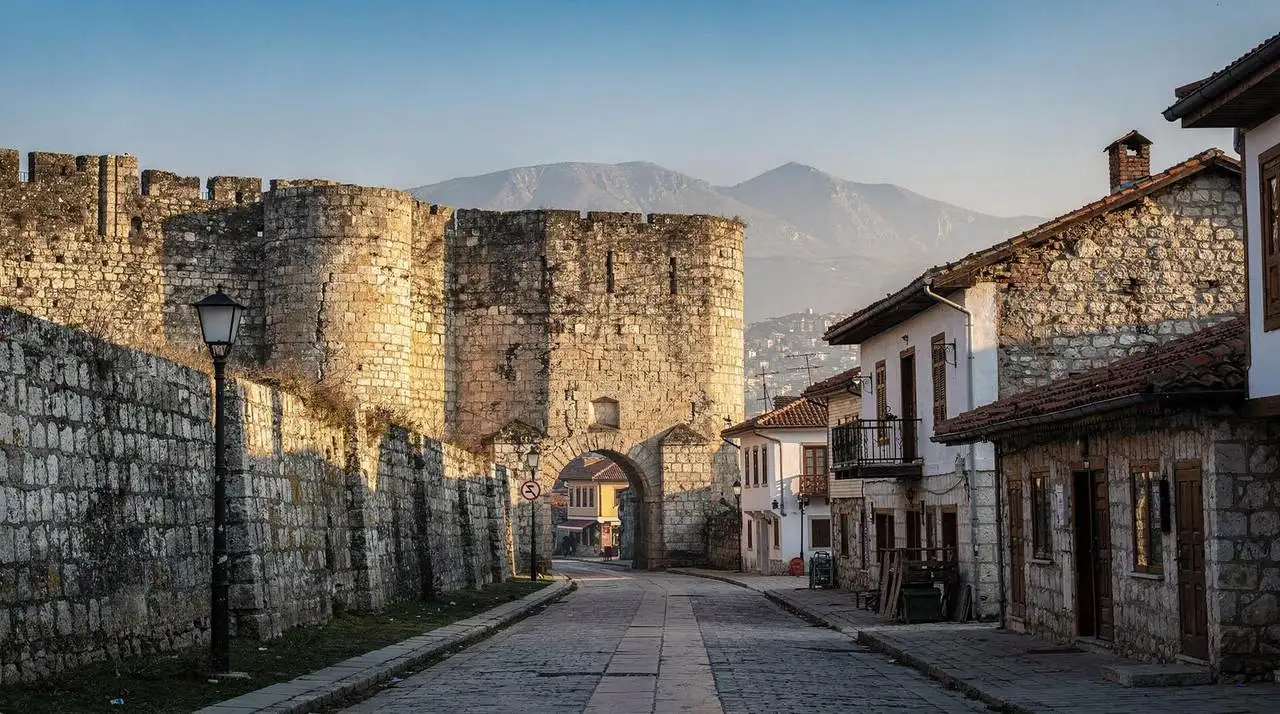
The most historically significant feature of Elbasan is the Ottoman fortress — a rectangular walled enclosure in the city centre whose walls, though partially degraded and incorporated into modern buildings, are still substantially intact in several sections.
The Fortress Walls and Towers
The walls originally enclosed an area of approximately 300 by 500 metres, with round towers at intervals along the perimeter. Several towers survive in reasonably good condition, and the wall sections that remain — in some places several metres high — give a strong sense of the original scale. Walking along the exterior of the surviving walls, with the Ottoman stones rising on one side and the modern city bustling on the other, is a disorienting and fascinating experience.
The main gate of the fortress, rebuilt and restored, provides the most impressive single architectural element of the complex. It opens into the interior of the old town — a neighbourhood of narrow lanes, some old houses, and a few surviving historic buildings mixed with more recent construction. The gate itself is photogenic from both sides: from outside, the Ottoman stonework rises dramatically; from inside, the view through the arch frames the modern city beyond.
Practical details: The fortress walls and old town are freely accessible — no entry fee, no formal opening hours. The best exploration combines the wall circuit with the interior historic buildings. Allow 1-2 hours for a thorough walk. Wear comfortable shoes as the cobbled lanes inside the fortress can be uneven.
The King Mosque
Inside the fortress, the King Mosque (Xhamia e Mbretit) dates from the time of the fortress’s original construction in the 15th century. It is one of the oldest Ottoman mosques in Albania and is still in active use. The building is plain and solid rather than ornate, reflecting its frontier military context. The minaret rises above the roofline of the surrounding buildings and serves as a navigation aid when moving through the narrow lanes of the old town. Visitors are welcome outside prayer times; dress appropriately.
St Mary’s Cathedral
Also within the fortress walls, the Cathedral of St Mary occupies a building with a complex history — originally a mosque, converted to a church during the post-communist period, and rebuilt to serve Elbasan’s Catholic community. The juxtaposition of active mosque and active cathedral within the same small historic enclosure says something significant about Albanian religious coexistence — a tolerance that is one of the more remarkable features of this country’s social fabric.
The Elbasan Historical Museum
The city museum occupies a building in the old bazaar area and covers the history of the region from prehistoric times through the Ottoman period and into the 20th century. The collection is informative, particularly on the Illyrian period and the Roman-era finds from the Elbasan area. Entry costs approximately 200-300 ALL. Open Tuesday to Sunday, 9am to 5pm. Allow an hour for a thorough visit; the labelling is in Albanian but the objects tell a reasonable story even without extensive translation.
The Thermal Baths of Elbasan
The thermal springs that have given Elbasan an additional identity since Roman times emerge at several points in and around the city, with the most developed facilities at Banja e Elbasanit, approximately 3 kilometres from the city centre.
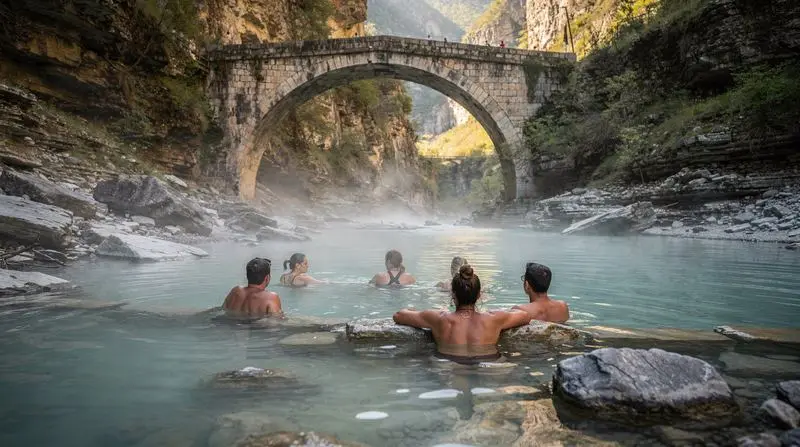
The waters here are moderately hot and sulphurous — natural springs with therapeutic mineral content that has been used for centuries to treat skin conditions, joint problems, and respiratory complaints. The bathing culture around these springs is genuinely Albanian in character: not the spa luxury of Central European thermal towns, but practical, local, and unpretentious. Session costs are very low — typically EUR 2-5 for a bath. The baths are a local institution, used by Albanian families and pensioners rather than international wellness tourists, which gives them an authenticity that more polished thermal destinations cannot match.
For a guided experience that combines Elbasan with the Lake Ohrid region, this full-day tour from Tirana covers the Elbasan fortress, the village of Lin, and the shores of Lake Ohrid — an efficient way to see central and eastern Albania in a single day. For cycling enthusiasts, this Albania bike tour passes through the Elbasan region and showcases the countryside at a slower pace.
Our Albania thermal baths guide compares the Elbasan baths with other thermal sites across the country, including the famous Benja thermal baths near Permet and the springs in the Peja area of Kosovo.
The baths are most atmospheric in the cooler months — winter and early spring — when the steam rises visibly over the pools and the contrast between the cold air and the warm water is at its most dramatic. In summer they remain operational but feel less essential given the ambient heat.
The Thursday Market
Elbasan’s Thursday market — the Pazari i Elbasan — is one of the largest traditional markets in Albania and has been operating, in various forms, for centuries. It occupies a large area on the edge of the city centre and attracts vendors and buyers from across the region.
The market sells everything: live animals, fresh produce, clothing, tools, household goods, electronic components, food, and items that resist easy categorisation. It is colourful, noisy, crowded, and genuinely Albanian in a way that is sometimes hard to access in more tourist-oriented settings. If your visit coincides with Thursday, make time for the market. Arrive before 10am for the best experience — by midday the freshest produce is gone and the crowds have peaked.
The live animal section at the northern end of the market is particularly striking — an aspect of Albanian market culture that is becoming rarer as supermarkets expand and traditional small-scale farming declines. The fresh produce section, by contrast, is excellent at any time of day: enormous quantities of vegetables, herbs, and fruit sold by the women who grew them, at prices that make the supermarket versions look absurd.
Where to Eat
Elbasan’s restaurant scene is aimed at Albanian residents rather than tourists, which means generous portions and low prices.
Restorant Ilira (old town area) — The most consistently recommended restaurant in the city centre, serving traditional Albanian cooking including qebap, tave kosi, and grilled lamb. Located near the fortress walls with a pleasant outdoor terrace. The tave kosi here — lamb baked with yogurt and egg in a clay pot — is particularly good. Budget EUR 5-10 per person.
Kafja e Kalasë (fortress gate area) — A pleasant cafe at the main gate of the Ottoman fortress, serving coffee, byrek, and cold drinks. Ideal for a break during the fortress exploration. The terrace looks directly at the restored gate, which makes for an unusual lunch backdrop. Budget EUR 2-5 per person.
Old bazaar restaurants — Several simple qebaptore (grilled meat restaurants) in the bazaar area serve filling meals of grilled meat, salad, and bread. Fast, cheap, and authentic. The qofte (spiced minced meat balls) at the best of these places rival anything in Tirana at a fraction of the price. Budget EUR 4-7 per person.
Thermal bath cafe — The Banja e Elbasanit facility has a basic cafe serving coffee and light snacks. Useful for post-bath refreshment. Budget EUR 2-4 per person.
Our Albanian food guide covers the central Albanian cooking tradition, including the grilled meat culture that Elbasan excels at and the role of the bazaar as a food source in Albanian provincial towns.
Getting to Elbasan
From Tirana
Elbasan is approximately 55 kilometres east of Tirana — about 45 minutes to an hour by car on the SH3 highway. The drive passes through the Elbasan valley, following the Shkumbin river through scenery that transitions from the coastal plain to the more rugged eastern interior.
Public transport connections are excellent. Furgons and minibuses run frequently from Tirana (from the east-bound terminals at Qafë Kashar) to Elbasan, taking about 1-1.5 hours and costing 200-300 ALL. These are among the more reliable furgon connections in Albania given the volume of traffic between the two cities.
From Pogradec and the East
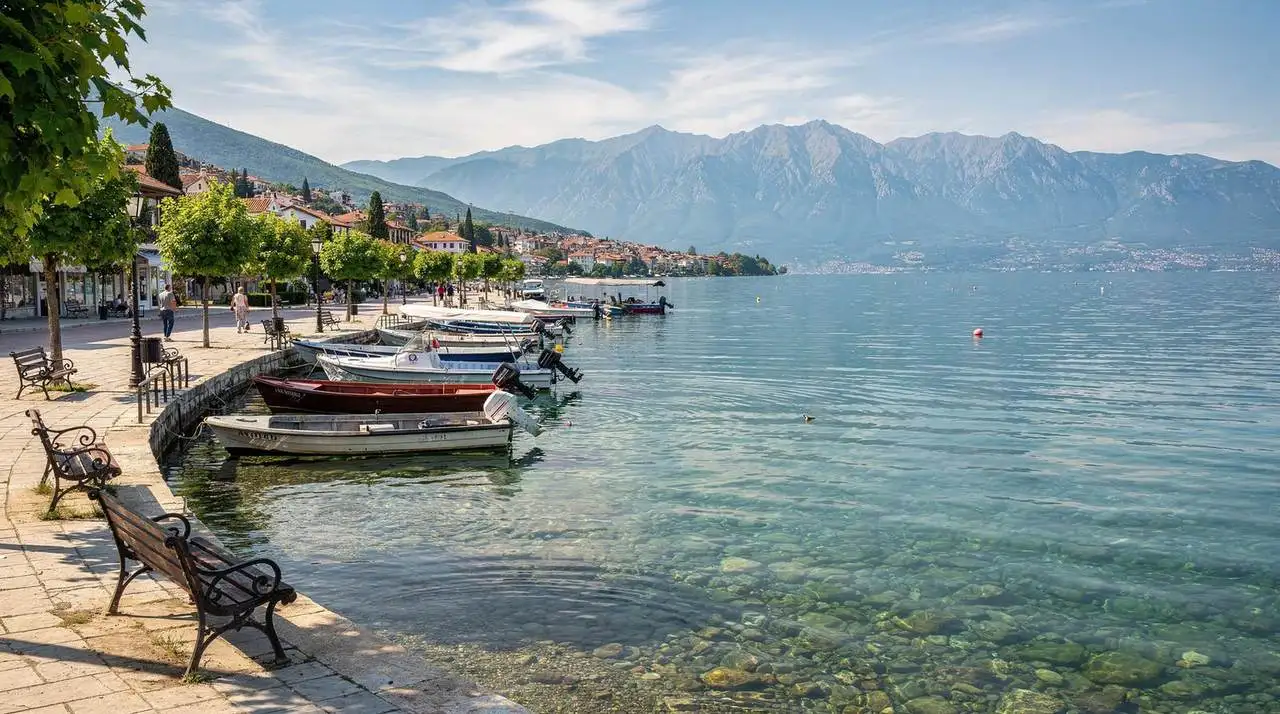
Elbasan sits on the main road between Tirana and Pogradec. From Pogradec, the drive west to Elbasan takes around 1.5 hours (approximately 90 kilometres). This makes Elbasan a natural midpoint stop on the Tirana-Pogradec route, where the Ottoman fortress and thermal baths add genuine interest to what would otherwise be a purely transitional journey.
From Berat
Berat is approximately 60 kilometres south of Elbasan — about 1-1.5 hours by car. Combining Elbasan with Berat for a central Albania day circuit is feasible, though demanding. The road south from Elbasan passes through the Shkumbin valley before climbing into the hills above Berat. See our car rental in Albania guide for vehicle recommendations.
Where to Stay
Elbasan has several hotels and guesthouses aimed primarily at Albanian business travellers — functional, affordable, and without much pretension.
Hotel Skampa (city centre) — The best-located mid-range option in Elbasan, with comfortable rooms and a central position near the old town. The hotel name references the ancient Roman settlement of Scampis that preceded the Ottoman city. Budget EUR 30-45 per night.
City guesthouses — Several family-run guesthouses near the fortress area offer basic rooms at EUR 20-30 per night. Adequate for an overnight stop and often including a substantial breakfast.
Most travellers visit as a day trip from Tirana or as a stop between Tirana and Pogradec, which is entirely feasible — a half-day is sufficient for the fortress, the museum, and the baths. The Albania travel budget guide places Elbasan costs in context relative to other Albanian cities.
Practical Information
Budget: Elbasan is one of Albania’s more affordable cities. Daily costs including accommodation, meals, entry fees, and transport run to EUR 15-25 — at the lower end of Albania’s already inexpensive scale.
Language: Less English is spoken here than in Tirana or the tourist-heavy coastal destinations. Basic Albanian phrases or a translation app are more useful than elsewhere. Italian is sometimes understood by older residents.
Safety: Elbasan is a safe, ordinary Albanian city. The standard precautions apply. See our Albania safety guide for general information.
Best time: The Thursday market is the strongest reason to time your visit specifically. Otherwise, Elbasan is accessible year-round and does not have a strong seasonal character — the thermal baths work year-round, the fortress is always open, and the museum maintains consistent hours.
Comparing Elbasan with the Eastern Circuit
| Elbasan | Pogradec | Korca | |
|---|---|---|---|
| Character | Ottoman fortress + industrial city | Lakeside resort town | Highland cultural city |
| Time needed | Half day | 1 day | 1 day |
| Crowds | Almost none | Moderate in summer | Light |
| Main draw | Thermal baths, Thursday market | Lake Ohrid shoreline | Old bazaar, brewery culture |
| Best paired with | Tirana-Pogradec drive | Lake Prespa | Voskopoje |
Travellers doing the full eastern loop typically stack these three: Elbasan as a morning stop out of Tirana, Pogradec for a lakeside night, and Korca for a highland finish before looping back. See the 14-day Albania itinerary for a routing that fits all three without feeling rushed.
Elbasan’s Honest Character
There is a type of traveller for whom Elbasan will be exactly right: those who want to see an Albanian city as it actually is rather than how it presents itself to tourists. The fortress walls rising above a busy street market, the mosque and cathedral within the same ancient enclosure, the thermal springs that Romans once used now serving Albanian pensioners — these are not packaged heritage experiences. They are the actual texture of a place that has been here through empires and ideologies and come out the other side still functioning.
Pogradec and Tirana offer the obvious pleasures of their respective characters. Elbasan offers something harder to find: Albanian normality, with history built in. Our Albania off the beaten path guide includes Elbasan in the eastern circuit alongside Pogradec and Lake Ohrid — a genuinely rewarding combination for travellers willing to look beyond the headline destinations.
Frequently Asked Questions About Elbasan
Is Elbasan worth visiting for tourists?
Elbasan is an off-the-beaten-path destination that rewards travelers interested in authentic Albanian city life rather than polished tourist attractions. The Ottoman fortress walls enclosing an active city neighbourhood, the Roman-era thermal baths still in use today, and the Thursday market are genuinely interesting. It is not a mainstream tourist stop, which is part of its appeal — you will meet almost no other foreign visitors and experience a very different Albania from the riviera resorts.
What are the thermal baths of Elbasan like?
The Elbasan thermal baths (Llixhat e Elbasanit) have been in use since Roman times and continue to operate today, primarily serving local Albanian visitors. The waters are mildly sulphurous and are believed locally to have therapeutic properties for rheumatism and skin conditions. The facilities are basic — this is a functioning spa for Albanian pensioners, not a luxury wellness destination. Admission is inexpensive (a few hundred ALL). The baths are located about 2 km outside the city centre.
What is the Ottoman fortress in Elbasan?
The Elbasan fortress was built by Sultan Mehmed II in 1466 as a major stronghold during the Ottoman consolidation of Albania. The walls are largely intact, running approximately 800 meters around the perimeter, with three of the original four towers still standing. Unusually, the old city developed within the walls rather than outside them, and today the fortress enclosure contains mosques, a church, bazaar streets, and ordinary residential neighbourhoods. The Ethnographic Museum inside provides context.
How far is Elbasan from Tirana?
Elbasan is approximately 55 km southeast of Tirana, reached in 1-1.5 hours by bus or car via the SH3 highway through the Elbasani gorge. Buses run regularly from Tirana’s main terminal throughout the day. The fare is around 300 ALL. Elbasan makes a straightforward day trip from Tirana or a natural stop on the route east to Pogradec and Lake Ohrid.
Can you combine Elbasan with Pogradec?
Yes — Elbasan and Pogradec are on the same eastern Albania highway, approximately 90 minutes apart by car. A combined day from Tirana covering Elbasan’s fortress in the morning and continuing to Pogradec and Lake Ohrid in the afternoon is a well-paced eastern Albania circuit. Alternatively, staying a night in either city allows more depth. Our Albania off the beaten path guide covers the full eastern circuit.
Is Elbasan safe to visit?
Yes — Elbasan is an ordinary, safe Albanian city with no particular tourist-related risks. Standard precautions apply, as covered in our Albania safety guide. Less English is spoken here than in Tirana or the coastal resorts, so a translation app or a few basic Albanian phrases (see the language basics guide) smooth things considerably.
Do you need a full day for Elbasan?
No — a half day is enough for most visitors to see the fortress, the King Mosque, and grab lunch near the old bazaar. Extend to a full day only if your visit falls on a Thursday and you want unhurried time at the Pazari i Elbasan market, or if you plan to combine the thermal baths with the fortress at a relaxed pace rather than rushing between the two.