Italy to Albania Ferry: The Complete Adriatic Crossing Guide
The Adriatic ferry crossing from Italy to Albania has a long history — these routes have carried goods, migrants, and travelers between the two coastlines for decades. For modern travelers, the Italy-Albania ferry offers something the budget airlines cannot: the ability to bring your own vehicle. If you are planning a road trip through Albania, arriving with your car or motorcycle from Italy is the most practical approach. And for those without vehicles, the overnight crossing saves you a night’s accommodation while delivering you into Albania’s most accessible coastal city.
This guide covers both main departure ports (Bari and Ancona), the principal operators, prices, cabin options, what the crossing is actually like, and everything you need for a smooth arrival in Durres.
| Departs from | Bari or Ancona, Italy |
| Crossing time | 8-9 hours (Bari) or 14-16 hours (Ancona) |
| Cost (foot passenger) | Around EUR 35-85 one way |
| Arrives at | Durres, Albania |
| Booking | Advance booking recommended in summer, especially with a vehicle |
Why Choose the Ferry Over Flying?
The ferry makes most sense in three specific scenarios:
You have your own vehicle. Bringing a car or motorcycle from Italy eliminates the need to rent and lets you drive your exact vehicle with your exact setup — especially useful for motorhome and campervan travelers, motorcyclists with luggage, or anyone with specialized equipment.
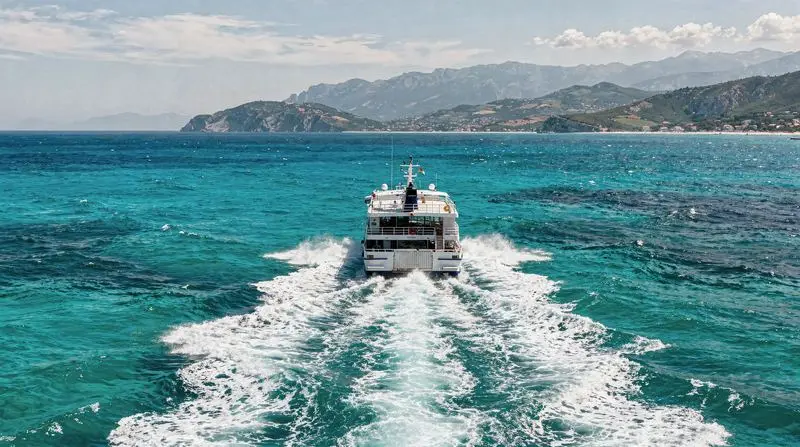
You want the journey to be part of the trip. There is something genuinely satisfying about the Adriatic crossing — watching the Italian coastline recede, the long hours of open sea, then the Albanian mountains appearing on the horizon. The ferry is slow travel at its best.
You are on a longer Balkans road trip. If you are driving from Germany or Central Europe through Italy and continuing into the Balkans, the Ancona or Bari ferry is more efficient than adding a significant overland detour through Slovenia, Croatia, and Bosnia.
For travelers flying in and renting a car locally, the budget airlines (Ryanair, Wizz Air, others) serve Tirana from across Europe at very competitive prices. The how to get to Albania guide covers all arrival options.
The Ports: Where Ferries Depart from Italy
Bari
Bari is the most popular departure point for the Italy-Albania crossing. It is closer to Albania than Ancona — the crossing to Durres takes around 8-9 hours, making it feasible as an overnight with a late departure and morning arrival (or vice versa). Bari itself is an attractive city worth a day of exploration: the old town Barivecchia with its winding medieval lanes, the Basilica di San Nicola, and a lively seafood restaurant scene around the harbor. A day in Bari before the ferry crossing is an enjoyable way to spend the time.
The Bari ferry terminal (Stazione Marittima) is located a short taxi ride or 20-minute walk from Bari Centrale train station. Regular trains connect Bari with Rome (3.5-4 hours), Naples (3 hours), and other Italian cities. Trenitalia and Italo both serve the route.
Getting to the Bari ferry terminal: Taxis from the train station cost EUR 10-15. The walk is manageable with a normal-sized bag. If driving to Bari, follow signs to “Porto” — the ferry terminal has its own parking areas (paid).
Ancona
Ancona is the second departure point and offers a longer crossing of 14-16 hours to Durres. This is typically an overnight sailing with daytime arrival the next day, and taking a cabin is strongly recommended to arrive rested. Ancona is a port city in the Marche region on Italy’s central Adriatic coast, about 3.5 hours by train from Rome and well-connected to Bologna and the north.
The longer crossing from Ancona is popular with travelers and truckers making a direct run from northern Italy or Central Europe who want to avoid the longer overland route through the Balkans. If you are driving from Germany, Austria, or Switzerland, the Ancona crossing can be a time-efficient choice — you avoid the entire Balkan highway distance and arrive in Albania by sea.
Getting to the Ancona ferry terminal: The terminal is close to the city center. Taxis from Ancona train station take 10-15 minutes. Ancona is a pleasant city with a good seafood tradition — the local brodetto (fish stew) is a regional specialty worth eating the evening before your crossing.
The Destination: Durres
All Italy-Albania ferries arrive at Durres (Durrës), Albania’s main commercial port and second-largest city, sitting on the Adriatic coast about 35 kilometers west of Tirana. The journey from Durres port to central Tirana takes about 40 minutes by car on the A1 motorway — one of Albania’s best highways.
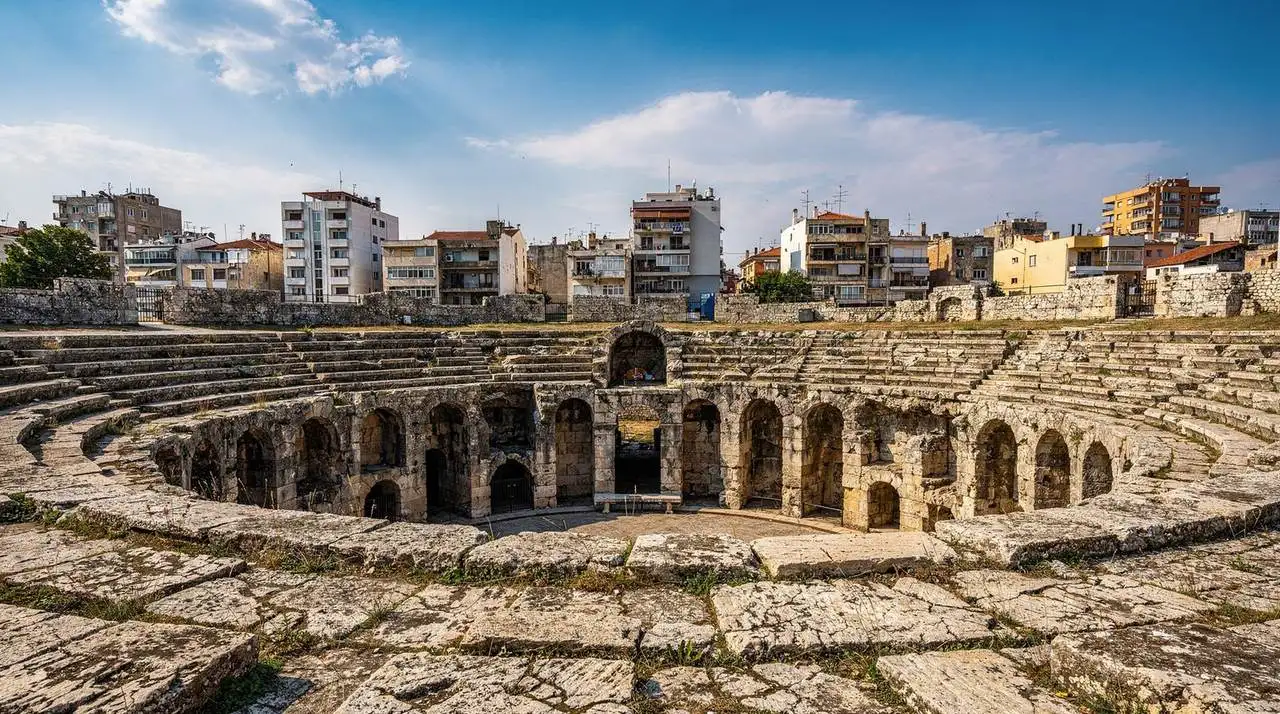
Durres is a genuine city with its own attractions: an impressive second-century Roman amphitheater (one of the largest in the Balkans) partially excavated within the urban fabric, a Byzantine-era city wall, good seafood restaurants along the waterfront, and a long sandy beach backed by resort hotels. It is not a priority destination in the way Berat or Gjirokastra are, but it makes a perfectly decent first stop and has a good range of accommodation options.
The amphitheater is the highlight — a second-century Roman structure with seating for over 15,000 spectators, with early Christian chapels and Byzantine mosaics discovered within its chambers. It sits in the middle of the modern city in a way that is genuinely extraordinary. Entry is modest and the site is well worth the stop.
For more on what to do during a day in Durres, see the Durres destination guide.
Ferry Operators
Adria Ferries
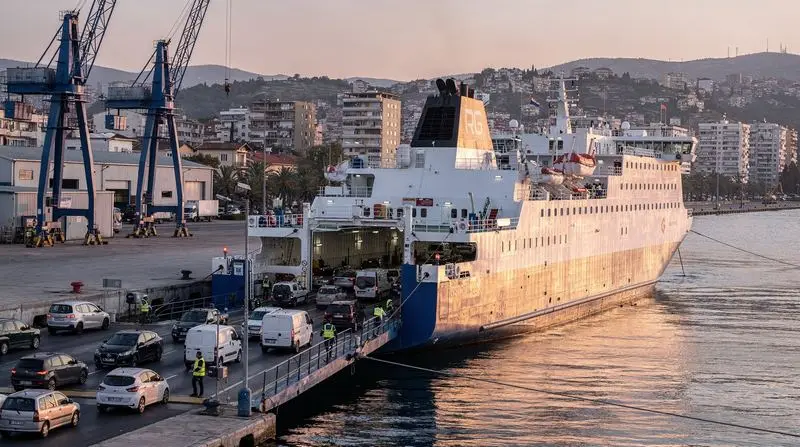
Adria Ferries operates on both the Bari-Durres and Ancona-Durres routes year-round. The fleet consists of medium-sized ro-ro (roll-on, roll-off) vessels capable of carrying cars, trucks, and motorcycles alongside passenger cabins. Passenger facilities include restaurants, bars, a duty-free shop, and various cabin categories. The fleet is not new but vessels are maintained and serviceable.
Adria Ferries operates year-round, with higher frequency in summer. Winter sailings may reduce to a few times weekly on less popular days.
Grandi Navi Veloci (GNV)
Grandi Navi Veloci is the other major operator, running larger ferries with good passenger facilities — restaurants, bars, sun decks, and multiple cabin categories including en-suite options. GNV vessels are generally more modern and comfortable than some alternatives. The company runs on the Bari-Durres route primarily.
Additional Operators
The Adriatic routes occasionally see additional operators depending on the season and commercial agreements. DirectFerries.co.uk is the best single source for comparing current operators and prices on these routes, as the operator landscape changes more than the routes themselves do.
Booking
Both main operators can be booked directly through their websites. DirectFerries.co.uk and similar aggregators allow comparison across operators. For summer travel, particularly with a vehicle, book several months in advance. Walk-up availability for foot passengers is often possible outside peak season, but do not rely on it in July and August when the Bari-Durres route is well used.
Ticket Prices and Accommodation Options
Prices vary significantly by season, direction, day of week, and advance booking period. The following are realistic 2025-2026 estimates:
Foot passenger (no cabin, airplane-style seat):
- Bari to Durres: EUR 35-60 one way
- Ancona to Durres: EUR 55-85 one way
Shared cabin (4-berth):
- Bari to Durres: EUR 60-90 one way
- Ancona to Durres: EUR 85-130 one way
Private cabin (2-berth en suite):
- Bari to Durres: EUR 90-140 one way
- Ancona to Durres: EUR 130-200 one way
Vehicle supplements (one way, standard car under 5 meters):
- Bari to Durres: EUR 60-100
- Ancona to Durres: EUR 90-140
Motorcycle (one way):
- Approximately 50-60 percent of the car rate
Larger vehicles (vans, campervans, motorhomes):
- Priced by vehicle length — confirm with the operator before booking
Prices for foot passengers are competitive, and when you factor in saving a night’s hotel, they compare well against budget airlines once you add baggage fees. If you are bringing a car, compare the total cost (ferry plus vehicle supplement plus fuel to the port) against flying and renting locally in Albania — at EUR 15-25 per day for an economy car, local rental makes financial sense for trips under two weeks.
Cabin Recommendations
For the Bari crossing (8-9 hours): A seat is manageable, particularly for evening departures where you sleep most of the crossing anyway. A shared 4-berth cabin improves comfort significantly. If you are two people traveling together, a 2-berth private cabin is worth the cost for a properly rested night.
For the Ancona crossing (14-16 hours): A cabin is not optional in any meaningful sense — sleeping upright in an airplane seat for 16 hours is genuinely unpleasant and you arrive exhausted. Book at minimum a shared 4-berth cabin; if budget allows, a 2-berth en suite is far superior and arrives you in Durres ready to drive.
Both operators offer cabins with and without private bathrooms. En-suite cabins are worth the premium on longer crossings, particularly for families or anyone who values morning shower access.
What to Expect Onboard
The Italy-Albania ferries are working vessels, not cruise ships. Facilities vary by operator and vessel but typically include:
- Self-service restaurant serving Italian and Albanian dishes — quality ranges from basic cafeteria food to decent set meals. Prices are ferry-standard (i.e., high). Bringing your own food is advisable for any crossing.
- Bar with drinks, coffee, and light snacks available throughout the crossing
- Duty-free shop selling alcohol, tobacco, and basic goods
- Sun deck — on good days the open deck is pleasant and the sea views are excellent
- Television lounges in the passenger areas
- WiFi — available on some vessels but often slow or costly; download entertainment before departure
The vibe is functional rather than luxurious. Bring a good book, download films or podcasts, pack snacks, and accept the ferry as the journey itself rather than a means to an end.
Food advice: Italian supermarkets near both ports are easily accessible. Stock up on good bread, cheese, salumi, and fruit before the crossing. Onboard prices reflect the captive market. For the Bari crossing at least, a good dinner in Bari before boarding (the old city has excellent value restaurants) is better than the ferry restaurant.
Seasickness and Sea Conditions
The Adriatic can be choppy, particularly in spring and autumn. In summer the sea is usually calm, particularly closer to the Italian coast. In winter and spring, swells can make the crossing uncomfortable for those prone to motion sickness.
If you are sensitive to motion: Take your medication 1-2 hours before departure, not when you are already feeling ill. Dramamine (dimenhydrinate) and Kwells (hyoscine) work well. Stugeron (cinnarizine) is popular in Europe and effective. The Scopoderm patch (behind the ear, available on prescription) is the strongest option for longer crossings.
On the ship: Stay on deck or in the middle of the ship where motion is least. Avoid alcohol. Keep hydrated. Eat something light before the crossing — an empty stomach makes nausea worse.
The Bari crossing at 8-9 hours has shorter exposure than Ancona’s 16 hours. If you are genuinely prone to seasickness, Bari is the more forgiving crossing.
The Cultural Experience of the Adriatic Crossing
There is something that connects the Italian and Albanian sides of the Adriatic beyond geography. Italian influence in Albania runs deep — through the Fascist-era architecture visible in Tirana’s center, through the Italian television that an entire generation of Albanians watched clandestinely during communism, through the hundreds of thousands of Albanians who emigrated to Italy in the 1990s and returned with Italian partners, Italian habits, and Italian words woven into their Albanian.
Crossing the Adriatic on the ferry is, in a small way, traveling through this cultural corridor. You will often share the vessel with Albanians returning from visits to Italian relatives, with Italian families heading to Albania for beach holidays they have not yet told their friends about, and with overland travelers from across Europe. The social mix on these crossings is genuinely interesting.
The Albania language basics guide covers how Italian functions as a second language in Albania — knowing a few Italian phrases gets you further than you might expect in the country.
Arriving in Durres
Durres port is a working commercial harbor. Foot passengers disembark and pass through Albanian border control within the port building. The process is similar to a standard international border: passport checked, stamped with an entry stamp, customs clearance (usually minimal for personal travelers). Allow 30-60 minutes from docking to being through the port gates.
Vehicle drivers follow separate lanes. Have your vehicle registration documents and insurance to hand. Albanian authorities require proof of valid insurance — check that your home policy covers Albania before departure, or purchase a short-term policy at the border. Green Card coverage applies in Albania for most European insurers. The Albania visa requirements guide covers what documentation you need at the border.
Getting from Durres port to Tirana: Taxis from the port charge EUR 15-25 for the 40-minute drive to central Tirana. Agree on the price before entering the vehicle — metered taxis are preferable but not always available at the port. Alternatively, a furgon or local bus from Durres bus station (a short taxi ride from the port) runs to Tirana frequently throughout the day for about 200-250 ALL (EUR 2).
If you are arriving with your own vehicle, the road from Durres to Tirana (A1 motorway) is one of Albania’s best — dual carriageway, clearly signed, and typically fast. See the driving in Albania guide for what to expect on Albanian roads generally.
Practical Tips for the Crossing
Check in early. For vehicle passengers especially, arrive at the port terminal 2-3 hours before departure. Check-in and vehicle loading take time, and late arrivals risk missing the sailing. The lanes for vehicle loading open and close on a schedule — do not leave your port arrival to the last minute.
Bring euros in cash. Onboard purchases are in euros. After arrival, ATMs in Durres city provide Albanian Lek.
Pack your own food for Ancona crossings. Italian supermarkets near Ancona port are accessible and sell excellent picnic supplies.
Secure your vehicle. Park your car as directed by the crew. Take all valuables out of the vehicle before the crossing — car decks are not supervised during the sailing. Lock the car.
Confirm vehicle dimensions when booking. If you have a van, SUV, or car with roof rack, measure the height before booking. Some vessel vehicle decks have height restrictions.
Travel insurance. The Albania travel insurance guide explains what coverage you need, including for sea travel and vehicle transport.
Motorhome and Campervan Travelers
The Italy-Albania ferry is one of the few practical ways to bring a motorhome or large campervan to Albania. The vehicle deck on both Adria Ferries and GNV vessels can accommodate most standard motorhome sizes, though very long vehicles (over 9 meters) should check with the operator in advance regarding availability and deck height.
Campervanning in Albania is an increasingly popular approach to the country. Albania has no formal campsite network comparable to Western Europe, but the combination of free parking in rural areas, friendly locals, and spectacular scenery makes wildcamping (within reason and local etiquette) generally problem-free. Coastal areas have some private campsite-style parking facilities, and mountain guesthouses often have vehicle parking where you can connect to power.
Bring sufficient fresh water for remote areas, be aware that fuel costs in Albania are competitive, and plan for rough road surfaces in some mountain sections that are better avoided in very large or very low-clearance motorhomes.
Taking Your Motorcycle on the Ferry
Motorcycle travelers heading to Albania by ferry have an excellent option in the Italy-Albania routes. Motorcycles pay approximately 50-60 percent of the standard car rate for the vehicle supplement, making it a cost-effective entry point.
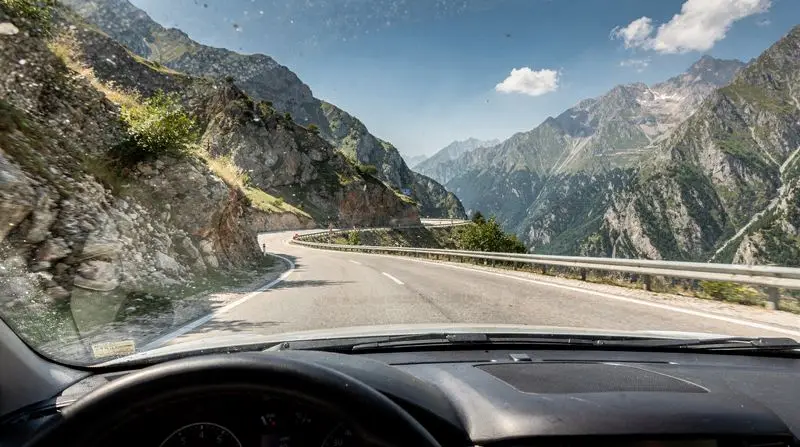
Albania is increasingly popular with motorcyclists — the mountain roads, the coastal scenery, and the relatively light traffic on secondary roads make it a compelling destination for two-wheel travel. The Llogara Pass road and the mountain passes of the Albanian Alps are particularly beloved by touring motorcyclists. The driving in Albania guide covers road conditions relevant to motorcycles, including the road surfaces to be aware of.
Returning to Italy from Albania
The same operators and routes work in reverse. If you are ending your Albania trip in Durres, the ferry back to Bari or Ancona saves a flight booking and allows you to bring purchases acquired during the trip.
One consideration for the return: book your return ferry before you travel, particularly for summer. The Bari-Durres route is heavily used by Albanian workers returning to Italy after summer holidays, and the Durres to Italy direction in late August can be booked solid if you leave it too late.
If you are doing a one-way Italy-Albania crossing (flying back separately), you have more flexibility, but booking the ferry in advance still guarantees your preferred departure time and cabin category.
Ferry as Part of a Wider Balkans Road Trip
Many travelers use the Italy-Albania ferry as the entry point to a wider Western Balkans road trip. A classic circuit:
Bari to Durres by overnight ferry, drive through Albania (Tirana, Berat, Gjirokastra, the Riviera), cross by road into Montenegro via Shkodra, drive through Montenegro and Bosnia (Kotor, Mostar), into Croatia (Dubrovnik, Split), and take a ferry or drive back through Slovenia to Italy. This is a genuinely excellent multi-week road trip, and the Adriatic ferry to Albania is the most adventurous and scenic way to start it.
Total driving distance for such a circuit: approximately 2,500-3,500 kilometers depending on the exact route. Three weeks is comfortable; two weeks is achievable but fast-paced.
Albania’s position at the start of the route means you get the most underrated destination first — while you still have fresh eyes and a full budget. Prices in Albania are so low compared to Croatia that you arrive in Dubrovnik having spent much less than expected in the preceding two weeks.
For activities and tours within Albania itself, Albania activities on GetYourGuide lists current tour options across the country — useful for planning day trips and experiences from your main bases.
First Days After the Ferry: Where to Head from Durres
Most ferry arrivals treat Durres as a transit point rather than a destination, and that is a reasonable call for a first trip. From Durres, the practical options are: continue straight to Tirana (40 minutes on the A1) for the capital’s museums, Blloku nightlife, and onward transport hub; head south along the coast toward Vlora and the Albanian Riviera if the beach is the priority; or, for drivers with more time, cut inland toward Berat, reachable in around two hours and a gentler introduction to Albania’s Ottoman heritage than the capital’s faster pace. Whichever direction you choose, the Albania travel tips guide covers first-days logistics — SIM cards, cash, and the etiquette basics that make the first 48 hours smoother.
For the specific experience of Tirana, Tirana walking tours provide an excellent first introduction to Albania’s capital before you head out into the country.
Ferry vs. Flying: A Straight Comparison
For travellers without a vehicle, the ferry is not automatically the cheaper or faster option — it depends on what you value:
| Ferry (Bari-Durres) | Flying to Tirana | |
|---|---|---|
| Time | 8-9 hours, but you arrive rested if you slept | 1.5-2 hours flight, plus airport time |
| Cost (foot passenger) | Around EUR 35-90 one way | Often EUR 20-80 with budget airlines, booked ahead |
| Baggage | No extra fee for normal luggage | Budget airlines charge extra for hold bags |
| Best for | Vehicle travellers, slow-travel fans, seasickness-tolerant | Time-pressed visitors, one-way city breaks |
The how to get to Albania guide covers flight routes and airlines in detail if the ferry does not suit your itinerary. For those entering by land instead, the border crossings guide covers the main road and rail options from neighbouring countries.
Alternative Adriatic Crossings
Bari and Ancona are not the only way to reach Albania by sea. The Corfu to Albania ferry guide covers the short hop from the Greek island of Corfu to Saranda — a useful option if your trip already includes Greece, and a far shorter crossing than either Italian route. Combining an Italy-Albania ferry on the way in with a Corfu-Saranda ferry on the way out (or vice versa) is a popular way to build a Balkans-Greece loop without backtracking.
Insurance and Documentation Checklist
Before boarding, confirm you have: a passport valid for at least six months beyond your travel dates (most nationalities do not need a visa — see the Albania visa requirements guide), proof of vehicle insurance valid in Albania if driving, vehicle registration documents, and travel insurance that explicitly covers sea crossings and, if relevant, vehicle transport. The Albania travel insurance guide explains what a standard European policy does and does not cover for this kind of trip, and it is worth checking before you reach the port rather than at the check-in desk.
The ferry crossing is just the beginning. Albania is waiting on the other side of the Adriatic, and it rarely disappoints.
Frequently asked questions about Italy to Albania Ferry
Do I need to book the Italy-Albania ferry in advance?
Advance booking is strongly recommended for summer travel, especially if bringing a vehicle — the Bari-Durres route in particular gets heavily booked by Albanian workers travelling to and from Italy around July and August. Foot passengers can sometimes find walk-up availability outside peak season, but booking a few weeks ahead guarantees your preferred sailing time and cabin category.
Is the Ancona or Bari route better for first-time visitors?
Bari is the more forgiving choice for most first-time visitors: the crossing is shorter (8-9 hours versus 14-16), cheaper, and more frequent. Ancona makes more sense if you are driving from northern Italy, Germany, Austria, or Switzerland and want to avoid the longer overland route through the Balkans. Both arrive at the same port, Durres.