There are cities you visit and cities that visit you. Berat is the second kind.
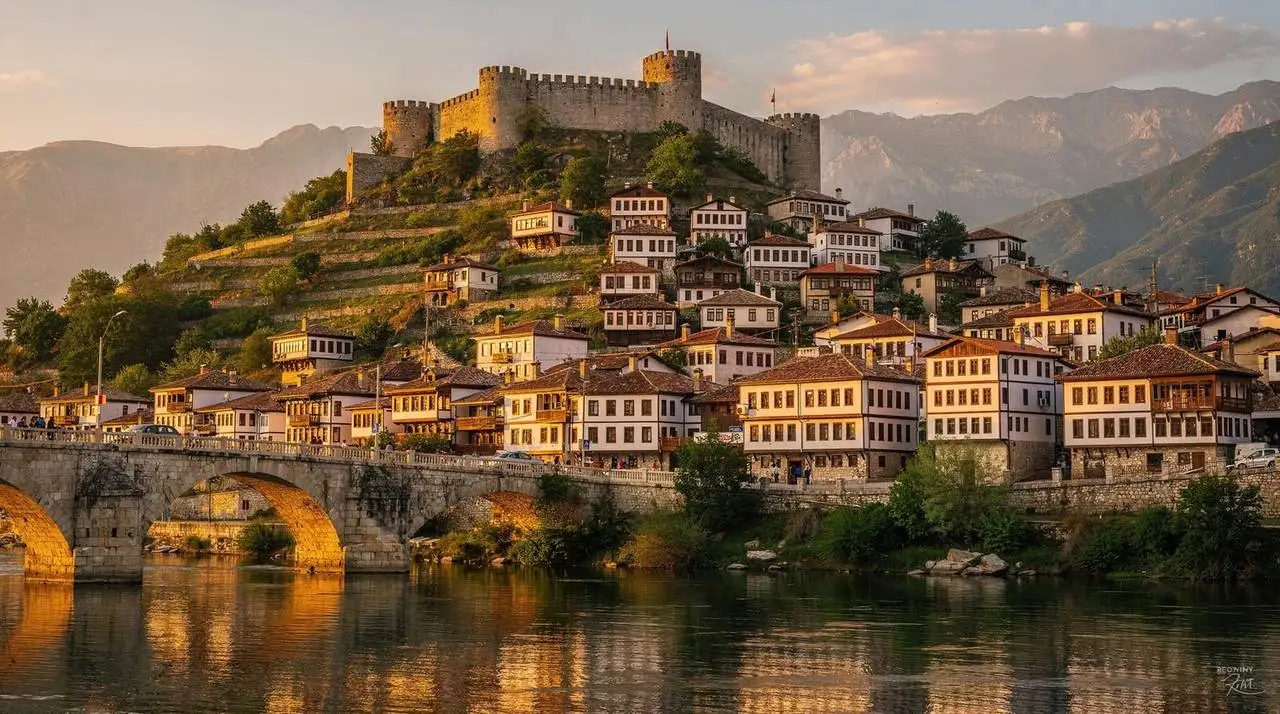
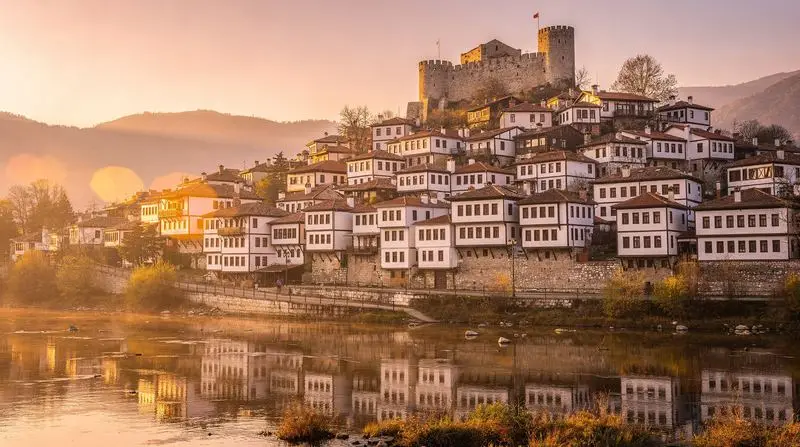
We arrived in the late afternoon, the light already turning amber, and drove over the bridge across the Osum River into town. From the bridge you see the hillside for the first time — the white Ottoman houses climbing the slope in irregular layers, the castle walls above them, the whole composition reflected faintly in the slow water below. We pulled over and simply stood there for a few minutes. Neither of us spoke, which is not typical.
That was our first visit to Berat. We have been back twice since, which is the most genuine recommendation we can offer.
| Where | Central Albania, about 120km / 2hrs by bus from Tirana |
| Stay | At least 2 nights — a day trip undersells it badly |
| Cost | Guesthouses from around €25-40/night; dinner for two around €15-25 |
| Best time | Spring (April-May) or autumn (September-October) for the amber light and thinner crowds |
| Getting there | Bus from Tirana or self-drive; easily combined with Gjirokastra south |
The City of a Thousand Windows
Berat has a nickname: Qyteti i Dritareve, the City of a Thousand Windows. Stand anywhere below the Mangalem quarter and you understand it immediately. The Ottoman-era houses are built with large, symmetrical windows arranged in rows across their white facades, and from a distance the hillside becomes a kind of optical pattern — windows above windows above windows, each one slightly different in its weathered wooden frame, the whole thing adding up to something that looks less like a functioning town and more like a very old painting brought improbably to life.
The houses are not a stage set. People live in them. On the evening of our first visit, we walked through Mangalem slowly enough to notice the details: laundry hanging between windows, geraniums in terracotta pots on crumbling ledges, the sound of a television from behind a painted shutter, the smell of cooking — garlic, olive oil, something slow and meat-based — drifting from a kitchen somewhere above us. The neighborhood is inhabited, alive, and genuinely indifferent to tourism in the best possible way.
Getting to Berat from Tirana
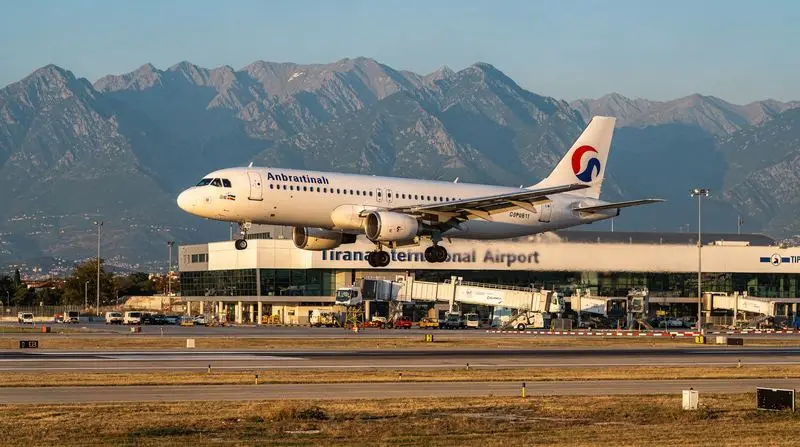
Tirana to Berat is approximately two hours by bus — one of the most rewarding two-hour drives in the Balkans. The bus passes through the Muzafer valley and approaches Berat from the north, giving you a view of the hillside composition from the road before you arrive. Most visitors come by bus or by rental car. A day trip from Tirana is possible but we strongly advise against it — Berat is a city that requires at least two nights to reveal itself properly. Our how to get to Albania guide covers all the transport options.
You can also combine Berat with Gjirokastra in a southern circuit — from Tirana to Berat to Gjirokastra to the Riviera is a natural and highly rewarding route that covers the best of inland Albania. Our 7-day south itinerary structures this circuit in detail.
The Castle That Has Always Been There
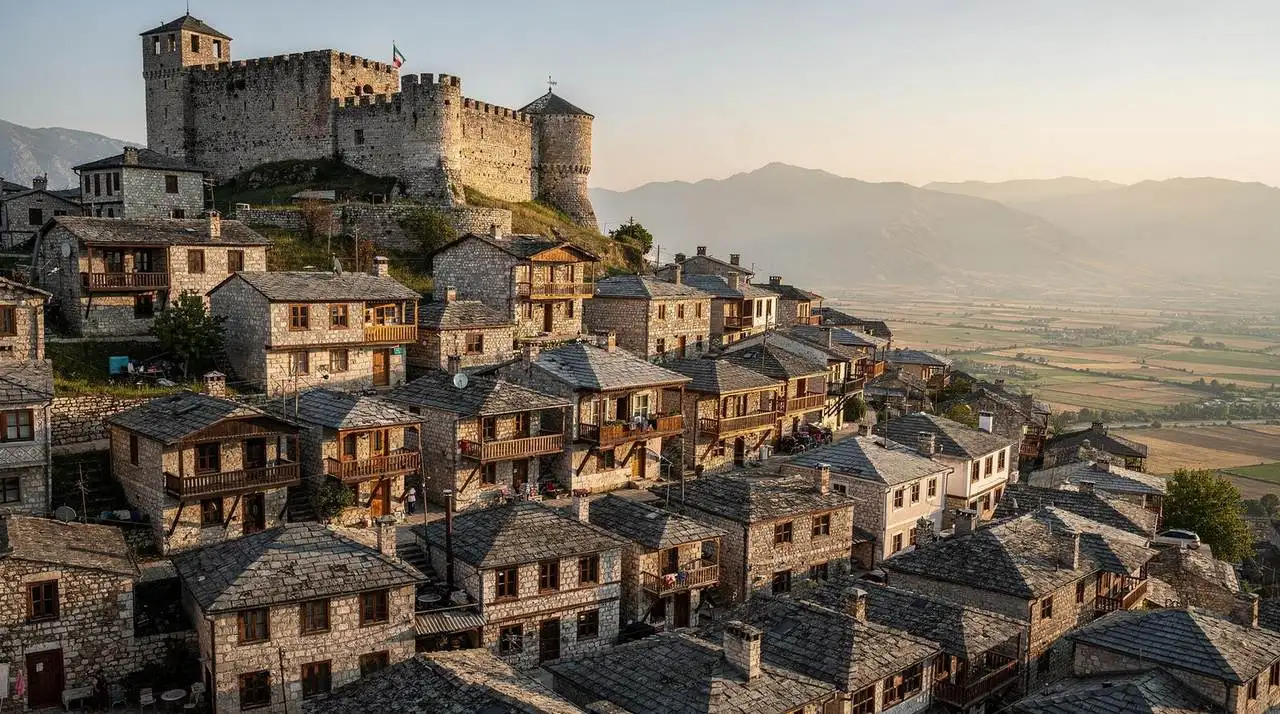
Above Mangalem, a steep lane leads up to Kalaja — the castle. It has been here in some form since at least the fourth century BC, though what you see today is largely Byzantine and Ottoman construction, with walls and towers dating from the thirteenth through the eighteenth centuries. What makes it different from most historic fortifications is that people still live inside it.
The residential community within the castle walls is small but genuine: a few dozen families, several working churches, a mosque, a museum, and a scattering of guesthouses. Walking through the castle gate feels like walking through a time threshold. The lanes inside are stone-paved and narrow, the houses lean toward each other across the alley, cats claim every horizontal surface with the total authority of cats.
The views from the castle ramparts over the valley below are among the best we have experienced anywhere in Albania. The Osum River curves through the valley floor, the town of Berat spreads between the hills, the mountains rise in every direction in shades of grey and green that change completely with the light. We went back three evenings in a row, each time finding a different wall to sit on, watching the light change over the same landscape in three completely different ways.
The Churches and the Onufri Museum
Inside the castle is the National Iconography Museum, housed in the Church of the Dormition of St. Mary and dedicated to the work of Onufri, a sixteenth-century Albanian icon painter who was one of the most important Byzantine artists of his era. His icons are distinguished by a particularly vivid red pigment — Onufri red, it is still called — that has retained its intensity across five centuries.
We are not generally the kind of travelers who seek out art museums as a first priority, but the Onufri Museum stopped us in our tracks. The icons here are extraordinary — figures with an almost electric presence, the red backgrounds somehow warm rather than aggressive, the gold leaf still glowing. The museum is small and the collection focused, which makes it manageable in a way that larger museums sometimes are not. We spent about an hour inside and could have spent longer.
A Cooking Experience That Connects You to the City
One of the best things you can do in Berat — particularly if you are staying more than one night, as we recommend — is to take a cooking class with a local host. A Berat cooking class takes you into a real kitchen and teaches you the traditional dishes that appear in the restaurants around you — byrek, tave kosi, the stuffed peppers that are a Berat speciality, the desserts that appear at every celebration. Learning to make these dishes gives you a completely different relationship with the food you eat for the rest of your trip.
It also gives you access to a domestic space that most visitors never see. Albanian home kitchens are where the best Albanian food lives, and the cooking class format is the legitimate way for a visitor to experience that world.
The Food, the Raki, and the Dinner We Did Not Plan
On our second evening in Berat we walked into a restaurant on the main square with no particular plan, sat down at a table, and had one of the most memorable meals of our traveling lives. This is the honest truth and we know it sounds like hyperbole.
The restaurant was run by a family. We never learned the name. The menu was handwritten in Albanian with translations that were approximate at best, but the owner came over and described what was good that day in careful, deliberate English. He recommended the lamb — it had been cooking since morning — and a dish of stuffed peppers with cheese and rice that was, he said, his mother’s recipe. We ordered both, plus bread and local wine.
The lamb was extraordinary. It arrived in a clay pot, falling apart, with the cooking juices concentrated into something almost sweet. The stuffed peppers were quieter but deeply satisfying. Bread appeared repeatedly throughout the meal without our asking. At the end, two glasses of raki arrived unbidden, with a wave from the owner that communicated: this is not on the bill, this is hospitality.
That dinner cost us about nine euros each. We have thought about it many times since.
For context on what we were eating and why it was so good, our Albanian food guide covers the traditional dishes and the regional variations that make Berat’s food culture distinctive.
Where to Stay and Where to Eat
We have stayed in both Mangalem and across the river in Gorica, and our honest advice is to book a guesthouse inside or right below the castle in Mangalem for your first visit — waking up to the view over the white houses is worth the steeper walk up from the main road. Our where to stay in Berat guide breaks down the neighbourhoods and price ranges in more detail, and the best restaurants in Berat guide has our current list beyond the unnamed family restaurant we stumbled into, since we cannot in good conscience send you looking for a place we never learned the name of.
If you only have time for one organised activity beyond wandering, the cooking class we mentioned above pairs naturally with a look at our broader cooking classes in Albania guide, which covers similar experiences elsewhere in the country if Berat is one stop on a longer trip.
Beyond Mangalem: Day Trips from Berat
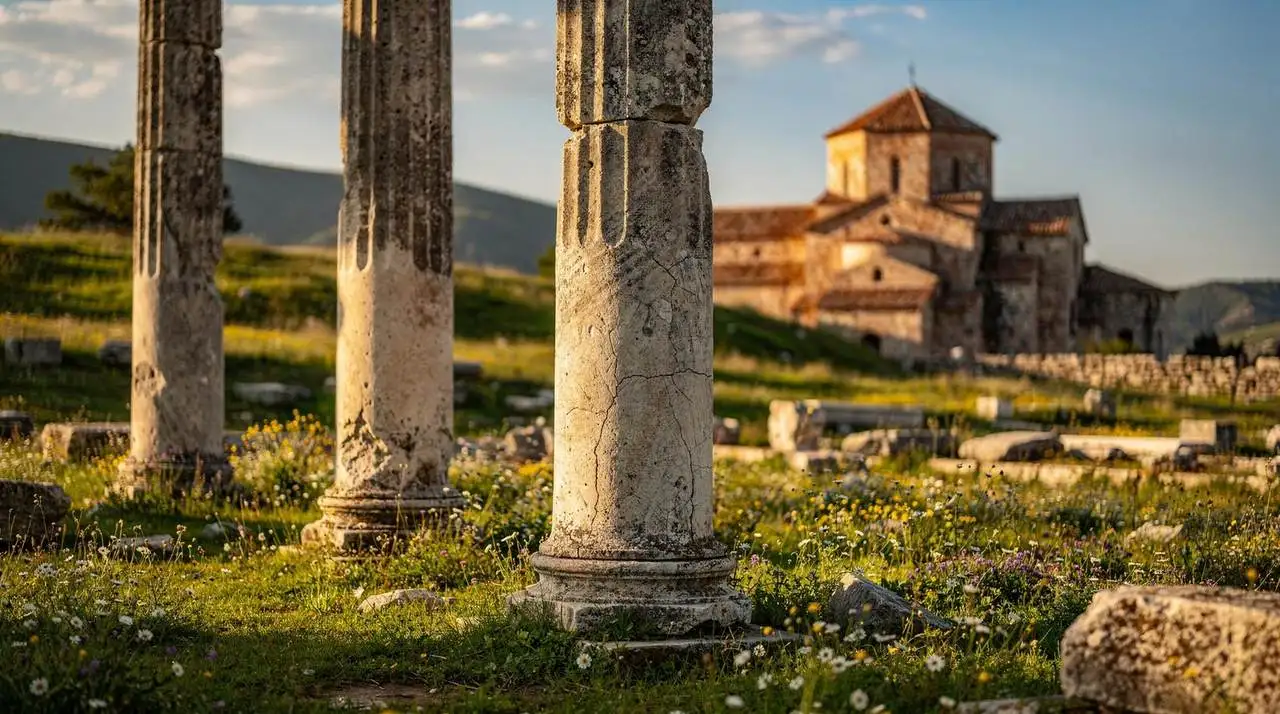
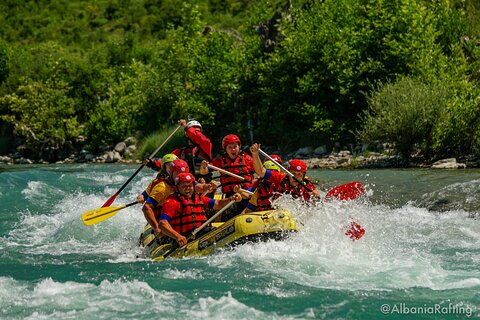
Berat is also a good base for exploring further into central Albania. If you want some time outdoors, you can join an Osum Canyon and Bogove Waterfall tour that heads out from town. Apollonia, the ancient Greek archaeological site near Fier, is close enough for a half-day visit and worth the detour if you have any interest in the layers of history that make Albania so dense with them — Illyrian, Greek, Roman, Byzantine, Ottoman, all within a couple of hours’ drive of each other. Our day trips from Berat guide covers Apollonia and a few other options with current transport logistics. For the bigger picture of how Berat’s castle and churches fit into the country’s UNESCO-listed sites, the UNESCO sites in Albania guide is a useful companion read, and the Albania history timeline guide helps make sense of what you are looking at once you are standing inside the castle walls.
What Berat Teaches You About Slow Travel
Berat is not a city that rewards rushing. Its pleasures are the pleasures of walking without a particular destination, of sitting with a coffee long enough for the neighborhood rhythms to become visible, of taking the same walk twice and noticing different things each time.
We stayed three nights on our first visit, which was the right amount of time to exhaust the obvious sights and then discover the less obvious ones. The Gorica quarter across the river is quieter than Mangalem and has its own stacked hillside houses. The path along the Osum River in the early morning, before the heat, is beautiful in an understated way. The old bazaar at the bottom of the hill has a few workshops where craftsmen still work in the traditional way — copper, wood, leather.
You could do Berat as a long day trip from Tirana, and many people do. We think this is a mistake. The city reveals itself slowly, and the experience of being there at night, when the castle is lit and the restaurants on the square are full and the air has that autumn-in-the-mountains quality of cold and wood smoke, is different enough from the daytime experience to justify the extra nights.
Berat in the Context of Albania’s Other Cities
Having visited Berat, Gjirokastra, and Tirana, we can say that the three cities are entirely different in character and all essential to understanding Albania. Tirana gives you the country’s present energy. Gjirokastra gives you the weight of its history — grey, serious, and extraordinary. Berat gives you its warmth — the white houses, the light on the river, the hospitality that Albanians call besa.
The combination of all three is the most complete introduction to Albanian culture available in a short trip. Our 14-day Albania itinerary structures a route that includes all three cities alongside the coast and the northern mountains.
What Stays With Us
Every place leaves a particular sensation — not a single memory but a composite of details that coalesce into a feeling. For Berat, it is a specific quality of golden afternoon light on white walls, the sound of the river below the bridge, the smell of that lamb dinner, and the view from the castle at the moment the sun went behind the mountains and the valley went blue.
We did not plan to love Berat as much as we did. We had no particular expectations. We arrived open and the city filled that openness with something lasting.
If you are building an Albania itinerary, put Berat near the top of the list. Give it at least two nights. Walk slowly. Eat well. Let it work on you.
You will understand why we keep going back.