Museums in Albania: From Cold War Bunkers to Byzantine Icons
Albania’s museum scene has undergone a quiet revolution. A generation ago the country’s museums were dusty propaganda showcases: communist-approved narratives about heroic workers, patriotic themes, and carefully managed versions of Albanian history. Today, Albania has some of the most original, haunting, and genuinely brilliant museum experiences in Europe — driven largely by a determination to confront honestly what the communist period did to the country and its people.
The flagship achievements are the Bunk’Art complex and the House of Leaves in Tirana: three museums that use authentic communist-era spaces — nuclear bunkers, secret police headquarters, interrogation rooms — to document the terror, surveillance, and human cost of Enver Hoxha’s 45-year dictatorship. These are extraordinary pieces of institutional memory: unflinching, well-curated, and deeply affecting. Beyond Tirana, the Onufri Museum in Berat, the Skanderbeg National Museum in Kruja, and the Marubi Photography Museum in Shkodra all belong in any serious cultural itinerary.
Albania’s museums are also, almost without exception, inexpensive — typically EUR 2-6 per person — and uncrowded by the standards of comparable institutions elsewhere in Europe.
| Must-see | Bunk’Art 1 & 2, House of Leaves (Tirana) |
| Entry | Typically EUR 2-6 per person |
| Time needed | 1-3 hours per museum; 2-3 days for a full Tirana circuit |
| Best combined with | Skanderbeg Museum Kruja, Onufri Museum Berat, Marubi Shkodra |
| Crowds | Low even in peak season |
Bunk’Art 1: Inside the Nuclear Bunker
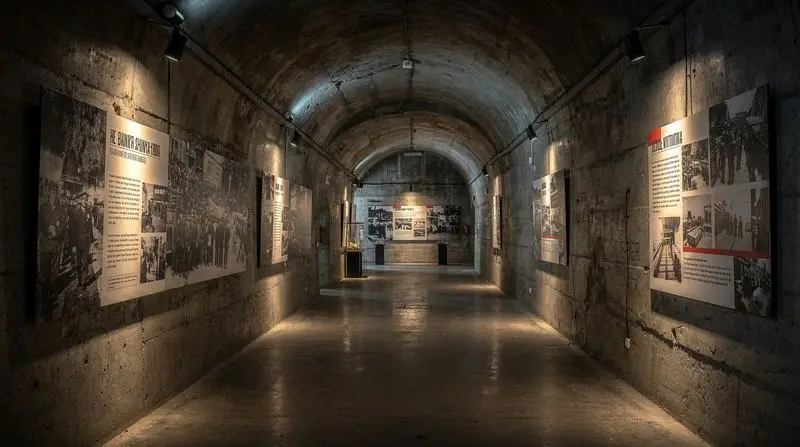
Bunk’Art 1 is housed in a remarkable physical space: a five-story, 106-room nuclear bunker built into the Shish mountain hillside northeast of central Tirana. Construction began in the early 1970s, ordered by Enver Hoxha as a refuge for the communist leadership and up to 200 key officials in the event of nuclear attack. The bunker was never used for its intended purpose. Instead it sat sealed and secret for decades after 1991 before being opened as a museum in 2014.
The space itself is as significant as the exhibitions within it. The reinforced concrete corridors, the sleeping quarters designed for 200 people, the conference rooms with original communist-era furniture, the generator rooms and ventilation systems, the decontamination chambers — all combine into an experience of totalitarian architecture that is physically overwhelming before you even read a single exhibit panel.
The exhibition focuses on the history of the Albanian communist state and the Ministry of Internal Affairs from 1944 to 1991. It covers the purges of the 1940s and 1950s, the relationship with Stalin’s USSR and later Mao’s China, the construction of the bunker network across Albania (over 170,000 bunkers were built — one for every four citizens), the persecution of political opponents, religious groups, and “class enemies,” and the collapse of the regime in 1990-91. Personal testimonies, STASI-style surveillance documents, and the original bureaucratic materials of the regime are presented without sentimentality.
Book a Tirana communist Albania tour including Bunk’Art Museum — the most comprehensive way to experience both the museum and the broader communist geography of the city, with an expert guide to provide narrative context.
Getting there: Approximately 5 km northeast of Skanderbeg Square. Taxi recommended (inexpensive) or a 20-minute walk uphill from the Ring Road.
Entry: Approximately EUR 5-6 per person. Combination tickets with Bunk’Art 2 available.
Time needed: 2-3 hours to experience the space and exhibitions properly. Do not rush.
Combine with: Combine Bunk’Art 1 with the Dajti Mountain cable car for a day that takes you from underground communist history to panoramic mountain views above the city.
Bunk’Art 2: The Sigurimi Files
Bunk’Art 2 opened in 2016 and is a different experience from its predecessor — smaller, more focused, and in some respects more disturbing. It is located right in the city center beneath Skanderbeg Square, in a bunker originally built for the Ministry of Internal Affairs. The exhibition focuses specifically on the Sigurimi — the communist secret police — and their systematic persecution of Albanian citizens.
The Sigurimi at its height maintained files on nearly 40% of the Albanian population. Neighbors informed on neighbors; family members were pressured to report on relatives; academics, priests, military officers, and intellectuals were arrested, tortured, and executed on the basis of informant reports and forced confessions. The museum documents this with characteristic directness: interrogation rooms preserved with original furniture, actual Sigurimi files (some victims can find their own family’s documents), records of executions, and testimony from survivors.
The experience is not comfortable. It should not be. But it is presented with care, historical rigor, and genuine respect for the victims — and it is essential for understanding why Albanian society developed the characteristics it did, and why the country’s post-communist transition has been both celebrated and painful.
Getting there: Located on Rruga Abdi Toptani, near Skanderbeg Square. Walkable from the city center.
Entry: Approximately EUR 3-5. Combination tickets with Bunk’Art 1 available.
Time needed: 1-2 hours.
House of Leaves: The Surveillance Museum
The House of Leaves (Shtëpia e Gjetheve) may be Tirana’s most unsettling museum — and given the competition, that is saying something. It is housed in a villa that served as the headquarters of the Sigurimi’s surveillance and interception operations. The building’s systems — hidden microphones, surveillance equipment, communication intercept technology — are partly preserved and partly reconstructed, giving visitors an insight into the physical infrastructure of a totalitarian surveillance state.
The museum takes its name from the leaves painted on the exterior of what appeared, from the outside, to be an ordinary residential villa — a camouflage of normality over the surveillance apparatus within. The exhibition documents how the Sigurimi monitored telephone calls, postal correspondence, and face-to-face conversations; how informant networks were built and maintained; and how the resulting information was used to arrest, coerce, and execute citizens.
Personal stories of surveillance victims are central to the presentation, preventing the material from becoming an abstract history of institutional evil. The museum has received significant attention from journalists, academics, and human rights organizations as one of the most thoughtful treatments of totalitarian surveillance in European museum culture.
Location: Rruga Lek Dukagjini, near the Blloku district.
Entry: Approximately EUR 3-5.
Time needed: 1-2 hours.
The Skanderbeg National Museum, Kruja
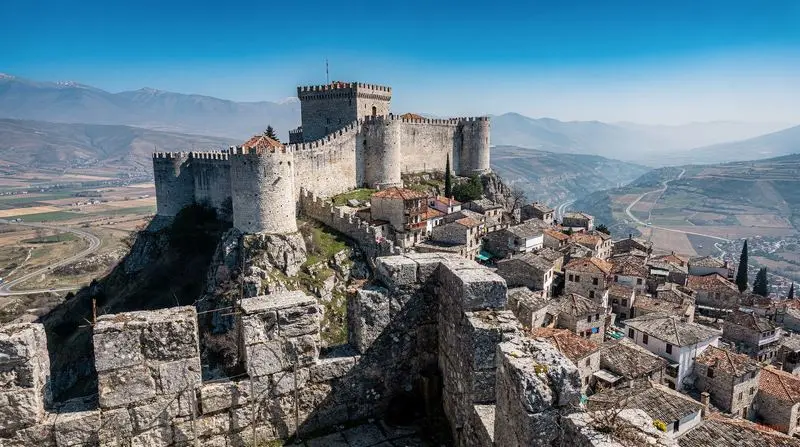
The Skanderbeg National Museum in Kruja is one of the most ambitious purpose-built museums in Albania — a large, dramatically designed building constructed to look like a medieval fortification, housing comprehensive collections on Albania’s national hero and the medieval history of resistance to Ottoman expansion.
Gjergj Kastrioti Skanderbeg (1405-1468) is the organizing myth of Albanian nationhood. An Albanian prince who spent years as an Ottoman military officer before defecting and returning to lead Albanian resistance, he united the country’s feudal lords, won numerous battles against forces substantially larger than his own, and maintained Albanian independence for over two decades. His red-and-black double-headed eagle banner became the Albanian flag. After his death, the Ottomans swept through within a decade — but Skanderbeg became the figure around whom Albanian national identity crystalized during the 19th-century national awakening.
The museum’s collection includes medieval armor, weapons, manuscripts, maps of the campaigns, diplomatic correspondence with European powers (popes and Venetian doges sent support and acknowledgment), and remarkable ethnographic material on the Albanian communities — the Arbëreshë — who fled to Italy after the fall of Kruja and whose descendants still maintain Albanian language and traditions in southern Italian villages.
The museum is best combined with the Kruja Castle complex and the old bazaar below — together they form one of the most rewarding half-day excursions from Tirana.
Onufri Museum, Berat Castle
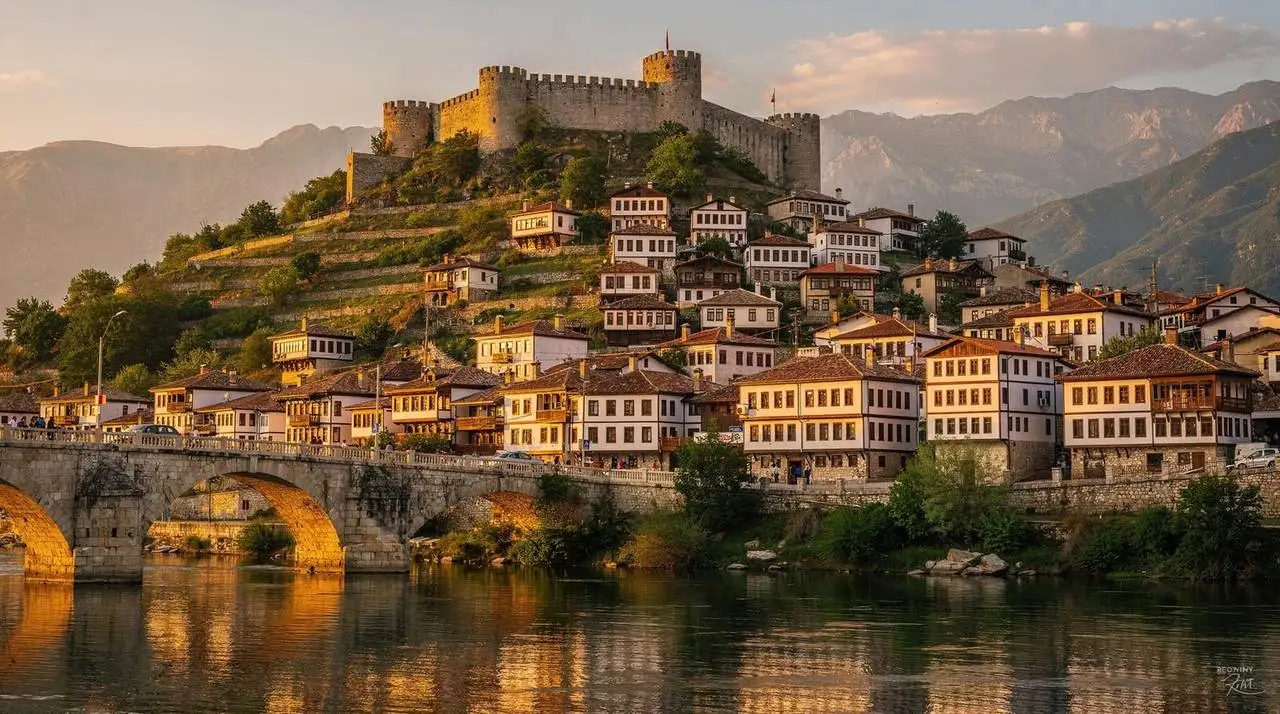
Inside Berat’s castle (Kalaja), the Church of the Dormition of Saint Mary houses the Onufri Museum — the finest collection of Orthodox religious art in Albania and a compelling display even for visitors without particular interest in religious iconography.
Onufri was a 16th-century Albanian iconographer of international significance, celebrated throughout the Orthodox world for the extraordinary quality of his figures and, most distinctively, for a vivid red pigment — “Onufri red” — that remains an art historical puzzle. No other iconographer of the period achieved precisely this shade, and its composition has never been definitively identified. The museum holds 17 icons attributed to Onufri and his son Nikolla, alongside liturgical manuscripts, embroidered vestments, silver altar pieces, and additional icons from other regional painters.
The church itself is a 13th-century Byzantine structure with well-preserved frescoes — the combination of architecture, frescoes, and the Onufri collection in a single room makes for a concentrated experience of medieval Orthodox material culture. Given that this is inside a living castle inhabited by Albanian families, the juxtaposition of extraordinary Byzantine art and ordinary daily life adds an additional layer of meaning.
Entry: Included with Berat Castle entry (approximately EUR 2-4).
Hours: Typically 9:00-17:00 daily; check locally.
The Marubi Photography Museum, Shkodra
The Marubi National Museum of Photography in Shkodra is among the finest photography museums in the Balkans and one of Albania’s most unexpected cultural treasures. It houses the archive of the Marubi dynasty — a family of Italian and Albanian photographers who documented Albanian life continuously from 1858 to the communist period.
Pietro Marubi arrived in Shkodra in 1858 as a political exile from Italy and established the country’s first photography studio. His Albanian successor, Kel Marubi, and subsequent generations of the family documented weddings, funerals, traditional dress, political events, and everyday life with extraordinary quality and consistency. The resulting archive — over 150,000 glass plate negatives — is one of the most complete visual records of Balkan social life in the late 19th and early 20th centuries.
The museum, renovated and professionalized in recent years, presents selections from the archive with excellent contextual information. The images of traditional Albanian dress and custom from the 1860s-1930s are particularly striking — a record of a way of life that the communist period subsequently erased or transformed beyond recognition.
Location: Shkodra city center.
Entry: Very modest. Well worth the time.
Combine with: Rozafa Castle (3-4 km from the city), a walk along the Shkodra lakeside promenade, and the city’s active cafe culture.
The National History Museum, Tirana
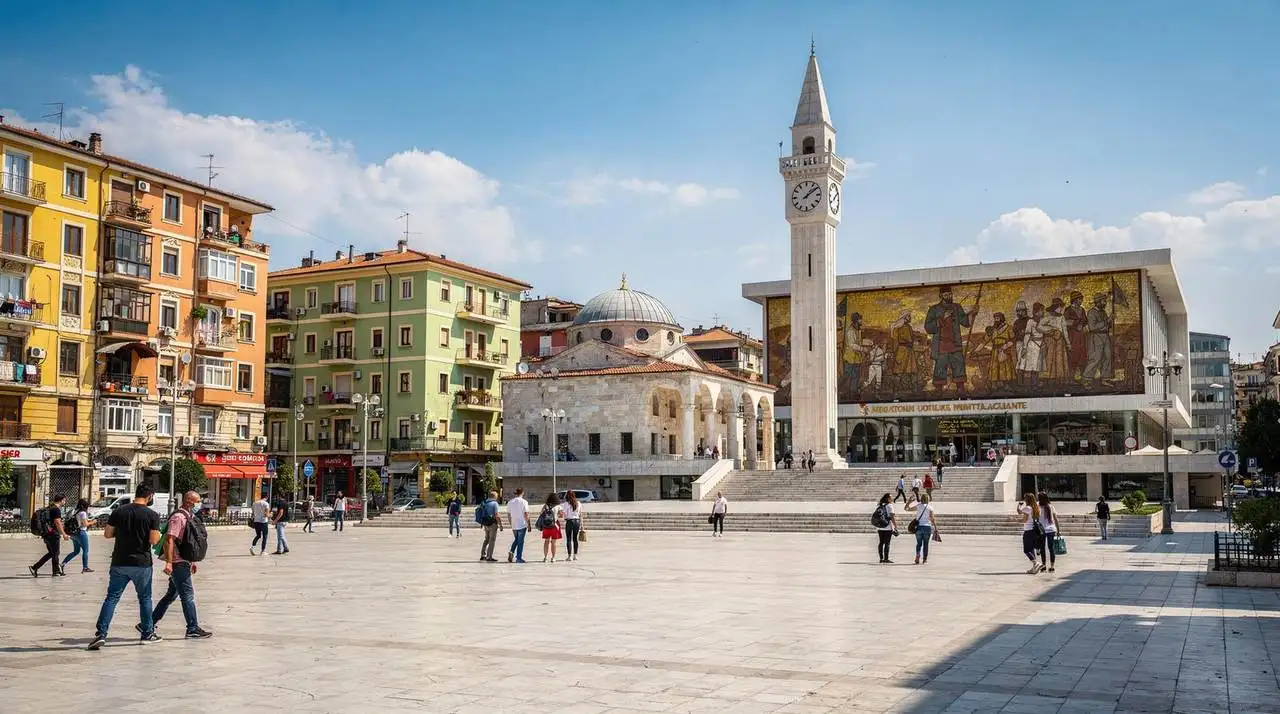
The National History Museum on Skanderbeg Square is Albania’s largest and most comprehensive historical museum, though it is less celebrated internationally than the more original Bunk’Art and House of Leaves. The museum covers the full sweep of Albanian history from the Illyrian period to the 20th century, with substantial collections of archaeological material from Butrint, Apollonia, and Durres.
The museum’s exterior is immediately recognizable: a vast socialist-realist mosaic covering the entire facade, depicting heroic Albanian workers, partisans, and soldiers in the approved communist aesthetic. The mosaic itself is an artifact worth studying — a frozen image of the ideological world the museum once served, now presented as historical document.
The interior collections are uneven but contain genuine highlights: the medieval weaponry and armor, the Illyrian jewelry from ancient graves, and the substantial ethnographic collection of traditional costumes from different Albanian regions. The communist history section has been progressively revised since 1991 and now presents a more balanced account than the propaganda it replaced.
Location: Skanderbeg Square, Tirana. Impossible to miss.
Entry: Approximately EUR 3-5.
The Durres Archaeological Museum
The Archaeological Museum in Durres, Albania’s second city, houses one of the finest ancient collections in the country — particularly strong on the material culture of Apollonia, Durres (ancient Epidamnos/Dyrrachium), and the Adriatic coast more broadly.
Highlights include remarkable Hellenistic sculpture, extraordinary Roman-era grave goods (including gold jewelry and glass vessels of exceptional quality), ancient Greek coins from Albanian sites, and architectural fragments from Apollonia. The collection benefits from being displayed in a purpose-built modern building (by Albanian standards) with reasonable lighting and labeling.
The museum is best combined with a visit to the nearby Roman Amphitheatre of Durres and the Byzantine-era mosaics visible in the amphitheatre’s chapel — a substantial half-day of archaeological content.
Planning Your Albania Museum Itinerary
Tirana alone warrants two to three museum days: Bunk’Art 2 and the National History Museum on day one; House of Leaves and the Pyramid area on day two; Bunk’Art 1 (requiring a separate trip to the hillside location) on day three. This museum-heavy Tirana itinerary pairs well with the walking and cycling tours that connect these sites with the city’s broader cultural geography.
Beyond Tirana, the Onufri Museum in Berat, the Skanderbeg Museum in Kruja, and the Marubi Museum in Shkodra form a provincial museum circuit of genuine quality. All three can be reached as day trips from Tirana, though overnight stays in Berat and Shkodra allow more relaxed exploration.
The UNESCO heritage sites and castles of Albania provide the physical context for the museum collections: visiting Butrint’s ruins is substantially richer after the Durres Archaeological Museum, and the Skanderbeg Museum makes Kruja Castle dramatically more meaningful.
Albania’s museums are improving rapidly and entry prices remain very low. The combination of original spaces, honest confrontation with difficult history, and the remarkable quality of the archaeological collections makes this one of the most rewarding museum circuits in southeastern Europe.
Museums and Albania’s Wider Historical Sites
Museums work best in Albania when paired with the physical sites they document. Bunk’Art 1’s exploration of the communist bunker network is more vivid after seeing actual bunkers scattered across the countryside — the historical sites guide and the castles guide cover the fortresses, amphitheatres, and archaeological sites that the museum collections draw from. The UNESCO sites in Albania guide similarly connects the Onufri Museum’s Berat collection and the Skanderbeg Museum’s Kruja context to the protected heritage cities that house them.
For visitors focused specifically on communist history, the museum circuit pairs naturally with walking tours that cover Tirana’s Blloku district — the former sealed communist elite quarter — and with the communist history guide for the broader political and social context that makes the Bunk’Art and House of Leaves exhibits land with full weight.
Regional Museums Worth the Detour
Beyond the major stops covered above, smaller regional museums reward travellers with time to explore beyond the capital. The archaeological collections at Butrint complement the Durres museum’s holdings, and ethnographic museums in Gjirokastra and Berat’s old town houses — often housed in preserved Ottoman-era residences — give a domestic-life counterpoint to the larger institutional collections. These smaller museums rarely have English signage as comprehensive as the major Tirana institutions, but the buildings themselves are often the primary attraction.
Frequently Asked Questions About Museums in Albania
How many museums should I visit in Tirana?
Two to three of Tirana’s flagship museums — Bunk’Art 2, House of Leaves, and either Bunk’Art 1 or the National History Museum — give a thorough understanding of the city’s communist-era history without museum fatigue. Bunk’Art 1 requires a separate trip to its hillside location, so factor in extra time if including it.
Are Albania’s museums suitable for children?
The Onufri Museum, Skanderbeg Museum, and Marubi Photography Museum work well for families with an interest in history or art. Bunk’Art 1 and 2 and the House of Leaves deal with difficult subject matter — surveillance, interrogation, and political persecution — and are better suited to older children and teenagers who can engage with the content thoughtfully.