How Many Days Do You Actually Need in Albania?
Albania is small on the map and slow on the ground. That mismatch is the reason almost every first-time visitor asks the same question: how many days is enough? The honest answer is that the country looks like a weekend destination and behaves like a two-week one. Mountain roads wind, coastal traffic crawls in summer, and the best places are rarely on the way to each other.
So the useful question is not “how much can I fit in?” but “what do I want to feel at the end of the trip?” Three days gives you a city and a taste. Seven gives you one region properly. Fourteen is where north and south finally sit together without a sprint. This guide lays out a sample plan for each trip length, who it suits, what you give up, and how to split your time between the north and the south.
| Trip length | Best for | What you get | What you sacrifice |
|---|---|---|---|
| 3 days | City breaks, add-on to a Balkan trip | Tirana and a day trip | The coast and the mountains |
| 5 days | First look at the highlights | Tirana, Berat, Gjirokastra, the far south | Any depth, any slack |
| 7 days | One region done well | The south or the north, not both | The other half of the country |
| 10 days | A true first visit | North and south with a loose pace | Remote areas and trekking time |
| 14 days | Balanced exploring | Both halves plus a few detours | Little, if you travel by car |
| 3 weeks | Slow travel, hiking, repeat visitors | Everything, with rest days | Nothing but your schedule |
What Shapes the Answer Before You Pick a Number
Three things matter more than the count of days itself.
Where you are starting. Nearly everyone arrives in Tirana, and the south and north pull in opposite directions from there. Every extra region you add means a long transfer day. Count those transfer days as part of the trip, not as a free bonus.
How you get around. A rental car gives you flexibility and lets you reach villages the buses do not serve, but you pay for it in concentration on mountain roads. Public transport is cheap and workable on the main corridors, and slower everywhere else. We compare the two below.
The season. In July and August the coast fills and the roads slow down, so a plan that works in May may need more buffer in August. In the shoulder months the same itinerary feels lighter. More on that near the end.
3 Days: Tirana and One Good Day Trip
Three days suits a city break, or a stopover bolted onto a longer Balkan journey. It is not enough to see “Albania”, but it is enough to understand why people come back.
Suggested shape: two days in Tirana for the squares, the Blloku quarter, the markets, the bunker museums and the café culture, then one day trip out of the capital. Kruja, Bovilla Lake or Dajti Mountain all work without needing a night elsewhere.
If it is your first morning in the city, a guided Tirana walking tour gives you the layers of Ottoman, communist and modern Albania in one pass, and makes the rest of the stay easier to read.
Best for: short breaks, travellers who dislike long road days, anyone testing whether Albania is for them. What you sacrifice: the beaches, the stone cities and the mountains. All of them. Do not try to squeeze Berat and the Riviera into this window.
5 Days: The Highlights Sampler
Five days is where the temptation to overreach begins. You can see the three names everyone has heard of, Tirana, Berat and Gjirokastra, plus a glimpse of the coast, but only if you accept that you will spend a lot of time moving.
Suggested shape: one day in Tirana, a day for Berat, a transfer south with a stop on the way, a day in Gjirokastra, and a final day around Saranda and the Blue Eye. The 5-days highlights itinerary is built around exactly this order.
Berat is the easiest to do in a single day from the capital. A full-day guided Berat tour from Tirana removes the transport question entirely, which matters when every day is spoken for.
Best for: travellers with a hard limit on time who want a varied first impression. What you sacrifice: slack. One delayed bus or one slow mountain stretch and the whole plan bends. Skip the north entirely and accept that you are sampling, not exploring.
7 Days: Pick One Half and Do It Properly
A week is the first length that rewards a clear decision. Rather than thin out a trip across the whole country, choose either the south or the north.
The southern week runs from Tirana through Berat to Gjirokastra, then down to the coast around Saranda and Ksamil, with the Blue Eye and Butrint in reach. The 7-days south itinerary lays out the full route. It is the easier choice for a first visit, with more to see per kilometre and better infrastructure for visitors.
For the coast, a Blue Eye, Butrint and Ksamil day tour from Saranda combines four sites in a single, well-organised day, which suits anyone without a car.
The northern week centres on Shkodra, Lake Koman and the Albanian Alps, with Theth as the anchor. It is wilder, slower and more physical. If you like walking, this is the better week, but it asks more of your logistics: the roads are rougher and the services thinner.
Best for: travellers who want depth over breadth and are happy to leave the other half for next time. What you sacrifice: half the country. That is not a loss if you decide on purpose; it is a loss if you try to cheat it with a rushed extra stop.
10 Days: The First Real North-and-South Trip
Ten days is where we recommend most first-time visitors land. It is long enough to link both halves without feeling hurried, and short enough to fit most holiday allowances.
A workable split: roughly four days north, five days south, and the remaining time absorbed by transfers through Tirana. Start in the capital, head to Shkodra and the mountains, return through Tirana, then go south via Berat to Gjirokastra and the coast. The 10-days complete itinerary follows this arc.
If you only want a taste of the Alps without committing to a trek, a guided Valbona-Theth crossing packages the logistics so you can spend your energy on the walking.
Best for: first visits, couples, and friends who want variety. What you sacrifice: the remote corners and any serious trekking. You will also pass through Tirana twice, which is a feature if you enjoy it and a nuisance if you do not.
14 Days: The Balanced Trip
Two weeks is the sweet spot for the country. You can keep the ten-day backbone and add what makes Albania feel particular: a few nights on the Riviera, a day or two in the Vjosa valley, or a slower stretch in the mountains.
A balanced split: about five days north and mountains, about eight days south including the coast, with one flexible day for weather, a late bus or simply a rest. The 14-days Albania itinerary walks through the full route.
This is also the length at which the coast earns real time. A day on the water changes the pace of the whole trip, and an Albanian Riviera boat tour reaches coves that the road does not.
Best for: travellers who want both halves and still want to sit down for dinner. What you sacrifice: very little if you drive. If you rely on buses, expect to drop one or two detours.
3 Weeks: Slow Travel, Rest Days and Trekking
With three weeks you stop optimising. You can stay four nights in a place that deserves it, add the full northern trek, linger on the coast and still have days with nothing planned. The 3-weeks Albania itinerary is designed around that slower rhythm.
This is also the length where the Theth and Valbona trek, the Vjosa valley, the lesser-visited southern interior and a ferry day on Lake Koman all fit without trade-offs.
Best for: hikers, remote workers, repeat visitors and anyone who prefers to unpack once a week. What you sacrifice: nothing in Albania. You may find that you sacrifice other trips, because three weeks tends to turn into a return visit.
How to Split North and South
A few rules hold across every trip length.
- Seven days or fewer: choose one half. A plan that tries to touch both ends spends most of its time in a vehicle.
- Ten days: lean south slightly. The south has more sights close together, so the extra days pay off faster.
- Fourteen days or more: give the north its own block. The mountains need at least three full days on the ground to be worth the road. A single day trip into the Alps leaves you mostly looking out of a window.
- Always route through Tirana once. It is the junction for almost everything, and it is a convenient place to repack and rest.
- Keep one buffer day. Weather, late buses and a morning you simply do not want to move will all find it.
Car Versus Buses and Furgons
Both work, and the right answer depends on how much of the country you want to reach.
By car. You gain the freedom to stop, reach villages and arrange your own timing, which is why two weeks by car covers noticeably more than two weeks by bus. The trade-off is mountain driving and summer coastal traffic. Read our Albania car rental guide and the driving in Albania guide before you commit.
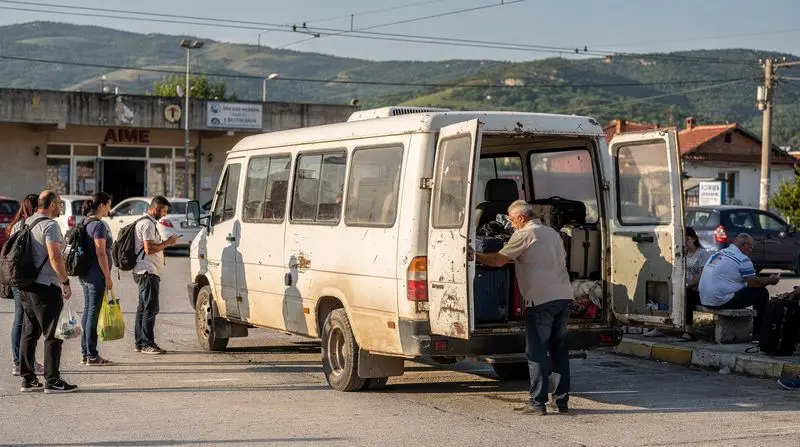
By bus and furgon. Furgons are the shared minibuses that link most towns, and they are an excellent way to travel on the main routes between Tirana, Shkodra, Berat, Gjirokastra and Saranda. They leave when full rather than on a rigid timetable, so allow flexibility. Our buses and furgons guide explains how the system works. If you have no car and little time, a private transfer from the airport removes the first hurdle: book a private transfer from Tirana Airport.
A practical rule: seven days or fewer works well on public transport or guided day tours; ten days and longer is where a car starts to pay for itself, especially in the mountains and the interior.
Season: Does the Length Change With the Month?
It does, a little.
Late spring and early autumn give you the most flexibility. The coast is pleasant, the mountains are accessible and the roads are calmer, so the plans above work as written.
Summer is the season for the Riviera, and also the season when it is busiest. Add a buffer day to any plan that depends on the coastal road, and book Saranda, Ksamil and Himara accommodation well ahead. If you want the north, the high mountains are at their most accessible in summer.
Winter is quiet. The cities and stone towns still reward a visit, but the high mountains are a different proposition and some mountain guesthouses close. A shorter, city-and-south trip makes more sense than a long one.
Whatever the season, check seasonal services such as ferries directly with the operator before you build a day around them. For Lake Koman, for example, the official site of the operator is the place to confirm current dates and booking rules. For the Corfu crossing, check the operator’s own site too.