Albania in 3 Weeks: The Ultimate Slow-Travel Itinerary
Twenty-one days in Albania is enough to go beyond the highlights and into the texture of the country — to spend a full day exploring a city with nowhere else to be, to take the detour that isn’t in any guidebook, to eat lunch at a roadside burek stall and fall into conversation with the family who runs it. This itinerary covers everything: the north, the centre, the south, the coast, and several off-beaten-path stops that most tourists never reach.
The pace is deliberately relaxed. There are buffer days built in, genuine rest time at the coast, and enough flexibility to follow your interests. Albania rewards slow travel more than most countries.
This is designed without a car for most of the route, though renting a vehicle for the Riviera section (Days 17–19) adds significant freedom. For a shorter version, see the 14-day comprehensive itinerary or the 10-day complete itinerary.
| Best for | Slow travellers and repeat visitors who want depth, not just highlights |
| Total cost | Around EUR 725–2,210 per person (budget to mid-range) |
| Getting around | Buses and shared taxis, plus a rental car for the Riviera (Days 17–20) |
| Car needed | Optional — recommended only for the final Riviera stretch |
| Best time | May, June, or September |
Overview
Week 1: Tirana, Durres, Shkodra, Albanian Alps Week 2: Back to Tirana, Berat, Apollonia, Permet, Gjirokastra Week 3: Korce, Pogradec, Saranda, Ksamil, Albanian Riviera
Week 1: The Capital and the Mountains
Day 1: Tirana — Arrival
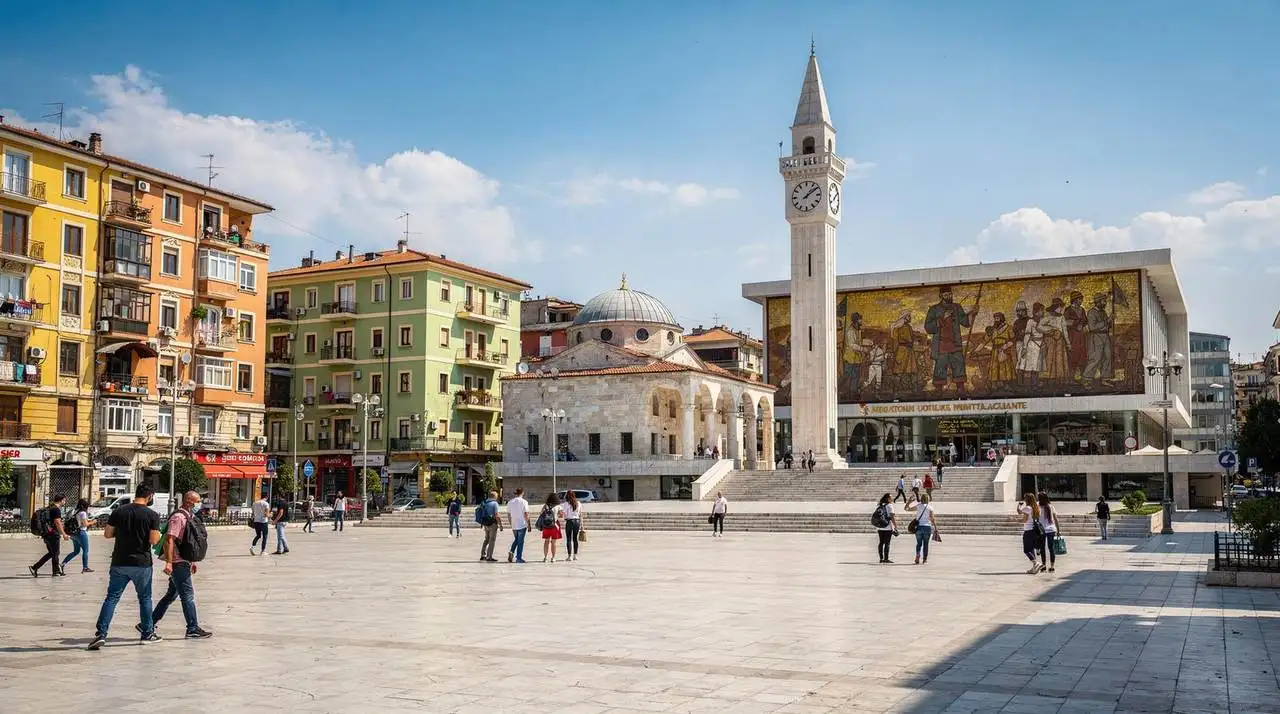
Fly into Tirana and settle in. Spend the first evening at Skanderbeg Square: the mosque, the clock tower, the museum facade mosaic. Walk through Blloku for dinner and a beer. This is an orientation evening — don’t try to cram in sightseeing, just absorb the energy of the place.
Day 2: Tirana — Deep Dive
Full day in Tirana: morning at the National History Museum (700 lekë) and BunkArt 2 (600 lekë). Lunch at Pazari i Ri. Afternoon: the Pyramid, the House of Leaves (500 lekë), street art in Blloku.
Join a Tirana walking tour in the late afternoon to unlock the city’s communist history and architectural layers.
Evening: the Tirana food tour — 3–4 hours of byrek, petulla, traditional dishes, raki, and brilliant local food knowledge.
Day 3: Durres — Albania’s Oldest City
Day trip to Durres — 35 km west of Tirana on the Adriatic coast, Albania’s main port and one of its oldest cities. The Roman Amphitheatre of Durres (entry 500 lekë) is the largest Roman amphitheatre in the Balkans, built in the 2nd century AD and still being excavated. The Archaeological Museum holds exceptional finds from the Greek colony of Epidamnos (Durres’s ancient name). Wander the city walls and Byzantine-era towers.
Bus from Tirana: 30–40 minutes, 150 lekë. Return the same day.
Day 4: Tirana to Shkodra
Morning bus to Shkodra (2 hours, 400 lekë). Afternoon at Rozafa Castle and the Marubi Photography Museum (500 lekë). Evening at the lake promenade — one of northern Albania’s great sunset views.
Day 5: Shkodra — Shala River Day Trip
Full-day Koman Lake and Shala River boat tour from Shkodra — the turquoise Shala River gorge is one of Albania’s most spectacular natural environments. Swim from the boat, cliff-jump (carefully), eat grilled lamb at the riverside restaurant, and return in the afternoon with a proper appreciation for what tomorrow’s ferry will look like.
Day 6: Koman Lake Ferry to Valbona
Rise before dawn for the shared taxi to Koman ferry terminal (1.5 hours). Take the morning ferry across Koman Lake (2.5 hours) — one of Europe’s great slow journeys through sheer limestone canyon. From Fierza, shared transport to Valbona (1 hour). Check in, rest, walk the valley floor, eat an extraordinary home-cooked dinner.
Day 7: Valbona Valley — Rest and Exploration
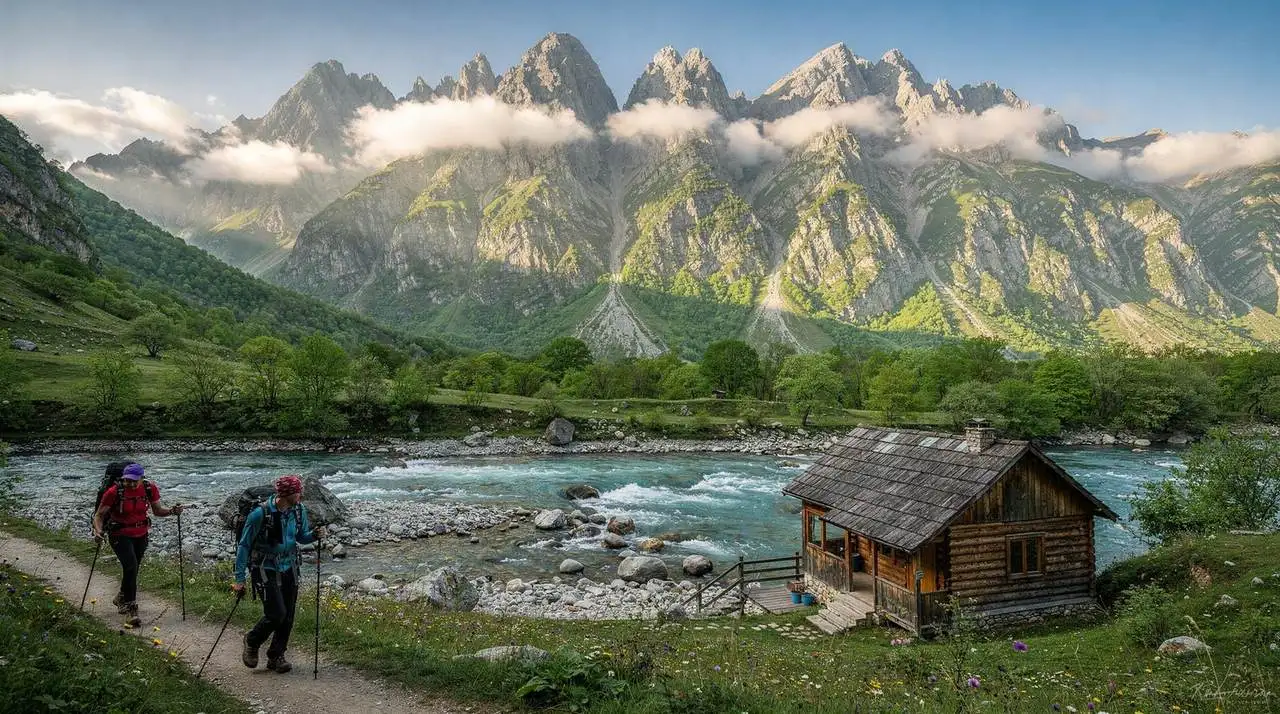
This is a rest day in the mountains before the big crossing. Sleep in. After breakfast, take a long valley walk toward the Valbona Pass approach trail — as far as the treeline, turning back before the steep section — to preview tomorrow’s route. Swim in the Valbona River. Eat a huge lunch. Rest in the afternoon. Prepare your pack for the crossing: carry only what you need; arrange for your main bag to be transported by vehicle over the pass if necessary (most guesthouses can organise this).
Week 2: The Highland Crossing and the Cultural South
Day 8: Valbona to Theth — The Crossing
The legendary crossing: 14 km, 1,200 m up to the Valbona Pass, 800 m down to Theth. Start at 7am with a full breakfast from your guesthouse. Walk 7–9 hours through some of the finest mountain scenery in Europe. Arrive in Theth exhausted and elated.
Book a guided 3-day Valbona-Theth crossing from Shkodra for a fully serviced version including Koman Lake and mountain accommodation.
Day 9: Theth — Waterfalls and Highland Culture
Theth rest day: Grunas Waterfall walk, the Lock-In Tower, the Blue Eye spring pool, and a long afternoon of doing very little. Read on the guesthouse terrace. Eat another extraordinary guesthouse dinner. Listen to the host explain the Kanun — the ancient customary law that governed this valley for centuries.
Day 10: Theth to Berat via Shkodra and Tirana
Long travel day: 4WD shared taxi Theth to Shkodra (2.5–3 hours), bus Shkodra to Tirana (2 hours), brief Tirana stopover if needed, afternoon bus Tirana to Berat (2 hours). Alternatively, break this into two days with an overnight in Tirana. Either way, arrive in Berat by evening.
Day 11: Berat — UNESCO City of a Thousand Windows
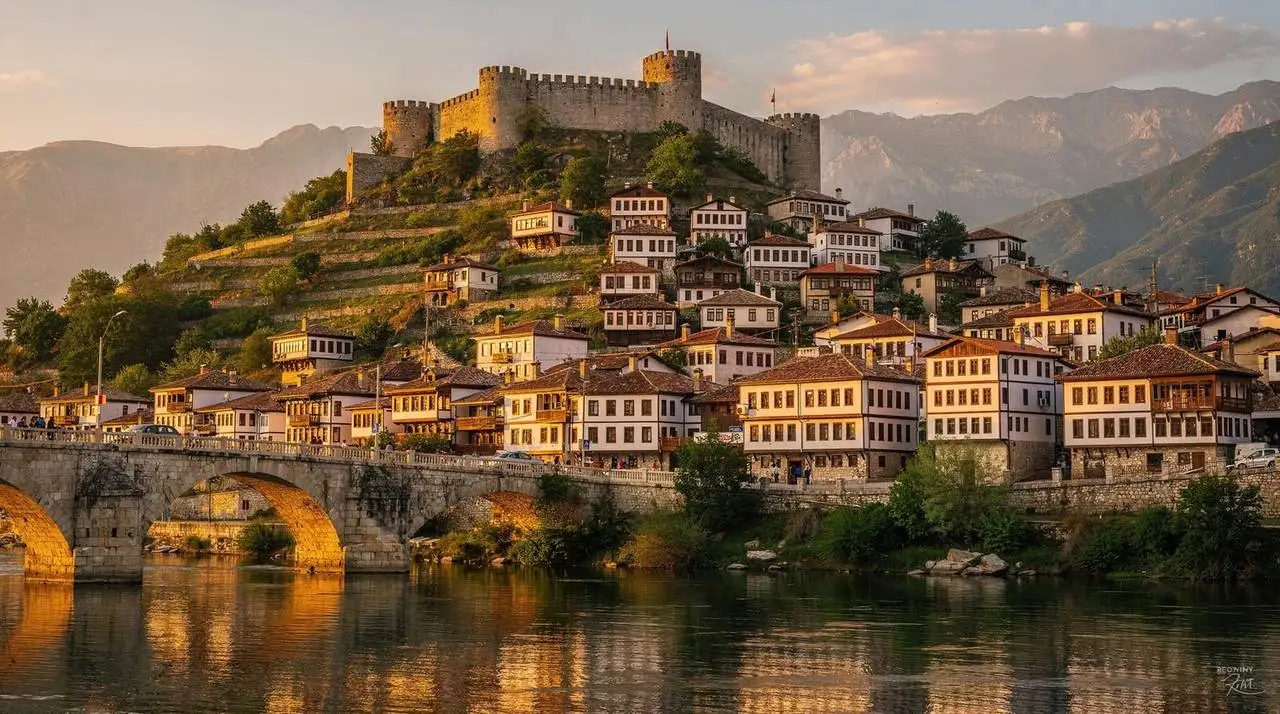
Full day in Berat. Morning: wander Mangalem’s cobblestone lanes, climb to Kalaja Castle, visit the Onufri Museum (400 lekë) with its extraordinary 16th-century icons. Afternoon: Ethnographic Museum (300 lekë), the Old Bazaar, the riverside promenade. Cross to Gorica for sunset over the thousand windows.
This is one of the most beautiful cities in the Balkans — give it the full day it deserves.
Day 12: Berat — Osum Canyon Day Trip
Morning trip to the Osum Canyon — one of Albania’s great natural spectacles, a limestone gorge up to 80 metres deep. Book an Osum Canyon and Bogove Waterfall tour from Berat — the tour typically combines the canyon walk or boat trip with the spectacular Bogove Waterfall. Return to Berat for a relaxed afternoon.
Day 13: Apollonia
Day trip from Berat to Apollonia near Fier — one of the most important Greek and Roman cities in the Adriatic region. Founded in 588 BC, eventually housing 60,000 people, the site contains an excellent museum and well-preserved ancient structures including a Greek bouleuterion and Roman odeon. Entry 700 lekë. Often almost deserted.
Return to Berat for your final night.
Day 14: Permet — Thermal Baths and Wild Rivers
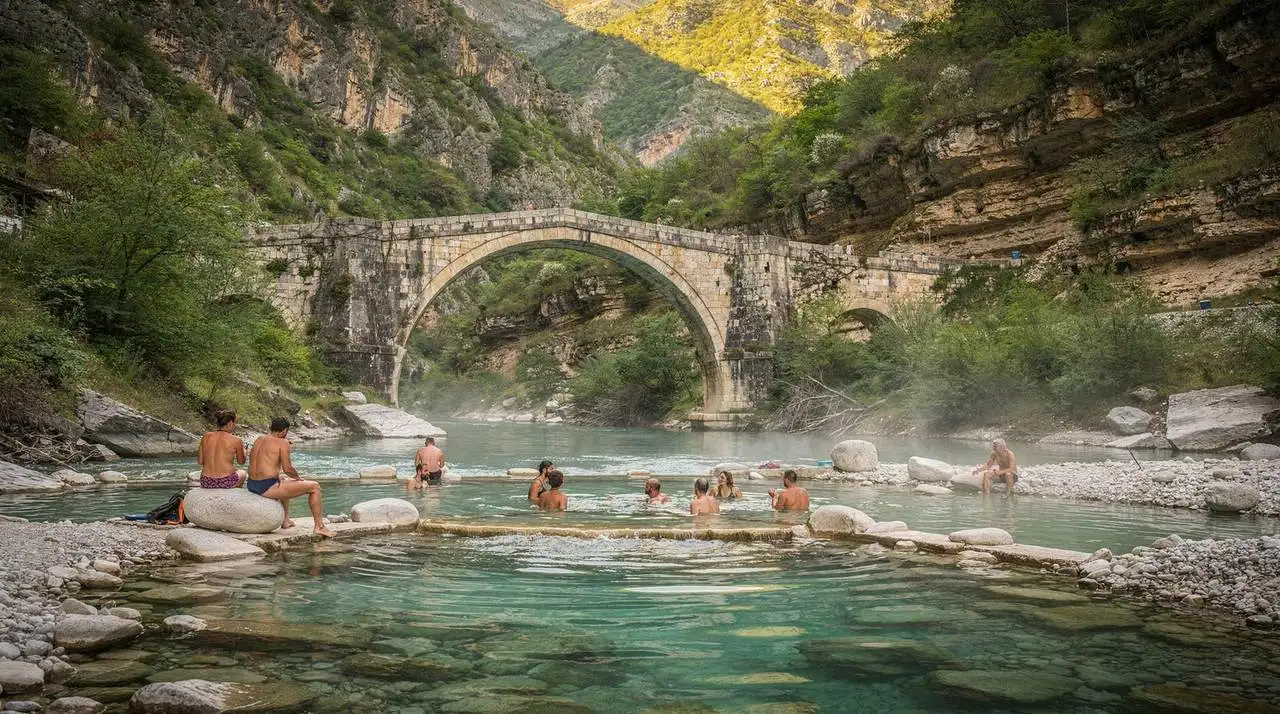
Bus or shared taxi from Berat to Permet via Tepelena (3–3.5 hours). The Benja Thermal Baths on the Langarica River — free hot mineral springs in a stunning limestone canyon — are the highlight, but Permet itself is worth an overnight: the Vjosa River promenade, the gliko shops, the local wine.
Join a Permet thermal baths guided tour for the canyon, the Ottoman bridge, and swimming in the pools.
Week 3: Southeast and the Riviera
Day 15: Gjirokastra — The Fortress City
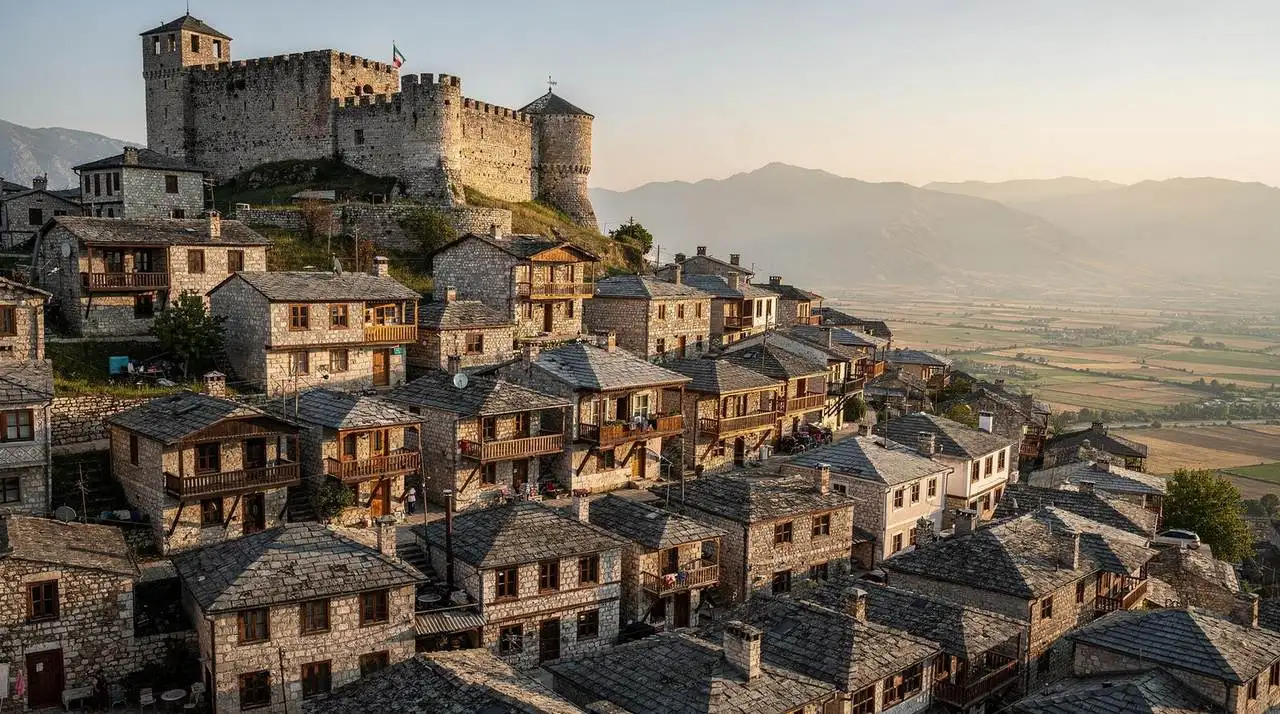
Travel from Permet to Gjirokastra — 1.5–2 hours by bus or shared taxi. Full afternoon at the Castle (500 lekë), the Zekate House (300 lekë), and the Old Bazaar. Join a guided Gjirokastra city tour for the full context of this UNESCO stone city.
Evening: dinner in the old bazaar; Antigoni Restaurant has excellent views and good traditional cooking.
Day 16: Korce — Albania’s Cultural Heart
Long travel from Gjirokastra to Korce (Korça) — approximately 3.5–4 hours via Permet. Korce is Albania’s “little Paris”: a prosperous, culturally confident city with a strong Orthodox tradition, excellent museums, and a famous cafe culture. The National Museum of Medieval Art (entry 500 lekë) houses exceptional Byzantine icons and frescoes from across southern Albania — easily one of the best art museums in the country.
Walk the city’s wide boulevards, explore the Old Bazaar neighbourhood, visit the neo-Gothic Cathedral of the Resurrection. Drink a local Korca beer in one of the many pavement cafes on Rinia Square. Korce’s restaurants are excellent; this is a city that eats well.
Day 17: Pogradec and Lake Ohrid
From Korce, take a short bus or taxi to Pogradec on the shore of Lake Ohrid — the ancient, extraordinarily clear lake shared between Albania and North Macedonia. Pogradec is a pleasant, understated resort town that Albanian families visit for the lake water (some of the clearest in the world) and the fresh water crayfish (korani) that are the local speciality.
Swim in Lake Ohrid, eat korani at a lakeside restaurant (expensive but exceptional), and enjoy a day of pure relaxation before the final push south.
Day 18: Gjirokastra to Saranda via Blue Eye
Travel from Pogradec south toward Saranda — this is a longer journey requiring a change or a shared taxi. Stop at the Blue Eye spring (Syri i Kaltër) on the way — the extraordinary karst spring where impossibly blue water wells up from the earth, surrounded by plane trees. Entry 100 lekë.
Book a best-of-Saranda tour combining Blue Eye, Butrint, and Ksamil — an efficient option if travelling from the south.
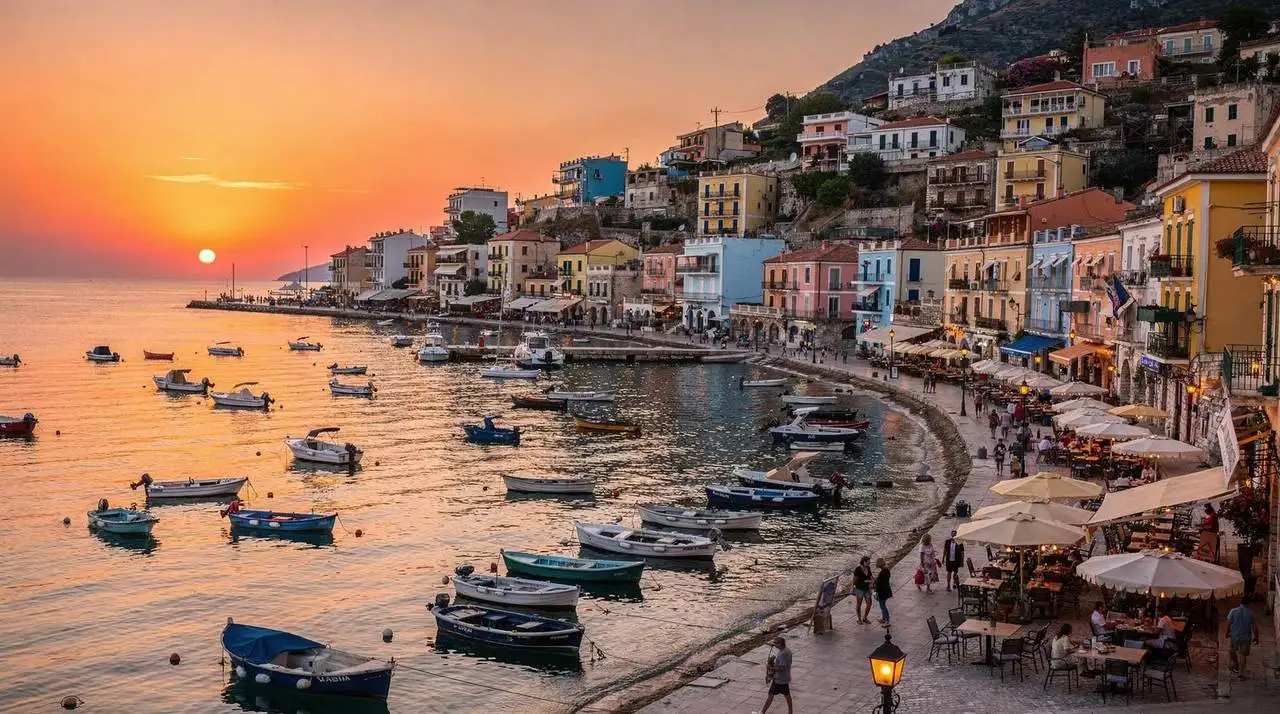
Arrive in Saranda in the afternoon. Evening: seafood dinner on the waterfront promenade with views toward Corfu.
Day 19: Butrint and Ksamil
Morning at Butrint — the UNESCO archaeological site (1,000 lekë) of exceptional layered history on a wooded promontory. Afternoon at Ksamil — Albania’s finest beach. Take a boat to the Ksamil islands, snorkel, swim.
Join a Riviera boat tour from Saranda to experience the southern coastline from the water.
Day 20: Albanian Riviera Road Trip
This is the day that benefits most from a rental car (available in Saranda, approximately EUR 35–50/day). Drive north along the Riviera: Borsh (one of the longest beaches in Albania, often empty), Himara (charming village with a castle, good restaurants), Dhermi (the most fashionable beach on the Riviera, turquoise water, dramatic cliffs above), Llogara Pass (1,027 m, where the mountains meet the sea with extraordinary views in both directions). Stay overnight in Dhermi or Himara.
For a guided version, see the Albanian Riviera road trip itinerary.
Day 21: Llogara and Return to Tirana
Morning at Llogara National Park — the pine forest above the pass, with walking trails and views toward both the Adriatic and the mountains. Then drive or bus north through Vlora and back to Tirana for your flight.
The Vlora-to-Tirana drive (or bus) takes approximately 3–4 hours via the main highway; buses run several times daily from Vlora bus station.
Off-the-Beaten-Path Additions
With 21 days you have time for detours the standard itineraries miss. Consider:
Shpella e Pellumbasit: A cave system near Tirana with prehistoric remains, accessible as a day trip.
Bovilla Lake: A beautiful reservoir in the mountains northeast of Tirana, easily combined with a hike to Gamti Mountain. Book a Bovilla Lake and Gamti Mountain hike from Tirana.
Voskopoja: A village near Korce famous for its extraordinary Byzantine frescoed churches — among the finest in Albania.
Tepelena: Ali Pasha’s castle above the Vjosa-Drinos confluence, on the road between Berat and Gjirokastra.
Finiq: An off-road Illyrian and Roman site near Gjirokastra, rarely visited and extraordinarily atmospheric.
21-Day Budget Summary
| Category | Budget | Mid-range | Comfortable |
|---|---|---|---|
| Accommodation (21 nights) | EUR 290–400 | EUR 735–1,050 | EUR 1,470–2,100 |
| Intercity transport | EUR 60–90 | EUR 130–200 | EUR 280–400 |
| Museum and site entries | EUR 65–80 | EUR 65–80 | EUR 65–80 |
| Food and drink (per day) | EUR 15–22 | EUR 30–50 | EUR 55–90 |
| Guided tours | EUR 0–70 | EUR 150–280 | EUR 400–700 |
| Car rental (4 days) | EUR 0 | EUR 140–200 | EUR 200–300 |
| Total 21 days | EUR 725–1,000 | EUR 1,520–2,210 | EUR 3,100–4,600 |
Prices per person. Three weeks in Albania — even at mid-range spending — represents extraordinary value compared to Western European destinations at similar standards.
Three Weeks in Albania: The Rhythm of Slow Travel
Twenty-one days is long enough that the trip changes character. For the first week, Albania is strange and stimulating: the alphabet on the signs, the sounds of the language, the different way that space and time are organised (Albanian social life operates on a much slower clock than northern European culture — meals are long, goodbyes are extended, nothing starts exactly on time). By the second week, these things normalise and you start to notice finer distinctions. By the third week, you have enough context that the places you visit in the last few days feel genuinely familiar, not just photographically recognisable.
This is the particular pleasure of slow travel: arriving at places with accumulated knowledge rather than fresh ignorance. When you reach Korce in the third week, you’ve already spent time in Tirana (which shows you Albanian urban modernity), Berat and Gjirokastra (which show you the Ottoman-era south), and Saranda (which shows you the coastal Albania). Korce — the mountain city with its Orthodox tradition, its central European cafe culture, and its deep connections to the Albanian diaspora of Romania and Bulgaria — makes complete sense in this context in a way it wouldn’t if you visited it first.
What to Read Before and During Your Three Weeks
Albanian literature is not widely translated, but several essential texts exist in English:
Ismail Kadare, “Chronicle in Stone” (novel, 1971): Set in Gjirokastra during the Italian and German occupations of World War II, narrated by a child. The definitive literary portrait of the city, written by the man who grew up there. Reading it before your Gjirokastra visit transforms the experience.
Ismail Kadare, “Broken April” (novel, 1978): Set in the northern Albanian highlands in the 1930s, about a young man caught in a cycle of blood vengeance under the Kanun. The most accessible entry point to understanding highland Albanian culture and the besa code. Read it before Theth and Valbona.
Robert Carver, “The Accursed Mountains” (travel narrative, 1998): A British journalist travels through northern Albania in the chaos of the post-communist early 1990s. Outdated in its specifics but captures something permanent about the landscape and the highland character.
Edith Durham, “High Albania” (travel narrative, 1909): A British traveller’s account of journeys through the Albanian Alps at the end of the Ottoman era. Extraordinary primary document; the highland villages she describes are largely the same villages that exist today.
Lea Ypi, “Free” (memoir, 2021): An Albanian-British philosopher’s account of growing up in communist Albania and the transition to democracy. The best single book for understanding the communist experience and its aftermath.
Three-Week Albania: Month-by-Month Guide
April: The country is at its most beautiful — wildflowers covering every slope, waterfalls at full force, no heat. Cultural sites are largely uncrowded. The Alps may still have snow at higher elevations; the Valbona Pass is inaccessible until mid-to-late May. The coast is warm enough for lunch outside but not for swimming. Excellent month overall except for the mountain trek.
May: The best single month for a three-week trip. The Alps are accessible from mid-May (check pass conditions before committing to the crossing). The coast is warm and uncrowded. Cities are comfortable for walking without the summer heat. Restaurants and guesthouses are open everywhere.
June: Still excellent. Early June can be slightly unpredictable in the mountains (snow can linger); from mid-June everything is reliable. The coast starts getting busier and warmer. Long evenings — sunset isn’t until 8:30–9pm — make for magnificent light on the limestone cities.
July–August: Peak season. The coast is crowded and prices rise significantly. The mountains are hot in the valleys but ideal walking conditions at altitude. Book everything ahead. Tirana in August is very hot (38–42°C); the north and the mountains are significantly cooler.
September: The second-best month. Crowds thin dramatically from mid-September; the sea is still warm for swimming; the mountains have superb visibility; the light is golden for photography. Many travellers rate September as the ideal time to visit.
October: Increasingly interesting as the crowds thin further. The coast gets quieter and cooler (still warm enough for swimming into early October). The mountain guesthouses begin closing from late October. Cities are very pleasant — Berat and Gjirokastra in October light are magical.
Building Your Own Three-Week Route
The 21-day itinerary above is one version of what a three-week Albania trip can look like. Here are alternative route structures depending on your priorities:
Mountain-focused (21 days, minimal coast): Extend the northern Alps section to 10 days, covering not just Valbona and Theth but also the Peaks of the Balkans trail toward Vermosh and the Montenegro border. Add Korce and Pogradec at the end for lake landscapes without beach. Skip Saranda and Ksamil.
Coast-and-culture (21 days, no major hiking): Tirana (3 days), Berat (3 days), Apollonia day trip, Permet (2 days), Gjirokastra (2 days), Korce (2 days), Saranda (2 days), Ksamil (2 days), and a full week on the Riviera from Saranda to Vlora by rental car. Zero serious hiking; maximum cultural and coastal experience.
North-only deep dive (21 days): Tirana (2 days), Shkodra (3 days), Koman Lake and the Shala River system (2 days), Valbona (3 days), the Peaks of the Balkans toward Kosovo and Montenegro (5+ days), return via Theth and Shkodra (4 days). For serious trekkers who want to cover the full Albanian section of the Peaks of the Balkans trail — see the Peaks of the Balkans trail guide before committing to this version, since it requires multi-day mountain logistics well beyond the standard Valbona-Theth crossing.
Slowing Down Further: Turning 21 Days into a Base-and-Explore Trip
Some travellers reach the third week of this itinerary and realise they’d rather stop moving. If that happens, the Riviera towns (Dhermi, Himara, or Saranda) and Berat are the best candidates for a multi-night base rather than a one-night stop, since each has enough restaurants, walks, and day-trip options nearby to fill 4–5 days without repetition. Swapping the planned Riviera road trip (Days 20–21) for a single 4-night stay in Dhermi or Himara, using a rental car only for day trips to Llogara and the neighbouring beaches, is a popular adjustment that costs little and adds real rest.
The same logic applies to Saranda, which works well as a base for Butrint, Ksamil, the Blue Eye, and short boat trips without changing accommodation each night. If your three weeks feel more like a marathon than a holiday by Day 15, don’t be afraid to cut one of the smaller stops (Pogradec or the off-the-beaten-path additions) in favour of extra nights somewhere you’ve already fallen for — the itinerary above is a strong default route, not an obligation.
Working Remotely During a Three-Week Trip
Because three weeks is long enough to overlap with remote-work commitments for many travellers, it’s worth knowing where the itinerary naturally supports a few working days without breaking the trip’s momentum. Tirana (Days 1–2) has the country’s best coworking spaces and most reliable internet — see the coworking spaces guide — and is a sensible place to front-load a light work day before the trip properly begins. Berat and Saranda both have reasonable cafe wifi and enough multi-night stays built into this itinerary (2–3 nights each) to fit in a half-day of calls without reshuffling the route.
The mountain stretch (Valbona, Theth) and the more remote southern detours (Permet, Voskopoja) have limited or no reliable internet — treat Days 6–9 as a genuine offline stretch rather than trying to stay connected. Planning around this rather than fighting it tends to make both the work and the travel better; Albania’s digital nomad scene, concentrated in Tirana and increasingly in Saranda, has already worked out this rhythm. The digital nomad guide has more detail on SIM coverage and coworking options by region.
A practical note: warn colleagues or clients in advance about the mountain gap rather than promising continuous availability across all 21 days — Albanian mountain guesthouses genuinely have no wifi and unreliable mobile signal, and trying to work around this on the trail itself undermines both the work and the point of being there.
Combining This Route With a Neighbouring Country
Three weeks is genuinely enough time to extend into a second country without the trip feeling rushed. From Korce or Pogradec, North Macedonia and the Macedonian side of Lake Ohrid are a short border crossing away. From Shkodra, Montenegro and the Bay of Kotor are within a day’s travel. From Saranda, the ferry to Corfu opens a Greek islands extension. Any of these work best appended to either end of the 21-day route as a further 4–7 days, rather than squeezed into the middle.