Albania in 5 Days: The Essential Highlights
Five days in Albania is enough to experience the country’s greatest hits — two UNESCO World Heritage cities, one of Europe’s most beautiful natural springs, a stretch of Ionian coastline, and Albania’s energetic, rapidly evolving capital. This itinerary traces a classic south-Albanian arc that works without a private car, using buses, furgons (shared minibuses), and the occasional taxi. It is the route most first-time visitors to Albania should follow.
The journey moves from north to south: Tirana (Days 1–2), Berat (Day 3), Gjirokastra (Day 4), and Saranda with the Blue Eye spring (Day 5). It’s a moderate pace — not rushed, not dawdling — with genuine time to absorb each place.
For a deeper south Albania experience, see our 7-day south Albania itinerary. For those who want to add the Albanian Alps, consider the 10-day complete itinerary.
| Where | Tirana, Berat, Gjirokastra, Blue Eye, Saranda |
| Cost | Around EUR 175–560 per person (budget to mid-range) |
| Time needed | 5 days, no car required |
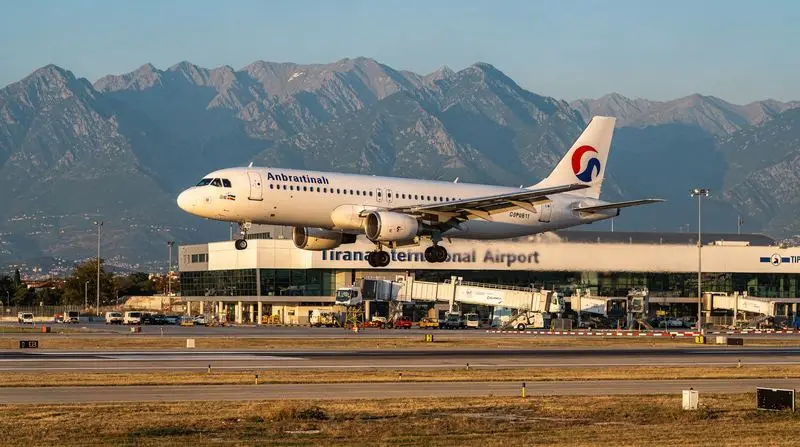
| Getting there | Tirana International Airport, then bus/shared taxi south |
| Best time | May–June or September–October |
Before You Go
Visas: Most EU, UK, US, Canadian, and Australian passport holders can enter Albania visa-free for up to 90 days.
Currency: Albanian Lek (ALL). EUR widely accepted. Current rate: approximately 1 EUR = 105 ALL.
SIM card: Buy an Albanian SIM at the airport (Vodafone AL and ALBtelecom have good coverage). Data is cheap — 10GB for around EUR 5.
Transport overview: Tirana to Berat is a 2-hour bus journey (400 lekë). Berat to Gjirokastra is approximately 2.5–3 hours by bus. Gjirokastra to Saranda is 1.5 hours by bus or shared taxi.
Day 1: Tirana — Arrival and First Impressions
Morning/Afternoon: Settle In and Explore Skanderbeg Square
Fly into Tirana International Airport and take a taxi or airport bus to your accommodation. Allow yourself the afternoon to get oriented. Tirana is a walking city at its core — most of the main sights are within 20–25 minutes on foot from Skanderbeg Square.
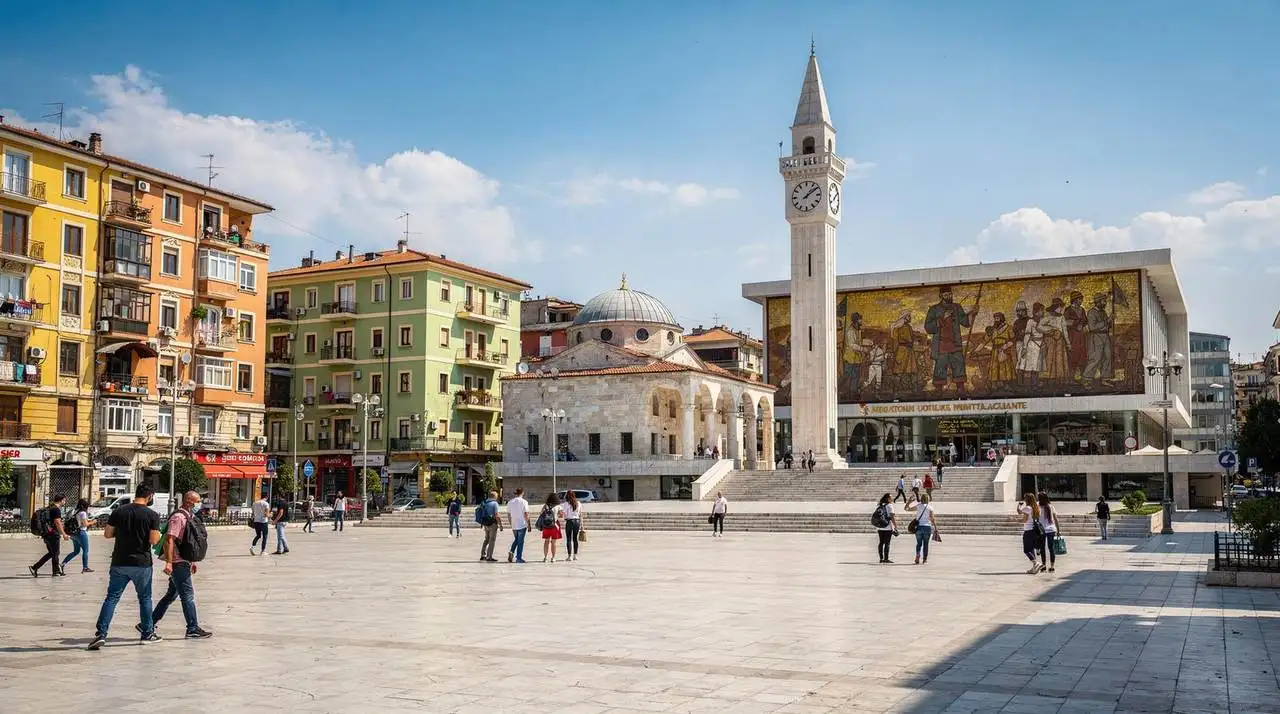
Start at the square itself: the equestrian Skanderbeg statue, the Et’hem Bey Mosque with its unusual naturalistic frescoes, the Clock Tower (climb it for EUR 2 for views over the square), and the grand facade of the National History Museum. From here, wander the pedestrian Rruga Myslym Shyri or walk through the Blloku neighbourhood — the former communist party enclave, now the city’s trendiest quarter packed with cafes and boutiques.
Take a guided Tirana walking tour on your first afternoon to get proper historical context — guides bring the communist era, the bunkers, the architecture, and the extraordinary 1991 transition vividly to life.
Evening: Blloku Dinner
The Blloku neighbourhood around Rruga Ismail Qemali offers excellent dining. Try Oda Restaurant for traditional Albanian cuisine (tave kosi, fërgësë, byrek) in a setting full of Ottoman-era antiques, or explore the many terrace restaurants along the pedestrian streets. A good dinner with house wine runs 1,500–2,500 lekë per person.
Day 2: Tirana Deep Dive
Morning: National History Museum and BunkArt 2
Spend the morning at the National History Museum (700 lekë entry, 2 hours) — arguably the best introduction to Albanian history anywhere, covering the Illyrian era through communism. The communist-era collection, including material on the Sigurimi secret police and the labour camps, is sobering and illuminating.
Walk to BunkArt 2 in the afternoon — the nuclear bunker museum beneath the former Ministry of Internal Affairs, documenting the history of communist surveillance and political terror. Even without a guide the exhibits are well explained in English; with a guide they become genuinely gripping.
Afternoon: Pazari i Ri and the Pyramid
Have lunch at Pazari i Ri (New Bazaar) — the beautifully restored covered market where you can build a meal from olives, cheese, fresh bread, and local pickles for a few hundred lekë. Then walk to the former Pyramid of Tirana, now converted into a youth cultural centre with its exterior open for climbing and free views over the city.
Join a Tirana food tour in the late afternoon — typically 3–4 hours, tasting byrek, petulla, traditional cheeses, homemade raki, and Tirana’s best street food with an expert local guide.
Evening: Early Night Before Berat Journey
Dine near your hotel and get an early night — the Berat bus leaves from Tirana’s southern bus terminal at around 7–8am. Book your accommodation in Berat for the following two nights.
Day 3: Berat — The City of a Thousand Windows
Morning: Travel to Berat and First Exploration
The bus from Tirana’s bus terminal to Berat takes approximately 2 hours and costs 400 lekë. Buses run several times daily; the first services depart early morning. For a day trip with transport included, book a guided Berat full-day tour from Tirana — though staying overnight in Berat is strongly recommended over a day trip.
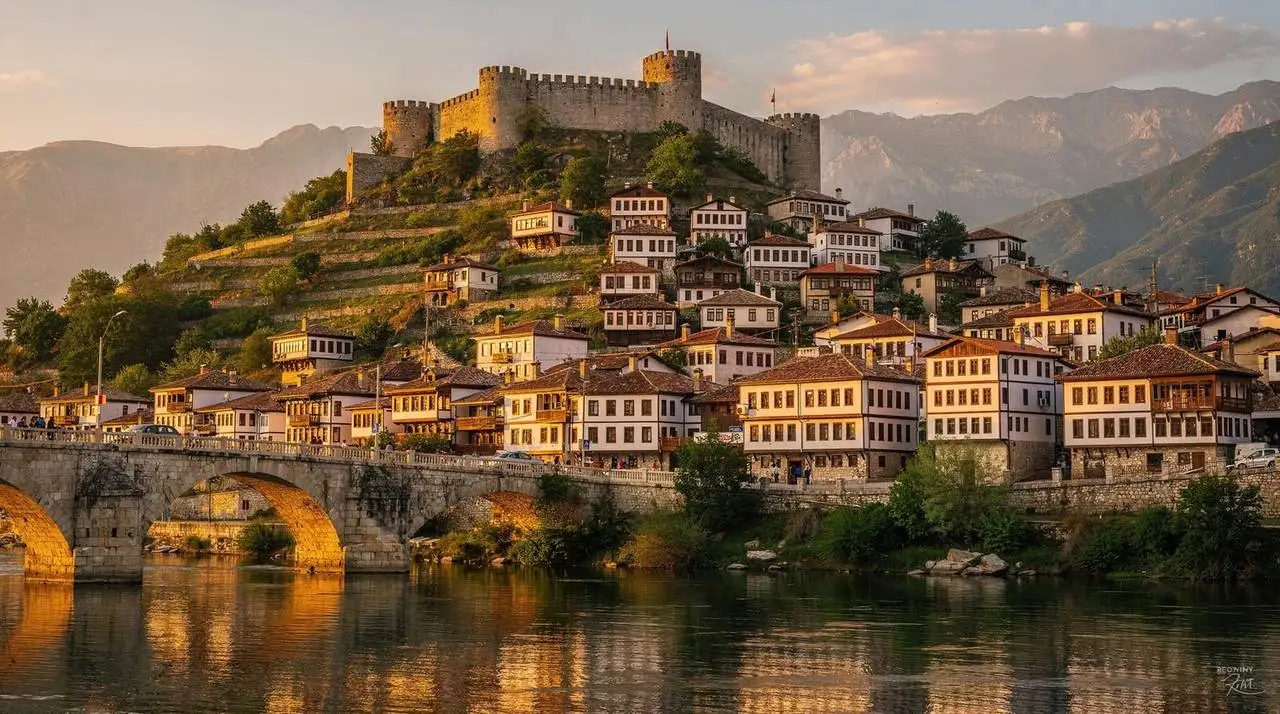
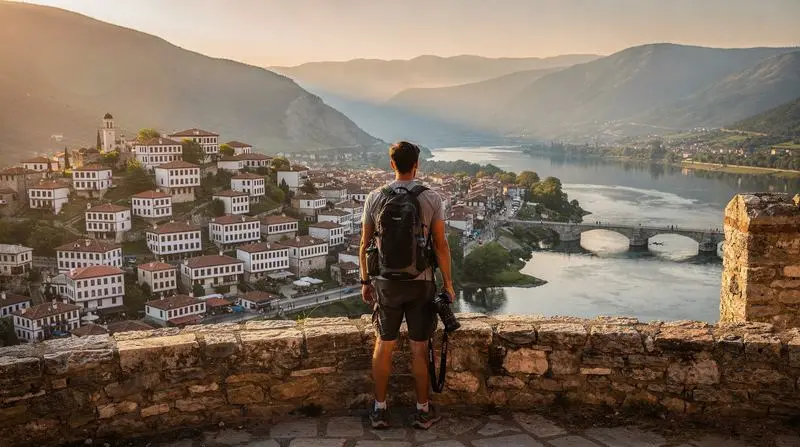
Berat is one of the most beautiful towns in the Balkans. The whitewashed Ottoman houses stacked up the hillside toward the castle — their large symmetrical windows giving the city its nickname, “the City of a Thousand Windows” — form a streetscape unlike anything else in Europe. UNESCO designated it a World Heritage Site in 2008.
Drop your bags at your accommodation (several good guesthouses in the Mangalem quarter, within the old town). Then walk through the cobblestone lanes of Mangalem, stopping at the beautifully carved wooden interiors of the old houses and the working hammam.
Afternoon: Kalaja Castle and the Onufri Museum
Walk up to Kalaja — Berat’s inhabited castle, one of the most extraordinary historical sites in Albania. Around 400 people still live within the castle walls, making it feel genuinely lived-in rather than museumified. Inside the castle walls you’ll find multiple Byzantine churches, a mosque, cisterns, towers, and residential houses draped in bougainvillea.
The Onufri Museum inside the Church of the Dormition of St Mary is the highlight of any Kalaja visit: it houses an extraordinary collection of 16th-century Byzantine icons painted by Onufri, an Albanian master considered one of the greatest Orthodox painters of his era. His use of a vivid red pigment — known as “Onufri red” — is technically remarkable and visually stunning. Entry to the museum complex is 400 lekë.
Evening: Gorica Quarter and Sunset
Cross the old stone bridge over the Osum River to the Gorica quarter — the historic Christian quarter on the east bank — and find a terrace from which to watch the sun set over the Mangalem houses. The reflected light on those thousand windows in the late afternoon is the most famous view in Berat. Several cafes on the Gorica side serve cold Korca beer and local wine at this hour. Dinner in Berat is inexpensive; guesthouses often serve exceptional home-cooked meals for 800–1,500 lekë.
Day 4: Gjirokastra — Albania’s Stone City
Morning: Travel to Gjirokastra
Bus from Berat to Gjirokastra takes 2.5–3 hours with a change in Fier or Tepelena; alternatively, take a shared taxi from Berat bus station (around 1,500–2,000 lekë, 2 hours direct). Gjirokastra is approximately 120 km south of Berat.
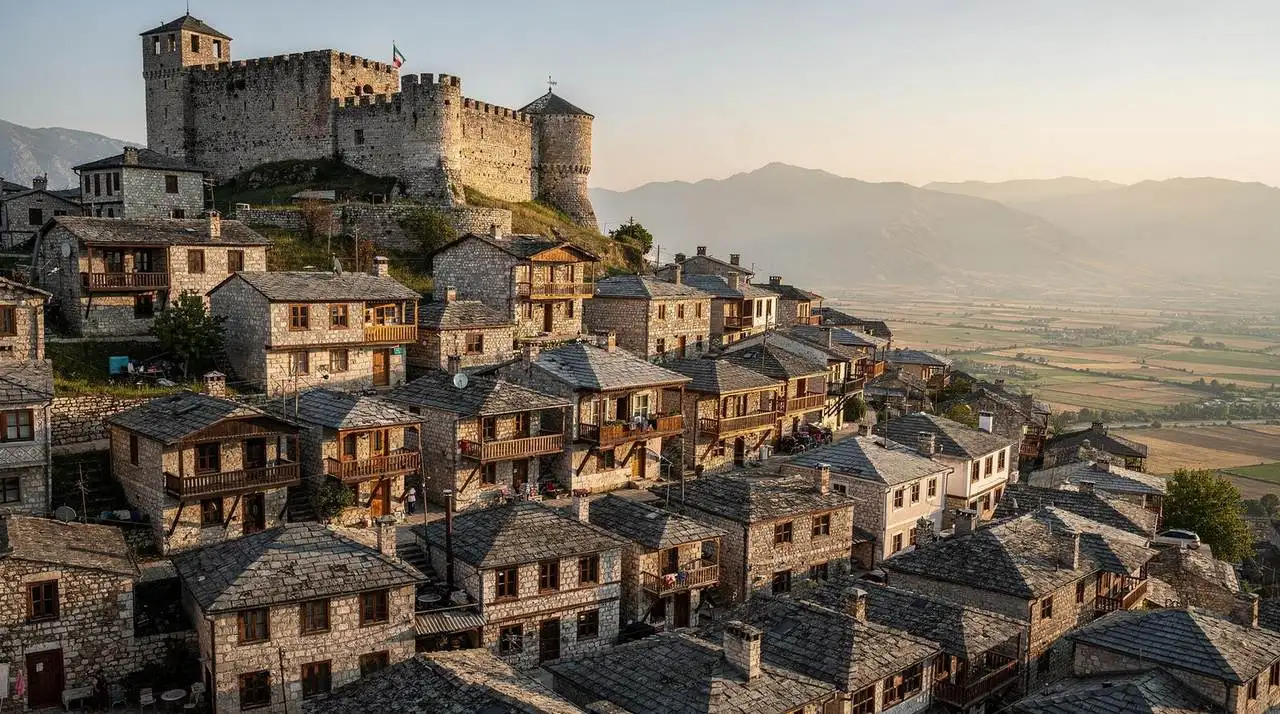
Gjirokastra shares UNESCO World Heritage status with Berat and is in some ways even more dramatic. Built from local grey stone on a steep hillside above the Drinos valley, it feels carved from the mountain itself — a fortress city of towers, slate roofs, and cobbled lanes that is simultaneously beautiful and slightly forbidding.
Afternoon: The Castle, Old Bazaar, and Enver Hoxha’s House
The Gjirokastra Castle dominates the city from its hilltop position. Inside: a collection of captured US and Soviet military hardware in the open courtyard (including a US Air Force T-33 jet), an ethnographic museum in the tower, and views across the valley that reach into Greece on a clear day. Entry 500 lekë.
Take a guided Gjirokastra city tour to properly understand the city’s layers — a guide who knows the neighbourhood families, the folklore, and the architectural history makes an enormous difference here.
The Old Bazaar (Çarshia e Vjetër) at the foot of the castle hill has been partially restored and contains craft workshops, small restaurants, and the beautiful 18th-century Bazaar Mosque. Novelist Ismail Kadare — Albania’s most famous writer — was born in Gjirokastra, and his childhood home is now a museum. The Zekate House — a spectacular 18th-century Ottoman-era tower house open to visitors — gives the best sense of how Gjirokastra’s wealthy families actually lived. Entry 300 lekë.
Evening: Gjirokastra Old Town at Night
The old town is atmospheric at night when most day visitors have left. Several restaurants in the bazaar and on the hillside serve good grilled meat and local wines; Antigoni Restaurant near the castle is reliable and has excellent views. A full dinner with wine: 1,500–2,500 lekë.
Day 5: Blue Eye Spring and Saranda
Morning: The Blue Eye of Albania
From Gjirokastra, take a shared taxi or local bus toward Saranda (1.5–2 hours) and ask to be dropped at the turning for Syri i Kaltër — the Blue Eye spring, 25 km east of Saranda. From the main road it’s a short walk through plane trees to the spring itself.
Book a half-day Blue Eye tour from Saranda to include transport and a guide — by far the easiest option.
The Blue Eye is one of the most visually extraordinary natural phenomena in Albania: a deep karst spring where water wells up from an unknown subterranean source, creating a vivid cobalt-blue disc fringed by turquoise and green. The water temperature is a constant 10°C year-round; swimming is possible near the edges (the central current is dangerously powerful). The setting — a clearing in ancient plane forest, the water perfectly clear, the blue impossibly saturated — is genuinely unforgettable.
Afternoon: Saranda Arrival and Butrint
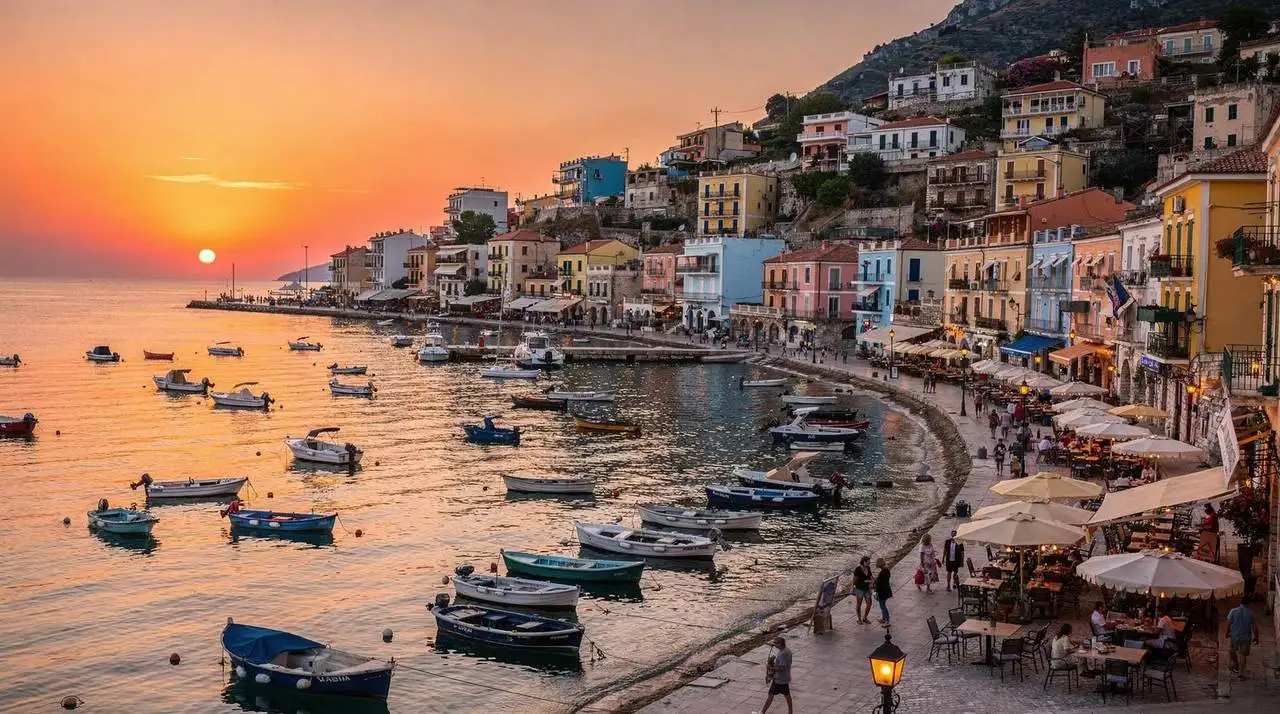
Continue to Saranda — Albania’s main Ionian resort town, pleasantly low-key by Mediterranean standards. Drop your bags, have lunch on the waterfront promenade (grilled fish with salad and local white wine: 1,200–1,800 lekë), and then take a taxi (600–800 lekë) or afternoon bus to Butrint — one of the most important archaeological sites in the Balkans, a UNESCO World Heritage Site since 1992.
Butrint is extraordinary: a compact peninsula site where Greek, Roman, Byzantine, and Venetian layers of occupation are visible within a 2 km walk through ancient forest. The theatre, baptistery mosaic, city walls, basilicas, and Venetian tower are all impressive; the setting on a wooded promontory between a lagoon and the sea is as beautiful as any ancient site in Greece. Entry 1,000 lekë; allow 2 hours.
Evening: Saranda Waterfront
Saranda’s waterfront comes alive in the evening. The promenade is lined with restaurants serving fresh Ionian seafood — sea bass, octopus, calamari, mussels — alongside Albanian staples. A relaxed seafood dinner with local wine on the waterfront is the perfect end to five days in Albania. Saranda also has an excellent selection of hotels at every price point, from hostels to proper beach hotels; the town faces west across the water toward Corfu, and the sunset from the promenade is striking.
Where to Stay
Tirana (2 nights): Hostel Freddy’s or Hostel Lili (budget), Hotel Kalemi 2 or The Square Hotel (mid-range), Padam Hotel (splurge).
Berat (1 night): Guesthouse Mangalem or Hotel Mangalemi (budget/mid-range, beautiful old town location), Hotel Berati (comfortable mid-range).
Gjirokastra (1 night): Guesthouse Kotoni (budget, stone house in the old town), Hotel Gjirokastra (mid-range), Stone City Hotel (comfortable, great views).
Saranda (1 night): Hostel Syri (budget), Hotel Porto Eda or Hotel Brilant (mid-range), Hairy Lemon or Hotel Butrinti (comfortable).
5-Day Albania Budget Summary
| Category | Budget | Mid-range | Comfortable |
|---|---|---|---|
| Accommodation (5 nights) | EUR 60–80 | EUR 175–250 | EUR 350–500 |
| Intercity transport | EUR 12–18 | EUR 20–35 | EUR 40–70 |
| Museum entries | EUR 18–22 | EUR 18–22 | EUR 18–22 |
| Food and drink (per day) | EUR 15–20 | EUR 30–45 | EUR 55–80 |
| Guided tours/activities | EUR 0–20 | EUR 50–90 | EUR 120–200 |
| Total 5 days | EUR 175–240 | EUR 390–560 | EUR 720–1,050 |
Prices per person. Budget assumes hostels, buses, and self-guided. Mid-range assumes guesthouses, some taxis, one or two tours. Comfortable assumes small hotels, taxis, and multiple guided experiences.
Practical Tips
Booking buses: Albania has no national bus booking system. For intercity routes, buses and furgons depart from designated stations; just show up and pay on the bus. Allow extra time, especially for the Berat-Gjirokastra leg which may require a change.
Carry cash: While card payment is increasingly common in Tirana, smaller towns still operate largely on cash. ATMs are available in Berat and Gjirokastra city centres.
Packed lunch for Butrint: Buy supplies in Saranda market before heading to Butrint — there is a cafe there but it is expensive and limited.
Blue Eye timing: Visit the Blue Eye in the morning before noon when tour buses arrive; the light is also better for photography in the morning. See our guide to getting to Albania for border crossing information if you’re planning to continue into Greece from Saranda.
Food allergies: Albanian cuisine uses a lot of dairy (fresh cheese, yoghurt, butter) and meat. Vegetarians can eat well by requesting vegetable byrek, salads, and bean dishes; vegans will find it harder outside Tirana. Nut allergies are less of a concern in Albanian cooking than in some other Mediterranean cuisines, but always confirm with the restaurant.
Photography: All the sites on this itinerary are photographically extraordinary. The best light in Berat is the 30 minutes before sunset from the Gorica side; in Gjirokastra, the morning light from the valley below the castle is best; the Blue Eye is most photogenic on overcast days when the colour of the water isn’t washed out by direct sun.
Albanian Food: What to Eat on Your 5-Day Trip
One of the unexpected pleasures of Albania is the food. Albanian cuisine sits at a fascinating intersection of Ottoman, Greek, Italian, and indigenous Balkan traditions, and uses exceptional local ingredients — fresh dairy from mountain farms, olive oil from ancient groves in the south, seasonal vegetables, and outstanding meat from animals raised on natural pasture.
Tave kosi: The national dish — lamb or chicken baked slowly in a yoghurt and egg sauce until the top caramelises and the meat is fall-apart tender. Served in the earthenware pot it’s cooked in. Every restaurant has its version; every region claims its version is best.
Fërgësë: A Tirana specialty — a baked casserole of roasted red peppers, tomatoes, and cottage cheese (gjize), often enriched with offal (liver or kidney) but available in vegetarian form. Served as a starter or light main with bread.
Byrek: The universal Albanian pastry — sheets of filo-style dough layered with fillings (cheese and egg, spinach and egg, meat) and baked until golden. Available from bakeries from early morning; the best byrek is eaten warm within minutes of coming out of the oven.
Sufllaqe: The Albanian version of doner kebab — grilled meat shaved from a rotating spit, wrapped in flatbread with yoghurt sauce, tomatoes, and onion. Albania’s most popular fast food; it’s better than it sounds and very cheap (200–400 lekë).
Qofte: Grilled minced meat patties, a staple of every Albanian grill restaurant. Made from a mixture of lamb and beef with herbs; served with bread, salad, and yoghurt. Simple and excellent.
Fresh fish: On the Ionian coast (Saranda, Ksamil) the fish is outstanding. Sea bass (levrek or peshk i detit) and sea bream (koce) are grilled whole over charcoal and served with lemon, olive oil, and salad. At a waterfront restaurant in Saranda, a whole grilled sea bass for two with bread and salad costs approximately 2,000–3,000 lekë.
Raki: The national spirit — grape or mulberry brandy, usually homemade, usually around 40–50% alcohol. It appears at almost every social occasion; refusing politely is fine, but accepting a small glass and sipping slowly is the correct social protocol. Commercial rakis are available; the ones made by guesthouse owners from their own fruit are usually better.
Albanian wine: An emerging wine industry producing interesting bottles from indigenous grape varieties. White wines from the Berat region (made from Trebicano grapes) are crisp and food-friendly. The Kallmet grape from the Shkodra region produces full-bodied reds. Look for bottles from Çobo Winery, Kantina Iliria, or Nurelli on restaurant wine lists.
Extending the Trip
The 5-day highlights itinerary is designed as either a standalone short trip or the beginning of a longer journey. Natural extensions include:
Add 2 days for the Albanian Riviera: From Saranda, take a bus or rental car north along the coast to Dhermi, Himara, and the Llogara Pass. Two days of beach-hopping and dramatic coastline driving adds the best of the Ionian coast to your trip. See the Albanian Riviera road trip itinerary for the detailed guide.
Add 3 days for Permet and the thermal baths: From Gjirokastra, detour east to Permet for the Benja Thermal Baths and the Vjosa River valley before continuing south. This adds one of Albania’s most beautiful natural experiences to the cultural circuit. See the southern cultural tour itinerary for the route.
Add 1 day for Korce: From Gjirokastra, travel northeast to Korce — Albania’s cultural capital, with the finest Byzantine art museum in the country and a pleasantly prosperous, un-touristy atmosphere. Works as an overnight before continuing to Saranda.
Add 5–7 days for the north: Return to Tirana from Saranda and head north to Shkodra, the Koman Lake ferry, Valbona, and Theth. The complete north Albania circuit adds one of Europe’s great mountain adventures to the cultural richness of the south. See the 10-day complete itinerary for the north-south combination.
Is 5 Days Enough for Albania’s Highlights?
Five days is genuinely enough to see and appreciate this specific route — Tirana, Berat, Gjirokastra, and Saranda are the four places most guidebooks and repeat visitors agree are essential, and this itinerary gives each one at least a full day rather than a rushed pass-through. Where five days feels tight is the transport: three of the four transfers (Tirana–Berat, Berat–Gjirokastra, Gjirokastra–Saranda) eat into sightseeing time, so the total “on the ground” time in each place is closer to a day and a half than two full days.
If your dates are flexible, six days rather than five buys meaningfully more breathing room, mostly by turning the rushed Berat-to-Gjirokastra transfer morning into a proper half-day in Berat first. If you’re fixed at five days, this itinerary’s order — Tirana first while you’re adjusting to the time zone and jet lag, the two UNESCO towns in the middle when you’re at your most alert, Saranda and the coast last as a wind-down — is deliberately the easiest sequence to manage.
What This Itinerary Skips (And Whether That’s a Problem)
Five days focused on the cultural south necessarily skips two of Albania’s other major draws: the Albanian Alps (Valbona, Theth, the Koman Lake ferry) and the wider Riviera beaches north of Saranda (Dhermi, Himara, Llogara). Neither omission is a mistake for a first five-day trip — the mountain crossing alone needs 2–3 days to do properly, and the Riviera rewards slower beach time that a five-day cultural circuit doesn’t have room for.
What you do get instead is arguably the strongest concentration of “must-see” sites reachable without a car in five days: two UNESCO towns, one of Europe’s most photographed natural springs, and a genuine ancient site (Butrint) that rivals anything in Greece. Travellers who finish this trip wanting more should look at the 7-day south itinerary for a slower version of the same region, or the 10-day complete itinerary to add the north.
Arriving Instead From the South (Greece Border)
Not every visitor flies into Tirana. If you’re arriving overland from Greece — via the Corfu ferry to Saranda, or a land border crossing further south — this itinerary works equally well run in reverse: Saranda and the Blue Eye first, then Gjirokastra, Berat, and finishing in Tirana for your onward flight. The transport logistics are identical either direction, and running the route backwards has the minor advantage of building toward the capital’s food and nightlife scene as a finale rather than a first-day introduction. Travellers connecting from Corfu should check current ferry schedules directly, since frequency drops noticeably outside the June–September season.
Packing for This Specific Route
Unlike a mountain-heavy itinerary, this five-day route needs relatively little specialist gear — no hiking boots or trekking poles required. Pack for warm days and cool old-town evenings: lightweight layers, comfortable walking shoes with good grip for the cobblestones of Berat and Gjirokastra (both towns are genuinely steep and uneven underfoot), a swimsuit for the Blue Eye and Saranda’s beaches, and something slightly smarter for Tirana’s better restaurants and Blloku’s evening scene. A universal power adapter and a portable battery pack are worth carrying, since guesthouse charging points in Berat and Gjirokastra’s old towns are sometimes limited to one socket per room. See the Albania packing list guide for a full seasonal breakdown if you’re combining this trip with other regions.