3 Days in Tirana: The Perfect City Break
Tirana surprises almost everyone who visits. Albania’s capital is an energetic, colour-soaked city that has undergone one of Europe’s most dramatic urban transformations over the past two decades — from a grey post-communist backwater to a genuinely exciting destination with great food, lively nightlife, world-class museums, and a walkable historic core that rewards slow exploration. Three days gives you enough time to feel the city’s rhythm, take two excellent day trips, and leave wanting more.
This itinerary is designed without a car. Everything on Day 1 and Day 3 is walkable or reachable by taxi for a few hundred lekë. Day 2 uses the Dajti cable car and a furgon (shared minibus) to Kruja. Budget travellers will find Tirana one of Europe’s most affordable capitals; even mid-range hotels and good restaurants rarely break the bank.
| Where | Tirana city centre, plus day trips to Dajti Mountain and Kruja |
| Cost | Around EUR 110–380 per person for 3 days (budget to mid-range) |
| Time needed | 3 full days, no car required |
| Getting there | Tirana International Airport (TIA), 17 km from the centre |
| Best time | April–June or September–October |
Practical Information
Getting to Tirana: Tirana International Airport Nënë Tereza (TIA) is about 17 km from the centre. Taxis cost around 2,500–3,000 lekë (EUR 24–28). An official airport bus runs to the city centre for 300 lekë. For more on arrivals, see our complete guide to getting to Albania.
Getting around: Central Tirana is compact and best explored on foot. Taxis are cheap — most city-centre rides cost 300–500 lekë (EUR 3–5). Download the Bolt app for reliable metered rides.
Currency: Albanian Lek (ALL). EUR is widely accepted in tourist areas. ATMs are plentiful around Skanderbeg Square.
Best time to visit: April–June and September–October offer mild weather and fewer crowds. July–August is hot (often 35°C+) but the city stays lively.
Day 1: The Heart of Tirana
Morning: Skanderbeg Square and the Museums
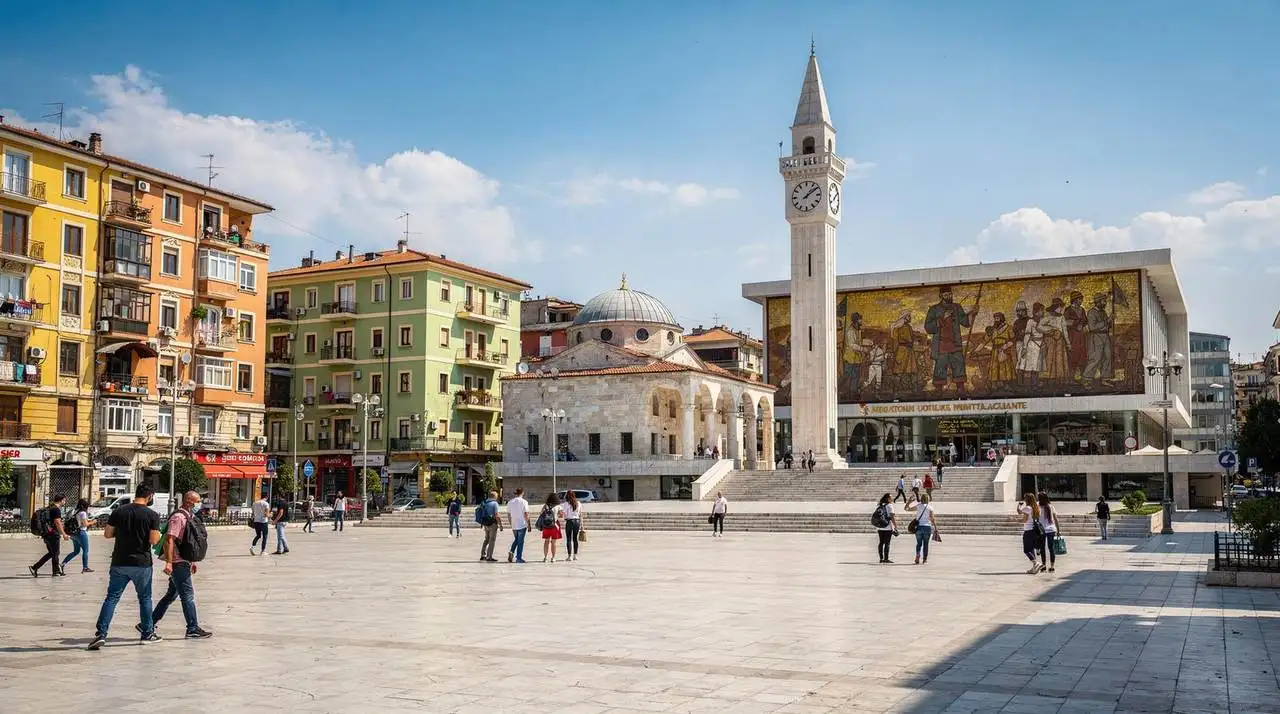
Start your Tirana experience at Skanderbeg Square — the vast, pedestrianised central plaza that anchors the city. Arrive around 9am when the light is good and the square is still relatively quiet. The equestrian statue of Gjergj Kastrioti Skanderbeg, Albania’s 15th-century national hero, stands at the centre; the Et’hem Bey Mosque (1821) and the Clock Tower flank the western edge. The mosque’s interior features unusually naturalistic frescoes of landscapes and trees — rare in Ottoman religious art — and is usually open to respectful visitors outside prayer times.
From the square, walk south to the National History Museum, which occupies the large socialist-era building with the famous mosaic mural on its facade. Allow two hours here: the collections cover Albanian history from Illyrian times through the communist period, and the exhibits on the Ottoman era and the National Awakening are genuinely illuminating. Entry costs 700 lekë (roughly EUR 6.50).
Next door, the National Art Gallery houses an extensive collection of Albanian painting from the 19th century through the communist-era Social Realist period. The socialist realist canvases are fascinating as historical documents — heroic factory workers, collectivised farmers, partisan fighters — and the gallery is often uncrowded.
Book a guided Tirana walking tour to get proper context for what you’re seeing — a good local guide makes the communist history and the city’s rapid transformation far more comprehensible and brings the neighbourhoods to life.
Afternoon: Blloku and the BunkArt 2
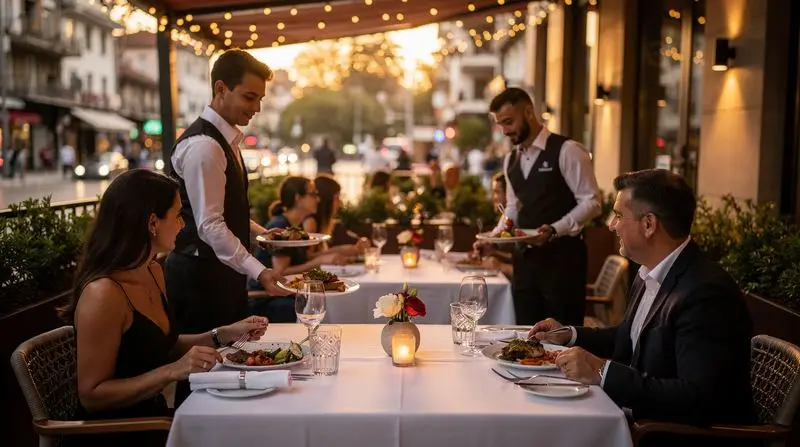
After the museums, walk fifteen minutes south to Blloku — the neighbourhood that was sealed off as a private enclave for communist party elites under Enver Hoxha and opened to the public only in 1991. Today it is the city’s trendiest quarter, full of cafes, restaurants, boutiques, and bars. Have lunch here at one of the many terrace restaurants — a plate of fërgësë (a traditional Tirana dish of peppers, tomatoes, and cottage cheese baked with offal, though vegetarian versions exist) with bread and a beer comes to around 800–1,000 lekë.
After lunch, don’t miss BunkArt 2, located in a nuclear bunker beneath the Ministry of Internal Affairs on Rruga Abdi Toptani, a short walk from Blloku. This smaller sibling to BunkArt 1 on Dajti Mountain documents the history of the communist secret police (the Sigurimi) through chilling multimedia exhibits. Entry 600 lekë; allow 90 minutes.
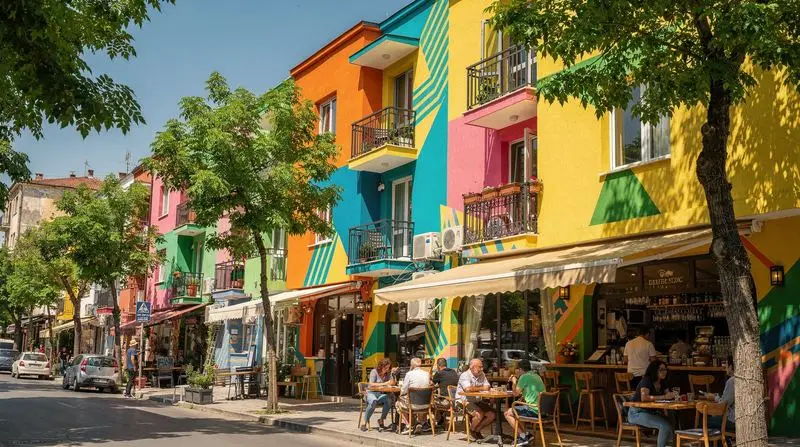
Spend the remainder of the afternoon wandering Blloku’s streets, browsing the vintage shops and independent boutiques on Rruga Ismail Qemali, and admiring the contrast between the communist-era apartment blocks and the brightly painted facades that former mayor Edi Rama commissioned in the 2000s to literally colour the city back to life.
Evening: Dinner and the Tirana Food Scene
Tirana’s dining scene has matured enormously in recent years. For your first evening, join a Tirana food tour to taste your way through the city’s best dishes — byrek (flaky pastry with cheese or spinach), tave kosi (lamb baked with eggs and yoghurt), petulla (Albanian doughnuts), raki, and more — with an expert guide who knows where locals actually eat.
If you prefer to dine independently, head to the stretch of restaurants along the artificial lake (Liqeni Artificial) north of the city centre, where several excellent spots serve grilled meats and fresh fish on pleasant terraces. The neighbourhood around Rruga Myslym Shyri is also packed with good options at every price point.
Day 1 estimated costs:
- National History Museum: 700 lekë
- National Art Gallery: 300 lekë
- BunkArt 2: 600 lekë
- Lunch: 800–1,200 lekë
- Food tour or dinner: 2,500–4,000 lekë (tour) or 1,200–2,000 lekë (independent)
Day 2: Dajti Mountain and Kruja
This day combines two of the best day trips from Tirana: a morning on Dajti Mountain via cable car, and an afternoon in Kruja. It’s a full day — start early.
Morning: Dajti Ekspres and BunkArt 1
The Dajti Ekspres cable car rises 1,613 metres above Tirana to the forested slopes of Mount Dajti, offering panoramic views over the capital and the plains stretching to the Adriatic. The lower station is in Farka, about 7 km east of the city centre — take a taxi (500–700 lekë) or catch the dedicated shuttle bus from near Skanderbeg Square.
Book a combined Dajti cable car and BunkArt 1 experience for the most efficient way to see both. BunkArt 1 — inside a massive nuclear bunker built to shelter the communist leadership in the event of attack — is one of the most extraordinary museums in the Balkans: 106 rooms documenting Albanian history and the paranoid militarism of the Hoxha era, with cold war artefacts, period rooms, and haunting exhibits about political imprisonment. Allow at least two hours.
Cable car return ticket: 800 lekë; BunkArt 1 entry: 800 lekë. There is a restaurant at the top of the cable car for lunch (1,000–1,500 lekë) with views over Tirana.
Afternoon: Kruja — Castle and Old Bazaar
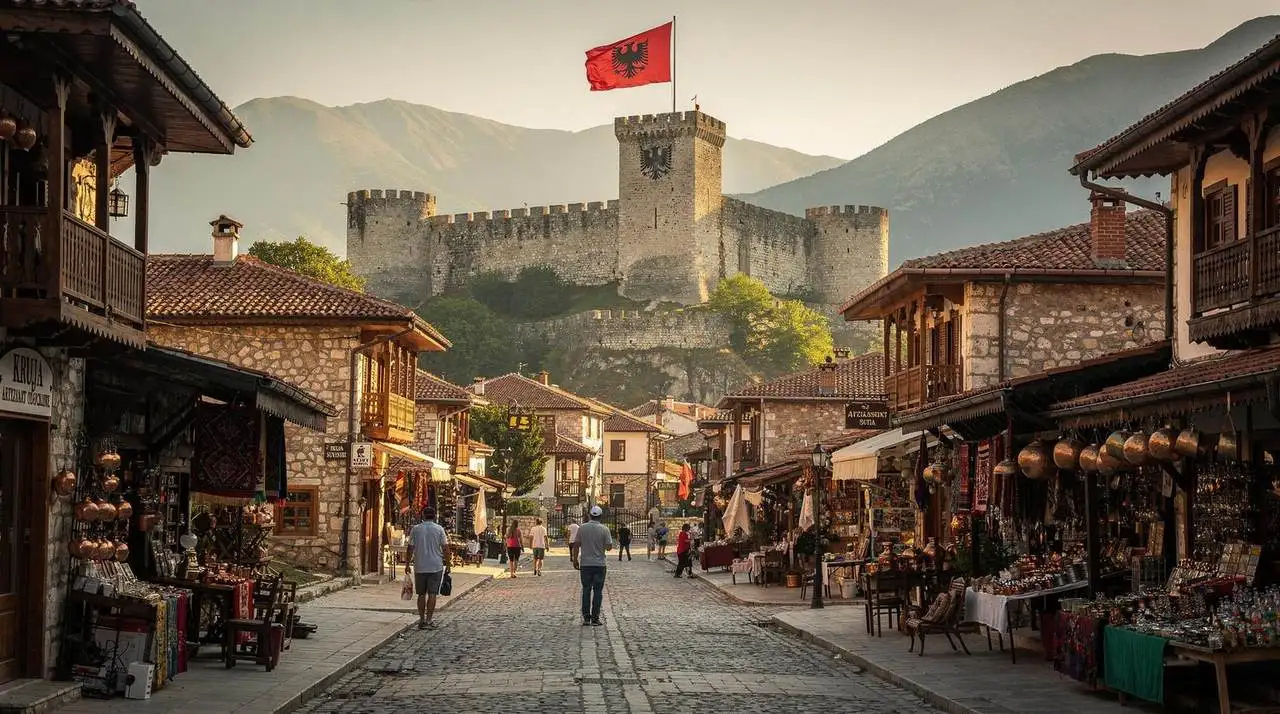
After returning from Dajti by early afternoon, head to Kruja — the fortress town 30 km north of Tirana where Skanderbeg held off the Ottoman army for decades in the 15th century. Furgons (shared minibuses) to Kruja depart from the minibus station near 5 Maji roundabout; the fare is about 200 lekë each way, and the journey takes 45–60 minutes depending on traffic.
Alternatively, join a guided day trip to Kruja which handles transport and includes a guide for the castle and museum — particularly useful for context on Skanderbeg’s resistance.
Kruja’s highlights: the Skanderbeg Museum inside the rebuilt castle (designed by Enver Hoxha’s daughter, architecturally interesting in itself), the Ethnographic Museum housed in an original Ottoman-era mansion with beautiful carved wooden ceilings, and the Old Bazaar (Çarshia e Vjetër) — one of the best-preserved Ottoman bazaars in Albania, where craftspeople still produce and sell traditional goods: copper, leather, antiques, and the famous Kruja kilims (hand-woven rugs).
Allow 2–3 hours in Kruja. The views from the castle over the plains below are excellent.
Evening: Back in Tirana
Return to Tirana by early evening. Tonight, explore the area around the artificial lake or try one of the rooftop bars in Blloku. The Sky Club and Radio Bar are popular with a mixed local-and-tourist crowd; a cocktail runs 600–900 lekë.
Day 2 estimated costs:
- Taxi to cable car station: 600 lekë
- Cable car return: 800 lekë
- BunkArt 1: 800 lekë
- Lunch on Dajti: 1,200 lekë
- Furgon to/from Kruja: 400 lekë (or guided tour ~3,000–4,000 lekë)
- Kruja museum: 400 lekë
- Dinner and drinks: 1,500–2,500 lekë
Day 3: Hidden Tirana and Departure
Morning: Pazari i Ri and the National Archaeological Museum
Day 3 focuses on sides of Tirana that visitors often miss. Start at Pazari i Ri (New Bazaar) — a beautifully restored covered market about ten minutes’ walk northeast of Skanderbeg Square. This is where Tirana shops: vendors sell fresh produce, olives, pickles, spices, nuts, dried fruit, and local cheeses under the elegant iron-and-glass market halls. Arrive around 8am to see it at its most vibrant; pick up a bag of local honey, some dried figs, or a jar of ajvar (roasted pepper paste) as an edible souvenir. Breakfast from a market vendor — byrek with cheese and a macchiato — costs around 200 lekë.
From Pazari i Ri, walk south to the National Archaeological Museum on Sheshi Nënë Tereza. Its collections of Illyrian and Greco-Roman artefacts from sites across Albania — including superb pieces from Butrint, Apollonia, and Dyrrachium (modern Durres) — are underrated and rarely crowded. The museum underwent significant renovation and is now well presented.
Afternoon: Tirana’s Street Art, Pyramid, and Departure Prep
Walk south along Rruga Ismail Qemali and through the old streets of Blloku, keeping your eyes open for the extraordinary street art that covers many of Tirana’s surfaces. The city has one of the densest concentrations of quality street murals in Europe, with international and Albanian artists contributing works across the centre.
The former Pyramid of Tirana — built by the communist government as a mausoleum for Enver Hoxha and later used as a NATO headquarters and concert venue — has been converted into a youth cultural centre (TUMO Tirana) and is now open for climbing up its exterior. The views from the top of the pyramid over the city are excellent and completely free.
Have a leisurely lunch in one of the cafes around Pazari i Ri or in the colourful streets south of Skanderbeg Square. Try taverna food — whole roasted lamb or goat, slow-cooked in traditional wood-fired ovens, is available at several spots.
If you have time before your departure, visit the House of Leaves museum on Rruga Ded Gjo Luli — a fascinating (and genuinely unsettling) museum dedicated to the communist surveillance state, housed in the building that served as the headquarters of the Sigurimi’s monitoring operations. It’s smaller than BunkArt 2 but more intimate; entry 500 lekë.
Evening: Farewell Dinner
For a final Tirana dinner, splurge slightly at one of the city’s better restaurants. Oda Restaurant near the National Theatre serves traditional Albanian cuisine in a setting decorated with antiques; Era Restaurant in the centre is an Tirana institution with excellent Albanian and Mediterranean dishes. Budget 2,000–3,500 lekë per person including wine for a sit-down meal.
Day 3 estimated costs:
- Market breakfast: 200 lekë
- Archaeological Museum: 500 lekë
- House of Leaves: 500 lekë
- Lunch: 800–1,200 lekë
- Farewell dinner: 2,000–3,500 lekë
Where to Stay in Tirana
Budget (under EUR 30/night): Freddy’s Hostel and Lili Hostel are both well-reviewed and centrally located. Expect dorms from EUR 12 and private rooms from EUR 25.
Mid-range (EUR 40–80/night): Hotel Kalemi 2, Hotel Mondial, and the boutique hotels along Rruga Ismail Qemali offer excellent value with central locations.
Splurge (EUR 100+/night): Tirana International Hotel (recently renovated), Padam Hotel on the boulevard, and the Sheraton Tirana are the top options for comfort and facilities.
For detailed accommodation advice, see our Tirana accommodation guide.
Tirana 3-Day Budget Summary
| Category | Budget traveller | Mid-range | Comfortable |
|---|---|---|---|
| Accommodation (3 nights) | EUR 36–45 | EUR 120–180 | EUR 250–350 |
| Museum entries | EUR 25 | EUR 25 | EUR 25 |
| Food and drink (per day) | EUR 15–20 | EUR 30–45 | EUR 50–80 |
| Local transport | EUR 8–10 | EUR 15–20 | EUR 25–35 |
| Guided tours/activities | EUR 0–15 | EUR 30–60 | EUR 80–150 |
| Total 3 days | EUR 110–150 | EUR 250–380 | EUR 480–720 |
Prices in EUR; 1 EUR is approximately 103–108 ALL. All figures are per person.
Tips for Your Tirana City Break
Dress code: Albania is a secular country and Tirana is relaxed about dress, but modest clothing is appropriate at the Et’hem Bey Mosque and the Orthodox churches.
Language: Albanian (Shqip) is the official language. English is widely spoken by younger Tiranans and anyone in the tourism or hospitality industry. Italian is also commonly understood.
Safety: Tirana is a safe city for tourists. The usual urban precautions apply — watch your pockets in crowded areas like Pazari i Ri — but crime against tourists is genuinely rare.
Tipping: Not obligatory but appreciated. Rounding up the bill or leaving 10% at restaurants is common.
Wi-Fi: Excellent and ubiquitous. Almost every cafe, restaurant, and hotel offers free Wi-Fi.
Raki: Albania’s national spirit (grape or mulberry brandy) is offered as a welcome drink at many restaurants and will appear at social occasions. It’s typically served straight at room temperature. Refusing is fine; accepting and sipping slowly is also fine.
For a longer Albania trip after your Tirana city break, consider extending with our 5-day Albania highlights itinerary or a cultural tour of southern Albania.
Tirana Neighbourhood Guide
Understanding Tirana’s neighbourhoods helps you navigate the city and choose where to eat, drink, and stay.
Skanderbeg Square and the Boulevard: The formal centre. The National History Museum, the Et’hem Bey Mosque, the Clock Tower, the National Art Gallery, and the main government buildings all sit along or near the grand central boulevard (Bulevardi Dëshmorët e Kombit). Tourist-oriented but essential; most city walks start here.
Blloku: South of the centre, between the Ring road and Rruga Sami Frashëri. This was the sealed communist party enclave; today it is Tirana’s most fashionable neighbourhood: boutiques, galleries, co-working spaces, cocktail bars, and the city’s best selection of restaurants. The streets between Rruga Ismail Qemali and Rruga Ibrahim Rugova are particularly good for browsing and eating.
Pazari i Ri area: Northeast of the centre, around the covered New Bazaar. This is one of Tirana’s oldest commercial areas and the most authentic for daily-life observation. The surrounding streets have become increasingly interesting, with independent restaurants and cafes colonising the ground floors of old buildings.
The Lake area (Liqeni Artificial): The artificial lake north of the centre, created in the communist era, is surrounded by parks and restaurants. Popular with families and couples in the evenings. Several of Tirana’s better fish and seafood restaurants are located here.
Kombinat: Further south, a neighbourhood of communist-era industrial architecture and working-class apartments. Less touristy but interesting for street art and a glimpse of un-gentrified Tirana.
Tirana Day Trips Beyond Dajti and Kruja
With three days in Tirana, you’re primarily in the city, but there are additional options if you’ve already seen Dajti and Kruja:
Durres: Albania’s largest port city, 35 km west of Tirana on the Adriatic coast. The Roman Amphitheatre of Durres (2nd century AD, the largest in the Balkans) and the Archaeological Museum are outstanding. There is also a long city beach — popular with Albanian families, slightly shabby but swimming is fine. Bus from Tirana: 30–40 minutes, 150 lekë. A comfortable half-day trip.
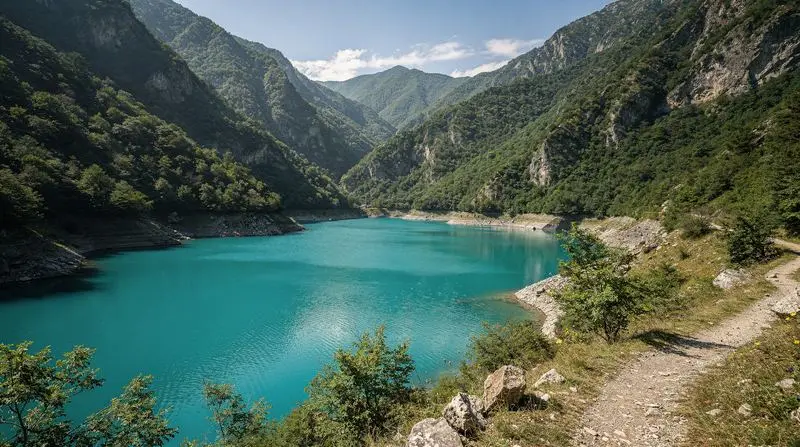
Bovilla Lake and Gamti Mountain: A beautiful reservoir in the mountains northeast of Tirana, surrounded by pine forest, with hiking trails to the Gamti Mountain viewpoint at 1,776 m. Take a shared taxi from Tirana (1,000–1,500 lekë to the trailhead) and walk back down. The trail is approximately 3 hours round trip; the views from the summit over the Bovilla reservoir and the Tirana plain are excellent.
Shpella e Pellumbasit: A prehistoric cave complex about 25 km southeast of Tirana, containing one of the most important archaeological sites in Albania — evidence of human occupation dating back 100,000 years. Now somewhat neglected but accessible and genuinely impressive. Combine with a walk in the surrounding river valley.
Where to Eat and Drink in Tirana: A Practical Guide
Breakfast: Albanians eat late. Before 9am, your options are the neighbourhood bakeries (furra) serving byrek from the moment they open — cheese, spinach, or meat filling in flaky pastry, eaten warm for 100–200 lekë — and the macchiato bars that appear on every corner. The macchiato (espresso with a splash of hot milk) is the Albanian national breakfast beverage.
Coffee culture: Albanian cafe culture is Mediterranean in character — long, slow, social. Most cafes serve Italian-style espresso drinks as well as traditional Turkish coffee. Sitting for two hours over one drink is entirely normal and never frowned upon.
Lunch: Tirana’s lunch scene is excellent and cheap. The Pazari i Ri market provides everything for a self-assembled meal; the surrounding streets have dozens of small restaurants serving daily specials. A two-course lunch with salad, a main dish, and bread runs 600–1,000 lekë at a good neighbourhood restaurant.
Street food: Albania’s street food scene is modest compared to southeast Asia or Turkey, but byrek is ubiquitous and excellent. The best bakeries rotate through multiple fillings; the spinach-and-egg version is particularly good. Look also for petulla (Albanian doughnuts, served with feta or honey), kackavall (fried cheese), and roasted corn on the cob from vendors near Skanderbeg Square.
Dinner: Tirana’s dinner scene has improved dramatically in the last decade. Beyond the traditional Albanian tavernas (excellent for tave kosi, fërgësë, and slow-cooked meats), there are now good Italian, Mediterranean, sushi, and even fusion restaurants. The Blloku neighbourhood has the highest concentration of quality options at every price point.
Bars and nightlife: Tirana’s bar scene is concentrated in Blloku. The city has a genuine late-night culture — bars don’t fill up until 11pm, and staying out until 3–4am is standard on weekends. The Radio Bar (rooftop, popular with a mixed crowd), the Sky Club (terrace above Blloku), and various smaller cocktail bars along Rruga Ismail Qemali are the current favourites. Drinks prices: a local Korca beer is 250–350 lekë; a cocktail 500–800 lekë.
Tirana’s best coffee shops: The city has a thriving specialty coffee scene. Mulliri i Vjeter in Blloku, Komiteti (a fascinating bar-museum full of communist memorabilia that also serves excellent coffee), and several newer third-wave coffee shops near the Pyramid have won loyal followings among Tirana’s growing professional class.
Adjusting This Itinerary: 2 Days or 4+ Days
If you only have 2 days, combine the essentials of Day 1 and Day 3: keep the National History Museum, BunkArt 2, and Blloku from Day 1, then add the Pyramid and Pazari i Ri from Day 3 as a single busy day, and use your second day entirely for either Dajti Mountain or Kruja — not both. Dajti is the easier half-day if your legs or schedule are tight; Kruja rewards a full afternoon and is harder to compress.
With 4 or more days, the natural additions are Durres (covered above as a half-day trip) and a proper full day in Kruja rather than a rushed afternoon, since the Skanderbeg Museum, Ethnographic Museum, and Old Bazaar genuinely reward unhurried browsing. Travellers extending beyond a city break should look at the 5-day Albania highlights itinerary, which uses Tirana as a springboard into Berat and the coast rather than a standalone destination.
Is 3 Days Enough for Tirana?
For most visitors, yes — three days covers the essential museums, Blloku, the street art, and both worthwhile day trips (Dajti and Kruja) without feeling rushed. Tirana itself is a compact city; the historic centre, Blloku, and Pazari i Ri are all within a 20-minute walk of each other, so you’re not losing hours to transit within the city the way you might in a larger European capital.
Where three days does feel tight is if you want to properly explore the neighbourhood restaurant scene, visit smaller museums like the House of Leaves and National Archaeological Museum without rushing, or add a second day trip beyond Dajti and Kruja. Digital nomads and slower travellers increasingly treat Tirana as a week-plus base — see the Tirana digital nomad guide if that’s more your pace. But as a focused city break, three days is the right amount of time, not a compromise.
Getting the Most Out of Blloku
Because Blloku features on every one of the three days in some form, it’s worth understanding its layout rather than just wandering. The neighbourhood is roughly bounded by Rruga Sami Frashëri to the north, the Ring road to the south, and Rruga Ibrahim Rugova to the east — a compact grid of maybe eight blocks that nonetheless contains a disproportionate share of Tirana’s best restaurants, bars, and boutiques. Rruga Ismail Qemali is the main artery for shopping and daytime cafe culture; the smaller side streets running off it hold most of the better dinner spots and are worth exploring without a fixed destination.
Blloku gets noticeably livelier as the day goes on: mornings are quiet and good for photography of the painted facades without crowds, early afternoon is when the boutiques and lunch terraces fill up, and after 9pm the neighbourhood shifts into its bar-and-restaurant peak. If you’re only passing through once, aim for early evening — you’ll catch both the golden-hour light on the buildings and the start of the dinner rush without the later, louder bar crowd. First-time visitors sometimes find Blloku’s transformation hard to square with its history as a sealed communist elite compound; a guided walking tour genuinely helps make that contrast legible rather than abstract.
For accommodation, staying inside or on the edge of Blloku puts you within walking distance of most of Day 1 and Day 3’s sights, at the cost of slightly higher noise from the nightlife on weekend evenings. Travellers who prefer quieter nights sometimes choose a hotel near Skanderbeg Square or the Lake area instead, accepting a ten-to-fifteen-minute walk or a short taxi ride into Blloku for dinner. Either choice works well for a three-day stay; see the Tirana accommodation guide for a fuller neighbourhood-by-neighbourhood breakdown.