The Albanian Side of Lake Ohrid: A Complete Guide
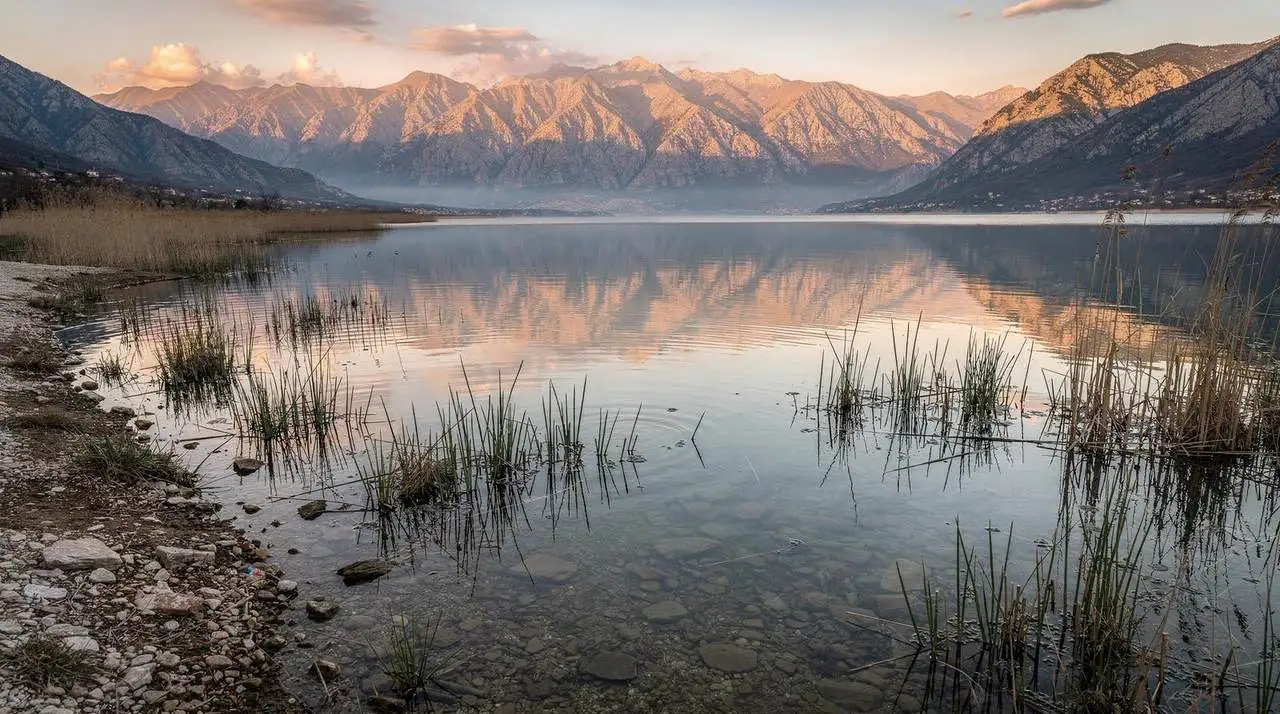
Lake Ohrid is one of the world’s ancient lakes — estimated to be between 2 and 5 million years old — and one of the most beautiful bodies of water in Europe. Its extraordinary depth (maximum 289 metres), exceptional clarity, and age have produced an ecosystem of endemic species found nowhere else on earth, earning it UNESCO World Heritage status shared between Albania and North Macedonia in 2019.
The North Macedonian side of the lake — with the city of Ohrid, the Church of St John at Kaneo, the Samuel’s Fortress, and an established tourist infrastructure — is well known internationally. The Albanian side, stretching approximately 30 kilometres along the western and southwestern shore from the town of Pogradec north toward the border, is far less visited, almost entirely undeveloped by comparison, and arguably more beautiful in its quieter, wilder way.
The Albanian shore has no medieval monasteries as famous as Sveti Naum, no restaurants as polished as Ohrid’s tourist strip, and no organised water sport hire businesses on every beach. What it has is the same extraordinary lake — brilliant blue, impossibly clear, mountain-ringed — without the crowds, with the specific pleasures of the Lin peninsula’s ancient ruins and Byzantine mosaics, the extraordinary Drilon springs, the fish restaurants of Pogradec, and the particular quality of travelling somewhere genuinely undiscovered.
| Where | Pogradec to the North Macedonian border, 30km of shore |
| Time needed | Full day from Pogradec, or a long day tour from Tirana |
| Getting there | 2.5-3hrs from Tirana by car; around 3hrs by bus |
| Cost | Koran trout meal EUR 8-14; Drilon boat hire modest |
| Best time | June-September for swimming; May/Sept for quieter visits |
Pogradec: The Lake Town
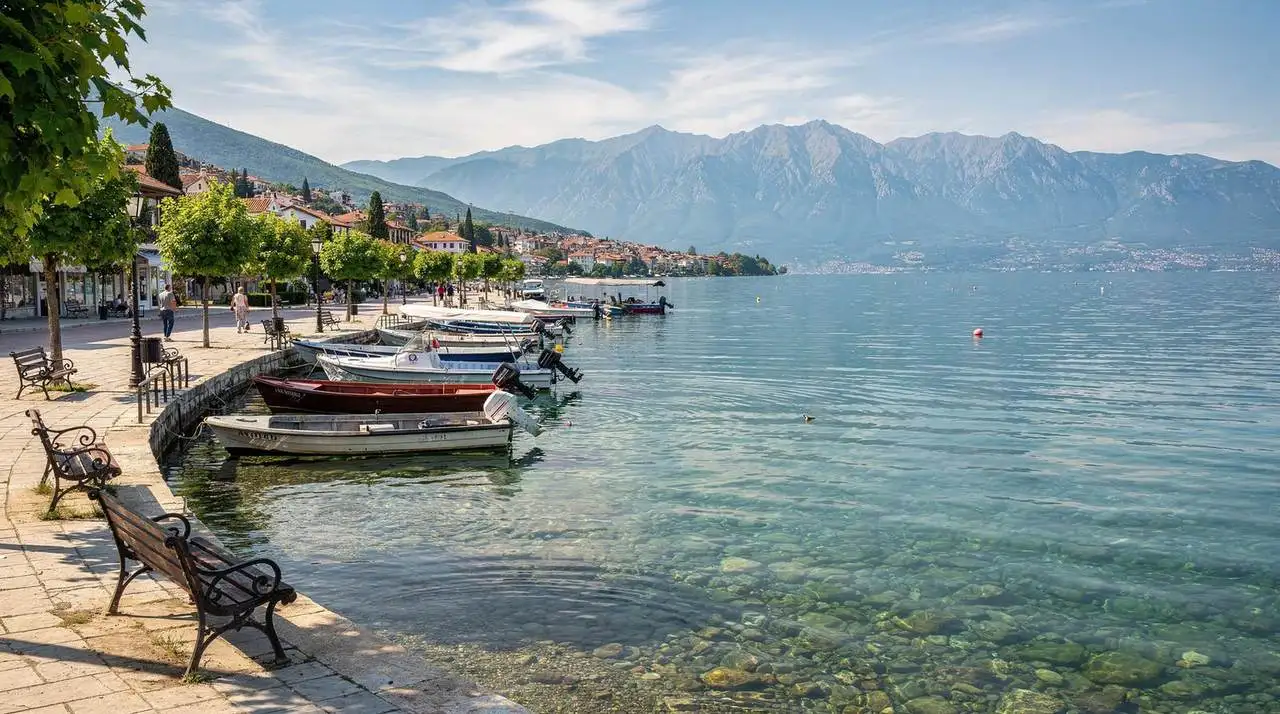
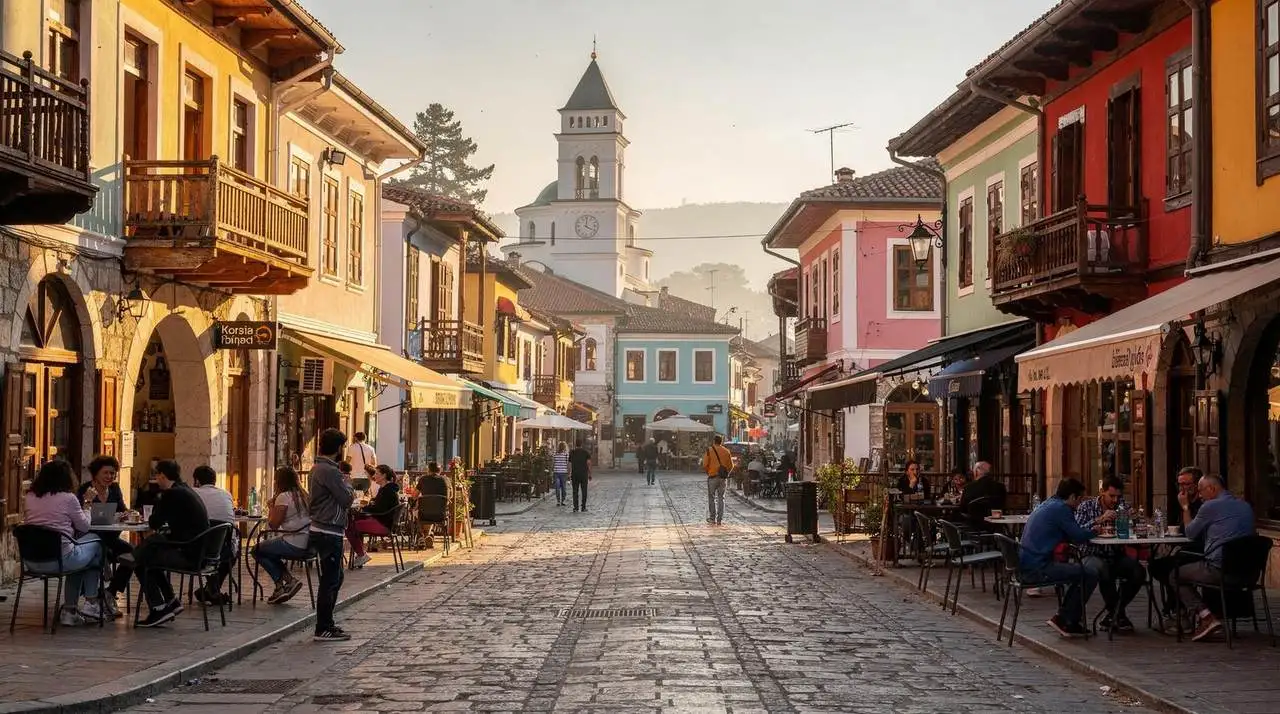
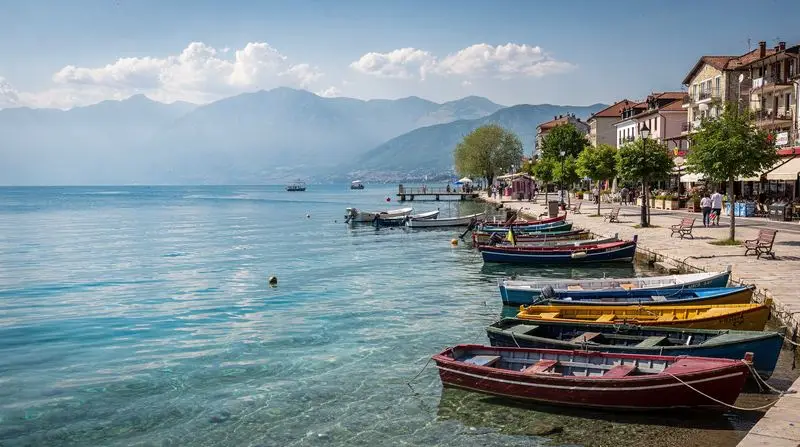
Pogradec is the main urban centre on the Albanian shore — a town of approximately 20,000 people sitting directly on the lake at its southwestern corner. It is not a show-stopper of a city in the way that North Macedonia’s Ohrid is, but it has the pleasures of a real Albanian lake town: a functioning market, good fish restaurants, a lakeside promenade, and the daily life of a community that has lived by the lake for centuries.
The promenade along the Pogradec waterfront is the evening social centre. Cafes line the shore path with tables looking out over the water; in summer the light on the lake in the evening — the low sun illuminating the water and the North Macedonian mountains beyond — creates scenes of remarkable beauty from simple cafe seating.
Koran trout: Pogradec is famous throughout Albania for the koran — the Ohrid trout (Salmo letnica), an endemic species found only in the Ohrid-Prespa lake system. The koran has a distinctive flavour compared to river trout, reflecting its feeding environment in the deep, cold lake waters. Every fish restaurant in Pogradec serves it, and eating koran in Pogradec — grilled whole, simply dressed with local olive oil and lemon — is one of the essential food experiences of eastern Albania.
Fish restaurants: The lakefront area has a cluster of fish restaurants ranging from simple tavernas to more elaborate establishments. The quality is consistently good because the supply chain is short: the fish arrive daily from the lake. A plate of koran trout with salad and local wine at a Pogradec lakefront table is an experience that combines fresh food, excellent wine (the Korca-region wines are the local house wines here), and an extraordinary view into a single sitting.
For a guided day trip from Tirana that takes in Pogradec and the key lake shore stops: this day tour from Tirana covers Lake Ohrid, Drilon, Lin, and Pogradec comprehensively. It is the most practical option for visitors from Tirana without cars who want to see the full Albanian lake shore in a single day.
The Lin Peninsula
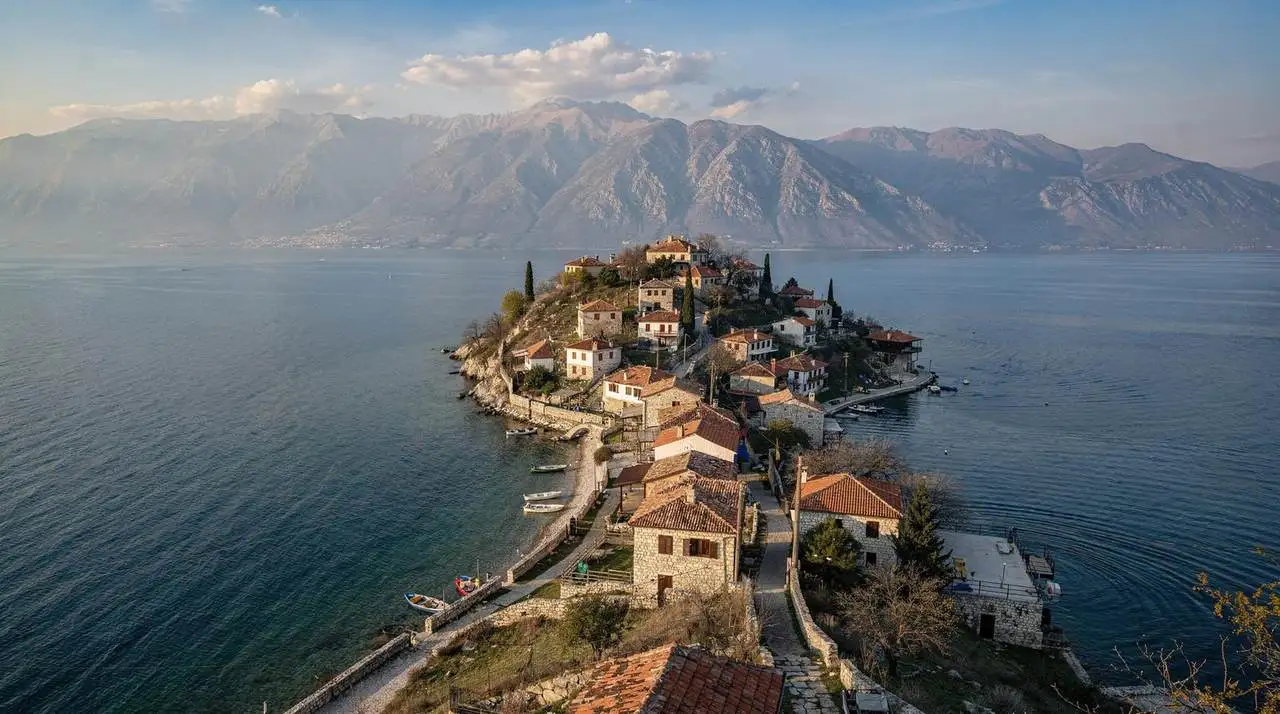
Roughly 20 kilometres north of Pogradec on the lake shore road, the Lin peninsula juts north into the lake, surrounded by water on three sides and connected to the mainland by a narrow neck. It is one of the most dramatically positioned settlements in Albania and holds one of the most important archaeological sites on the Albanian shore.
The peninsula was inhabited by neolithic lake-dwelling communities 8,500 years ago — palafite (pile dwelling) ruins in the shallow waters around the shore document one of the oldest known human settlements in the Albanian Balkans. An early Christian basilica within the village preserves mosaic floors of considerable quality and age, dated to the 5th or 6th century CE.
Beyond the archaeology, the Lin peninsula offers lake views of extraordinary scope. Standing at the tip of the peninsula with water on three sides and the full breadth of Lake Ohrid visible in all directions — 30 kilometres of deep blue framed by mountains on every side — is one of the finest panoramic experiences in Albanian travel.
Our comprehensive Lin village guide covers the archaeology, the mosaics, and the practical visit details in full. Allow 2-4 hours for a comfortable Lin visit as part of a lake shore day trip.
Tushemisht Village
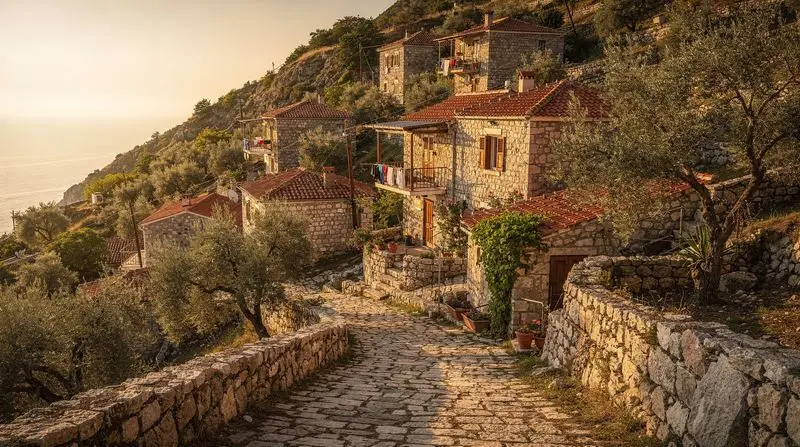
The village of Tushemisht sits between Pogradec and Lin on the lake shore, overlooking the water from a slightly elevated position. It is a small village without specific major monuments, but its character — stone houses, fishing boats on the shore, agricultural land running to the water — represents the traditional lake shore village life that has shaped this coastline for centuries.
The beach at Tushemisht is one of the better swimming spots on the Albanian shore: pebble beach with clear, deep water immediately offshore and the kind of gradual entry that makes it suitable for all ages. In summer the beach is used by local Albanian families but never reaches the crowds of the Riviera; the remote eastern Albania location keeps visitor numbers manageable.
The village cafe is a simple establishment serving coffee, cold drinks, and basic food. In season, someone usually sells fresh lake fish directly from the boats. This is not a restaurant in the formal sense — more an informal arrangement where freshness is guaranteed because the fish was in the lake that morning.
Drilon Natural Reserve
Near the village of Tushemisht and close to the North Macedonian border crossing, the Drilon Natural Reserve is one of the most visually extraordinary places on the Albanian lake shore. The Drilon springs emerge from underground at the lake shore — the surfacing of water that has filtered underground from Lake Prespa through the karst geology connecting the two lakes.
The springs create a series of pools, channels, and small waterways in a landscape of extraordinary lushness: the constant water supply supports vegetation of tropical density compared to the dry Mediterranean hillsides surrounding it. Large plane trees, weeping willows, and various water plants grow in profusion around the spring channels. The water itself — emerging from underground at constant temperature, crystal clear — flows through the reserve in multiple channels before entering the lake.
The Drilon area has been developed as a day-visit destination with a restaurant and boat hire. The boats available for hire — small rowing boats that can be taken through the spring channels — provide one of the most pleasant gentle activities on the Albanian lake shore. Rowing slowly through the spring-fed channels under the plane tree canopy, with the lake visible ahead and the Macedonian mountains beyond, is an experience that sounds simple and proves to be perfect.
The restaurant at Drilon serves koran trout and other lake fish in an extraordinary setting — tables beside the spring channels, the water emerging visibly around you. It is not the most sophisticated Albanian restaurant, but the combination of fresh fish and this setting makes a meal here memorable.
Swimming in Lake Ohrid
Lake Ohrid is one of the finest swimming lakes in the Balkans. The water is exceptionally clear — visibility of 20 metres or more in the deeper sections — cold even in summer (surface temperature reaches 20-23°C in July-August), and clean. The combination of depth, clarity, and the absence of algal blooms or pollution that affect many European lakes makes it a genuinely outstanding swimming destination.
The best swimming spots on the Albanian shore:
Tushemisht beach: Pebble beach with clear water and good depth close to shore. Suitable for all abilities.
Lin peninsula shores: Multiple access points around the peninsula, with particularly clear water on the western side. Rocky entry points — water shoes helpful.
Drilon area: Swimming from the shore near the spring reserve is possible and the spring-chilled water makes for bracing entry at the lake edge.
Pogradec beach: The beach in Pogradec town has been improved and provides a convenient swimming access near all the town’s facilities.
Water temperatures peak in late July and August when the surface warms to 22-23°C. Earlier in the season (May-June) the water is cold — 14-18°C — but very clear. By September the temperature is dropping but swimming is still comfortable for acclimatised swimmers.
The Lake Ohrid Ecosystem and UNESCO Status
Lake Ohrid received UNESCO World Heritage status in 2019 for its natural heritage — the lake system’s extraordinary biological diversity and its status as one of the world’s oldest lakes. The Albanian side of the lake is covered by this designation equally with the Macedonian side.
The lake’s endemic species include the koran trout (Salmo letnica), the Ohrid eel (which migrates from the Atlantic to spawn in the lake), multiple endemic invertebrate species, and the Ohrid sponge (Ochridospongilla) — a freshwater sponge found nowhere else in the world. The combination of great age, isolation, and ecological stability has produced an endemic species assemblage of genuine scientific importance.
The UNESCO designation carries conservation obligations that both Albania and North Macedonia are gradually implementing. The restrictions on development along the lake shore, the fishing quotas that protect the endemic species, and the limitations on motorised boat access in sensitive areas are all consequences of the designation. For visitors, the practical effect is that the lake is genuinely protected and its clarity and quality are likely to be maintained.
Getting to the Albanian Shore of Lake Ohrid
The Albanian shore is reached via Pogradec, approximately 150 kilometres east of Tirana.
By car from Tirana: The drive via Elbasan and the mountain pass takes approximately 2.5-3 hours. Our car rental Albania guide covers the route options and vehicle recommendations for eastern Albania travel.
By bus from Tirana: Regular buses run from Tirana to Pogradec, taking approximately 3 hours. From Pogradec, the lake shore road north is accessible by taxi.
Day tour from Tirana: This organised day tour from Tirana covers the lake shore comprehensively, including Lin, Drilon, and Pogradec with transport. The most practical option for car-free visitors.
From Korca: Korca is approximately 55 kilometres south of Pogradec, connected by a good road through the Devolli valley. The drive takes about 60-70 minutes. Korca makes the natural base for an eastern Albania circuit combining city culture with lake visits.
A Day Itinerary for the Albanian Shore
The Albanian shore of Lake Ohrid can be covered comfortably in a full day from Pogradec or in a very long day from Tirana with an organised tour:
Morning (9-11am): Arrive Pogradec. Walk the lakeside promenade, coffee at a waterfront cafe, browse the market. Arrange a taxi for the lake shore drive if not self-driving.
Late morning (11am-1pm): Drive north on the lake shore road. Stop at Tushemisht for the beach and village atmosphere. Continue to Lin for the peninsula, the lake view, and the mosaics (allow 90 minutes minimum).
Lunch (1-3pm): Return to Pogradec or stop at Tushemisht for fresh fish. The koran trout at a Pogradec lakefront restaurant is the ideal lake shore lunch.
Afternoon (3-6pm): Drive to Drilon Natural Reserve for the spring channels and rowing boats. Allow 2 hours minimum — the boat experience through the spring channels should not be rushed.
Evening (6-8pm): Return to Pogradec for the evening promenade and a final coffee or beer on the waterfront as the light changes on the lake. Drive back to base or overnight in Pogradec.
Combining with North Macedonia’s Ohrid
The North Macedonian city of Ohrid — with its famous medieval churches, hilltop fortress, and developed restaurant and accommodation scene — is accessible from the Albanian shore via the border crossing at Sveti Naum (seasonal) or via the main border at Lin-Cafare. For visitors with time, combining the Albanian and Macedonian shores of the same lake provides a remarkable comparison: the undeveloped, quieter Albanian side against the more historically rich and better-resourced Macedonian side.
The Albania off the beaten path guide covers the eastern Albania-North Macedonia circuit in detail, explaining how to combine Korca, the Albanian lake shore, and the Ohrid-North Macedonia section into a coherent 3-4 day eastern journey.
The Pogradec Food Scene: Koran and Beyond
Pogradec’s restaurant identity is inseparable from the lake, and specifically from the koran trout that is the city’s most celebrated culinary product. But the broader food scene in Pogradec rewards exploration beyond the headline fish.
Lake fish variety: Beyond koran, Pogradec restaurants serve carp (krap) from the lake system — either baked in clay pot preparations similar to the Shkodra tradition or simply grilled. Freshwater eel, when available, is a traditional Pogradec delicacy. Ask what the restaurant has fresh that day; the answer reflects the morning market supply better than any fixed menu.
The Albanian food context: Pogradec’s position between Korca (eastern Albanian highland cooking) and Tirana (the standard reference point) means the restaurants here draw from both culinary traditions. The eastern Albanian dairy products — the highland cheeses and yogurts — appear at Pogradec tables in their finest form, fresh from the plateau farms. The eastern Albanian wine from the Korca region appears as house wine.
Market shopping: The Pogradec daily market sells lake fish, fresh produce from the surrounding farms, and the local honey and preserved goods that make Albanian markets rewarding for food shopping. The market is at its most active in the morning; arrive before 9am for the freshest fish selection.
Budget eating: Pogradec is very affordable. A full koran trout meal with salad, bread, and local wine costs EUR 8-14 per person at most lake shore restaurants. Budget eating at the market stalls and byrek shops costs EUR 2-4 per meal. The overall food budget in Pogradec is lower than in Tirana and substantially lower than coastal resort destinations.
Practical Information
Accommodation: Pogradec has the widest range of lake shore accommodation, from budget guesthouses to mid-range hotels. Several guesthouses in Tushemisht offer lake-view rooms with direct beach access.
Currency: Albanian lek throughout. ATMs in Pogradec; cash-only in the lake shore villages.
Language: English is limited in the lake shore villages; Albanian is essential. Translation apps are adequate for navigation and simple communication.
Mobile data: Coverage along the lake shore road is variable. Download offline maps before leaving Pogradec.
Photography: Early morning light on the lake (7-9am) is extraordinary. The golden hour before sunset is the best time for landscape photography from the Lin peninsula. The Drilon spring channels photograph well at midday when the light penetrates the tree canopy.
Photography and the Best Light on the Lake
The Albanian shore’s relative emptiness makes it particularly rewarding for photography, since popular vantage points rarely have more than a handful of other visitors even in peak season. The photography spots in Albania guide and photography tips guide cover general technique and locations, but for this stretch of coast specifically: shoot the Lin peninsula at golden hour for the best separation between the lake, the mountains, and the mosaics site, and visit Drilon around midday when overhead light penetrates the plane tree canopy most effectively over the spring channels.
Pairing Lake Ohrid with Korca and the Eastern Circuit
Pogradec sits close enough to Korca — about 55 kilometres and 60-70 minutes by road — that the two make a natural pair for anyone exploring eastern Albania beyond the capital. The Korca city guide covers the museum, brewery, and old bazaar that complement a lake shore day, and the Albania off the beaten path guide sets out a full 3-4 day eastern circuit combining Korca, the lake, and the crossing into North Macedonia’s Ohrid for those with time to see both shores.
For travellers without a car, day tours from Tirana are the most practical way to see the Albanian shore in a single trip, but they necessarily move fast. Staying at least one night in Pogradec allows a slower pace — an evening promenade, a proper sit-down koran trout dinner, and a full morning at Drilon and Lin without the pressure of a return coach schedule. The where to stay budget guide covers accommodation options applicable to Pogradec.
Wildlife and Birdwatching on the Albanian Shore
Beyond the endemic lake species, the reed beds and quieter coves along the Albanian shore attract herons, cormorants, and seasonal waterfowl, particularly around the Drilon springs where the constant water flow supports a richer margin habitat than the open lake shore. Serious birders combining Lake Ohrid with Lake Prespa — a short drive further east and one of Albania’s most important sites for the endangered Dalmatian pelican — will find the birdwatching in Albania guide useful for planning a combined visit, since the two lake systems are often covered together by birding tour operators.
Frequently Asked Questions About the Albanian Side of Lake Ohrid
Is the Albanian side of Lake Ohrid worth visiting if you have already seen Ohrid in North Macedonia?
Yes — the Albanian side offers a completely different experience. Where North Macedonia’s Ohrid is polished, tourist-developed, and rich in well-preserved medieval architecture, the Albanian shore is wilder, quieter, and less manicured. The Lin peninsula’s archaeological layers (8,500-year-old lake settlements, 5th-century Christian mosaics) are not replicated on the Macedonian side. The Drilon springs are extraordinary. And the koran trout in Pogradec is the same fish that Ohrid restaurants serve but fresher and cheaper. Both shores are worth experiencing.
What is the koran trout and why is it famous?
The koran (Salmo letnica) is an endemic species of trout found only in the Ohrid-Prespa lake system. It has a distinctive flavour compared to standard river trout, reflecting its specialised feeding environment in the deep, clear lake. The fish is considered a delicacy throughout Albania and North Macedonia. The best place to eat koran is Pogradec, where the supply is fresh and the price is very reasonable. It is one of the most distinctive regional food experiences in eastern Albania.
How long does it take to drive the Albanian shore of Lake Ohrid?
From Pogradec north to the Drilon springs near the North Macedonian border takes approximately 40-50 minutes by car without stops. With stops at Tushemisht, Lin, and Drilon, allow 4-5 hours for a comfortable visit. The shore road is paved throughout and in good condition; some sections along the hillside are narrow and require care when meeting oncoming traffic.
Is swimming safe in Lake Ohrid on the Albanian side?
Yes — Lake Ohrid’s water quality is exceptional and swimming is safe throughout the Albanian shore. The lake is very clear, with no significant pollution on the Albanian side. The water is cold even in summer (20-23°C at peak in late July-August). Rocky entry points at some locations make water shoes useful. The beaches at Tushemisht and near Pogradec have the gentlest entry; the Lin peninsula shores require more care on the rocks.
Can you cross from the Albanian side of Lake Ohrid into North Macedonia?
Yes — the main border crossing between Albania and North Macedonia in this area operates year-round (at Kafasan, on the road from Pogradec toward Struga). A seasonal crossing at Sveti Naum may also be available. Both Albanian and EU citizens cross freely; check current visa requirements if travelling on a third-country passport. The crossing gives direct access to the Macedonian lakeside road and the city of Ohrid about 30 kilometres north.