Lin: The Ancient Peninsula on Lake Ohrid
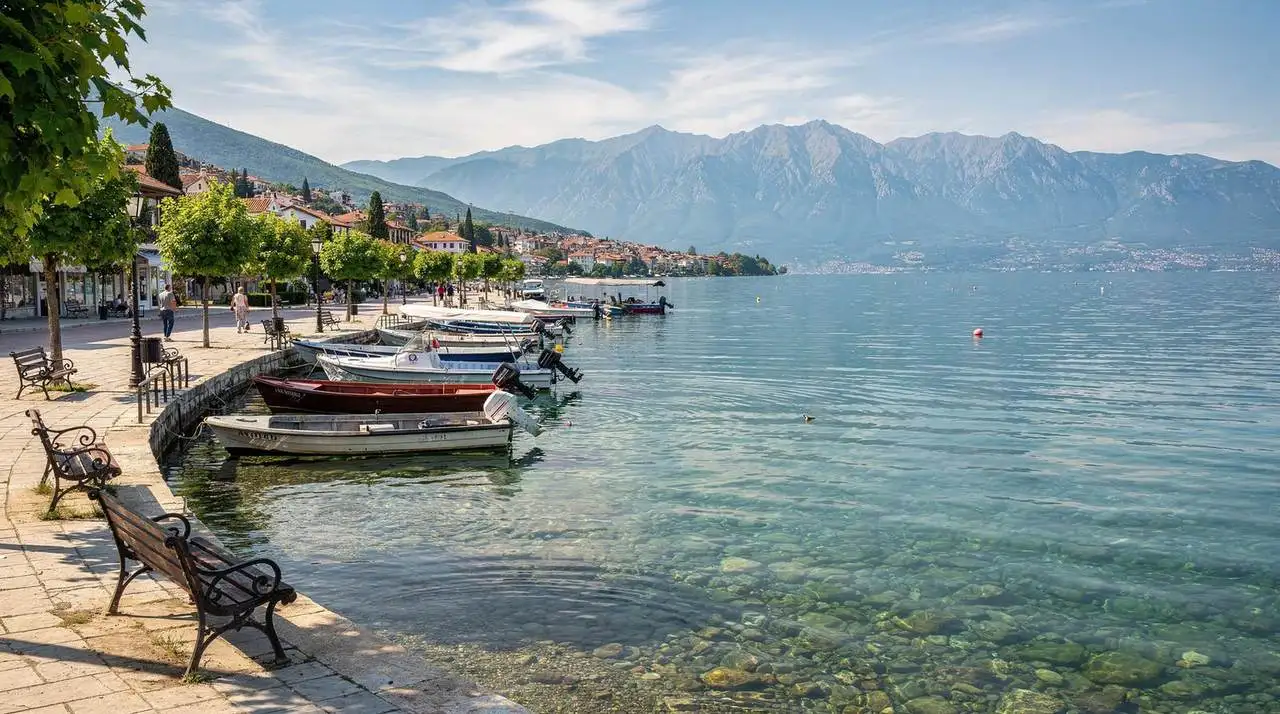
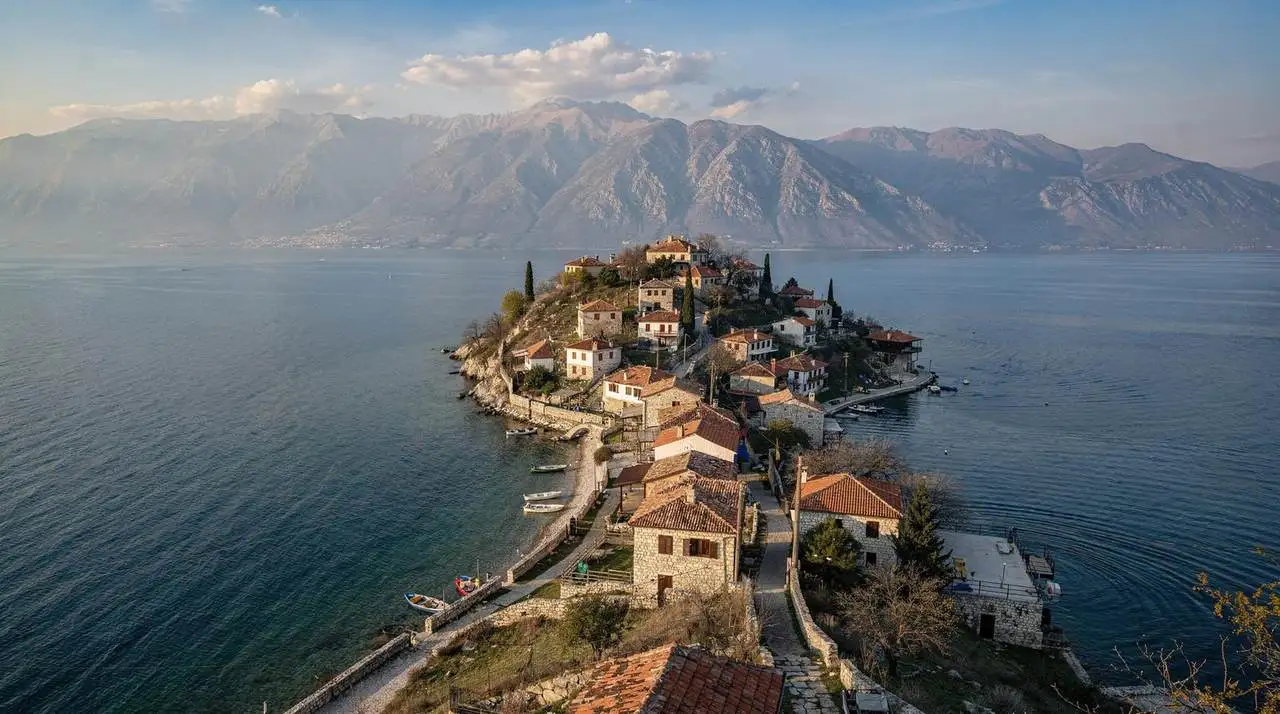
On a narrow finger of land that juts northward into the deep, impossibly blue waters of Lake Ohrid, the village of Lin sits at one of the most dramatically beautiful positions in Albania. Surrounded by water on three sides, connected to the Albanian shore by a narrow neck of land, and looking out across the lake toward the North Macedonian shore and the city of Ohrid, Lin has the geographic character of a place that has always been important — a natural point of habitation, control, and connection.
The evidence for that importance extends back 8,500 years. Underwater archaeological investigation in the shallow waters around the Lin peninsula has revealed the remains of neolithic palafite settlements — lake dwellings built on wooden piles driven into the lakebed — that represent some of the oldest known human habitation in the Albanian Balkans. These are not the only ancient layers here: early Christian remains, including a mosaic floor of considerable quality, add another dimension to a site that compresses an extraordinary span of human history into a small and visually spectacular place.
Lin is not a major tourism destination in the conventional sense. It has no resort infrastructure, no crowded beach clubs, no well-developed visitor economy. What it has is ancient ruins, beautiful mosaics, one of the finest lake panoramas in the Balkans, and the quality of complete quietness that increasingly rare in Mediterranean and Adriatic travel. For visitors approaching from Pogradec along the Lake Ohrid shore road, Lin is the essential stop.
| Where | Lake Ohrid peninsula, 20-25 min from Pogradec |
| Cost | Free peninsula access; mosaic viewing arranged locally, small tip appreciated |
| Time needed | 2-4 hours |
| Getting there | Taxi/car from Pogradec, or Tirana day tour |
| Best time | May-September, early morning for light and quiet |
The Palafite Ruins: Neolithic Lake Settlements
The palafite settlements — literally “pile dwellings,” structures built on platforms raised above shallow water on wooden piles — around the Lin peninsula are among the oldest known in the Albanian Balkans. Dating to approximately 6,500 BCE, they represent the very earliest phases of human settlement in the Lake Ohrid basin, part of a broader prehistoric lake-dwelling tradition that stretched across central and southeastern Europe and is now recognised as a UNESCO World Heritage phenomenon across multiple countries.
The Lin palafites are not directly equivalent to the UNESCO-listed Swiss and Italian lake dwellings, but they are part of the same cultural horizon and represent the same prehistoric pattern of lake-edge habitation. Underwater surveys have identified the locations of piles and associated material culture in the shallow waters around the peninsula’s eastern shore.
Most visitors will not see the underwater archaeology directly — there is no museum or dive programme dedicated to it at the village level — but understanding that you are standing on a peninsula that has been continuously important to human communities for nearly 9,000 years adds a dimension to the experience that makes the view across Lake Ohrid feel weighted with time in a particular way.
The Early Christian Mosaics
Within the village, the remains of an early Christian basilica preserve a mosaic floor of considerable quality and considerable age. The mosaics, dated to approximately the fifth or sixth century CE, feature geometric and decorative patterns in the Byzantine tradition, using tesserae of coloured stone to create compositions that were intended to cover the floor of a substantial church building.
The quality of the surviving mosaic work is genuinely remarkable for a village of Lin’s size, suggesting that the early Christian community here was prosperous and connected to the broader artistic and ecclesiastical networks of the late antique Balkans. Lin’s position on Lake Ohrid — a natural communication route — would have made it part of the broader Christian cultural world that the lake connected even in late antiquity.
Access to the mosaics should be arranged through the village; they are protected rather than simply exposed, and a local guide or caretaker provides the best access and context. This is another reason to visit with some flexibility and patience rather than with the expectation of quick tourist-site access.
The View from the Peninsula
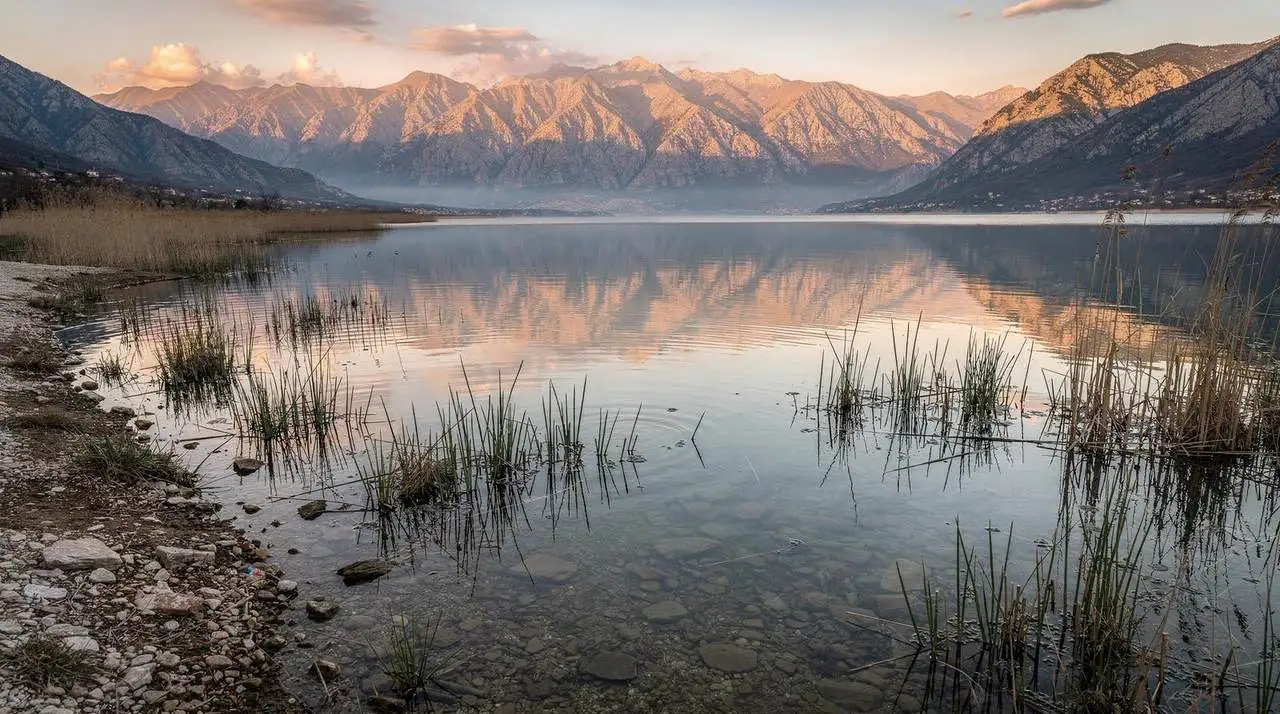
Even setting archaeology aside entirely, Lin is worth visiting for the view alone. Standing at the tip of the Lin peninsula with water on three sides and the full breadth of Lake Ohrid visible — the deepest lake in the Balkans, extraordinarily clear, brilliantly blue — is one of the most visually arresting experiences in Albanian travel.
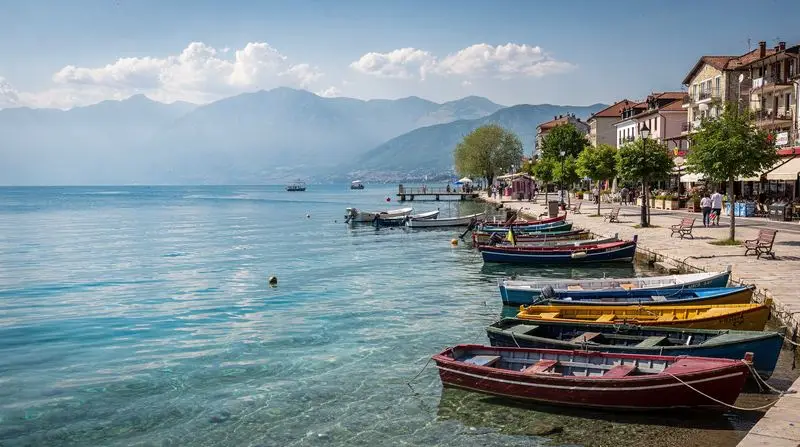
Lake Ohrid is 30 kilometres long and up to 15 kilometres wide, set between mountains on both the Albanian and North Macedonian sides. From the Lin peninsula the full northern extent of the lake is visible, with the town of Ohrid and the Church of St John at Kaneo just visible on the North Macedonian shore on clear days. The water changes colour through the day as the light shifts — deep indigo in morning shadow, brilliant turquoise in full sun, golden in late afternoon.
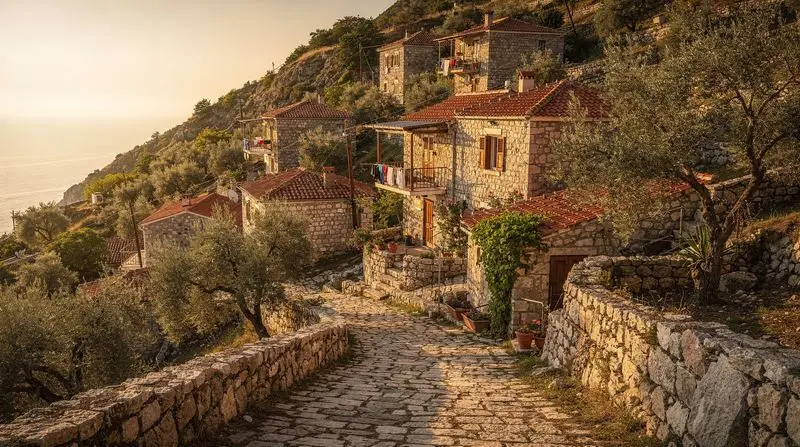
The peninsula itself, with its olive trees, fishing boats, and stone houses, provides a foreground for the lake view that makes it compositionally perfect. Photographers who arrive at Lin for the first time rarely leave quickly.
Getting to Lin
Lin is located on the lake shore road between Pogradec and the North Macedonian border crossing. From Pogradec, the drive along the lake shore road takes approximately 20-25 minutes. The road passes through several lake shore villages before reaching the turn for the Lin peninsula — the turn is clearly signed.
There is limited public transport directly to Lin. The most practical options:
- Day trip from Pogradec by taxi or car: Pogradec is the regional base and the natural starting point. A taxi round trip from Pogradec to Lin and back costs very little and can be combined with other lake shore stops.
- From Tirana as a day trip: Organised day tours from Tirana cover the Lake Ohrid Albanian shore, including Lin and the Drilon springs near Pogradec. This day tour from Tirana covers Lake Ohrid, Drilon, Lin, and Pogradec as a full-day circuit, making it the most convenient option for visitors without their own transport who want to see the Albanian shore of Lake Ohrid comprehensively.
- Self-drive from Korca: The drive from Korca to Lin via Pogradec takes approximately 90 minutes. This circuit — Korca to Pogradec to Lin and back — makes an excellent full-day eastern Albania excursion.
Lin and the Albanian Shore of Lake Ohrid
Lin is one stop on a longer story: the Albanian shore of Lake Ohrid, running from Pogradec north toward the North Macedonian border, is one of the most rewarding and least-visited stretches of lakeside in the Balkans. The guide to the Albanian side of Lake Ohrid covers the full shore in detail, including Pogradec’s fish restaurants, the Drilon springs, Tushemisht village, and the border area.
Lin sits roughly in the middle of this shore and is the most historically and visually compelling single stop. For visitors who can spend only half a day on the Albanian lake shore, Lin is the priority. For those with a full day, the combination of Pogradec for lunch (fish restaurants) and Lin for the afternoon view and archaeology is the optimal circuit.
The lake itself, shared between Albania and North Macedonia, received UNESCO World Heritage status in 2019 as a natural heritage site of outstanding universal value. The designation covers both the lake ecosystem and the cultural landscape of the lake basin. Lin’s palafite ruins and early Christian mosaics are part of the cultural dimension of this recognition, even if the Albanian side of the lake does not yet have the visitor infrastructure that North Macedonia’s Ohrid provides.
The Village of Lin Today
Lin village has perhaps 200-300 permanent residents, with a small number engaged in traditional fishing and a growing number providing basic hospitality services for visitors. The village is self-consciously aware of its historical significance and the increasing visitor attention it receives, but the infrastructure for tourism remains basic.
There are a few simple cafes and at least one small guesthouse. The local fish — trout and the endemic Ohrid trout are particular treasures — can sometimes be obtained fresh at the village, and simple grilled fish meals are available. Do not expect sophisticated restaurant service; do expect fresh lake fish cooked simply and served with genuine Albanian hospitality.
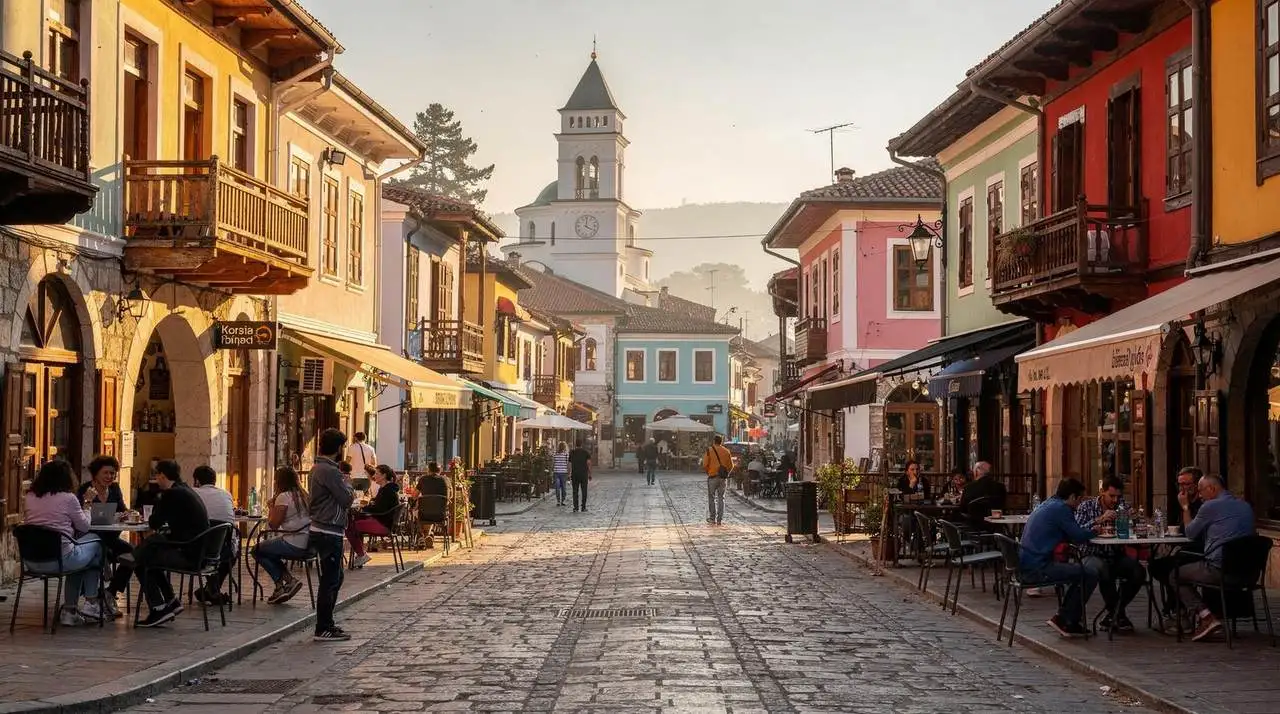
The houses in Lin are mostly simple modern construction mixed with older stone buildings. The village maintains its traditional fishing community character, with boats moored along the shore and nets drying. This functional ordinariness is part of the appeal — Lin has not been turned into a heritage village performance, and the daily life that continues around the ancient ruins gives the place a lived-in quality that more intensively developed sites lose.
What to Expect on a Visit
Allow 2-4 hours for a comfortable Lin visit: time to walk the peninsula, find the mosaic site, explore the village, sit at a cafe with the lake view, and photograph at different positions on the shore.
Summer weekends bring Albanian day-trippers from Pogradec and Korca, and the small village can feel relatively busy. Weekdays and shoulder season visits are quieter.
Bring water and snacks from Pogradec if you plan to spend the full afternoon; the village cafe may be open but supply and reliability is variable.
The road to the peninsula tip is narrow and not always passable by larger vehicles. Park at the village entrance and walk the final stretch to the lake edge.
Cultural and Historical Context
Lin stands at the intersection of several layers of Albanian and Balkan history. The Neolithic communities here were part of a broader Mediterranean prehistoric culture. The early Christian basilica connects Lin to the period when the Lake Ohrid basin was a centre of Christian missionary activity (Saints Cyril and Methodius worked in the Ohrid region in the ninth century; the broader lake basin became a centre of Slavic Christian culture). The Ottoman period overlaid these earlier layers with the commercial and agricultural patterns that shaped the village into its present form.
Understanding Albania through places like Lin — where 8,500 years of human presence can be traced in the soil, the lake bottom, and the surviving mosaic floor — is one of the most intellectually rewarding aspects of travel in this country. Our guide to historical sites in Albania places Lin in the broader context of Albanian archaeological and heritage sites.
Swimming and Beach Access at Lin
The Lin peninsula’s shore provides some of the finest lake swimming on the Albanian side of Lake Ohrid. The water around the peninsula is exceptionally clear — Lake Ohrid’s famous 20-metre visibility extends to the Albanian shore — and the variety of entry points around the peninsula allows different swimming experiences depending on conditions and preference.
The eastern shore of the peninsula (facing back toward the mainland) has the calmest water in most wind conditions, with a pebble beach accessible from the village. This is the most convenient swimming spot and suitable for children and less confident swimmers, with a gradual deepening and clear visibility to the bottom.
The western and northern shores of the peninsula face the open lake and have rockier entry points but deeper water immediately offshore. For swimmers comfortable with rocky entry, these give the most dramatic open-lake experience — swimming away from the shore with the full breadth of Lake Ohrid ahead. Water shoes are strongly recommended for rocky entry.
The lake temperature peaks at 20-23°C in late July and August. Earlier in the season the water is colder — 14-18°C in May and June — and the cold temperature shock on entry is significant. By September the surface begins cooling again but remains comfortable for acclimatised swimmers.
Getting the Most from a Lin Visit
Lin rewards patience and exploration more than itinerary execution. The most rewarding visits combine several elements: the archaeology and mosaics (requiring arrangement with a local caretaker), the peninsula walk and lake views, time at the water (swimming or simply sitting by the lake), and the village cafe experience.
The ideal Lin visit:
Morning (best light for photography): Arrive early when the lake light is at its finest — the low-angle morning sun illuminates the water with a golden quality that midday cannot replicate. Walk to the tip of the peninsula for the panoramic view. The morning is also the quietest time, before any day-tripper vehicles arrive.
Mid-morning: Return to the village and arrange access to the early Christian mosaics. This may take 20-30 minutes of conversation and waiting; patience is essential and rewarded. The mosaic site with a local explainer is a fundamentally different experience from what the isolated stone floor would provide without context.
Late morning/afternoon: Swimming from the eastern shore beach. The water at Lin is often the clearest visible from any point on the Albanian shore.
Afternoon: Sit at the village cafe with coffee and the lake view before the return journey.
Where to Eat and Stay at Lin
Lin has minimal formal infrastructure, and that is part of what makes it distinctive among Lake Ohrid destinations. A small number of village cafes near the entrance to the peninsula serve coffee, byrek, and sometimes simple grilled fish if the day’s catch allows — do not expect a menu or fixed hours; ask and see what is available. The single small guesthouse in the village offers a handful of basic rooms, useful mainly for visitors who want to catch the peninsula at both sunrise and sunset without a return drive to Pogradec.
Most visitors base themselves in Pogradec, 20-25 minutes away, where the accommodation and restaurant scene is considerably more developed — lakeside hotels, family guesthouses, and the koran trout restaurants along the promenade. The Pogradec destination guide covers the fuller range of options. Treating Lin as a half-day or full-day excursion from a Pogradec base, rather than an overnight destination in its own right, suits most travel styles better and still allows an early-morning or late-afternoon visit for the best light.
Lin Compared to Other Lake Ohrid Stops
| Stop | Character | Time needed | Best for |
|---|---|---|---|
| Lin | Ancient ruins, mosaics, quiet peninsula | 2-4 hours | History, photography, solitude |
| Pogradec | Lakeside town, promenade, fish restaurants | 1-2 days | Base, dining, evening life |
| Drilon (near Pogradec) | Spring-fed park, shaded pools | 1-2 hours | Families, shade, easy walk |
| Ohrid town (North Macedonia) | Developed old town, monasteries | Full day | Heritage architecture, tourist infrastructure |
Lin and the Lake’s History of Settlement
Lake Ohrid’s extraordinary age — estimated at 2-5 million years old — means that its shores have been settled by humans for essentially the entire span of human presence in the Balkans. The neolithic palafite settlements at Lin are part of a broader pattern of lake-shore occupation that extended around the entire Ohrid basin.
Lake dwelling communities chose their locations for strategic and practical reasons: the water provided food (fish, freshwater shellfish, aquatic plants), natural defence (water surroundings deterring raiding), and transport routes. The Lin peninsula, with its three-sided water exposure and the elevated view across the lake, would have been an ideal location for a community that depended on the lake for both food and mobility.
The continuity from neolithic lake-dwellers through early Christian community to the fishing village that exists today is one of those long threads of human history that make certain places feel heavy with time. Standing on the Lin peninsula knowing that humans have stood in the same position for 8,500 years — watching the same lake, catching the same (or related) fish species, sheltering from the same mountain winds — provides a perspective on the present that few travel experiences can equal.
Frequently Asked Questions About Lin
What are the Lin palafite ruins?
The palafite ruins near Lin are the remains of prehistoric lake dwellings — structures built on wooden platforms raised above the shallow waters of Lake Ohrid on wooden piles. Dating to approximately 6,500 BCE, they represent some of the earliest known human settlement in the Albanian Balkans. The ruins are largely underwater and visible mainly through archaeological survey rather than direct observation by casual visitors, but they are part of the broader Lake Ohrid UNESCO World Heritage designation and give Lin its claim as one of the oldest continuously significant sites in Albania.
Can you see the early Christian mosaics at Lin?
Yes, with some arrangement. The mosaics from the early Christian basilica at Lin are protected and not simply lying open to the elements. Access is typically arranged through the village, often with a local guide or caretaker who can show the site and explain its context. The mosaics are in relatively good condition for their age and represent a genuinely remarkable survival of late antique floor decoration in a small Albanian village. Budget time for the arrangement and be patient if it takes a few conversations to find the right person.
How do you get to Lin from Tirana?
The most practical option for visitors without a car is an organised day tour from Tirana. This day tour from Tirana covers Lake Ohrid, Drilon, Lin, and Pogradec comprehensively. By public transport, the route requires reaching Pogradec first (regular buses from Tirana) and then taking a taxi the final 20-25 kilometres along the lake shore road. Self-drive from Tirana takes approximately 3 hours via Elbasan and Pogradec.
Is Lin worth visiting without a car?
Yes, though it requires more planning. The combination of a Tirana-Pogradec bus and a local taxi from Pogradec to Lin makes the trip feasible for independent travellers without vehicles. A full day allows comfortable coverage of the lake shore including Lin, with lunch fish restaurants in Pogradec and the afternoon at the Lin peninsula. An organised day tour from Tirana is the simplest option for car-free visitors.
What is the best time to visit Lin?
May through September covers the optimal period, with June and September offering the best balance of warm temperatures, calm lake conditions, and reduced crowds compared to the July-August peak. April visits are possible and the lake view is spectacular in spring light, but water temperatures are cold for swimming. The lake shore road is open year-round, and even winter visits (for the light and solitude) are feasible for those exploring eastern Albania out of season.
Where should you eat and stay near Lin?
Lin itself has only a couple of village cafes with irregular hours and one small guesthouse, so most visitors base themselves in Pogradec, 20-25 minutes away, where the fish restaurants along the promenade and a wider range of accommodation make it a far more practical hub. Treat Lin as a half-day or full-day excursion rather than an overnight stop unless you specifically want to catch sunrise or sunset on the peninsula.