Albania vs Greece: The Ionian Neighbours Compared
Albania and Greece face each other across the Ionian Sea at its narrowest point — Saranda and Corfu are just 27 kilometres apart, a ferry crossing of 35 minutes. Yet in terms of tourist development, price level, and crowd density, they inhabit entirely different worlds. The two countries share a coastline quality, a Mediterranean climate, and layers of ancient history. They diverge sharply on everything else.
This comparison is particularly useful for travellers who are considering one or the other for a Mediterranean holiday, who want to combine both, or who are specifically looking at the southern Albanian coast and wondering how it stacks up against the Ionian Greek islands.
| Ferry link | Saranda-Corfu, 35 minutes, around EUR 20-35 |
| Cost gap | Albania around 45-65% cheaper |
| Best for islands | Greece (Ionian and Aegean networks) |
| Best for solitude | Albania (fewer crowds even in peak season) |
| Best combined base | Saranda or Corfu, day-tripping the other |
The Proximity Factor
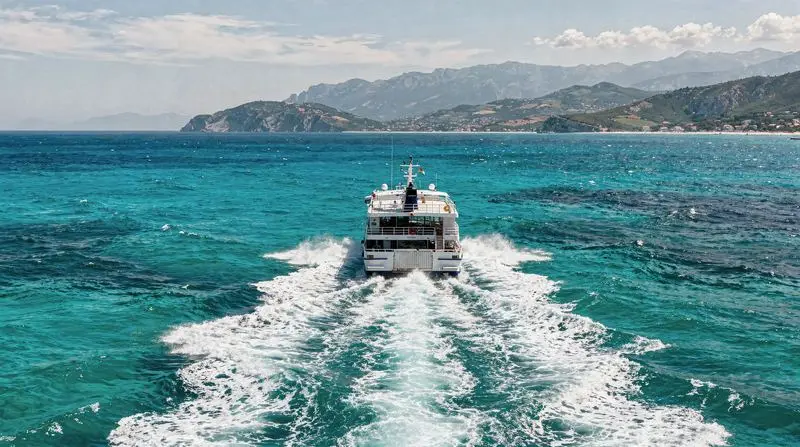
Before anything else: Albania and Greece are not mutually exclusive. The Corfu to Albania ferry connects Saranda to Corfu Town in 35 minutes (or to the new Corfu port in less time on fast ferries). Many travellers now combine a week of Greek island-hopping with a week on the Albanian Riviera, treating them as complementary destinations rather than competing ones.
This itinerary has become popular enough that Corfu-based tour operators now offer day trips to Saranda. This day trip from Saranda to Corfu Town and Palaiokastritsa gives you the Greek island experience from the Albanian side — and seeing both across a single day makes the comparison vivid and immediate.
Price: The Biggest Difference
Greece has become expensive — genuinely expensive in the Ionian islands that most directly compare to the Albanian Riviera. Corfu, Zakynthos, and Kefalonia in peak season are priced comparably to Italy or Spain. Even the less fashionable Ionian islands have moved upward in price since the post-COVID tourism boom.
| Category | Albanian Riviera | Corfu / Ionian Islands | Difference |
|---|---|---|---|
| Hotel double (mid-range) | EUR 60-90 | EUR 120-200 | Albania ~55% cheaper |
| Dinner for two (sit-down) | EUR 20-35 | EUR 45-70 | Albania ~55% cheaper |
| Beach sunbed set | EUR 5-8 | EUR 15-25 | Albania ~65% cheaper |
| Day boat tour | EUR 30-50 | EUR 60-100 | Albania ~50% cheaper |
| Airport car rental (week) | EUR 200-300 | EUR 350-600 | Albania ~45% cheaper |
The price gap is consistent across almost every category. A week on the Albanian Riviera for a couple, at a comfortable mid-range level, costs roughly what three or four days in Corfu costs. Over a two-week trip, the saving typically amounts to EUR 1,500-2,500 for two people.
See Albania travel budget for detailed numbers by accommodation category and travel style.
The Beaches: An Honest Comparison
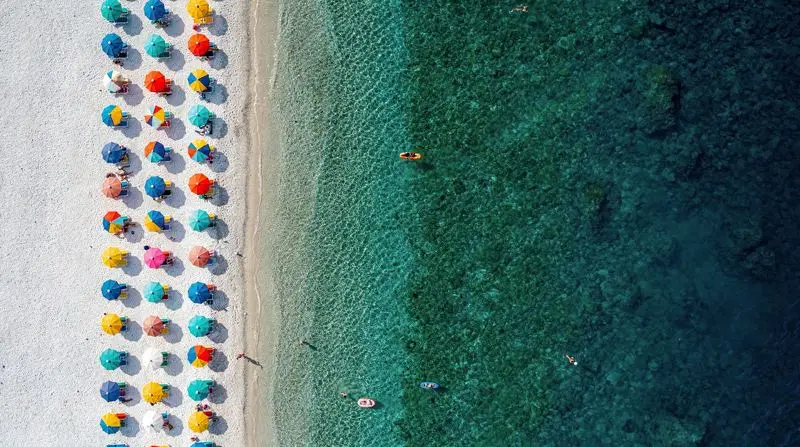
The Albanian Riviera and the Ionian Greek islands draw their water from the same sea and the same geological character — limestone, turquoise clarity, mountain backdrops. The quality at the best Albanian beaches genuinely matches and occasionally exceeds what you find in the Ionian islands.
Ksamil versus Sivota (Lefkada): Comparable turquoise water, comparable island-dotted lagoon character. Ksamil is cheaper and less developed; Sivota has more polished facilities.
Gjipe versus Porto Katsiki: Both are steep-cliffed, wild-access coves of exceptional beauty. Porto Katsiki has better facilities; Gjipe is more dramatic and reached by a 40-minute walk through a canyon that is itself part of the experience.
Dhermi versus Myrtos (Kefalonia): Myrtos has the edge on scenic drama; Dhermi has better facilities and a livelier beach scene.
Where Greece decisively wins: islands. The Ionian islands — Corfu, Lefkada, Kefalonia, Ithaca, Zakynthos, Paxi — offer a sailing and island-hopping dimension that Albania cannot replicate. If variety of island destinations is the goal, Greece wins without contest.
Where Albania decisively wins: space and solitude. Even in August, it is possible to find an uncrowded cove on the Albanian Riviera by walking 20 minutes from the road. In the Ionian islands in August, finding a genuinely empty beach requires either a boat or local knowledge.
The boat tours from Saranda and Himara reach sea caves, isolated coves, and islands that are not accessible by road — an experience comparable to the best Greek island boat excursions at Albanian prices. The Best of Saranda tour covers the Blue Eye spring, Butrint ruins, Ksamil lagoon, and Lekuresi castle in a single day — a combination of nature, history, and coastline that no Greek island day tour can match for EUR 35-50 per person.
History and Ancient Sites
This is closer than most people expect.
Greece has the depth and breadth of the ancient world’s most studied civilisation. The Parthenon, Delphi, Olympia, Mycenae — these are sites of global significance that Albania cannot match for historical weight or name recognition.
Albania has Butrint — a UNESCO World Heritage Site and one of the most extraordinary archaeological sites in the Mediterranean, where Illyrian, Greek, Roman, Byzantine, and Venetian layers sit within a lagoon of exceptional natural beauty. Butrint is arguably better preserved than many comparable Greek sites because it has received fewer visitors and less development pressure. The site is a short drive or boat ride from Saranda.
Albania also has Apollonia, an ancient Greek city that rivalled Corinth in its time and remains impressively intact outside of Fier. The Gjirokastra castle and the Ottoman layers of Berat add different historical dimensions. The communist-era history adds a uniquely 20th-century layer — the Bunk’Art museums in Tirana’s nuclear shelters, the 175,000 concrete bunkers across the landscape — that Greece cannot match.
The country’s archaeological story is as old as Greece’s — because much of what is now southern Albania was, in antiquity, part of the same civilisational sphere that produced the Greek cities of Butrint and Apollonia.
Food: Mediterranean Cousins
Both cuisines draw from the same Mediterranean pantry — olive oil, seafood, lamb, legumes, fresh vegetables, yoghurt — but have developed in different directions.
Greek food is better known and more codified: moussaka, souvlaki, spanakopita, fresh fish by weight, the omnipresent Greek salad. It is reliable, often delicious, and occasionally predictable.
Albanian food is less internationally known but arguably more varied. The Ottoman influence produces pastries, slow-cooked meat dishes, and preparations using yoghurt and herbs in ways Greek cuisine does not. The burek (layered filo pastry with cheese, meat, or spinach), tave kosi (lamb baked in yoghurt), and the gjelle dishes cooked under a sac are genuinely distinctive. Coastal Albanian seafood is superb and significantly cheaper than equivalent Greek seafood.
Both countries have excellent local wine traditions; Albania’s is less well-known internationally but offers indigenous varieties like Kallmet and Shesh i Zi that are well worth exploring. See the wine tasting guide for Albania for recommended producers and regions.
Infrastructure and Ease of Travel
Greece wins clearly. The Greek island ferry network is one of the most developed in the world, with frequent connections, reliable schedules, and infrastructure designed for mass tourism. English is spoken almost universally. Card payment works everywhere. Accommodation booking systems are reliable and comprehensive.
Albania is improving quickly but is not yet at Greek standards. Rural roads can be rough, cash is still essential in many places, and some booking and service standards are less predictable. This is improving season by season, but it remains a real consideration.
The upside of Albania’s less developed tourism infrastructure is authenticity. When everything works perfectly, the invisible hand of tourism management sometimes removes the sense of genuine encounter. Albania’s imperfections, managed with flexibility, often produce better stories.
The Albania travel tips guide covers practical preparation for navigating the country efficiently. The Albania SIM card guide and driving in Albania guide address the two most common infrastructure questions.
Crowds: The Albanian Advantage
Greece’s tourism industry has grown dramatically in recent years. Santorini is notoriously overcrowded — famously, the Greek government has implemented visitor caps on some sections. Corfu receives over three million tourists per year on an island with a permanent population of 100,000. Even the less fashionable Ionian islands are much busier than their infrastructure was designed to handle.
Albania’s entire tourism industry, including the domestic market, is a fraction of this. The Albanian Riviera is busy by Albanian standards in August and manageable by any Mediterranean comparison.
If avoiding crowds is a priority — particularly for someone who has done the Greek islands and wants the same coastline quality without the summer saturation — Albania is the obvious answer.
The cultural consequence of fewer crowds extends beyond beach space. In Berat or Gjirokastra, you are not one of thousands of visitors processing through a site. The guesthouse owners know where you came from; the restaurant owners bring out dishes from the family menu that are not on the tourist version; the experience of the place is qualitatively different.
The Mountain Dimension: Albania’s Unique Advantage
Greece has mountains — Olympus, Taygetos, the Pindus range — but they feature in few standard Greek tourist itineraries. The island focus dominates, and most Greece visitors see very little of the extraordinary Greek mainland interior.
Albania’s Albanian Alps provide a mountain experience of genuine quality that complements the coastal destination. The Accursed Mountains — accessible via Shkodra and the Koman Lake ferry — contain scenery that experienced hikers describe as reminiscent of the western Alps before mass tourism infrastructure arrived. The Theth-Valbona hike crosses a 1,793-metre pass through some of the most dramatic mountain scenery in Europe.
This gives an Albania trip a variety of landscape — coast to Ottoman cities to Alpine mountains — that a Greek island trip typically cannot match unless you specifically plan for mainland Greece.
Nightlife and Beach Scene
Both countries have strong summer beach cultures, though the styles differ.
Greece: Mykonos and Santorini are internationally famous party destinations. The Ionian islands have a more relaxed, family-oriented beach scene. Greek nightlife peaks late — midnight starts for clubs are standard — which aligns with the general Mediterranean rhythm.
Albania: Dhermi beach clubs are the most developed party scene, with an atmosphere that draws young Albanians from the diaspora alongside European visitors. Tirana’s Blloku neighbourhood has a year-round bar and restaurant scene that is sophisticated, affordable, and operates on the same late schedule as Greece. See the nightlife guide for Albania for specific recommendations.
Who Should Choose Greece
- Island-hopping enthusiasts: nothing in Albania matches the Ionian and Aegean island networks
- Travellers who want maximum historical depth and name recognition
- Anyone who needs fully reliable tourist infrastructure
- Sailing holidays: Greece is one of the world’s great sailing destinations
- First-time Mediterranean visitors who want the classic experience
Who Should Choose Albania
- Experienced Mediterranean travellers looking for something less processed
- Budget-conscious travellers: Albania offers comparable quality at dramatically lower prices
- Hikers: the Albanian Alps are extraordinary and less commercialised than anything in mainland Greece
- Travellers who specifically want Albanian Riviera beaches without Ionian island prices
- Culture enthusiasts interested in Ottoman, Byzantine, and communist-era history
- Anyone who has done Greece and wants to see what is next door
Combining Albania and Greece: The Best Approach
The most popular and perhaps the most rewarding approach: base yourself in Saranda on the Albanian side and take a day trip to Corfu, or base yourself in Corfu and take a day trip to Saranda. Many travellers now spend a week on each side of the Ionian, treating the ferry as the link between two complementary destinations rather than a border between competitors.
A fortnight that combines five days on the Albanian Riviera, a visit to Gjirokastra and Butrint, and a week on the Ionian islands (Corfu, Lefkada) gives you Greek island variety and Albanian authenticity and budget savings. This is not a compromise; it is the best of both.
The practical logistics are straightforward: fly into Tirana, drive south along the Riviera, cross to Corfu by ferry from Saranda (35 minutes), and pick up the Greek island ferry network from Corfu. The return can be a direct flight home from Corfu Airport. Total ferry cost: approximately EUR 20-35 one way.
The Verdict
Greece and Albania are not competing destinations — they are adjacent chapters of the same Mediterranean story. Greece has more islands, better infrastructure, and deeper name recognition. Albania has lower prices, less crowded beaches of comparable quality, and cultural sites of genuine significance that feel like discoveries rather than attractions.
For pure value, Albania wins decisively. For island variety, Greece wins decisively. For anyone visiting the Ionian coast — Greek or Albanian — the honest answer is: take the ferry and see both.
What Locals Notice First When Crossing the Border
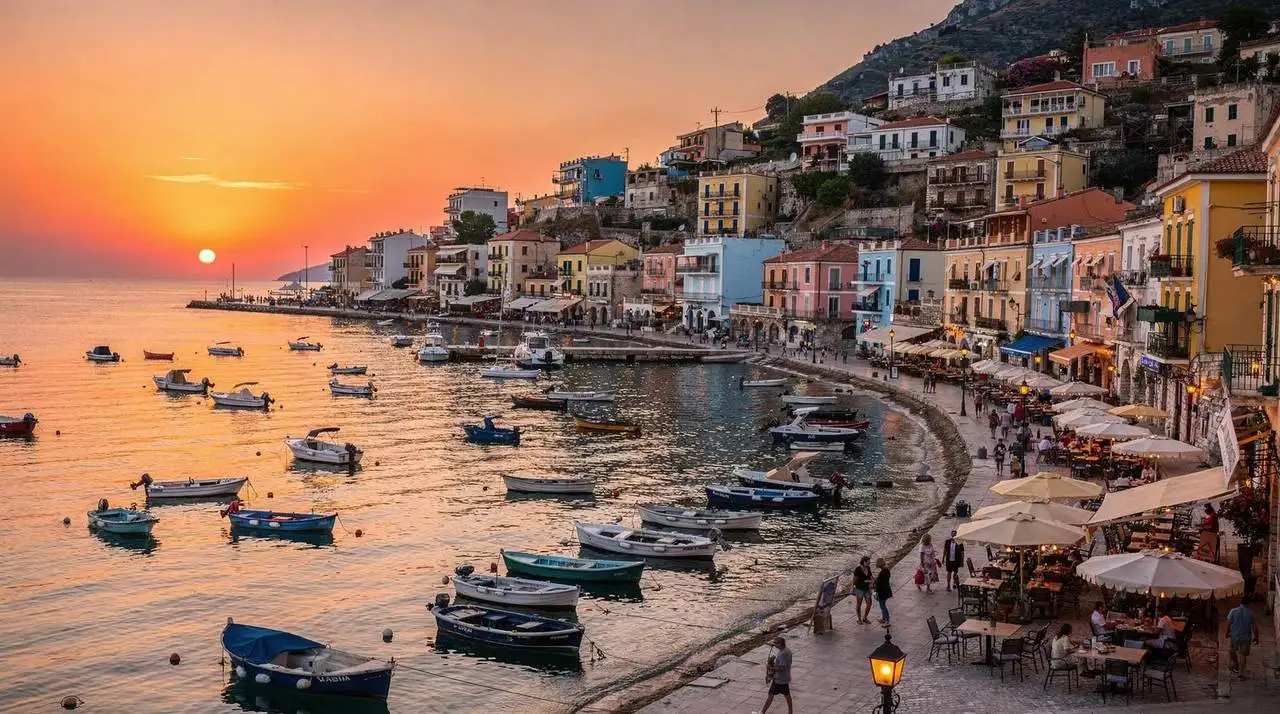
Travelers who make the Saranda-Corfu crossing in either direction consistently mention the same first impression: how quickly the atmosphere shifts despite the short distance. Corfu feels immediately more polished — better-marked roads, more English signage, a longer-established tourist infrastructure. Saranda feels rawer and more immediate, with construction still visibly underway and prices that reset noticeably lower the moment you step off the ferry. Neither impression is a criticism; it’s simply the clearest illustration of how differently the two sides of a 35-minute crossing have developed.
Planning the Saranda-Corfu Crossing
The ferry itself deserves practical detail since it is the hinge of most combined itineraries. High-speed ferries run multiple times daily in peak season (June-September), dropping to once or twice daily in shoulder months, and the crossing costs roughly EUR 20-35 one way depending on operator and season. Book a day or two ahead in July-August; walk-up tickets are usually available outside peak weeks. The Corfu to Albania ferry guide has current schedules, operators, and port logistics on both sides.
Travelers based in Saranda for the Albanian Riviera can treat Corfu as a single, easy day trip rather than a full relocation — pack a day bag, take an early crossing, and you’ll have 6-7 hours on the island before the return ferry. The reverse works equally well for Corfu-based travelers curious about Butrint or the Blue Eye spring.
Frequently Asked Questions About Albania vs Greece
Is it easy to visit both Albania and Greece on one trip?
Yes — this is one of the easiest international combination trips in Europe. The Saranda-Corfu ferry takes just 35 minutes, runs multiple times daily in summer, and connects directly into the Greek island ferry network from Corfu. Many travelers base in Saranda or Corfu and treat the other side as a straightforward day trip.
Is the Albanian Riviera really comparable to the Greek islands?
For water quality and scenic drama, yes — both draw on the same Ionian Sea and similar limestone coastal geology. Where Greece wins decisively is island variety and sailing culture; where Albania wins is space, lower prices, and noticeably fewer crowds even at the height of summer.
How much does a combined Albania-Greece trip typically cost?
For a couple splitting time between the Albanian Riviera and the Ionian islands over two weeks, a realistic mid-range budget runs EUR 2,500-3,500 total, weighted toward the Greek side given its higher per-day costs. Spending proportionally more nights in Albania is the simplest lever for keeping the overall trip cost down without sacrificing quality.