Albania eSIM Guide: Stay Connected in 2026
Staying connected in Albania has become significantly easier as both domestic mobile infrastructure and international eSIM options have improved. For travelers visiting in 2026, an eSIM is arguably the most convenient way to get reliable data coverage in Albania — no SIM card hunting, no queueing at a mobile shop, no language barrier at a carrier’s counter, and instant activation before you even board your flight.
This guide covers everything you need to know: how eSIM works in Albania, the best providers with current pricing, how to activate before arrival, how much data you actually need, coverage reality across different Albanian regions, and honest advice on whether eSIM or a physical local SIM is better for your specific trip.
| Best for | Trips of 1-2 weeks, dual-SIM travelers |
| Typical cost | around EUR 5-15 for 1-10 GB |
| Activation | Instant, before departure |
| Best coverage | Tirana, Riviera towns, main highways |
| Weak spots | Albanian Alps valleys, Koman Lake ferry |
How eSIM Works in Albania
An eSIM (embedded SIM) is a digital SIM card built directly into compatible smartphones. Instead of inserting a physical SIM card, you download a carrier profile to your phone — typically by scanning a QR code. The profile configures your phone to connect to a mobile network, and once active, works identically to a physical SIM from the user’s perspective.
In Albania, eSIM data plans connect to local networks through roaming agreements — most commonly to Vodafone Albania, ALBtelecom, or ONE Telecommunications (formerly Eagle Mobile), the three main Albanian carriers. The quality of the roaming connection varies by provider and by your geographic location within Albania.
Albania’s mobile infrastructure: Albania’s 4G LTE coverage has improved considerably over the past five years. The network now reaches most populated areas, the main highways, and coastal towns reliably. The main coverage gaps are:
- Deep mountain valleys in the Albanian Alps — some dead zones in Theth and between villages in the northern highlands
- Interior rural areas well away from main roads
- Sections of the Theth-Valbona hiking trail above the treeline
- The middle section of the Koman Lake ferry crossing
For Tirana, the Albanian Riviera, Saranda, Berat, Gjirokastra, Shkodra, and the main highways, 4G coverage is solid and eSIM plans work reliably throughout the day. With data active from the moment you land, it is easy to book a guided outing such as a Tirana food tour with a local guide and share your live location with the group.
Does My Phone Support eSIM?
eSIM compatibility has expanded rapidly across the smartphone market. Most flagship devices released from 2019 onward support eSIM:
Compatible devices include:
- iPhone XS and all later models (SE 2nd generation, iPhone 11, 12, 13, 14, 15, 16 series)
- Google Pixel 3 and all later Pixel models
- Samsung Galaxy S20 and later (important caveat: some carrier-locked Samsung phones sold in the United States and some other markets have eSIM functionality disabled by the carrier)
- Samsung Galaxy Z Fold and Z Flip series (all generations)
- Motorola Razr series
- OnePlus 11 and later
- Xiaomi 13 and later
- Most flagship Huawei models (though limitations on Google services apply to newer Huawei devices)
- iPad Pro (2018 and later), iPad Air (2019 and later), iPad mini 5th generation and later
Checking your device: On iPhone, go to Settings > Cellular > Add eSIM — if the option is present, your phone is eSIM-capable. On Android, go to Settings > Network > SIM cards — the exact path varies by manufacturer but look for “Add eSIM” or “Download eSIM” options.
Carrier lock: If you purchased your phone from a carrier rather than directly from the manufacturer, and particularly if you are still in a contract period, your phone may be carrier-locked. Carrier locks typically prevent adding eSIMs from other providers. Contact your carrier if unsure.
The dual-SIM advantage: Many travelers use eSIM for Albania data while keeping their home SIM active for calls and their home number. This dual-SIM setup means you remain reachable on your regular number for calls and texts while using the cheaper eSIM data in Albania. For business travelers and anyone who needs to remain reachable, this is an extremely practical arrangement.
Top eSIM Providers for Albania
Airalo
Airalo is the largest and most established eSIM marketplace, offering plans for Albania through regional “Europe” plans and sometimes Albania-specific options.
Typical Airalo options (indicative 2026 pricing):
- 1 GB / 7 days: EUR 5-7
- 3 GB / 30 days: EUR 10-13
- 5 GB / 30 days: EUR 14-18
- 10 GB / 30 days: EUR 20-26
Pros: Large established platform with substantial user base and reviews, reliable customer support available in the app, Esim+ management app, wide device compatibility, multiple plan size options, strong track record across 100+ countries.
Cons: Data-only (no local Albanian phone number for calls or SMS). Prices are mid-market rather than the cheapest available.
Best for: Short trips of 3-7 days, first-time eSIM users who want a trusted platform with good support, travelers visiting multiple European countries who want a regional plan.
Activation: Purchase through the Airalo app or website, receive QR code by email, scan in your phone’s cellular settings. The profile can be installed days before departure — useful if you want to confirm installation is working — but only activates when your phone connects to an Albanian network.
Holafly
Holafly specializes in unlimited data eSIM plans — a key differentiator from most competitors. Their Albania coverage uses roaming agreements with local carriers.
Typical Holafly options (indicative 2026 pricing):
- Unlimited data / 5 days: EUR 19
- Unlimited data / 10 days: EUR 27
- Unlimited data / 15 days: EUR 34
- Unlimited data / 30 days: EUR 49
Pros: Truly unlimited data without counting gigabytes, simple pricing with no hidden data cap surprises, responsive customer support via WhatsApp (relevant for travelers who encounter issues).
Cons: More expensive than data-cap alternatives for light users — if you use 2GB in a week, you are paying significantly more than an equivalent Airalo plan. Fair-use policies exist for extreme cases (tethering data at very high volumes may be throttled).
Best for: Heavy data users, digital nomads working remotely, travelers who want to upload photos and videos without monitoring usage, and anyone who finds data anxiety stressful.
Nomad
Nomad offers competitive pricing with a clean app interface. Their Albania plans run through European roaming agreements.
Typical Nomad options (indicative 2026 pricing):
- 1 GB / 30 days: EUR 5-6
- 3 GB / 30 days: EUR 9-11
- 5 GB / 30 days: EUR 13-15
- 10 GB / 30 days: EUR 19-22
Pros: Competitive pricing, clean app interface, data rollover on some plans allows unused data to carry forward, regional plans work across multiple European countries simultaneously — good value for travelers visiting Albania as part of a broader European trip.
Cons: Smaller customer support operation than Airalo or Holafly, fewer reviews available for verification of Albania-specific performance.
Best for: Budget-conscious travelers who want reliable coverage without the unlimited-plan premium, and those visiting multiple countries on one trip.
Ubigi
Ubigi (a subsidiary of CriticalTelecom) offers eSIM plans with direct carrier agreements rather than layered roaming arrangements, which can improve reliability in some markets.
Typical Ubigi options:
- 1 GB: EUR 6-8
- 3 GB: EUR 12-15
- 5 GB: EUR 18-22
Pros: Direct carrier relationships may improve reliability in edge cases, business-oriented platform with invoicing capabilities for expense claims.
Cons: Less consumer-friendly interface than Airalo or Nomad, fewer user reviews available, higher per-GB cost than competitors.
Best for: Business travelers who need proper invoicing documentation, or technically confident users who prefer direct carrier arrangements.
eSIM Provider Comparison
| Provider | 3 GB Price | 10 GB Price | Unlimited Available | Local Number |
|---|---|---|---|---|
| Airalo | EUR 10-13 | EUR 20-26 | No | No |
| Holafly | EUR 19+ (unlimited) | EUR 19+ (unlimited) | Yes | No |
| Nomad | EUR 9-11 | EUR 19-22 | No | No |
| Ubigi | EUR 12-15 | Not available | No | No |
Prices fluctuate with promotions and regional pricing. Check each provider’s current pricing before purchasing.
Step-by-Step Activation Process
The eSIM activation process is straightforward once you understand the steps:
Step 1 — Confirm compatibility: Verify your phone supports eSIM (Settings > Cellular > Add eSIM on iPhone, or equivalent Android path).
Step 2 — Purchase your plan: Buy through the provider’s app or website. Standard credit and debit card payment, Apple Pay, or Google Pay. You receive a confirmation email containing a QR code.
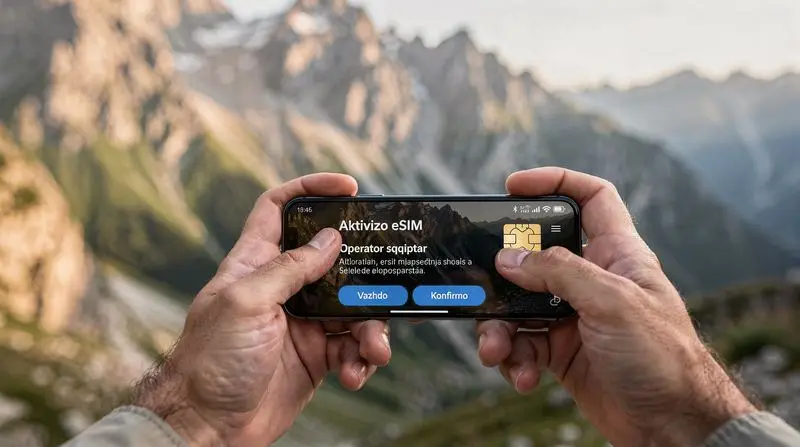
Step 3 — Install the eSIM profile: Open your phone’s cellular settings. Select “Add eSIM” or “Add Data Plan.” Scan the QR code from your confirmation email. Your phone downloads and installs the carrier profile. Label the plan “Albania” for easy identification.
Step 4 — Set data routing: In your phone’s cellular settings, choose which SIM handles mobile data. Select your Albania eSIM for data while keeping your home SIM for calls and texts (dual-SIM users).
Step 5 — Activate on arrival: The eSIM activates automatically when your phone connects to an Albanian mobile network. No action is required — on landing in Tirana, you should see Albanian network coverage appearing on your eSIM within a few minutes.
Step 6 — Troubleshoot if needed: If the eSIM does not connect, check: (a) that data roaming is enabled for the eSIM specifically in your phone’s settings, (b) that the eSIM profile shows as active in your cellular settings, (c) that you are in an area with mobile coverage. All major providers have WhatsApp or in-app support for troubleshooting.
Important: Most eSIM QR codes can only be scanned once. If you accidentally delete the eSIM profile before the trip, contact your provider for a replacement QR code.
eSIM vs. Physical Albanian SIM: Which Is Better?
The honest answer depends on your specific trip profile.
Physical Local SIM (Albanian Carrier)
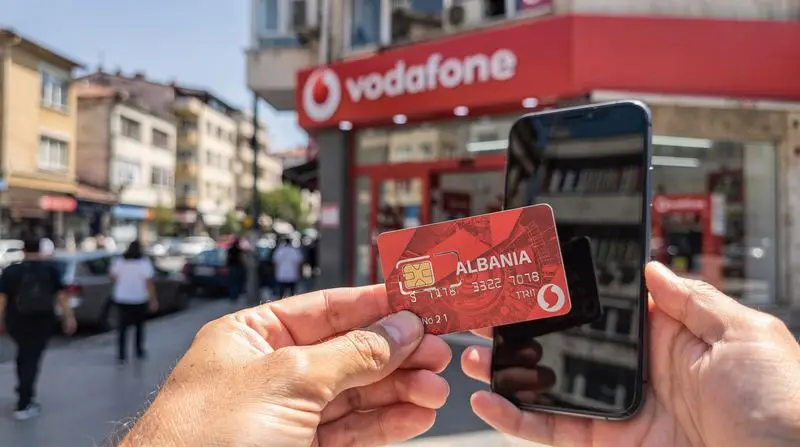
Albanian SIM cards from Vodafone Albania, ALBtelecom, or ONE Telecommunications are available at Tirana International Airport (operator kiosks in the arrivals hall), at mobile network shops throughout Tirana and other cities, and at some tourist shops.
Local SIM advantages:
- Cheaper per GB for heavy data users — a local SIM with 10 GB costs approximately EUR 5-8, compared with EUR 20-26 for 10 GB on Airalo
- Includes local Albanian calls and SMS on a local Albanian number
- Better coverage in some rural areas where direct network (rather than roaming) may have stronger signal
- Refillable with additional data or credit at local shops
Local SIM disadvantages:
- Requires arriving in Albania and finding a shop or airport kiosk before you have connectivity
- May require passport for registration (carrier-dependent)
- Requires ejecting your home SIM (on single-SIM phones) and managing without your regular number
- Shop setup can take 20-30 minutes, often in Albanian language
eSIM advantages:
- Activated before departure — you have connectivity from the moment you land at Tirana Airport
- No SIM swapping or physical handling required
- Dual-SIM capability keeps your home number active for calls
- Entirely managed from your phone without visiting a shop
- No language barrier
eSIM disadvantages:
- More expensive per GB than a local SIM
- Data only — no local Albanian phone number
- Requires a compatible phone
- Cannot be topped up at local shops (requires using the provider’s app)
The verdict: For most tourists visiting for 1-2 weeks, an eSIM is the more convenient choice and the price premium (EUR 5-15 more than a local SIM for the same data) is worth the hassle avoided. For stays of three weeks or more, or for digital nomads and heavy users who need the cheapest per-GB rate, a physical local SIM is better value. See the Albania SIM card guide for the full local SIM purchase process and carrier comparison.
How Much Data Do You Actually Need?
Understanding realistic data consumption helps choose the right plan size without overpaying.
| Activity | Approximate Data per Hour |
|---|---|
| Social media browsing (Instagram, Facebook) | 50-150 MB |
| Google Maps navigation | 5-20 MB |
| WhatsApp messaging (text only) | Minimal |
| WhatsApp voice calls | 50-100 MB |
| WhatsApp video calls | 200-400 MB |
| Streaming music (Spotify standard) | 40-80 MB |
| Streaming video (YouTube standard definition) | 500-800 MB |
| Email and web browsing | 10-50 MB |
For a typical Albania trip:
A light user (maps, messaging, occasional Instagram) comfortably uses 1-2 GB per week. A moderate user (above plus occasional video calls, more social media) uses 3-5 GB per week. A heavy user (streaming, working remotely, video calls throughout the day) uses 10+ GB per week.
Important Albania-specific factor: The country’s WiFi situation reduces your eSIM dependency. All hotels, guesthouses, cafes, and restaurants provide free WiFi in Albania, and the quality in urban areas and tourist-facing properties is generally good. Your eSIM data is primarily for outdoor use, transport, and times when you are away from WiFi — which in practice means your consumption is lower than it would be in a country with poorer WiFi coverage.
Regional Coverage Guide
Tirana: Excellent 4G coverage from all Albanian carriers throughout the city. eSIM plans from all providers work reliably.
Albanian Riviera (Saranda, Himara, Dhermi): Good coverage in the towns themselves and along the main coastal highway. Some gaps on mountain roads between coastal towns. Dhermi village can have weak signal — the beach below has better coverage. Downloads before driving through mountain switchbacks are advisable.
Berat and Gjirokastra: Good 4G coverage in both city centers. Rural areas between them are patchier.
Shkodra: Good 4G coverage in the city. Improving on the road north toward the Albanian Alps.
Albanian Alps (Theth, Valbona): Coverage has improved significantly in recent years. Theth village now has limited but functional 4G from ONE Telecommunications (which tends to have the best mountain coverage). The Theth-Valbona hiking trail has dead zones, particularly at higher altitudes. Download offline maps in Google Maps and Maps.me before entering the mountains — this is essential for navigation regardless of eSIM status.
Koman Lake ferry: Very limited or no coverage on the ferry itself due to the canyon walls blocking signal. The ferry crossing is approximately two hours — download entertainment for offline use before boarding. See the Koman Lake ferry guide for the full logistics.
Permet and the southeast: Moderate coverage in the town. Good enough for messaging and navigation; unreliable for high-bandwidth activities.
Prespa Lakes: Spotty coverage, reflecting the remoteness of this border region.
Practical Tips for eSIM Use in Albania
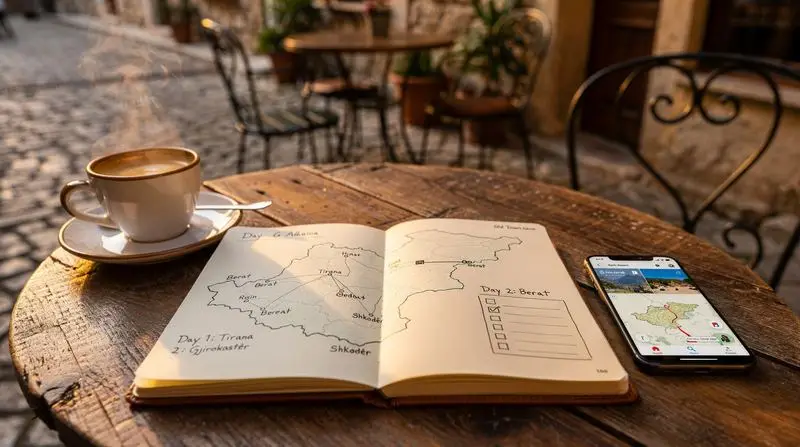
Download offline maps before departure. Google Maps allows full offline map downloads — download all of Albania while on home WiFi. This is essential insurance for mountain areas and reduces data consumption during navigation throughout the country. Maps.me is the preferred alternative for detailed hiking trail data.
WhatsApp for everything. WhatsApp is the primary communication tool in Albania. Guesthouses confirm reservations via WhatsApp, restaurants respond to table inquiries via WhatsApp, local tour operators send updates through it. Your eSIM data plan makes WhatsApp work without WiFi — a significant practical advantage.
Monitor usage through the provider app. Most eSIM providers have apps showing real-time data consumption. Check periodically, particularly if you are on a capped plan, to avoid surprises near the end of your trip.
Top up in-app if needed. Most providers allow additional data purchases through their app if you exhaust your plan. This is more expensive per GB than buying the right size initially but functions as a fallback.
Hotel WiFi offsets eSIM consumption. Use hotel and cafe WiFi for data-heavy tasks (downloading large map files, streaming in the evening, video calls). Reserve your eSIM data for outdoor use and transport. This approach makes even a 3 GB plan sufficient for a week.
Payment and Technical Notes
All major eSIM providers accept credit and debit cards, Apple Pay, and Google Pay. Purchases are made in USD, EUR, or GBP depending on the provider’s pricing structure. Receipts are emailed automatically — useful for expense claims.
The eSIM purchase can be made at any time before your trip — up to several months in advance. The QR code remains valid until scanned. There is no penalty for purchasing early. The plan’s data allowance period typically begins when you first connect to a local Albanian network, not from the time of purchase.
What to Do If Your eSIM Stops Working
If your eSIM loses connectivity during your trip:
- Check that data roaming is still enabled for the eSIM in your phone’s cellular settings
- Try toggling airplane mode off and on to force a network reconnection
- Check the provider’s app for any service alerts or account issues
- Contact provider support via WhatsApp or in-app chat — most respond within minutes
- If the eSIM itself has become corrupted (rare), the provider can reissue a QR code
As a backup, knowing where Albanian carrier shops are in the city you are visiting provides an alternative if eSIM issues cannot be resolved remotely. Vodafone Albania and ALBtelecom both have high-street shops in major Albanian cities where a physical SIM can be purchased quickly.
For additional practical planning, the Albania travel tips guide covers connectivity alongside the broader practical advice that makes any Albania trip work smoothly. The Albania packing list includes connectivity preparation as part of the standard pre-departure checklist.
Once you are connected and on the ground in Albania, a city walking tour is one of the best ways to orient yourself quickly:
This Tirana city walking tour covers the main landmarks with a local guide who can also provide practical current information about getting around — complementing your digital connectivity with the kind of local knowledge that no app replaces. Cost approximately EUR 15-25 per person.
Using eSIM Data for Navigation on Albania’s Roads
Albania’s road network includes long stretches of mountain switchbacks, particularly on the coastal road between Vlora and Saranda and on routes into the Albanian Alps, where signage can be sparse and GPS becomes essential rather than a convenience. An active eSIM data connection lets Google Maps or Waze recalculate in real time as you navigate, which matters more in Albania than in countries with denser, better-signed road networks.
That said, coverage gaps do occur on some mountain passes, so downloading offline map sections for your planned route before setting out is still the safer approach — treat live navigation as a backup to offline maps, not a replacement for them. Renting a car is one of the best ways to see rural Albania properly, and having reliable data for both navigation and translating road signs or asking locals for directions via translation apps makes the experience considerably smoother.
eSIM for Digital Nomads and Longer Stays
Travelers staying beyond the typical two-week holiday window face a different calculation. For stays of one to three months, stacking multiple 30-day eSIM plans becomes expensive compared with the alternative: buying a physical Albanian SIM after arrival (Vodafone Albania, ALBtelecom, or ONE), which offers substantially cheaper per-GB rates and can be topped up indefinitely at local shops. A practical middle path many longer-stay visitors use is an eSIM for the first week — covering connectivity from the airport onward while you settle in — followed by a local physical SIM once you have time to visit a carrier shop. For the broader logistics of extended stays, see the Albania travel tips guide, and pack accordingly using the Albania packing list, which flags connectivity essentials alongside everything else.
eSIM Battery and Data Usage Tips
Running an active eSIM data connection alongside your home SIM does draw more battery than a single-SIM setup, particularly on older phones. A few habits reduce the impact without sacrificing connectivity: switch to 4G-only rather than letting your phone hunt for 5G in areas where 5G coverage is patchy anyway, disable background app refresh for data-heavy apps you are not actively using, and keep a portable charger or power bank in your daypack for full days of sightseeing away from an outlet. Most travelers find that a standard 10,000mAh power bank comfortably covers a day of active navigation, photography, and messaging on top of normal phone use.
Roaming from Your Home Country: Is It Ever Better Than an eSIM?
For short trips of just a few days, some travelers find their home carrier’s EU/international roaming add-on is competitive with an eSIM, particularly if the home plan already includes the Balkans in a regional bundle. However, Albania is frequently excluded from EU roaming bundles because it is not an EU member state — a common and costly surprise for European travelers who assume their EU roaming allowance covers Albania automatically. Always check explicitly whether your home carrier’s plan includes Albania by name, not just “Europe,” before relying on it. In most cases, a dedicated Albania or Balkans eSIM plan works out cheaper and more predictable than assuming home roaming coverage.
Connecting Your eSIM to the Rest of Your Trip Planning
An eSIM works best when it is part of a wider plan. If you are comparing carriers before buying, the Albania SIM provider comparison sets the local operators side by side, which helps you judge whether the eSIM premium is worth it for your trip. If you are still working out how you will arrive, the how to get to Albania guide covers the main routes, and it is worth installing your eSIM profile before you leave home whichever one you choose.
Connectivity also matters once you start moving around. Travelers heading to the mountains should read the Theth to Valbona hike guide alongside the coverage notes above, since offline maps matter far more than live data on the trail. Those relying on buses and furgons will find that a working data connection makes checking departure times and messaging a driver much easier, as described in the buses and furgons guide. And if you want a few more apps to load before departure, the best apps for Albania is a good place to start.
Frequently Asked Questions About eSIMs in Albania
Can I use an eSIM in Albania?
Yes, eSIMs work in Albania with providers like Airalo, Holafly, and Nomad offering Albania-specific or Balkans regional data plans. eSIMs are the most convenient option for travelers who do not want to purchase a physical SIM on arrival. Coverage quality depends on the underlying network the eSIM uses — most use Albanian operators Vodafone AL or ONE.
How much does mobile data cost in Albania?
Albanian SIM cards from local operators (ONE, Vodafone Albania, ALBtelecom) offer very affordable data plans — EUR 5-10 for 5-10 GB of data for a short-term visitor SIM. International eSIM providers charge EUR 5-15 for similar data allowances for Albania. Local SIMs require registration with a passport, while eSIMs are fully digital.
Does my phone work in Albania?
Most modern unlocked smartphones work in Albania. The country uses 4G LTE on standard frequency bands (1800 MHz, 2600 MHz) compatible with European and most international devices. Check that your phone is unlocked before using a local SIM. Coverage is good in cities, towns, and along main roads, but limited or absent in the Albanian Alps mountain valleys.
What is the best SIM card for Albania?
Vodafone Albania and ONE are the two largest networks with the best overall coverage, including 4G in most populated areas. ONE typically edges out on rural coverage in some regions. For most visitors buying a local SIM at the airport or in Tirana, either operator is a reliable choice. Tourist SIM packages with bundled data start from EUR 5-8 at telecom shops.
Does my EU roaming plan work in Albania?
Usually not automatically. Albania is not an EU member, so many EU carriers’ “roam like at home” bundles exclude it entirely or apply separate, often expensive, out-of-bundle roaming rates. Check with your home carrier whether Albania is explicitly included before relying on it — if it isn’t, an eSIM or local SIM is the more predictable and usually cheaper option for your trip.
Can I use WhatsApp and Google Maps without an eSIM in Albania?
Only where WiFi is available — hotels, guesthouses, cafes, and restaurants across Albania almost universally offer free WiFi, so WhatsApp messaging and route-checking work fine indoors. For navigation while walking or driving between towns, or for staying reachable away from WiFi, an eSIM or local SIM becomes genuinely useful rather than optional.