Albania in December: A Quiet Winter with Festive Highlights
December is one of Albania’s quietest months for tourism and one of its most atmospheric. The country in December operates at its natural winter rhythm — not suppressed or closed, as some visitors imagine of off-season travel, but unhurried, affordable, and full of the genuine daily life that summer visitors surrounded by tourist infrastructure rarely see.
The headline attraction of an Albanian December is Korce’s Christmas market, one of the most charming seasonal events in the Balkans and almost entirely unknown to international visitors outside Albania and the Albanian diaspora. Combined with Tirana’s growing festive decorations, the thermal springs that are most pleasurable in cold weather, and the extraordinary value pricing of Albania’s quietest month, December offers a genuinely rewarding experience for the right kind of traveler.
| Where | Korça, Tirana, Berat, Gjirokastra — culture, not coast |
| Cost | Among the lowest of the year, alongside January |
| Time needed | 4-7 days for a culture-and-thermal-baths circuit |
| Getting there | Fly into Tirana; rental car useful outside the capital |
| Best time of day | Daytime for sightseeing — days are short, roughly 9am-5pm light |
December Weather in Albania
Temperatures in December range from 6°C to 12°C across most of the country, with colder conditions in the mountains and at elevation. Tirana and the coastal lowlands see average highs of 10-11°C, with nights dropping to 3-5°C. Rainfall is at its annual peak in December — along with January, it is the wettest month in the Albanian calendar — and overcast days with periodic rain are the norm.
The far south retains slightly milder conditions. Saranda and the southern Riviera coast typically see a degree or two warmer than the national average, and clear days in December there can be pleasant for walking and outdoor sightseeing.
Snow is possible in Tirana and the coastal lowlands during cold snaps, though it rarely persists. The northern mountains around Shkodra and the Albanian Alps are properly snowbound in December, and the passes connecting highland communities are often closed to ordinary vehicles. Mountain hiking is not a December activity for the general visitor.
Korce’s Christmas Market: Albania’s Most Charming December Event
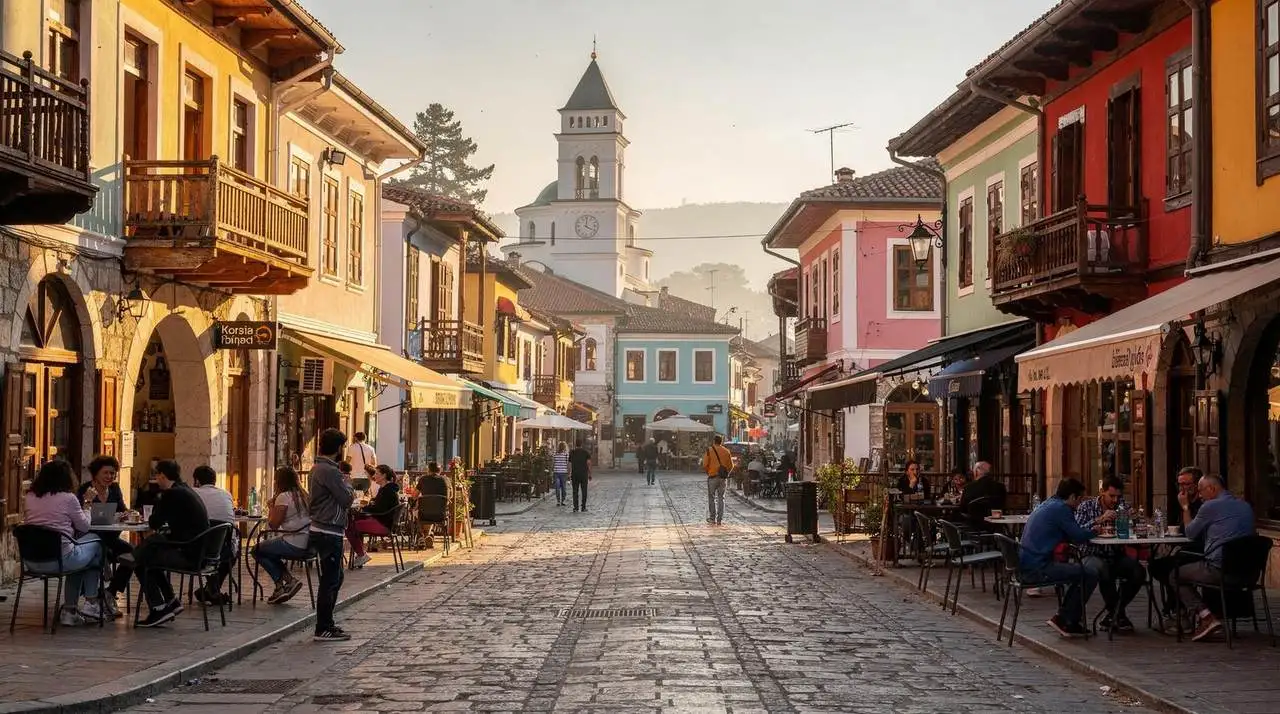
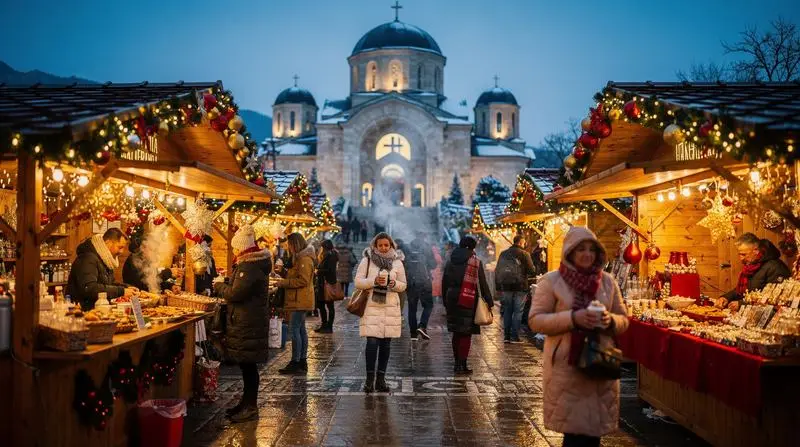
The Christmas market in Korce (also written Korca) is genuinely one of the most appealing seasonal events in the Balkans, and its near-complete absence from international tourism awareness makes visiting it an experience of pleasant discovery. The market occupies the central boulevard of the city — the tree-lined avenue that is the heart of Korce’s social life — with wooden stalls selling crafts, local food products, warm drinks, and seasonal decorations, lit with the warm light of the market season.
What makes the Korce Christmas market special is its combination of the universal elements of the central European Christmas market tradition (the stalls, the mulled wine, the artisan goods, the festive atmosphere) with the particular character of Korce: a city that has always seen itself as Albania’s most culturally sophisticated, with a strong Orthodox Christian and historically significant Jewish community, a brewing tradition dating to the nineteenth century, and a particular pride in its own cultural identity.
The market atmosphere is warm despite the cold — Albanians visiting from across the country and from the diaspora mix with the curious international visitors who have found their way to this southeastern city. The local food stalls serve traditional Korce pastries, hot drinks, and seasonal sweets that are specific to this city and this occasion.
Korce is accessible from Tirana by a bus or car journey of roughly three hours through the central Albanian highlands. The drive itself — particularly if you go via the Elbasan valley and the Qaf e Thanës mountain pass — is scenic and rewarding. The city is large enough to warrant a one or two night stay, and the December visit allows time for the Christmas market, the Museum of Medieval Art (which houses some of the most important Byzantine icons in the region), and the city’s distinctive architectural character.
Berat and Gjirokastra in December
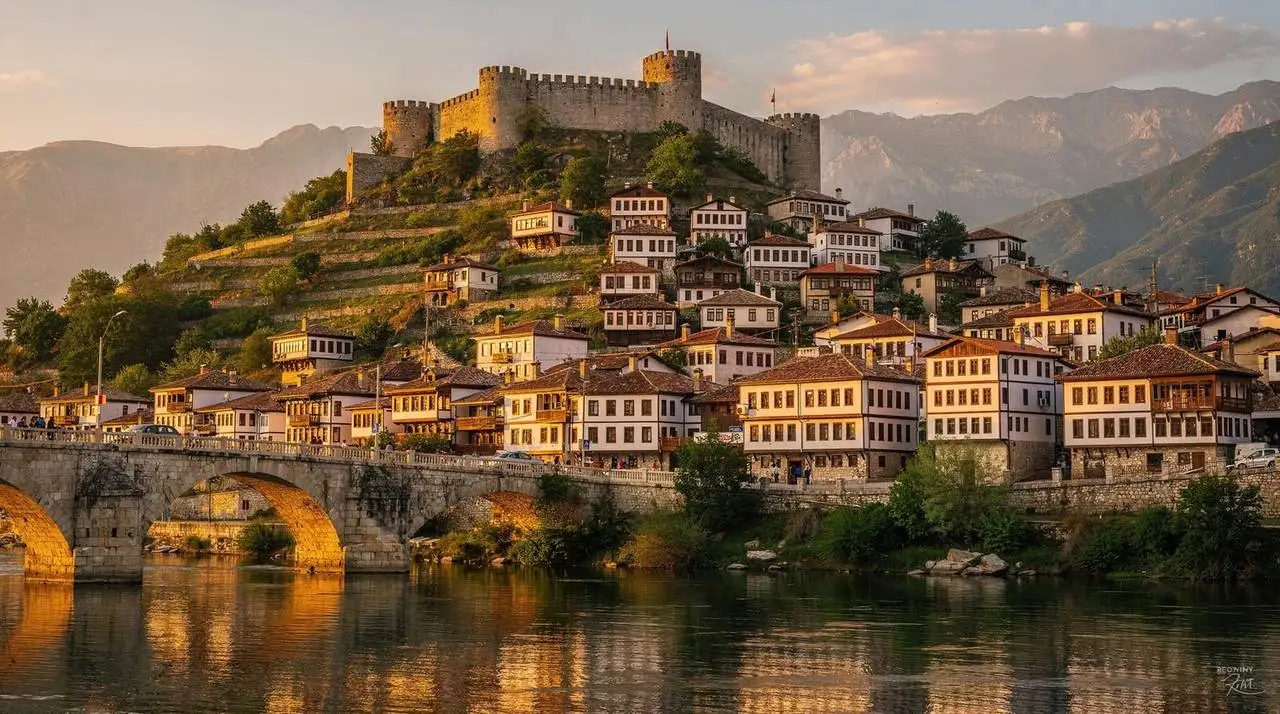
The UNESCO World Heritage cities of Berat and Gjirokastra are both rewarding in December, experienced in the kind of tranquility that their summer visitor numbers make impossible. Berat’s white Ottoman houses against a winter sky, the castle lit in the short December afternoons, and the restaurant terraces that in summer look out over a busy Osum river valley now showing a quieter, more reflective version of the view — all of these give the city a particular December character.
Gjirokastra in December is atmospheric in a way that suits its stone architecture and historical weight. The castle — one of the largest and best-preserved Ottoman-era fortifications in the Balkans — is most effectively visited in low season when the space is your own. The views from the castle walls over the Drino valley in December’s clear weather, with snow visible on the mountains above, produce a different image of Albania from the summer version but no less compelling.
Both cities have year-round hotels and restaurants. The smaller guesthouses within the UNESCO zones are worth prioritizing for December — staying within the old quarter in a historic building provides an experience of these cities that the peripheral hotels cannot match, and December is exactly the time when these properties are available and affordable.
Tirana in December: Festive Capital
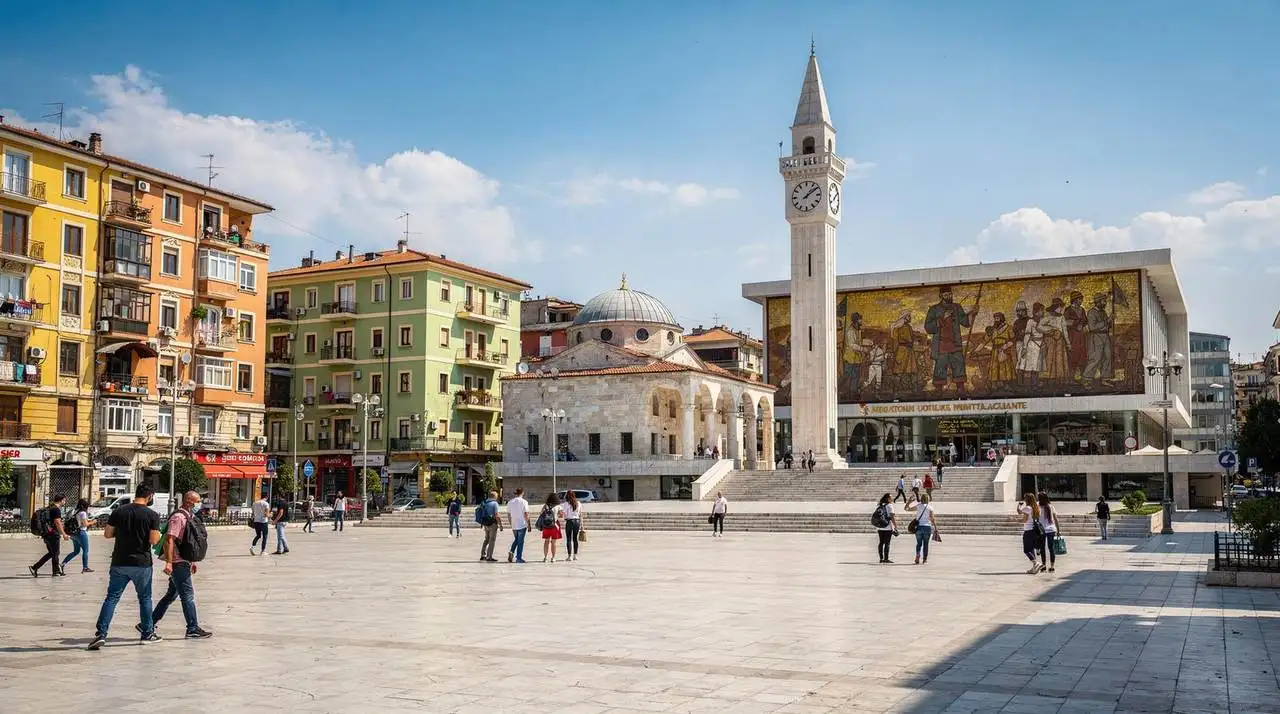
Tirana in December has developed a growing festive decorations program in recent years. Skanderbeg Square and the main boulevard are lit for the season, and the city’s cafe and restaurant scene maintains its usual vitality without pause. The holiday season — which in Tirana encompasses both the secular New Year celebrations and the Christian Christmas observed by a significant portion of the population — creates a festive atmosphere from mid-December through New Year.
The BunkArt museums, the National History Museum, the National Art Gallery, and the other cultural institutions of Tirana are all open in December and at their quietest, most accessible state. A December cultural immersion in Tirana — two or three days covering the major museums and galleries, exploring the New Bazaar and the Blloku neighborhood, eating well at restaurants that have time to serve rather than just survive — provides excellent value and a genuinely unhurried experience.
The New Year’s Eve celebrations in Tirana (Nata e Vitit te Ri) center on Skanderbeg Square, where a concert and fireworks program typically draws large crowds from across the city. This is one of the more energetic social events of the Albanian calendar, reflecting the importance that Albanians place on the New Year transition.
Shkodra in December
Shkodra in December offers a northern Albanian winter experience that is worth the journey from Tirana for the right visitor. The city is Albania’s fourth largest and has a cultural seriousness — it is considered the country’s most artistically and intellectually ambitious city — that manifests in active gallery programs, literary events, and cultural institutions that operate year-round.
The Rozafa Castle above Shkodra, one of the finest Illyrian and medieval fortress complexes in the Balkans, is dramatic in December conditions: the lake below in its winter grey, the mountains to the north white with early snow, the castle walls emerging from the hill against a winter sky. Access is year-round, the views from the ramparts are exceptional, and the visit in December involves complete solitude at one of the finest viewpoints in Albanian travel.
Lake Shkodra — the largest lake in the Balkans, shared between Albania and Montenegro — is at its winter level in December, which is often slightly higher than summer due to the winter rainfall. The lake’s birdlife is at its most diverse in winter, when migratory species join the resident population. Birdwatching at Lake Shkodra in December, for those with this interest, is genuinely excellent.
The city’s main pedestrian street, Rruga Kole Idromeno, provides the standard Albanian cafe culture experience in a northern city context. The coffee shops here have a slightly different character from Tirana — more reserved, reflecting the northern Albanian character — but equally committed to the social institution of the long coffee.
Thermal Baths in December: The Essential Winter Activity
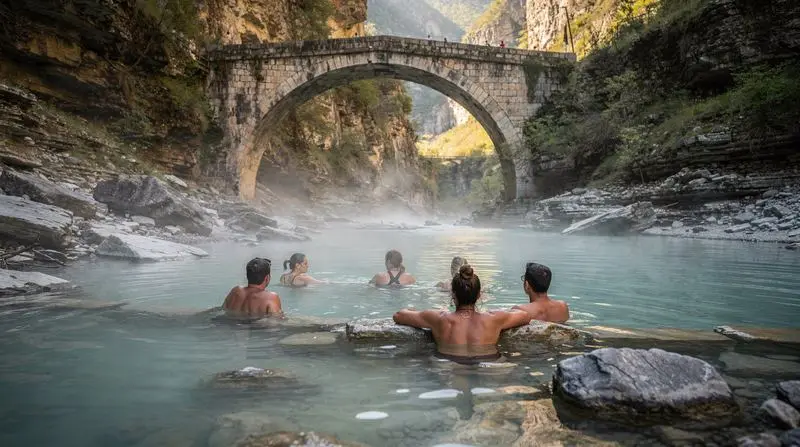
The thermal springs of Albania are at their absolute best in December. The hot mineral water at the Benja thermal baths near Permet — maintained at around 28-32°C — is most pleasurable when the surrounding air temperature is close to zero and frost covers the canyon walls. The steam rising from the pools, the cold air outside the water, and the dramatic winter landscape of the Langarica Canyon create a sensory experience that the summer version cannot replicate.
A guided excursion to the Benja thermal baths handles the logistics of reaching the springs in December, when road conditions can be variable and advance confirmation of the springs’ winter operating arrangements is useful.
The thermal bath complex at Llixha near Elbasan is the more developed and accessible alternative for visitors based in central Albania. With proper changing facilities and consistently maintained hot pools, it serves a primarily local clientele year-round and is perfectly functional in December.
A Realistic December Itinerary
A well-paced December trip runs 5-7 days and avoids the coast entirely: two nights in Tirana for the museums and festive city centre, one or two nights in Berat for the castle and old quarters in winter light, a night in Korça timed around the Christmas market if dates allow, and a day trip to the Benja thermal baths near Permet worked in from either Berat or Gjirokastra. This route keeps driving distances reasonable — Tirana to Berat is under two hours, Berat to Korça around three via the Qafë e Thanës pass — and avoids the mountain passes that can close after snowfall.
Travellers with more time can extend north to Shkodra for Rozafa Castle and Lake Shkodra’s winter birdlife, though this adds a full extra day of driving each way from the southern circuit and is best treated as a separate short trip from Tirana rather than bolted onto a Berat-Korça-Permet loop.
For visitors without a rental car, buses and furgons connect all of these cities year-round, though December schedules run less frequently than summer ones and the last departures of the day tend to be earlier — worth checking locally rather than assuming a summer timetable still applies.
What Remains Open in December
The cultural infrastructure remains essentially fully operational in December. Museums, UNESCO World Heritage sites, the castle complexes at Berat and Gjirokastra, and the archaeological sites at Butrint and Apollonia all maintain their winter visiting hours. Berat and Gjirokastra are accessible and rewarding in December — perhaps even more so than summer, as the absence of any tourist competition makes the cities entirely available in their authentic winter state.
Coastal facilities (beach bars, sunbeds, beach-facing restaurants) are closed through December. The smaller coastal resort towns have a minimal presence of open businesses. Saranda and Vlora as towns remain functional but with reduced winter hospitality.
Transport between cities continues year-round. The main highways are generally passable in December, though mountain passes can be closed after snowfall. Checking road conditions before mountain travel in December is essential.
Christmas and New Year in Albania
Albania’s relationship with Christmas reflects its religious and historical diversity. The Catholic minority (particularly concentrated in the north and in some Shkodra families) celebrates Christmas on December 25th. The Orthodox minority celebrates in January. The Muslim majority — while not religiously observing Christmas — participates in the secular and commercial aspects of the holiday season.
The net result is that December has a festive quality that is not confined to any single religious identity. The Christmas market in Korce, the New Year decorations in Tirana, and the general Albanian hospitality that makes any holiday an occasion for gathering and celebration all contribute to a December atmosphere that is warm despite the cold weather.
Prices and Value in December
December competes with January for the title of Albania’s cheapest month. Accommodation prices are at their annual minimum. Flights to Tirana from European capitals drop to their off-season lows. The combination of inexpensive accommodation, Albania’s already-low food and drink prices, and the complete absence of any tourist premium creates genuinely exceptional value.
A Tirana walking tour in December operates year-round and provides the standard orientation to the capital in the quiet, cold conditions of the winter month. The small group sizes typical of December tours often produce a more personal and informative experience than the larger summer groups.
What to Pack for December
December packing is the same as January: waterproof boots, a warm wool or fleece mid-layer, a proper waterproof outer jacket, and thermal underlayers for mountain visits or the colder northern cities. A wool hat and gloves are appropriate for evenings everywhere.
Albanian Food in December
December’s food culture is at its most heartwarming in the literal sense. The winter cooking that defines Albanian cuisine in the cold months — long-simmered bean soups, slow-braised lamb, hearty potato and vegetable bakes, and the rich dairy products of winter milk — is at full operation. The markets have the winter’s preserved goods: pickled vegetables, dried peppers, aged cheeses, stored potatoes and root vegetables, and the dried figs, walnuts, and other autumn produce that provide sweetness and richness through the winter months.
The New Year preparations from mid-December onward give the food culture in Tirana a festive quality: pastry shops produce special New Year cakes (simite dhe gëzim — various traditional pastries and sweets), restaurants offer special menus, and the general sense of cooking for celebration adds something to even ordinary restaurant meals in the city.
Raki consumption increases through December, as described in our raki guide. The offer of raki to visitors is if anything more pressing in December than in summer — the spirit’s warming function is genuinely relevant, and the Albanian tradition of hospitality through offering raki operates at full intensity as the cold of the year’s end sets in.
Meeting Albanians in December
December’s minimal tourist numbers create a particular social opportunity. Albanian hospitality — the besa tradition of welcoming guests that is described in our Albanian customs guide — is particularly evident when there are few visitors to dilute the individual attention. Travelers who visit Albania in December often report the most direct and meaningful interactions with local people of any month, precisely because they are unusual enough to generate genuine curiosity rather than tourist-industry routine.
The Albanian approach to New Year’s Eve — celebrated with great enthusiasm as a secular holiday that unites Muslim, Christian, and non-religious Albanians equally — is worth experiencing directly if timing permits. The Tirana celebrations center on Skanderbeg Square and the surrounding streets, with concerts, fireworks, and the collective marking of the year’s end that Albanian society does with considerable energy.
December Practical Tips
Book accommodation in Korce in advance if you plan to visit for the Christmas market, particularly for the peak December weekends when Albanian visitors from across the country arrive for the market. The city’s hotels fill up for these weekends in a way that nothing else in December does.
The main Tirana hotels and restaurants are operating normally and without any seasonal closures. Transport between cities is running on normal schedules throughout December. Mountain roads should be treated with respect in December — the passes can be icy and snowbound, and checking conditions before any mountain drive is essential.
Is December Right for You?
December suits travelers who want Albanian culture and authenticity, who are comfortable with cold and wet weather, and who find the idea of a Christmas market in Korce, a thermal bath in a frozen canyon, or a completely uncrowded tour of Berat’s UNESCO old quarter more appealing than beach culture. It is genuinely unsuitable for visitors expecting the warm Riviera experience.
For a complete overview of all twelve months and what each offers, see the best time to visit Albania guide. For a broader look at Albania’s cold months as a pair, the Albania winter travel guide covers December through February planning together, and the winter Albania itinerary lays out a full route.
Frequently Asked Questions About Albania in December
Is Korça’s Christmas market worth a special trip?
Yes, for travellers interested in an authentic, largely undiscovered seasonal event — it has the charm of a Central European Christmas market with a distinctly Albanian character, and it draws few international visitors relative to its quality. Combine it with a night or two exploring Korça’s Museum of Medieval Art and old bazaar quarter, and factor in the roughly three-hour drive or bus journey from Tirana.
Can you visit the Albanian coast in December?
Technically yes, but most beach infrastructure — sunbeds, beach bars, seasonal restaurants — is closed for winter, and the towns operate at reduced capacity. Saranda and Vlora remain functional as towns with some year-round restaurants, but December is far better suited to a culture-focused trip through Tirana, Berat, Gjirokastra and Korça than a coastal one.
Is Albania expensive to visit in December?
No — December is one of the two or three cheapest months of the year to visit, alongside January and February. Accommodation, flights and car rental all sit at their annual lows, and the already modest cost of Albanian food and drink makes a December trip genuinely inexpensive by European standards, even accounting for the need to stay in heated indoor spaces rather than outdoor beach settings.