Raki in Albania: The National Spirit Explained
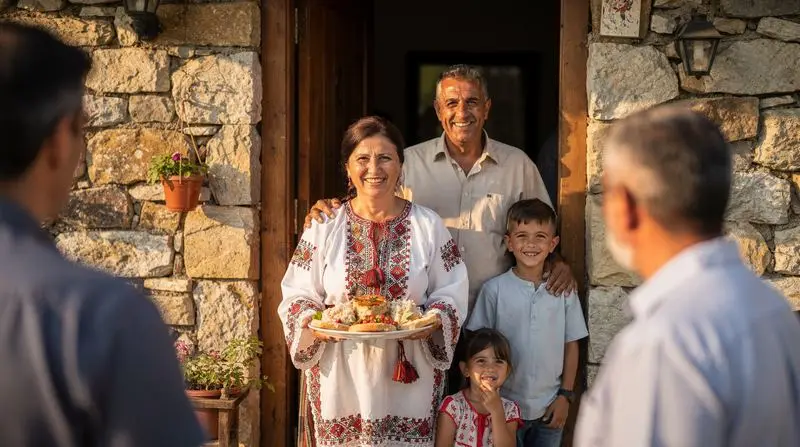
There is no more Albanian experience than being handed a small glass of raki the moment you cross the threshold of an Albanian home. The gesture precedes introductions, sits ahead of any meal, and communicates something beyond mere hospitality: that you are welcome, that the host is prepared for your arrival, and that whatever comes next will be conducted in the spirit of genuine warmth. Raki is not simply a drink in Albania; it is a social instrument as precise and culturally loaded as any formal greeting.
Understanding raki — what it is, how it is made, how it is consumed, and what the protocols around it mean — gives visitors an entry point into Albanian culture that extends well beyond the liquid in the glass.
| What | Grape or fruit brandy, homemade or commercial |
| Strength | Typically 40-55% alcohol |
| Where to try | Any Albanian home, guesthouse, or restaurant |
| Cost | Commercial bottle: around EUR 6-12; homemade often cheaper |
| Etiquette | Sip, don’t shoot; “Gëzuar” is the toast |
What Raki Is
Raki (pronounced RAH-kee) is a fruit brandy produced by distilling fermented fruit mash. In Albania, the base ingredient is most commonly grape — specifically the pressed grape skins, seeds, and stems left over after wine production, known as pomace. This makes Albanian raki essentially a pomace brandy similar to Italian grappa or French marc. However, Albanian raki is also made from plums (kumbull), figs (fik), mulberry (dud), quince (ftua), and various other fruits depending on region, season, and the preferences of the producer.
The alcohol content of typical Albanian raki ranges from 40 percent to 55 percent, though home-produced versions occasionally exceed this. Commercial raki sold in bottles tends toward 40-45 percent. The strength varies significantly with homemade production, and first-time visitors to Albanian households are sometimes caught off guard by the power of raki poured with genuine hospitality.
The flavor profile of grape raki is earthy, slightly funky, and warming — quite different from refined Italian grappa. Albanian raki retains more of the raw character of its base material, giving it an assertive personality that either appeals immediately or requires several encounters to appreciate. The better homemade versions, aged in small wooden barrels, develop considerable complexity.
Homemade vs. Commercial Raki
The distinction between raki shtepi (homemade raki) and commercial raki is fundamental to understanding the drink’s role in Albanian society. Almost every rural Albanian family that grows grapes or other fruit trees produces its own raki, and this home distillation operates entirely outside formal regulation. The practice is so deeply embedded in rural Albanian culture that it effectively functions as a folk right rather than a legal grey area.
The quality of homemade raki varies enormously. The best versions — produced by families with generations of distillation knowledge, using good-quality fruit, and aged properly — rival quality artisan spirits from anywhere in Europe. The worst versions taste harsh and aggressive. There is no reliable way to tell which you are being offered until you taste it, which is itself part of the experience.
Commercial Albanian raki is produced by several distilleries, of which Skenderbeu is the best known. The commercial versions are consistent, appropriately smooth, and available in every Albanian shop and restaurant. They are also, in the opinion of most Albanians, somewhat soulless compared to the best homemade versions — which is why the gift of a bottle of a family’s own raki carries genuine significance.
Regional Raki Variations
Different regions of Albania produce raki from different base materials, and these regional variations have loyal followings.
Permet area in southeastern Albania is famous for its raki fiqit (fig raki), which has a distinctive sweetness and earthiness quite different from the drier grape versions. The fig trees of southern Albania produce fruit with an intensity of flavor that carries through into the spirit. Permet’s raki is considered among the finest in the country by those who seek it out. If you visit Permet and its extraordinary thermal baths, the fig raki is an essential local purchase.
Northern Albania and the highlands produce raki from plums (kumbull) that is softer and fruitier than grape raki. The plum orchards of the Dibra region and around Kukës supply local distillers with fruit that, in good years, produces a brandy of genuine quality. Plum raki is often slightly lower in alcohol than grape raki and is frequently the first introduction to the spirit for visitors who find grape raki too assertive.
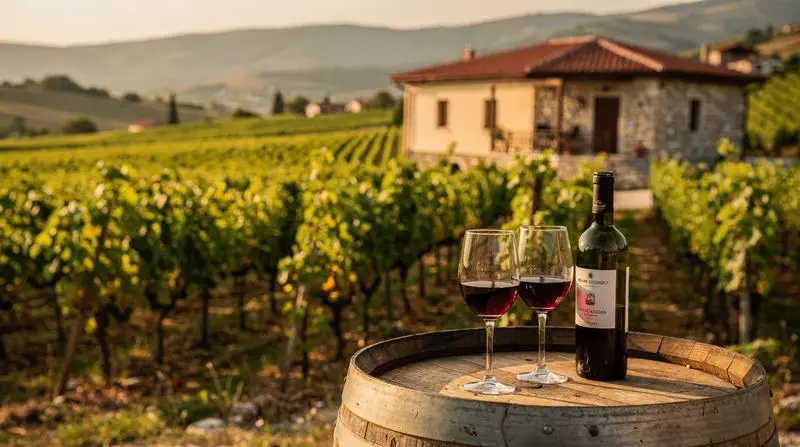
The Berat region, which is also an important wine area, produces raki as a byproduct of its wine industry. The raki from Berat’s wine estates tends to be more refined than purely artisanal productions, since the starting material — quality wine pomace — is better. Visiting Berat in autumn during the grape harvest gives you the chance to see the distillation process in action.
Coastal and island raki from the area around Himara and the Greek-influenced south sometimes incorporates anise, producing a cloudy raki that behaves more like ouzo or arak when water is added. This style is less common than the clear versions but reflects the cultural overlap in this border region.
The Ritual of Raki
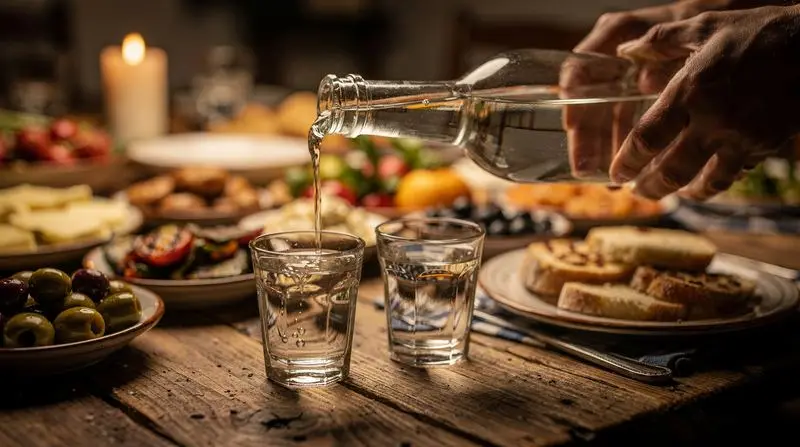
Raki is served in small glasses — typically 50ml at most. The Albanian approach is not to drink large quantities quickly but to sip small amounts slowly over the course of a meal or long social occasion. The glass will be refilled before it is entirely empty in most Albanian homes, so maintaining some liquid in the glass is a practical way to manage the pace.
The traditional toast is “Gëzuar!” — pronounced geh-ZOO-ar — meaning “cheers” or more literally “may you be happy.” The toast is accompanied by eye contact with each person at the table and a clink of glasses. In formal or ceremonial settings, toasts may be extended speeches; in casual ones, gëzuar is sufficient.
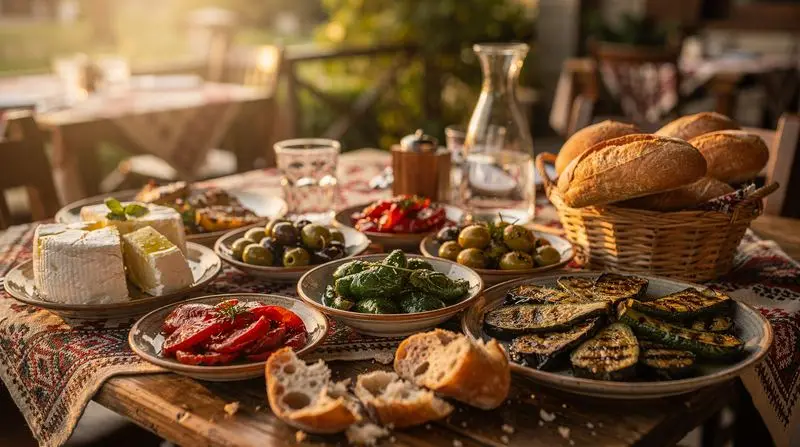
Raki is served before meals as an aperitif, alongside mezze-style starters, with the main course in some traditional settings, and after meals as a digestif. Food always accompanies raki in proper Albanian tradition. Serving raki without at least some bread, olives, or small snacks would be considered poor hospitality. The most elaborate raki accompaniment is a full spread of cold starters: white cheese, olives, stuffed peppers, cured meats, raw vegetables — what Albanians call meze.
How to Handle Raki as a Visitor
The principal challenge for visitors is that Albanian hospitality makes it difficult to refuse raki without creating mild social awkwardness. The solution is simple honesty: “Nuk pi alkool” (I don’t drink alcohol) is always respected, and Albanians will not press you. “Pak, pak” (a little, a little, said with a gesture toward a small amount in the glass) is another workable approach that expresses willingness to participate without committing to a full glass.
If you do drink raki, sipping rather than shooting is both the culturally correct approach and the practical one. Albanian hosts take the refusal of a refill less personally if the glass still has something in it.
The raki poured for you in Albanian homes is almost certainly the host’s own production or that of a family member. Commenting positively — even if it is rougher than expected — is appropriate. Albanian raki producers take considerable pride in their work, and the pride is often justified even when the product is an acquired taste.
Raki and Albanian Ceremonies
Raki’s role in Albanian life extends beyond everyday hospitality into ceremonial functions that few other beverages carry.
Weddings in Albania involve raki in quantities and at stages of the celebration that would seem remarkable in other contexts. The morning of a traditional Albanian wedding begins with raki for the wedding party and close family, symbolically marking the transition of the day. Raki toasts punctuate the wedding feast at intervals throughout an event that may last two days.
Religious celebrations, naming ceremonies, funerals, and harvest festivals all involve raki as the default ceremonial drink. The consistency of this use across Muslim and Christian Albanian communities is notable — raki functions as a cultural symbol that transcends religious practice, reflecting Albania’s long tradition of religious tolerance.
The autumn distillation — when the grape harvest is distilled — is itself a social occasion in rural communities. Families gather around the shared distillation equipment, and the first raki to come off the still is tasted communally and evaluated with the seriousness of a professional tasting.
How Raki Is Made: The Distillation Process
Understanding how raki is made explains why quality varies so significantly. The process begins with the raw material: for grape raki, this is pomace — the grape skins, seeds, and stems left after wine pressing. The quality of the starting material has enormous influence on the final spirit.
The fermentation stage converts the sugars in the pomace or fruit mash to alcohol over several days to several weeks. Distillation happens in a copper pot still called a kazani. The fermented mash is loaded into the still, which is heated — traditionally over a wood fire — until the alcohol vapors rise, pass through a copper coil cooled by cold water, and condense into liquid. The first portions (the “head”) and final portions (the “tail”) are separated and discarded; only the middle — the “heart” — becomes raki. This selection process is where the distiller’s skill most directly affects quality.
The resulting liquid is typically clear and around 50-55 percent alcohol before dilution. Aging in small oak barrels mellows the spirit, adds golden color, and develops complexity over months or years. Unaged raki is clear and assertive; barrel-aged raki is nuanced and significantly more pleasant for those unfamiliar with the style.
Buying Raki in Albania
Commercial raki is available in every supermarket and convenience store. Skenderbeu and Gjergj Fishta are the most widely available brands. Regional distilleries sell their products locally.
Buying from producers in rural areas is both possible and recommended. Farmers selling homemade raki operate simply: bottles filled from barrels are sold at prices far below commercial equivalents, often without labels. This is how most raki actually changes hands in Albania, and the personal connection gives the purchase a context that commercial transactions cannot provide.
Artisan shops in Tirana: The New Bazaar area and several shops in Blloku sell properly labeled artisan raki from small producers at quality-appropriate prices — the best option for taking raki home as a gift.
Airport duty-free: Tirana Airport has commercial raki available. Convenient but not the most interesting option.
What to buy: For quality, seek raki from named producers in the Permet region (for fig raki), Berat valley (for grape), or Shkodra area. Look for barrel-aged versions (plepur in northern dialects) for complexity. For an introduction to the style, Skenderbeu’s commercial grape raki is a reliable benchmark.
Raki’s Role in Albanian Hospitality
Understanding raki means understanding something about Albanian hospitality more broadly. The offer of raki is an act of besa — the Albanian code of honor and hospitality — and the spirit with which it is offered and received defines the social relationship that follows.
The welcome drink. In a traditional Albanian home, guesthouse, or certain restaurants, raki appears before you have asked for it. This is the literal expression of welcome. The offering of raki says: you are in my space and I am glad you are here.
Homemade versus commercial. The raki that matters in Albanian culture is made at home. When a guesthouse host offers you “raki shtëpie” (house raki), they are offering something made by the family with family produce. This carries more significance — and usually more flavor — than a commercial bottle.
The Albania customs and etiquette guide covers besa and the hospitality code that makes raki a cultural rather than merely alcoholic institution.
Raki Terminology
When buying or ordering raki in Albania, a few terms help navigate the options:
- Raki shtëpie / raki shtepi: homemade raki from private production
- Raki frutash: fruit raki (non-grape base)
- Raki vini / raki rrushi: grape-based raki
- Raki kumbulles: plum raki
- Raki fiku: fig raki
- Plepur: aged raki, particularly in the north
- Gëzuar: cheers
When offered raki from an unlabeled bottle, asking about the base material (“nga çfarë është?” — what is it made from?) opens a conversation that Albanians love to have about their production. The answer reveals regional identity, family tradition, and local agricultural context in ways that brand names entirely obscure.
Raki and the Broader Drinking Culture
Raki sits at the center of Albanian drinking culture but does not stand alone. Albanian wine has developed significantly, particularly among younger Albanians and in urban settings. The two coexist comfortably, often at the same table: raki for the aperitif and toast, wine with the meal.
Beer (birra) is widely drunk in summer and in coastal areas. Albanian commercial beers are light lagers; Tirana Beer and Elbar are the main domestic brands. In Korçë in southeastern Albania, the local brewery has operated since the nineteenth century and produces a beer with more character than the national brands.
For visitors interested in the full picture of Albanian food and drink, the Albanian food guide covers the culinary traditions that provide context for raki’s role at the Albanian table. And for the coffee culture that bookends every Albanian social occasion before and after the raki, see the Albanian coffee culture guide.
Practical Raki Guide for Travelers
At a guesthouse: If offered raki on arrival, accept at least a small amount. It is the warmest social gesture an Albanian host can make.
At a restaurant: “Raki shtëpie” is always worth asking for. The answer — whether they have their own production or a commercial bottle — tells you about the restaurant’s character.
At a traditional meal: Follow the pace of the other drinkers, sip rather than shoot, and respond to toasts with gëzuar and eye contact. The formality varies by setting.
Taking it home: Pack commercial bottles in checked luggage. For homemade raki in unlabeled bottles, declare it at customs as the 1-2 liter personal allowance typically covers a gift purchase; larger quantities require declaration and may face questions.
For non-drinkers: The refusal is genuinely respected. “Nuk pi alkool” closes the subject without offence in virtually every Albanian context.
Raki is one of those things that, once understood in its cultural context, transforms from an aggressive spirit into a social key. It opens conversations, marks transitions, honors guests, and connects the present to a tradition of Albanian hospitality that runs through every aspect of the country’s culture.
Understanding raki in the context of Albanian food culture is deepened by a food tour, where raki appears naturally within the meal sequence:
This Tirana food tour with meals included covers Albanian culinary culture — byrek, grilled meats, local cheeses, sweets, and the context in which raki appears as both a welcome gesture and a meal marker. One of the best structured introductions to Albanian food culture available. Cost approximately EUR 30-50 per person.
For the wine dimension of Albanian drink culture — which shares deep roots with the same agricultural traditions that produce raki — see the wine tasting guide and the Albanian food guide.
This winery tour and tasting near Tirana often includes raki alongside wine in the tasting sequence — giving you both dimensions of Albanian viticulture and distillation in a single visit. Cost approximately EUR 20-35 per person.
Raki Prices Around Albania
Prices vary by region and setting. Expect to pay slightly more for raki served in tourist-oriented restaurants on the Albanian Riviera than in a small-town bar in the interior. Buying directly from a producer — a farm stand, a family in a village, or a guesthouse offering their own bottle for sale — is usually the cheapest route to the best quality, since you are cutting out both retail markup and the packaging costs of a labeled commercial bottle.
Raki Styles at a Glance
For visitors trying to make sense of the different regional and base-material variations quickly:
| Style | Base | Character | Where it’s best |
|---|---|---|---|
| Raki rrushi (grape) | Grape pomace | Earthy, assertive, closest to grappa | Berat region |
| Raki fiqit (fig) | Figs | Sweet, distinctive, softer entry point | Permet |
| Raki kumbulles (plum) | Plums | Fruitier, often lower alcohol | Northern highlands, Dibra/Kukës |
| Commercial (Skenderbeu) | Grape | Consistent, smooth, “safe” choice | Any supermarket or shop |
Where to Try Raki Beyond the Home
While the home is where raki’s cultural role is most fully expressed, curious travelers can also explore it through guided tastings and food experiences. The winery tours and food tours linked above build raki into a structured context alongside wine and traditional dishes — a good option for visitors who want to understand the drink without relying solely on being invited into someone’s home. The Albania customs and etiquette guide covers the wider besa hospitality tradition that raki sits within, useful reading before any homestay or guesthouse visit where raki is likely to appear unprompted.
Frequently Asked Questions About Raki in Albania
Is it rude to refuse raki in Albania?
No. While accepting at least a small amount is the warmest response to an offer, a polite refusal — “Nuk pi alkool” (I don’t drink alcohol) — is genuinely respected in every Albanian context, including guesthouses and formal meals. Hosts will not press you after a clear, polite decline.
Can I bring Albanian raki home on a flight?
Yes, but only in checked luggage — liquids over 100ml are not permitted in carry-on bags. Commercial bottled raki travels well; homemade raki in unlabeled bottles should be declared if quantities exceed the typical 1-2 liter personal allowance. Buying at airport duty-free on departure is the simplest option if you forgot to pack a bottle.
What is the difference between homemade and commercial raki?
Homemade raki (raki shtëpie) is produced by families using their own fruit, entirely outside commercial regulation, and quality varies from harsh to exceptional depending on the producer’s skill. Commercial raki (Skenderbeu is the best-known brand) is consistent and smooth but, in the view of most Albanians, less characterful than a good homemade version.