Voskopoje: The Athens of Albania
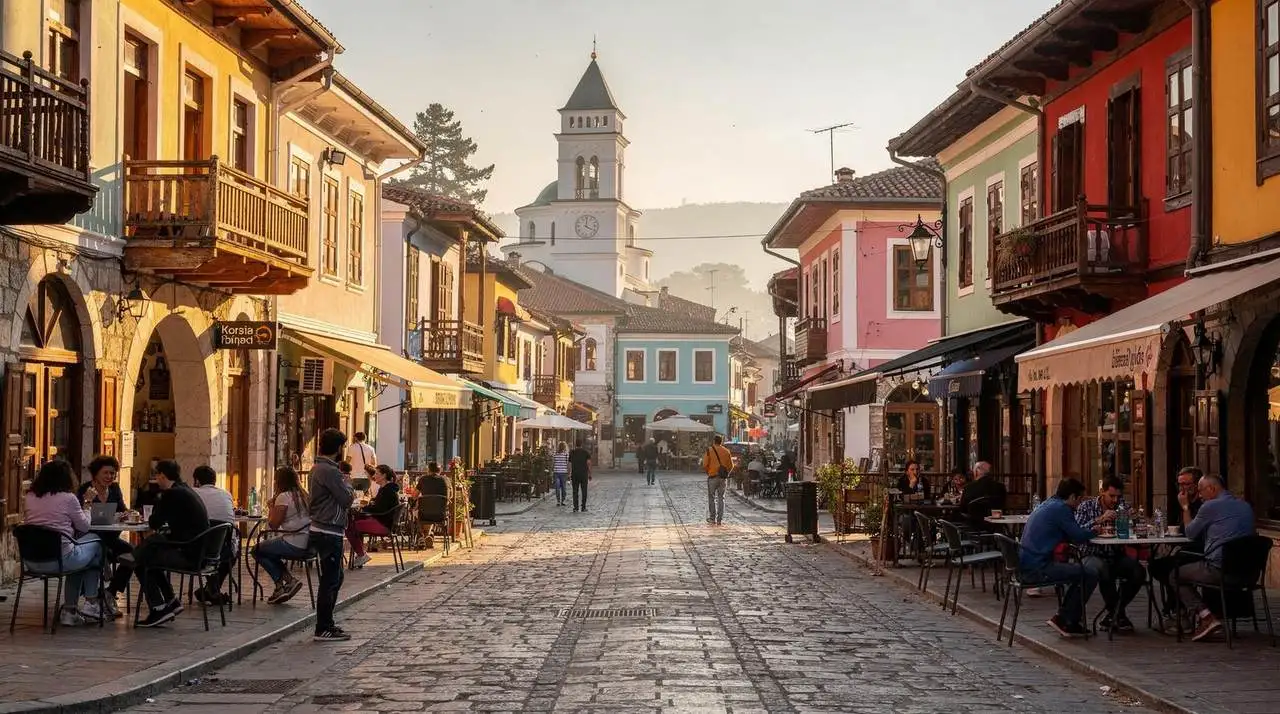
High in the mountains of southeastern Albania, at an altitude of 1,160 metres above sea level and roughly 20 kilometres southwest of Korca, lies one of the most historically significant and visually arresting villages in the entire Balkans. Voskopoje — known in Greek as Moscopole and in various other spellings that reflect its multilingual past — was once one of the largest and most important cities in the Ottoman Balkans. Today it is a quiet mountain village of a few hundred permanent residents. Between those two states lies one of the most dramatic stories of rise and fall in regional history.
At its eighteenth-century peak, Voskopoje had a population estimated between 20,000 and 40,000 people. It was a major centre of Aromanian and Orthodox Albanian commercial life, home to merchants who traded across the Mediterranean, publishers of the first printing press in the Balkans south of the Danube, and builders of churches whose frescoes rank among the finest examples of late Byzantine and post-Byzantine religious art in the world. The city was sacked by Ottoman forces in 1769 and again in 1789, and it never recovered. The population scattered across the Balkans and further afield; the buildings crumbled; the intellectual and commercial life migrated elsewhere.
What survives is extraordinary: a handful of stone churches, several of them still standing and still maintaining the original frescoes from painters of the Korca school, including the master David Selenicasi and his contemporaries. These frescoes — vivid, dynamic, technically sophisticated, and full of narrative energy — are among the most important artworks in Albania and among the least-visited religious monuments in the Orthodox world.
| Where | Southeastern Albania, 20km southwest of Korca, 1,160m |
| Cost | Around EUR 15-30/day; church donations a few hundred ALL |
| Time needed | Half-day to full day trip |
| Getting there | 30-40 min by car/taxi from Korca, no regular bus |
| Best time | May-October, or Dec-Feb for snow (road-dependent) |
The History of a Vanished Metropolis
Understanding why Voskopoje matters requires some understanding of what it was. The Aromanian people — a Romance-speaking people of the Balkans who called themselves Vlachs in much of their own tradition — established Voskopoje as a major commercial hub from the late seventeenth century onward. The city sat at the intersection of trade routes connecting the Ottoman interior with Adriatic ports, and the Aromanian merchant diaspora used it as a base from which commercial networks extended to Venice, Leipzig, Budapest, and Vienna.
The Academy of Voskopoje — established in the early eighteenth century — was the most significant educational institution in the Albanian Balkans at the time, offering instruction in Greek, Latin, and the sciences. The printing press, established in 1720, produced religious texts and educational materials in Greek. The intellectual ambition of the city was genuinely remarkable for its time and place.
The churches were built and decorated during this golden period, from roughly 1690 through the 1760s. The best painters of the Korca school were employed to fill walls and ceilings with frescoes of exceptional sophistication. Then came the destruction: Ottoman military campaigns in 1769 and 1789, driven partly by the rise of the powerful Pashalik of Ioannina and partly by competition between regional powers, destroyed most of the city. The Academy closed, the press fell silent, and the population dispersed.
What the destruction left behind was a ghost city of churches — the stone buildings strong enough to survive what the wooden commercial structures could not — with their frescoes largely intact because the painted surfaces were protected within walls that still stood. For the traveller, this legacy is the reason to come.
The Churches of Voskopoje
Several churches remain standing and accessible in the Voskopoje area. The quality and state of preservation varies, but the best examples are genuinely exceptional.
The Church of Saint Nicholas (Shën Kolli) is widely considered the finest surviving example of Voskopoje church art. Built in 1721 and frescoed by the painter Kosta of Korca and his workshop, the interior walls and ceiling are entirely covered with scenes from the life of Christ, the Virgin, and the saints, rendered in a style that combines Byzantine compositional tradition with a dynamism and narrative realism that reflects eighteenth-century Baroque influence filtering through Orthodox channels. The colors — despite their age — retain a richness that modern reproduction cannot fully convey. Deep ochres, vivid blues, and the characteristic warm reds of the Korca school fill every surface.
The Church of the Dormition of the Virgin (Fjetja e Shën Mërisë), slightly outside the village, contains frescoes attributed to David Selenicasi, considered the master of the Korca school. Selenicasi worked across southeastern Albania and North Macedonia in the first half of the eighteenth century, and his Voskopoje work shows his mature style: elegant figures with emotional expressiveness, complex narrative scenes, and a sophisticated approach to spatial depth that anticipates later Western painterly concerns.
The Church of Saint Athanasius and the Church of the Holy Trinity complete the main group of surviving churches. Not all are always open to visitors — access depends on the local caretaker and religious calendar — so arrival with patience and some flexibility is advisable. Bringing a good torch (flashlight) is strongly recommended, as the interiors are often dark and the frescoes on the ceiling vaults are difficult to see without additional light.
Getting to Voskopoje
Voskopoje is best visited as a day trip from Korca, which lies approximately 20 kilometres northeast and provides all the accommodation, restaurant, and transport infrastructure for the area. The road between Korca and Voskopoje is paved but narrow and winding through mountain terrain; the drive takes around 30-40 minutes by car.
There is no regular public transport directly to Voskopoje. Options for getting there without a car include hiring a taxi from Korca for the day (negotiate a return trip, as taxis in Voskopoje are essentially non-existent), joining an organised tour from Korca, or renting a vehicle. Our car rental in Albania guide covers the practical considerations for self-drive travel in eastern Albania.
For those wanting a guided experience of the Korca region that includes the churches and frescoes of Voskopoje in context: this Korca experience provides a starting point for exploring eastern Albania. Local guides in Korca frequently offer customised day trips to Voskopoje and can explain the church frescoes in their historical context. This Korce walking tour can be combined with a Voskopoje day trip as part of a two-day eastern Albania exploration.
Voskopoje in Winter
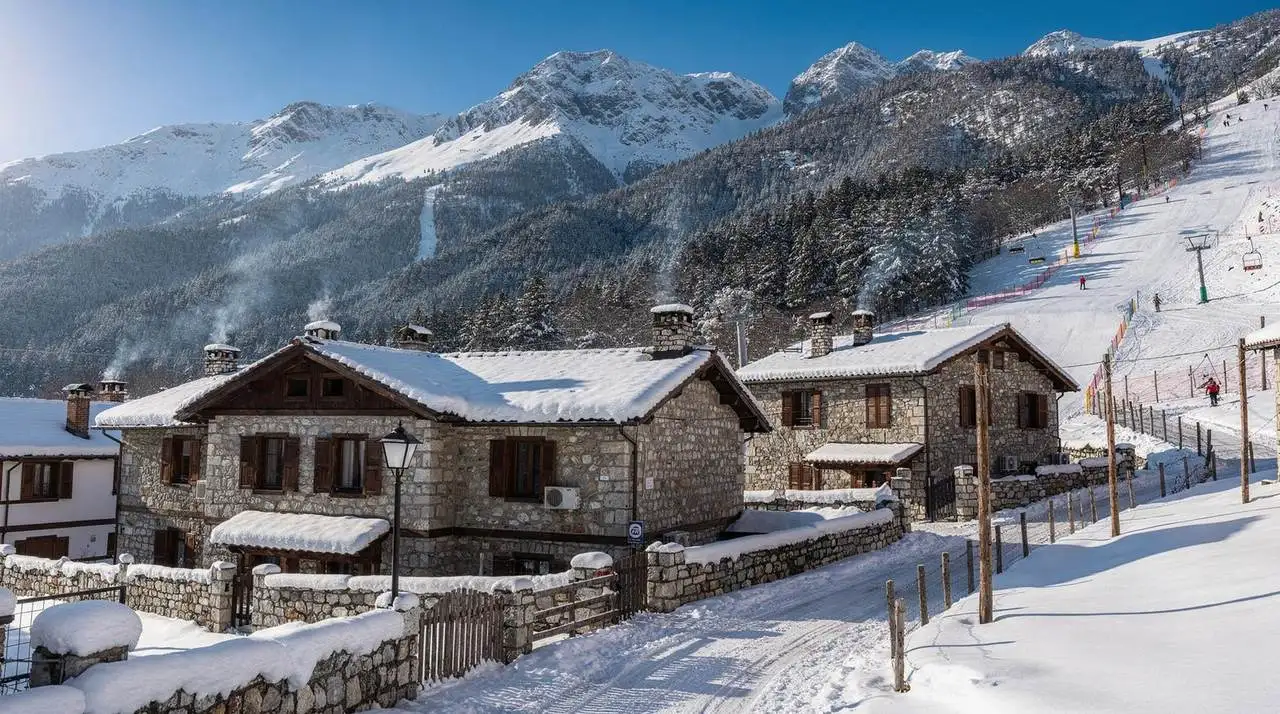
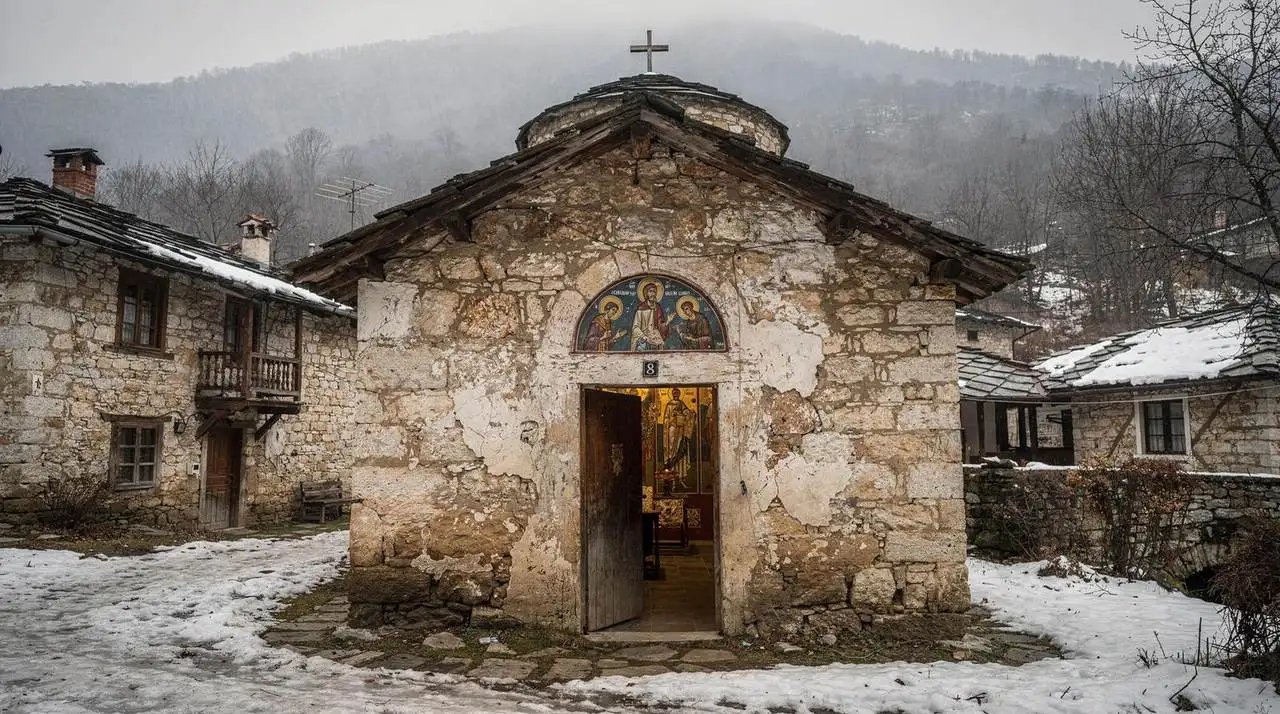
While most Albanian destinations are optimally visited in the warmer months, Voskopoje has a particular appeal in winter that sets it apart from most of the country. At 1,160 metres, the village receives reliable snowfall from December through February, and the landscape of snow-covered mountain pastures, stone church walls, and empty lanes has a severe beauty that summer visitors never see.
Winter visits require more preparation — the road can be icy or briefly impassable after heavy snowfall, the churches may not be accessible without advance arrangement, and accommodation in the village itself is minimal. Basing in Korca and making a day trip when conditions allow is the practical approach. But for travellers who find themselves in eastern Albania in winter, the effort is rewarded with a scene of remarkable bleakness and beauty.
The nearby village of Dardha at 1,344 metres provides a combined winter circuit with Voskopoje for those interested in both ski culture and church architecture — an unusual combination that eastern Albania makes possible.
The Aromanian Legacy
Voskopoje’s history is intimately connected with the Aromanian people, and some understanding of this community enriches the visit. The Aromanians — speakers of a Latin-derived language closely related to Romanian, sometimes called Vlach — were spread across the Balkans from the medieval period onward, maintaining distinctive cultural and linguistic traditions while integrating into the broader religious and commercial life of the Ottoman world.
In Voskopoje, the Aromanian commercial elite built the churches, funded the Academy, and established the printing press. The frescoes they commissioned were painted by Albanian Orthodox artists working in the established Korca tradition, funded by Aromanian merchant wealth, and dedicated to saints venerated across the Orthodox world — a genuinely multi-ethnic cultural production that reflects the complex identity of pre-modern Balkan life.
Today, a small Aromanian-speaking population survives in the Voskopoje area and in the surrounding villages. The language — audible occasionally in conversations among older residents — is a living connection to the eighteenth-century trading city that once stood here. The Albania off the beaten path guide places Voskopoje within the broader context of eastern Albania’s extraordinary but little-known heritage.
Where to Eat and Drink
The village of Voskopoje has a small number of simple restaurants and cafes, mostly informal establishments serving traditional Albanian food. Quality is basic but honest: grilled meats, byrek, local cheese, and seasonal vegetables. Do not expect the restaurant sophistication of Korca.
For serious dining, return to Korca in the evening. The eastern Albania itinerary typically schedules Voskopoje as a morning or afternoon excursion from Korca, with dinner in the city.
In summer, a picnic in the mountain meadows above the village is a better option than most indoor restaurant alternatives. Local shops in Korca can supply cheese, bread, olives, and the excellent local bakllava for a meal in an extraordinary setting.
Combining Voskopoje with the Eastern Circuit
Voskopoje fits naturally into an eastern Albania itinerary that covers Korca, Dardha, Lake Prespa, and Pogradec. The circuit of these destinations — all within a 50-kilometre radius — forms one of the most rewarding off-beaten-path trips in Albania, combining natural landscapes with some of the finest historic and artistic heritage in the country.
Korca as a base makes all of these destinations accessible as day trips without the need to move accommodation each night. Two nights in Korca allows comfortable coverage of Voskopoje and Dardha on one day and Pogradec and the Lake Ohrid shore on another, with the city itself filling evenings with the brewery, bazaar, and boulevard culture that makes it one of Albania’s most civilised urban bases.
For a complete understanding of the medieval art tradition that Voskopoje represents, the National Museum of Medieval Art in Korca — which houses the finest icons and religious objects from the Korca school — should be visited before or after Voskopoje. The museum provides the contextual framework that makes the church frescoes more legible.
Practical Information
Getting there: Car or taxi from Korca (20km, 30-40 minutes). No regular public transport.
Church access: Variable. Some churches are locked; ask at the village for the caretaker (the local word is kujdestar). Early morning and late afternoon visits are more likely to find someone available. A donation is expected and appropriate.
What to bring: Torch for the dark church interiors. Modest clothing (shoulders and knees covered) for the active churches. Water and snacks if making a full day of it.
Accommodation: Minimal in the village itself. Base in Korca for the best range of options.
Photography: Generally permitted inside the churches for personal use, but ask first. Flash photography is destructive to old frescoes and should be avoided in any case.
Voskopoje is not on any main tourist route, and this is precisely its value. The frescoes here rival anything in Serbia or North Macedonia for quality, and the complete absence of tourist infrastructure gives visits a quality of genuine discovery. Coming to a place like this — where the art is real, the history is profound, and you may be the only visitor — is among the finest experiences eastern Albania offers.
The Mountain Landscape Around Voskopoje
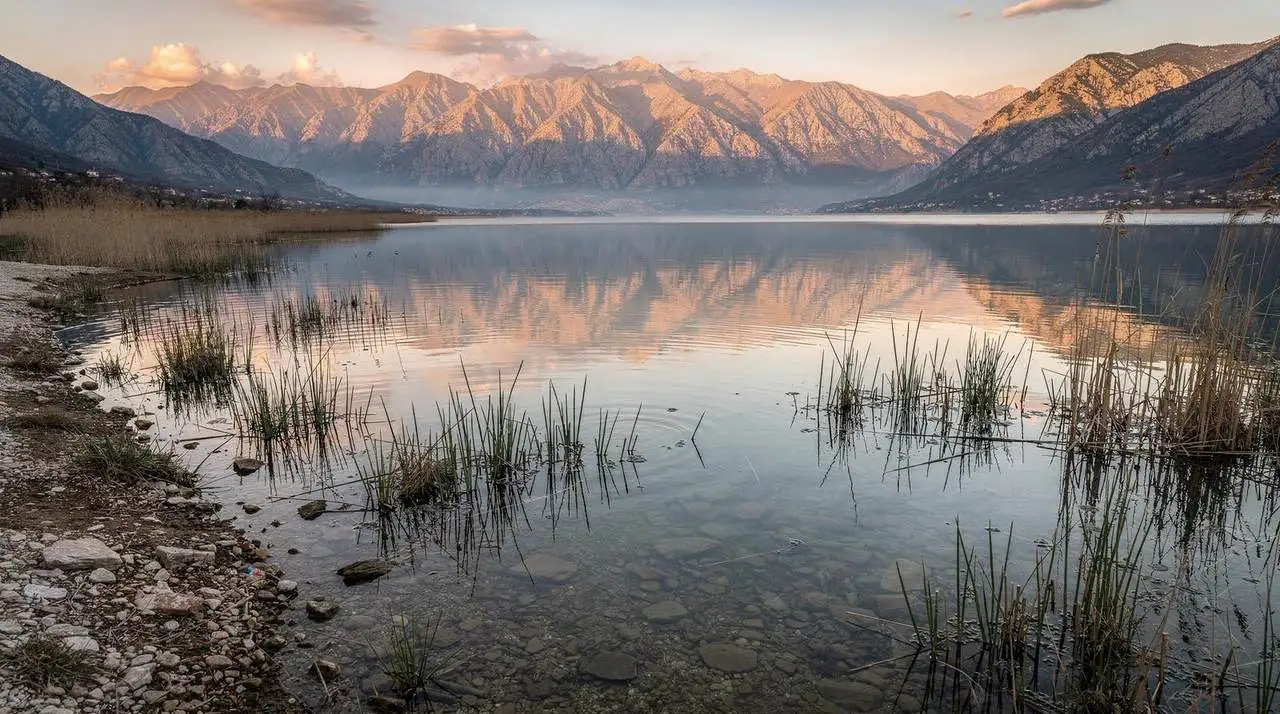
The setting of Voskopoje is inseparable from the experience of visiting it. The village sits in a broad mountain basin at 1,160 metres, surrounded by the forested ridges of the Morava range and the extended plateau country that connects with Korca to the northeast. The landscape changes profoundly with the seasons.
In spring (April-May), the meadows around the village are carpeted with wildflowers — crocus, wild orchids, and the mountain flowers of the Albanian highland bloom in sequence as the snow retreats. The air is cool and clear, the forest has not yet reached full leaf, and the churches in their stone settings look their most austere against the still-bare hillsides.
In summer (June-September), the meadows green and the surrounding forests fill. The altitude provides relief from the heat of lowland Albania — even in August, Voskopoje rarely exceeds 25°C, and the evenings cool reliably. The village is most visited in summer by Albanian and diaspora travellers combining cultural heritage with mountain air.
In autumn (October-November), the forests above the village turn gold and the light in the mountains has the quality specific to this latitude at that season. Autumn is arguably the finest time to visit for those who appreciate landscape photography — the colour of the turning beech forests against the stone churches provides compositions that summer visits cannot replicate.
The mountain landscape itself has a particular significance for the historical story of Voskopoje. It was the isolation and altitude of this mountain setting that made the city a refuge for Aromanian merchants avoiding the volatile lowland routes, and the same isolation that protected the surviving churches after the destructions of the 18th century. The mountains that surrounded the former city are the reason any of it survived.
Traditional Village Life
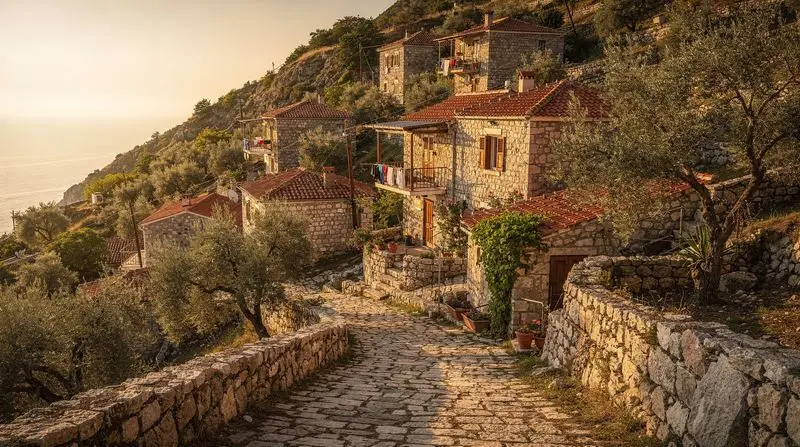
Despite its extraordinary historical significance, Voskopoje today functions primarily as a functioning agricultural village. The permanent population — a few hundred people — maintains the sheep and cattle farming, the orchard cultivation, and the daily rhythms of Albanian mountain village life that have always characterised this community.
The shepherds and farmers who live among the ruins of the former great city are the human continuity with the past that the churches and frescoes represent in stone and paint. Meeting a shepherd with his flock on the track to a church, or watching a woman tend her garden within the ruined walls of a former merchant’s house, provides a direct connection to the life that the historical record otherwise renders as abstraction.
The village maintains a small school, a basic health post, and the social infrastructure of a functioning Albanian rural community. Tourism — still minimal — has begun to provide some additional income but has not yet transformed the character of the place in the way it has transformed some other Albanian villages.
Buying local products — cheese, honey, walnuts, dried herbs — directly from village families is both the best way to support the community economically and the best way to take home something genuinely from this place. Ask at the village square; someone will direct you.
How to Photograph the Voskopoje Frescoes
The frescoes in the Voskopoje churches pose particular photographic challenges that are worth understanding before arriving with a camera. The interiors are dark — the small windows of Byzantine church design admit limited light, and the paintings on the upper sections of walls and on the ceiling vaults are frequently in deep shadow.
A torch (flashlight) is essential for seeing the details, but for photography, a wide-aperture lens and high ISO settings are necessary to capture the fresco quality without artificial light. Flash photography is absolutely to be avoided — not only because it is technically damaging to aged pigments but because the flat light of flash destroys the dimensional modelling that the fresco painters achieved with careful use of light and shadow.
The best approach is patience and slow exposure. A small tripod or the ability to brace against a wall allows long exposures that capture the natural colour and modelling of the frescoes more faithfully than any flash-based approach. The colour of the surviving frescoes — warm ochres, vivid blues, the deep reds of the Korca school — responds beautifully to slow available-light photography in a way that flash renders flat and lifeless.
For wide-angle shots of the church exteriors, the warm light of late afternoon is best — the low angle illuminates the stone textures and creates the long shadows that give three-dimensional quality to the rough-cut blocks of the church walls.
Voskopoje by Season
| Season | Conditions | Notes |
|---|---|---|
| Spring (Apr-May) | Wildflowers, cool clear air | Churches at their most austere against bare hillsides |
| Summer (Jun-Sep) | Mild, rarely above 25°C | Most visited season, best church access |
| Autumn (Oct-Nov) | Gold beech forests | Best for photography, fewer visitors |
| Winter (Dec-Feb) | Reliable snowfall | Road can be icy; check conditions from Korca first |
Frequently Asked Questions About Voskopoje
Why is Voskopoje called the Athens of Albania?
The title reflects Voskopoje’s eighteenth-century role as a major intellectual and cultural centre in the Balkans. At its peak, the city hosted the Academy of Voskopoje (one of the leading educational institutions of the Ottoman Balkans), the first printing press south of the Danube, an active merchant community with pan-European connections, and a tradition of commissioning exceptional religious art. The “Athens” epithet, while somewhat hyperbolic, captures the genuine cultural ambition of a city that punched far above its geographical size in intellectual and artistic terms.
Are the Voskopoje church frescoes still intact?
Several churches retain substantially intact fresco programmes from the eighteenth century. The Church of Saint Nicholas is considered the best-preserved, with nearly complete coverage of its interior walls and ceiling. Other churches are in varying states of preservation — some frescoes have deteriorated through water damage and neglect, others survive remarkably well. The quality of the surviving work is genuinely extraordinary and rivals the best preserved Byzantine and post-Byzantine church art in the Balkans.
How do you get to Voskopoje from Korca?
The drive from Korca to Voskopoje takes 30-40 minutes via a paved mountain road. Taxis from Korca can be hired for a return trip; agree on the price and return time before departure. There is no regular bus service. Renting a car in Korca gives the most flexibility for combining Voskopoje with other nearby destinations such as Dardha and Lake Prespa.
Is Voskopoje worth visiting in winter?
Yes, particularly for travellers who appreciate remote mountain landscapes and have already covered Albania’s warmer-season highlights. The village at 1,160m receives snow from December through February, and the combination of snow-covered churches and mountain scenery is remarkable. The practical challenge is road access after heavy snowfall and the reduced availability of church caretakers outside the tourist season. Base in Korca and check road conditions before attempting the drive.
Who painted the Voskopoje church frescoes?
The main painters associated with the Voskopoje churches were artists of the Korca school of iconography, active in the late seventeenth through eighteenth centuries. David Selenicasi, considered the finest master of this school, painted frescoes in at least one Voskopoje church. Kosta of Korca and his workshop painted the Church of Saint Nicholas. These painters worked within the Orthodox Byzantine tradition while incorporating influences from contemporary European Baroque painting, producing a distinctive hybrid style of great vitality and technical quality.