Dardha: Albania’s Ski Village in the Eastern Mountains
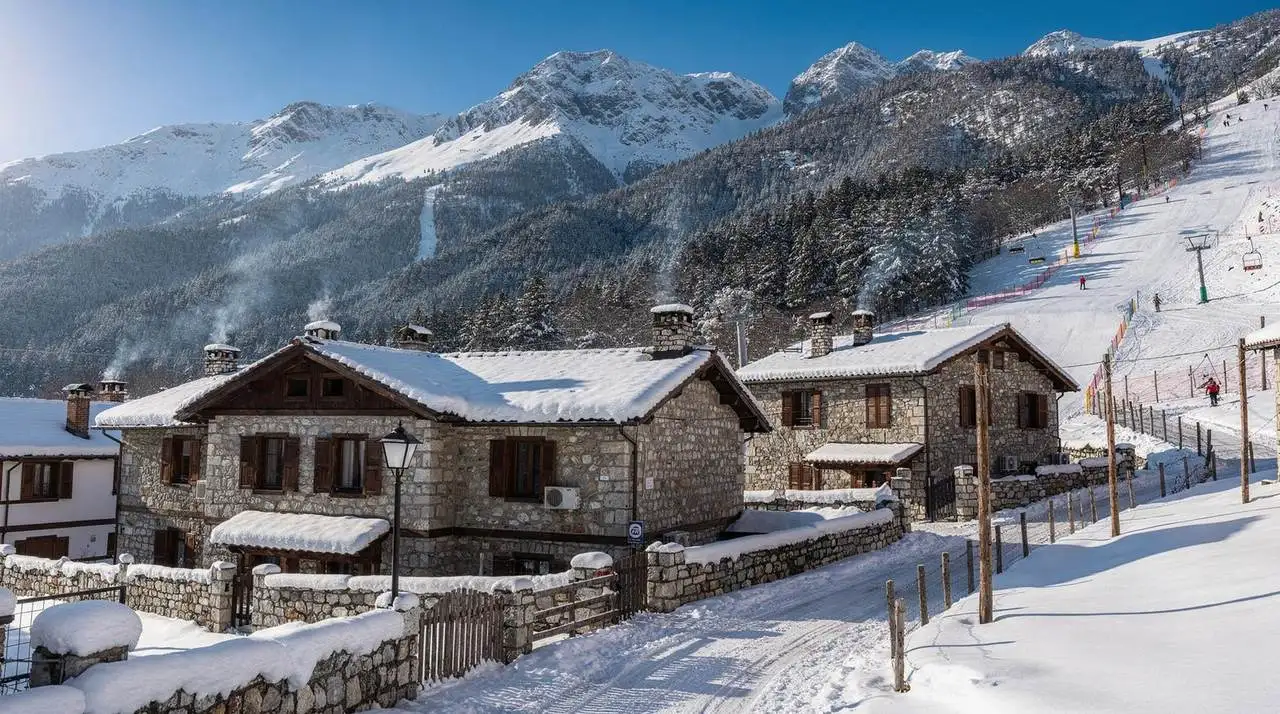
At 1,344 metres above sea level in the mountains above the Korca plateau, Dardha is Albania’s primary ski destination and one of the country’s most appealing traditional stone villages. It sits roughly 14 kilometres south of Korca in the Morava mountains, a compact settlement of old stone houses, narrow lanes, and a small ski resort that draws Albanians and a growing number of international visitors during the winter months.
The village has two distinct seasons and two quite different appeals. In winter — from roughly December through March, depending on snowfall — Dardha is a ski resort with a chairlift, prepared pistes, and the convivial atmosphere of a mountain village that has organised itself around winter sports. In summer, the same stone village at altitude becomes a cool-weather retreat from the heat of coastal and lowland Albania, with hiking trails in the surrounding mountains, fresh air, and a pace of life that has barely changed across generations.
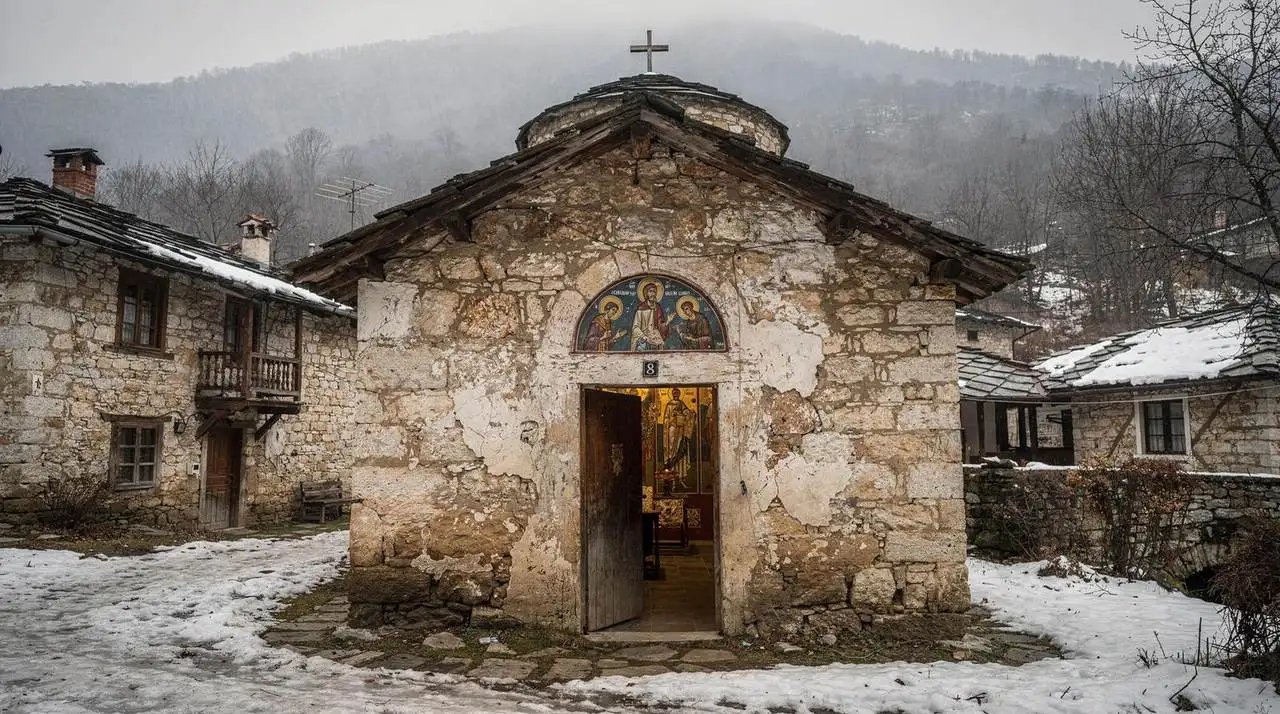
The architecture is the constant: Dardha’s stone houses, built in the traditional mountain style with thick walls, small windows, and slate roofs, give the village a visual cohesion and historic character that is increasingly rare in Albanian rural settlements. Walking through the village even in summer, when the ski runs are empty and the restaurants are catering to hikers rather than skiers, feels like entering a preserved world.
| Where | Morava mountains, 14 km / 25-30min south of Korça |
| Getting there | Taxi from Korça, self-drive, or an organised winter day trip |
| Elevation | 1,344m — noticeably cooler than the coast year-round |
| Winter draw | Chairlift skiing, budget-friendly, uncrowded |
| Summer draw | Hiking, stone-village architecture, cool mountain air |
The Ski Resort
Dardha Ski Resort is Albania’s most developed winter sports facility, though it is modest by Western European standards. The resort has a chairlift and several ski runs of varying difficulty, suitable for beginner to intermediate skiers. Equipment hire is available at the base. The runs are prepared and maintained when snow conditions allow, typically from late December through February and sometimes into March.
The resort’s main assets are its price (Albanian ski resort prices are extremely competitive by European comparison), the uncrowded slopes (Dardha does not approach the volume of even a small Austrian or Italian ski resort), and the opportunity to ski in Albania — a genuinely unusual experience that combines winter sports with a cultural setting unlike any ski resort in Western Europe.
Ski lessons are available for beginners, and instructors with at least basic English are generally available. The lifts and facilities are simple but functional, and the après-ski culture is built around the village’s traditional restaurants and cafes rather than the synthetic resort nightlife of larger European ski destinations.
Practical ski information:
- Season: Typically December through February (snow dependent)
- Lifts: Chairlift and drag lifts covering the main piste network
- Equipment hire: Available at the base
- Ski school: Basic lessons available, English instruction possible
- Day pass: Very affordable by European standards
The best approach to skiing in Dardha is to manage expectations appropriately. This is not Val d’Isere or Verbier. It is a modest Albanian mountain resort with genuine charm, good snow when the season cooperates, and the pleasure of doing something straightforward in an unexpected setting.
Summer Hiking from Dardha
In the summer months, the ski infrastructure is idle but the mountains are active. The trails from Dardha into the Morava range provide hiking at various levels of difficulty, with the higher ridgelines offering panoramic views across the Korca plateau to the east and deeper into the mountains toward Lake Prespa and Voskopoje to the west and south.
Day hikes from the village range from gentle walks through the surrounding meadows and forest to more demanding routes toward the summit ridges at above 2,000 metres. The terrain is alpine in character: open pasture at the higher elevations, mixed forest on the lower slopes, and rocky ridgelines above the treeline. Wildlife includes eagles, foxes, and in the more remote areas, occasionally wolves and bears — though encounters with the larger mammals are uncommon.
The meadows around Dardha in summer are used for traditional transhumance grazing, and it is still possible to encounter shepherds with their flocks in the high pastures — a continuity of agricultural practice that has largely disappeared from more accessible mountain areas in Europe.
For hiking logistics, Korca-based guides offer day trips into the Morava mountains with Dardha as a base. The Albania hiking guide covers the broader context of mountain walking in the country, including what to expect from eastern Albanian mountain terrain and how it compares with the more famous Albanian Alps in the north. If you are starting from the capital and want a taste of Albanian mountain walking before heading east, a guided Bovilla Lake and Gamti Mountain hiking day trip from Tirana is an easy way to do it.
The Village Architecture
Dardha’s stone houses are its most immediately compelling feature for visitors approaching from the lower lowlands and coastal areas of Albania. The construction style is specific to this mountain region: large blocks of locally quarried grey stone, walls of 60-80 centimetres thickness for thermal insulation, small shuttered windows opening onto timber-framed interiors, and roofs of split stone slate (in the oldest buildings) or tile.
The village has maintained this architectural character because the combination of altitude, relative remoteness, and the persistence of traditional building practices among local families has slowed the replacement of old buildings with the concrete construction that has altered so many Albanian villages. Walking the lanes of Dardha, particularly the older residential streets above the main square, provides an encounter with traditional Albanian mountain domestic architecture that feels authentic rather than preserved-for-tourists.
Several of the old stone houses have been converted to guesthouses, and staying in one — thick walls keeping the cold out in winter, the same walls keeping the heat out in summer — is the recommended way to experience the village. The interiors often preserve original features: wood-beamed ceilings, stone fireplaces, traditional textiles on the walls. For context on the broader architecture of Albanian mountain settlements, our guide to Theth and the Albanian Alps describes similar vernacular building traditions in the north.
Where to Eat
Dardha’s restaurant scene is built around the village’s core of traditional establishments, most of which operate year-round and serve traditional Albanian highland cooking.
Local grill restaurants serve lamb, grilled meats, and the standard Albanian mountain menu with fresh local vegetables in summer and preserved and stored produce in winter. The quality is honest and portions are large.
Village cafes open early and stay open through the evening, serving strong espresso, byrek, and local pastries. In winter, these become gathering points for skiers and locals at the end of the ski day, with rakija and coffee the standard order.
Guesthouse kitchens — for guests staying in the traditional stone guesthouses — often serve the most interesting food in the village: home cooking using local produce, often including dairy products from family farms in the surrounding mountains. Ask in advance if the guesthouse provides dinner.
For more elaborate dining, Korca — 14 kilometres and 30 minutes away — has a full range of restaurants and the famous brewery beer garden. Most visitors combine an afternoon in Dardha with an evening meal in Korca.
Getting to Dardha
Dardha is 14 kilometres south of Korca on a mountain road that climbs steadily from the plateau. The drive takes about 25-30 minutes by car. In winter, the road is cleared of snow but may require care after fresh snowfall; chains are occasionally necessary after heavy storms.
There is no regular public bus service to Dardha from Korca. Options include:
- Taxi from Korca: A reliable and inexpensive option for the short distance. Negotiate a return fare.
- Car rental: Gives full flexibility for combining Dardha with Voskopoje, Lake Prespa, and other eastern Albania destinations in a single day or circuit.
- Organised day trips: Local agencies in Korca offer winter day trips to Dardha including ski hire, which is the simplest option for visitors who want to ski without the logistics.
For those visiting in winter and planning to ski for several days, staying in Dardha itself — rather than commuting from Korca — makes more sense. Accommodation is limited but the guesthouses in the village can accommodate a few days comfortably.
When to Visit Dardha
Winter (December-March): The primary ski season. Snowfall is not guaranteed every year — Albanian mountain winters can be variable — but when the snow arrives, the resort is active and the village atmosphere is at its most convivial. The Christmas and New Year period sees Albanian families from Korca and beyond coming to Dardha for the winter atmosphere.
Spring (April-May): The snow is melting and the meadows are beginning to green. The ski runs are closed but the village is pleasant and the surrounding landscape transitions rapidly through several stages of spring colour. Few visitors.
Summer (June-September): The hiking season. Cool temperatures (at 1,344m, Dardha is 15-20 degrees cooler than coastal Albania), green mountain scenery, and the simple pleasure of a village that is functioning normally rather than performing for tourists.
Autumn (October-November): The forest below the village turns gold and the first cold arrives. The village prepares for winter; the last hikers are finishing the season. A quiet, beautiful time for visitors who appreciate solitude.
Dardha is one of the clearest examples of the two-season mountain destination phenomenon in Albania. The Albania in December guide and Albania in January guide cover the winter travel context for this region in detail, including practical advice on road conditions, accommodation heating, and what to pack for Albanian mountain winter travel.
Combining Dardha with the Eastern Circuit
The best way to visit Dardha is as part of a broader eastern Albania circuit based in Korca. The combination of Korca city (brewery, bazaar, medieval art museum), Dardha (mountain village, winter sports, summer hiking), Voskopoje (Byzantine frescoes, ghost city history), and Lake Prespa (UNESCO biosphere, bird colonies) makes eastern Albania one of the most diverse and rewarding regions in the country.
The circuit can be covered in two days with a Korca base: Day one covering Dardha and Voskopoje as a combined mountain and heritage day; Day two heading west toward Lake Prespa and the village shores. This itinerary appears in detail in the Albania off the beaten path guide, which rates the eastern circuit as the single best off-mainstream experience in the country. To see what guided options are available in the region, check tours and activities near Korçë — some operators offer day trips that combine several of these eastern Albania highlights.
Practical Tips
Accommodation: Several guesthouses operate in the village, most with heating systems capable of handling mountain winters. Book ahead for the Christmas-New Year period and during February school holidays. Summer accommodation is generally available without advance booking.
Snow conditions: Check in advance for winter visits. Albanian weather services (meteoalb.al) and the Korca municipality website sometimes post road condition updates.
Gear: For skiing, hire equipment at the resort rather than travelling with it unless you have your own boots. For summer hiking, standard walking boots are adequate for most trails from the village. A waterproof layer is sensible at any season at this altitude.
Currency: Dardha operates entirely in Albanian lek. There is no ATM in the village; withdraw cash in Korca before making the trip.
Mobile signal: Coverage in the village is generally reliable, though it thins out on the higher hiking routes above the treeline. Download offline maps for the ridge and shepherd’s-track routes before setting out.
Accessibility: The village lanes are cobbled and slope steeply in places, and the ski base area involves some uneven ground. Travelers with mobility limitations should expect a traditional mountain village rather than a purpose-built, fully accessible resort. Our accessible travel in Albania guide covers what to expect at mountain destinations like this one more broadly.
The Morava Mountains: Hiking Routes and Trails
The mountain massif above Dardha offers hiking of varying difficulty with consistently excellent high-country scenery. The Morava range reaches above 2,000 metres, and the routes from the village access multiple trail systems depending on the day’s ambition.
The ridge route above the ski area: Following the ski piste uphill from the village and continuing above the top lift station onto the open ridgeline, this route reaches 1,800-1,900 metres within two hours of leaving the village. The views from the ridge cover the Korca plateau to the east, the mountains toward Lake Prespa to the south, and the deeper Morava peaks to the west. The ridgeline walking is open and exposed — bring a windproof layer even in summer.
The forest circuit: A lower, less demanding route that circles through the mixed beech and oak forest below the ridgeline, returning through the upper meadows above the village. This is an excellent option for those who want mountain air and forest walking without the altitude gain of the ridgeline route. Allow 3-4 hours for the full circuit. The forest is particularly good for birdwatching — various woodpecker species, nuthatch, treecreeper, and the raptor species that use the ridge updrafts.
The shepherd’s tracks: Multiple unmarked tracks leave the village in various directions toward the summer pastures and the high grazing areas. These are used by shepherds rather than organised for tourist hiking, and navigation requires either local knowledge or good map-reading skills. The reward is remote mountain landscape without other walkers.
For longer mountain routes and the higher summits, local guides from Korca or arranged through Dardha guesthouses are the safest approach. The terrain above the treeline is open and can be confusing in poor visibility, and Albanian mountain rescue is very limited outside the northern Alps area.
Local Crafts and Traditions
Dardha’s traditional crafts reflect the mountain textile and woodworking traditions of eastern Albanian highland communities. The thick woollen textiles — socks, stockings, and the distinctive mountain blankets made from unspun fleece — are produced by village women using techniques that have not substantially changed across generations.
The wool products have a particular practical quality in this climate — naturally water-resistant due to the lanolin retention in the unprocessed fleece — and are genuine working items rather than souvenir productions. Buying directly from the village women who produce them is straightforward: knock on doors, hold up money, and the transaction communicates across language barriers with minimal difficulty.
Woodcarving, decorative panel work, and the carved wooden items used in domestic settings are also produced by village craftsmen, though the tradition is less active than the textile production. Some of the guesthouse interiors display examples of traditional carved furniture and wall decoration that show the quality of this tradition at its best.
The village maintains a tradition of communal agricultural work — the collective hay harvest in late summer and the joint preparation of winter fuel wood — that provides occasional windows onto a community organisation that has become rare in most of Europe.
This kind of continuity is part of what distinguishes Dardha from destinations that have reorganised themselves primarily around tourism. Visitors who arrive expecting a curated mountain-resort experience sometimes need a day to adjust to the fact that much of what they’re seeing — the shepherds, the wool production, the communal harvest work — is simply ongoing village life rather than a performance staged for guests. That adjustment is, for most travelers, part of the appeal rather than a drawback.
Accommodation Options in Dardha
Dardha’s accommodation is entirely in traditional stone guesthouses, most of which are family-run operations with between 4 and 10 rooms. The quality is simple but genuine — thick stone walls that retain heat in winter and cool in summer, wood-beam ceilings, open fireplaces in the common rooms, and the home cooking that family-run guesthouses in Albanian mountain villages consistently produce.
Winter stays: The guesthouses with functioning heating systems (wood stoves or central heating) fill quickly during the Christmas-New Year period and the February school holiday ski period. Booking 2-4 weeks ahead for these dates is essential.
Summer stays: Capacity is less constrained in summer; booking a few days ahead is generally sufficient. Summer guesthouse stays include the particular pleasure of breakfasts on terraces with mountain views, evening meals from garden produce, and the cool nights that make sleeping at 1,344 metres consistently comfortable even in August.
Self-catering: At least one property in the village offers self-contained apartments for visitors who prefer more independence. This is a good option for groups or for longer stays.
Pricing across Dardha’s guesthouses is very affordable — EUR 20-35 per person per night including breakfast is the standard range, with higher prices during peak ski season and the summer school holiday period.
Is Dardha Suitable for Families?
Dardha works well for families in both seasons, in different ways. In winter, the gentle beginner runs and the low-key, uncrowded resort atmosphere suit children learning to ski far better than a large, intimidating international resort — lift queues are short and instructors have time to work patiently with young beginners. In summer, the lower meadow and forest circuit trails are manageable for children who can handle a few hours of walking, while the ridge routes above 1,800 metres are better suited to older children and teenagers given the exposure and distance involved. Guesthouse family rooms are common, and the home-cooked meals suit picky eaters better than a more anonymous resort restaurant. Our Albania family travel guide has broader guidance on planning a mountain-village stay like this one with children.
Frequently Asked Questions About Dardha
Is there actually skiing in Albania at Dardha?
Yes — Dardha has a functioning ski resort with a chairlift, ski hire, and prepared pistes suitable for beginner to intermediate skiers. The resort is modest compared to Western European ski destinations but fully operational when snow conditions permit, typically from late December through February. Prices are substantially lower than equivalent European ski destinations, and the slopes are rarely crowded. It is not for advanced skiers seeking steep or extensive terrain, but for a few days of uncomplicated winter sports in an interesting cultural setting, Dardha is a genuinely enjoyable option.
How far is Dardha from Korca?
Dardha is 14 kilometres south of Korca, accessed by a mountain road that climbs from the Korca plateau. The drive takes approximately 25-30 minutes by car. There is no regular bus service; taxis from Korca are the most convenient public transport option. The proximity makes Dardha an easy day trip from Korca, though staying overnight in the village gives a more complete experience of the mountain atmosphere.
What is Dardha like in summer?
In summer, Dardha is a cool mountain village at 1,344 metres — substantially cooler than coastal or lowland Albania — with hiking trails in the Morava mountains, traditional stone architecture, and a peaceful rural atmosphere. The ski infrastructure is idle but the village is functioning normally. Summer is a good time for long walks in the surrounding meadows and forests, and the combination of mountain air and traditional Albanian village life provides a complete contrast to the beach and coastal experience of most summer Albania visits.
Can you visit Dardha and Voskopoje in the same day?
Yes — both are within 25 kilometres of Korca, and the two destinations complement each other well: Dardha offers mountain landscape and village architecture, while Voskopoje offers history and Byzantine church frescoes. A full day from Korca allows comfortable coverage of both, with morning at Voskopoje (churches, village) and afternoon at Dardha (walk, lunch), returning to Korca for dinner. Having a car makes this circuit straightforward; by taxi, it requires coordination but is still feasible.
What traditional food is served in Dardha?
Dardha’s restaurants serve Albanian highland cooking: slow-cooked lamb, grilled meats, fresh local dairy products (white cheese, yogurt from sheep and goat milk), and seasonal vegetables. Cornbread (buke misri) and fergesë (a pepper and cottage cheese preparation) appear on most traditional menus. In season, wild mushrooms from the surrounding forest supplement the standard menu. The food is honest and hearty rather than refined, well suited to the appetite generated by a day of skiing or hiking.
Is Dardha good for beginner skiers?
Yes — it’s one of the more forgiving places to learn in Europe. The runs are gentle, lift queues are short to non-existent, day passes and lessons are inexpensive, and instructors have the time to work patiently with nervous beginners in a way larger, busier resorts often can’t match. It is not the place for advanced skiers seeking challenging terrain, but for a first-time skier or a family teaching children, Dardha’s low-pressure atmosphere is a genuine advantage.
Can you visit Dardha without a car?
Yes, though it requires a bit more planning. Taxis from Korça are the standard option for day visits, and organised winter day trips (including ski hire) are available through Korça-based agencies for travelers who prefer not to arrange transport themselves. Public buses do not run to Dardha, so independent travelers without a car should budget for taxi fares in both directions or book an organised trip.