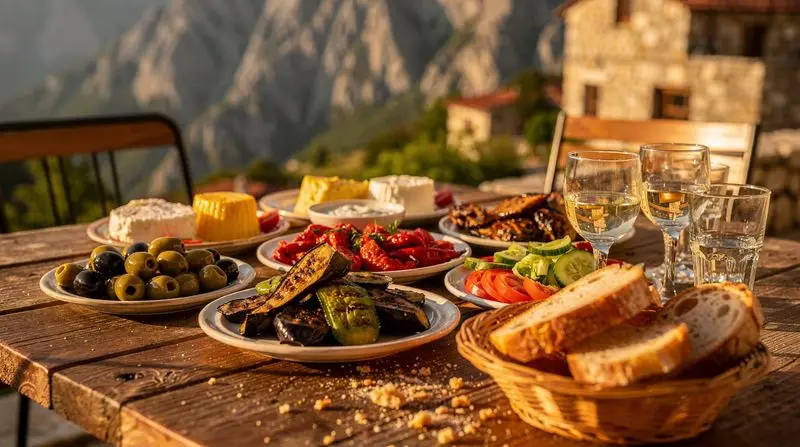
| Must-eat | Byrek, tave kosi, fergese, grilled Riviera seafood |
| Daily food budget (two) | Around 25-45 euros for restaurant dinners, less at markets |
| Best regions | Elbasan (tave kosi), the Riviera (seafood), Tirana (variety) |
| Coffee | Around 0.50-1 euro per espresso anywhere in the country |
We had low expectations. This is an honest admission. Before our first trip to Albania, our knowledge of Albanian food extended approximately as far as “Mediterranean-ish, probably” and a vague awareness that they made a dish called byrek. We were not anticipating a food revelation.
We were wrong.
By the end of our first week, we were actively restructuring our days around meals: walking an extra kilometer to reach a restaurant someone had mentioned, ordering dishes we could not identify just to see what arrived, asking guesthouse owners what their mothers cooked and whether they might cook it for us. Albanian food turned out to be one of the most genuinely satisfying culinary experiences we have had in Europe, and it caught us entirely off guard.
Here is what we discovered. For a deeper and more comprehensive dive into the cuisine, our full Albanian food guide covers every dish, region, and category in detail — but this is the personal account of being surprised by it.
The Byrek Revelation
Breakfast on our first morning in Tirana was byrek, because it was seven in the morning and the byrek shop on the corner was the only thing open, and also because it cost thirty cents and smelled extraordinary.
Byrek is a filo pastry baked in large flat trays and cut into sections to order. The fillings vary — spinach and egg, white cheese, minced meat — and the crust is golden, slightly flaky, and just enough crisp to give way to something soft inside. It is served hot and eaten standing at the counter or on the pavement outside. You wash it down with a glass of kos, a tangy liquid yogurt that cuts the richness of the pastry perfectly.
We ate byrek most mornings for three weeks across two trips to Albania. We have not found a better breakfast anywhere in the country, and honestly, we have not found one we like as much in most of Europe.
The best byrek we ate was from a tiny shop in Tirana’s Pazari i Ri area — a new market neighbourhood that has been beautifully restored and is worth visiting for the food culture alone. The spinach and egg filling here was almost custardy inside a crust that shattered at the bite. We went back three mornings in a row.
Tave Kosi: Why Everyone Talks About It
The national dish of Albania deserves its reputation. Tave kosi — chunks of lamb or chicken baked in a custard of yogurt, eggs, and butter, sometimes over a layer of rice — is one of the more distinctive things you will eat in the Balkans. The yogurt bakes into something between a sauce and a soufflé, golden on top and rich underneath, surrounding meat that has had time to become completely tender.
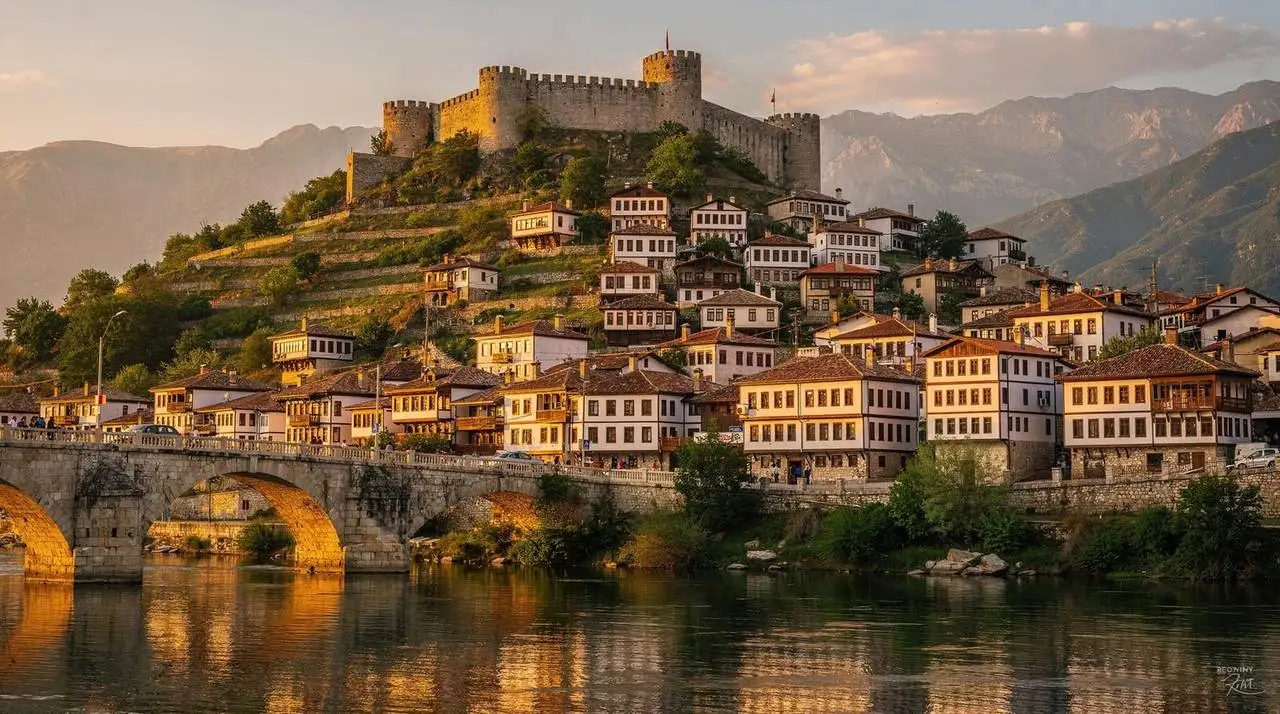
The dish originated in Elbasan in central Albania, and the Elbasan version is considered definitive. If you pass through Elbasan — worth doing on the drive between Tirana and Berat — stop at one of the restaurants on the old bazaar street and eat it there. The version we had in a small restaurant near the city’s old mosque was extraordinary: a clay pot brought directly from the oven, still bubbling at the edges, with a basket of fresh bread and a sharp salad on the side.
Every restaurant in Albania serves tave kosi. Many of them serve it well. The Elbasan version is the one to benchmark everything else against.
The Seafood Along the Coast
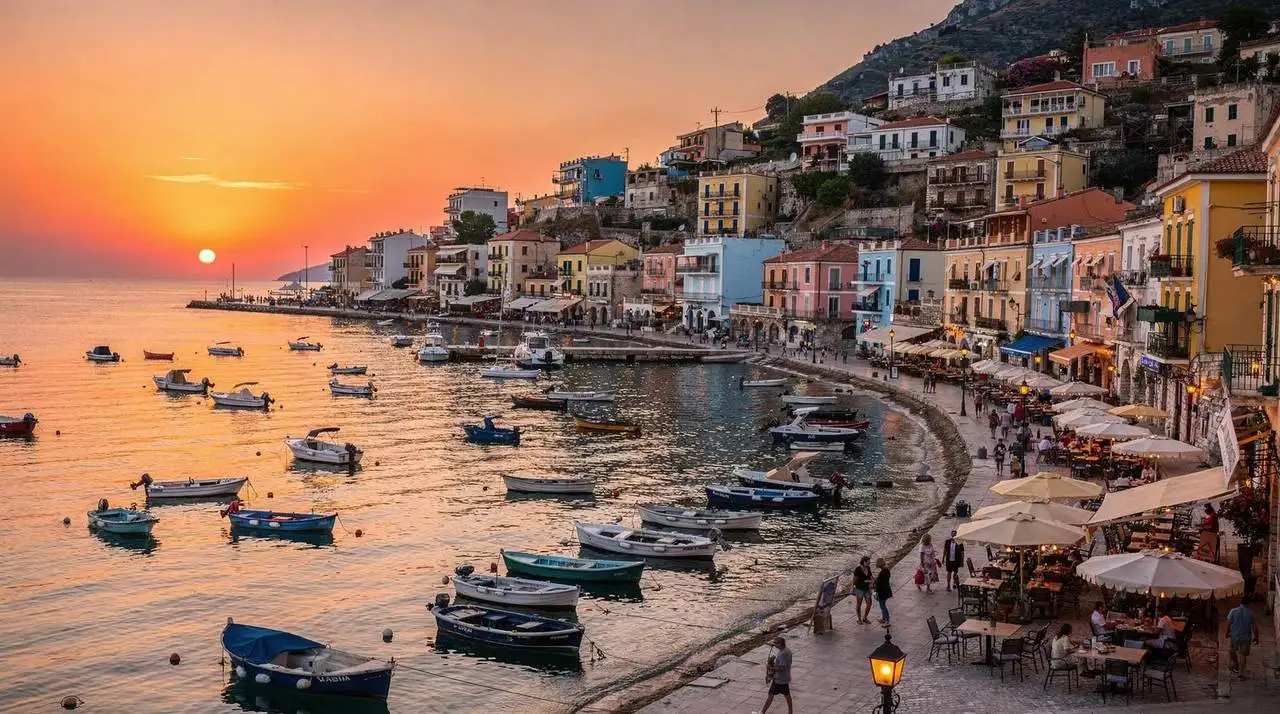
One of the most pleasant food surprises in Albania came at the coast, where we had not thought to have particularly high expectations. We knew the Ionian was clean. We did not know that the seafood would be this good.
In Saranda and along the Albanian Riviera, fish and seafood restaurants offer what the boats brought in that morning. The sea bream grilled whole over charcoal, drizzled with olive oil and lemon, is simple and flawless. Octopus is common — braised until tender, dressed with capers and herbs, or simply grilled. Mussels cooked in wine and garlic are the kind of thing you order as a starter and then regret when they are gone. Shrimp in butter and white wine, served in a ceramic pot with bread to dip.
The thing that makes Albanian coastal seafood special is the olive oil. Albania produces some of the finest olive oil in Europe — old-growth trees, traditional pressing, no industrial scale — and the oil used in the coastal restaurants is the real thing. A simple plate of grilled fish dressed with this oil is better than more complicated dishes we have eaten in restaurants that charge ten times the price.
We once took a food tour in Tirana that gave us a proper grounding in Albanian cuisine before we headed south. A Tirana city food tour with meals included hit the markets, the traditional restaurants, and a few local favorites that we would never have found alone. It reframed the rest of our trip: understanding the context for the dishes made everything we ate afterward more interesting. We recommend it as a first-day activity before heading to the coast.
Fergese: The Dish We Nearly Missed
A friend who had been to Albania told us to find fergese before we went. We nodded, wrote it down, and then mostly forgot about it until we saw it on a menu in Berat and ordered it on a semi-random basis.
Fergese is a Tirana specialty: a baked dish of cottage cheese, roasted peppers, tomatoes, and egg, thickened and browned in the oven. It sounds modest. It is not. The combination of soft, slightly tangy cheese with the sweetness of the roasted peppers and the richness of the egg creates something that is difficult to stop eating. It is typically served as a starter, with bread, but we have made it a main course several times by ordering a second portion.
In Tirana, fergese with offal — liver and kidney mixed into the cheese base — is the traditional version and worth trying if you have any appetite for that kind of thing. Even the plain cheese version, though, is excellent.
The Lamb: A Study in Patience
Albanian lamb cookery is characterised by patience. The lamb dishes that are most memorable — in guesthouses, in village restaurants, in the old town establishments of Berat and Gjirokastra — have invariably been cooking for hours. The meat is not rushed. It is given time to become something it could not become at speed.
The method varies: roasted in a clay pot buried in coals (a method called tave, which also gives the national dish its name), slow-braised in the oven with herbs and vegetables, or cooked in the method called spit-roasted over open fire for celebrations. The result in every version is meat that is tender past the point of mere softness, with a depth of flavour that a two-hour roast cannot replicate.
If you are in Albania around Easter, you will encounter whole lamb roasted in village squares in the Orthodox tradition — a communal event that is as much social occasion as meal. If you miss Easter, many mountain guesthouses will roast lamb on request if you arrange it in advance. This is one of the experiences worth asking about.
The Wine: An Underrated Discovery
Albanian wine does not appear in the international press and has essentially no export presence. This is a shame, because the domestic wine culture is genuine, the indigenous grape varieties are interesting, and the quality at the better producers is higher than you would guess from the obscurity.
The key regions are in the south: around Permet and the Vjosa Valley, around Berat, and along the Adriatic coast. The red grape varieties include Shesh i Zi and Kallmet. The whites — lighter, sometimes slightly oxidative, often consumed young — are made from varieties that exist essentially only in Albania.
In Tirana, the Lunder winery not far from the city offers tastings and is worth the short excursion for wine-curious visitors. A guided Lunder winery tour with wine tasting near Tirana covers the Albanian wine tradition and includes tasting of the main varieties — an excellent introduction before you encounter local wine throughout the rest of your trip.
In restaurants, ask for the local wine rather than the imported options. You will spend less and learn more.
The Coffee Culture
Albanian coffee culture is worth its own section because it is genuinely exceptional. Albania runs on espresso — good, strong, properly extracted espresso served in small cups with a glass of water on the side. The coffee ritual here is about more than caffeine. It is about the time spent, the conversation had, the seat in the sun that you occupy for an hour without anyone suggesting you move along.
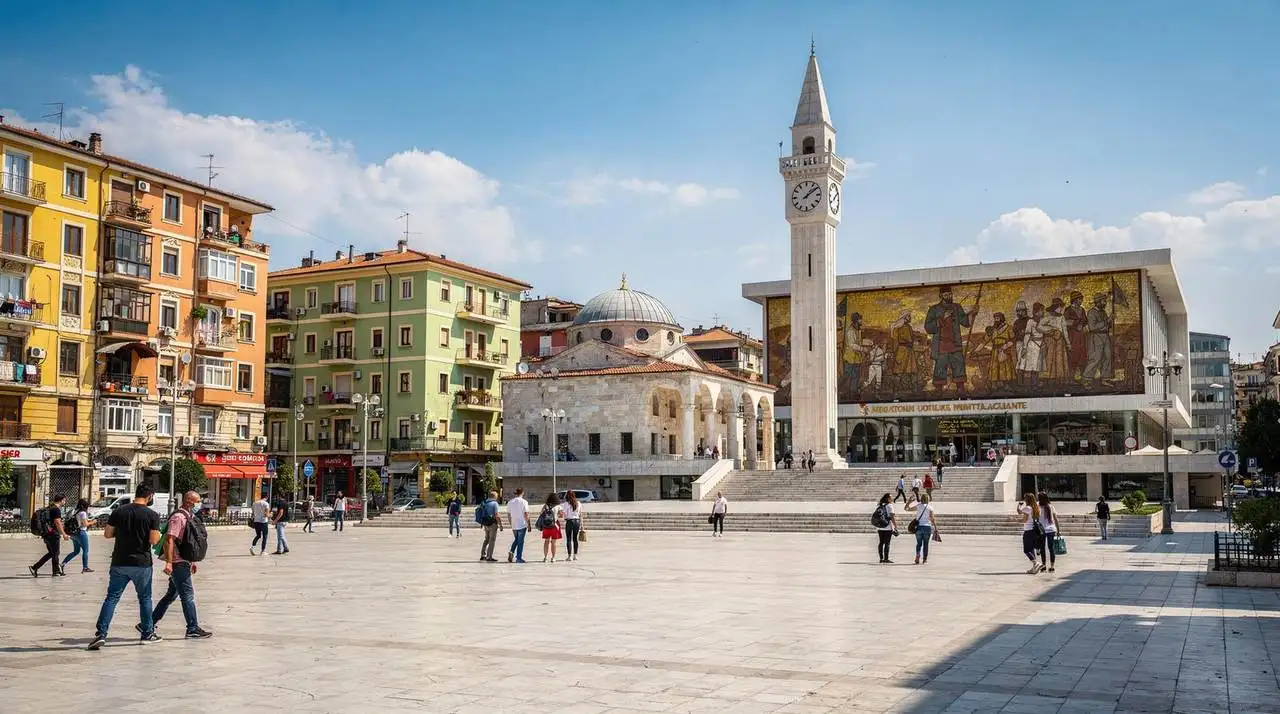
In Tirana, the Blloku neighborhood has hundreds of cafes ranging from sleek modern spots to old-school bars where the espresso machine looks like it has been there since the 1990s and probably has. We worked our way through many of them. The coffee was consistently excellent and consistently cheap — between fifty cents and one euro for an espresso anywhere in the country.
Albanian coffee culture also includes a category called macchiato that is not what the Italian original suggests: it is a small espresso with a generous cloud of milk foam, almost a miniature cappuccino, and it is what most Albanians order mid-morning. We converted to this practice by day three and have not fully recovered.
The Raki Tradition
Every meal, every hospitality moment, and many random conversations in Albania eventually involve raki. Albanian raki is a grape or plum brandy, typically home-distilled and ranging from rough to surprisingly refined. The good homemade raki — often offered by guesthouse owners or restaurant families at the end of a meal, without charge — is clean and warm, with a long finish and none of the harshness of badly made spirits.
Accepting raki when offered is the correct social response. Declining it politely is understood. Suggesting you would like another glass is the surest way to make a friend in Albania.
The Experience That Changed How We Eat at Home
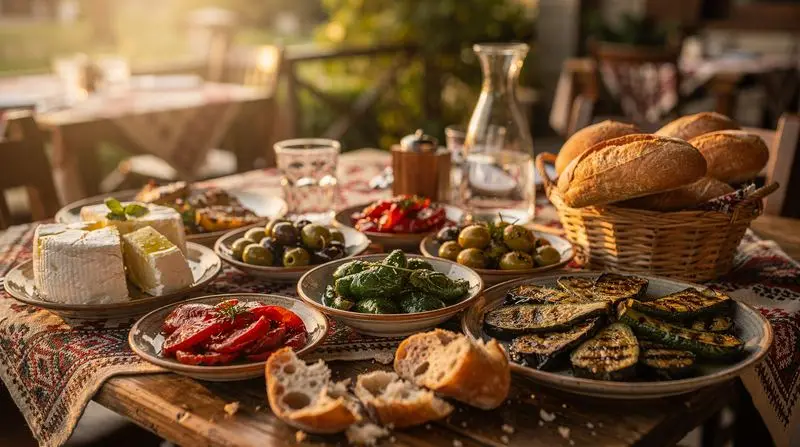
Something happens to most people who spend real time eating in Albania: they develop an intense appreciation for food that is simply but well made from good ingredients. The Albanian kitchen does not hide behind complexity or technique. It relies on quality: the freshness of the produce, the care given to the slow processes, the quality of the oil.
Coming home from Albania, we were different in the kitchen — more patient with slow cooking, more focused on the quality of individual ingredients, less interested in elaborate recipes. The country’s food culture teaches by example that simplicity is not a compromise but a discipline.
If you want to take something practical home with you, a cooking class in Berat gives you the techniques in a real kitchen. A Berat cooking class covers the traditional dishes in a hands-on setting — you leave knowing how to make byrek, tave kosi, and at least one of the lamb preparations that you spent two weeks ordering in restaurants.
Street Food and Markets: The Cheaper Half of the Story
Everything described above assumes some restaurant eating, but a genuinely large part of what makes Albanian food special happens outside restaurants entirely. Market stalls sell fruit and vegetables that taste like they are supposed to — tomatoes with actual flavour, stone fruit in season that outclasses anything we buy at home. Street vendors sell simple grilled corn, roasted chestnuts in winter, and sunflower seeds by the paper cone that Albanians snack on constantly. Our street food in Albania guide goes further into this cheaper, more informal layer of the food culture that a first-time visitor easily misses by sticking to restaurant menus.
If You Are Vegetarian
We are not vegetarian ourselves, but travelling with friends who are has taught us that Albanian food handles vegetarian eating better than its meat-heavy reputation suggests. Fergese without offal, byrek with spinach and cheese, market vegetables prepared simply, and the extraordinary olive oil that runs through everything make vegetarian eating in Albania easy rather than an exercise in creative substitution. The vegetarian in Albania guide covers this in more depth than we can here, including which regional dishes are naturally vegetarian without modification.
Regional Differences Worth Knowing
Albanian food is not uniform across the country, and expecting the same dishes everywhere sets up mild disappointment. The south leans toward olive oil, seafood, and Ottoman-influenced dishes shared with neighbouring Greece. The centre, around Elbasan and Tirana, is where tave kosi and the richer dairy-based cooking dominate. The north has heavier, mountain-adapted food — more preserved meat, more dairy, dishes built for cold weather and physical work. Knowing which region you are in shapes what to order, and ordering the local specialty rather than a generic “Albanian” dish nearly always produces the better meal.
Where to Eat When You Do Not Know Where to Eat
The most common question we get after publishing anything about Albanian food is some version of “how do I find good places without a guide constantly at my elbow.” Our honest advice: skip anywhere with laminated multilingual menus and photos of the food out front, follow where local workers eat their lunch rather than where other tourists are sitting, and ask your guesthouse hosts directly — they know their town’s food scene better than any online review aggregator. Our region-specific restaurant guides, including best restaurants in Tirana and best restaurants in Berat, are built on exactly that approach rather than star ratings alone.
The Takeaway
Albanian food is one of the great underrated food cultures in Europe. It is not flashy or internationally famous. It has not been exported to cities around the world in the way Greek or Turkish food has. But it is deeply satisfying, seasonally grounded, and produced with a level of care and quality that reflects a food culture that simply has not been diluted by industrialization.
Go with curiosity and an empty stomach. Say yes to whatever the owner recommends. Ask where things come from. And do not leave without eating byrek at least once.
For a deeper dive, our full Albanian food guide covers the dishes, the regions, and the best places to eat across the country. The food tours guide covers the organised tasting experiences available in Tirana and other cities if you want structured access to the food culture from the first day.