Albania by Van: What We Found Out the Hard Way
| Best for | Small to medium vans; large motorhomes should stick to the coast |
| Daily budget (two people) | Around 30-50 euros including fuel |
| Campsites | Few purpose-built; wild camping and guesthouse parking fill the gap |
| Toughest roads | Valbona approach, Osumi Canyon interior, unmarked river crossings |
| Route length | Vlora to Saranda comfortably done in 3-5 days |
We have driven thousands of kilometres through Albania over the years — in hire cars, in furgons, on foot with a pack, and more recently in a borrowed campervan from a friend in Thessaloniki who swore it would handle Albanian mountain roads. It mostly did, with one memorable exception involving a river crossing south of Permet that we will get to later.
The short answer to the question in the title: yes, van life is absolutely possible in Albania. It is also more complicated than Instagram suggests, which is why this guide exists.
Why Albania Is Interesting for Van Life
The appeal is obvious once you see the numbers. Albania has over 400 kilometres of coastline, the vast majority of it without the developed resort infrastructure of Croatia or Greece. Wild camping exists. Costs are low. Scenery is dramatic. Border crossings are generally quick. The road network, while challenging in places, is more extensive than it was even five years ago.
Albania also occupies a relatively compact geography — you can drive from the northern mountains to the southern tip of the Riviera in a single long day. This makes it unusually suited to van travel: you cover a lot of ground, a lot of landscape variation, and a lot of different types of terrain without the enormous distances that make van life in Spain or France logistically complex.
The combination of Adriatic and Ionian coasts, Albanian Alps, river valleys like the Vjosa and Osumi, and the interior lake region around Ohrid gives van travellers a variety of environments that few countries of Albania’s size can match.
Our car rental Albania guide covers some of the same ground for visitors driving smaller vehicles, and much of the road information there applies to van travel as well.
The Roads: Honest Assessment
We are not going to lie to you about this: Albanian roads are variable. The national highways — particularly the A1 from Tirana to Durres and the main road south through Fier and Vlora — are modern, well-maintained, and entirely fine for a campervan of any size. The SH8 coastal road through the Riviera is winding and beautiful but has a paved surface throughout; it is manageable in a van, though slow going in parts.
The mountain roads are a different story. The road to Theth from Shkodra has been significantly improved in recent years but remains challenging in places, particularly in the upper section before Theth village. The road to Valbona from Bajram Curri is an adventure. Many of the inland roads in the south — toward Permet, toward the Osumi Canyon, toward remote villages in the Gramsh region — involve single-lane mountain roads, hairpin bends, occasional potholes of genuine ambition, and limited space to pass oncoming vehicles.
For a small to medium van — a standard VW T6 or similar — most of these roads are manageable with patience. For a large motorhome of the kind common on European campersites, we would advise against the mountain interiors. Stick to the coast and the main valley routes and you will have no serious problems.
The river crossing we mentioned earlier: it was not a surprise. It was on a map, marked as a fording point. We decided it was fine. The Permit guesthouse owner we stayed with that evening had a somewhat different assessment. Know your vehicle’s clearance before attempting any unmarked water crossings in the south.
Camping: Where and How
Albania does not have a developed motorhome and campervan culture in the northern European sense. There are very few purpose-built campsites with electrical hookups, water connections, and dump stations. What Albania has instead is space, local tolerance for wild camping in appropriate locations, and a growing number of informal camping spots that have developed organically.
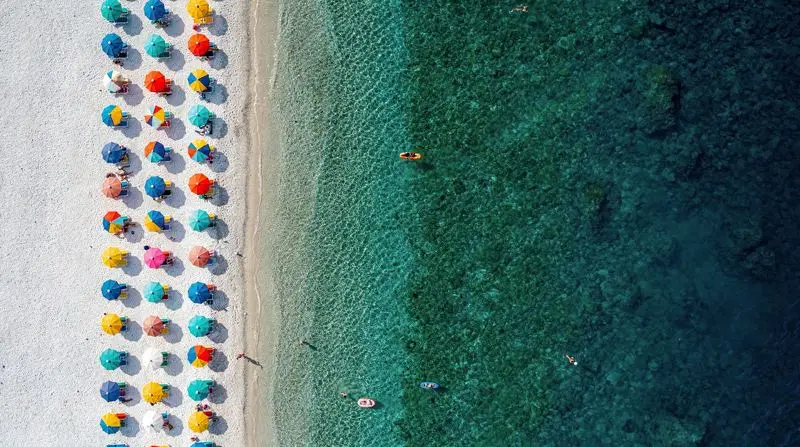
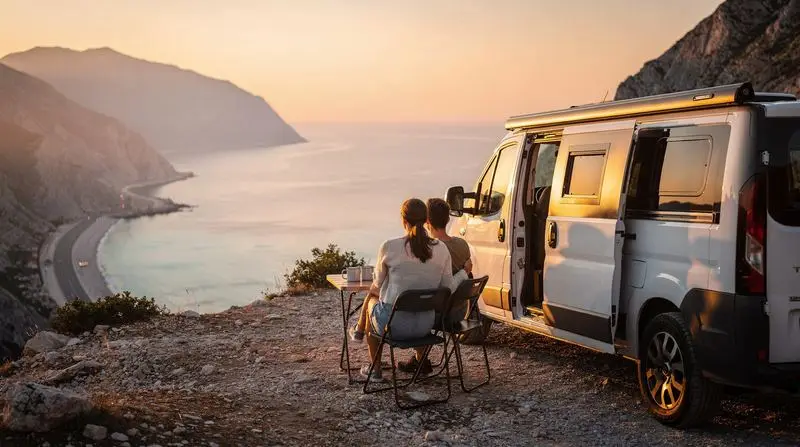
Wild camping on the coast: In practical terms, this is largely possible along the Albanian Riviera outside the developed resort areas. The coast north of Himara, particularly the sections accessible via rough tracks from the main road, has numerous spots where campervans have clearly parked overnight. The beaches at Palasa, Borsh, and several unnamed coves offer this kind of access. Technically, camping on Albanian state-owned beaches requires a permit; in practice, a well-behaved van parked overnight on a remote stretch of coast will not encounter any problems. Common sense applies: leave no trace, be respectful, move on in the morning.
Campsite infrastructure: A small number of actual campsites exist. Around Shkodra, several camping areas have developed near Lake Shkodra. In the south, a few paid camping spots operate near Saranda and Ksamil. These are not European campsite standards — they are basic, with water access and perhaps a shared toilet block — but they are cheap (typically 5-10 euros per night) and give you a secure overnight location.
Guesthouse parking: Many Albanian guesthouses, particularly in mountain villages, have space that they are happy to allow a van to park overnight in exchange for eating dinner and breakfast with them. This is our favourite approach. You get home cooking, local conversation, a secure spot, and sometimes access to a proper shower, all for the cost of a meal. Ask when you arrive. The answer is almost always yes.
Urban overnight stops: Parking a campervan overnight in Tirana or other cities is technically possible but practically inelegant — parking is chaotic, security is uncertain, and cities are not where you want to be in a van anyway. Use the cities as day-trip bases with your van parked somewhere outside, or accept the cost of a guesthouse for urban nights.
The Albanian Riviera by Van: The Route
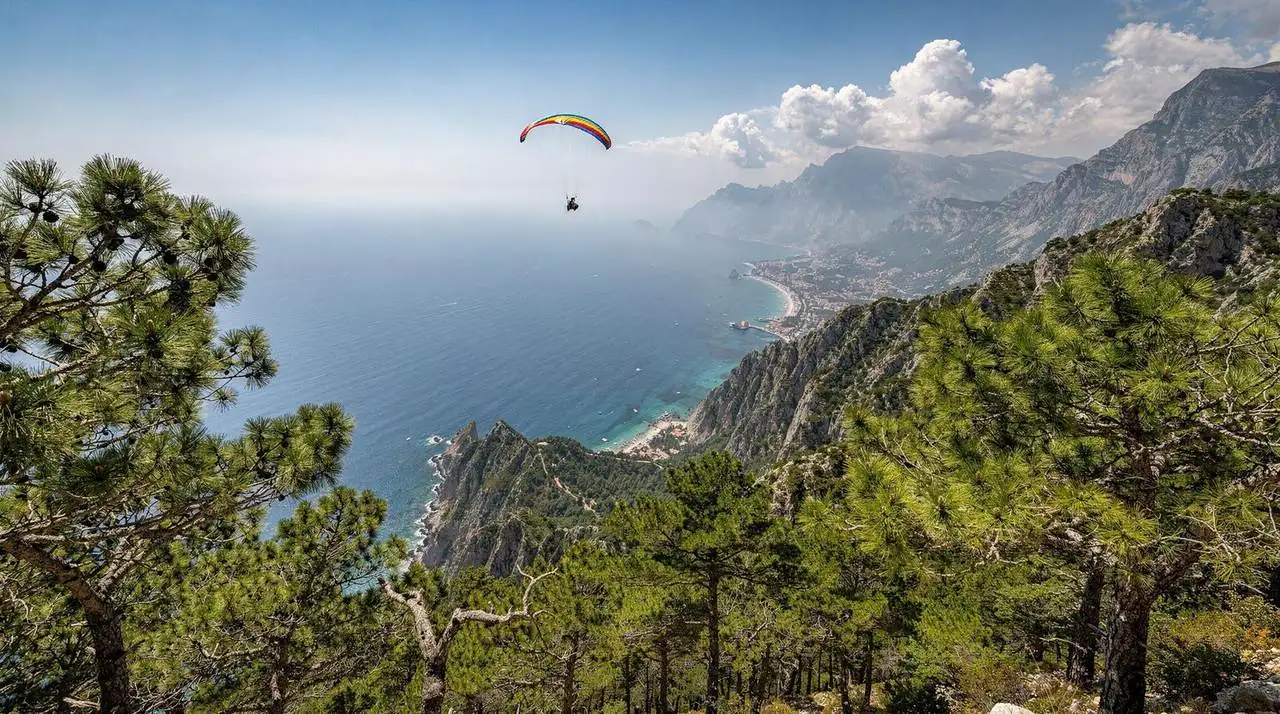
The classic van life route along the Riviera runs from Vlora south through the Llogara Pass and down to Saranda, with Llogara National Park itself offering what is arguably the finest wild camping viewpoint in the country — the pass at 1000 metres above sea level, with views down to the sea on both sides. Campervans frequently stop here overnight.
From Llogara, the road descends to Dhermi — a beach village that has become genuinely trendy and is worth a night. Continue south through Himara, stopping at Livadhi beach (a shingle and sand beach that is one of the best on the coast), and onward to Saranda and Ksamil.
The full route from Vlora to Saranda, with stops, is comfortable over three to five days. Allow more time if you want to explore the inland roads toward Gjirokastra or Permet — both are accessible from the coast and both are rewarding. Our Albanian Riviera road trip itinerary covers this coastal route with more detail on specific stops and timing.
Our best beaches in Albania guide covers the individual beaches along this route with detail on access, facilities, and what kind of traveller each suits.
For days when you want to explore the sea rather than the road, van travellers who base near Himara have excellent access to boat tours. Albanian Riviera boat tours from Himara reach sea caves and hidden coves that are inaccessible from the road — excellent for a day off from driving.
The Albanian Alps by Van
The northern mountains are harder work but extraordinarily beautiful. The standard approach is to drive north from Tirana to Shkodra, then continue east and north through Koplik toward the mountain valleys.
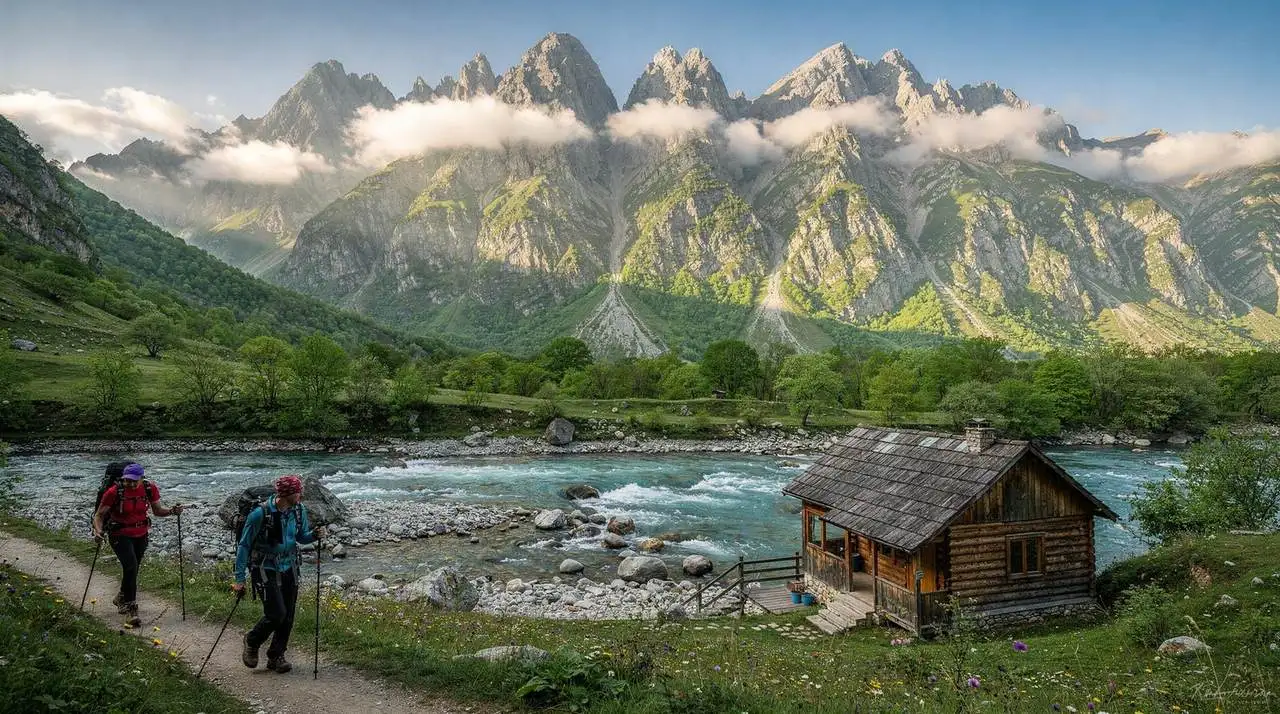
Valbona is reachable by van via Bajram Curri and a mountain road that deteriorates significantly in the final stretch — doable in a small van, not recommended in a large motorhome. The village has basic facilities and increasingly good food.
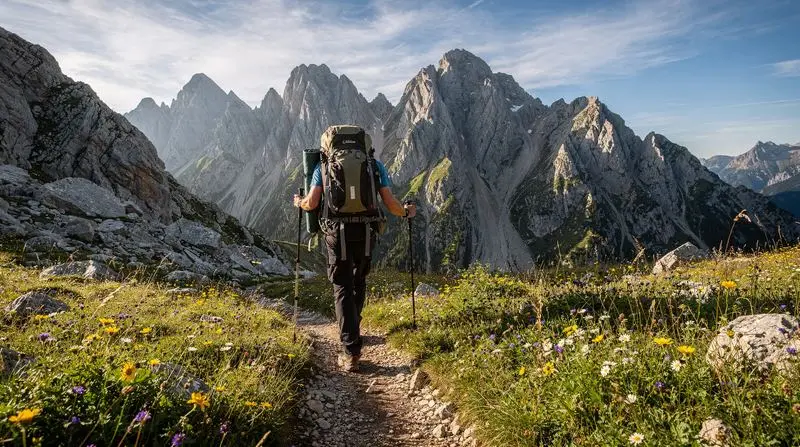
The famous Theth to Valbona hike creates a logistical challenge for van travellers because you end up with your vehicle at one end and yourself at the other. Most people resolve this by leaving the van at a guesthouse in Theth, hiking to Valbona, returning to Theth by the same route or arranging transport back, or leaving the van in Shkodra and accessing both valleys by local transport. Factor this in when planning.
For the Koman Lake ferry experience, van travellers can actually put their vehicle on the car ferry — there is capacity for a small number of vehicles alongside the passenger load. This allows you to arrive in the northern valleys with your van rather than returning by the same road. The logistics require advance planning and an early arrival at the Koman dock.
Permit and the South: The Van Life Sweet Spot
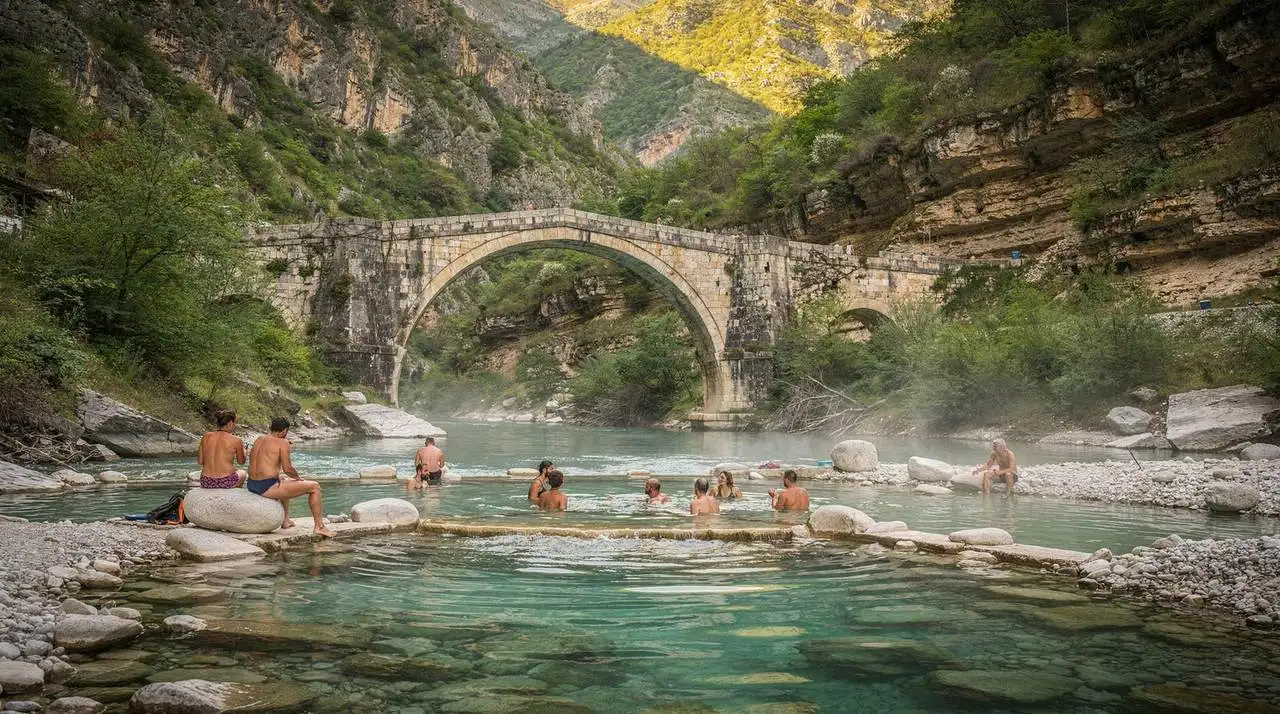
Permet and the Vjosa Valley are perhaps the most rewarding part of the country for van travellers who want to go beyond the coast. The valley has several wild camping possibilities along the river, the thermal baths at Benja are extraordinary and completely free, and the town itself has enough infrastructure for resupply and rest days.
The road south from Gjirokastra to Permet is excellent and the approach from Berat via Corovoda is passable in a small to medium van. The Vjosa Valley from Permet toward the coast offers river camping that feels genuinely remote despite being within an hour’s drive of civilisation.
A guided thermal baths experience is worth booking even if you are traveling independently: a Benja thermal baths guided experience from Permet includes transport from town and shows you the best pools and Ottoman bridges — useful on arrival when you do not yet know the area.
Costs: What to Budget
Van life in Albania is genuinely cheap. A realistic budget for two people in a self-sufficient van:
- Fuel: Albania uses Euro 95 petrol and diesel. Prices are broadly comparable to Southern European levels, slightly below Greece or Italy. A day’s driving in the mountains might cover 150-200km — budget accordingly.
- Food: Buying from markets and cooking in the van costs very little. Albanian fruit and vegetables are excellent and cheap. A market shop for two for two days costs under 15 euros.
- Paid camping (where used): 5-10 euros per night.
- Restaurant meals: When you eat out, budget 15-25 euros for two for a proper dinner with wine in most places.
- Total daily budget: 30-50 euros for two people, including fuel, is entirely realistic.
For context on Albanian food costs and what to buy at markets, the Albanian food guide is helpful — it covers local products and where to find them.
Van Life Beyond the Riviera and the Alps
Most van life content on Albania sticks to the two obvious routes — the coast and the northern mountains — for good reason: they are spectacular and well suited to vehicle travel. But the interior rewards the effort too. The road through Korca and down toward Lake Prespa offers high-altitude farmland, cooler summer temperatures, and a version of Albania that most Riviera-focused visitors never see. The roads here are generally in decent condition on the main routes, with the same caveats about single-lane sections once you leave them.
Elbasan and the central valleys make a sensible link between the coast and the south without retracing the same roads twice. It is not a dramatic detour, but it breaks up long driving days and gives you a look at everyday Albanian towns rather than only the tourist circuit. Our Albania road trip guide covers route planning across the whole country in more depth than this van-specific piece, including how to sequence a longer trip that combines coast, mountains, and interior without excessive backtracking.
Fuel, SIM Cards, and Staying Connected
Beyond the practical driving concerns already covered, two logistics questions come up constantly from van travellers: fuel availability and staying online. Fuel stations are common on all major routes and in every town of any size; carrying a spare canister is sensible only for the more remote mountain approaches, not for the coast or main valleys. For connectivity, a local SIM solves the patchy coverage issue in the mountains better than relying on roaming — our Albania SIM card guide covers where to buy one and which network has the best rural coverage, which matters more for van travellers navigating unfamiliar mountain roads than for most other visitors.
What to Watch Out For
Insurance: Check that your vehicle insurance covers Albania specifically. Many European policies include Albania, but some cheaper policies exclude it. Verify before crossing the border.
Grey customs: Bringing a foreign-registered vehicle into Albania for extended periods involves customs declarations. Short visits (under 90 days for EU/UK registered vehicles) are generally unproblematic, but check current regulations.
Wild camping etiquette: Albanian communities are generally tolerant of camping travellers, but behaving well is essential for maintaining that tolerance. Ask permission where there is someone to ask. Leave sites cleaner than you found them. Buy something locally wherever possible — a coffee, some vegetables from a farm stall.
Mountain weather: Summer thunderstorms in the Albanian Alps are fast and violent. If you are camping at altitude, watch the forecast and have a plan for getting the van to lower ground if conditions deteriorate. The valley floors are significantly safer than any exposed ridge position.
Connectivity: Mobile data coverage is good on the main routes and in towns but patchy in remote mountain valleys. Download offline maps before heading into the mountains and have a physical backup for critical navigation.
Albania rewards the van traveller who comes prepared, moves slowly, and talks to people. The traveller who arrives expecting sanitised European campsite standards will be disappointed. The traveller who is comfortable with improvisation will have one of the best van experiences in Europe.