Albanian Coffee Culture: The Social Institution Behind Every Cup
If there is one ritual that defines daily life in Albania more than any other, it is the act of drinking coffee. Not merely the physical act of consuming caffeine — although Albanians consume coffee at a rate that places the country among Europe’s highest per capita — but the social practice built around it. In Albania, coffee is rarely drunk alone, rarely drunk quickly, and rarely drunk without the expectation that the conversation accompanying it matters as much as the beverage itself.
For visitors accustomed to grabbing an espresso at a station counter or ordering a takeaway cup on the way to work, Albanian coffee culture requires a different mindset. The cafe is not a pit stop but a destination. A coffee takes as long as the conversation requires. And declining an invitation to share a coffee is one of the more meaningful social refusals you can make in this country.
| Where | Every town has cafes; Blloku (Tirana) has the widest range |
| Cost | Around 80–150 lek (EUR 0.70–1.30) for an espresso |
| Typical order | Kafe turke (Turkish) or espresso/macchiato |
| Pace | No rush — a coffee can last an hour or more |
| Etiquette | Whoever invites, pays |
The Origins: Ottoman Legacy and Albanian Adaptation
Albanian coffee culture descends directly from the Ottoman coffeehouses that spread across the Balkans from the sixteenth century onward. The Ottomans brought both the coffee itself and the coffeehouse as a social institution — a place where men gathered to drink, talk, play games, and exchange news. In the centuries of Ottoman rule over Albanian territory, this tradition took deep root.
After independence and through the turbulent twentieth century — including the long decades of communist isolation under Enver Hoxha — the cafe survived as one of the few genuinely public social spaces the regime could not entirely eliminate. Even in Hoxha’s Albania, where private enterprise was banned and foreign goods were largely unavailable, coffee was obtained, prepared, and shared. The social need it fulfilled was too deeply embedded to suppress.
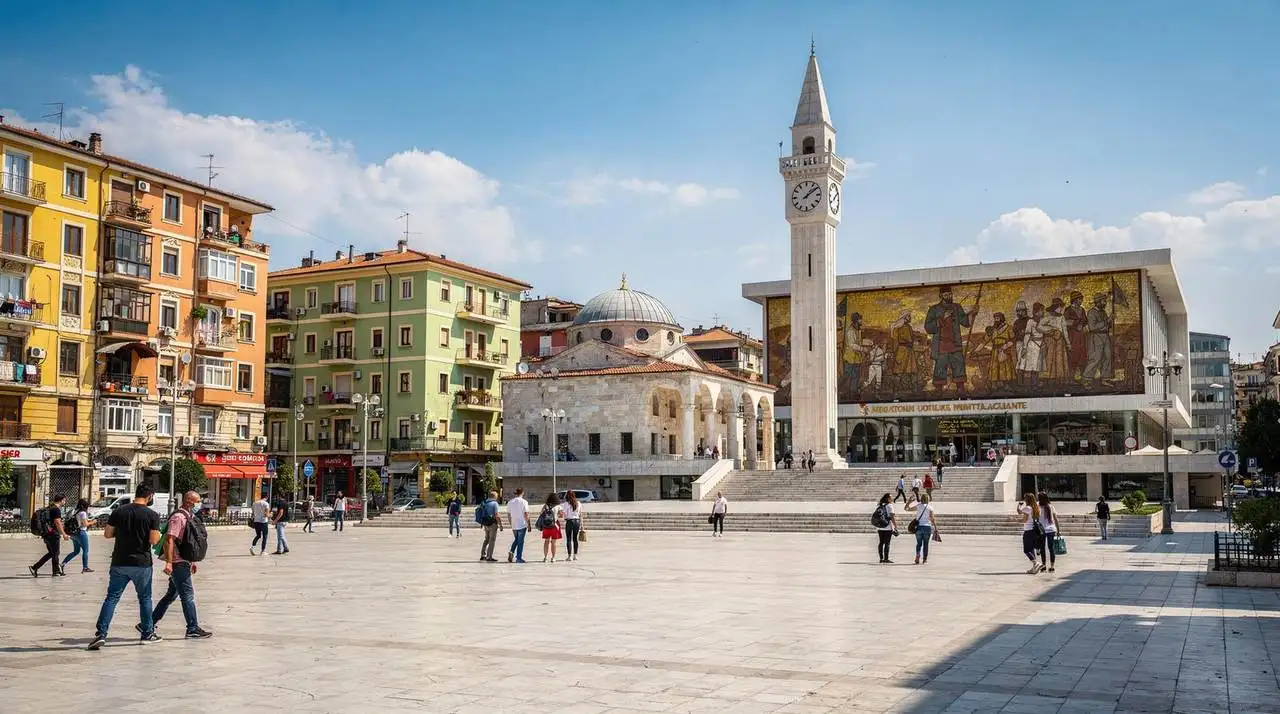
The fall of communism in the early 1990s brought an explosion of cafes across Albania’s cities. Tirana went from a city with almost no independent cafes to one where the cafe became the defining feature of the urban landscape within a single decade. The Blloku neighborhood — once the exclusive residential district of the communist leadership, sealed off from ordinary citizens — opened to the public in 1991 and quickly filled with cafes, bars, and restaurants. It has been the heart of Tirana’s cafe culture ever since, and remains the best place to experience it.
What Albanians Actually Drink
The vocabulary of Albanian coffee is worth understanding before you arrive.
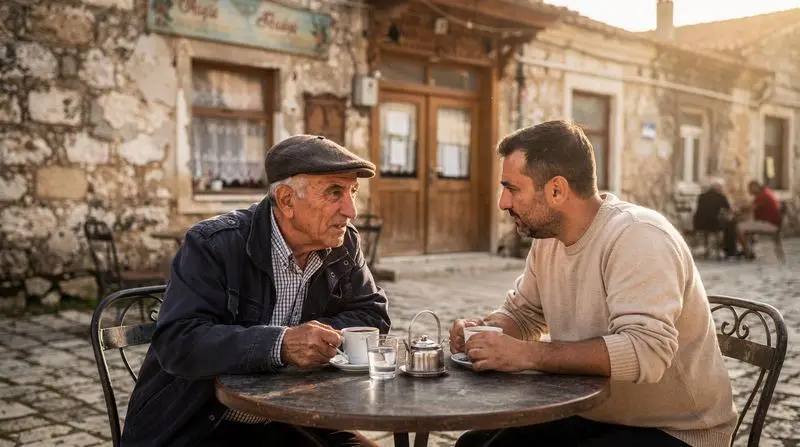
Kafe turke (Turkish coffee) is the traditional preparation: finely ground coffee simmered in a small copper pot called a xhezve, then poured unfiltered into a small cup where the grounds settle at the bottom. The result is intensely strong, slightly thick, and traditionally served with a glass of cold water and often a small sweet on the side. Turkish coffee is served in older-style cafes and in homes, and the ritual of preparation — the slow heating of the xhezve, the timing of when to pour — is something Albanian grandmothers take seriously.
Kafe espresso is now the dominant style in urban Albania and the one you will encounter in most modern cafes. Albanian espresso preparation is taken seriously: the equipment tends to be good, the coffee is typically freshly ground, and the expectation is a short, strong cup with proper crema. An espresso in Tirana costs between 80 and 150 lek — roughly EUR 0.70 to EUR 1.30 — making it one of the best-value cups in Europe by quality-to-price ratio. La Marzocco and Nuova Simonelli machines are common in better Blloku cafes.
Macchiato (makijato) is the most popular order among Albanian women and younger city dwellers: a small espresso with a layer of frothed milk on top, served in a slightly larger cup than a straight espresso. The macchiato as made in Albanian cafes is closer to the Italian version than the large milky interpretation found elsewhere.
Kapucino is available in most cafes and refers to a cappuccino in the standard sense. Kafe me qumesht (coffee with milk) covers everything from a flat white equivalent to a simple espresso diluted with warm milk.
Nescafe — the brand name used in Albania to refer to any instant coffee — retains surprising popularity in village cafes and more rural settings. Ordering Nescafe in a city cafe will earn a slightly puzzled look; in a mountain guesthouse, it may be what is available.
Freddo espresso and freddo cappuccino — cold iced versions of espresso and cappuccino — have entered Albanian cafe menus in recent years and are popular in summer. The Albanian adaptation is excellent: strong espresso over ice with a cold milk foam.
The Social Architecture of the Albanian Cafe
Understanding who goes to cafes, when, and why reveals a great deal about Albanian social structure.
The morning cafe session typically involves Albanian men gathering before or instead of starting work. In smaller towns and villages, the local cafe serves as an informal community center: a place to hear the news, arrange informal business, and maintain the daily social contact that Albanian life appears to genuinely require. This morning session can run from 7am to noon and involves a procession of coffees, cigarettes (Albania has among the highest smoking rates in Europe, and traditional cafes are often smoky), and extended conversation.
For younger Albanians in cities, the cafe is the default setting for any social interaction that does not happen at home or at work. Meeting a friend for coffee is the standard approach to socializing; the cafe visit might last thirty minutes or three hours, determined by conversation rather than planning.
Business in Albania is conducted significantly over coffee. Introductory meetings, informal negotiations, the building of relationships that precede any formal transaction — all of these happen in cafes. Arriving at a business meeting in Albania without time for coffee beforehand is considered somewhat abrupt.
The evening cafe culture differs from the morning session. As the temperature drops and the xhiro begins — Albanians’ evening walk along the main boulevards, a tradition shared across the Balkans — the cafes fill with a different mix: couples, groups of friends, families. In summer, cafe terraces in Tirana, Shkodra, and the coastal towns fill completely from 7pm onward and remain full until midnight.
Coffee Hospitality: The Rules of Engagement
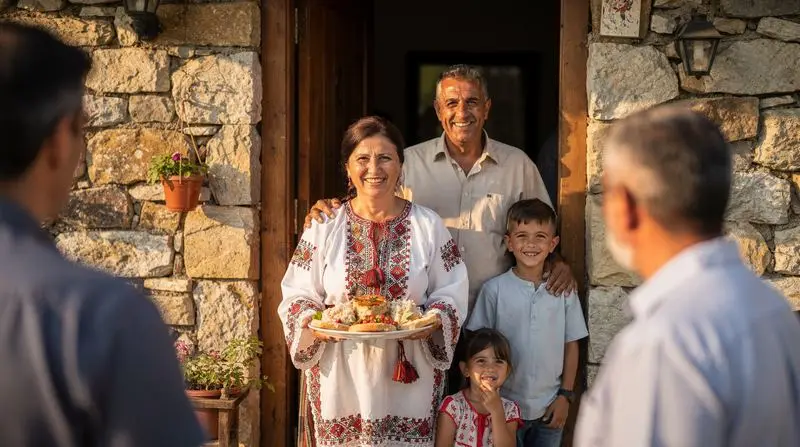
If you visit an Albanian home, you will be offered coffee. This is not a question; it is a statement. The offer of coffee to a guest is an expression of welcome and respect that connects to the deep Albanian hospitality code known as besa. Refusing politely is possible — “faleminderit, nuk pi kafe” (thank you, I don’t drink coffee) is understood — but accepting creates a warmer connection.
The host will almost certainly prepare kafe turke if they are from an older generation or if the household maintains traditional customs. Watching the preparation is part of the hospitality: the careful spooning of the ground coffee into the xhezve, the addition of water and often sugar (shumë sheqer: very sweet; pak sheqer: a little sweet; pa sheqer: without sugar), the slow heating over the flame while the host watches for the moment the coffee begins to rise and must be removed just before it overflows.
In a cafe setting, when one Albanian invites another for coffee, the person who issued the invitation pays. Arguing over the bill is futile — the inviter has already decided they will pay and any resistance will be cheerfully overridden. When visiting Albania, you will frequently find that Albanian hosts, guides, or new acquaintances insist on paying for your coffee more often than social convention elsewhere would suggest. The correct response is gratitude — and the memory that you owe one.
The Albania customs and etiquette guide covers this and other aspects of Albanian hospitality in more depth.
Reading Turkish Coffee Grounds
Leximi i filxhanit (reading the coffee cup) is a tradition maintained primarily by older Albanian women. After finishing a kafe turke, the cup is inverted onto the saucer and left for a few minutes. The pattern left by the grounds is then interpreted by someone with the knowledge to read them — typically a grandmother or older woman with a reputation for accuracy.
The practice is taken seriously in some families and treated as light entertainment in others, but it is a real part of Albanian coffee culture that visitors may encounter. If you are offered a cup reading, the appropriate response is engaged curiosity rather than skepticism, regardless of your personal views on divination.
Where to Experience Albanian Coffee Culture
In Tirana, the Blloku neighborhood is the place to experience the full range. The streets around Rruga Pjeter Bogdani and the surrounding blocks contain a concentration of cafes spanning everything from traditional setups with Turkish coffee and backgammon tables to sleek contemporary espresso bars with single-origin beans.
Rinia Park and the lakeside area offer cafe terraces in a green setting that is particularly pleasant in spring and autumn. The passegiata culture is most visible here in the evenings, with families walking the paths and stopping at cafe tables along the way.
For a small-city experience, Shkodra’s cafe culture along the pedestrian street Rruga Kole Idromeno is worth seeking out. The city has a strong Catholic minority with Italian connections, and the espresso quality tends to be particularly high. The main pedestrian street in the late afternoon is one of the better social walking experiences in northern Albania.
The New Bazaar area in Tirana combines coffee culture with the food market experience — a morning espresso at a bazaar cafe while watching the market vendors set up their stalls is one of the more pleasurable small experiences the city offers. If you would rather explore it with a local guide, this small-group Tirana city food tour with meals included is a relaxed way to taste the local food scene between coffee stops.
For visitors wanting to experience Albanian cafe culture with cultural context, Tirana food and culture tours typically include a cafe stop with explanation of Albanian coffee traditions — an efficient way to understand the context while experiencing it.
Regional Coffee Variations
Tirana and the urban centers follow the espresso-dominant model described above. Travel to more rural areas and the picture changes.
In the villages of the Albanian Alps and the northeastern highlands, kafe turke remains the standard and is often prepared over an open fire rather than a gas flame. The quality of the preparation varies, but the ritual of offering it does not. Arriving at a mountain guesthouse and being offered Turkish coffee made over an outdoor fire is one of the more characteristically Albanian experiences available to travelers.
In the south, particularly in cities like Gjirokastra and Permet, the Ottoman coffee tradition is stronger and more visible. Old-style cafes with low tables, wooden stools, and xhezve prepared to order still operate alongside modern espresso bars.
The coastal towns along the Riviera have developed a more Mediterranean cafe culture influenced by Italian proximity and tourism. Here you are as likely to find excellent espresso as anything else, and the cafe aesthetic tends toward the contemporary.
Coffee Prices: Understanding Albanian Value
One of the most striking aspects of Albanian coffee culture for visitors from Western Europe is the price. An espresso in Tirana’s best cafes costs between 80 and 150 lek — roughly EUR 0.70 to EUR 1.30. The same quality of espresso in Paris, London, or Amsterdam would cost EUR 3.50 to EUR 5.
This pricing reflects Albanian economic realities more than any compromise in quality. Many of Tirana’s better cafes have invested seriously in equipment and in trained baristas. The price of coffee in Albania has remained remarkably stable even as the city’s overall cost of living has risen, partly because coffee is so central to daily social life that any significant price increase would be a genuine political issue.
For visitors, this means excellent coffee in Albania is essentially free from a Western budget perspective. The ability to sit at a cafe for two hours, drink three excellent espressos, and leave EUR 4 lighter is one of the more straightforward pleasures Albanian travel offers. The Albania travel budget guide covers daily costs, where coffee is the least of your expenses.
Making Albanian Turkish Coffee at Home
The kafe turke preparation is straightforward to replicate at home. A xhezve (copper or stainless cezve) is available at kitchen supply shops and Albanian diaspora stores in many Western cities. Finely ground coffee (specifically labelled “Turkish grind,” finer than espresso grind) is the starting material.
The method: Measure cold water into the cezve (one small cup’s worth per serving), add one heaped teaspoon of ground coffee per serving, and the desired sugar (if any). Heat slowly over low flame, stirring once at the beginning. Watch the surface of the liquid — as the temperature rises, a foam forms and begins to climb toward the rim. At the moment it is about to overflow, remove from heat. Let it settle for twenty seconds, then pour slowly into the cup, trying to keep the grounds in the cezve.
The cup should have a layer of foam on top (called “ajkë kafeje” — coffee cream) and should be drunk slowly after the grounds have settled. Adding sugar after the fact ruins the texture; sugar must be dissolved during the heating process.
The Pace of Albanian Cafe Life
The pace of cafe culture in Albania is one of the most immediate adjustments visitors make. The country has not adopted the productivity-culture relationship with time that defines many Western European contexts, and the cafe remains a space where nothing is required except conversation and the slow enjoyment of a cup. Sitting for two hours over one espresso is entirely normal and expected. The waiter will not hover with the bill; you leave when you are ready.
For many visitors, this turns out to be one of the things they remember most fondly about Albania after returning home. The Albanian cafe, in its unhurried quality, is an invitation to slow down to a pace the country deserves — and that most travelers benefit from.
See the Albania customs and etiquette guide for more on the broader social practices that Albanian cafe culture connects to, and the Albanian food guide for the food culture that accompanies the coffee tradition.
What to Order If You Don’t Speak Albanian
Ordering coffee in Albania rarely requires more than pointing and a few words. “Nje kafe, ju lutem” (one coffee, please) followed by the style — “turke,” “espresso,” or “makijato” — is enough almost anywhere. Staff in tourist-frequented cafes in Tirana, Saranda, and along the coast generally speak enough English or Italian to take a straightforward order, and pointing at another table’s cup works everywhere. Specifying sugar level matters more than most visitors expect: a plain “kafe turke” without further instruction often arrives medium-sweet, so state “pa sheqer” (no sugar) or “pak sheqer” (a little) if you have a preference, since removing sugar after it has been boiled in is not possible.
Coffee Culture Along the Coast vs. the Capital
Coffee habits shift subtly by region and season. In Tirana, the cafe scene runs year-round at full intensity, with Blloku’s terraces busy from early morning through midnight regardless of season. Along the Albanian Riviera, coffee culture becomes more seasonal and more tied to the sea — cafes in Saranda and Himara fill with a mixed crowd of locals and tourists in summer, often positioned to catch a sunset view, and the pace slows further outside July and August when many close early or reduce hours. Travelers building a coastal itinerary should expect coffee stops to be less of a fixed daily ritual and more of an occasional pleasure tied to a specific view, which pairs naturally with time spent at beach clubs along the coast or exploring nearby towns on a day trip from Saranda.
Frequently Asked Questions About Albanian Coffee Culture
How much does coffee cost in Albania?
An espresso in a good Tirana cafe typically costs 80–150 lek (roughly EUR 0.70–1.30), and prices in smaller towns and villages are often lower still. Turkish coffee is usually priced the same as or slightly less than espresso. Even sitting for two hours over several coffees rarely adds up to more than a few euros — one of the better small-value experiences in Albanian travel budgeting.
Is it rude to decline a coffee invitation in Albania?
It can register as a mild social refusal, since offering coffee is a core expression of Albanian hospitality (besa). A polite decline — “faleminderit, nuk pi kafe” (thank you, I don’t drink coffee) — is understood and accepted without offense, but accepting, even briefly, tends to warm an interaction noticeably, particularly with hosts, guides, or shopkeepers.