The Most Common Mistakes Tourists Make in Albania
Albania is an easy country to visit badly. The distances look manageable on a map, the itinerary looks complete when it centres on the Riviera, and the logistics seem simple until they are not. Most mistakes are avoidable with a small amount of prior knowledge — which is exactly what this guide provides.
These are the errors that experienced Albania travelers see repeated constantly, drawn from patterns visible in traveler forums, guesthouse conversations, and the recurring questions people ask after returning from Albania wishing they had done things differently.
| #1 mistake | Only visiting the Riviera |
| Most costly mistake | Not carrying enough cash in rural areas |
| Most time-wasting mistake | Underestimating driving times |
| Easiest fix | Book Theth/Valbona guesthouses by February-March |
| Meta-mistake | Treating Albania like a familiar Western European destination |
Mistake 1: Only Visiting the Albanian Riviera
The Riviera deserves its reputation. Ksamil, Dhermi, Gjipe, the coastal drive from the Llogara Pass south to Saranda — all of these are genuinely excellent. The turquoise water, the cheap seafood, the empty coves accessible only on foot — they live up to the photographs. But Albania that begins and ends on the coast is Albania at perhaps 40 percent of its potential.
The UNESCO cities of Berat and Gjirokastra are extraordinary. Berat’s Ottoman-era houses cascade down a hillside toward a Byzantine castle in a composition that justifies every photograph; Gjirokastra’s stone-paved lanes and fortress are among the most atmospheric historic townscapes in the Balkans. Neither attracts the visitor numbers their quality should warrant.
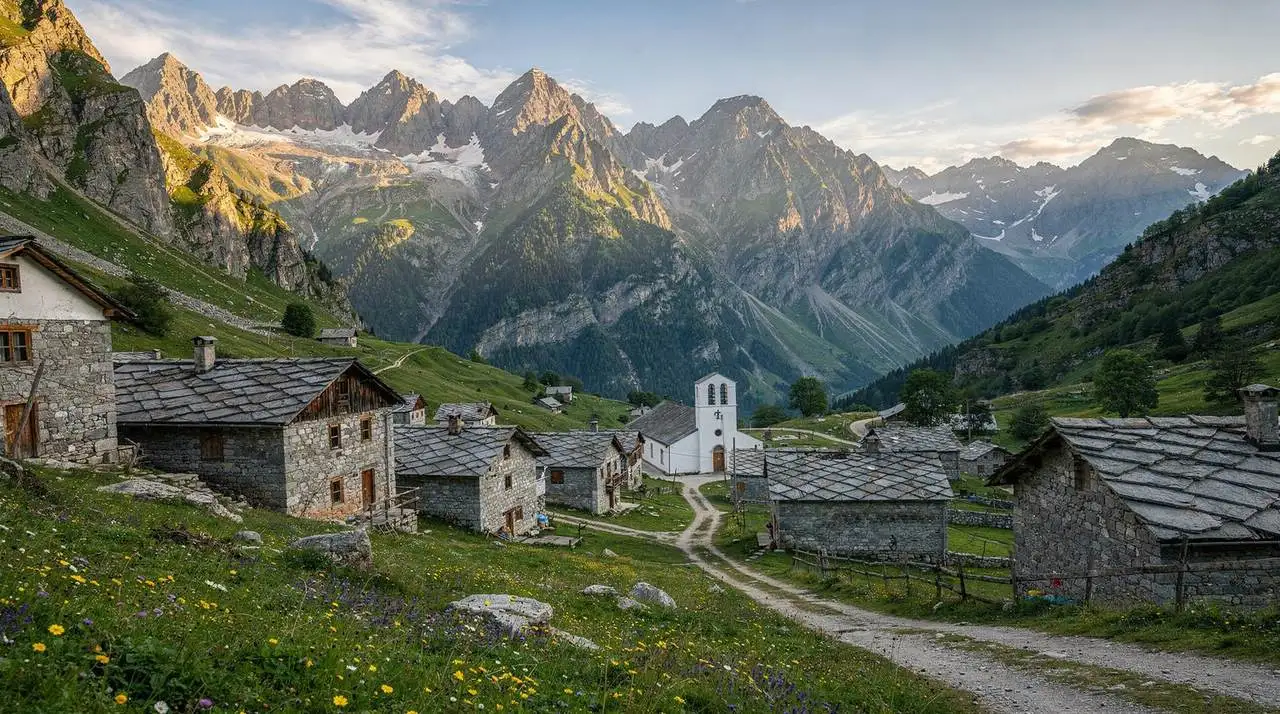
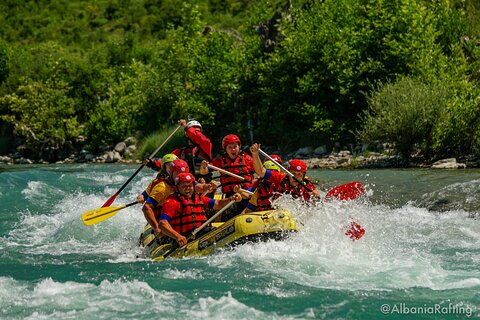
The Albanian Alps — accessible from Shkodra via the Koman Lake ferry or by direct road — contain some of the most dramatic mountain scenery in Europe. The Theth-Valbona hike is one of the genuinely great one-day mountain walks in the Balkans. Permet and the deep south have thermal baths, wild rivers, and Byzantine ruins that almost nobody visits.
Travelers who spend a week exclusively on the Riviera and then leave have had a good holiday. Travelers who combine three or four days of coast with the UNESCO cities and either the mountains or the south have had a genuinely remarkable trip. Plan accordingly.
The fix: Build at minimum one UNESCO city (Berat or Gjirokastra) and one mountain experience (even the Koman Lake ferry if not a full Alps trek) into any itinerary of a week or more. See the Albania itineraries section for specific routing suggestions.
Mistake 2: Not Carrying Enough Cash
The advice to carry cash appears in essentially every Albania guide and is still ignored with impressive regularity. The pattern: travelers land in Tirana, use cards everywhere in the first day or two (which works fine in the capital and established tourist restaurants), drive to the coast or mountains, and then find themselves at a rural restaurant or guesthouse that has no card reader and no ATM within 30 kilometers.
Albanian card infrastructure has improved significantly in Tirana and major tourist towns. But rural restaurants, mountain guesthouses, furgon transport, market stalls, small cafes, and local shops remain cash-only. A mountain guesthouse in Theth or Valbona will almost certainly not accept cards. A village restaurant near Permet will not accept cards. The family-run beach bar at a remote cove will not accept cards.
The practical fix: every time you pass an ATM in a town, consider whether you have enough cash to cover the next day or two including accommodation, food, and transport. In the main tourist areas, EUR 50-80 per person per day covers everything with something to spare. In rural and mountain areas, cash needs are lower but ATM availability is also lower.
Keep a supply of smaller denominations (200, 500, 1,000 ALL). Asking a guesthouse owner to break a 5,000 ALL note for a 200 ALL coffee creates genuine difficulties. See the Albania currency guide for denomination advice and ATM locations.
Mistake 3: Underestimating Driving Times
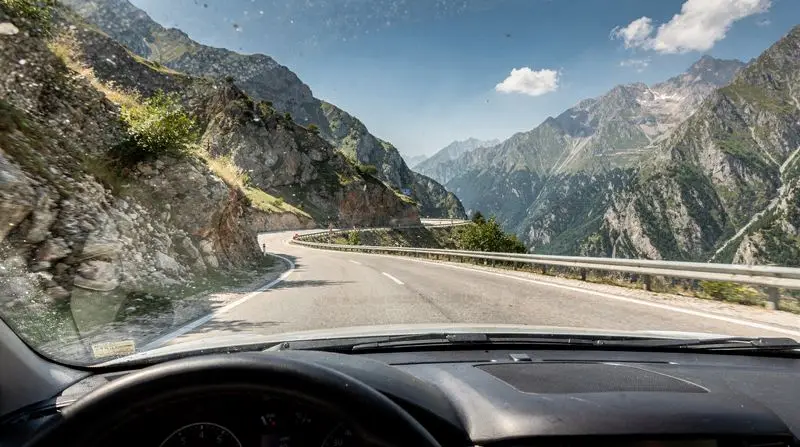
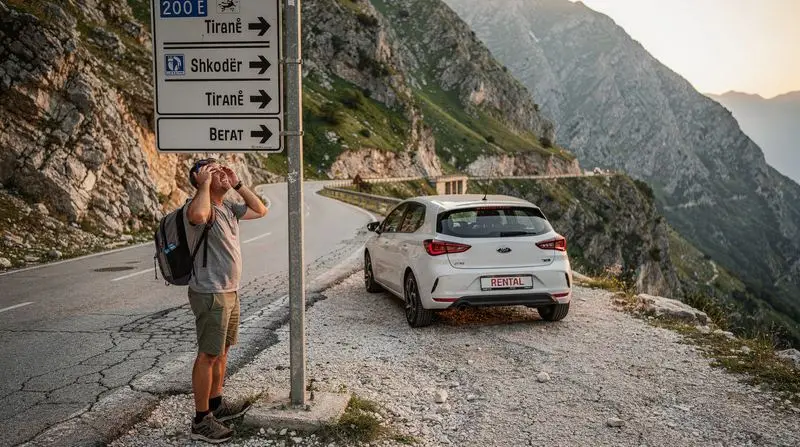
Albanian road distances look manageable on a map. They are not, in many cases. The combination of mountain roads, switchback sections, variable surface quality, unexpected livestock on the road, and slow stretches through towns makes Albanian driving consistently slower than European motorway experience would suggest.
Common examples of the time trap:
- Tirana to Gjirokastra looks like a 3-hour drive on Google Maps. Allow 4-4.5 hours.
- Himara to Saranda along the coastal road looks like 45 minutes. Allow 1.5 hours minimum, more if you stop (you will want to stop at every beach turnoff).
- The Llogara Pass section, from the coastal road to the top and down the other side, looks like 30 minutes. Allow 1-1.5 hours including the inevitable stop for the panoramic view at the summit.
- The road from Shkodra to Theth: 70 kilometers takes 3 hours minimum.
- Saranda to Butrint looks like 20 minutes. It is 20 minutes in good conditions but summer traffic on the road can extend it significantly.
The cascade of mistakes from this underestimation: arriving at a UNESCO city at 17:00 when the museum closes at 17:00, starting the mountain approach too late and finishing in the dark, or missing the last furgon connection because the journey took longer than expected.
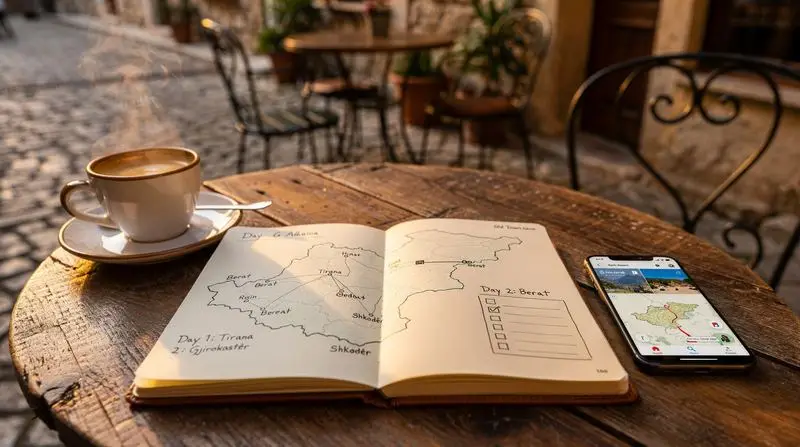
The fix is simple: build time buffers into every driving day, plan for fewer destinations than you think you can reach, and accept that the drive itself is often the experience in Albania. See the driving in Albania guide for route-specific timing guidance.
Mistake 4: Not Booking Albanian Alps Guesthouses in Advance
Theth and Valbona are the accommodation hubs for the Theth-Valbona hike — one of the most popular day walks in the Balkans. The guesthouses in both villages are run by local families, have relatively small capacity (typically 4-15 rooms), and fill up months in advance for July and August.
The mistake is assuming that a destination this remote and unglamorous cannot possibly have a booking problem. It does — a significant one. Travelers arrive at Theth in peak season having not booked, find every guesthouse full, and face the choice between sleeping rough, driving back to Shkodra in the dark on mountain roads, or imposing on a local family’s hospitality in a way that puts everyone in an uncomfortable position.
The fix: Book Theth and Valbona accommodation by February or March for summer travel. Many guesthouses do not list on international booking platforms — research specific guesthouse names (Guesthouse Luka in Theth, Guesthouse Rezidenca Tradita in Valbona, and others), find their WhatsApp contact, and book directly. This is not an inconvenience; it is the normal way the system works. Most guesthouse owners respond quickly to WhatsApp messages and have basic English.
The guesthouses in the Albanian Alps guide covers the booking process in detail.
Mistake 5: Skipping the North
The north of Albania — the Albanian Alps, Shkodra, the Koman Lake ferry, the Shala River — is the part of the country that experienced Albania travelers talk about most. It is also the part that most first-time visitors cut from itineraries when time gets tight.
The standard justification for skipping the north: “We only have a week and we want to do the coast.” This is a legitimate choice for genuinely short trips. But if you have ten days or more and you are not including at least two nights in the north, you are missing what many consider the most spectacular part of the country.
The Koman Lake ferry — a 2.5-hour journey through a drowned river canyon of extraordinary beauty — is one of the great scenic experiences in Europe, comparable to fjord cruises in Norway at a fraction of the cost. The Shala River, with its improbably turquoise water between white limestone cliffs near the Fierza reservoir, is one of the most beautiful swimming spots on the continent. The walk from Theth to Valbona crosses mountain scenery that rivals anything in the Alps.
Northern Albania is more physically demanding and requires more planning than the south. These are features, not bugs. If you like adventure travel without the crowds, the north is where Albania rewards you most.
Mistake 6: Assuming Restaurants Are Open Without Checking
Albania’s restaurant and cafe hours follow a logic that is sometimes different from what visitors expect. In tourist areas in peak season, everything is open all day from morning until well past midnight. In shoulder season in the same places, hours are reduced. In rural areas and small villages, restaurants may not open until they know someone is coming — because they cook to order rather than maintaining a kitchen ready for walk-ins.
The fix: if you are staying somewhere small or remote, ask your guesthouse owner in the morning what the dinner situation is. They will either confirm the local restaurant is open, arrange something themselves (Albanian guesthouse cooking is frequently excellent — often better than the restaurants), or tell you where to go and when. Do not arrive at 8pm at a village restaurant in October and assume it will be open.
This applies particularly to Permit, Vuno, Porto Palermo, and other smaller destinations outside peak season. It is less relevant for Tirana, Saranda, or established Riviera towns.
Mistake 7: Overpacking the Itinerary
Albania looks compact on a map and its highlights feel manageable to visit quickly. This impression is consistently misleading. Gjirokastra alone deserves a full day — and a night, so you experience it in the morning before tour groups and in the evening when it empties out. Berat deserves the same treatment. The Albanian Alps cannot be done in a day trip from Tirana (the logistics alone take half the day).
The most common form of this mistake: trying to do Tirana, Kruja, Berat, Gjirokastra, the Blue Eye, Saranda, Ksamil, Butrint, the Riviera road, and the Llogara Pass in five days. This itinerary is technically possible in the sense that you can drive between these places. It is not possible in the sense of actually experiencing them.
The fix: Build an itinerary where each significant place gets at least two nights. Move slower. Albania rewards lingering — the second morning in Gjirokastra, when you have the stone lanes almost to yourself, is worth far more than a third destination reached in a hurry.
If you want to experience multiple sites in one day without driving yourself, organized tours handle the logistics. Guided day trips from Tirana to Berat are a good way to see a UNESCO city efficiently on a short trip without losing the depth of experience.
Mistake 8: Ignoring Local Seasonal Knowledge
Albania has a genuine tourist season (late May to September) and a genuine off-season (November to March). Within that, the nuances matter significantly. Going to Theth in early May before the snow has cleared the pass; arriving in a coastal village in late October when the restaurant you planned to eat at has closed for winter; driving the Llogara Pass road in December without checking conditions — these all cause real problems for travelers who assumed.
The fix: talk to the people who live where you are going. Your Tirana guesthouse owner knows whether the Theth road is open this week. Your Riviera host knows which restaurants have closed for the season and which ones stay open for the shoulder-season crowd. Local knowledge is freely offered in Albania and is almost always accurate.
The Albania travel tips guide covers seasonal nuances in more detail.
Mistake 9: Not Trying the Local Raki
This is the lightest item on the list, but it reflects a pattern of not engaging with local culture. Raki — the Albanian fruit brandy distilled from grapes, mulberries, plums, or whatever the family tradition dictates — is offered as a welcome drink at virtually every guesthouse and traditional restaurant in the country. Refusing politely is always acceptable; accepting and drinking it even if it is not your usual preference is a gesture of cultural engagement that significantly changes the temperature of the interaction.
The best raki comes from family production in Permet, Skrapar, and the mountain villages of the north. It bears no resemblance to mass-produced spirits. The Albanian raki tradition is documented in the raki guide, which also tells you what to look for and how production varies by region.
The same principle applies more broadly: trying local food, attempting a few words of Albanian (Faleminderit — thank you — goes a very long way), and showing genuine curiosity about the culture pays off in ways that keeping a tourist-observer distance never does.
Mistake 10: Using Outdated Price Expectations
Albania is genuinely affordable by European standards. But peak season prices at the most popular Riviera spots have risen significantly in recent years as tourism has grown and the destination’s reputation has spread. A beach club in Dhermi in August now charges EUR 12-15 for a sunbed set. A sea-view restaurant in Ksamil in July can charge EUR 25-30 per person for dinner. A sea-view room in peak season Ksamil costs EUR 80-120.
These prices are still very reasonable by Mediterranean comparison — Greece or Croatia would charge double. They are not the “almost free” prices that older Albania guides suggested when writing about 2018 or 2019.
Budget with realistic current figures rather than outdated ones. The Albania travel budget guide has current data for 2025-2026.
Mistake 11: Missing the Museum of Secret Surveillance (Bunk’Art)
In Tirana, many visitors spend a day in the city and miss both Bunk’Art 1 and Bunk’Art 2 — the museum installations in the former communist nuclear bunkers that document the Hoxha regime’s surveillance apparatus and social control. These are not optional side trips for history enthusiasts; they are essential to understanding the country you are visiting.
Albania spent 45 years under one of the most isolated and repressive communist regimes in history. The Bunk’Art installations make this history viscerally understandable through documents, artifacts, and the experience of walking through the actual bunkers. The National Historical Museum on Skanderbeg Square and the House of Leaves (former Sigurimi secret police headquarters) provide complementary coverage.
Without this context, the things you observe in Albania — the prevalence of small concrete bunkers in every landscape, the intergenerational effects on attitudes toward authority, the remarkable warmth of a people who survived and rebuilt — make less sense.
Communist Albania tours with Bunk’Art Museum combine the bunker visit with guided historical context — an efficient way to cover this ground on a short Tirana visit.
Mistake 12: Planning a Single-Direction Itinerary and Getting Stuck Backtracking
Albania’s geography rewards circular or one-way itineraries rather than out-and-back ones. A common planning error: flying into Tirana, driving to Saranda (south), then trying to return to Tirana for the flight back through Berat and Gjirokastra. This works but involves significant repetition of the same mountain road.
Better approaches include: flying into Tirana, driving south (Berat, Gjirokastra, Saranda), then arranging a Corfu ferry connection for the return — the Saranda to Corfu ferry is fast and cheap, and Corfu airport connects back to major European cities. Or fly in, drive the south, take the Koman Lake ferry, and exit through Kosovo to Pristina airport.
The flexibility of a rental car makes these one-way itineraries possible. See the car rental Albania guide for one-way drop-off policies.
Mistake 13: Not Checking SIM Card or eSIM Options Before Arrival
Some travelers land expecting airport-wide free Wi-Fi or seamless roaming and then discover patchy connectivity, particularly heading into the mountains. Albanian mobile networks are actually solid in most populated areas, and a local SIM or eSIM is cheap and easy to set up — the mistake is not the state of the network, it’s not preparing at all and then struggling to book a furgon seat or confirm a guesthouse without data. The fix: sort connectivity on day one. See the Albania SIM card guide and Albania eSIM guide for the fastest options, including which work best for the mountain regions.
Mistake 14: Not Researching Which Beaches Are Pebble vs Sand
Photos of the Albanian Riviera can be misleading about beach texture — many of the most photogenic coves, including much of Ksamil and Dhermi, are pebble or a pebble-sand mix rather than the soft golden sand some visitors expect from the pictures. This isn’t a dealbreaker, but arriving without water shoes for a week of pebble beaches is an easily avoided discomfort. The fix: check the best beaches Albania guide before your trip and pack water shoes if sand specifically matters to you.
The Meta-Mistake: Treating Albania Like a Familiar Destination
The underlying error in most Albania travel mistakes is applying assumptions formed by visiting France, Spain, Greece, or Croatia to a country that operates on different principles. Albania rewards travelers who arrive curious and flexible. It penalizes those who arrive with rigid expectations about how things should work.
The best advice for a first visit: read up, plan a framework, and then hold the framework loosely enough to change it when someone local tells you something better. The best experiences in Albanian travel are often not in any guide — they emerge from conversations with people who live there, from a guesthouse owner who mentions a spring nearby, from a driver who suggests a detour to a view nobody visits.
For a broader set of practical guidance before your trip, see the Albania travel tips guide and the things to know before visiting Albania guide.
Frequently Asked Questions About Avoiding Mistakes in Albania
What is the single biggest mistake first-time visitors make in Albania?
Spending the entire trip on the Riviera and skipping the UNESCO cities (Berat, Gjirokastra) and the Albanian Alps. The coast is genuinely excellent, but it represents roughly 40% of what makes Albania worth visiting — travelers who combine it with at least one inland or mountain experience consistently report the more memorable trips.
How much cash should I carry per day in Albania?
In tourist areas, EUR 50-80 per person per day in Lek covers accommodation, food, and transport comfortably, with cards handling the rest. In rural or mountain areas, budget similarly but carry it in advance, since ATMs thin out significantly outside the main towns — see the Albania currency guide for denomination advice.
How far in advance should I book accommodation in the Albanian Alps?
For July and August, book Theth and Valbona guesthouses by February or March. Many don’t list on international booking platforms, so research specific guesthouse names and contact them directly via WhatsApp. Outside peak summer, a week or two of notice is usually sufficient — see the guesthouses in the Albanian Alps guide for the booking process.
Is it a mistake to rent a car in Albania as a first-time visitor?
No — for most itineraries beyond a single city, a rental car is the better choice. It gives you the flexibility to stop at unmarked beaches, adjust to local advice about road conditions, and reach the mountain regions that furgon minivans serve less frequently. See the car rental Albania guide and driving in Albania guide for what to expect.