Things to Know Before Visiting Albania
Albania is not a difficult country to visit. It is open, welcoming, and increasingly well set up for tourism. But it has its own logic, its own rhythms, and a handful of quirks that genuinely catch first-time visitors off guard. Knowing these things before you arrive makes the difference between a trip spent confused and frustrated and one that flows well from the first morning.
This guide covers everything that matters — from the practical and logistical to the cultural and behavioral — so you arrive informed and ready to engage with one of Europe’s most compelling and underrated destinations.
| Currency | Albanian Lek (ALL); cash essential outside cities |
| Safety | Low crime, safe to walk at night in cities |
| Best first stop | Tirana, 2-3 days before heading to the coast or mountains |
| Getting around | Furgon (shared minibus) or rental car |
| Booking lead time | Weeks ahead for Riviera/mountains in July-August |
The Head-Shake Means Yes (and the Nod Means No)
This is the thing Albania is most famous for among travelers who have been there, and it deserves to be at the top of any list. Albanian body language for yes and no is reversed from most of the world’s conventions. A head shake — the sideways movement that everywhere else signals “no” — means “yes” in Albania. A nod — which means “yes” almost universally — means “no” in Albania.
This causes genuine confusion in everyday interactions: ordering food, agreeing to prices, confirming directions, thanking someone for their help. The confusion is mutual — Albanians who deal with tourists frequently have often adapted to the international convention — but in more rural areas or with older locals, the traditional system prevails completely.
The practical adaptation: listen to the spoken word rather than reading the body language, and if in doubt, ask for verbal confirmation. “Po?” (yes?) and “Jo?” (no?) are the two words that confirm everything. The Albania language basics guide covers this and other essential Albanian phrases in full.
Albania Is Safer Than You Think
Safety is the most common concern among people considering Albania for the first time, driven largely by outdated perceptions formed in the 1990s when the country was in genuine chaos following communism’s collapse and the catastrophic 1997 pyramid scheme crisis that destabilized the country entirely.
Contemporary Albania is a safe destination by any realistic European standard. Petty crime targeting tourists (pickpocketing, bag snatching) is low by Mediterranean comparison. Violent crime against tourists is rare to nonexistent. The cities are safe to walk at night. Women traveling alone report generally positive experiences with some standard urban caution advised — see the Albania female solo travel guide for specific advice.
The areas that require specific awareness are road safety (discussed below) and a very small number of regions in the northern highlands with specific local land disputes — these are well-documented and simply avoided rather than navigated through.
The Albania safety guide gives a detailed, honest assessment of actual risks.
Carry Cash — Always
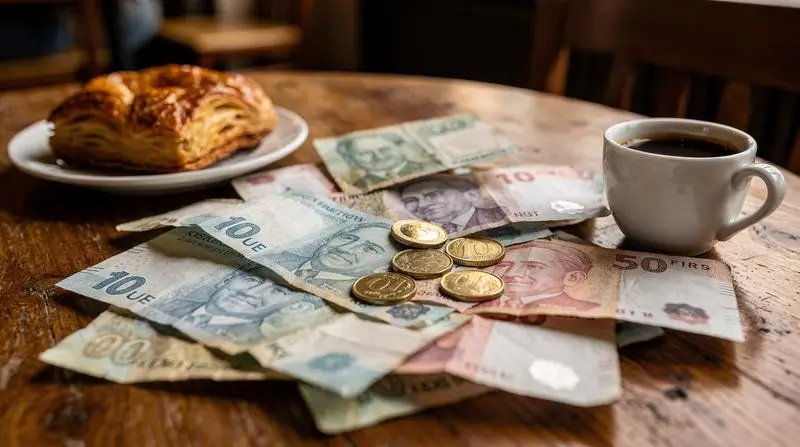
Albania’s card payment infrastructure is developing but remains patchy outside major cities and established tourist infrastructure. In Tirana, Saranda, and the main Riviera hotels and restaurants, cards are widely accepted. In rural areas, mountain guesthouses, smaller restaurants, local markets, furgon transport, petrol stations outside cities, and essentially anywhere not oriented toward international tourism, cash is often the only option.
The Albanian lek (ALL) is the official currency. In tourist areas, euros are sometimes accepted as a practical convenience, though you will often receive change in lek. ATMs are available in all towns and cities; in smaller villages there may be no ATM at all.
The practical rule: carry enough cash to cover a full day’s expenses whenever you leave a city. Running out of cash in a mountain village with no ATM and a guesthouse dinner ahead is an entirely avoidable problem. The Albania currency guide covers ATM locations, exchange rates, and how much to carry.
The Roads Are Better Than You Have Heard — With Real Caveats
Albania’s road reputation was poor a decade ago and was not entirely undeserved. The main national roads are now genuinely good. The Tirana-Gjirokastra highway (SH4) is fast and smooth. The Riviera road has been substantially improved. The coastal road from Vlora to Saranda is well-surfaced and beautiful.
The caveats are real, however. Mountain roads — particularly in the north, toward Theth and Valbona — remain rough in sections and are not suitable for low-clearance vehicles. Rural interior roads vary significantly between excellent and pothole-ridden. Albanian driving culture, particularly the use of lanes, overtaking conventions, and speed on winding mountain roads, is notably different from Western European standards.
The specific hazards: livestock on rural roads (a cow or goat around a mountain curve is not uncommon); cars overtaking on blind corners; potholes in older road sections; absent guardrails on mountain drops.
Driving in Albania covers everything you need to know, including specific roads to be cautious on and timing for common routes.
Accommodation Books Out Early in Summer — Especially in the Mountains
The Albanian Riviera has enough accommodation capacity that some last-minute booking is possible in summer, though the best properties at prime locations fill up. More critically, the mountain guesthouses in Theth and Valbona — which have limited beds and are the access point for the Theth-Valbona hike — fill months in advance for July and August.
If mountain hiking is central to your plans, book Theth accommodation by March or April for a summer trip. The guesthouses do not all list on international booking platforms — some book exclusively via WhatsApp or direct email, so research specific guesthouses in advance.
Riviera accommodation: book two to four weeks ahead for peak summer at popular spots like Ksamil and Dhermi. For shoulder season (May-June, September), booking a week ahead is usually sufficient.
Rent a Car if You Can
Public transport in Albania — the furgon (shared minivan) network — is functional, affordable, and covers the major routes. Tirana to Saranda, Tirana to Shkodra, Tirana to Berat: these routes work on public transport with patience and some schedule acceptance.
But Albania’s best experiences are often in places that furgons do not reach: the coastal coves accessible only by rough track from the Riviera road, Porto Palermo’s castle, the village of Vuno perched above the coast, the Benja thermal baths outside Permet, the Antigonea ruins near Gjirokastra, the remote beaches of the northern Adriatic coast.
A rental car is the key that unlocks this version of Albania. It also gives you timing flexibility that shared transport cannot — arriving at a viewpoint at golden hour, or leaving a beach when you want rather than when the furgon departs.
See the car rental Albania guide for what to expect and how to book, and the buses and furgons guide for when public transport works well.
Albanian Hospitality Is Genuine
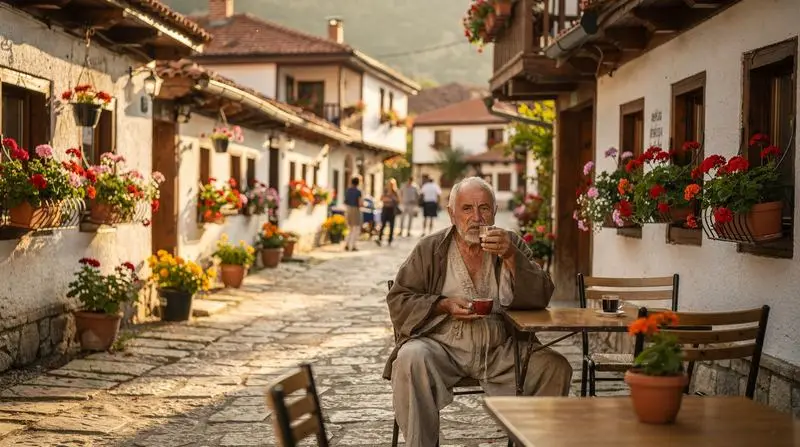
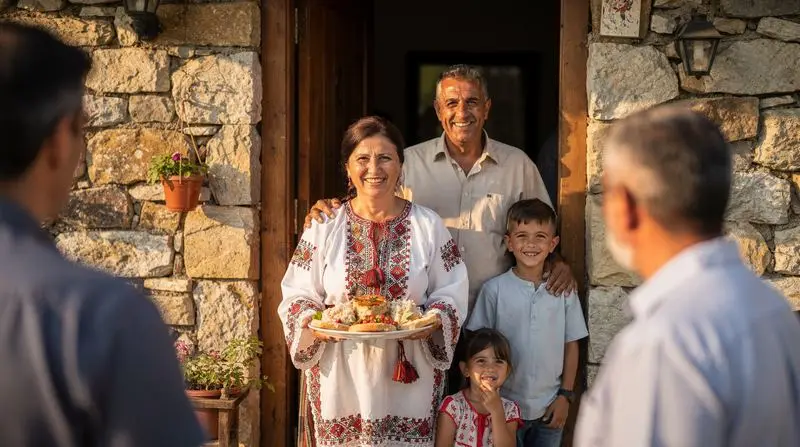
The concept of besa — a deep code of hospitality and honor with roots in the ancient Kanun customary law — still shapes Albanian social behavior, particularly in rural areas. Guests are received seriously; feeding a visitor is an expression of respect; the relationship between host and guest carries genuine weight.
In practical terms, this means: if a guesthouse owner brings you raki and sits to talk before dinner, the correct response is to sit and talk. If a family at a mountain picnic gestures for you to join them, they mean it. If someone in a small village offers to show you around or drive you somewhere, the offer is almost always sincere rather than an attempt to extract payment.
This does not mean you should accept everything or be naive about the occasional opportunist in tourist areas. But it does mean that Albania’s reputation for genuine warmth is, in the experience of the vast majority of visitors, entirely accurate. The Albania customs and etiquette guide covers the cultural nuances that help you engage respectfully.
The Language Situation: More English Than You Expect, More Italian Than You Think
Albanian (Shqip) is a distinct Indo-European language unrelated to any neighbor — it has no close relatives and shares no vocabulary shortcuts with other European languages. Learning a few words — faleminderit (thank you), mirëmëngjes (good morning), ju lutem (please) — is both useful and received with disproportionate warmth.
In tourist areas, English is widely spoken, particularly by anyone under 40. Hotel staff, tour operators, restaurant workers in cities, and most people working in the hospitality industry communicate effectively in English.
In rural areas and among older generations, Italian (from decades of watching Italian television broadcasts across the Adriatic during communism) and Greek (particularly in the south) are more useful than English. An older shopkeeper who cannot manage English may light up when addressed in Italian.
Attempting any Albanian at all is universally appreciated, even if it is simply “Faleminderit” every time you leave a cafe. The language basics guide has all the essential phrases with pronunciation guides.
The Food Is Better Than You Expect
Albanian cuisine occupies an unusual position: it is genuinely good — sometimes excellent — but almost entirely unknown outside the country. The Ottoman culinary inheritance gives it depth: slow-cooked meat dishes, exceptional pastry tradition, preserved vegetables of real quality. The coastal seafood is fresh, well-prepared, and significantly cheaper than equivalent quality in Greece or Croatia.
Specific things to seek out: tavë kosi (lamb and rice baked in yoghurt), byrek (layered filo pastry with cheese, meat, or spinach), fërgesë (a pepper and tomato dish with white cheese from Tirana), grilled fish by the kilogram at coastal restaurants, fresh local yoghurt that accompanies almost everything, and the mountain cheeses of the north.
The wine scene is small but interesting — ask for Kallmet (a red from the northern highlands) or Shesh i Bardhë (a crisp local white from the Berat region). Raki, the national spirit distilled from grapes, mulberries, or whatever the local family tradition dictates, is offered as a welcome drink and digestif everywhere you go. The raki guide explains the tradition and what to look for.
Temperatures in Summer Are Serious Heat
Albanian summers are genuinely hot and this is not always communicated clearly. July and August on the coast reach 34-36 degrees Celsius regularly, and the interior cities (Tirana, Berat, Gjirokastra) can hit 38-40 degrees. This is not a problem if you plan around it — beach or sightseeing in the morning, rest in the midday shade, sightseeing again in the late afternoon and evening.
It becomes a problem if you try to walk a UNESCO city at noon, hike a mountain trail in full sun, or drive without air conditioning.
Sunscreen of high SPF, a good sun hat, and a refillable water bottle are not optional in Albanian summer. If hiking, carry more water than you think you need. Heat exhaustion and dehydration are genuine risks on summer mountain trails.
Mobile Data Works Well in Cities and Main Roads
Albanian SIM cards are cheap and widely available. Buying a local SIM at Tirana Airport or in the first convenience store you find gives you affordable data for the whole trip. Coverage is excellent on the main routes and in all towns; some mountain areas and remote valleys have no signal whatsoever.
The Albania SIM card guide covers which operator to buy (Vodafone or ONE are the main choices), what packages cost, and where coverage is unreliable. Download offline maps for mountain areas before you lose signal.
EU roaming may or may not work at normal EU rates depending on your home provider’s coverage agreements with Albanian networks; check before assuming it works. Albania is not EU so standard EU roaming rules do not automatically apply.
The Bunkers Are Everywhere — There’s a Reason for That
You will notice, within the first hours of driving through Albania, small concrete dome-shaped structures in fields, hillsides, gardens, and beaches. These are the 173,000+ military bunkers constructed by the Hoxha regime between the 1960s and 1980s — one bunker for every 14 citizens at the time of construction. They are the most visible physical legacy of Albania’s communist isolation and one of the most striking things about the Albanian landscape.
Most are abandoned. Some have been converted to imaginative uses — art installations, cafes, storage, museum exhibits. The Bunk’Art museums in Tirana are built inside two of the largest bunkers and are among the most significant historical experiences in Albania. Understanding this history enriches every aspect of your trip.
Communist Albania tours with the Bunk’Art Museum provide the historical context in an organized format — well worth doing on your first or second day in Tirana.
Cash-Only Transport: Furgons and Buses Take Lek Only
The furgon system — Albania’s informal shared minibus network — is cash-only. So are local buses, taxis in many situations, and essentially all forms of public transport outside of Bolt (the ride-hailing app, which accepts card payment). Plan accordingly: always have Lek in small denominations before getting on any public transport.
The buses and furgons guide covers how the furgon system works, where to find them in each city, and what to expect.
The Country Is Changing Fast — Verify Current Information
This is both the most important thing to know and the most difficult to convey. Albania is in a period of rapid economic and infrastructural change. New hotels are opening on the Riviera. Roads are improving. New restaurants are experimenting with Albanian cuisine in ways that would have been unusual five years ago. Tourist infrastructure that did not exist in 2020 is now standard.
The result is that specific advice about prices, road conditions, and opening hours ages quickly. Check recent traveler reports on booking platforms and forums for the most current situation on specific destinations. The broader truths — the warmth, the value, the beauty, the food — remain constant.
How Albania Feels Different From Its Balkan Neighbors
First-time Balkans travelers sometimes arrive in Albania expecting something close to Croatia, Montenegro, or Greece, and are surprised by how different the texture of daily life actually is. Albania spent nearly half a century under one of Europe’s most extreme and isolated communist regimes, and the effects — the bunkers, the distinctive Ottoman-communist-contemporary architectural layering, the relative novelty of mass tourism — set it apart from neighbors that opened to the world decades earlier. Prices are noticeably lower than Croatia or coastal Montenegro for comparable quality. Infrastructure, while improving fast, is less uniformly polished than in EU member states. What this means practically: come with a spirit of discovery rather than a checklist of expected European conveniences, and the gap between expectation and reality becomes part of what makes Albania memorable rather than a source of frustration.
Small Surprises First-Timers Often Miss
A handful of smaller details do not fit neatly under a heading of their own but genuinely change how a first trip feels. Many shops and some restaurants close for a few hours in the early afternoon in smaller towns, particularly outside the main tourist season — plan errands for morning or early evening rather than 1-3pm. Smoking remains far more common indoors and in cafes than most Western European or North American visitors expect, particularly in older-style kafene; if this bothers you, look for the newer specialty coffee shops in Tirana and Saranda, which are more likely to be smoke-free. Drone flying requires permits in Albania and is restricted near airports, borders, and some historic sites — check the drone rules Albania guide before flying near Butrint, Gjirokastra Castle, or the Tirana area. Public toilets are inconsistent outside of restaurants and hotels; carrying tissue and small change (some are pay-per-use) is a sensible habit, particularly in bus terminals and rural stops.
Health, Pharmacies, and Staying Well
Albania’s pharmacy network (farmaci) is dense in cities and reasonably present in larger towns, staffed by pharmacists who often speak some English or Italian and can advise on minor ailments without needing a doctor’s visit. Prescription medication rules differ from many visitors’ home countries — bring adequate supplies of anything you rely on, along with the generic name in case brand names differ locally. The Albania pharmacy and health guide covers what is available over the counter and how to find English-speaking clinics in Tirana and the main coastal towns. Travel insurance is genuinely worth arranging before departure, particularly if hiking, diving, or driving are part of your plans — see the Albania travel insurance guide for what to look for in a policy that covers activities Albania is known for.
You Will Feel the Draw to Come Back
Perhaps the most important thing to know before visiting Albania is that first-time visitors regularly leave planning how to come back. The country has a quality that is difficult to articulate — an authenticity, a combination of extraordinary landscape with genuine human warmth, a sense of arriving somewhere at the right moment in its development.
Most travelers who visit Albania once return. Plan a generous first trip — a minimum of a week, better two — so you leave with enough of the country seen to know what you want to return for.
For practical trip planning, see the Albania travel tips guide and the Albania packing list for everything you need to prepare before departure.