Albania in February: Late Winter Travel in an Uncrowded Country
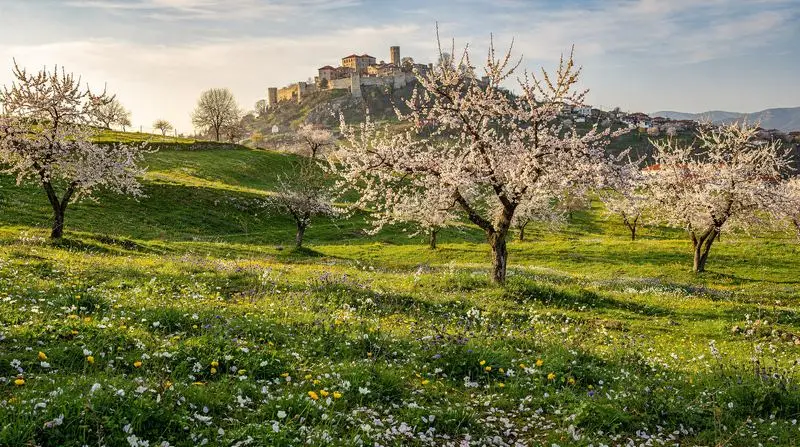
February occupies an ambiguous position in the Albanian travel calendar. It is cold and often wet, like January before it, but there are signs that winter is beginning to loosen its grip: the days are measurably longer than at the solstice, the first spring wildflowers appear at lower elevations by the end of the month, and a certain forward momentum begins to be felt in the country’s rhythm. Albania in February is not comfortable by the standards of a beach destination, but it has its own particular quality that rewards travelers willing to meet it on its terms.
The tourism infrastructure remains essentially at its winter minimum in February. Beach facilities and mountain summer trails are closed. The pace of life in the country’s cities is slow and unperturbed by visitor numbers. For independent travelers focused on culture and authenticity, this is either a feature or a bug depending on their priorities.
| Where | Tirana, Berat, Shkodra, and thermal baths near Permet or Elbasan |
| Cost | Among the two or three cheapest months of the year |
| Time needed | 5-6 days for a compact cultural circuit |
| Getting there | Fly into Tirana; furgons and main highways run normally |
| Best time of day | Midday for warmth; short daylight hours (roughly 8am-5:30pm) |
February Weather in Albania
Temperatures in February range from 6°C to 11°C in Tirana and the coast, with cold nights in most of the country and frost in the mountains and at higher elevations. The average daily high in Tirana reaches about 10-11°C, with nights dropping to 3-5°C. Rainfall remains significant — February is typically the second or third wettest month of the year — though some years produce a dry spell in mid-February that can be genuinely pleasant for outdoor sightseeing.
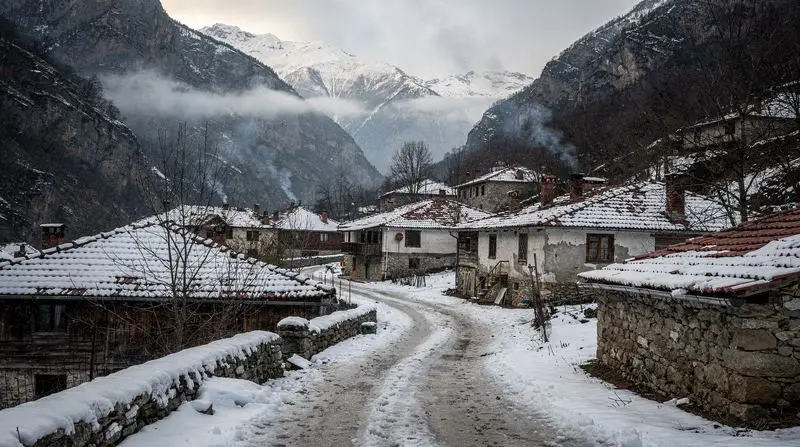
Snow is possible in Tirana and the coastal lowlands during cold spells, though it rarely persists for more than a day or two at sea level. The northern mountains around Shkodra, Valbona, and Theth are heavily snowbound and inaccessible for anything other than specialist winter activities.
The south of Albania — Saranda, Butrint, and the southern Riviera — is noticeably milder than the north in February. On clear days in the far south, afternoon temperatures occasionally touch 14-15°C, which combined with the Mediterranean scenery and absence of crowds creates a surprisingly pleasant atmosphere.
What to Do in Albania in February
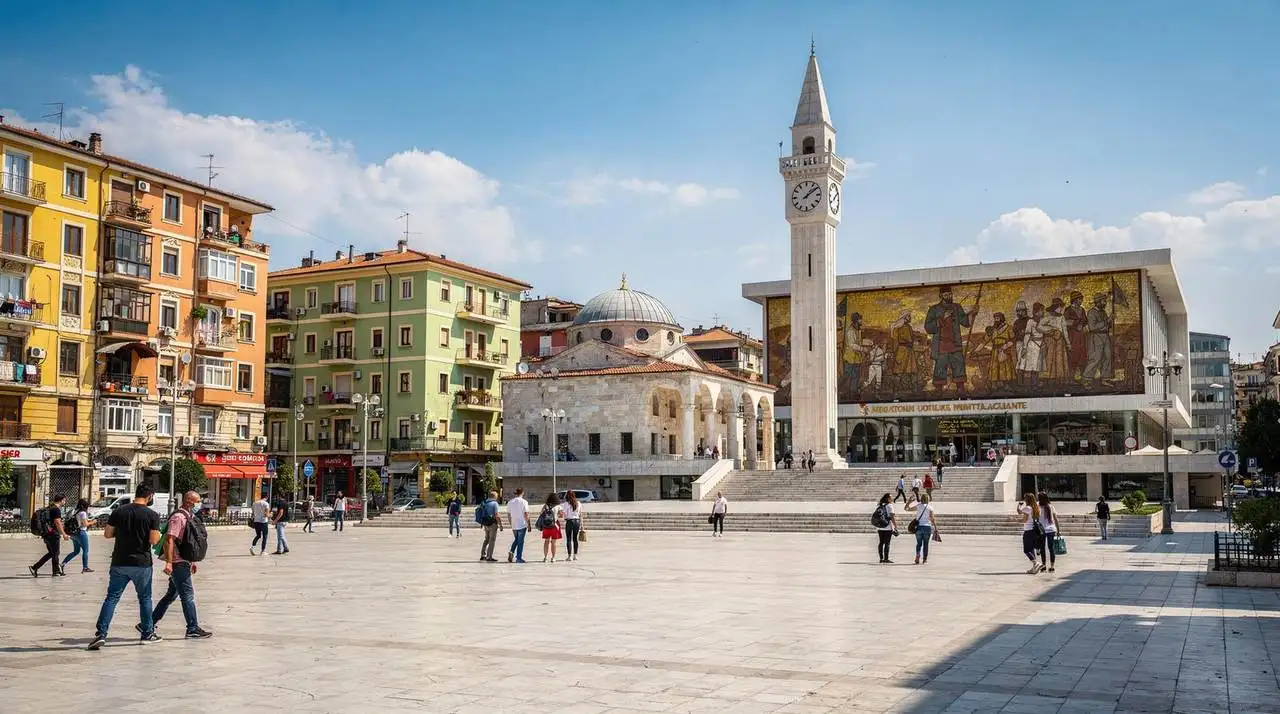
Tirana cultural immersion is the primary agenda for February visitors. The capital’s museums, galleries, and cultural venues are operating at their winter schedules but are effectively empty of tourists, meaning you can spend an hour at the National History Museum or BunkArt2 without navigating crowds or waiting for anything.
The BunkArt2 museum in central Tirana — housed in the underground bunker that served as the Ministry of Internal Affairs during the communist era — is one of the most striking museum experiences in the region and is best visited in a contemplative mood, which winter discourages most visitors from having in summer. February’s quieter pace suits BunkArt2 perfectly.
The National Art Gallery holds a significant collection of Albanian painting from the nineteenth century through the communist Realism period and into contemporary work. The communist-era Socialist Realism paintings are particularly interesting as historical documents, and the gallery has enough space that even on a busy day (by February standards, not summer ones) the experience is unhurried.
Shkodra in February has an appealing quality that its summer version lacks. The northern city, with its castle overlooking the lake and the old pedestrian street of Rruga Kole Idromeno, functions entirely for its residents in winter. The coffee culture is active, the Orthodox and Catholic churches are in full winter routine, and the city’s reputation for cultural seriousness (Shkodra has historically been Albania’s most culturally ambitious city, with a literature and music tradition that has produced several of the country’s most important artists) is visible in the small galleries and cultural institutions that operate through winter.
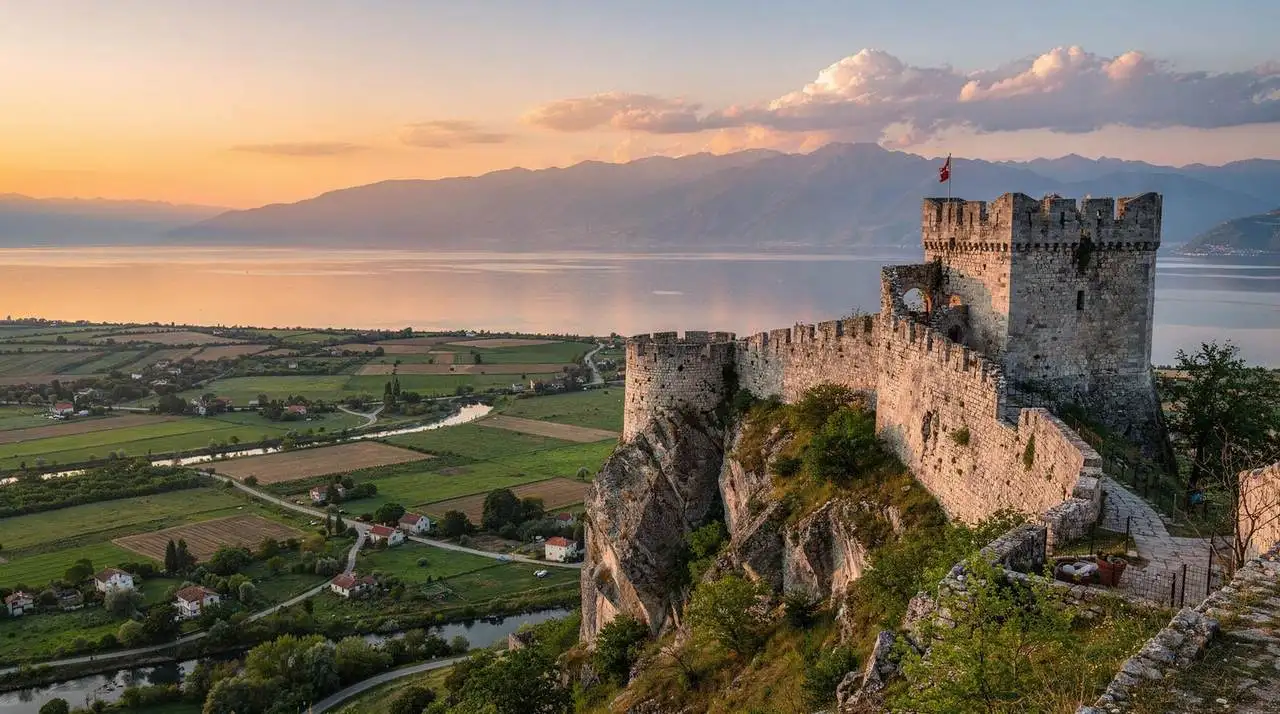
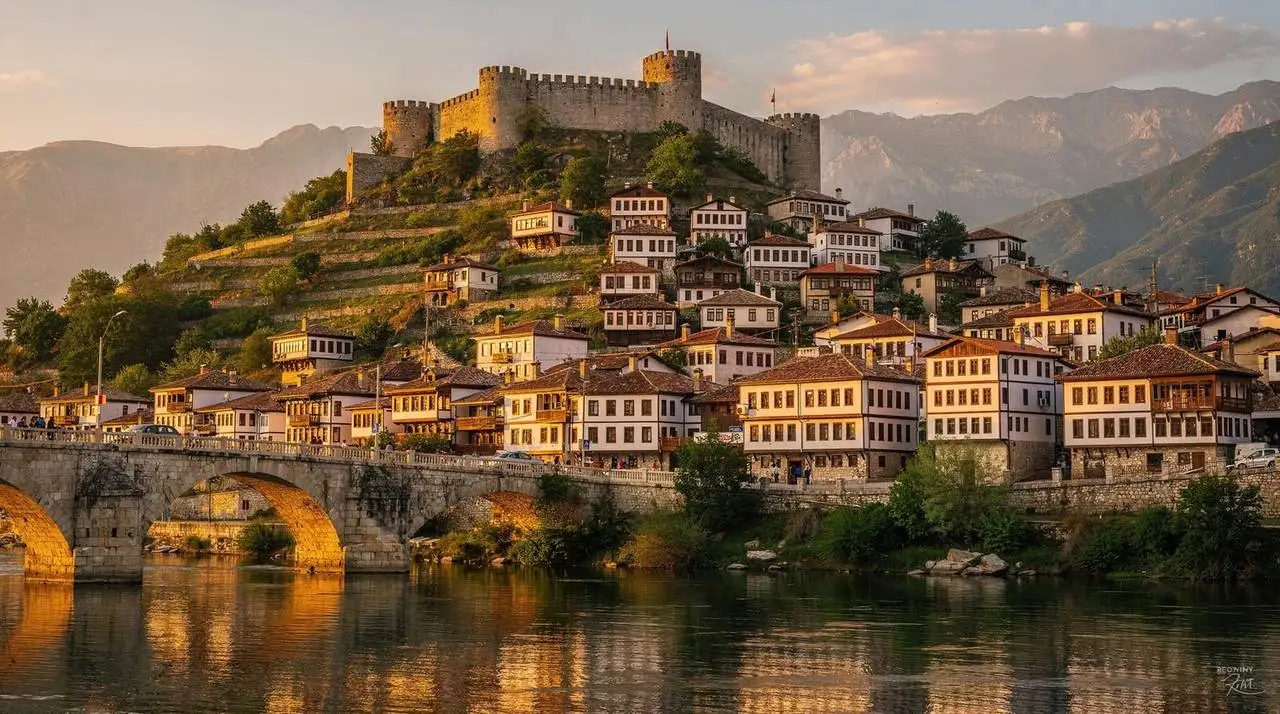
Berat’s UNESCO old city in February has a quality of light — the low winter sun on the white Ottoman houses, the castle walls catching the thin warmth of short winter afternoons — that is distinct from any other season. The city is functioning normally for residents and has very few visitors, which means the old quarter and the castle are experienced in genuine tranquility. The Onufri Museum in the castle, housing Byzantine-era icons by one of Albania’s most important painters, is open year-round.
Carnival and February Festivities
While Albania does not have a Carnival tradition as pronounced as neighboring countries with strong Catholic or Orthodox cultures, the period before the Orthodox Lent (which in some years falls in February or early March) sees a certain festive quality in communities with significant Orthodox Christian populations.
Korce in southeastern Albania, with its historically significant Orthodox Christian community, has a subdued pre-Lent tradition that gives the city a slightly different atmosphere in February. The celebration is not the elaborate masked carnival of Adriatic countries but involves communal meals and social gatherings that give the city a somewhat heightened social energy in an otherwise quiet month.
In some areas of southern Albania, particularly around Permet and the Lunxheri villages, the pre-Lenten period maintains food traditions involving meat-heavy feasts before the forty-day Orthodox fast — a practice that connects to very old Balkan Christian customs.
Thermal Baths: A February Priority
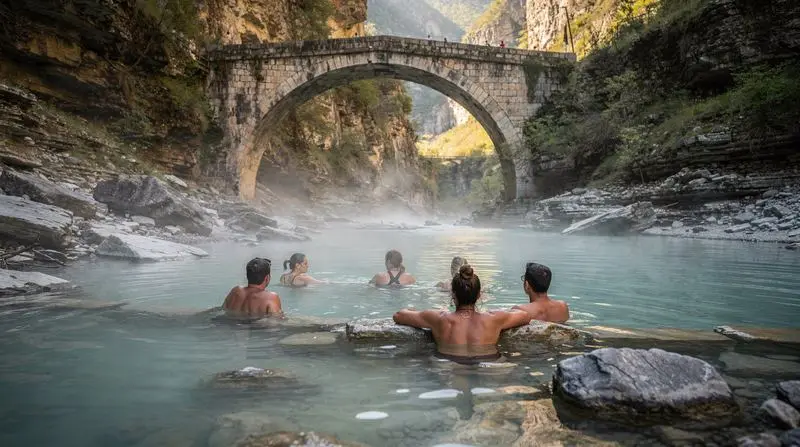
As in January, the thermal springs at Benja near Permet remain one of February’s outstanding activities. The contrast between the cold February air and the steaming hot spring water is at its maximum in the winter months, and the gorge setting of the springs — the Langarica Canyon — is dramatic under the low winter light.
A guided excursion to the Benja thermal baths handles the logistics of reaching the springs from Permet and is particularly useful in February when road conditions require local knowledge and the springs’ exact operating arrangements benefit from advance confirmation.
The Llixha thermal baths near Elbasan are a more accessible alternative with better infrastructure, including changing facilities and basic services. They are fully operational in February and serve a mainly local clientele of Albanians using the springs for their therapeutic properties.
Food and Drink in February
February is an excellent month to eat Albanian food in the country’s best restaurants without any difficulty securing a table. Tirana’s top restaurants — Mullixhiu, Oda, Era — are operating normally and often have their winter menus featuring preserved and braised preparations that suit the cold season better than the lighter summer cooking.
Albanian winter food is hearty: long-cooked bean soups (fasule), slow-braised lamb, fergese made with stored dried peppers from the autumn harvest, and bread puddings and rice puddings for dessert. The market stalls at the New Bazaar shift to winter produce: root vegetables, preserved goods, aged cheeses that have matured since the autumn, and seasonal citrus from the south.
Raki consumption increases in winter, as Albanians use the spirit both for warmth and as a health measure (the folk medicine uses of raki are extensive and taken seriously). An invitation to share raki in February is if anything more likely than in summer, and accepting it is one of the warmer social experiences the cold month offers. See our raki guide for what to expect.
Prices and Availability
February maintains January’s position as the cheapest month for Albanian travel. Accommodation prices in Tirana are at their annual low, and the complete absence of tourist season competition means that the best hotels in the country are available at prices that would be extraordinary in other months. Budget hotels charge rates that challenge the distinction between accommodation and a donated room.
Flights to Tirana from European capitals are at their winter minimum in February, making the combination of cheap flights and cheap in-country costs genuinely compelling for budget travelers.
Albanian History and February Culture
February is an excellent month for engaging with Albanian history and cultural heritage, subjects for which the country offers material of genuine depth and interest. The National History Museum in Tirana traces Albanian civilization from the Illyrian period through the Roman, Byzantine, Ottoman, and communist eras to the present — a sweep of time that explains why this small country, often overlooked, has been at the center of numerous historical struggles for control of the western Balkans.
The BunkArt museums — there are two in Tirana, BunkArt1 in the tunnels of the mountain command bunker and BunkArt2 in the former Ministry of Internal Affairs bunker in the city center — are among the most thoughtful and affecting historical museums in the region. The documentation of communist-era political repression, the scale of the security state apparatus, and the stories of individuals who suffered under Hoxha’s regime are presented with candor and detail that would have been impossible to discuss publicly a generation ago. February visits, with minimal crowds and plenty of time, allow proper engagement with this material.
The ethnographic museum in Gjirokastra — housed in Enver Hoxha’s childhood home in the old city — provides a different angle: the domestic life of an Ottoman-era Albanian bourgeois household, preserved with an irony that only the subsequent history explains (this house of a man who became an absolute dictator, preserved as a museum of traditional life while his regime systematically destroyed traditional Albanian culture).
What to Pack for February
February packing is almost identical to January: waterproof footwear, a warm mid-layer, a windproof and waterproof outer layer, and thermal underlayers for mountain visits or for Korce and other elevated cities. By the end of February, afternoon temperatures occasionally warrant shedding a layer, but packing for warmth rather than optimism is the correct approach.
A small umbrella is more useful in February than a large one — the coastal and lowland rain tends to come in intermittent showers rather than sustained downpours.
February and Albanian Hospitality
February visitors to Albania often report the most direct encounters with Albanian hospitality of any month. The combination of very low tourist numbers and the winter social intensity of Albanian cafe culture — where everyone is indoors and more inclined toward conversation — creates conditions for genuine interaction that busier months suppress.
An Albanian who encounters an international visitor in February is genuinely curious about why you have come. Albania in February is not an obvious tourist destination, and the willingness to be there in cold and grey weather signals something about a visitor’s relationship to travel that Albanians seem to find interesting. Conversations that begin with “why are you here?” often extend into long exchanges about Albania’s history, its relationship with the world, and the Albanian perspective on place and identity that the country’s unusual twentieth century has shaped.
The besa tradition of hospitality — the Albanian code of honor that places guest welfare at the center of social obligation — operates at full strength in February, when there are few guests to accommodate and each encounter carries its full weight. Coffee invitations, offers of help, the kind of spontaneous warmth that tourists in busy season receive in diluted form — all of this is available at full concentration to the February visitor willing to accept it.
Getting Around and Practicalities
Transport between cities operates normally in February. The furgon network connecting Tirana with Shkodra, Berat, Gjirokastra, Saranda, and other major destinations runs daily. Mountain road conditions can make some higher routes inaccessible after snowfall, but the main highways are generally passable.
The Tirana walking tour runs year-round and provides an excellent way to orient yourself in the capital. The winter version is typically smaller than summer groups, and guides often have more time for questions and diversions than in the busy season.
A February Itinerary
A February Albania visit is best structured around the cities and cultural attractions, with day trips to thermal baths providing the outdoor highlight. A five or six day February itinerary might look like: two days in Tirana covering BunkArt, the National History Museum, the New Bazaar, and the Blloku cafe scene. A day trip to the thermal baths at Benja near Permet, or alternatively to Llixha near Elbasan if the road conditions make the Permet journey impractical. A two day visit to Berat for the UNESCO old city and castle. And a final day back in Tirana for any remaining cultural priorities before departure.
This itinerary is compact, avoids the need for mountain roads in poor conditions, and accesses the best of Albania’s winter-available attractions in a reasonable sequence. The driving distances are manageable even in February conditions: Tirana to Berat is 120 kilometres on a good highway, and Tirana to Permet is around 200 kilometres via Gjirokaster or via Elbasan. For travellers without a car, the buses and furgons guide covers the same route by public transport, though journeys take longer and February schedules run less frequently than in summer.
Albanian Hospitality in February
One of the less obvious benefits of February travel in Albania is the heightened Albanian hospitality that winter visitors often report. With fewer tourists in the country, Albanians who encounter visitors are frequently more curious, more willing to engage, and more insistent on the traditional obligations of the besa hospitality code. This can manifest as spontaneous invitations to coffee, offers of help with directions that turn into extended conversations, or the kind of warmth that gets crowded out in high season.
The coffee culture described in detail in our Albanian coffee guide operates year-round and in winter takes on an even more central social function: when there is no beach and no hike, the cafe becomes the primary third space, and February travelers who embrace sitting in Albanian cafes over multiple coffees and long conversations get a window into daily Albanian life that is genuinely difficult to access in the busy months.
Practical Tips for February
Keep an eye on weather forecasts and road condition reports if you plan to drive any mountain routes. The national road authority posts updates on major route closures, and local knowledge (asking at any cafe or hotel) is the most reliable real-time source for specific mountain road conditions.
Carry cash. February is not a month for counting on card acceptance everywhere. Albanian ATMs are well distributed in cities and most larger towns, and withdrawing lek on arrival in Tirana is sensible practice for any month.
For the fullest picture of when to visit Albania, including how February compares to other months, see the best time to visit Albania guide.
February Carnival and Pre-Lenten Events
February in Albania coincides with the traditional pre-Lenten carnival period in parts of the country. While Albania does not have a nationally famous carnival on the scale of Venice or Rijeka, several regional traditions exist:
Shkodra Carnival: Shkodra, with its significant Catholic population (a legacy of its historical position as a trading city with strong Venetian and Austrian connections), has a pre-Lenten carnival tradition that is celebrated more visibly here than elsewhere in Albania. Parades, masks, and street celebrations take place in the days before Ash Wednesday. The exact timing varies annually with the Easter calendar.
Carnival traditions in the south: The Orthodox Christian communities of southern Albania observe the pre-Lenten period with their own traditions. In Gjirokastra and the surrounding villages, certain foods associated with the pre-Lenten season appear on menus.
Valentines Day: Western commercial Valentine’s Day has arrived in Albanian cities. Tirana’s restaurants and cafes in Blloku mark 14 February with special menus and decorations. For couples traveling in February, this is worth knowing — booking a restaurant for Valentine’s evening in Tirana is advisable.
February in Tirana: Practical Guide
Tirana is the most rewarding destination for a February visit. Specific recommendations:
Museums to prioritize: The National Historical Museum has a comprehensive collection covering Albanian history from antiquity to the communist period. BunkArt 2 (in the former Ministry of Interior building) documents the Sigurimi secret police era with extraordinary archival materials. The House of Leaves, which occupies the actual building used for surveillance operations during the communist period, is among the most affecting museum experiences in the country.
The New Bazaar in February: Tirana’s New Bazaar (Pazari i Ri) is a covered market and restaurant complex. In February, the market operates normally with fresh produce vendors, artisan food stalls, and restaurants. The indoor setting makes it particularly good in wet February weather — browsing the stalls and eating a long lunch in one of the restaurants is an excellent way to spend a February afternoon in Tirana.
Walking the Blloku neighborhood: The former communist elite neighborhood, now Tirana’s trendiest district, is fascinating in February precisely because the tourist element is absent. The cafes are full of locals. The wine bars and restaurants operate at a slower pace. Walking the grid of streets in February gives you the neighborhood as Tirana residents experience it rather than as a tourist destination.
Day trips from Tirana in February: The two most accessible day trips from Tirana in winter conditions are Kruja (40 minutes, the Skanderbeg castle and bazaar, virtually empty in February) and Durrës (40 minutes, the Roman amphitheater and archaeological museum). Both are straightforward in any weather and require no mountain road driving.
February Budget and Value
February represents the second-lowest-cost month of the Albanian travel year (after January). The value implications:
Accommodation: Tirana city hotels and guesthouses at 30-50 percent below summer rates. For travelers who prioritize quality accommodation at reduced cost, February enables stays in the city’s best properties at prices otherwise only seen in deep winter.
Restaurants: Full service at Tirana’s best restaurants with no wait for tables, full attention from staff, and the quality of cooking that comes from a kitchen serving fewer covers at a more measured pace.
Transport: Car rental is at minimum rates. Furgons run regularly. The roads are manageable with appropriate care.
Overall: A quality February trip to Tirana and one cultural city (Berat or Gjirokastra for a day or overnight) provides exceptional value with excellent cultural access in the absence of tourist competition.
February vs January vs March: Which Winter Month?
Visitors deciding between the three cold-season months face a genuine trade-off. January is the coldest and wettest but also the cheapest and quietest, ideal for travellers who want maximum solitude and don’t mind grey skies. February sits in the middle: still cold, still cheap, but with visibly lengthening days and occasional dry, mild spells that make outdoor sightseeing more comfortable than in January. March brings the first genuine signs of spring — wildflowers, warmer afternoons, and the earliest reopening of some seasonal businesses — at the cost of slightly higher prices and the first hints of Easter-period crowds toward the end of the month.
For a first winter visit to Albania, February is usually the better choice of the three: cold enough to have the country to yourself, but with enough daylight and occasional mild days to make walking tours of Berat and Gjirokastra genuinely pleasant rather than merely tolerable.
The South Stays Milder
Travellers who find central and northern Albania too cold in February have a reasonable alternative in the far south. Saranda and the area around Butrint run a degree or two warmer than Tirana on average, and clear February days there can reach 14-15°C in the afternoon — genuinely pleasant for walking the ancient ruins or the town’s seafront promenade without a crowd in sight. The trade-off is distance: reaching Saranda from Tirana takes around four hours by road, which makes it a poor fit for a short trip but a worthwhile extension for anyone spending a week or more in the country and wanting a taste of the coast even in the cold season, paired with the day trips from Saranda that remain fully accessible in February.
Frequently Asked Questions About Albania in February
Is February too cold to enjoy Albania?
Not for a culture-focused trip. Daytime temperatures of 6-11°C are comfortable for walking around cities like Tirana and Berat with proper layers, and the near-total absence of crowds makes museums, castles, and old quarters far more enjoyable than in peak season. It is unsuitable only for travellers hoping for beach or mountain hiking conditions.
What’s the single best thing to do in Albania in February?
The Benja thermal baths near Permet are the standout February activity — soaking in naturally hot mineral water while cold air and frost surround the Langarica Canyon is a sensory experience unique to winter. A close second is an unhurried day at Tirana’s BunkArt2 and House of Leaves museums, both of which reward the slow, contemplative pace that February’s absence of crowds allows.