Albania History Timeline: The Complete Guide
Few countries pack as much dramatic history into as small a territory as Albania. Illyrian kingdoms, Roman conquest, Byzantine Christianity, Ottoman transformation, a national hero who held off the largest empire in the world, fifty years of the most isolated communist regime in Europe, and a chaotic but ultimately successful transition to democracy — all of this within a country smaller than Switzerland.
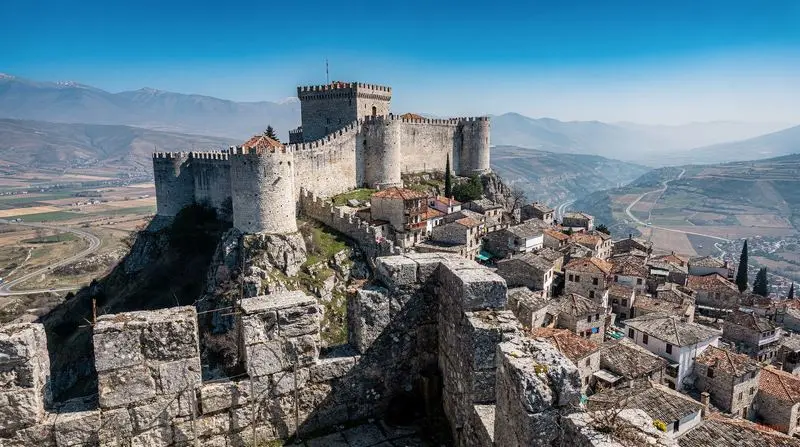
Understanding Albanian history transforms the experience of traveling here. The castle in Berat suddenly speaks of three thousand years of continuous habitation. The pyramid in Tirana central tells a story of communist megalomania and post-communist reclamation. The Et’hem Bey Mosque is not just a beautiful building but a testament to survival through decades when religion was constitutionally banned.
This timeline moves through Albanian history period by period, covering the key events and dates that shaped the country you are visiting today.
| First Albanian state | Principality of Arbanon, 1190 |
| National hero | Skanderbeg (resisted Ottomans 1443-1468) |
| Independence | November 28, 1912 |
| Communist era | 1944-1991 (Enver Hoxha) |
| EU status | Candidate country, negotiations since 2022 |
The Illyrians: Before History Begins in Writing
The Illyrians were a group of Indo-European peoples who inhabited the western Balkans from at least the 2nd millennium BC. Albanian historians and linguists argue — and most international scholarship broadly supports — that modern Albanians are the direct descendants of ancient Illyrians, making the Albanian language potentially the oldest living language in Europe, derived from ancient Illyrian.
The Illyrians were not a single unified people but a collection of related tribes occupying territory that covers modern Albania, Kosovo, western North Macedonia, Montenegro, and parts of Bosnia and Herzegovina. They were farmers, traders, and warriors, living in hilltop settlements, trading with Greek colonies on the Adriatic coast, and building the kind of stone fortifications that still underlie Albanian medieval castles.
Greek colonies: Greek settlements on the Albanian coast — Apollonia (near modern Fier) and Epidamnus (modern Durrës) — were founded in the 7th and 6th centuries BC. These became significant cultural and commercial centers. Apollonia in particular was famous throughout the ancient world; Julius Caesar drew on Apollonian scholars, and the future Emperor Augustus studied there.
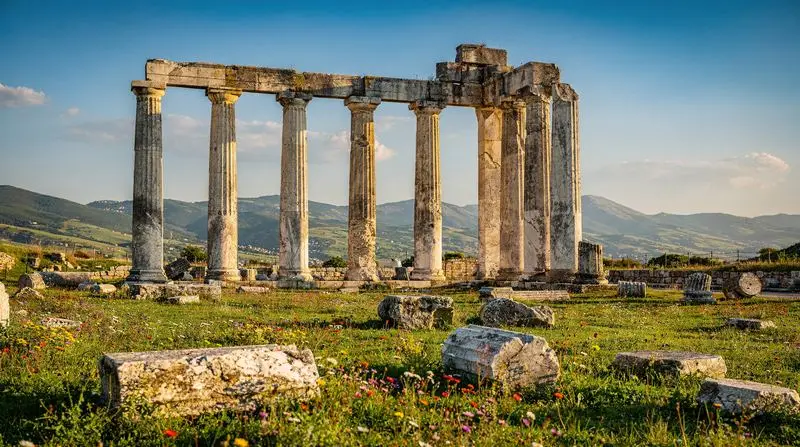
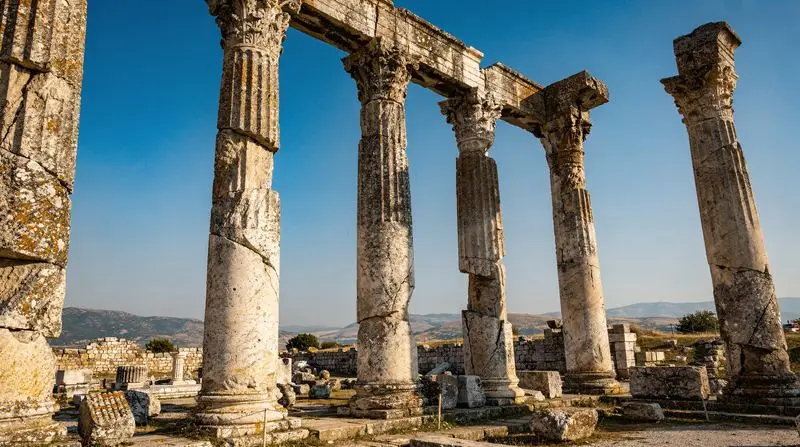
The Apollonia ruins remain impressive today, set on a limestone plateau with sweeping views — one of the best classical sites in Albania.
168 BC: Roman Conquest
The Roman Republic completed the conquest of Illyria in 168 BC following the Third Illyrian War, which ended with the capture of the Illyrian king Gentius at Scodra (modern Shkodra). The territory became the Roman province of Illyricum.
Albania’s position on the Adriatic made it a critical corridor for Roman power. The Via Egnatia — the great Roman road connecting Rome (via Brindisi) to Thessalonica and Constantinople — ran directly through Albanian territory, connecting Durrës to the interior. Ruins of the Via Egnatia are still visible in several locations.
Roman Albania (168 BC – 395 AD): Three centuries of Roman rule brought urban development, the Latin language (which influenced Albanian), and eventually Christianity. Durrës (Dyrrachium) became one of the most important cities in the western Balkans. The Roman amphitheatre at Durrës — still partially visible — was among the largest in the Balkans.
The Medieval Period: Byzantine Rule and Slavic Migrations
With the division of the Roman Empire in 395 AD, Albania fell within the Eastern (Byzantine) sphere. Byzantine rule brought Orthodox Christianity as the dominant religion and a long period of political complexity as empires waxed and waned.
Slavic migrations (6th-7th century AD): The great southward movement of Slavic peoples transformed the demographic map of the Balkans. In most of the central Balkans, Slavic populations became dominant. Albania was partially but not completely affected — the highland populations in particular maintained pre-Slavic identities and languages.
1190: The Principality of Arbanon (Arberia)
The first recorded Albanian state is the Principality of Arbanon (also called Arberia), established around 1190 under Progon of Kruja. This small principality in the central Albanian highlands represented the first time an Albanian-speaking political entity appears in historical records with a clear geographic identity.
The name “Arbanon” or “Albania” first appears in Byzantine records in this period, applied to a region and its people in a way that clearly links to the modern name. This moment is foundational to Albanian national identity.
The Principality of Arbanon was not large or long-lasting by medieval standards, but it established the principle of Albanian political self-organization that would resurface repeatedly over the following centuries.
Medieval Albanian states: Following Arbanon, various Albanian noble families — the Topias, Muzakas, Balshas, and others — controlled parts of Albanian territory through the 13th and 14th centuries. The Anjou dynasty of Naples briefly controlled much of Albania in the late 13th century (1271-1285), creating the “Kingdom of Albania.”
1385-1389: Ottoman First Contact
Ottoman forces under Sultan Murad I entered Albanian territory in 1385, defeating Albanian forces at the Battle of Savra. By 1389, following the critical Battle of Kosovo (which affected the entire Balkans), Ottoman dominance over the region was established in principle if not yet in complete practice.
Albanian nobles initially offered varying responses — some collaborated, some resisted, some converted to Islam. The pattern of Albanian-Ottoman relations for the next century was complex negotiation rather than simple conquest.
1443: Skanderbeg Begins His Resistance
November 28, 1443 is perhaps the most important single date in Albanian national consciousness. On that day, Gjergj Kastrioti — the Albanian noble who had been given as a hostage to the Ottoman court as a child, raised as a Muslim, educated in the Ottoman military system, and risen to become a brilliant commander in the Ottoman armies — switched sides.
At the Battle of Niš, Skanderbeg (his Ottoman title, combining “İskender” for Alexander with “bey” for lord) deserted the Ottoman forces with several hundred Albanian cavalry. He rode to Kruja, the fortified hilltop town of his father’s principality, presented a forged document authorizing Ottoman surrender of the fortress, took command of it, converted back to Christianity, and raised a double-headed eagle flag that became the Albanian national symbol.
For the next 24 years — until his death in 1468 — Skanderbeg held off the most powerful empire in the world. He won over 20 battles against Ottoman forces that typically outnumbered his own by vast margins, using superior knowledge of the terrain and mobile warfare tactics that frustrated conventional Ottoman operations. He united Albanian noble families who had previously fought each other, created the League of Lezhë (the first Albanian military alliance), and became a figure of European admiration — Pope Callixtus III called him “the Champion of Christ.”
When Skanderbeg died of malaria in Lezhë in 1468, the resistance effectively ended. Within years, Albanian resistance collapsed and the Ottoman conquest was completed.
Skanderbeg today: His image is everywhere in Albania — on the 100 ALL coin, in the center of Tirana’s main square, on the national flag’s double-headed eagle connection. The Kruja Castle complex houses the Skanderbeg Museum. His burial site in Lezha is a place of national veneration.
1478-1912: Ottoman Albania
For over four centuries, Albania was part of the Ottoman Empire. The consequences were transformational:
Islamization: The majority of the Albanian population gradually converted to Islam over the 16th and 17th centuries. This was driven by a combination of social and economic incentives (conversion opened opportunities in the Ottoman administrative and military systems) rather than forced conversion. The result was a Muslim majority population alongside significant Christian (both Orthodox and Catholic) minorities — a pattern that persists today.
Albanian contributions to the Ottoman Empire: Albanians played extraordinarily disproportionate roles in the Ottoman state. An estimated 49 Grand Viziers (the highest position in the Ottoman government, below the Sultan) were of Albanian origin. The most famous Albanian in world history from this period is perhaps Mehmet Ali of Egypt (Muhammad Ali Pasha), born in Kavala (modern Greece) of Albanian parentage, who became the founder of modern Egypt and whose dynasty ruled until 1952.
The Bektashi Order: The Bektashi Sufi movement — heterodox Islamic mysticism with strong pre-Islamic Balkan elements — took strong root in Albania during the Ottoman period and became deeply integrated into Albanian culture. Albania remains the world headquarters of the Bektashi Order.
Pashaliks and local power: By the late 18th century, powerful Albanian pashas controlled large semi-autonomous territories. The most famous was Ali Pasha of Ioannina (1740-1822), whose court was visited by Lord Byron and who controlled a pashalik covering much of what is now northern Greece and southern Albania.
1878: The League of Prizren
The League of Prizren (1878-1881) was the first modern Albanian national political organization, formed in response to the Treaty of San Stefano (1878) following the Russo-Turkish War, which proposed dividing Albanian-inhabited territories among neighboring states. The League called for Albanian political rights and the unification of Albanian-inhabited territories within the Ottoman framework.
While it failed in its immediate political goals — the Ottoman Sultan suppressed it militarily in 1881 — the League of Prizren established Albanian national consciousness as a modern political force. November 28 — the date the League was formed, and also the date of Skanderbeg’s 1443 desertion — became Albanian Independence Day.
1878-1912: The Albanian National Awakening (Rilindja)
The late 19th and early 20th century saw the Rilindja (Rebirth or Renaissance) — a cultural and political movement analogous to the national awakenings happening across Europe simultaneously. Albanian language literature, journalism, and political thought developed rapidly. The Albanian language was standardized into a single Latin-based alphabet (1908, at the Congress of Monastir/Bitola).
Key figures of the Rilindja include the poets Naim Frashëri and De Rada, the prose writer Sami Frashëri, and numerous others who established Albanian as a literary language and articulated Albanian national identity.
November 28, 1912: Independence
On November 28, 1912, as the Ottoman Empire collapsed in the First Balkan War, Albanian leaders meeting in Vlora proclaimed Albanian independence. The declaration was signed by Ismail Qemali, who became the first head of an independent Albanian state.
The timing was critical — without the 1912 declaration, Albanian-inhabited territories might have been divided entirely among Greece, Serbia, and Montenegro as they negotiated the post-Ottoman map. The November 28 date — simultaneously Skanderbeg’s 1443 date and the League of Prizren’s 1878 date — was chosen deliberately to link independence to the entire arc of Albanian national history.
The 1913 Protocol of Florence recognized Albanian independence and established borders that left significant Albanian populations in Kosovo (assigned to Serbia), western North Macedonia, and parts of Greece — a source of Balkan tension for the following century.
1914-1939: Interwar Period and King Zog
Albanian independence was followed by a chaotic period of competing foreign interests, territorial disputes, and internal political struggles. A brief period of parliamentary government gave way to the autocratic rule of Ahmet Zogu, who declared himself King Zog I in 1928.
Zog modernized Albania in certain respects — infrastructure development, legal reforms, women’s education — while maintaining authoritarian control. His reliance on Italian economic and political support gradually transformed Albania into an Italian protectorate. Italian cultural influence in this period is visible in the architecture of central Tirana.
April 1939: Italian Invasion
Mussolini’s Italy invaded Albania on April 7, 1939 — six months before Germany’s invasion of Poland began World War II. King Zog fled with his family (his wife Geraldine had given birth to Crown Prince Leka just two days before the invasion). Albania became an Italian-controlled kingdom.
During World War II, Albania was used as a base for Italian operations in Greece. The country experienced both occupation and internal resistance movements — nationalist and communist partisans fought both the occupiers and each other.
November 29, 1944: Communist Victory
November 29, 1944 — the day after Albanian Independence Day — the communist National Liberation Front under Enver Hoxha liberated Tirana from German occupation (Italy had switched sides in 1943 and been replaced by German forces). Hoxha became Prime Minister and the dominant figure in Albania for the next four decades.
The establishment of communist rule transformed Albania utterly:
Collectivization: Private property was abolished. Agriculture was collectivized. Businesses were nationalized.
Stalin’s Albania: Albania initially aligned closely with Yugoslavia under Tito, then broke with Yugoslavia in 1948 and aligned with the Soviet Union. When Khrushchev de-Stalinized the Soviet Union after 1956, Hoxha broke with Moscow and aligned with Mao’s China. When China normalized relations with the US in 1972, Hoxha broke with China too.
Total isolation: By the mid-1970s, Albania was the most isolated country in the world — allied with no power, hostile to all neighbors, and internally sealed. Citizens could not travel abroad. Foreign publications were banned. Private property, religion, and private enterprise were all illegal.
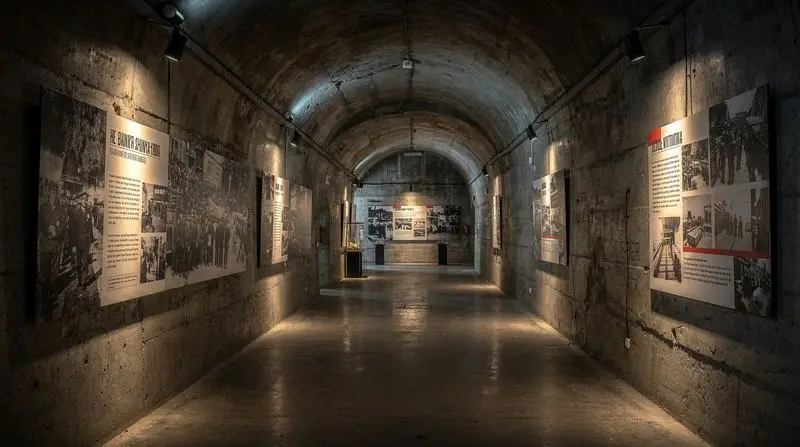
Bunkerization: Between 1967 and 1986, approximately 700,000 concrete bunkers were built across Albania — roughly one for every four Albanians. This extraordinary paranoid defensive program consumed enormous national resources. The bunkers are visible everywhere in Albania today, from beaches to mountain passes to city parks.
Atheist state: In 1967, Albania became the world’s first constitutionally atheist state. All religious practice was banned, mosques and churches were closed or destroyed (or converted to warehouses and gymnasiums), and religious leaders were imprisoned or executed. This extreme measure was unique in communist history.
Death of Hoxha: Enver Hoxha died in April 1985 after 41 years in power. His successor, Ramiz Alia, attempted gradual reform but events outpaced him.
1990-1991: The Fall of Communism
The fall of communist regimes across Eastern Europe in 1989 created irresistible pressure in Albania. December 1990 saw the first multi-party demonstrations in Tirana — students at the University gathered in what became a decisive moment. The communist regime collapsed with remarkable speed.
March 1992: The first free multi-party elections brought the Democratic Party under Sali Berisha to power, ending communist rule.
1997: The Pyramid Crisis: Albania’s transition was not smooth. In 1996-1997, massive Ponzi scheme pyramid companies collapsed, wiping out the savings of a large portion of the population. The result was a total breakdown of state authority, widespread looting of army arsenals, and a near-civil-war. Italy and other European nations sent peacekeeping forces. This crisis set Albania’s development back years and remains a formative collective trauma.
2009: NATO Membership
Albania joined NATO in 2009, marking its integration into Western security structures and a definitive geopolitical orientation toward Europe. This membership was a significant milestone, achieved under Prime Minister Sali Berisha’s second term.
2014: EU Candidate Status
The European Union granted Albania EU candidate status in June 2014, formalizing the country’s aspiration to join the bloc. Accession negotiations are a multiyear process involving alignment of legislation and institutions with EU standards.
2022: Formal Accession Negotiations Begin
In July 2022, the EU formally opened accession negotiations with Albania (and North Macedonia simultaneously). This moved the relationship from candidate status to active membership talks — a significant step, though full membership remains years away.
The Kosovo Question and Regional Identity
No account of modern Albanian history is complete without acknowledging the 1913 Protocol of Florence’s lasting consequence: the borders drawn after independence left a substantial ethnic Albanian population outside the new state, concentrated in what became Kosovo. This division shaped Balkan politics for the rest of the 20th century, culminating in the Kosovo War of 1998-1999 and Kosovo’s eventual declaration of independence in 2008 — an event Albania recognized immediately and enthusiastically. Today, Albanian identity spans multiple states (Albania, Kosovo, parts of North Macedonia and Montenegro), and this shared ethnic and linguistic identity, despite different political histories, remains a significant undercurrent in regional politics and in how Albanians themselves understand their national story.
2023: Vjosa Wild River National Park
In March 2023, the Albanian government declared the Vjosa River a National Park — the first Wild River National Park in Europe. This was a globally significant conservation milestone. The Vjosa is one of Europe’s last large free-flowing rivers, running 272 km from the Pindus mountains of Greece through southern Albania to the Adriatic, without any dams or significant human interruption.
The Vjosa decision was driven by a decade-long campaign by international environmental organizations and Albanian activists against planned hydroelectric dam construction on the river.
Key Historical Eras at a Glance
| Era | Period | Legacy visible today |
|---|---|---|
| Illyrian / Classical | 2nd millennium BC – 168 BC | Apollonia, Butrint ruins |
| Roman / Byzantine | 168 BC – 1385 AD | Via Egnatia, Durrës amphitheatre |
| Ottoman | 1385-1912 | Berat, Gjirokastra old towns; Bektashi culture |
| Communist | 1944-1991 | Bunkers, Bunk’Art museums, Tirana pyramid |
| Post-communist / EU accession | 1991-present | Modern Tirana, tourism boom |
Understanding Kanun and the Bektashi Legacy Today
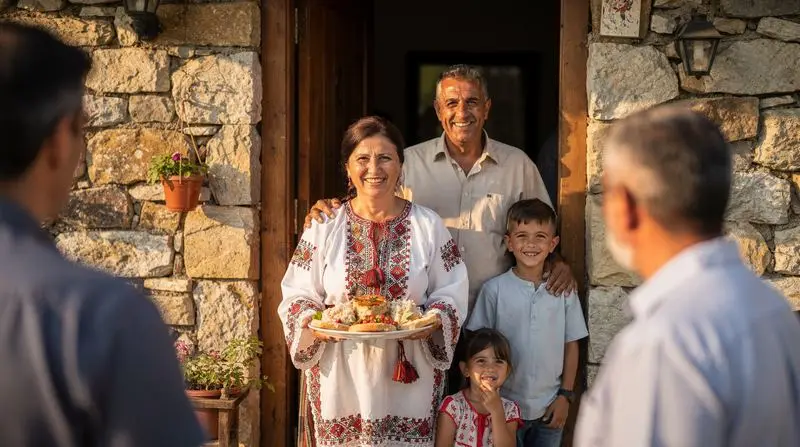
Two threads from this timeline are worth understanding in more depth because they still shape daily Albanian life. The Kanun, a body of customary law codified in the medieval and early modern periods (most famously by Lekë Dukagjini), governed everything from hospitality and property to blood feuds in the northern highlands for centuries, and its emphasis on besa — sworn word and guest protection — remains a genuine cultural undercurrent in Albanian hospitality today, long after the legal code itself lapsed.
The Albania customs and etiquette guide explains how besa surfaces in everyday interactions with hosts and strangers. The Bektashi Order, which took root during Ottoman rule and made Albania its world headquarters, remains visible today in the country’s religious tolerance and in specific pilgrimage sites like Mount Tomorri — a living continuation of a centuries-old thread rather than a historical footnote.
Visiting the Layers of History
For travelers who want to move from reading about this history to seeing it directly, Albania’s castles at Kruja, Berat, and Gjirokastra each represent different chapters of the timeline — Kruja tied directly to Skanderbeg’s resistance, Berat and Gjirokastra to the long Ottoman centuries. The communist period has its own dedicated circuit of sites, covered in the Albania dark tourism guide, including the Bunk’Art museums and the Spac forced-labor camp remains. For a broader framework of what to prioritize across all these eras on a first visit, the Albania bucket list guide organizes the country’s essential historical and natural sites into a practical shortlist.
Albania Today: Transformation in Progress
Albania’s trajectory since 1991 is a story of extraordinary transformation. A country that 35 years ago had no cars (private vehicles were banned), no private property, no religion, no market economy, and no connection to the outside world today has modern highways, a booming tourism industry, a vibrant urban culture, and an active EU accession process.
The historical sites of Albania provide the physical evidence of this layered history. The museums guide covers the institutional interpretation of the communist period and broader Albanian history. The Bunk’Art communist bunker museums specifically are essential visits for understanding the communist decades.
To experience Albanian history through a guided tour, a Tirana walking tour covers the communist and post-communist history of the capital with expert interpretation. For the UNESCO heritage of the south, a guided day tour to Berat puts the Ottoman, Byzantine, and modern Albanian history of this extraordinary city in context.
Frequently Asked Questions About Albania History
Who were the ancient Albanians?
The ancient Albanians are generally identified as descendants of the Illyrians — Indo-European peoples who inhabited the western Balkans from at least the 2nd millennium BC. Linguistic analysis suggests Albanian is the only surviving descendant of ancient Illyrian. This continuity gives Albania one of the longest continuous connections to a specific territory of any European nation.
When did Albania become independent?
Albania declared independence on November 28, 1912, when nationalist leaders meeting in Vlora proclaimed separation from the collapsing Ottoman Empire. The date — November 28 — also commemorates Skanderbeg’s 1443 resistance and the 1878 League of Prizren declaration, linking independence to centuries of national struggle.
When did communism end in Albania?
Communist rule in Albania effectively ended in early 1991 with mass popular demonstrations and the regime’s collapse. The first free multi-party elections were held in March 1992, bringing the Democratic Party to power. Albania was one of the last countries in Eastern Europe to transition from communism and the transition was particularly difficult.
Is Albania in the EU?
Albania is an EU candidate country with formal accession negotiations underway since 2022. It is not yet an EU member. The accession process requires extensive alignment of Albanian legislation and institutions with EU standards and is expected to take many more years. Albania joined NATO in 2009.
Why are there so many bunkers in Albania?
Between 1967 and 1986, dictator Enver Hoxha ordered the construction of approximately 700,000 concrete bunkers across the country — roughly one for every four Albanians — as part of an extreme, paranoid defensive program against a feared invasion that never came. The bunkers consumed enormous national resources and remain visible everywhere today, from beaches to mountain passes to city parks. Several have been repurposed as museums (Bunk’Art in Tirana), cafes, or even guesthouses, turning a symbol of paranoid isolation into an unusual tourist attraction.
What should I know about Skanderbeg before visiting Albania?
Skanderbeg (Gjergj Kastrioti) is Albania’s most important historical figure — a 15th-century nobleman who defected from Ottoman military service and held off Ottoman conquest for 24 years using guerrilla tactics from his stronghold at Kruja. His image appears on currency, statues, and the national flag’s double-headed eagle, and Kruja Castle houses a dedicated Skanderbeg Museum. Understanding his story before visiting Kruja or seeing his statue in Tirana’s main square adds significant context to what would otherwise be just another impressive castle.