Art and Culture Workshops in Albania: A Guide for Travelers
Albania’s living cultural traditions are not simply museum pieces — they are practiced art forms, techniques passed through generations of artisans and musicians, and experiences that travelers can actively participate in rather than merely observe. From Byzantine icon painting to UNESCO-recognized polyphonic singing, from silver filigree to traditional wool weaving, Albania offers cultural workshop experiences that are genuinely distinctive.
This guide covers the main art and culture workshop opportunities available to visitors, organized by tradition.
| Where | Berat, Korça, Shkodra, Gjirokastra, Tirana |
| Cost | around EUR 15-40 for introductory sessions |
| Time needed | 2-4 hours for most introductory workshops |
| Booking | Ask at your guesthouse or local cultural centre; few are online-bookable |
| Best combined with | A cultural festival or an old-town stay |
Icon Painting in Albania
The Tradition
Albanian icon painting has a history stretching back to Byzantine antiquity, but its peak achievement came in the 16th century with the work of Onufri — considered the greatest Albanian visual artist in history and one of the most important icon painters in the entire Orthodox tradition. Onufri’s signature innovation was a vivid crimson pigment (Onufri red) derived from a local mineral source, which gives his icons an extraordinary luminosity still visible in the Onufri Museum in Berat Castle.
After Onufri, a tradition of Albanian icon painters continued through the Ottoman period — remarkable given that this was an officially Islamic state. The cities of Berat and Korça (Voskopoja in the highlands above Korça was particularly important) maintained Orthodox artistic traditions throughout.
Icon Painting Workshops in Berat
Berat is the natural center for icon painting experiences. The city’s Mangalem old town has several artists and workshops connected to the Orthodox painting tradition.
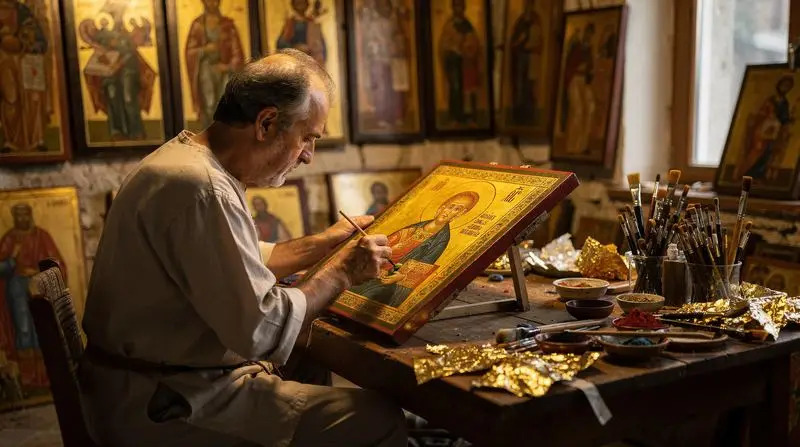
What workshops offer: Introduction to egg-tempera technique (the traditional medium for Byzantine icons), understanding gold leaf application, the canonical compositional rules of Byzantine iconography, and creating a small icon to take home.
Duration: Workshops typically run 2-4 hours for introductory sessions; more intensive multi-day courses are available for those with serious interest.
Finding workshops: Ask at your guesthouse in Berat’s old town — the connections to working icon painters are well established. The Berat Cultural Center and local arts associations can make referrals.
What to expect: Genuine workshop environments with working artists, not tourist demonstrations. Participants work alongside artisans on the same techniques. The egg-tempera on gessoed wood technique used in Byzantine iconography is demanding — even a basic workshop leaves you with deep respect for the masters.
Icon Painting Workshops in Korça
Korça is Albania’s intellectual and artistic capital — a city with strong Western cultural influences from its connections to the Albanian diaspora and a long history of secular and religious artistic production.
The city and surrounding area (particularly Voskopoja/Moscopole) has a rich tradition of Orthodox fresco painting. Several cultural organizations in Korça offer icon-related workshops and art experiences connecting to this heritage.
The National Museum of Medieval Art (Muzeu Kombëtar i Artit Mesjetar), Korça: This museum houses an extraordinary collection of Byzantine and post-Byzantine icons from Albanian churches. It is essential viewing for anyone interested in icon painting and provides the artistic and historical context for workshops.
Traditional Craft Workshops
Silver Filigree (Filigranë)
Albanian silver filigree is a jewelry-making tradition with roots in the Ottoman period and possibly earlier. Intricate interlaced silver wire is worked into elaborate patterns — traditional jewelry, decorative objects, and accessories. The work requires extraordinary patience and fine-motor skill.
Where to find it: Shkodra has a tradition of silver filigree work, with a few remaining master craftspeople. Korça also has connections to this tradition. The old bazaars of Berat and Gjirokastra have craftspeople working in silver.
Workshop opportunities: Some silversmiths accept visitors to watch the process and, in some cases, to attempt simple techniques under supervision. The tourism infrastructure for formal workshops is not highly developed — the best approach is personal introduction through cultural organizations or guesthouse networks.
Buying filigree: Genuine Albanian silver filigree is available at craft shops in Tirana’s Pazari i Ri (New Bazaar) and in old town bazaars. The quality and authenticity of “traditional” craft items varies considerably — seeking out actual working craftspeople produces better outcomes than souvenir shops.
Traditional Textile and Wool Crafts
Qilim (kilim) weaving: Flat-woven rugs using traditional geometric patterns are a living Albanian craft tradition, particularly in highland areas. The patterns encode regional identity — specific geometric motifs are associated with specific areas.
Where to see and participate: The Museum of Traditional Crafts in Tirana, the ethnographic museums in Gjirokastra and Berat, and several guesthouses in the Albanian Alps maintain traditional textile tools and can demonstrate or teach basic weaving techniques.
Gjirokastra Ethnographic Museum: Housed in a beautifully preserved tower house, this museum includes traditional textile production tools and demonstrates traditional domestic crafts. The castle area workshops occasionally host craft demonstrations.
Traditional Woodcarving
Intricate geometric woodcarving — applied to furniture, architectural elements, and household objects — is a traditional Albanian craft with Ottoman and pre-Ottoman roots. The technique involves working repeated geometric patterns into walnut, oak, and other hardwoods using chisels and hand tools.
Where to find it: Berat and Gjirokastra both have craftspeople working in traditional woodcarving. The Zekate House in Gjirokastra and the houses of Mangalem in Berat show traditional carved interiors in their original context.
Iso-Polyphonic Singing
What It Is
Albanian iso-polyphony is one of the most distinctive musical traditions in Europe. Inscribed on UNESCO’s Representative List of the Intangible Cultural Heritage of Humanity in 2005, it is a form of multi-part singing where two or more independent vocal lines (some sustained as a drone, others carrying melodic material) interweave in a way that creates harmonies unlike any other European folk tradition.
The tradition is particularly strong in southern Albania — the areas of Labëria (around Vlora and Gjirokastra), Çamëria, and the Toskëria highlands. Two broad regional styles exist: the Tosk tradition (predominantly from central and southern Albania) and the Gheg tradition (from northern Albania, with somewhat different characteristics).
Polyphonic singing was traditionally performed at specific social occasions — weddings, harvest celebrations, religious festivals, memorial meals. Each song type has specific social context and performance conventions.
Experiencing Polyphony
The Gjirokastra National Folklore Festival: Held every five years in Gjirokastra Castle, this is the premier showcase of Albanian traditional music including iso-polyphony. The festival brings performers from every Albanian region and is a genuinely extraordinary cultural experience. Check the schedule — the festival falls in odd-numbered years and specific dates vary.
The Korça Folk Serenades: Korça hosts a famous serenades festival (Serenata e Korçës) where traditional music, including polyphony, is performed in the streets and squares.
Cultural organizations: Several organizations in Tirana, Gjirokastra, and Saranda work to preserve and promote iso-polyphony. Ask at cultural centers, guesthouses, and tourist information offices about upcoming performances.
Village contexts: The most authentic polyphony is heard at actual village celebrations and communal events — weddings, name-day celebrations, seasonal gatherings. If you are traveling with local connections or staying at family guesthouses, ask about upcoming events. Albanians are proud of this tradition and genuinely delighted when visitors express interest.
Organized cultural tours: Some Albania tour operators include a polyphony performance or workshop as part of cultural itineraries. This provides guaranteed access to a performance in a context designed for visitors. For the Gjirokastra area specifically, an organized cultural tour can include both the architectural and musical heritage.
A guided Gjirokastra city tour can be combined with cultural experiences including traditional music in the old bazaar area.
Learning Polyphony
For visitors with serious musical interest, short workshop experiences with polyphony groups do exist in Gjirokastra and occasionally in Tirana. These are not tourist packages but genuine cultural exchange — learning the drone technique or understanding the compositional structure of specific song types. Cultural organizations including the Centre for Albanian Folk Culture (Qendra Kombëtare e Veprimtarisë Kulturore Popullore) maintain connections to practitioners.
Folk Dance
Albanian Dance Traditions
Albanian folk dance divides broadly into northern and southern styles:
Northern Gheg dances: Typically more martial in character, with stamping footwork, formations reflecting historical defensive organization, and strong rhythmic patterns. Circle dances (valle) are common.
Southern Tosk dances: More flowing and lyrical, often with complex footwork patterns and graceful arm movements. The valle (round dance) is the central form.
Iso-polyphonic dance: Some southern dances combine the vocal polyphony tradition with movement, creating multimedia folk performances.
Experiencing and Learning Folk Dance
Tirana Ethnographic performances: Several cultural organizations in Tirana perform traditional folk dances, particularly during summer cultural programs. The Summer Festival (Festivali i Verës) includes dance performances.
Gjirokaster and southern guesthouses: Some guesthouses in Gjirokastra and the southern highlands organize folk dance demonstrations, particularly for groups. Ask at cultural centers.
Korça Folk Festival: Korça’s cultural calendar includes folk dance performances.
Albanian diaspora connections: Many Albanian cultural centers in Western countries maintain active folk dance groups. Connecting with these before travel can provide introductions to specific practitioners in Albania.
Cultural Workshops at Festivals
The Albania festivals and events guide covers the full calendar, but several festivals specifically include participatory cultural workshop components:
Tirana International Contemporary Art Biennial: Tirana is an active center of contemporary visual art, with artist-run studios, galleries, and periodic events. Visiting artist studios and participating in exhibition openings is accessible to interested visitors.
Korça Beer Festival: Beyond the beer focus, this includes traditional craft markets and cultural demonstrations.
Dita e Verës (Summer Day Festival), March 14: Primarily celebrated in Elbasan, this ancient spring festival involves traditional foods, music, and customs. A genuinely participatory cultural event.
Cooking as Cultural Workshop
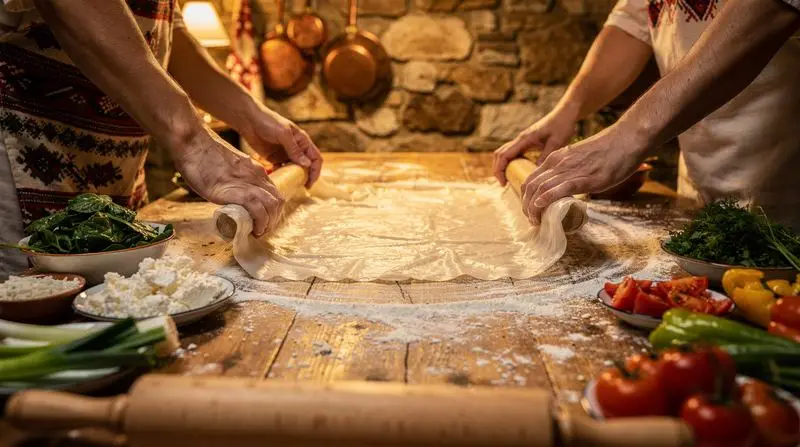
Albanian cooking is inseparable from cultural identity. Cooking classes in Albania offer direct participation in culinary tradition — making byrek, preparing qofte, learning traditional methods for tave kosi (the national dish of lamb baked with yoghurt and eggs), and understanding the herbal and wild plant traditions of Albanian highland cooking.
A Tirana food tour with meals included combines culinary cultural knowledge with direct tasting experience across multiple traditional restaurants and market contexts.
Craft Shopping with Cultural Context
For those who want to support living craft traditions through purchasing rather than making, these are the best sources:
Tirana Pazari i Ri (New Bazaar): The revitalized historic bazaar has craft vendors alongside food producers. Quality varies — look for items with clear artisan provenance.
Berat old town craft workshops: Several artisans in the Mangalem area work in traditional techniques and sell directly from workshop spaces.
Gjirokastra bazaar: Traditional crafts including metalwork and textiles.
Authenticity note: Many items sold as “traditional Albanian crafts” in tourist shops are imported mass production. Genuine locally-made crafts command higher prices and can usually be distinguished by asking about the maker. The commitment is worth it — supporting living Albanian craft traditions matters to the preservation of these skills.
What to Budget and Expect
Prices for cultural workshops in Albania are modest by Western European standards, though they vary depending on materials and the artisan’s reputation. Introductory icon painting sessions in Berat typically run around EUR 20-40 including materials and a small icon to take home; cooking classes fall in a similar range with the meal included; craft demonstrations that let you attempt a simple technique are often lower, around EUR 10-20, since supervised participation rather than a finished piece is the focus.
Expect informal, unhurried sessions rather than polished tourist-package production. This is generally the point — you are working alongside a practising artisan or musician rather than watching a staged performance — but it means flexibility on timing and a willingness to communicate through gestures, a translation app, or a guesthouse host acting as informal interpreter when English is limited.
Museums That Set Up the Workshops
Visiting the right museum before a workshop transforms the experience from a craft demonstration into something with real context. The Albania museums guide covers the full national picture, but for workshop travellers specifically, prioritising the Onufri Museum in Berat Castle before an icon painting session, or the Gjirokastra Ethnographic Museum before a textile or woodcarving visit, gives you the vocabulary and visual reference to appreciate what the artisan is actually doing rather than watching technique in a vacuum.
The historical sites guide also covers Gjirokastra and Berat’s broader Ottoman-era architecture, which is where most of these craft traditions were originally embedded — the tower houses, the bazaars, the churches and mosques that required these skills in the first place.
Where to Base Yourself
Since arrangements run through guesthouses and local introductions, where you sleep matters. The where to stay in Berat guide and the where to stay in Gjirokastra guide cover old-town guesthouses whose hosts tend to know the working artisans personally. For a wider look at the town itself, see the Berat destination page, the Gjirokastra destination page and the Korça destination page. If you are in Korça, the Korça city guide helps you plan around the museum and the surrounding highland villages, including Voskopoje.
Adding Workshops to a Longer Route
Cultural workshops fit well into a slower route through the south. The southern cultural tour itinerary links the towns where these traditions are strongest, and the Albania food guide is a good companion if you want to pair craft sessions with regional cooking. Travellers who also enjoy local drinks can read about raki in Albania before a village gathering, where it is often part of the hospitality.
Combining Workshops Into a Trip
Because most of these workshops are informal and arranged through local contacts rather than fixed booking systems, they work best as a flexible add-on to a Berat, Gjirokastra, or Korça stay rather than as a planned centrepiece. A realistic approach: arrive with two or three nights in one of these towns, ask at your guesthouse on day one about current workshop availability, and treat a confirmed session as a welcome bonus rather than a guaranteed itinerary item.
For travellers whose main interest is food rather than visual art or music, cooking classes are the most reliably bookable cultural workshop in the country and pair naturally with a market visit and a byrek-making session in Tirana, Berat, or Gjirokastra.
Frequently Asked Questions About Albania Art and Culture Workshops
Where can I take an icon painting workshop in Albania?
Icon painting workshops are available in Berat through artisans and cultural organizations connected to the city’s Orthodox painting tradition. Korça, with its National Museum of Medieval Art and nearby Voskopoja heritage churches, also offers connections to the tradition. Introductory workshops run 2-4 hours; intensive multi-day courses are available for serious participants.
What is Albanian iso-polyphonic singing?
Albanian iso-polyphonic singing is a UNESCO-recognized traditional singing style in which multiple voices sing independent melodic lines simultaneously, including at least one sustained drone voice. It is primarily a southern Albanian tradition practiced at social occasions. It sounds unlike any other European folk tradition. The best contexts to hear it are the Gjirokastra National Folklore Festival and cultural events in the Labëria and Toskëria regions.
Can tourists attend Albanian folk performances?
Yes. Organized folk performances are available through cultural organizations in Tirana and through guided tours in Gjirokastra. Village-level authentic performances are less accessible without local connections, though Albanian hospitality means that expressing genuine interest often leads to invitations. Cultural festivals in Gjirokastra, Korça, and Elbasan are the most accessible settings for authentic folk music and dance.
Is Albanian silver filigree still made today?
Yes, but by a diminishing number of artisans. Genuine Albanian silver filigree jewelry and objects are made by craftspeople in Shkodra, Korça, and in the old town bazaars. The best examples are sold directly from workshops rather than in generic souvenir shops. The craft requires significant skill and time investment, so authentic filigree items are priced accordingly.