Diving and Snorkeling in Albania: A Complete Guide
Albania sits at the meeting point of the Adriatic and Ionian Seas, with a coastline that includes some of the clearest and most biodiverse water in the entire Mediterranean. Despite this, it remains dramatically underexplored by the diving community. The country has no diving mass tourism, the water visibility is exceptional, and the marine protected areas — particularly around Karaburun and Sazan Island near Vlora — shelter both natural underwater landscapes and the wrecks of ships sunk during the Second World War.
For snorkelers, the shallow lagoons of Ksamil, the rocky headlands of Dhermi, and the sea caves of the Riviera offer extraordinary underwater scenery accessible without any equipment beyond a mask and fins. For certified divers, the Karaburun Peninsula is in a class of its own in the western Balkans. This guide covers all the options, from the most accessible beginner snorkeling spots to the technical wreck diving opportunities that experienced divers will find genuinely exciting.
| Best diving | Karaburun Peninsula and Sazan Island, near Vlora |
| Best snorkeling | Ksamil lagoon, near Saranda |
| Best months | May-June and September-October |
| Water temp (summer) | 25-28°C |
| PADI certification | Around EUR 300-400, 3-4 days |
The Karaburun Peninsula: Albania’s Best Dive Destination
The Karaburun Peninsula forms the southern jaw of the Bay of Vlora, separating the Adriatic from the Ionian. It was largely inaccessible during the communist era — a military zone from which civilian visitors were excluded — and this enforced absence of human activity for four decades has left an underwater environment of exceptional health. Combined with the converging currents of two seas and the complex topography of underwater cliffs and caves, this makes for diving that genuinely surprises experienced divers more accustomed to the degraded reefs of more popular Mediterranean destinations.
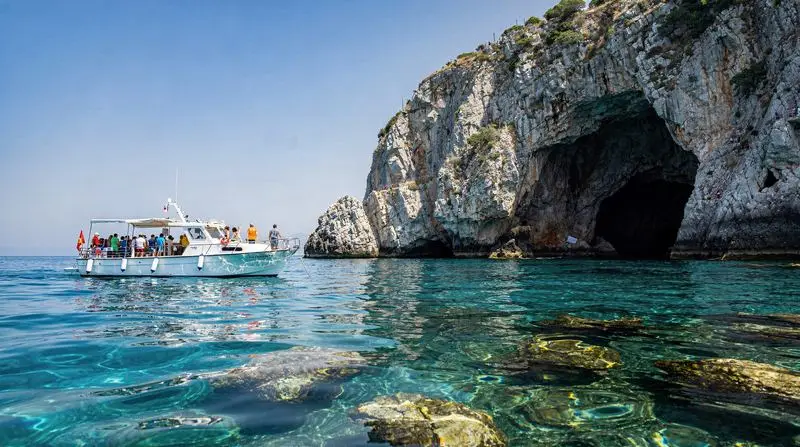
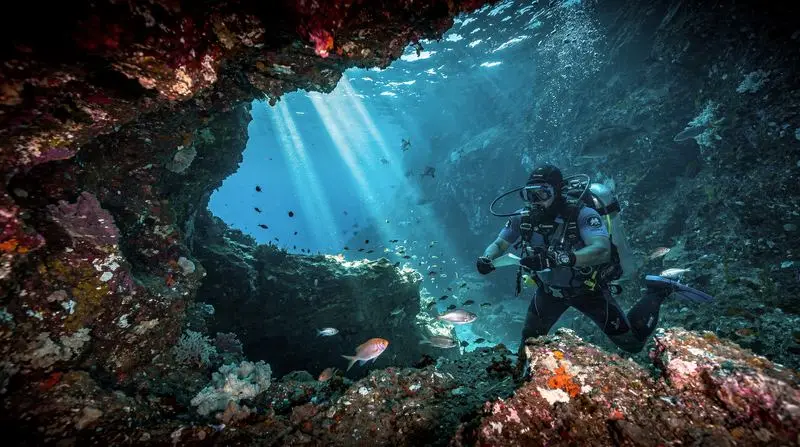
The Haxhi Ali Cave is the signature dive site on Karaburun. The cave entrance sits slightly above the waterline at low tide, opening into a large chamber whose ceiling rises several metres above the water surface. Divers can enter from the water and explore the cave’s main chamber and the series of passages that lead deeper into the rock. Stalactites and formations that formed when sea levels were lower hang above the waterline, while the underwater section reveals a rich encrustation of sponges, corals, and colourful invertebrates. Visibility inside the cave, lit by natural light from the entrance and by divers’ torches, can reach 15-20 metres.
This Sazan and Karaburun boat trip from Vlora visits the peninsula and Sazan Island, covering the Haxhi Ali Cave and multiple coastal swimming spots — the best surface-level introduction to this extraordinary marine environment. Cost approximately EUR 35-55 per person for a full day.
For non-divers, a speedboat tour of the cave entrance allows you to appreciate the remarkable exterior and to swim in the extraordinary water of the bay. From the surface, the water clarity above the cave reveals the limestone topography below.
Sazan Island Wrecks
Sazan Island, adjacent to Karaburun, was one of the most heavily militarised islands in the Mediterranean during the Hoxha era. The combination of Albanian, Italian, and German military activity in the waters around the island during World War II left a collection of wrecks at various depths. Several Italian naval vessels, sunk during the war, lie in depths ranging from 18 to 45 metres — within recreational diving range for advanced divers. The wrecks are heavily encrusted with marine life and provide habitat for large schools of fish, moray eels, octopus, and occasional cuttlefish.
The deeper wrecks — some descending beyond 40 metres — require advanced or deep dive certification and should only be attempted with dive operators who have specific knowledge of the sites. The shallower wrecks at 18-25 metres are accessible for divers with Open Water certification and are among the most interesting recreational dive sites in the Balkans.
Marine Life on Karaburun
The marine protected area around Karaburun and Sazan shelters a cross-section of Mediterranean marine life that is increasingly difficult to find in heavily fished areas. Large grouper are frequently encountered on the rocky sections of the peninsula — a reliable indicator of good fisheries management, as grouper are highly sensitive to fishing pressure and disappear quickly from fished areas. Loggerhead sea turtles nest on the Karaburun beaches and can be encountered underwater throughout the summer season. Posidonia seagrass meadows cover much of the shallow sea floor in the bay area, providing habitat for seahorses, pipefish, and juvenile fish of many species.
Dolphins — common dolphins and bottlenose — are regularly seen in the Bay of Vlora and are occasionally encountered during dives on calmer days. The convergence of Adriatic and Ionian water masses creates a productive marine environment that supports a higher diversity of species than either sea alone would sustain.
Snorkeling Near Ksamil
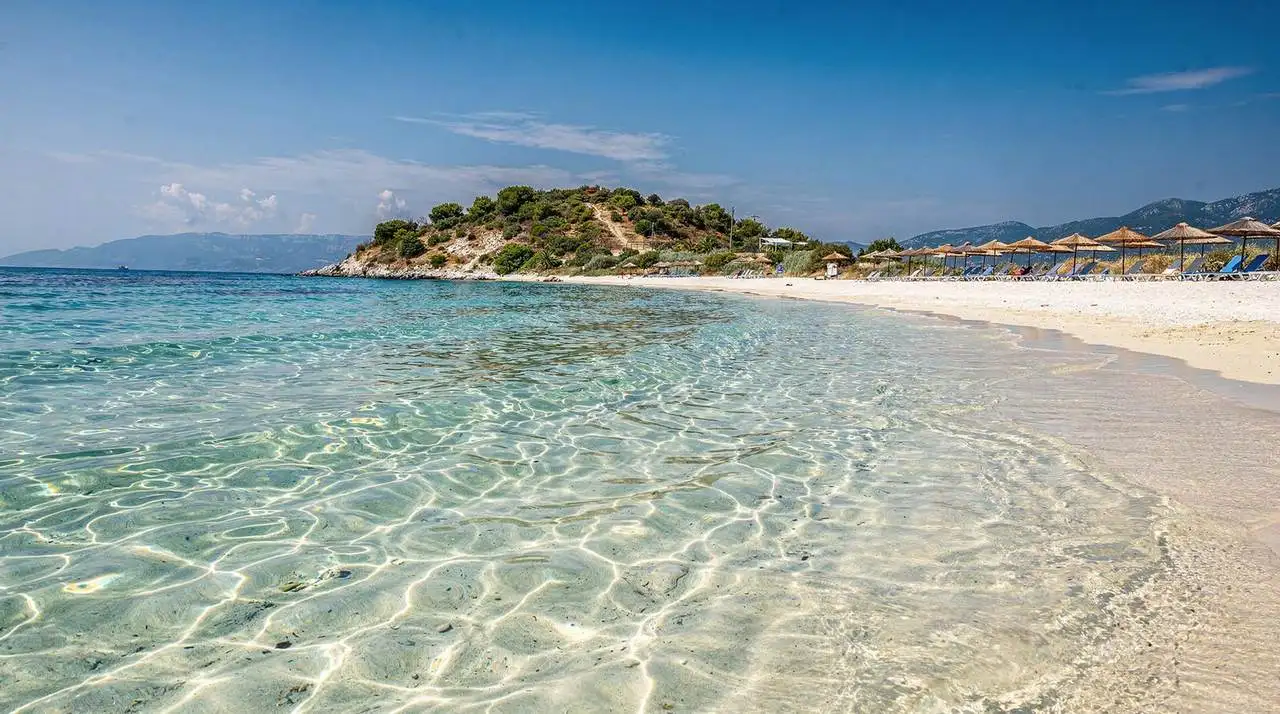
Ksamil’s shallow turquoise lagoon is among the best snorkeling environments in Albania for beginners and for anyone who wants an accessible underwater experience without scuba gear. The water clarity in the lagoon is extraordinary — visibility of 10-15 metres is normal in calm conditions — and the seagrass beds between the main beach and the offshore islands shelter a high diversity of marine life.
Common snorkeling finds at Ksamil include octopus (often visible on the rocky patches between seagrass beds), sea bream and other Mediterranean reef fish, sea urchins, and occasional seahorses in the denser seagrass. The bottom near the islands drops away more steeply, creating a mini-wall effect that larger fish use as a hunting ground.
This Saranda boat tour to 7 destinations with snorkeling combines Ksamil island-hopping with guided snorkeling stops — an excellent way to see the underwater landscape of the south coast with a guide who knows the best spots. Cost approximately EUR 30-45 per person.
The water temperature at Ksamil is comfortable for snorkeling from late May through September, reaching 25-27°C at peak summer. A thin wetsuit or rash guard extends the season at either end. Early morning sessions before 10am offer the calmest water surface and best underwater visibility, as afternoon winds can stir up small amounts of sediment in the shallower sections of the lagoon.
Other Good Snorkeling Spots on the Riviera
The Albanian Riviera offers snorkeling opportunities far beyond Ksamil, and many of the best spots are completely uncrowded even in peak summer:
Gjipe Beach: The rocky headlands at either end of Gjipe beach have excellent underwater topography. The clarity of the water here — one of the least disturbed sections of the coast — is exceptional. Snorkeling around the base of the cliffs reveals encrusted rock surfaces, crevice-dwelling fish, and good populations of sea urchins and starfish. Gjipe is accessible on foot via a canyon walk from the road or by boat tour.
Dhermi: The rocky sections at the northern and southern ends of the main Dhermi beach, away from the central sandy section, are good for snorkeling. Large boulders underwater provide habitat for grouper, wrasse, and octopus. The water off Dhermi is among the clearest on the Riviera.
Porto Palermo: The bay near Porto Palermo Castle (between Himara and Saranda) has calm, very clear water and interesting underwater topography. The castle sits on a small peninsula; the water on both sides is worth exploring with a mask. Kayaking tours at Porto Palermo often include snorkeling stops at the best spots within the bay.
Palase: The water off Palase beach is deep and exceptionally clear — one of the clearest spots on the entire Riviera. Snorkeling off the rocky points reveals a steeply shelving underwater landscape with good fish populations and very little sediment disturbance even in slight swells.
Himara headlands: The cliffs north and south of Himara town conceal small coves and underwater formations that reward slow, close-range snorkeling exploration. The boat tours from Himara access many of these spots and typically include swimming stops in the clearest sections.
Discover Scuba Diving in Albania
For visitors who are not certified divers but want to experience the underwater world of the Karaburun area, Discover Scuba Diving (DSD) sessions are available from operators in Vlora. These supervised introductory dives take place in calm, shallow bays under direct instructor supervision — no prior experience or certification is required.
A typical DSD session at Vlora includes a brief classroom orientation covering basic equipment and safety, a shallow-water practice session in the bay, and a supervised dive to a maximum depth of around 5-8 metres. The experience gives a genuine taste of the underwater environment and often motivates participants to pursue full Open Water certification.
Prices for DSD sessions in Vlora run approximately EUR 50-80 per person including equipment. Book with operators who hold current PADI, CMAS, or equivalent instructor certifications, and verify that equipment is well-maintained.
Dive Operators in Albania
The diving infrastructure in Albania is still developing relative to more established Mediterranean destinations, but Vlora now has several operators with professional setups. The main cluster of certified dive operators is in Vlora, where proximity to Karaburun and Sazan provides the best dive sites. A smaller number of operators work from Saranda and occasionally from Himara for snorkeling-focused excursions.
When choosing a dive operator, verify that guides hold current PADI, CMAS, or equivalent certification, that equipment is regularly serviced and up to date, that the operator has specific knowledge of the site you want to dive (Sazan wrecks in particular require specialist knowledge of the access routes and conditions), and that cancellation policies are clear given that sea conditions on the Ionian can prevent diving on short notice.
Booking through established platforms provides a useful layer of consumer protection. Shore dives and guided dive excursions can also be arranged directly at the Vlora harbour, where local operators have boats and can discuss conditions and sites in detail.
Dive Conditions by Season
April-May: The sea is warming from its winter minimum (around 16-18°C). Visibility is excellent, often exceeding 25-30 metres, as winter storms have settled and plankton blooms have not yet peaked. Wetsuits (5mm minimum) are necessary. Excellent conditions for the Karaburun dive sites.
June: Water temperature reaches 22-24°C. Visibility remains excellent. Ideal conditions with minimal crowds. The calmest sea states of the year make boat transit to Sazan and Karaburun straightforward.
July-August: Peak diving season. Water temperature 25-28°C. Surface conditions can deteriorate in the afternoon meltemi wind — morning dive departures are essential. Visibility remains very good at depth. Wetsuit requirement drops to 3mm for recreational depths.
September-October: Excellent conditions continue, often better than peak summer as the winds moderate. Water temperature 22-24°C in September, cooling through October. Reduced boat traffic and fewer visitors at sites.
November-March: Diving is possible on calm days but most operators do not maintain regular schedules. Water temperature drops to 14-16°C and a 7mm wetsuit is necessary.
The best months overall are May-June and September-October: settled weather, excellent visibility, comfortable temperatures, and minimal crowds.
Equipment Hire and Certifications
Dive operators in Vlora and Saranda provide full equipment hire including tanks, BCDs, regulators, wetsuits, and fins. Visitors who bring their own equipment should check current Albanian customs regulations before packing — some items may require specific documentation on entry.
PADI Open Water is the minimum certification required for most recreational dive sites in Albania. Advanced Open Water opens access to the deeper wrecks around Sazan (18-40 metres). Experienced technical divers will find a handful of sites in the 40-60 metre range that remain largely unexplored and have significant potential for future discovery.
Underwater photography is an excellent complement to diving in Albania — the extraordinary clarity of the water and the rich marine life make for exceptional images. Many Karaburun cave sections have photogenic combinations of natural light, stalactite formations, and encrusted rock surfaces that experienced underwater photographers find genuinely compelling.
Combining Diving with the Rest of Albania
Vlora is the natural base for anyone prioritising diving on an Albania trip. The city has good accommodation across the price range, an interesting history (it was the site of Albania’s declaration of independence in 1912), and easy road connections to both Tirana (2-3 hours north) and the Albanian Riviera (1-2 hours south to Himara). The best beaches of the Riviera are within easy day-trip distance, and the Karaburun Peninsula is reached by a 30-45 minute boat ride from the Vlora harbour.
Saranda is the best base for snorkeling-focused visits in the south, with the Ksamil lagoon, the Blue Eye spring, and Butrint National Park all within easy reach. Day trips from Saranda can combine water activities with cultural visits — spending the morning on a Ksamil snorkeling tour and the afternoon at Butrint, for example, makes for an exceptionally full and rewarding day. See the day trips from Saranda guide for logistics and timing.
For visitors whose primary interest is water activities, it is perfectly feasible to design an Albania itinerary centred on the coast, moving between Vlora (diving, Karaburun Peninsula), Himara (sea caves, boat tours), Ksamil (snorkeling, lagoon beaches), and Saranda (boat tours, Butrint) over a week to ten days. The Albanian Riviera is compact enough that moving between these bases takes one to two hours by car along the SH8 coastal road.
Practical Tips for Water Activities
Morning is always better: Sea conditions on the Ionian coast are consistently calmest before 11am. This applies equally to boat tours, snorkeling, kayaking, and diving. Plan water-based activities for morning and leave afternoons for land-based sightseeing or beach relaxation.
Sun protection: The combination of intense Albanian sun and water reflection makes sunburn a serious risk. Apply high-SPF waterproof sunscreen before any water activity and wear a rash guard or wetsuit top for extended snorkeling sessions.
Bring your own mask if possible: Hire equipment is available but quality varies. A well-fitting personal mask makes snorkeling dramatically more enjoyable — rental masks often leak, which kills the experience.
Cash for local operators: Many harbour-based operators in Albania prefer or require cash payment. Carry Albanian Lek or Euros, and confirm payment options when booking.
Check the boat tours guide: Many surface boat excursions include snorkeling stops and provide a convenient combined experience of above-water and underwater exploration on the same trip.
Final Thoughts
Albanian waters reward those willing to look beneath the surface. The combination of extraordinary clarity, unexplored wrecks, healthy marine life, and almost nonexistent dive tourism creates conditions that experienced divers find genuinely exciting — and that beginners and snorkelers find approachable and beautiful. The Karaburun marine protected area, the Ksamil lagoon, and the rocky headlands of the Riviera form a trio of underwater environments with genuinely different characters, accessible to visitors at every experience level.
As Albania’s profile as a travel destination grows, the underwater world here is unlikely to remain a secret for much longer. For context on where water activities fit within a broader Albania trip, see the best experiences in Albania guide and the Albania travel budget guide for cost planning.
Diving vs Snorkeling: Which Should You Choose?
Not every Albania visitor needs to make this decision, but for those with limited time on the coast, it helps to be clear about the trade-offs:
| Diving | Snorkeling | |
|---|---|---|
| Certification needed | Yes (or a DSD session) | None |
| Cost | EUR 50-90 per dive; EUR 300-400 for Open Water | Often free with your own mask, or EUR 30-45 for a guided boat tour |
| Best sites | Karaburun caves and Sazan wrecks | Ksamil lagoon, Dhermi, Gjipe |
| Time commitment | Half day minimum per dive trip | An hour or a full afternoon, flexible |
| Who it suits | Certified divers or those willing to try a DSD session | Anyone, including families and casual swimmers |
For most first-time visitors to the Albanian coast, snorkeling at Ksamil or along the Riviera headlands delivers an excellent underwater experience with no preparation required. Diving is worth the additional cost and commitment specifically for the Karaburun caves and Sazan wrecks, which offer something genuinely unavailable at the surface.
Boat-Based vs Shore-Based Snorkeling
Snorkeling in Albania splits into two practical categories, and knowing which applies to a given spot saves wasted effort. Shore-based snorkeling — walking or swimming out directly from the beach — works well at Ksamil, Dhermi’s rocky ends, and Palase, where the underwater terrain is close to shore and easily reached without a boat. Boat-based snorkeling is necessary for Karaburun’s caves, the more remote sections of Gjipe, and any Sazan-adjacent water, where access on foot is impractical or restricted. Most organised boat tours from Saranda, Himara, and Vlora build in two or three snorkeling stops specifically chosen for underwater interest, making them the simplest way to reach the boat-only sites without owning or chartering a vessel yourself.
Frequently Asked Questions About Diving and Snorkeling in Albania
Is diving good in Albania?
Yes, Albanian waters offer genuinely exciting diving with extraordinary visibility (often 20-30 metres), interesting wrecks, and healthy marine life in areas with little dive traffic. The Karaburun Peninsula and Sazan Island marine protected area near Vlora is the standout destination, with World War II wrecks and pristine underwater landscapes rarely visited by divers.
Where is the best snorkeling in Albania?
The Ksamil lagoon and island shores offer excellent snorkeling with seagrass beds sheltering octopus, sea bream, and occasional sea turtles in very shallow, clear water. The rocky headlands at Palase, Gjipe, and Dhermi offer good snorkeling around underwater rock formations. The marine protected area off Karaburun is the most biodiverse but requires a boat to reach.
Can you do PADI certification in Albania?
PADI certification courses are available in Albania, primarily based in Saranda and Vlora where dive centers operate in summer. Open Water certification typically costs EUR 300-400 and takes 3-4 days. Saranda is the most established location with English-speaking instructors experienced in training beginners in the calm Ionian waters.
Is Ksamil good for beginners who have never snorkeled before?
Yes, Ksamil is one of the most beginner-friendly snorkeling spots in the Mediterranean. The lagoon is shallow, calm, and clear, with an easy shore entry from the main beach and no strong currents. First-time snorkelers can wade in gradually and explore the seagrass beds without needing a boat or any prior experience.
What time of year has the clearest water for diving in Albania?
April-May and September-October typically offer the clearest visibility, often exceeding 25-30 metres at the Karaburun sites, as winter storms have settled and summer plankton blooms have not yet built up. Peak summer (July-August) still offers very good visibility but can see afternoon surface chop from the meltemi wind, making morning dive departures preferable.