Albania’s National Parks: A Complete Guide
Albania protects approximately 18% of its territory through national parks, nature reserves, and managed natural areas — a higher proportion than many Western European countries. The country’s geological and ecological diversity is extraordinary for its size: pristine alpine landscapes, Mediterranean wetlands, ancient forests, wild rivers, and coastal lagoons all fall within protected areas.
This guide covers all 15 national parks and key nature reserves, with practical visitor information, highlights, and honest assessment of each.
| Total parks | 15, covering roughly 18% of Albania’s territory |
| Most visited | Theth, Valbona, Butrint, Llogara |
| Most unique | Vjosa Wild River National Park (Europe’s first) |
| Entry fees | Mostly free; Butrint EUR 5-7 is the main exception |
| Best season | April-October for most parks |
The Vjosa Wild River National Park: Europe’s First Wild River Park
Declared in March 2023, the Vjosa Wild River National Park represents one of the most significant conservation achievements in European history. The Vjosa River, flowing 270km from the mountains of Greece through southern Albania to the Adriatic, is the last major wild river in Europe outside Russia — free of dams, canalization, or major human intervention along its entire length.
The national park declaration followed a years-long campaign by environmental groups and was achieved in cooperation with the Albanian government. It protects not just the river itself but its entire watershed, including the Bence, Shushica, and Devolli tributaries.
Why this matters: Every other major European river has been dammed, regulated, or altered. The Vjosa represents what rivers once were: dynamic, flooding naturally, depositing sediment, supporting riparian forests, and hosting fish species including the critically endangered Huchen (Danube salmon).
Visitor experience: The Vjosa is not a typical national park with visitor centers and hiking trails — it is a wild landscape best experienced by:
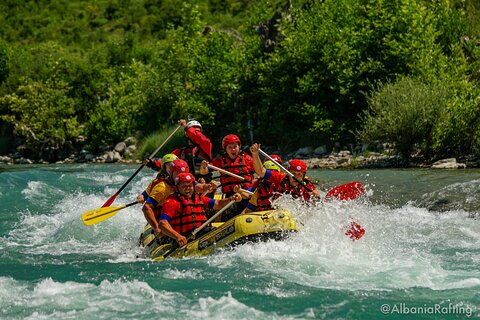
- Rafting from Permet to Tepelena (approximately 35-40km of navigable rapids and calm sections)
- Kayaking on calmer sections near Permet
- Visiting the canyon sections near Dragot
- Walking the riverbanks near Permet town
Book a rafting experience on the Vjosa River near Permet for the most immersive way to experience this extraordinary wild landscape.
Best season: March-June for rafting (river levels higher, water not too cold). Swimming in summer when river runs lower and clearer.
Theth National Park
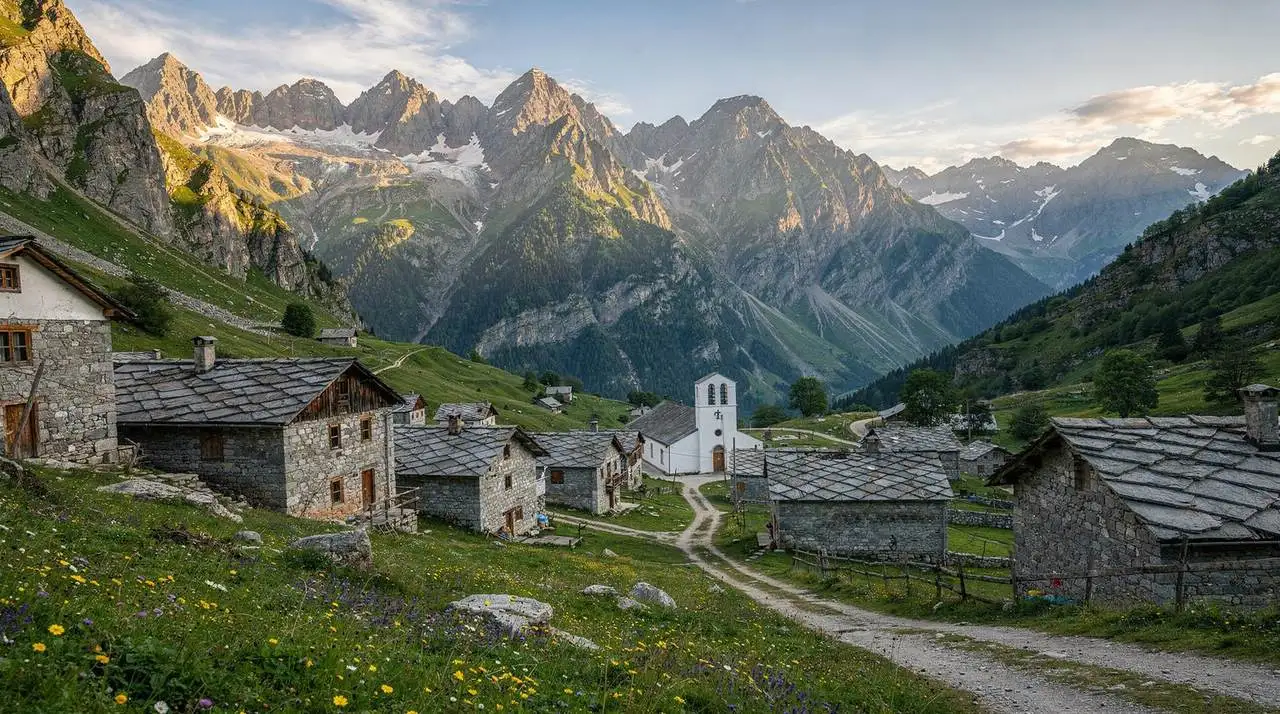
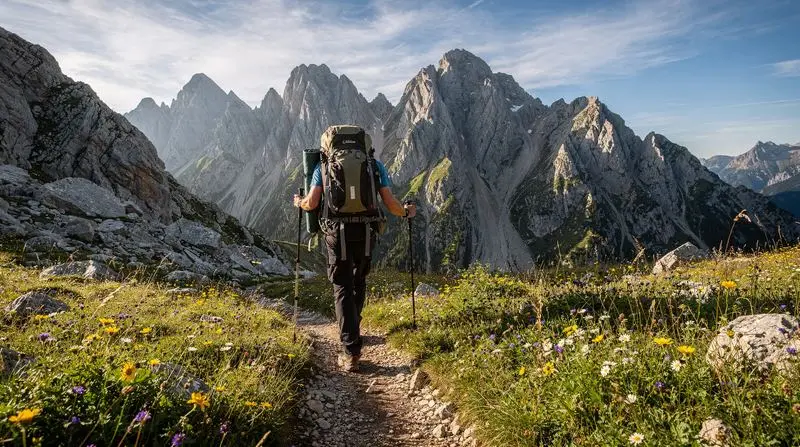
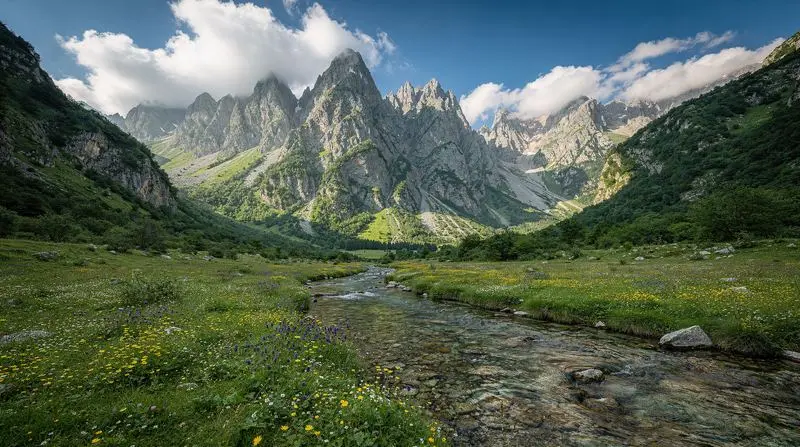
Theth is among the most dramatic landscapes in Europe. The high valley, ringed by the jagged peaks of the Accursed Mountains (Bjeshket e Nemuna), sits at around 800m altitude in northeastern Albania and is accessible by a single mountain road from Shkodra (roughly 2 hours in good conditions).
Park highlights:
- The Blue Eye of Theth (Syri i Kaltër): Not to be confused with the more famous Blue Eye near Saranda, this karst spring in a canyon near Theth village emits ice-cold water of extraordinary clarity. A 2-3 hour walk from the village.
- Grunas Waterfall: A 30m waterfall a 30-minute walk from the village center. Accessible for most fitness levels.
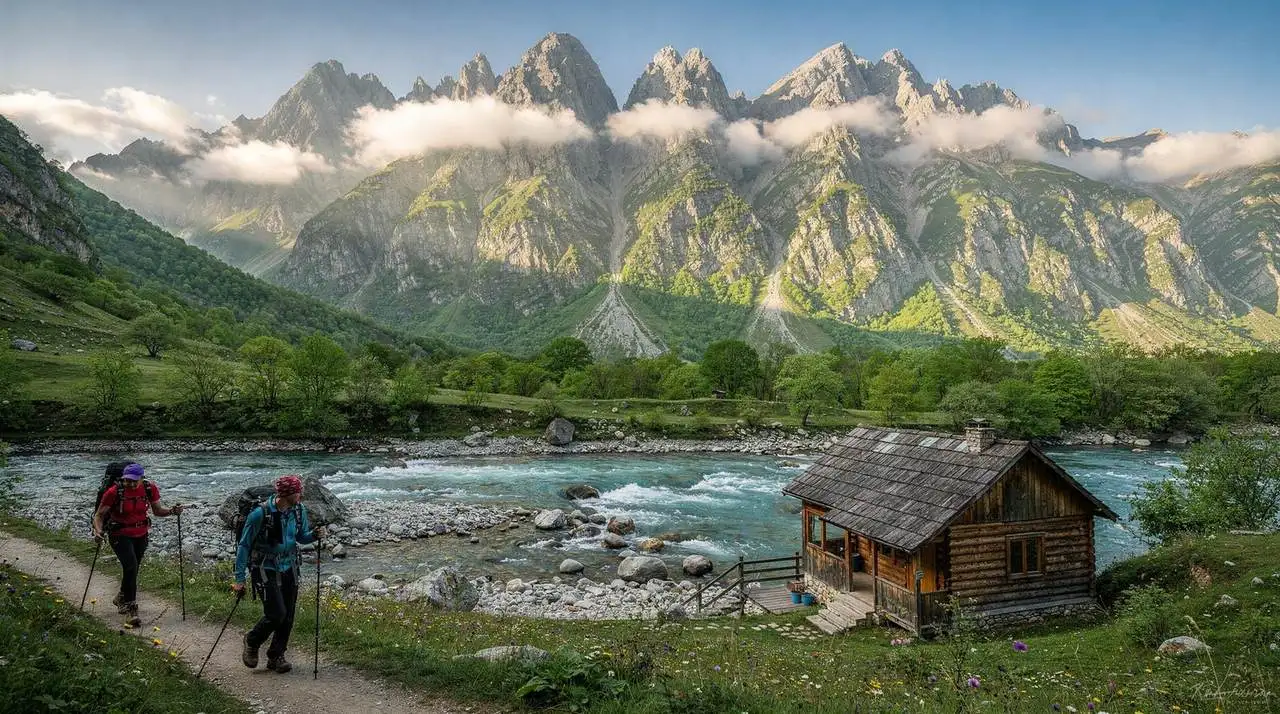
- Theth-Valbona Trail: The most famous hike in Albania, crossing the Valbona Pass (1,798m) between the two valleys. Allow 7-9 hours for the full crossing. See the Theth-Valbona hike guide for detailed trail information.
- The Theth church: A small Catholic church dating from the early 20th century that served as the village’s spiritual center during the communist era when religion was banned.
- Lock-in towers (Kulla): Traditional stone towers used under the Kanun to shelter blood feud victims — one of Albania’s most tangible connections to its unique legal and social heritage.
Practical info: Theth is visited April-October; the road closes in heavy snow. Accommodation is almost entirely guesthouses with half-board (EUR 22-28 per person). A furgon runs from Shkodra in summer (approximately EUR 8-10). See the comprehensive Albanian Alps hiking guide for seasonal trail information.
Valbona Valley National Park
Valbona (Lugina e Valbonës) is Theth’s twin in the national park system — connected by the famous hiking trail but distinctly different in character. Where Theth is enclosed and dramatic, Valbona is a broader, more open valley with a river running through and views of extraordinary mountain walls.
Park highlights:
- Valbona River: Crystal clear glacial water running through the valley floor. Accessible for swimming in the warmer summer months.
- Village guesthouses: Valbona has arguably the best guesthouse hospitality in Albania — families who have been hosting trekkers for 20+ years and serve extraordinary home-cooked meals.
- Peaks for more experienced hikers: The surrounding peaks including Maja Jezercës (2,694m, the highest point in the Albanian Alps) are for experienced mountaineers with guide support.
- The Lake Koman connection: Most visitors reach Valbona via the spectacular Koman Lake ferry from Shkodra — one of the great boat journeys in Europe. See the Koman Lake ferry guide.
Best for: Multi-day hikers, guesthouse culture enthusiasts, photography, those doing the Peaks of the Balkans trail.
Book a 3-day Valbona-Theth Albanian Alps trip from Shkodra for a fully guided experience including all transport, guesthouse accommodation, and trail guidance.
Butrint National Park
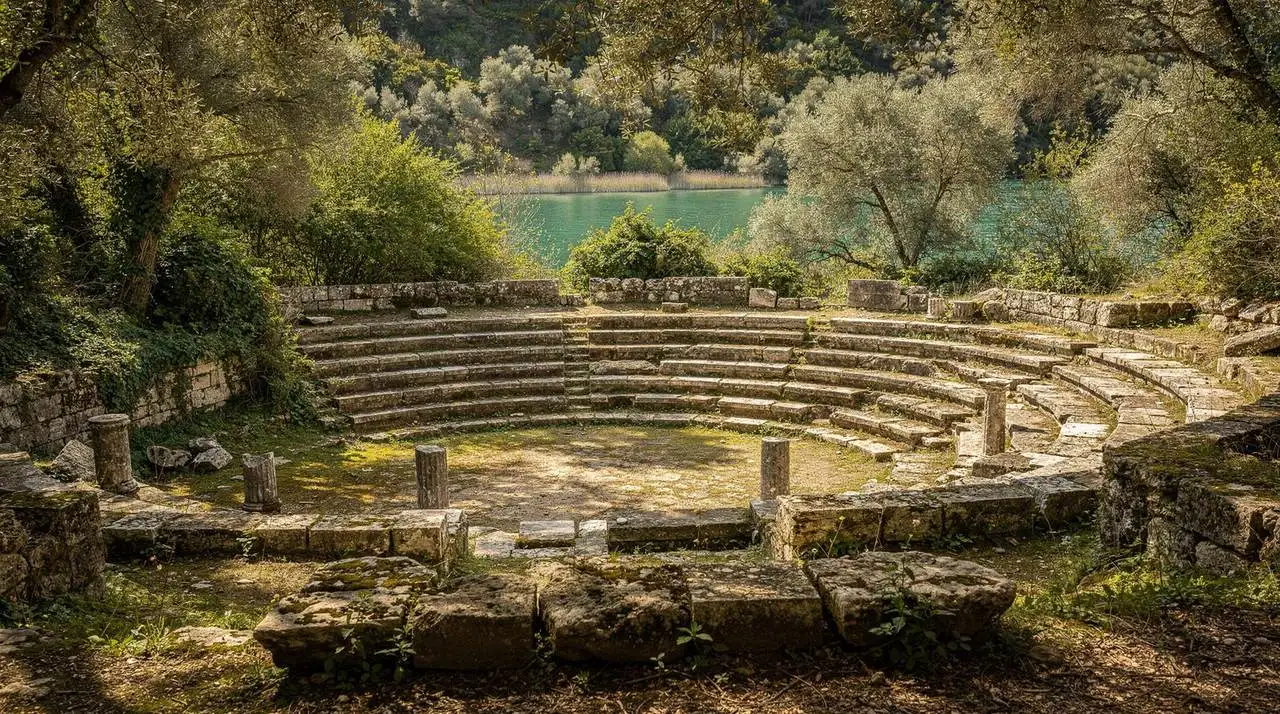
Butrint is Albania’s most visited and internationally recognized protected area, combining archaeological and natural heritage in a UNESCO World Heritage Site. The 29km² park sits on a forested peninsula surrounded by Lake Butrint and the Vivari Channel, a short drive from Saranda.
The archaeological site: Butrint was continuously inhabited from Neolithic times through Greek, Roman, Byzantine, and Venetian periods. The concentration of ruins — Greek theater, Roman baths, Early Christian basilica, Venetian towers — within a forested landscape is extraordinary. The site never feels like a theme park; the ruins sit among wild fig trees and olive groves in a way that feels genuinely ancient.
The natural environment: Beyond the archaeology, the park protects important wetland habitats with significant bird life, the Butrint lagoon, and sections of old-growth forest.
Practical info: Entry fee approximately EUR 5-7. Open year-round but best visited in spring and autumn to avoid summer heat. Combine with Ksamil beach (5km away) for a full day. See the Butrint destination guide for detailed visitor information.
Llogara National Park
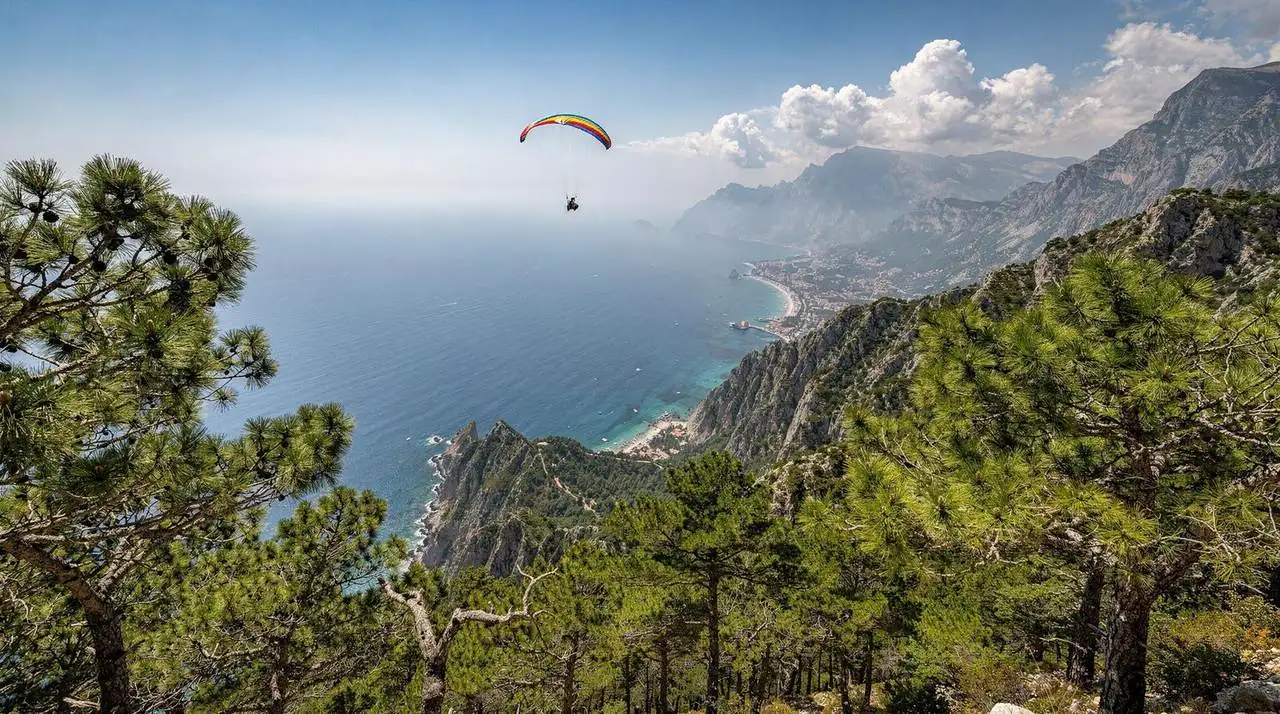
Llogara covers the Ceraunian Mountains above the Albanian Riviera, protecting a remarkable transition zone between alpine forest and Mediterranean coast. The national park straddles the mountain ridge, with pine and fir forests giving way to views of the Ionian coast 1,000m below.
The Llogara Pass (1,027m) is the defining geographical feature — a mountain road crossing that is one of the great drives in Europe. Coming from Vlora in the north, the road climbs through pine forests, emerges at the pass with vertiginous coastal views, then descends in tight switchbacks to the Riviera. In a hire car, this journey is simply spectacular.
Hiking: The park has trails through the pine forest, including routes toward the peaks above the pass. The forest is cool and shaded in summer — a welcome respite from the coastal heat.
Wildlife: Golden eagles and other raptors are visible from the pass. The forests support brown bear populations (rarely seen but present).
Practical info: No entry fee for the pass and road. The famous Llogara Restaurant at the summit serves burek, grilled meats, and local cheese at entirely reasonable prices. A stop here is essentially obligatory on any Riviera road trip. See the full Llogara destination guide.
Divjaka-Karavasta National Park
This coastal wetland park on the central Albanian coast protects the most important lagoon system in Albania and one of the most significant wetlands in the Mediterranean. Karavasta Lagoon is the third largest in the Mediterranean, covering approximately 4,000 hectares.
Why birders come here: The park hosts one of only two remaining breeding colonies of the Dalmatian pelican (Pelecanus crispus) in Albania, a globally endangered species. Several hundred pelicans breed here annually, and the spectacle of these enormous birds — wingspan up to 3.5m — in their natural habitat is extraordinary. See the birdwatching in Albania guide for detailed seasonal information.
Other wildlife: Pygmy cormorant, glossy ibis, greater flamingo (seasonal visitor), European roller, and multiple heron species are regularly recorded in the park.
The dune forest: Divjaka also protects the largest surviving Albanian coastal pine forest — a rare Mediterranean habitat increasingly rare throughout the region.
Practical info: Entry fee around EUR 2-3. The park has basic visitor infrastructure including walking paths and a small observation tower. Guided birdwatching tours from local operators are available. The nearest town is Lushnja (30km) or Fier (40km).
Prespa National Park
Albania’s section of the transboundary Prespa Lakes region (shared with North Macedonia and Greece) protects lake shores, reed beds, and montane forest around the Great Prespa and Small Prespa lakes.
The lakes: Great Prespa Lake is the largest lake in the Balkans (285 km²), shared between three countries. The water is extraordinarily clear and the surrounding mountains create a dramatic setting. The Albanian shoreline has a fraction of the development of the Macedonian side.
Cultural heritage: Ancient Orthodox churches with Byzantine frescoes, some accessible by boat, dot the lake islands and shores.
Wildlife: Dalmatian pelicans also breed at Prespa alongside the Karavasta colony. The lake supports large populations of cormorants, herons, and raptors.
Best for: Serious birders, off-the-beaten-path travelers, cyclists exploring the quiet lake roads.
Shebenik-Jablanica National Park
This large mountain park in central-eastern Albania near Elbasan protects ancient Balkan beech and oak forest — some of the most ecologically significant forest habitat remaining in Europe. Old-growth forest of this quality is rare continent-wide.
Wildlife: Brown bear, wolf, lynx, and wildcat are present but rarely seen. The birdlife includes important populations of forest birds including black woodpecker, hazel grouse, and numerous raptor species.
Visitor infrastructure: Limited — this is a genuine wilderness area. For experienced hikers and naturalists rather than casual visitors.
Dajti Mountain National Park
The most accessible national park from Tirana, Mount Dajti (1,612m) looms over the capital’s eastern side and is reachable by gondola (Dajti Ekspres cable car) from the city outskirts.
The gondola experience: The cable car ride itself is a highlight — 15 minutes of cable travel with views over Tirana and toward the Adriatic. The summit has restaurants, walking trails, and a hotel.
Hiking: Trails from the summit area offer 2-4 hour loops through beech forest. The full ascent from Tirana by foot is a serious undertaking (6-8 hours) for fit hikers.
For Tirana visitors: A half-day trip to Dajti is an easy and rewarding addition to a Tirana stay, particularly for those wanting a break from the city. Cable car cost approximately EUR 7-10 return.
Thethi i Shtames (Zall-Gjoce) National Park
A smaller park near the town of Burrel in central Albania, protecting the Gjoce gorge and surrounding forest. Less visited than the main parks but rewarding for those exploring central Albania.
Bredhi i Drenovës National Park
Near Korca in southeastern Albania, this park protects a forest of Greek fir (Abies cephalonica) — a species at the northern limit of its range. The forest is particularly beautiful in autumn when the surrounding deciduous trees turn colour. Combined with a visit to Korce city, this makes for a good excursion.
Bredhi i Hotovës National Park
Adjoining Permet in the south, this park protects fir forest and has hiking trails connecting to the Permet area tourist circuit. The combination of Permet town, the Benje Thermal Baths, Vjosa River, and this park makes the Permet region one of the most rewarding nature tourism areas in Albania.
Camping and Overnighting in National Parks
Formal campsite infrastructure within Albania’s national parks is limited, but wild camping is generally tolerated with common-sense etiquette — pack out all rubbish, avoid open fires in dry conditions, and camp a reasonable distance from working farms and grazing land. The camping in Albania guide and wild camping guide cover the specifics by region, including which parks have designated sites versus informal tolerance. For most visitors, however, guesthouses in or near the parks — particularly in Theth, Valbona, and Permet — offer a far more comfortable and locally supportive alternative to camping, with home-cooked meals that are themselves part of the park experience.
National Parks and Wildlife Watching
Several of Albania’s parks are genuine wildlife destinations rather than simply scenic backdrops. Divjaka-Karavasta’s Dalmatian pelican colony and Prespa’s overlapping bird populations make eastern and central Albania a serious birdwatching circuit — the birdwatching in Albania guide covers seasonal timing and access in far more depth than is practical here. For those hoping to see Albania’s larger mammals, expectations should be realistic: brown bear, wolf, and lynx are present in Shebenik-Jablanica, the Albanian Alps, and other forested parks, but sightings are rare even for experienced naturalists, and no park offers guaranteed wildlife viewing in the way an African safari does.
Combining National Parks with Adventure Activities
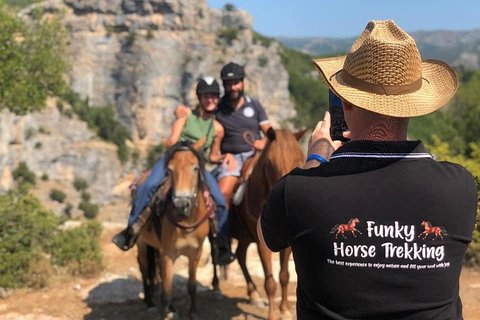
Several parks double as bases for specific outdoor activities beyond hiking. The Vjosa supports rafting and river kayaking near Permet; Llogara is a launch point for paragliding flights over the Riviera; and the mountain tracks around Theth, Valbona, and Bovilla near Tirana are increasingly used for off-road jeep tours. Combining a park visit with one of these activities makes for a more active day than hiking alone, particularly for travellers with limited time who want to maximise what a single park visit delivers.
Mali i Gjere National Park
Near Gjirokastra, protecting the mountains rising above Albania’s second UNESCO city. The park provides context for the dramatic setting of Gjirokastra — the city sits at the bottom of a deep valley with mountain walls on all sides.
Korab-Koritnik National Park
Albania’s section of the Korab massif, which contains Albania’s highest point (Mount Korab, 2,764m, on the North Macedonia border). This is serious mountaineering territory. The Albanian section is remote and has minimal visitor infrastructure.
Lurë-Mali i Dejës National Park
A mountain lake district in northeastern Albania with multiple glacial lakes (liqenet). Beautiful high-alpine landscape accessible via rough mountain roads. Popular with Albanian hikers and mountain bikers.
Planning Your National Park Visits
Best combination itinerary for national parks (10 days):
- Tirana (base) — day trip to Dajti Mountain
- Shkodra — base for Theth and Valbona
- Koman Lake ferry to Valbona
- Theth (via Valbona crossing)
- Return to Tirana, drive south
- Permet area — Vjosa River rafting, Benje Thermal Baths, Hotova forest
- Gjirokastra/Mali i Gjere
- Saranda — day trip to Butrint
- Llogara Pass (driving the Riviera)
- Divjaka-Karavasta (en route back north, or separate visit)
Fees: Most Albanian national parks charge minimal or no entry fees. Butrint is the main exception at EUR 5-7. The Theth and Valbona valleys have occasional local trail fees of EUR 1-2 on some routes.
Conservation: Albania’s national parks are generally under-resourced in terms of ranger presence and litter management. Carry out all waste, stay on marked trails where they exist, and avoid disturbing wildlife.
Frequently Asked Questions About National Parks of Albania
How many national parks does Albania have?
Albania has 15 protected natural areas designated as national parks, covering approximately 3.5 percent of the country’s territory. The most visited are Theth National Park, Valbona Valley National Park, Butrint National Park, Llogara National Park, and Divjaka-Karavasta National Park. The Vjosa River gained national park status in 2023, making it Europe’s first wild river national park.
Which is the best national park in Albania?
For dramatic mountain scenery, Valbona Valley National Park and Theth National Park are the standout choices. Butrint National Park uniquely combines extraordinary archaeological ruins with wetland habitats. Llogara is the most accessible from the Riviera, with high-altitude pine forests and a famous road pass. Karaburun-Sazan Marine Park is the best for underwater exploration.
Is Vjosa the first wild river national park in Europe?
Yes. The Vjosa River National Park, established in March 2023, is recognized as Europe’s first wild river national park. The Vjosa is one of the last large undammed rivers in Europe, flowing entirely free for 270 kilometres from its source in Greece through Albania to the Adriatic. The park protects approximately 400 km2 of river and floodplain habitat.
Do Albanian national parks charge entrance fees?
Most Albanian national parks charge minimal or no entrance fees. Butrint National Park is the main exception at EUR 5-7 per person. Theth and Valbona are free on the main hiking trails, though some routes have nominal fees of EUR 1-2. Llogara National Park has no entrance fee. The minimal cost barrier makes Albania’s protected areas among the most accessible national parks in Europe.