Best Restaurants in Saranda: A Complete Dining Guide
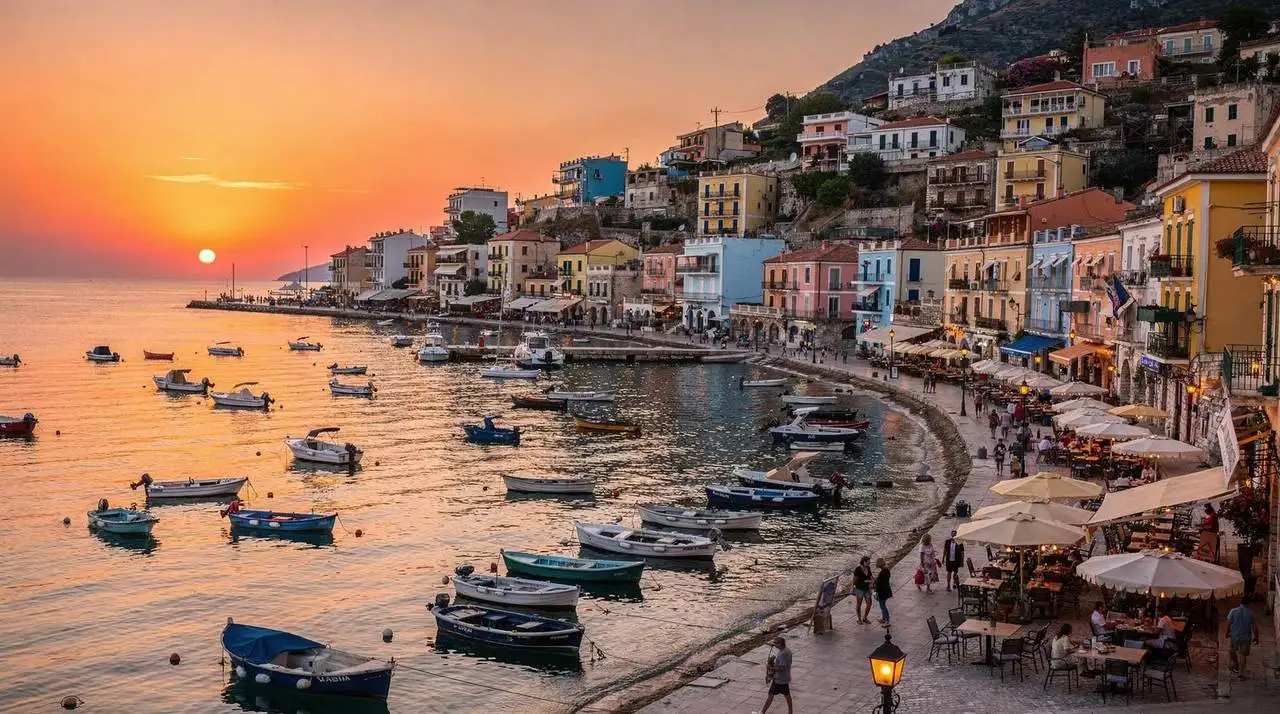
Saranda is the center of gravity for dining on the Albanian Riviera. As the region’s largest town and principal transport hub, it concentrates the best restaurants, the freshest seafood, and the widest variety of dining options between Vlora to the north and the Greek border to the south. Whether you are staying in Saranda itself, making day trips from Ksamil, or passing through on the way down the coast, eating well here is straightforward if you know where to look.
The city’s culinary identity is defined almost entirely by the sea. Saranda sits in a bay on the Ionian coast, and the fishing boats that work the waters around the Karaburun Peninsula, the Vivari Channel, and the waters near Ksamil supply the town’s restaurants with fish and seafood that arrives on the table in a state of freshness that is difficult to achieve anywhere far from the source.
Understanding how the ordering system works, which restaurants best serve which purposes, and how to navigate the promenade versus backstreet distinction transforms Saranda eating from an average experience into an excellent one.
| Where to eat | Promenade for choice, backstreets/fish market for value |
| Typical cost | Around EUR 25-40 for two at promenade; EUR 12-18/person fish market |
| Don’t miss | Fresh-caught fish by weight, Butrinti mussels, Limani for a special dinner |
| Best time | Lunch 12:30-3pm; dinner peak 8-10pm |
| Nearby | Ksamil (14km), Butrint, Gjirokastra (1.5hrs) |
Seafood First: Understanding How Ordering Works
Before covering specific restaurants, understanding how seafood ordering works in Saranda clarifies the experience considerably — because the system is different from most European tourist destinations and can catch visitors off guard.
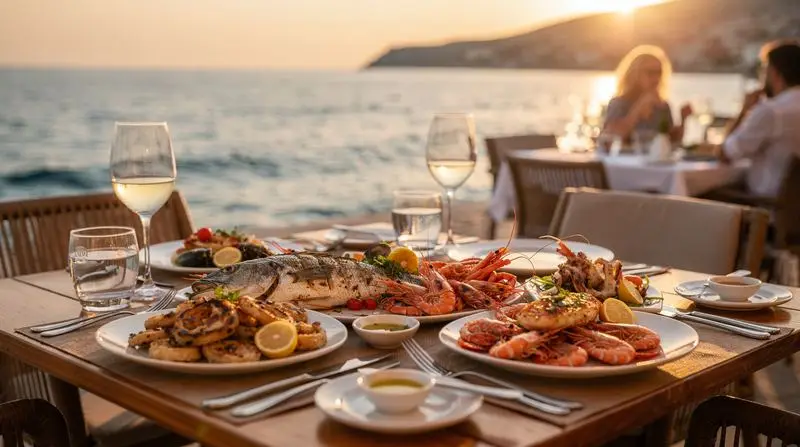
In the better seafood restaurants, the standard approach is not to order from a printed menu but to look at the daily catch displayed on ice at the restaurant entrance. A waiter will indicate what arrived that day, point out the fish by species, give the weight of each specimen, quote a per-kilogram price, and ask how you want it cooked. This fresh-catch ordering means prices vary daily depending on the catch, and a large sea bream or grouper is priced by weight rather than as a fixed-price portion.
Always confirm the total weight and approximate cost before the fish goes to the kitchen. This is standard Albanian restaurant practice, not a warning of bad faith — it simply ensures both sides have the same understanding. Once confirmed, the fish is weighed, the price agreed, and the cooking proceeds.
The result of this approach, however, is fish of a quality that justifies any small administrative awkwardness. Fish that was swimming yesterday afternoon, on your plate tonight, prepared simply with olive oil and lemon — this is the fundamental Saranda dining experience and it is excellent.
Common Saranda catches include:
- Levrek (sea bass) — delicate white flesh, usually grilled whole
- Koce (sea bream) — the most versatile and reliably good choice
- Barbun (red mullet) — small and flavorful, often served fried or grilled
- Shpata (swordfish) — available in season, usually late summer
- Astar (swordfish steaks) when in season
- Oktopodit (octopus) — year-round, grilled on charcoal or slow-cooked in tomato sauce
- Midhje (mussels) from the Butrinti lagoon — see below
Limani: Upscale Dining on the Waterfront
Limani sits on Saranda’s main promenade in a position that makes the most of the bay view, with a terrace extending close to the water in summer. It represents the upscale end of Saranda dining — not expensive by any Western European standard, but at the top of the local range in terms of presentation, service quality, and wine selection.
The menu covers the full range of Ionian seafood alongside well-executed Albanian meat dishes and Mediterranean salads. The octopus is particularly good here: grilled over charcoal until the exterior chars slightly while the interior remains tender, then finished with olive oil and lemon in the simple preparation that showcases good octopus best. The sea bream from the daily catch is handled with the restraint the ingredient deserves — not overworked, not over-seasoned.
Service at Limani is more polished than at most Saranda restaurants, and the wine list extends to Albanian wines by the bottle alongside house carafes. This is the right choice for a celebration dinner, for a first evening in Saranda when you want to be certain of quality, or for occasions when the setting matters as much as the food.
What to expect: A complete dinner for two with shared starters (mussels, octopus), a shared fish, salads, a carafe of wine, and water runs EUR 40-60. This is at the high end of Saranda pricing and exceptional value by any Mediterranean standard.
Restaurant Haxhi: Traditional Albanian at Its Best
Haxhi is an institution in Saranda — a family-run restaurant that has maintained its commitment to traditional Albanian cooking through decades of changing tourism trends. The menu leans heavily toward meat rather than seafood, which is somewhat unexpected for a coastal city but reflects the depth of Albanian inland cooking traditions that have taken root here.
Tavë kosi (lamb baked with yoghurt and egg custard), qofte (spiced grilled meatballs), slow-roasted lamb shoulder, stuffed peppers, and the kinds of dishes that require hours of preparation rather than minutes of assembly. These are the dishes most tourist-facing restaurants do not bother with because they require a kitchen committed to traditional methods. Haxhi bothers.
The interior is simple — which in Albanian restaurant culture tends to signal confidence in what comes from the kitchen rather than a lack of effort. Haxhi’s core clientele has always been Albanian rather than tourist, which is the most reliable endorsement available.
Best for: Travelers who want to eat traditional Albanian food rather than standard Mediterranean seafood. Families. Anyone who spent the morning at Butrint and wants a real meal in the afternoon.
What to order: Ask what the slow-cooked dishes of the day are (the answer is the menu that matters), and order tavë kosi if available. Budget EUR 15-20 per person for a full meal.
Timing: The lunch service is the busiest and arguably the best — the slow-cooked dishes have been going since morning and are at their peak.
The Fish Market Area: Budget Seafood
The area around Saranda’s small fish market — a short walk along the waterfront from the main promenade — clusters several simple taverna-style restaurants catering to local fishermen, market workers, and budget-conscious visitors who have been tipped off about them.
These restaurants do not have elaborate decor, professional service, or printed menus in multiple languages. What they have is fish that is genuinely as fresh as it gets, at prices 30-40% below promenade equivalents for the same quality. A generous plate of fried mixed fish with bread and a local beer costs under EUR 6 at the fish market restaurants.
The fish market itself operates in the early mornings and is worth visiting independently — watching the catch come in and distributed to the town’s restaurants gives useful context to everything you eat in Saranda.
The practical approach: Walk to the fish market area, look at which restaurants have Albanian families eating at them, and join one. These are the restaurants that locals choose when they want a proper fish lunch without paying promenade prices.
Seafront Promenade: Choosing Wisely Among Many Options
The main promenade (bulevardi) is lined with restaurants competing aggressively for tourist trade, which produces both the city’s greatest concentration of dining options and its most variable quality. Several promenade restaurants are excellent; others serve mediocre food at slightly inflated prices to visitors who are unlikely to return.
The practical filters for choosing a promenade restaurant:
Look at who is eating there — a table mix of Albanian families and couples alongside tourists suggests genuine quality rather than pure tourist capture. Look at the fish display at the entrance — fish with clear eyes, firm flesh, and displayed on fresh ice rather than half-melted piles. Look for restaurants showing handwritten daily specials rather than ten-page laminated menus covering every possible cuisine.
With those filters applied, the promenade is a genuinely pleasant place to eat, particularly in the evenings when the bay views, the sea air, and the long Albanian summer dusk create an outdoor dining atmosphere that requires very little from the kitchen to feel special.
Mussels: A Saranda Specialty Not to Miss
The Butrinti lagoon south of Saranda produces some of the finest mussels in the Mediterranean. The lagoon’s particular combination of fresh and saltwater — the outlet channel to the sea creates conditions of unusual productivity — allows mussels to grow larger and with a more pronounced flavor than open-sea cultivation produces. Local mussel farms have operated in the lagoon for generations.
Several Saranda restaurants specialize in midhje and prepare them multiple ways. The simplest preparation — steamed with white wine, garlic, and parsley — is the best showcase for the quality of the shellfish. Gratiné preparations with cheese and breadcrumbs are popular but mask more of the natural flavor. A cold mussel salad with lemon and olive oil makes an excellent starter at any price point.
If you are visiting Butrint for the day, the drive along the lagoon road passes several small restaurants that serve mussels even closer to the source — look for simple establishments with mussel farm signs along the water. If you would rather have the logistics handled, a Butrint and Ksamil day trip from Saranda makes it easy to combine the ruins with a lagoon-side seafood lunch.
Limani vs Haxhi vs the Fish Market: Which Fits Your Meal
| Restaurant type | Best for | Price level | Setting |
|---|---|---|---|
| Limani | Celebration dinner, wine | Higher | Promenade waterfront |
| Haxhi | Traditional Albanian, families | Moderate | Simple interior |
| Fish market area | Budget seafood, authenticity | Low | Functional, local |
For a fuller picture of where to sleep near this restaurant cluster, none of Saranda’s accommodation is far from the promenade, but see the Albania travel budget guide for how Saranda dining compares to the rest of the Riviera.
Vegetarian Options in Saranda
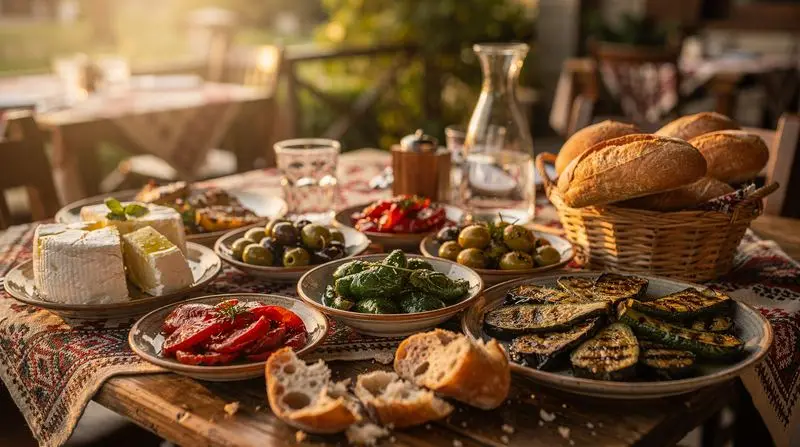
Saranda’s seafood focus does not exclude vegetarians. The Albanian appetizer selection — cheese, olives, roasted peppers, salads — is strong at every restaurant type, and byrek me spinaq is reliably available. Haxhi in particular, being meat-oriented rather than seafood-oriented, has good vegetable-based traditional dishes like fergese without meat. Strict vegans should expect to rely on salads and self-catering, as dairy is pervasive across Albanian traditional cooking. The Albanian food guide has more detail on plant-based options nationally.
Ksamil: A Short Drive and Different Setting
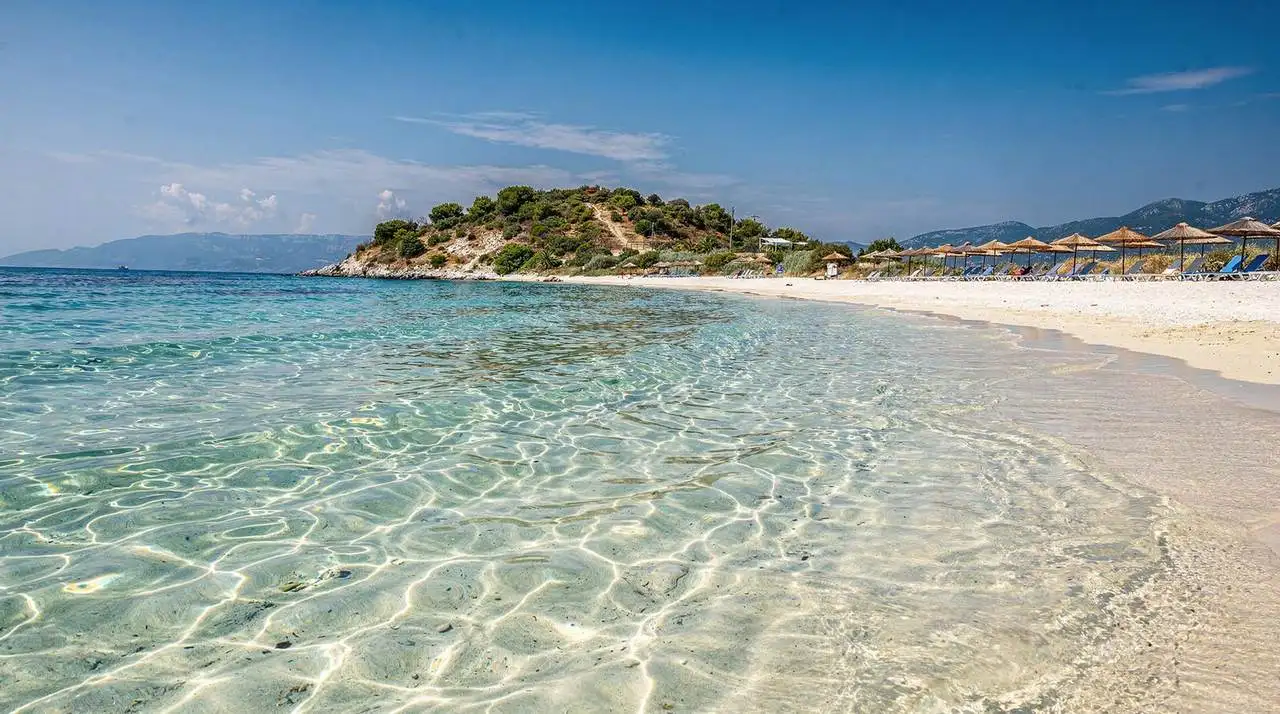
Although technically outside Saranda, the restaurants in Ksamil are within 20 minutes by car and form part of the same dining ecosystem. The Ksamil beachfront restaurants serve grilled fish, salads, and cold drinks in a setting of turquoise water and the small offshore islands that cannot be replicated in Saranda itself.
The trade-off is that Ksamil restaurants are slightly more tourist-facing and marginally more expensive than their Saranda equivalents. Seafood quality is similar, sourced from the same waters. The choice between eating in Saranda or Ksamil is primarily about priorities: value and variety in Saranda, or water views and beach setting in Ksamil.
For the best combined experience: Spend the day at Ksamil beach or on a boat tour of the islands, eat lunch at a Ksamil beachfront restaurant for the setting, then return to Saranda for a more formal dinner at one of the better promenade restaurants.
For organized boat trips that combine the Ksamil island area with the Ionian sea perspective, Albanian Riviera boat trips from Saranda cover the island area and often include a fish lunch stop at a restaurant accessible only by sea.
What Things Actually Cost: Saranda Dining Prices
One of the most common questions about Saranda is what food costs. The honest picture:
At promenade restaurants: A whole grilled sea bream (priced by weight at around 1,400-1,800 ALL per kilogram) for a fish weighing 400-500 grams costs approximately 600-800 ALL (EUR 5.50-7.50). A shared mussel portion runs 600-800 ALL. Salads are 300-400 ALL. A 300ml carafe of house wine costs 400-600 ALL. Beer is 250-300 ALL. A complete seafood dinner for two — starters, shared fish, salads, wine, water — runs EUR 25-40. By any Mediterranean seafood restaurant comparison, this is exceptional value.
At fish market area restaurants: Approximately 25-35% lower for equivalent quality. Budget travelers who concentrate dinner spending here and use the savings for better experiences elsewhere eat very well in Saranda for EUR 12-18 per person.
Breakfast and coffee: A coffee and byrek at a promenade cafe costs under EUR 3. This is one of the great value morning experiences in the Mediterranean.
A One-Day Saranda Food Itinerary
For visitors with a single day to eat well in Saranda: breakfast at a promenade cafe for byrek and coffee (under EUR 3), a mid-morning walk to the fish market to see the day’s catch, lunch at Haxhi for traditional Albanian food while the slow-cooked dishes are at their peak, an afternoon coffee at the northern promenade cafes with the bay view, and dinner at Limani or a fish market restaurant depending on budget and occasion. This sequence covers Saranda’s full dining range — traditional, market, and promenade — in a single well-paced day, and pairs naturally with a morning or afternoon visit to Butrint if time allows.
Boat Trips and Eating on the Water
Saranda is one of the main departure points for boat trips along the Riviera, and eating as part of a day on the water is one of the most memorable food experiences in the area. Boat trip operators that run coastal excursions from Saranda’s harbor typically include a fish lunch stop — usually at a small family restaurant in a sea-accessible village or cove, with a simple but excellent meal of grilled fish, salad, and bread at tables directly on the waterfront.
The quality of these boat trip lunch stops varies between operators. The best stop at family-run restaurants in coves that have been serving boat day-trippers for years and have developed a formula that works: whatever is freshest that day, prepared simply, at a table with the boat tied alongside. Asking the operator specifically about the lunch stop before booking is worthwhile.
Seasonal Eating in Saranda
Spring (April-May): The city is quiet, many restaurants are still ramping up for the season, and the fish market restaurants are the most reliable option. Sea temperatures are cool but the light and pace of the city are genuinely pleasant.
Summer (June-September): Full season. Every restaurant category runs at capacity, particularly July and August, and reservations matter most at Limani and other promenade favourites. Fish supply is at its most abundant.
Autumn (October-November): A strong shoulder season for dining — warm sea, thinner crowds, and restaurants that remain open tend to be the more established, better ones. Many consider October the best month for a Saranda food trip.
Winter (December-February): A significant number of waterfront restaurants close or reduce hours. Haxhi and the backstreet local restaurants remain the most reliable options for a proper meal out of season.
Backstreet vs. Promenade: A Consistent Observation
A practical observation for all of Saranda’s restaurant scene: the quality-to-price ratio consistently improves when you move one or two blocks back from the promenade. The waterfront restaurants charge a premium for sea view and tourist foot traffic. The restaurants on parallel streets — frequented primarily by locals — offer equivalent or better food at 15-25% lower prices.
This is not a reason to avoid the promenade restaurants, which include some of the best dining in Saranda. It is a reason to alternate: promenade for the occasion dinners, backstreet restaurants for everyday meals. Walking from the promenade inland toward the old town area, you enter progressively more local restaurant territory — the restaurants where Albanian families eat Sunday lunch, where local workers take their midday meal, and where residents of the city (not visitors) dine.
The most practical test: If a restaurant’s outdoor sign is primarily in English with Albanian as an afterthought, and if the menu photographs show generic “Mediterranean food” rather than specifically Albanian dishes, it has optimized for tourist capture rather than food quality. Walk past these and look for the place where the family at the next table is having an animated conversation and eating things that look extraordinary.
Where to Have Coffee and Breakfast
Saranda’s cafe culture runs from early morning. Promenade cafes serve strong espresso and byrek from around 7am, making them natural starting points before a day of sightseeing or boat trips. The best byrek in Saranda comes from the small bakery-cafes one block back from the promenade rather than from the tourist-facing establishments on the waterfront.
The byrek (pastry) situation in Saranda follows the Albanian standard: byrek me djath (cheese), byrek me spinaq (spinach), and byrek me mish (meat) are the common varieties. A freshly baked byrek from a morning bakery costs 100-150 ALL — under EUR 1.50. Combined with an espresso (80-120 ALL), this is a complete, genuine Albanian breakfast for under EUR 2.
For morning coffee with a view, the cafes at the northern end of the promenade looking directly across the bay are hard to improve on. A coffee and byrek at a table facing the Ionian in the morning light costs under EUR 3 and is one of those uncomplicated pleasures that makes Saranda feel like a genuinely good place to be.
Albanian Drinks to Try in Saranda
Wine: Several promenade restaurants now offer Albanian wine by the glass, which is worth exploring if you want to understand the local production. Ask for “vere vendase” (local wine) — you will typically receive something from the Berat region or the Permet valley, produced from the Shesh i Bardhë white grape or Kallmet red. The Albanian wine guide covers producers in detail.
Raki: Every restaurant in Saranda offers raki, and every traditional restaurant offers house raki made by the family or sourced from local production. Starting a meal with a small glass of raki is the Albanian way, and in Saranda this typically means a grape-based raki from the southern Albanian wine country. The raki guide explains the culture and what to expect.
Fresh juices: Albanian cafes serve excellent freshly squeezed juices — citrus, pomegranate in autumn, and seasonal fruit. In a coastal Albanian town in summer, a fresh juice at a promenade cafe is one of the better non-alcoholic choices.
Espresso: Saranda’s espresso culture is as strong as anywhere in Albania. A macchiato or espresso costs 80-120 ALL and the quality is consistently good. Albanian baristas take the coffee seriously. For a full account of Albanian coffee culture and what to order, see the Albanian coffee culture guide.
Eating on a Budget in Saranda
Saranda has an excellent budget eating scene for travelers who know where to look. The fish market area restaurants are the primary resource for inexpensive seafood. Beyond these:
Byrek shops: Small bakeries throughout the streets one block back from the promenade serve byrek from around 100-150 ALL. The morning freshness makes the difference — ask which varieties came out of the oven most recently.
Qofte vendors: Near the old town area, grilled meatball vendors serve qofte with bread and yoghurt sauce for 300-400 ALL. This street food is essentially unchanged from its traditional form.
Sufllaqe (doner) stalls: Operating into the late evening for the night-out crowd, a large sufllaqe with salad costs 300-400 ALL.
Ice cream and pastry: Saranda in summer has gelaterias and traditional pastry shops serving ballokume (corn biscuits from Elbasan), tulumba (fried pastry), and kadaif (shredded wheat pastry with walnuts and honey). The pastry shops near the central square are worth exploring.
A budget traveler eating byrek and street food for breakfast and lunch, with a single quality seafood dinner at the fish market area restaurants, eats very well in Saranda for EUR 10-15 per day. This is one of the genuine bargains of Mediterranean coastal travel.
Practical Information for Dining in Saranda
Hours: Lunch from roughly 12:30pm to 3pm. Dinner from 7pm, with the main rush at 8-10pm. Most promenade restaurants stay open until midnight or later in summer.
Seasonality: In winter (November through February), a significant number of waterfront restaurants close or significantly reduce hours. The core local restaurants (Haxhi and the backstreet options) tend to remain open year-round.
Payment: Cash in lek or euros is accepted everywhere. Card payment is available at larger promenade restaurants but not reliably at the fish market area or at traditional restaurants. Carrying cash in Saranda is always advisable.
Language: English is widely spoken in tourist-facing restaurants. Less so in backstreet local options — Google Translate’s camera function handles Albanian menus effectively.
For broader context on Albanian food culture and the dishes you will encounter throughout the country, see the Albanian food guide. For day trips from Saranda to extend your dining geography, Gjirokastra (1.5 hours north) offers a completely different food experience rooted in southern Albanian mountain cooking, and the Butrint destination guide covers the mussel restaurants along the lagoon road that are worth combining with the archaeological site visit.
Frequently asked questions about Best Restaurants in Saranda
What is the best restaurant in Saranda for a special dinner?
Limani, on the main promenade, is the most polished choice for a celebration meal, with a stronger wine list and more attentive service than most Saranda restaurants, while remaining affordable by Western European standards.
How much does a meal cost in Saranda?
A full seafood dinner for two at a promenade restaurant runs EUR 25-40, including starters, a shared fish, salad, and wine. At the fish market area, the same style of meal costs EUR 12-18 per person. Byrek and coffee for breakfast costs under EUR 3.
Is Saranda a good base for restaurant day trips?
Yes. Saranda’s central position on the southern Riviera puts Ksamil 14 kilometres south and Gjirokastra 1.5 hours inland within easy reach, making it a practical hub for sampling several distinct southern Albanian food traditions without changing accommodation.
Do I need to speak Albanian to order well in Saranda?
No, though a few phrases help at the fish market and backstreet restaurants where English is less reliable. On the promenade, English is widely spoken. Pointing at the day’s catch on ice and confirming the weight works in any restaurant regardless of language.
Is Saranda more expensive than the rest of the Riviera for dining?
Slightly, reflecting its role as the region’s largest town, but the difference is modest. Himara and Vlora tend to run a little cheaper for equivalent quality, while Ksamil’s beachfront restaurants are often pricier than Saranda’s promenade equivalents.
What is the single best food experience in Saranda for a first-time visitor?
Watching the daily catch weighed and priced at a promenade restaurant, then eating that same fish grilled an hour later with the bay in view, captures the essence of Saranda dining better than any single restaurant recommendation.