Benja Thermal Baths: Albania’s Finest Hot Springs
In a limestone gorge 14 kilometres south of Permet, where the Langarica River has cut through ancient rock to create a canyon of startling beauty, natural hot springs emerge from the base of the cliff at temperatures between 29 and 35 degrees Celsius. These are the Benja Thermal Baths — by wide consensus, the finest hot spring experience in Albania and one of the most beautiful natural bathing sites in the Balkans.
| Where | 14km south of Permet, Langarica gorge |
| Cost | Free (small parking fee, around 100–200 lek) |
| Water temp | Around 29–35°C across 7 pools |
| Time needed | Half a day, including the walk |
| Best time | Weekday mornings, or September–October |
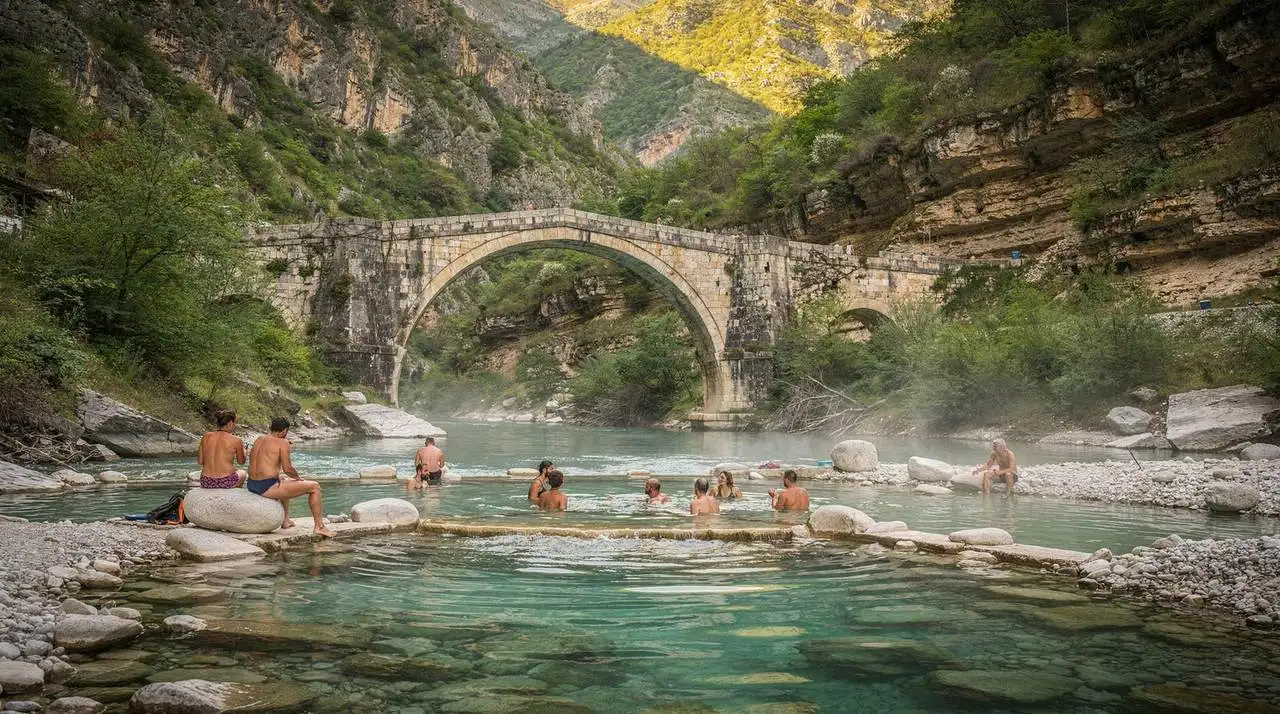
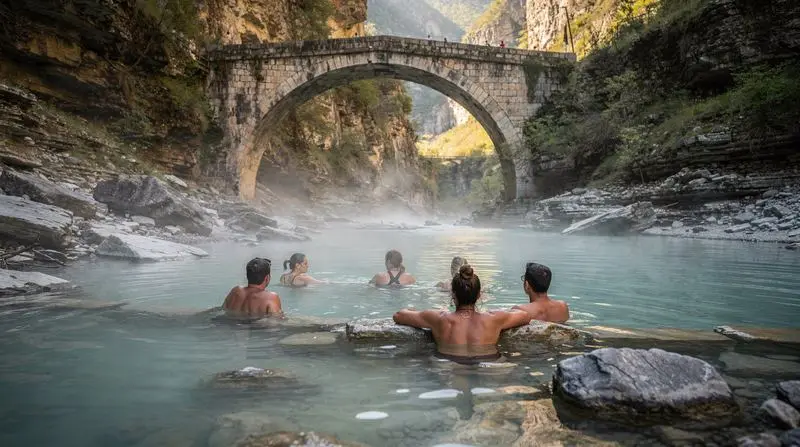
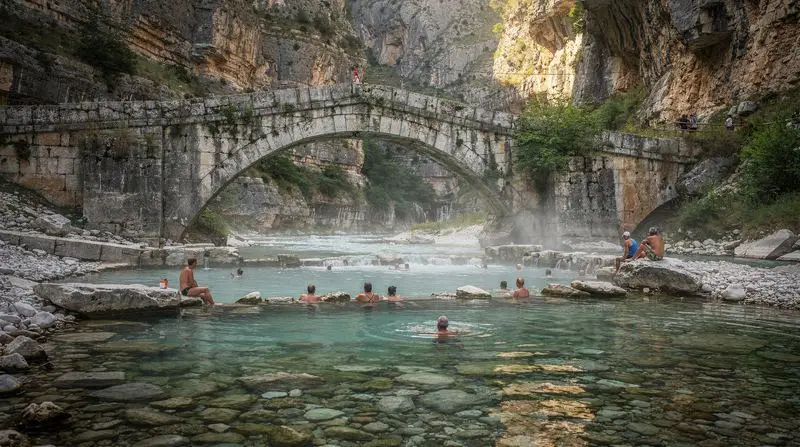
The combination of setting and sensation at Benja is extraordinary. The gorge walls rise steeply on both sides of the narrow valley. The water in the pools is warm but not hot — warm enough to be genuinely therapeutic, to relax muscles and ease tension, but not the scalding 40+ degree water of purpose-built spa facilities. Immediately alongside the thermal pools, the Langarica River runs cold and clear from the mountains, providing the counterpoint to the warm spring water: the combination of hot spring and cold river plunge is one of the great physical pleasures of travel in southern Albania.
Above the pools, spanning the gorge at a higher elevation, stands the Ottoman-era Kati Bridge — a single-span stone arch of the kind that medieval Albanian builders perfected in mountain river crossings. The bridge is both a historical monument and a compositional element in what is already a perfect landscape: the stone arch, the gorge walls, the thermal pools below, and the clear mountain sky above.
Access is free. There are no changing rooms, no facilities beyond the pools themselves, and no organised infrastructure for the visit. This is one of the most accessible and most rewarding natural attractions in Albania, and it remains free and wild.
The Seven Pools
The thermal springs at Benja emerge at several points along the gorge base, collecting into pools that have been partially shaped by stone terracing but remain essentially natural. Seven distinct pools are typically accessible, varying in temperature (the pools closer to the spring source are warmer; more distant pools receive more mixing with the cool river water and are cooler), depth, and character.
Hottest pools (near the source): The closest pools to the main spring emerge at around 34-35°C. These are genuinely warm — not hot-tub hot, but warmer than any reasonable person expects a natural Albanian river gorge to be. Staying in for 15-20 minutes is comfortable before the heat starts to register.
Medium pools: The majority of the seven pools fall in the 29-33°C range — the most therapeutic and most comfortable for extended soaking. Most bathers settle here for the bulk of their visit.
Cooler edge pools: Where the thermal water has most thoroughly mixed with the cold river, the pools are closer to 26-28°C — still above ambient river temperature, still noticeably warm, and the most comfortable for swimmers who find the hotter pools too intense.
The pool configuration changes over time as the spring flow varies and the stone terracing is occasionally modified. The general geography — a sequence of pools stepping down toward the river with the gorge walls rising above — remains constant.
The Cold River Plunge
Immediately alongside the thermal pools, the Langarica River flows cold and clear. The contrast between the thermal water (29-35°C) and the mountain river (12-16°C in summer, colder in spring) creates the classic hydrotherapy cycle that makes hot spring bathing in natural settings distinctly different from spa hot tubs.
Moving from the thermal pool to the river and back again — the alternation of heat and cold — produces a circulatory response that many bathers find genuinely invigorating and physically restorative. The sensation of cold mountain water immediately after the thermal heat is striking and becomes addictive over the course of an afternoon visit.
The Langarica at the Benja site is also simply beautiful — clear water over rounded pebbles, the canyon visible upstream and downstream, and the warm afternoon light in the gorge creating a play of colour on the water surface that is worth sitting and watching even without bathing.
The Ottoman Kati Bridge
The medieval single-arch stone bridge spanning the Langarica gorge above the thermal pools is one of the finest examples of Ottoman-era bridge construction in Albania. These bridges — built throughout the Albanian highlands from the 15th through 18th centuries as trade and military route infrastructure — are one of the most distinctive features of the Albanian mountain landscape.
The Kati Bridge is a masterwork of the form: a single pointed arch of cut limestone spanning the full width of the gorge, with the stone foundations bedded directly into the canyon walls. The engineering required to construct a bridge like this — without modern materials, with the gorge walls as the only abutment — reflects a mastery of traditional stone construction that has few contemporary parallels.
The bridge is accessible by a short path from the thermal pool area and is worth crossing and re-crossing for the different perspectives it offers: looking down into the gorge and the pools below, looking upstream through the canyon, and the view back down the valley toward the Vjosa.
Getting to Benja Thermal Baths
The thermal baths are located 14 kilometres south of Permet in the Langarica River valley. The drive from Permet follows a valley road and takes approximately 20-25 minutes by car.
By car or taxi from Permet: The most common approach. Taxis from Permet to Benja and back can be negotiated; agree a return time as taxis waiting at the springs are not guaranteed.
Organised tours: Local operators in Permet offer guided excursions to Benja, often combined with other activities. This guided Benja Thermal Baths tour from Permet covers transport to the gorge and provides local context about the spring’s geological and cultural history — an excellent option for visitors who want the story alongside the experience.
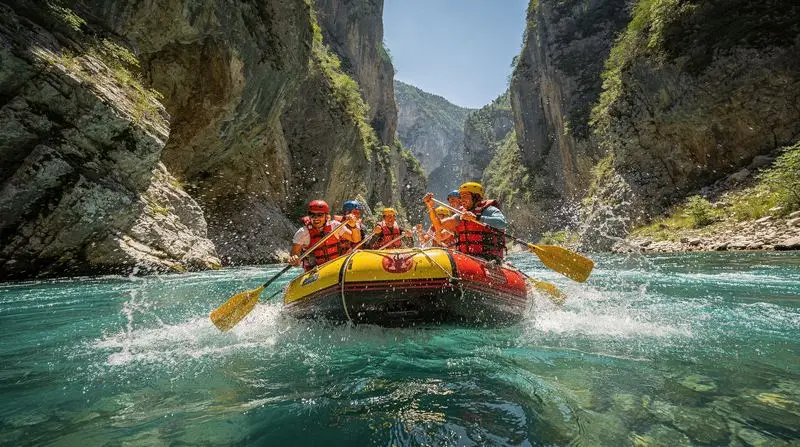
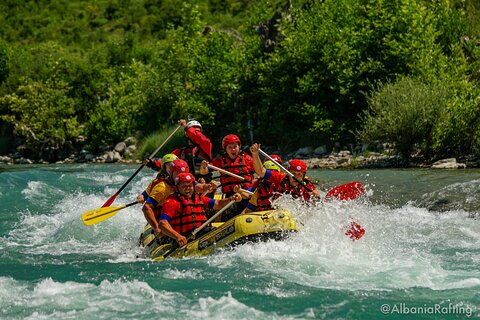
Combined with Vjosa rafting: For the perfect southern Albania active day, combine morning rafting on the Vjosa National Park near Permet with an afternoon soak at Benja. The contrast between the physical intensity of whitewater rafting and the relaxation of the thermal pools makes this one of Albania’s best single-day adventure combinations. A specific tour operator runs this combination: this Vjosa rafting and Benja thermal baths tour handles all logistics for both activities in a single day.
Walking: The walk from Permet along the Langarica valley to the springs is possible in 2-3 hours each way on a well-used path through the valley floor. This extends the day significantly but provides a deeper engagement with the landscape.
What to Bring
Swimwear: Essential. There are no changing rooms at the springs; bring something you can put on at the car/taxi and walk to the pools.
Towel: Bring your own — no towels or facilities are available at the springs.
Water shoes or old sandals: The rocks around the thermal pools are slippery with mineral deposits. Footwear that can be worn in water makes movement between pools significantly easier.
Water and snacks: There is no cafe or food supply at the springs themselves. Bring adequate water (the spring water is not for drinking) and snacks for an afternoon visit.
Sun protection: The gorge provides some shade but the midday sun reaches the pools directly. Sunscreen for the parts not in the water.
Change of clothes: Dry clothing for the return journey. The springs are messy with mineral deposits; the thermal water leaves a slight residue on swimwear.
Entry and Costs
Entry to the Benja thermal springs themselves is free. There is no ticket booth, no entrance fee, and no infrastructure beyond the pools. A small parking area at the trailhead charges a nominal parking fee (typically 100-200 ALL), though the area is free to enter on foot.
This is one of Albania’s finest free natural attractions, and the lack of commercial development is part of what makes it extraordinary. Bring cash for the parking and nothing else is required.
Best Times to Visit
Weekday mornings (April-June): The quietest, best-light, and most uncrowded combination. Spring weekday mornings see the thermal pools at their most undisturbed — occasionally empty for short periods — with the gorge in spring flower and the water flow at its most vigorous.
Summer weekdays: July and August bring weekend crowds of Albanian families that can fill the pools to capacity. Weekday visits in summer are substantially quieter than weekends.
Autumn (September-October): Excellent combination of warm enough weather for comfortable bathing, autumn colour in the gorge vegetation, and greatly reduced visitor numbers compared to summer. The water temperature in the pools is stable year-round (geothermal heat is constant); the air temperature drops but remains comfortable for bathing through October.
Spring (April-May): The most beautiful season at the gorge — wildflowers on the canyon walls, the first warm days after winter, and the snowmelt-fed river running at its clearest. The pools are available but morning temperatures require commitment for the cold river plunge.
Winter (November-March): The springs are warm year-round, but cold air and the absence of direct sun make winter bathing a hardcore experience. A small number of enthusiasts come specifically in winter for the surreal combination of snow-dusted gorge walls and warm thermal water.
The Gorge Walk
The path from the parking area to the thermal springs follows the Langarica River through the lower sections of the gorge for approximately 1.5-2 kilometres. The walk takes 20-30 minutes and is straightforward for most fitness levels.
The path passes through oak and plane tree forest before opening onto the limestone gorge section where the springs emerge. The geological transition — from forested valley to open limestone canyon — is abrupt and dramatic, and the first sight of the thermal pools with the canyon walls rising above them is one of those arrival moments that rewards the approach.
A suspension footbridge over the Langarica provides access to the south bank and the main pool area. The bridge sways satisfyingly and provides an excellent vantage point over the river before the thermal pool area.
Comparing Benja with Other Albanian Thermal Sites
Albania has several thermal spring sites, but Benja is consistently rated the finest by visitors and in comparative guides. The Albania thermal baths guide provides a comprehensive comparison of all the main sites in the country.
Benja’s advantages over other Albanian thermal sites:
- Natural setting: The limestone gorge and Ottoman bridge create a setting no other Albanian thermal site can match
- Water quality: The spring water at Benja is clean and well-mineralised
- Cold river access: The immediate proximity of the cold Langarica river enables the classic thermal/cold contrast that single-pool facilities cannot provide
- Free entry: While most commercial spa facilities charge EUR 5-15 for pool access, Benja is free
- Accessibility: 14 km from Permet on a paved road — more accessible than many comparable sites
The Llixhat e Elbasanit (thermal baths near Elbasan) are Albania’s other notable hot spring site, more developed and more easily accessible from Tirana but less beautiful and lacking the gorge setting.
Thermal Bathing Etiquette
The Benja springs are a shared natural resource, and basic etiquette improves the experience for everyone:
- No soap or shampoo in the pools: The mineral water and the gorge ecosystem do not benefit from detergents. Wash at accommodation, not at the springs.
- No rubbish: Pack all waste out. The gorge has no rubbish facilities; everything brought in should be taken back.
- Share the pools: The most popular pools fill quickly on busy days. Moving between pools and allowing others access to the best spots is standard practice.
- Quiet in the gorge: The natural acoustics of the canyon amplify sound. Keeping noise to a conversational level is appreciated by others and adds to the meditative quality of the experience.
Permit as a Base for Benja Visits
Permet is the perfect base for the Benja visit. The town is 14 kilometres north, provides all necessary accommodation, restaurants, and activity operators, and positions you for both the thermal baths and the Vjosa rafting in the same trip.
Permet’s own charms — the City of Flowers title, the local wine and raki tradition, the proximity to Gjirokastra — supplement the thermal bath experience and make a two-night stay at Permet one of the best short itineraries in southern Albania. The Albania off the beaten path guide includes the Permet-Benja circuit as one of the top five off-mainstream experiences in the country.
The Geology of the Benja Springs
The thermal springs at Benja are heated by deep geothermal processes associated with the active tectonics of the Albanian mountain belt. The Dinaric Alps — the mountain chain of which the Albanian mountains are the southern extension — remain geologically active, with crustal heat flow significantly elevated above the global average in several areas.
The water that emerges at Benja fell as rain and snow on the surrounding highlands, percolated deep into the limestone aquifer, was heated by geothermal energy over the course of its underground journey, and re-emerges at the gorge base where the erosion of the canyon has cut into the aquifer. The journey from rainfall to hot spring emergence takes decades, and the water that you soak in at Benja may have entered the rock as precipitation forty or fifty years ago.
The mineral content of the water reflects this deep journey through limestone. The springs are mildly mineralised with calcium bicarbonate — the dissolution product of limestone — plus small amounts of silica, iron, and trace elements absorbed from the rock. This mineral load is not dramatically different from well water in most limestone areas, but it is clean and clear and does not leave the unpleasant deposits on skin that highly sulphurous or iron-rich springs can.
The water’s therapeutic claims — relaxation of muscle tension, improvement of circulation, skin benefits — are consistent with the general evidence for thermal bathing, which is more robust for the circulation and relaxation effects than for more specific medical claims. The heat works; the minerals add modest supplementary effect. The cold river plunge following the thermal soak produces a cardiovascular response — repeated dilation and constriction of peripheral blood vessels — that most visitors experience as invigorating.
The Langarica Canyon Walk
The walk from the parking area to the thermal springs, following the Langarica River through its lower gorge, is itself a worthwhile experience rather than merely a means of reaching the pools. The canyon that the Langarica has cut through the limestone plateau is on a smaller scale than the Osum Canyon, but it has the same geological drama in miniature.
The canyon walls above the path are vertical in the tightest sections, with the pale limestone stained by iron deposits into bands of yellow and rust. Ferns grow from the cliff face where seepage water maintains moisture. The river itself — cold, clear, running over rounded limestone pebbles — is audible before it is visible, and the approach through the forest before the canyon opens is one of the better arrival moments in southern Albanian travel.
The suspension footbridge over the Langarica is the transition point from the forest path to the canyon section and the thermal pool area. The bridge has the characteristic spring and sway of all suspension footbridges and provides an elevated view of both the river below and the canyon section ahead. Pause here for the view before continuing to the pools.
The total walk from the parking area to the farthest pool section is approximately 1.5-2 kilometres. The path is well-trodden but sometimes rocky and uneven; solid footwear for the approach and water shoes for the pools are the appropriate combination.
What Makes Benja Different from Developed Spa Facilities
The comparison between Benja and a commercial spa facility — which invariably involves Benja winning for the experience even when losing on convenience — reveals something important about what makes natural thermal bathing distinctive.
Commercial spa facilities offer controlled water temperature, clean changing rooms, lockers, cafe service, and the full apparatus of a managed wellness industry. What they cannot offer is the setting — the canyon walls, the Ottoman bridge, the cold river running alongside — or the freedom from structure that comes with a genuinely wild thermal site. At Benja, there is no queue, no entry ticket scanning, no timetabled water aerobics class, no noise from other people’s phone conversations because the canyon amplifies ambient sound in a way that discourages phone use.
The combination of warm water, extraordinary natural setting, complete informality, and free access creates a bathing experience that is qualitatively different from commercial alternatives. Regular visitors to upmarket European thermal spas often find Benja more satisfying despite — or because of — the absence of facilities.
The leave-no-trace ethic that the site requires from visitors — bringing all waste out, not using soap or shampoo in the pools, not disturbing the natural character of the gorge — is not an inconvenience but part of what maintains the experience. The site is as good as it is precisely because it has not been developed into a managed attraction, and each visitor’s respect for that condition preserves it for those who follow.
Photography at Benja
The Benja site rewards a bit of planning for photography, since the gorge’s lighting changes dramatically through the day. Midday sun creates harsh shadows in the narrower sections of the canyon, while the hour after sunrise and the two hours before sunset bring softer, more directional light that shows the limestone banding and the water’s color more effectively. The Kati Bridge photographs best from the pool area looking upward, with the stone arch framed against the sky, or from the bridge itself looking down into the pools below.
Waterproof phone cases or simple point-and-shoot cameras handle the mist and splash near the pools better than exposed camera gear; a proper camera bag or dry bag is worth carrying if you plan to shoot from multiple vantage points around the springs. Drone photography is technically possible given the open canyon, but check current Albanian drone regulations before flying, since rules have tightened in protected natural areas — the drone rules guide covers current requirements.
Safety and Practical Cautions
The pools and the walking path are natural, unmanaged terrain, and a few practical cautions matter more than they would at a commercial spa. The rocks around the pools are often coated in a thin mineral film that gets slippery when wet, and several visitors each season slip while moving between pools in bare feet — water shoes genuinely reduce this risk rather than being a nice-to-have. The Langarica River, though shallow near the crossing points, can have a stronger current after heavy rain or spring snowmelt, so check conditions before wading in unfamiliar sections, particularly in April and May.
There is no mobile phone signal in parts of the gorge, and no lifeguard or staff presence at any time, so travelling with at least one other person is sensible, especially outside peak visiting hours. Families with young children should supervise closely around the pool edges, where the transition from shallow to deeper sections is not always obvious. Basic first aid supplies are worth carrying, since the nearest medical facility is back in Permet, roughly 20-25 minutes away by car, and there is no on-site assistance beyond whatever fellow visitors happen to offer.
Visiting With Children or Limited Mobility
Benja is manageable with children, though the site’s informal, unmanaged nature means more supervision is required than at a purpose-built family attraction. The gorge walk from the parking area is flat and well-trodden enough for most children old enough to walk the 1.5-2 kilometres comfortably, and the suspension footbridge is a highlight for most kids rather than a source of anxiety. The pools themselves vary in depth without clear markers, so keeping younger children in the shallower edge pools under direct supervision is the sensible approach.
For visitors with limited mobility, the gorge walk and the uneven, rocky terrain around the pools present genuine obstacles — there is no paved or wheelchair-accessible path, and the final approach to the pools involves stepping over rocks and roots. Travelers with mobility concerns should weigh this honestly against the alternative of the more developed (but less scenic) Llixhat e Elbasanit thermal baths, which have easier access from a paved car park.
Combining Benja With the Wider Vjosa Valley
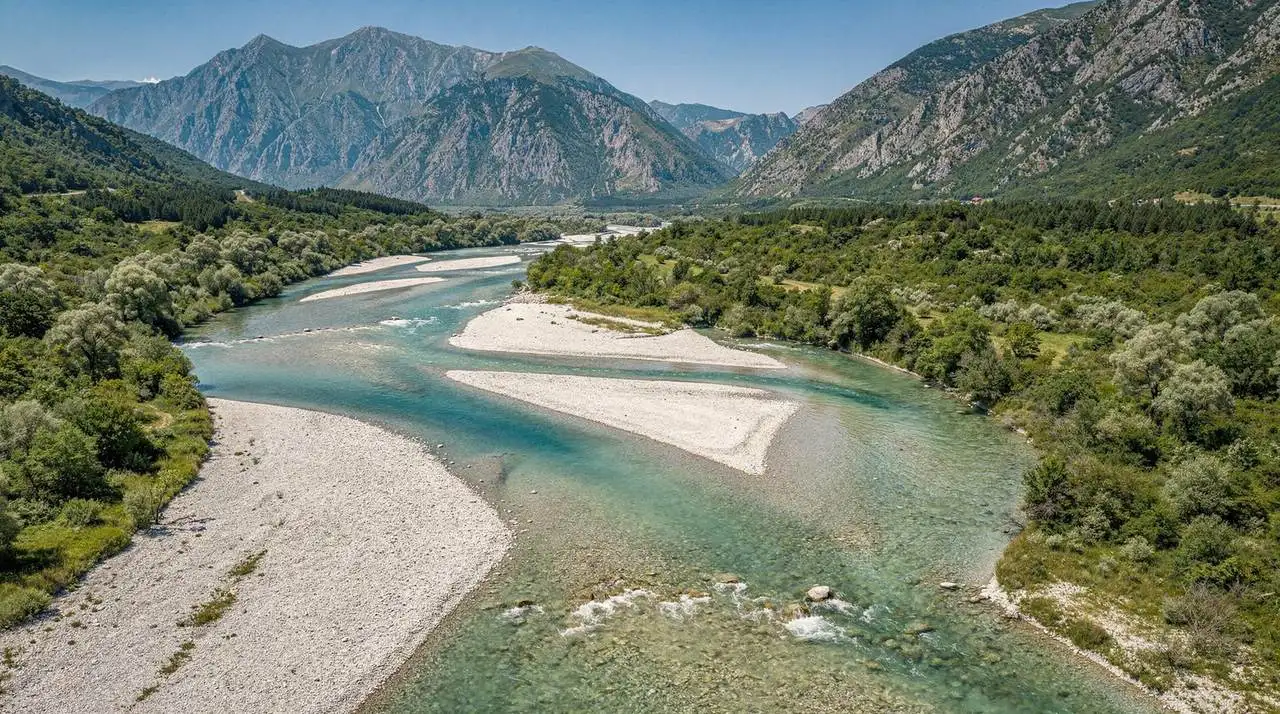
Benja rarely needs to be a stand-alone half-day trip. The Vjosa National Park, one of Europe’s last wild rivers, runs through the valley near Permet and offers rafting, canyoning, and simple riverside walks that pair naturally with a thermal soak — rafting in the morning while the water is cooler and the light is best, then Benja in the afternoon once muscles need the warm water. Travelers with an extra day can extend south toward Gjirokastra, using Permet as a two-night base rather than a single overnight stop. The Albania off the beaten path guide covers how to sequence Permet, Benja, and the Vjosa valley into a broader southern Albania route that avoids retracing the same roads.
Frequently Asked Questions About Benja Thermal Baths
Is entry to Benja Thermal Baths free?
Yes — the thermal springs themselves are free to enter, with no ticket booth or admission fee. A small parking charge applies at the trailhead (100-200 ALL) if arriving by vehicle. There are no paid facilities at the springs: no changing rooms, no lockers, no cafe, no equipment hire. Bring everything you need from Permet or wherever you are based.
How hot are the Benja Thermal Baths?
The pools at Benja range from approximately 29°C to 35°C depending on proximity to the spring source and mixing with the adjacent cold river. The hottest pools (near the source) are at about 34-35°C — comfortably warm but not uncomfortably hot. The majority of the seven accessible pools are in the 29-33°C range, which is optimal for extended soaking. The temperatures are stable year-round as the geothermal source is constant.
How do you get to Benja from Permet?
Benja is 14 kilometres south of Permet on a paved valley road; the drive takes 20-25 minutes. A taxi from Permet can be hired for the return trip; agree on a return time before the driver leaves. Alternatively, a guided tour from Permet includes transport. The walk from Permet through the Langarica valley takes 2-3 hours each way — a full day option for walkers.
Can you combine Benja with Vjosa River rafting in a single day?
Yes — this is one of the best day-trip combinations in southern Albania. Morning rafting on the Vjosa near Permet (2-3 hours on the water), lunch in Permet, and afternoon at the Benja thermal baths creates a genuinely outstanding single day that combines adventure and relaxation. The tour combining both activities handles all logistics and is the simplest approach for visitors without their own transport.
What is the Ottoman Kati Bridge near Benja?
The Kati Bridge is a single-arch stone bridge spanning the Langarica gorge above the thermal pools, built in the Ottoman period (15th-18th century era). It is one of the best-preserved examples of traditional Albanian stone arch bridge construction in southern Albania. The bridge is free to walk across and provides elevated views over the gorge and the thermal pools below. It is also the most photographed element of the Benja site, serving as the compositional centrepiece that combines with the gorge walls and pools for the classic Benja photograph.