Divjaka-Karavasta National Park: Albania’s Lagoon Wilderness
On the Adriatic coast of central Albania, roughly 130 kilometres south of Tirana between the towns of Fier and Kavaja, Divjaka-Karavasta National Park protects one of the most important wetland ecosystems in the Mediterranean. The park covers approximately 22,230 hectares and centres on the Karavasta Lagoon — a 42-square-kilometre coastal lagoon separated from the open Adriatic by a narrow sand barrier beach — that hosts one of the most significant breeding colonies of Dalmatian pelicans in the world.
This is not a polished eco-tourism destination. There are no luxury lodges, no well-signed nature trails with interpretive boards at every station. What there is instead is a genuinely wild place: a vast lagoon shimmering with waterbirds in the morning light, a pine forest thick enough to provide real shade, Adriatic beach stretching in both directions with no beach clubs or development, and the particular pleasure of seeing a globally threatened species in its habitat without other tourists.
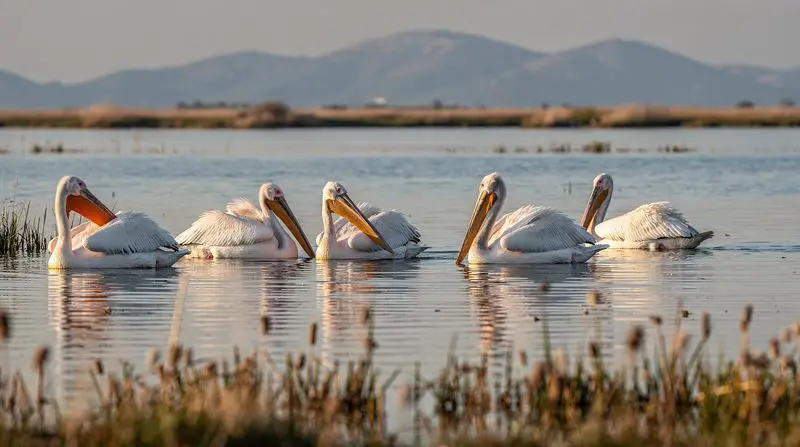
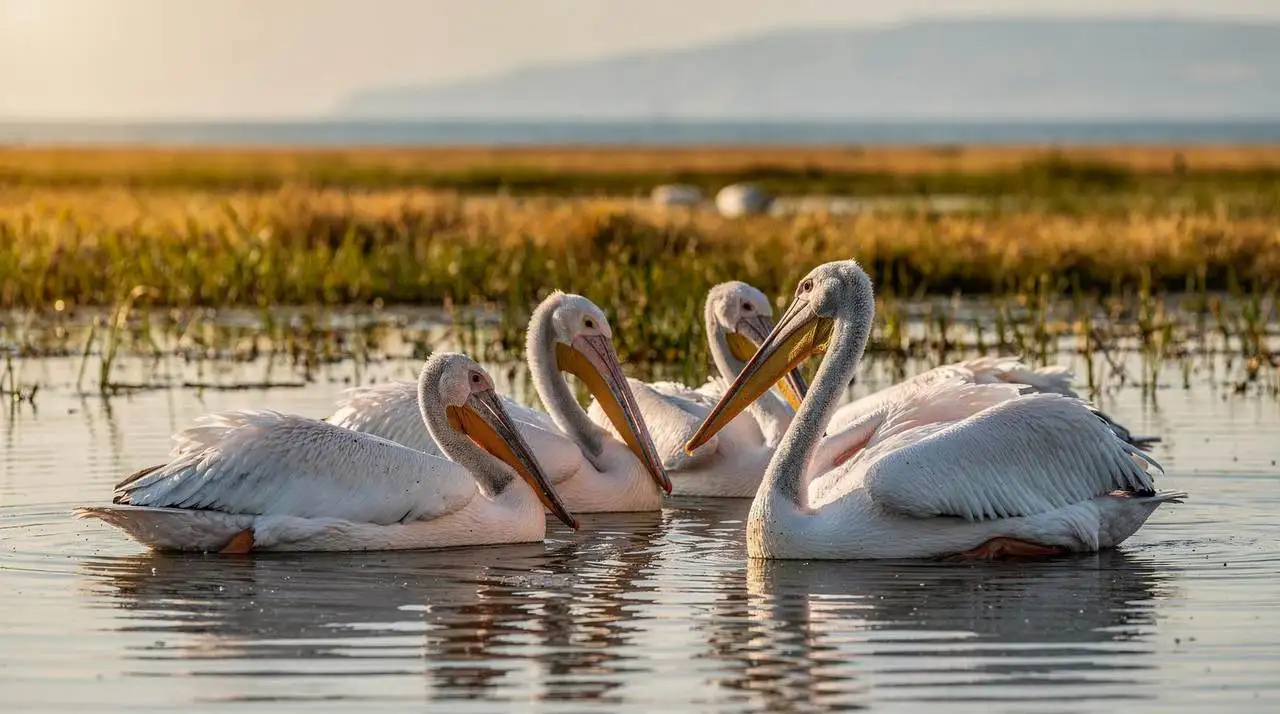
The Karavasta Lagoon’s Dalmatian pelican colony is the star attraction and the main reason ornithologists and nature tourists make the journey here. The Dalmatian pelican (Pelecanus crispus) is the world’s largest pelican species and one of the rarest, with an estimated global population of fewer than 15,000 individuals. The Karavasta colony, which breeds on islands within the lagoon, is one of the most important in the Mediterranean range, making this a genuinely significant wildlife destination by global standards.
| Where | Adriatic coast, ~130 km / 2hrs south of Tirana |
| Getting there | Self-drive, organised day tour, or bus to Fier + local transport |
| Entry | Around 200-300 ALL |
| Best for pelicans | April-June, first two hours after dawn |
| Best for beach | July-August, undeveloped Adriatic sand |
The Dalmatian Pelican Colony
The pelicans arrive at Karavasta Lagoon in late winter and breed through spring, with chicks visible from April through June. The colony size varies from year to year but typically numbers several hundred breeding pairs — large enough to create a genuinely dramatic spectacle when the birds are flying, feeding, or congregating on the lagoon’s central islands.
Watching Dalmatian pelicans in flight is one of those wildlife experiences that exceeds anticipation. The birds are enormous — wingspan up to 3.45 metres, the widest of any living pelican — and their flight has a slow, prehistoric quality that makes them look fundamentally different from the seabirds of more familiar European coasts. Watching a group of them glide low across the lagoon surface in the morning light, their wingbeats synchronised, is the kind of moment that stays in memory.
Boat tours on the lagoon are the best way to observe the pelicans without disturbing the colony. Local fishermen and licensed operators in Divjaka village offer lagoon tours that bring visitors close to the feeding areas while maintaining appropriate distances from nesting sites. The best viewing is from April through June, when breeding activity is at its peak and juvenile birds are beginning to fly. The morning hours — before the midday wind comes up — provide the calmest water and best light for observation and photography.
For a guided visit to the lagoon from Durres that also takes in nearby Apollonia: this day tour from Durres covers Karavasta Lagoon and Apollonia ancient city, combining the natural and archaeological highlights of the central Albanian coast in a single well-organised day. This is the most efficient option for visitors based in Tirana or Durres who want to see the lagoon without renting a car.
Other Bird Species
While the Dalmatian pelicans are the headline act, the Karavasta Lagoon supports an exceptional diversity of waterbirds that makes it one of the premier birdwatching sites in the Balkans.
The lagoon’s shallow and deep-water habitats support:
- Greater flamingoes (Phoenicopterus roseus): present seasonally, often in substantial flocks
- Pygmy cormorant (Microcarbo pygmeus): one of the most important populations in the Mediterranean
- Glossy ibis (Plegadis falcinellus): feeding in the lagoon shallows
- Purple heron (Ardea purpurea) and grey heron (Ardea cinerea): common throughout
- Little egret and great white egret: conspicuous year-round
- Spoonbill (Platalea leucorodia): regular visitor
- Various wader species during migration: the lagoon sits on the Adriatic flyway
The pine forest between the lagoon and the beach supports a separate woodland bird community including several owl species, woodpeckers, and the dense scrub that shelters migrating warblers during spring and autumn passage. Serious birders may need two full days to do the site justice.
The best birdwatching seasons are spring (April-May) for breeding and early summer activity, and autumn (September-October) for migration. The Albania birdwatching guide covers the national context and explains why Albania — still little known as a birding destination — holds some of the most important populations of several Mediterranean and Balkan species.
The Pine Forest and Beaches
Divjaka-Karavasta is not only a birdwatching destination. The Divjaka pine forest — a substantial woodland of Aleppo and stone pines that separates the lagoon from the Adriatic — is a genuinely lovely landscape in its own right, with cool shade under the canopy that makes summer walks here far more pleasant than the exposed beaches further south.
The beach on the seaward side of the forest is among the longest undeveloped stretches of Adriatic beach in Albania. No beach clubs, no sunbeds and parasols for hire, no organised facilities — just a wide, flat beach of fine sand backed by the pine forest, with the Adriatic extending west. In July and August, the beach attracts Albanian families who camp in the forest or in simple bungalows in Divjaka village, but the scale of the beach means it never feels crowded.
For Albanian families from Tirana, Fier, and the surrounding lowlands, Divjaka is a traditional summer holiday destination that predates the development of the Riviera as a mass tourist destination. There is a nostalgic quality to the place — the pine forest, the simple accommodation, the campfire evenings — that speaks to a particular kind of Albanian summer that has largely been replaced elsewhere by more commercial beach culture.
Apollonia: The Archaeological Complement
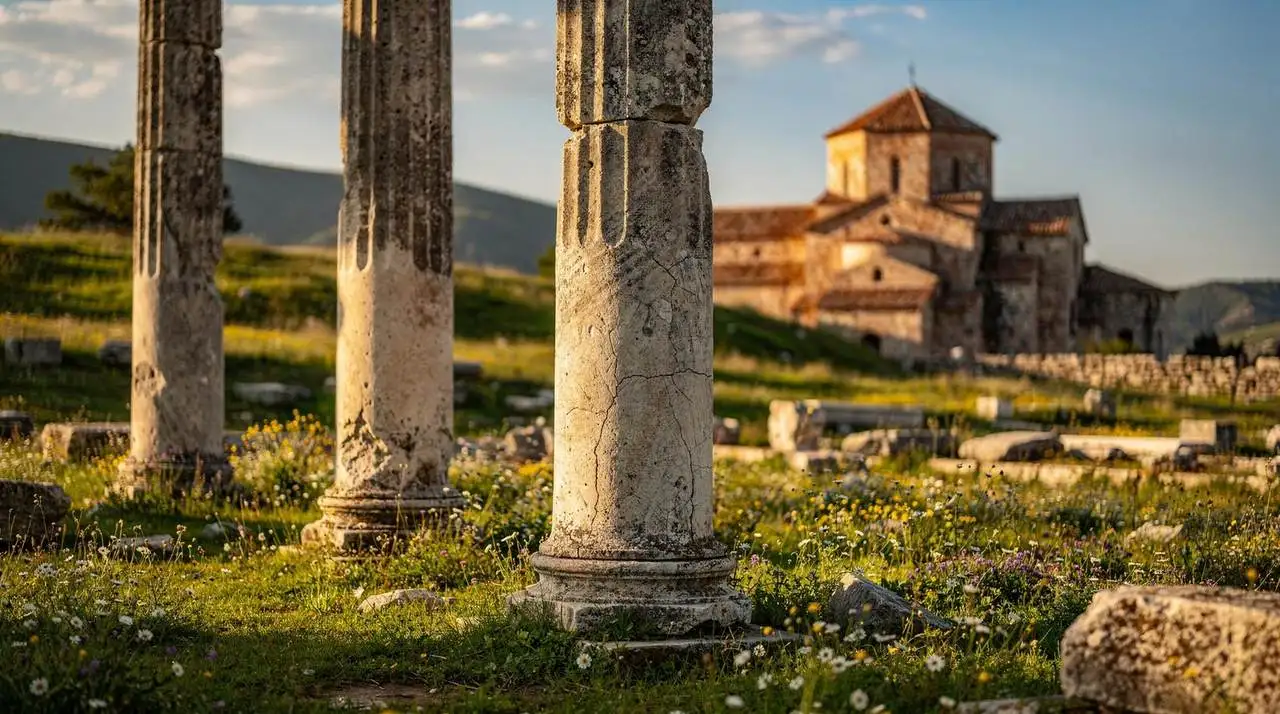
Divjaka-Karavasta pairs naturally with a visit to Apollonia, the ancient Greek and later Roman city whose ruins stand on a hill near Fier, approximately 20 kilometres south of the park. Apollonia was one of the most important cities in the ancient Adriatic world — Julius Caesar wintered his troops there during the civil war — and the archaeological site, with its substantial ruins, excellent museum, and beautiful setting in olive groves, is the finest ancient site in this part of Albania.
The combination of Karavasta Lagoon (pelicans, birdwatching, lagoon boat tour) and Apollonia (ancient ruins, museum) makes for a full and varied day from Tirana or Durres, and this is precisely the combination offered by organised day tours. The distance between the two sites is about 20-25 kilometres, manageable within a single day with an early start.
Getting to Divjaka-Karavasta
The park is located on the Adriatic coast, approximately 50 kilometres southwest of Durres and 130 kilometres from Tirana. Access options:
By car: The drive from Tirana takes approximately 2 hours via the A2 motorway toward Fier, turning west toward Divjaka. The road into the park area is paved and passable by standard vehicles.
By bus: Buses run from Tirana and Durres to the town of Fier, and from Fier local transport connects to Divjaka. The journey requires patience and connections; allow at least 3 hours from Tirana.
Day tour: The most practical option for visitors without cars. This organised tour from Durres combines the lagoon and Apollonia with transport included, making it by far the simplest approach for independent travellers.
Where to Stay
Divjaka village, just outside the park, has a range of accommodation options from simple guesthouses to holiday bungalows that cater primarily to Albanian domestic tourists. The standard is basic but adequate, and the prices are very low by any standard. For a more comfortable base with better dining options, Fier (20 km south) or Kavaja (35 km north) have a wider range.
For visitors primarily interested in birdwatching, staying in Divjaka village itself allows early morning access to the lagoon before the light changes, which is the best strategy for pelican observation and photography. Arriving at the lagoon shore at dawn — possible only if you are already in the village — gives an experience of the waterbirds that mid-morning arrival cannot replicate.
Practical Information
Park entrance: A small entrance fee applies (typically 200-300 ALL per person). The park infrastructure is basic — there is a visitor centre of sorts in Divjaka, a couple of marked walking trails, and a lookout point over the lagoon.
Boat tours: Available from local fishermen and operators in Divjaka village. Prices are negotiable; expect to pay EUR 10-20 per person for a lagoon tour depending on duration and group size.
Best birdwatching time: April through early June for breeding season. Arrive early — the lagoon is most active in the first two hours after dawn.
What to bring: Binoculars are essential for serious birdwatching. Insect repellent is strongly recommended for lagoon-edge areas, particularly in summer evenings. Sunscreen for the beach. A light jacket for early morning lagoon visits.
Swimming: The Adriatic beach at Divjaka is suitable for swimming in summer. The lagoon itself should not be entered — it is a protected area and access by swimming would disturb the wildlife.
Currency and cash: As with most rural Albanian destinations, cash is the norm for the park entrance fee, boat tours, and small guesthouses in Divjaka village. Withdraw lek before leaving Tirana, Durres, or Fier, since ATM access within the park area itself is unreliable. See our Albania travel budget guide for broader cost planning across a central Albania itinerary.
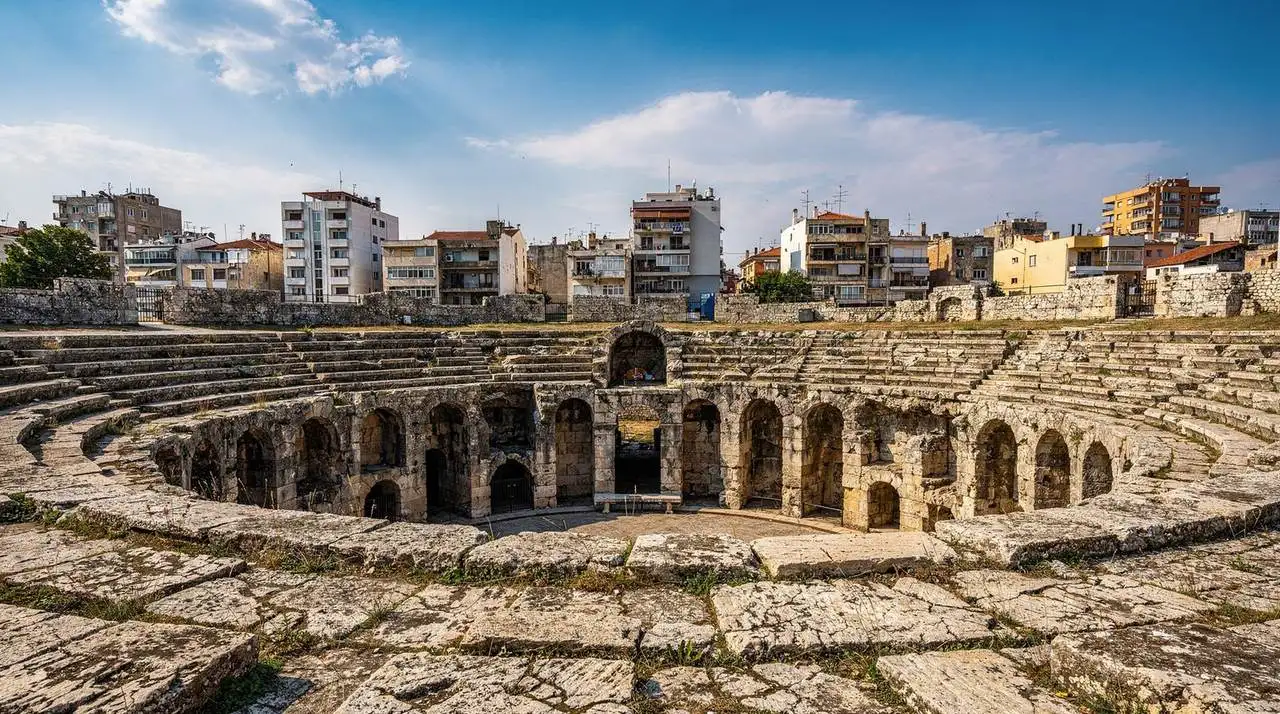
Combining with a road trip: For travelers with a rental car exploring central Albania beyond a single day trip, Divjaka-Karavasta fits naturally into a loop that also takes in Durres’s Roman amphitheatre and the coastal towns further south. Our Albania road trip guide covers how to sequence stops like this one along the central Adriatic coast.
For families visiting with children, the combination of beach, pine forest, and pelican boat tour makes Divjaka-Karavasta one of the most engaging family destinations in central Albania. The Albania family travel guide covers the practical considerations for travelling with children in this region.
The Lagoon Ecosystem in Detail
The Karavasta Lagoon’s ecological value derives from the combination of its physical characteristics and its position in the broader Adriatic coastal landscape. The lagoon is a coastal lagoon — separated from the open sea by a narrow sand barrier — with depths averaging 0.5-1.5 metres across most of its area. The shallow water warms quickly in spring, creating productive feeding grounds for waterbirds before the open sea has reached comparable temperatures.
The water chemistry reflects the mix of fresh water (from the Shkumbin and Seman rivers draining into the lagoon system) and salt water (from tidal exchange through the lagoon mouth). This brackish intermediate zone creates conditions different from both fresh water and open sea, and the specialised species that exploit it — including several of the waterbirds that make Karavasta significant — are often particularly threatened globally because this habitat type has been drastically reduced across the Mediterranean coast by drainage, development, and water management.
The reed beds within the lagoon — extensive areas of Phragmites australis and Typha, the standard European reed and bulrush — provide the dense emergent vegetation that waterbirds require for nesting and roosting. The Dalmatian pelicans nest on reed-island platforms within the lagoon. The pygmy cormorant roosts in the reeds. The purple heron, bittern, and little bittern — all reed-bed specialists — breed within the lagoon margins.
The sand barrier beach separating the lagoon from the Adriatic is itself an important habitat. The wrack zone, the embryonic dunes, and the open sandy beach are all components of a coastal habitat sequence that becomes increasingly rare on developed Mediterranean coastlines.
The History of Karavasta as a Protected Area
The Karavasta Lagoon has been protected under Albanian law since 1966, making it one of the older nature reserves in the country — the designation predating the collapse of communism and the subsequent changes that affected most Albanian institutions. The communist period’s isolation actually benefited the lagoon in ecological terms: the absence of development pressure and the restriction of access that characterised communist Albania left the lagoon substantially undisturbed.
The park’s boundaries were expanded and formalized after 1991, and international conservation organisations including the WWF and various European bird protection bodies have been involved in supporting the park’s management. The Italian government provided some funding for wetland protection initiatives in the 1990s and 2000s, part of the broader Italian involvement in Albanian environmental management during the post-communist transition.
Today the park faces the contradictory pressures common to protected areas in developing countries: increased visitor numbers (positive for income generation), inadequate management resources, and surrounding land-use changes (agricultural intensification, water extraction) that affect the lagoon’s water quality and level. The pelican colony’s annual productivity — chicks fledged per breeding pair — is monitored as an indicator of overall lagoon health.
The Divjaka Pine Forest in Detail
The pine forest between the Karavasta Lagoon and the Adriatic beach is not simply a backdrop to the water attractions — it is a valuable habitat and a pleasant place to spend time independent of the birdwatching and beach activities.
The forest is predominantly Aleppo pine (Pinus halepensis) with areas of stone pine (Pinus pinea), the characteristic Mediterranean coastal pines of the Adriatic shore. The understorey includes various shrubby plants — juniper, lentisk, and the thorny scrub that provides nesting and roosting habitat for smaller woodland birds.
Walking through the forest in the late morning heat of summer provides a shade that the open beach cannot. The paths through the pines — informal tracks worn by local use rather than signed trails — allow circular walks of an hour or two that cover both the lagoon edge and the forest interior without ever reaching the beach.
The forest is most beautiful at dawn, when the morning light filters through the pine canopy and the air is still cool. At this hour, the bird activity in the forest is at its highest — the residents establishing territory, the migrants that have stopped overnight beginning to feed before continuing their journey. A slow walk through the forest at first light, before the beach tourists arrive, is one of the most peaceful experiences the park offers.
Is Divjaka-Karavasta Suitable for Solo Travelers?
Yes, and it suits independent, self-sufficient travelers particularly well. The absence of crowds and organised infrastructure that some visitors find limiting is, for a solo traveler comfortable navigating without much hand-holding, part of the appeal — a lagoon at dawn with only the birds for company is a genuinely rewarding way to spend a morning alone. The practical challenge is transport: without a car, reaching the park independently requires patience with bus connections through Fier, which makes an organised day tour or a rental car the more time-efficient choice for solo visitors on a tighter schedule. Our Albania solo travel guide covers logistics and safety for independent travel to less-touristed sites like this one.
Photography at Karavasta
The lagoon rewards photographers willing to work around its schedule rather than their own. The first hour after dawn delivers the calmest water, the softest light, and the highest bird activity, all of which fade as the morning wind picks up and the heat builds. A telephoto lens matters more here than at most Albanian destinations, since the pelicans and other wetland species generally keep a respectful distance from the boat, and getting a genuinely striking flight shot usually means patience over multiple passes rather than a single lucky frame. Our Albania photography workshops guide covers other locations around the country suited to wildlife and landscape photography for travelers building a dedicated photography itinerary.
Narta Lagoon: Flamingoes Near Vlora
For visitors coming from or continuing to Vlora, the Narta Lagoon near the city is a secondary wetland site of interest that provides a different ecosystem experience from Karavasta. Narta is smaller and less biologically rich than Karavasta but is notable for its flamingo population — greater flamingoes are present seasonally in numbers that can be spectacular from the road-accessible shore.
The Narta Lagoon also marks the mouth of the Vjosa River, connecting it to the Vjosa National Park story. The river’s free-flowing character from its mountain source ends here at the Adriatic — the terminus of Europe’s last wild river.
Frequently Asked Questions About Divjaka-Karavasta
Can you see Dalmatian pelicans at Karavasta Lagoon?
Yes — the Karavasta Lagoon hosts one of the most important Dalmatian pelican breeding colonies in the Mediterranean. The pelicans are present from late winter through summer, with the peak breeding activity from April through June. Boat tours on the lagoon bring visitors close enough for excellent views and photography. The colony typically numbers several hundred breeding pairs, making sightings reliable during the breeding season.
What is the best time to visit Divjaka-Karavasta?
For birdwatching and pelican observation, April through June is optimal — breeding activity is at its peak, juvenile birds are developing, and the lagoon is at its most active. For beach and pine forest visits, July and August are the main season (warm, sunny, Albanian domestic holiday crowd). For a combination of birdwatching and comfortable temperatures without summer heat, May is ideal. Autumn migration (September-October) is also worthwhile for birders interested in passage species.
How do you get to Karavasta Lagoon from Tirana?
By car, the drive from Tirana takes approximately 2 hours via the Fier highway, then west toward Divjaka. By organised tour, this day tour from Durres includes the lagoon and Apollonia. By public transport, buses run to Fier with local connections to Divjaka, though the journey takes at least 3 hours and requires coordination.
Is Divjaka-Karavasta good for families?
Yes — the combination of beach, pine forest, and pelican boat tour makes it an engaging destination for children. The beach is safe for swimming, the pine forest provides shade and space to explore, and children generally find the pelican boat tour memorable. The park infrastructure is basic, so pack everything you need including food and water for the day. The absence of development that makes the park special also means limited facilities, which requires some preparation for family visits.
Is there accommodation inside the national park?
Accommodation options are available in Divjaka village, just outside the park boundary. These range from simple guesthouses to holiday bungalows, mostly catering to Albanian domestic tourists. Standards are basic and prices are very low. For more comfortable accommodation, Fier (20 km away) has a wider range of hotels. For birdwatchers wanting early morning lagoon access, staying in Divjaka village is strongly recommended.
Do you need your own binoculars, or can you rent them?
Bring your own if birdwatching is a priority — equipment rental is not reliably available at the park, and boat operators generally do not supply binoculars for passengers. A mid-range pair is sufficient for lagoon viewing; serious birders may also want a spotting scope for the more distant pelican colony islands, though this is optional for a casual visit.
Is Divjaka-Karavasta worth visiting if you’re not a birdwatcher?
Yes, though the appeal shifts. Non-birders generally enjoy the undeveloped Adriatic beach, the shaded pine forest walks, and the simple, low-key Albanian domestic holiday atmosphere of Divjaka village — a contrast to the more polished Riviera towns further south. Combining the park with Apollonia for the archaeological interest rounds out a day trip nicely for travelers whose main draw isn’t wildlife.