| Albanian Riviera | Croatian Coast | |
|---|---|---|
| Beach quality | Comparable, more space and solitude | Comparable, better facilities |
| Sunbed cost | Around 3-5 euros | Around 15-25 euros |
| Dinner for two | Around 20-30 euros | Around 40-50 euros |
| Crowds in July-August | Growing but still manageable off the main hotspots | Very heavy, especially the islands and Dubrovnik |
| Best for | Value, wildness, discovery | Infrastructure, iconic towns, reliability |
We want to be upfront about something before we start: we love Croatia. The Dalmatian Coast is stunning, the food is excellent, the islands are beautiful, and Dubrovnik, for all its tourist saturation, is one of the most dramatic walled cities in the world. We are not here to tear Croatia down.
But we have spent significant time on both coastlines, and we think the comparison is worth making honestly, because more and more travelers are asking us exactly this question: we loved Croatia, should we try Albania instead? Or: Albania sounds interesting but is it really comparable?
The answer depends on what you are looking for. So let us break it down.
The Beaches
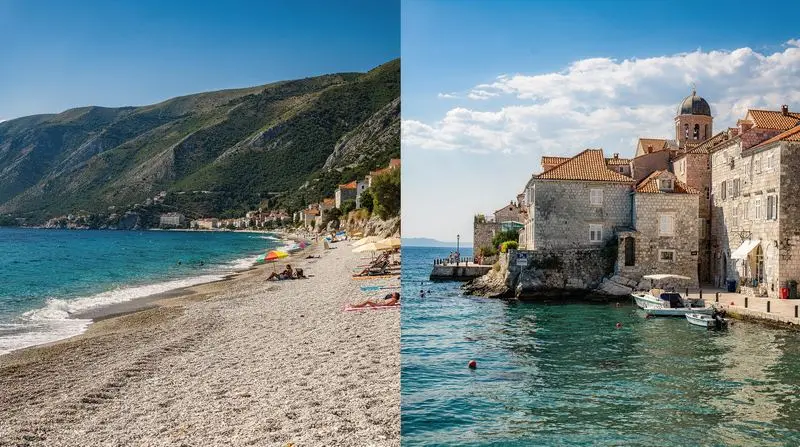
Croatia: The Dalmatian Coast has extraordinary variety — from the smooth-pebble coves of the islands to the rocky bays of the Peljesac Peninsula to the spectacular Makarska Riviera. The water is reliably clear and beautiful. Croatia has invested heavily in beach infrastructure over decades, and it shows: facilities are good, access is often easy, and you always know more or less what you are getting.
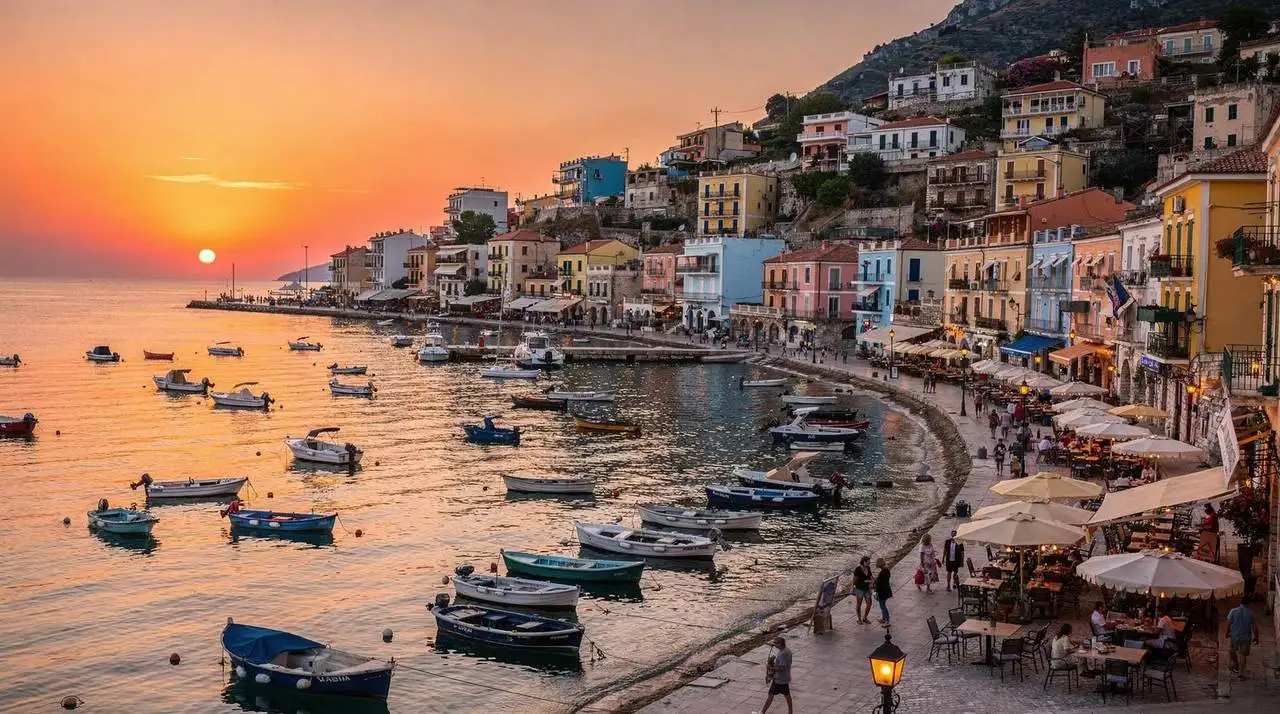
What you also get, in high season, is crowds. July and August on the Croatian coast is a full-contact experience. Hvar town quayside at midnight in August is a nightclub that happened to get built near the sea. The beaches on Brac and Korcula are beautiful but packed. Dubrovnik in summer feels less like a medieval gem and more like a very expensive theme park with a dress code.
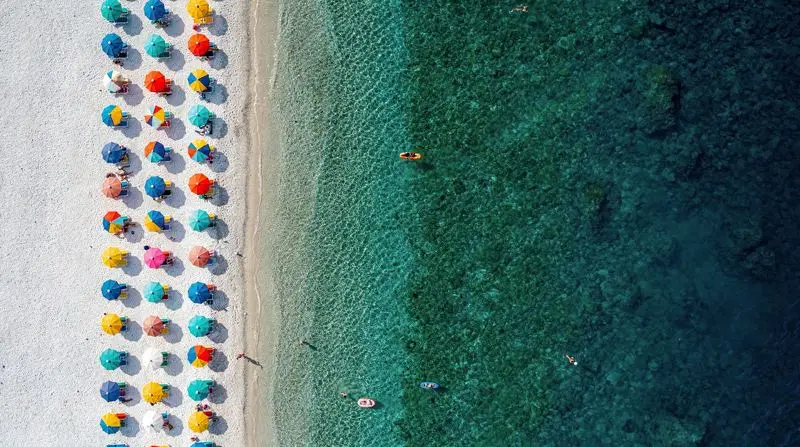
Albania: The Albanian Riviera runs roughly from Vlora south to Saranda, and the beaches here are — we are going to say it plainly — as beautiful as anything Croatia offers. The water has the same clarity and the same palette of blues and greens. The pebble coves and hidden bays between Dhermi and Himara compare favorably to anything on the Dalmatian islands.
The key difference is scale. In July 2020, we sat on a beach at Gjipe — a long sweep of white pebbles at the end of a gorge walk, turquoise water, mountains on both sides — and shared it with perhaps thirty other people. That beach, transplanted to the Croatian coast, would have had three thousand people on it. The volume of tourism the two coastlines absorb is simply not comparable yet.
The Albanian beaches also have fewer facilities in places, which is either a charm or a problem depending on what you want. Some coves require a walk to reach and offer nothing but the beach itself. Others, around Saranda and Ksamil, have sunbeds, beach bars, and restaurants. Our best beaches guide ranks the full Albanian Riviera with honest assessments of each location.
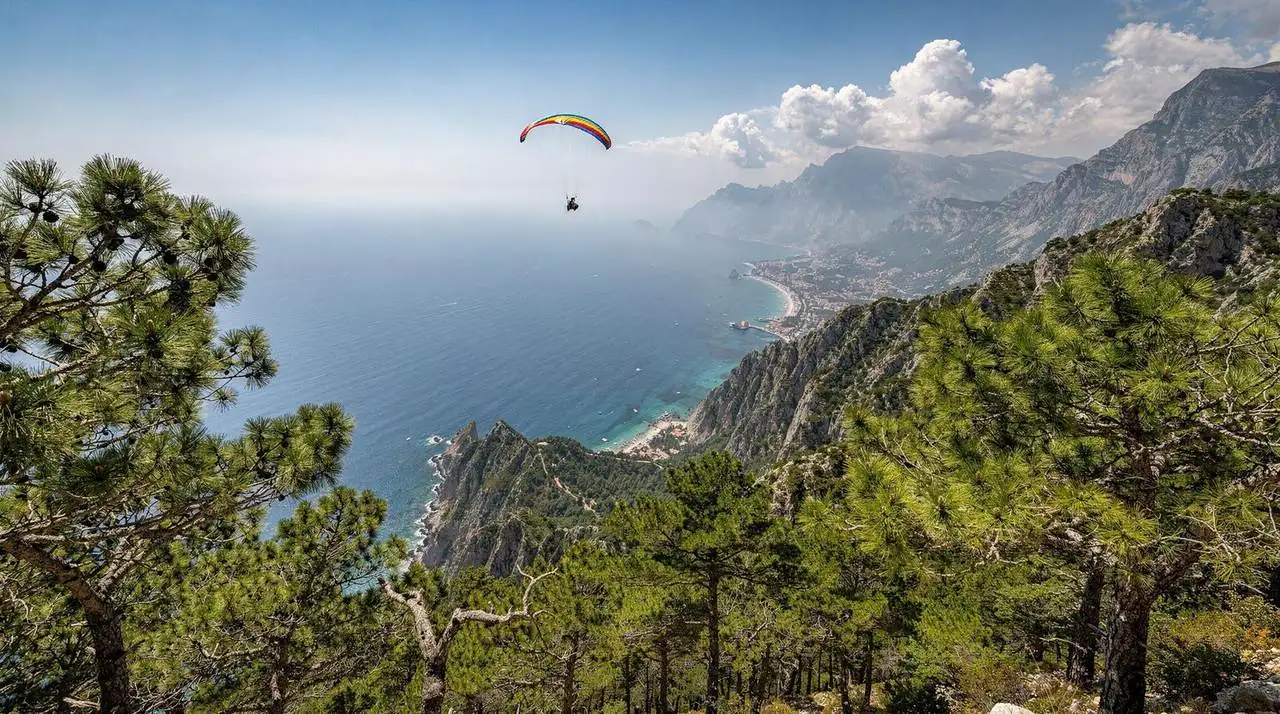
One major Albanian advantage over Croatia: boat tours. Albanian Riviera boat tours from Himara access sea caves and hidden coves along the coast that cannot be reached by road. This kind of discovery is available to boat travellers in Croatia too, but the Albanian coastline has significantly more of it in an accessible form for a much lower price.
Winner on beaches: Broadly comparable in quality, but Albania wins on space, solitude, and the possibility of genuine discovery. Croatia wins on infrastructure and facilities.
The Prices
This is where the comparison becomes dramatic.
In Croatia in peak summer, you will pay fifteen to twenty-five euros for a beach sunbed and umbrella. A basic restaurant meal for two in Dubrovnik — pizza, drinks, no starters — will cost forty to fifty euros. A private room in a decent guesthouse on Hvar in July: eighty to one hundred and fifty euros per night. A car ferry to the islands adds further cost. The totals accumulate rapidly.
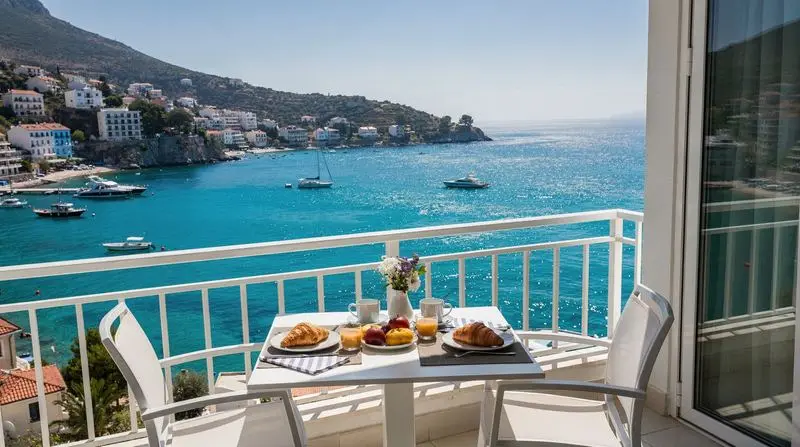
In Albania, a sunbed on the best beaches costs around three to five euros. Our most expensive dinner on the Albanian Riviera — grilled octopus, sea bream, salads, wine, dessert — came to twenty-two euros for two, and that was at a seafood restaurant that would have charged three times as much in Split. Guesthouses in Ksamil and Dhermi in July run twenty-five to fifty euros per night for rooms that are perfectly comfortable and often have sea views.
The gap is not marginal. We calculated that a week on the Albanian Riviera costs us roughly thirty to forty percent of what an equivalent week would cost in Croatia, with comparable or superior beach quality and considerably fewer crowds. This is not a trivial difference — it is the difference between a budget trip and a comfortable one, or between one week and two.
Our Albania travel budget guide breaks down the current costs in detail.
Winner on prices: Albania, by a distance that is genuinely hard to overstate.
The Towns and Culture
Croatia: Dubrovnik is magnificent, but you are sharing it with cruise ship passengers by the thousands. Split is more manageable and genuinely interesting — Diocletian’s Palace is extraordinary, and the city has real life happening inside its ancient walls. The smaller towns like Trogir, Ston, and Korcula are charming and offer a more authentic experience. Croatian food culture is excellent: the wine, the olive oil, the seafood, and the peka (slow-cooked meat and vegetables under a bell) are all worth seeking out.
Albania: Saranda is a pleasant beach town rather than a historic gem, though the remains of ancient Butrint nearby are remarkable. The real cultural riches of Albania require venturing inland: Berat and Gjirokastra are two of the most extraordinary historic cities in the Balkans, and both are UNESCO-listed. Neither is on the coast, but both are within a day trip of the Riviera.
Gjirokastra in particular rewards a guided approach — the history of the stone city is layered and specific. A guided Gjirokastra city tour covers the Ottoman architecture, the castle, and the remarkable domestic houses in a way that makes the city’s extraordinary character comprehensible rather than just visually overwhelming.
The combination of an Albanian Riviera beach holiday with day trips to Berat and Gjirokastra is genuinely superior to what a comparable Croatian coastal trip offers culturally — you get world-class beaches plus UNESCO heritage cities within an easy drive, rather than having to choose between coast and culture. Our 7-day south itinerary structures this combination into a logical route.
Albanian food culture is excellent — the seafood is superb, the olive oil is some of the best we have tasted anywhere, and the tradition of hospitality means you eat well almost everywhere. A Tirana food tour before heading south introduces you to the cuisine properly and makes your restaurant choices everywhere else more confident.
Winner on towns and culture: Croatia wins for coastal town culture and variety; Albania wins if you are willing to look inland and have a genuine appetite for undiscovered places.
The Practical Considerations
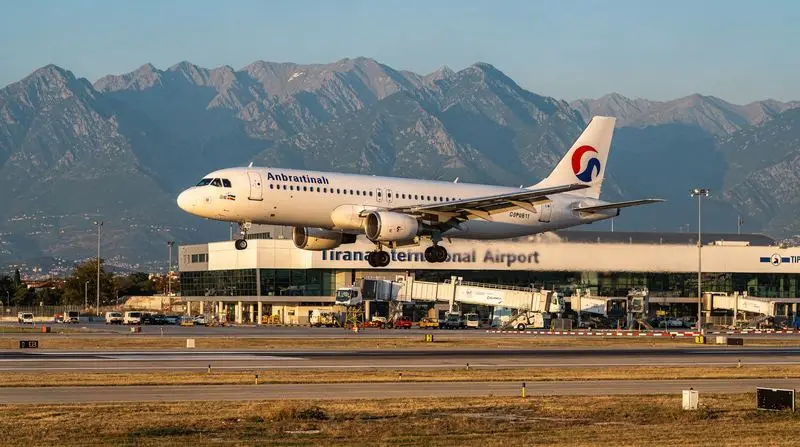
Getting there: Croatia is extremely well-connected by air and ferry from across Europe. Albania has fewer direct flight options, though connections have improved steadily. Tirana has regular flights from many European cities, and the drive or bus from Tirana to the Riviera takes around four to five hours. From Corfu, there is a short ferry crossing to Saranda that takes about thirty minutes — a very easy entry point. Our how to get to Albania guide covers all the options.
Infrastructure: Croatia’s tourism infrastructure is well-developed and reliable. Albania is developing rapidly but remains less consistent. Roads along the Albanian Riviera have improved but some mountain approaches to beaches require a vehicle with decent clearance. Our car rental Albania guide covers what to know about driving the coast.
Language: Both countries present no real language barrier in tourist areas. English is widely spoken in coastal Croatia. In Albania, younger people and anyone in tourism speak English well.
Safety: Both are safe destinations for independent travelers, including solo women. The old concerns about Albania are genuinely outdated. Our Albania safety guide addresses this directly.
The Combined Itinerary
One option that increasingly makes sense is combining both coastlines in a single trip. The Corfu-to-Saranda ferry crossing means you can move between the two countries with minimal friction: fly to Corfu, spend a few days on the Greek island, then take the ferry to Saranda and spend a week on the Albanian Riviera before flying home from Tirana.
This approach lets you compare the experiences directly and gives you the best of both: Croatian island infrastructure and well-developed facilities on one side, Albanian wildness, authenticity, and value on the other.
The Albanian Riviera road trip itinerary covers the Albanian section of this combination.
What About Montenegro, Greece, and Turkey?
Croatia is the obvious comparison because it is the most famous, but it is not the only one worth making. Montenegro’s Bay of Kotor and southern beaches sit geographically between the two, sharing some of Albania’s affordability with more of Croatia’s polish. Greece’s Ionian islands are the closest in feel to the Albanian Riviera — genuinely similar water and light — but at Croatian-level prices and crowds in peak season. Our Albania vs Montenegro guide, Albania vs Greece guide, and Albania vs Turkey guide each break down a different version of this same question, since which comparison matters most depends entirely on what else is already on your shortlist.
The Practical Case for Combining Them
We mentioned the Corfu-to-Saranda ferry as one bridge between the two coastlines, but it is worth being explicit about why this works so well logistically: Corfu and the Albanian Riviera share a coastline separated by a strait you can cross in half an hour, at a fraction of what a flight would cost. This means the “Albania or Croatia” framing of this whole article is, for many travellers, a false choice — the more interesting question is how to sequence both into a single trip rather than picking one. Our Saranda vs Dubrovnik guide looks at the two anchor towns of each coastline directly if you are trying to decide where to base a shorter trip.
The Honest Verdict
If you want a polished, well-organized Mediterranean holiday with great infrastructure, iconic historic towns, and a wide choice of accommodation and restaurants — go to Croatia. It delivers reliably and beautifully.
If you want something wilder, more affordable, less crowded, and more genuinely surprising — go to the Albanian Riviera. You will work slightly harder for your experiences, but the reward is beaches that feel discovered rather than sold to you, food that has not been modified for tourist expectations, and the particular pleasure of being somewhere that has not yet been packaged.
We think Albania is the better story. But we understand that Croatia is the easier one to tell.
Go to Albania if you want to remember a beach holiday forever. Go to Croatia if you want a beach holiday to go exactly as planned.
For us, memorable wins every time.