Winter Albania: A 7-Day Itinerary for the Off-Season Adventurer
Albania in winter is a revelation for travellers who have only heard of it as a summer beach destination. The country’s winter character — snow on the mountains, thermal springs steaming in river canyons, the unique atmosphere of historic cities without summer crowds, and the warmth of Albanian hospitality most visible in the colder months — is genuinely distinct and deeply rewarding.
This seven-day itinerary visits the best of winter Albania: Tirana’s excellent museums and cafe culture, Elbasan’s thermal baths in their most atmospheric cold-weather form, the Korca region with Dardha ski resort and the extraordinary village of Voskopoje, the UNESCO World Heritage city of Berat in its winter best, and the thermal baths of Permet in the Vjosa Valley.
It is an easy to moderate itinerary in terms of physical demands — no long hikes, no mountain crossings, just comfortable travel between genuinely rewarding destinations. A rental car is strongly recommended for flexibility, particularly for the Korca-Dardha and Permet thermal sections.
| Where | Tirana → Elbasan → Korca → Dardha → Berat → Permet |
| Cost | EUR 40–70/night double accommodation, EUR 10–20/person restaurant meals |
| Time needed | 7 days, car recommended |
| Getting around | Rental car for flexibility; public transport possible with more effort |
| Best time | December–February, when skiing and the “steam vs snow” thermal contrast are at their best |
Why Winter Is a Great Time to Visit Albania
No crowds. Albania’s tourist season peaks in July and August. Visit in January or February and you have the UNESCO cities, the mountain villages, and the thermal springs largely to yourself.
Cheaper prices. Accommodation, tours, and restaurant prices in winter are typically 20-40% lower than peak summer rates.
Thermal baths at their best. Soaking in open-air thermal pools surrounded by snow-dusted canyon walls (Permet Benja) or steam rising in the cold air (Elbasan) is an entirely different and arguably superior experience compared to summer visits.
Skiing available. The Dardha ski resort opens in late December, making winter the only time you can ski in Albania.
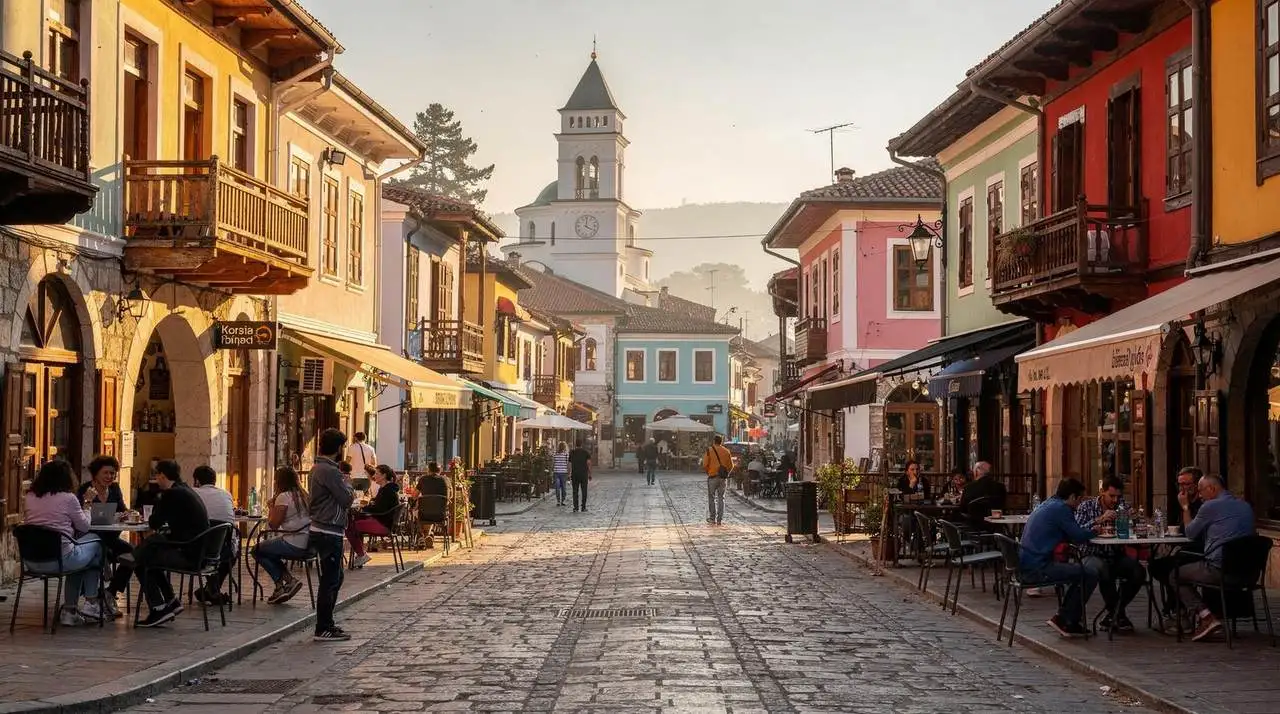
Authentic atmosphere. Albanian cities and towns feel most genuinely local in winter. The cafes are full of Albanians having long conversations over coffee, the restaurants serve seasonal food, and the interaction between visitor and local has a quality that summer crowds dilute.
If you want a wider view of the season before committing, the Albania in winter guide and the Albania in January guide cover what changes month by month, while the winter travel blog post gives a first-hand feel for it. For the thermal side of the trip, the Benja thermal baths guide goes deeper than the day-by-day notes below.
Route Overview
Day 1: Tirana — arrival and city immersion Day 2: Tirana — museums and Blloku district Day 3: Tirana to Elbasan — thermal baths, then onward to Korca Day 4: Korca, Voskopoje, and evening in the city Day 5: Dardha skiing Day 6: Korca to Berat — UNESCO city exploration Day 7: Berat to Permet — thermal baths, then return to Tirana
Day 1: Tirana — Arrival and First Impressions
Arrive in Tirana at Nënë Tereza International Airport and transfer to accommodation in the city centre — Blloku district is ideal for winter, within walking distance of good restaurants and cafes.
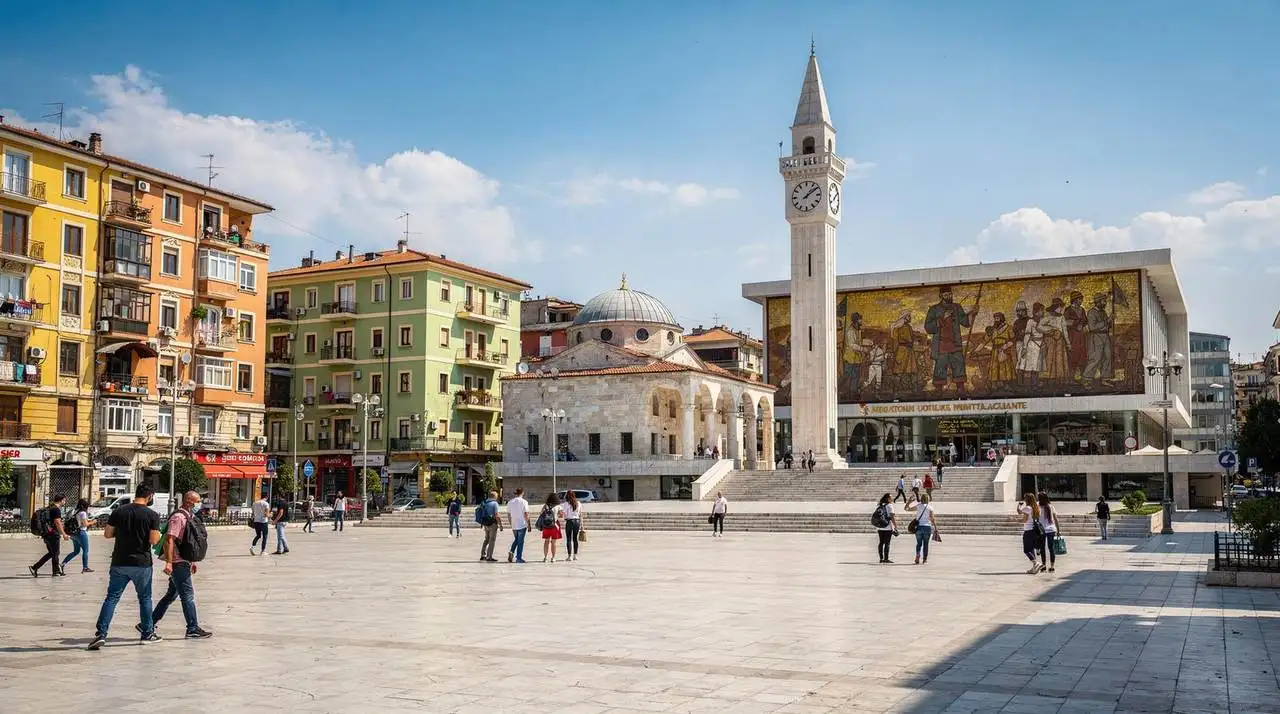
Tirana in winter has a pleasingly un-touristy energy. The outdoor cafe culture migrates slightly indoors but does not disappear — Albanians are serious coffee drinkers regardless of temperature. Take an evening walk through the central Skanderbeg Square, see the Et’hem Bey Mosque (one of few original Ottoman structures that survived Albania’s communist antireligion campaign), and find a traditional restaurant for your first Albanian meal. The Tirana destination guide and the best restaurants in Tirana are useful for choosing where to eat, and if you would rather stay longer in the capital, the 3 days in Tirana itinerary fills in more ideas.
First dinner recommendation: Try tavë kosi (baked lamb with yoghurt — Albania’s national dish), byrek (layered filo pastry with cheese or spinach), and a glass of Albanian red wine. The Blloku area has numerous good options.
Day 2: Tirana — History and Communist Heritage
Tirana’s museums are the most concentrated collection of Albanian cultural heritage in the country. Winter is the ideal time to visit — the queues that form in summer are absent, and you can take your time.
Start with BunkArt 1 or BunkArt 2. These extraordinary museums are built within the vast nuclear bunkers constructed by the communist government of Enver Hoxha — one beneath a mountain outside the city, one in the city centre. They document the paranoia and isolation of the Albanian communist period with photographs, artefacts, and reconstructed interiors that are genuinely moving.
The Tirana communist Albania tour including BunkArt Museum provides a guided context for understanding the period — essential for making sense of the country’s remarkable post-communist transformation.
Afternoon: The National History Museum on Skanderbeg Square is Albania’s largest museum, covering the full sweep from Illyrian prehistory through independence and communism. The Socialist Realist mosaic covering the facade is one of the most striking pieces of public art in the Balkans.
Evening: Explore the Blloku neighbourhood — once reserved exclusively for the communist elite, now Tirana’s most fashionable dining and nightlife district. The contrast is not lost on Albanians.
Day 3: Elbasan Thermal Baths and Onwards to Korca
Depart Tirana by car and head southeast through the Shkumbin Valley. The 90-minute drive to Elbasan passes through classic Albanian highland scenery — terraced hillsides, river valleys, and roadside villages.
Elbasan: Albania’s fourth-largest city has a remarkably intact Ottoman old town within its Venetian-built walls, and the area’s thermal spring tradition dates back centuries. The Llixhat e Elbasanit (Elbasan thermal baths) in the Shkumbin gorge near the city offer healing sulfurous waters — best appreciated in cold weather when the contrast between icy air and warm water is most extreme.
After the thermal bath visit, continue southeast toward Korca — approximately 2 hours driving through the Mokra mountains. This route passes through beautiful highland scenery that, in winter, may include snow-covered passes.
Korca evening: Arrive in Korca in time for evening. This is Albania’s most culturally sophisticated provincial city — the birthplace of Albanian-language education, the site of the first Albanian school, and a city with a restaurant and cafe scene that punches significantly above its size. The Korca brewery tour and tasting (Birra Korca) is a local institution; the brewery produces the most beloved Albanian beer.
Day 4: Korca City and Voskopoje Village
Spend the morning in Korca itself. The National Museum of Medieval Art houses an extraordinary collection of Byzantine and post-Byzantine icons — one of the finest collections in the Balkans and almost unknown to international visitors. The city’s old bazaar area and the National Education Museum (marking the 1887 founding of the first Albanian school) round out the morning.
Afternoon — Voskopoje: Drive approximately 20km southwest of Korca to Voskopoje, a UNESCO-protected village that was once one of the largest cities in the Ottoman Balkans. At its peak in the 18th century, Voskopoje had around 35,000 inhabitants, its own printing press, and a renowned academy. Plague, raids, and Ottoman decline reduced it to the atmospheric ghost of a village it is today.
The surviving 18th-century churches retain extraordinary fresco cycles — particularly the Church of St. Nicholas and the Church of the Holy Trinity. In winter, with snow on the ground and no other visitors, Voskopoje has a melancholic grandeur that is genuinely affecting.
The Voskopoje destination guide and the Korca city guide add background on the churches and the town if you want to plan the day more closely.
Return to Korca for dinner. The city’s restaurant scene warrants exploration — try byrek with spinach, fresh Korca trout if available, and local wine.
Day 5: Dardha Skiing
Drive from Korca to Dardha (approximately 30-40 minutes, last section on mountain road — snow chains may be required, confirm conditions before departure).
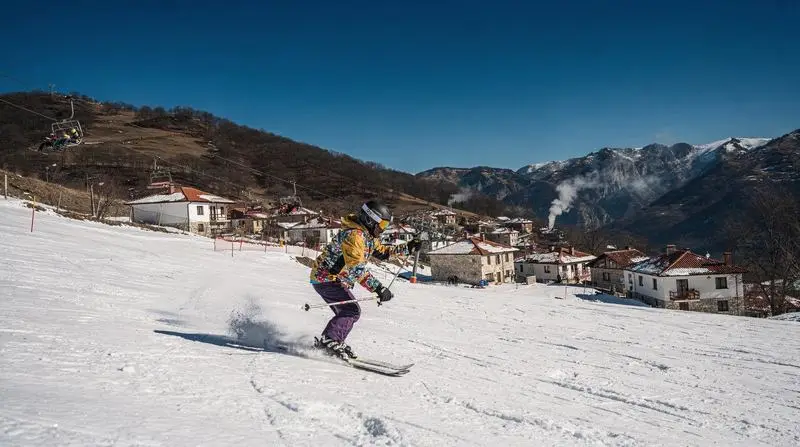
See the skiing Albania guide for full details on the resort, but in brief: Dardha offers multiple drag lifts, groomed runs suited to beginners and intermediates, equipment hire on-site (approximately EUR 10-15 per day), and lift passes at EUR 10-15 per day. The village is beautiful in snow — traditional stone architecture, beech forests, views toward Lake Ohrid.
Even non-skiers enjoy Dardha in winter; the Dardha destination guide describes the village in more detail. Snowshoeing in the forested uplands above the village, walking the village trails, and sitting by the fire in a traditional guesthouse with a glass of raki are perfectly satisfying winter activities without skis.
Evening: Return to Korca for the final night. The city’s winter restaurant and nightlife culture is worth staying up for.
Day 6: Korca to Berat — UNESCO World Heritage City
Depart Korca and drive west and south to Berat — approximately 2.5 hours through the Tomorr highlands. This drive is beautiful in winter when snow caps the higher ridges.
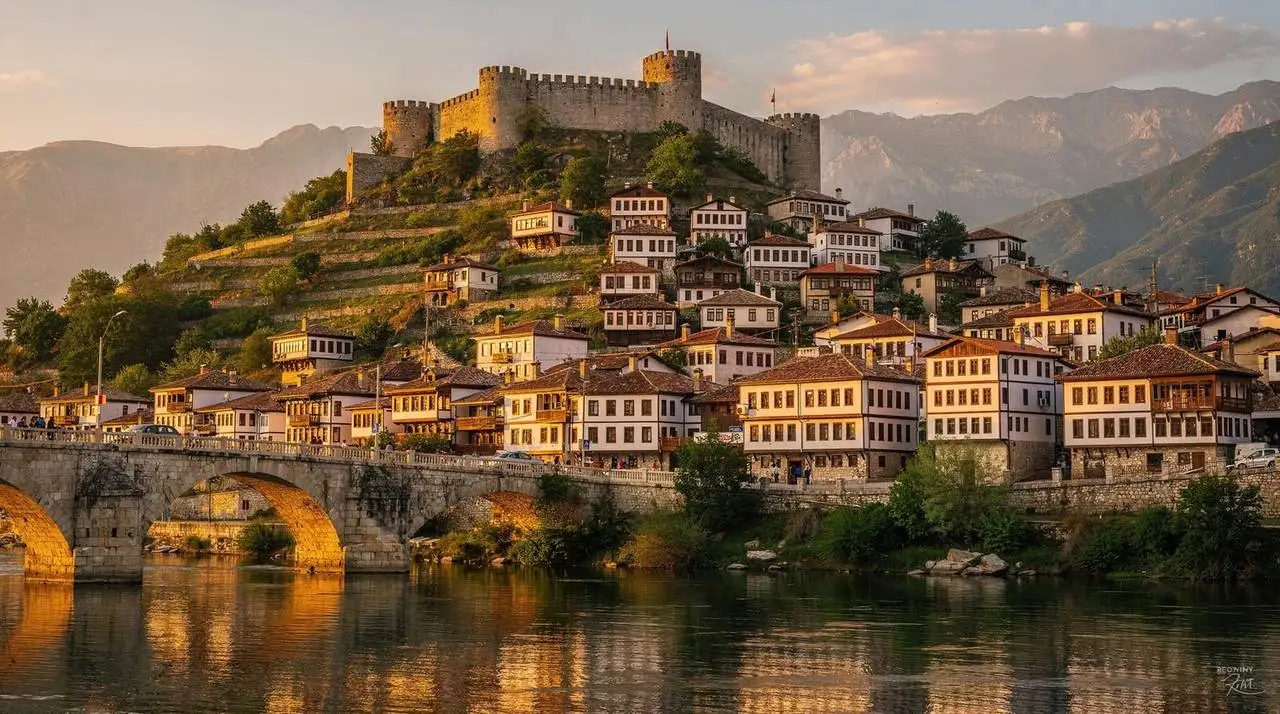
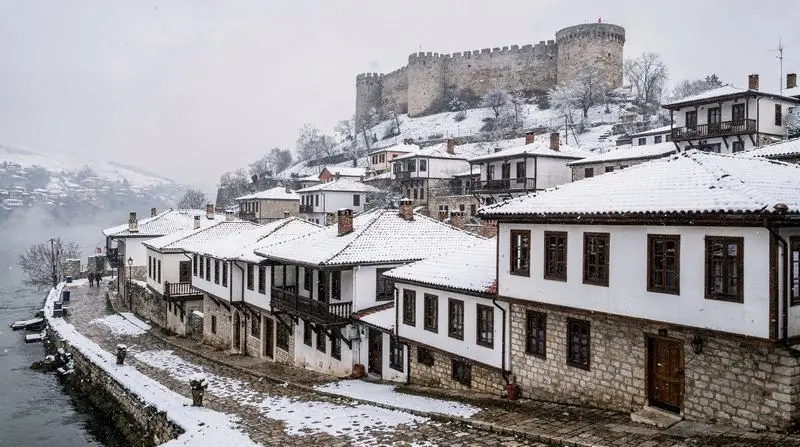
Berat is one of Albania’s two UNESCO World Heritage Sites and one of the most visually distinctive cities in the Balkans. The “City of a Thousand Windows” — its Ottoman-era houses stacked on the hillside above the Osum River, each with its characteristic grid of windows — is remarkable in all seasons, but winter has particular qualities: the reflection of the castle and old town in the river, the absence of summer heat, the golden light of short winter days on the white-rendered Ottoman facades.
What to see in Berat:
- The Kalaja (castle) — a hilltop citadel still inhabited by families, with Byzantine churches and a small museum
- Mangalem quarter — the Ottoman Muslim quarter below the castle, with characteristic bay-windowed houses
- Gorica quarter — across the river, the Christian neighbourhood
- Onufri National Museum inside the castle — icons by Albania’s most celebrated medieval painter
- The Osum River gorge viewpoints
For a place to sleep and eat, see where to stay in Berat and the best restaurants in Berat.
Evening in Berat: The old town restaurants are excellent. Try slow-cooked qifqi (rice-stuffed fried balls, a Berat speciality), grilled meat, and local Berat wine. Cobo Winery is the most prominent local producer.
Day 7: Berat to Permet Thermal Baths and Return to Tirana
The final day combines one of Albania’s most atmospheric natural attractions with the return journey to Tirana.
Drive from Berat south to Permet (approximately 2 hours via the Vjosa Valley). The valley road in winter passes through a landscape of bare poplar trees, river gravel, and the snow-dusted ridges of the Nemerçka and Lunxheria ranges — stark and beautiful.
Permet Benja Thermal Baths: In a limestone canyon of the Lengarica River, 7km from Permet town, the Benja thermal baths are one of Albania’s great natural attractions. The hot spring emerges at around 30-32°C and flows into natural pools in the canyon. In winter — cold air, possibly light snow, steam rising from the warm water — the experience is extraordinary. A medieval one-arched Ottoman bridge (the Katiu Bridge) spans the gorge nearby.
The Permet Benja thermal baths guided tour includes transport from Permet town and local guide context for the canyon, Ottoman bridge, and the thermal spring geology.
After the thermal soak, a lunch in Permet town is essential — the city is the capital of Albanian food identity in many respects, with its roses, gliko (spoon sweets), and traditional cooking. Then begin the return journey to Tirana (approximately 3.5-4 hours driving via the Elbasan valley route).
Practical Information
Getting Around
A rental car is strongly recommended for this itinerary. The Korca to Dardha road, the Voskopoje detour, and the Permet thermal baths are all difficult or impossible without private transport. Rental is available at Tirana airport and city centre offices.
Winter driving in Albania requires care — some mountain roads may require snow chains in January-February, and wet road surfaces demand cautious speeds. The main routes (Tirana-Elbasan-Korca, Korca-Berat) are well-maintained national roads.
Accommodation
- Tirana: Wide range of hotels and guesthouses; the Blloku area is ideal
- Korca: Several well-reviewed hotels and guesthouses in the city centre
- Berat: The old town area has excellent guesthouses within the historical city
Budget
This is a moderate budget itinerary. Accommodation averages EUR 40-70 per night for a double room. Restaurant meals are EUR 10-20 per person. The thermal baths at Permet cost minimal entry fees. Skiing at Dardha adds approximately EUR 25-35 per day.
What to Pack for Winter Albania
Layering matters more than any single heavy item, since this itinerary crosses from mild Tirana to genuinely cold Korca and Dardha in the same week. Bring a warm waterproof outer layer, sturdy shoes with grip for icy pavements in Korca and Dardha, swimwear for the thermal baths (yes, even in winter — you’ll want it under a coat), and gloves for the ski day if you’re renting rather than buying equipment. See the Albania packing list guide for a fuller checklist, and the driving in Albania guide for what winter road conditions actually involve on the Korca-Dardha and Berat-Permet legs.
Comparing This Route to a Summer Albania Trip
| Winter (this itinerary) | Summer | |
|---|---|---|
| Crowds | Minimal at UNESCO sites and thermal baths | Heavy at Berat, Ksamil, the Riviera |
| Prices | 20-40% lower on accommodation and tours | Peak rates, book well ahead |
| Coastal Riviera | Not part of this route — too cold to be the draw | The main summer attraction |
| Unique activities | Skiing at Dardha, snow-and-steam thermal baths | Beach time, boat trips, Blue Eye swimming |
| Driving conditions | Snow chains possible on mountain roads | Straightforward, but hot and busy |
If the coastal Riviera matters more to you than skiing and thermal baths, this winter route isn’t the right fit — pair a summer trip instead with the Albanian Riviera destination guide.
Photography in Winter Light
Winter light in Albania is genuinely different from summer’s harsh midday sun — lower sun angles produce longer golden hours, and the contrast between snow-capped ridges and Berat’s white Ottoman facades is one of the country’s most photogenic combinations. The Mangalem quarter’s “thousand windows” catch particularly good light in the first and last hour of a winter day, with far fewer people in the frame than a summer shot would have. Voskopoje under snow has a genuinely melancholic beauty that summer visitors never see. Bring a spare battery — cold temperatures drain camera batteries noticeably faster, especially during the Dardha ski day and the Benja thermal baths visit, where you’ll want photos of the steam rising off the water against winter air.
Frequently Asked Questions About the Winter Albania Itinerary
Is Albania Safe to Visit in Winter?
Yes. Albania is safe year-round. The main winter-specific consideration is road conditions in mountain areas — snow chains may be needed in January-February for higher roads including the approach to Dardha. Main intercity roads are well-maintained.
Do the Thermal Baths at Permet and Elbasan Operate Year-Round?
Yes. The Permet Benja thermal springs are natural features accessible year-round. The Elbasan thermal baths operate year-round, with peak domestic visitor numbers in winter. Both are open in January and February.
Is Dardha Ski Resort Guaranteed to Have Snow?
No. Dardha at approximately 1,500 metres altitude does not have guaranteed snow cover — like all lower-altitude European resorts, snowfall can be variable. January and February typically have the most reliable coverage. Check local conditions before making Dardha the centrepiece of your trip, and build in Korca city time as an enjoyable alternative if conditions disappoint.
Can I Do This Itinerary Without a Car?
Most elements are possible by public transport with added effort. Tirana has bus connections to Elbasan, Korca, Berat, and Permet. However, Dardha (from Korca by local taxi), Voskopoje (similar), and Benja thermal baths (taxi from Permet) all require private transport for the final connections. Public transport works but adds time and complexity.
What Is the Weather Like in Albania in Winter?
Tirana is mild — rarely below 5°C during the day, wet rather than snowy at city level. Korca and Dardha are cold with reliable winter snow from December through February. Berat and Permet are mild at valley level (10-15°C typical daytime temperatures in January) but can see snow above 500 metres. Pack warm layers, waterproof outer clothing, and comfortable walking shoes.