Albania and North Macedonia in 10 Days: The Complete Combined Itinerary
The Albania–North Macedonia combination is one of the Balkans’ most rewarding two-country itineraries, and one of its least traveled. Lake Ohrid is the unifying element: a body of water of extraordinary clarity and antiquity, shared between both countries, and named a UNESCO World Heritage Site for both its natural and cultural significance.
This is an easy itinerary by Balkans standards. The terrain is gentler than northern Albania’s Alps, the border crossings are simple, and the combination of lake towns, mountain churches, old bazaars, and Byzantine heritage provides rich cultural content without demanding strenuous hiking or complex logistics.
The route runs east from Tirana through the central Albanian corridor to Pogradec on the Albanian shore of Lake Ohrid, crosses into North Macedonia to Ohrid, continues to Bitola in the south of the country, and returns to Albania via Korça before heading back to Tirana. It is achievable with or without a rental car, though a car significantly extends options.
| Where | Tirana → Elbasan → Pogradec → Ohrid → Bitola → Korça → Tirana |
| Duration | 10 days |
| Cost | Around EUR 40–60/day mid-range across both countries |
| Getting around | Rental car recommended, though feasible by bus with more planning |
| Best time | May–June or September–October for the lake at its best |
| Currency | Albanian Lek and Macedonian Denar; carry a little Euro as backup |
Route Overview
Days 1-2: Tirana Day 3: Tirana to Elbasan Day 4: Elbasan to Pogradec and Lake Ohrid shore Day 5: Pogradec — cross into North Macedonia — Ohrid Days 6-7: Ohrid Day 8: Ohrid to Bitola Day 9: Bitola — cross back into Albania — Korça Day 10: Korça to Tirana
Day 1: Tirana — Welcome to Albania
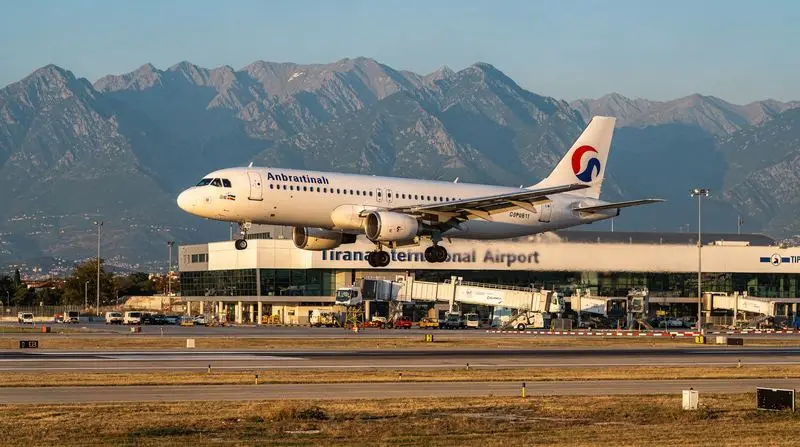
Arrive at Tirana International Airport. Transfer to the city center (private transfer EUR 25-35, or Rinia Park bus).
Afternoon and Evening
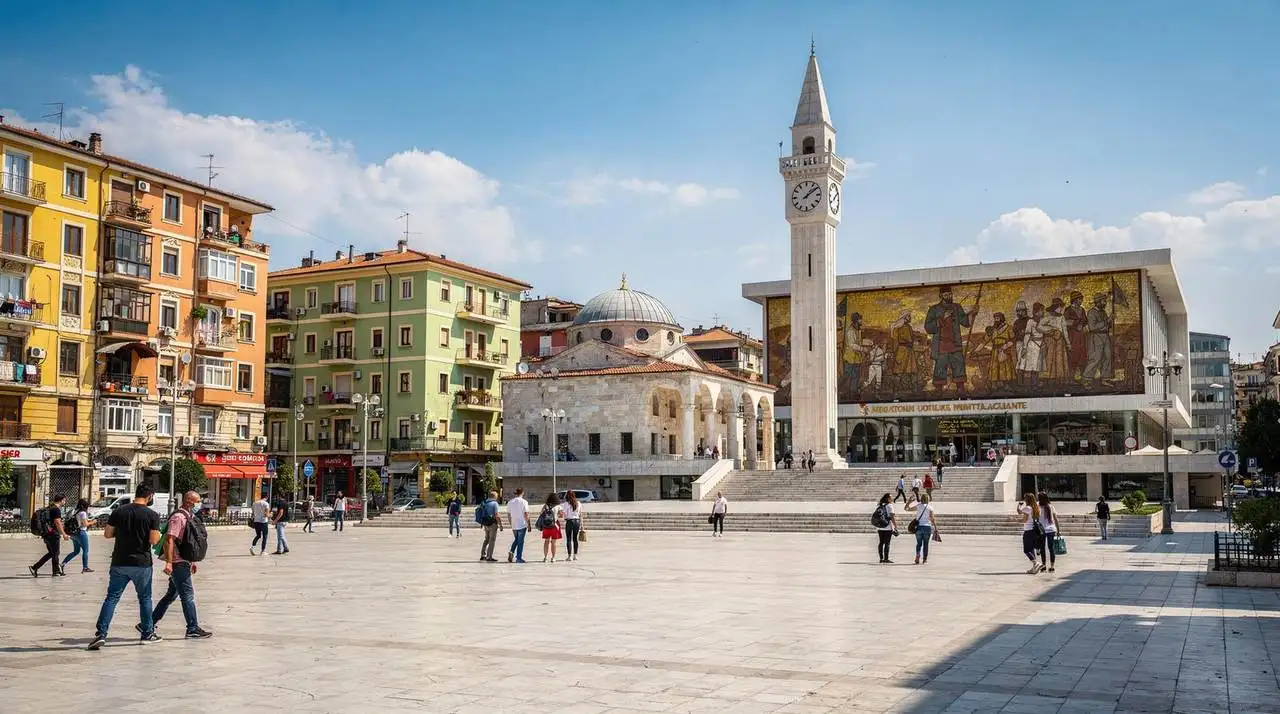
Skanderbeg Square — the vast central plaza with the equestrian statue of Albania’s national hero — is the natural starting point. Walk the outer edges: the Et’hem Bey Mosque (18th century, painted interior), the National History Museum, the Clock Tower, and the Pyramid (the former Enver Hoxha museum, now an urban park and event space).
Blloku neighborhood for a coffee at any terrace — this is communist party elite territory repurposed into the city’s most vibrant social district since 1991.
Join a Tirana walking tour for evening context on the communist legacy and the city’s transformation.
Dinner in the Blloku area — tave kosi (Albania’s national dish: lamb baked with eggs and yoghurt sauce) at a traditional restaurant.
Day 2: Tirana — Cultural Depth
Morning: BunkArt and the Museum Quarter
BunkArt 2 (600 ALL, 90 minutes) — the secret police bunker museum documenting Sigurimi operations and the psychology of communist Albania. One of the most powerful museum experiences in the Balkans.
National History Museum (700 ALL, 2 hours) — from the Illyrian period through independence and the communist era to today. Essential context for the entire journey ahead.
Afternoon: Pazari i Ri and Street Life
Lunch from the vendors at the New Bazaar — byrek (flaky pastry), fresh cheese, olives, roasted peppers, and grilled meats for EUR 3-4. This is the best cheap eating in the capital.
Walking the residential streets of the center reveals the painted-facade project that transformed grey communist apartment blocks into colorful canvases. The Albania art and culture workshops guide has more on Albanian creative traditions.
Evening: Food Tour or Independent Dinner
For those wanting a structured introduction to Albanian cuisine: the Tirana food tour with meals included covers multiple stops across the city with cultural commentary. Alternatively, explore Blloku’s restaurants independently.
Day 3: Tirana to Elbasan
Morning: Drive East Through the Valleys
The A3 expressway east from Tirana passes through the Elbasan corridor — the same geographic gateway that has channeled armies, traders, and travelers between the Adriatic coast and the Macedonian interior for three millennia. The Via Egnatia, the Roman road connecting Rome to Constantinople, ran through this exact passage.
Elbasan is approximately 50 km from Tirana (45 minutes by expressway). Its Ottoman-era walled inner city (kalaja) is modest but genuine — thick stone walls enclosing a grid of streets with several mosques and a small ethnographic museum.
Afternoon: Elbasan’s Old Town
The Elbasan Fortress walls enclose an area of the old Ottoman market city. Walk the walls (free), visit the Church of Saint Mary within the walls (one of the few surviving examples of a church built within an Ottoman fortification), and explore the Old Bazaar around the castle perimeter.
The Ethnographic Museum of Elbasan in a traditional Ottoman house has good displays of traditional crafts and domestic life. Entry 200 ALL.
The surrounding hills — the Jablanicë range to the south, the Sallmonit range to the north — frame the city. The drive south from Elbasan toward Librazhd follows the Shkumbin River valley through increasingly beautiful mountain scenery.
Evening: Stay in Elbasan
Elbasan is not a destination city, but it has practical accommodation for a night and provides a real sense of central Albanian provincial life that tourist-focused itineraries skip. The evening market and café culture around the main boulevard is genuine and engaging.
Day 4: Elbasan to Pogradec — Arrival at Lake Ohrid
Morning: Drive Through the Gorge
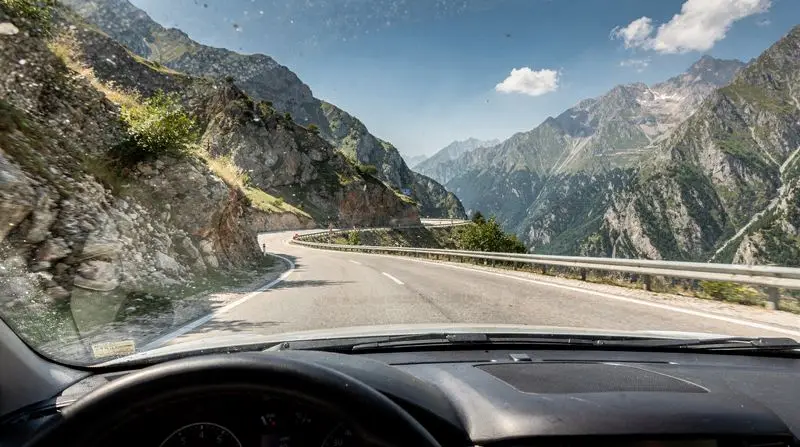
The road from Elbasan southeast to Librazhd and then climbing to the Qafa e Thanës pass is one of the more dramatic drives in central Albania. The Shkumbin River gorge is narrow and deep, with the road clinging to the canyon walls. After Librazhd, the road climbs steeply through beech and oak forest.
Qafa e Thanës Pass (approximately 1,160m) — the border with North Macedonia is at this pass. The Albanian side of the crossing is in beech forest; the descent toward Ohrid enters the North Macedonia side and reveals Lake Ohrid in its full extent.
Wait — today we stay in Albania. From the pass, the descent leads to Pogradec on the Albanian shore of Lake Ohrid.
Afternoon: Pogradec and Lake Ohrid — Albanian Side
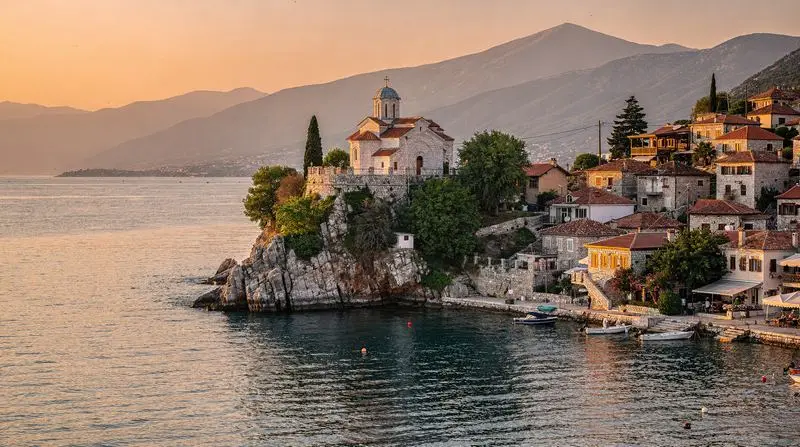
Pogradec is Albania’s primary lake resort town. The long lakefront promenade, beaches, and fish restaurants make it the Albanian equivalent of Ohrid town across the lake — smaller, quieter, and much cheaper.
The lakefront promenade stretches several kilometers. The lake here is already displaying its famous clarity — you can see the bottom in considerable depth. The color shifts from emerald in shallows to deep cobalt in open water.
Lin village: 15 km north of Pogradec, the peninsula of Lin has an early Christian basilica with extraordinary late-antique mosaic floors dating to the 5th-6th century. The mosaics are among the finest early Christian floor mosaics in the Balkans. Entry fee minimal; ask locally for current access.
Evening: Lake Fish in Pogradec
Koran (the endemic Lake Ohrid trout, Salmo letnica) is one of the finest freshwater fish in Europe — dense, pink-fleshed, and found only in Lake Ohrid. The fish restaurants along Pogradec’s promenade serve it grilled or roasted with olive oil and herbs. This is one of the genuine gastronomy highlights of the Albania-North Macedonia circuit.
Day 5: Pogradec to Ohrid via the Qafa e Thanës Border
Morning: Cross into North Macedonia
The Tushemisht-Sveti Naum border crossing at the southern end of Lake Ohrid is the most scenic entry into North Macedonia — you cross directly at the lakeside, and the monastery of Sveti Naum is immediately on the Macedonian side.
Sveti Naum Monastery (founded 905 AD by Saint Naum, a disciple of Saints Cyril and Methodius): The complex sits on a headland directly above the lake, with the extraordinary springs of the Black Drin River emerging from beneath the monastery cliff — pellucid blue pools of water appearing from underground. Peacocks wander the monastery grounds. One of the most beautiful sacred sites in the Balkans.
Afternoon: Drive Along the Western Shore to Ohrid
The 30 km drive north from Sveti Naum to Ohrid along the western shore passes through traditional Macedonian villages and reveals different perspectives on the lake. The eastern shore road (via Struga) is faster but less scenic.
Arrive in Ohrid, check in, and spend the afternoon walking the old town.
Ohrid old town: UNESCO World Heritage status covers both the natural lake and the cultural city. The combination of Byzantine-era churches, a medieval fortress, and a dense historical streetscape makes Ohrid one of the most historically rich cities in the Balkans — sometimes called “the Jerusalem of the Balkans” for its density of churches (reportedly over 365 at the peak of the medieval period, one for each day of the year).
Evening: Ohrid Lakefront
The Ohrid lakefront promenade at sunset is beautiful. The city faces west over the lake, and the sunset light reflected on the water, with the mosque minaret and church towers rising from the old town above, creates an extraordinary panorama.
Day 6: Ohrid — Deep Exploration
Morning: Byzantine Churches
Church of Saint Sophia (Sveta Sofija, 11th century): The cathedral of the Ohrid archbishopric, with the most complete cycle of Byzantine frescoes in North Macedonia. Essential. Entry approximately 150 MKD.
Church of Saint John at Kaneo (Sveti Jovan Kaneo, 13th century): The most photographed building in North Macedonia — a small Byzantine church perched on a clifftop directly above the lake. Walk to it from the old town (20 minutes). Entry approximately 100 MKD.
Church of Saints Clement and Panteleimon: Above the town, near the fortress, with good views.
Afternoon: Ohrid Fortress and the Old Town
Samuel’s Fortress (Tvrdinata Samuilova): The medieval fortress above Ohrid, built on the site of an Illyrian settlement and later Roman fortifications. The current structure dates primarily to the medieval Bulgarian/Byzantine period. Walk the walls for extraordinary views over the lake, the town, and the surrounding mountains. Entry approximately 60 MKD.
Evening: Traditional Music and Dinner
Ohrid has a good restaurant scene. Fresh koran (the same endemic trout as on the Albanian side), grilled lamb, tavče gravče (the Macedonian baked bean dish with remarkable depth), and Macedonian wines (Vranec red grape wine from the Tikveš region is excellent).
Day 7: Lake Ohrid Activities and Surrounds
Morning: Boat Trip on Lake Ohrid
A boat trip on Lake Ohrid from the Ohrid waterfront visits the Bay of Bones (a reconstruction of a prehistoric lake dwelling/stilt settlement, dated to 2000 BC), Sveti Naum by water, and the beaches accessible only by boat.
The Bay of Bones museum (Zatokata na Koskite) is approximately 10 km south of Ohrid and recreates a 3,500-year-old Bronze Age settlement on reconstructed stilts above the lake — fascinating and unusual.
Afternoon: Struga
The town of Struga at the northern end of Lake Ohrid, where the Black Drin River exits the lake, has a relaxed character and a famous annual Poetry Evenings festival (held in late August). The river walk through Struga is pleasant. The town has a significant Albanian-speaking population, connecting this part of North Macedonia closely to Albania’s cultural orbit.
Day 8: Ohrid to Bitola
Morning: Drive South Through Mountain Landscapes
The road from Ohrid to Bitola crosses the Pelister mountain massif — the highest part of North Macedonia, with Pelister peak at 2,601m and the Pelister National Park containing the rare five-needle Molika pine tree found only in this corner of the Balkans.
The drive via Resen and Prespa Lake offers extraordinary scenery: Lake Prespa (shared between North Macedonia, Albania, and Greece) is shallow, reedy, and surrounded by mountains, with a completely different character from the deep-blue Ohrid. The pelican colonies on Prespa are among the largest in Europe.
Bitola (approximately 90 km from Ohrid, 2 hours with Prespa detour) was one of the Ottoman Empire’s most important European cities in the 19th century — the last significant Ottoman settlement before the Adriatic. Today it retains a long boulevard of consular buildings, grand 19th-century architecture, and the atmospheric old bazaar (Stara Čaršija).
Afternoon: Bitola and Heraclea
Heraclea Lyncestis — the remarkably preserved archaeological site on the edge of Bitola, with extraordinary late-antique mosaic floors depicting animals and landscapes, a Roman theatre, and extensive visible remains of a city founded by Philip II of Macedon (father of Alexander the Great) in the 4th century BC. Entry approximately 100 MKD, allow 2 hours.
Sirok Sokak (Bitola’s pedestrian boulevard): A long, café-lined promenade with 19th-century buildings from the Ottoman consular era. Walking it at the Macedonian version of paseo time (early evening) is one of the most pleasant town-walking experiences in the Balkans.
Day 9: Bitola to Korça via the Border
Morning: Cross into Albania at Kapshtica
The Kapshtica-Krystallopigi border crossing between North Macedonia and Albania is approximately 30 km from Bitola. It is the main southern border crossing and is generally straightforward.
Alternatively, take the day tour from Tirana to North Macedonia for a structured way to do this cross-border section with guided logistics.
Cross into Albania and descend toward Korça on the Albanian side — approximately 40 km from the border.
Afternoon: Korça — Albania’s Cultural Capital
Korça is often called Albania’s most cultured city — a claim the city backs up with its extraordinary cafe culture, Central European architecture, strong Orthodox tradition, and the National Museum of Medieval Art.
National Museum of Medieval Art (Muzeu Kombëtar i Artit Mesjetar): One of the most important collections of Byzantine and post-Byzantine icons in the world, assembled from Albanian churches. The collection includes works by Onufri (the greatest Albanian artist in history) and generations of later icon painters. Essential. Entry 400 ALL, allow 90 minutes.
The Old Bazaar: Korça’s restored bazaar area, with craft shops, cafes, and workshops in traditional Ottoman market buildings.
Korça Cathedral: The large Orthodox cathedral rebuilt in the post-communist period dominates the city center.
Evening: Korça’s Café Culture
Korça’s café scene is justly famous. The city has a tradition of sophisticated coffee culture influenced by its Albanian diaspora connections to Europe. The main boulevard in early evening — with residents promenading, cafes full, and the mountain backdrop catching the last light — is one of Albania’s most pleasant urban scenes.
Day 10: Korça to Tirana
Morning: Voskopoja and Mountain Drive
Before the drive west, take the 20-minute detour to Voskopoja — the highland village that was once one of the most important cities in the Ottoman Balkans (population 60,000 in the 18th century, now a quiet village). Several 18th-century Orthodox churches with remarkable fresco programs survive, in various states of preservation.
The drive from Korça to Tirana (approximately 180 km) via Elbasan takes 3-3.5 hours on the main road. Alternatively, the scenic route via Gramsh and the Devoll River valley is longer but more dramatic.
Afternoon: Return to Tirana
Arrive in Tirana with the afternoon for final visits, last-minute shopping at the Pazari i Ri, or simply a leisurely final coffee in the Blloku before the evening flight home.
Practical Information
Visas and Border Crossings
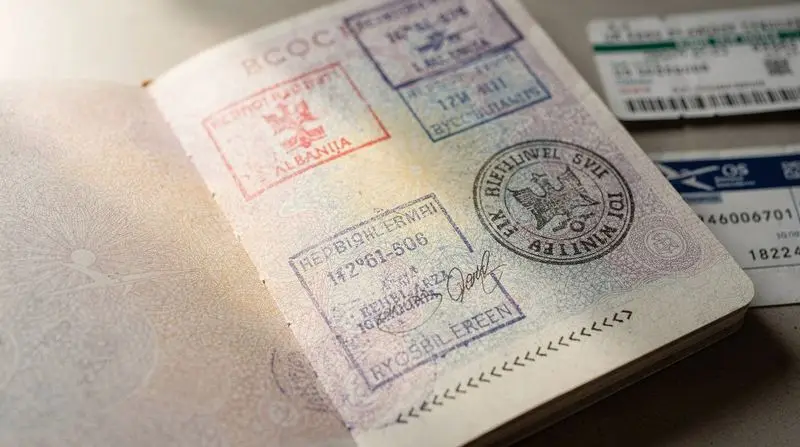
EU, UK, US, Canadian, and Australian passport holders enter both Albania and North Macedonia without visas. Both countries are EU candidates but not yet members. Border formalities are straightforward. The Albania visa requirements guide covers Albanian entry in detail.
Currency
Albania uses the Albanian Lek (ALL). North Macedonia uses the Macedonian Denar (MKD). Exchange Lek at Tirana airport or city banks before departure. MKD exchange is available at the North Macedonia border crossing and in Ohrid/Bitola. Keep some Euro as a backup — accepted in tourist contexts in both countries.
Driving Across Both Borders
Most Albanian car rental agencies permit crossing into North Macedonia. Confirm this explicitly when booking. The Qafa e Thanës crossing and the Kapshtica crossing are both open year-round. See the driving in Albania guide for rental recommendations.
Prices
Both Albania and North Macedonia are budget-friendly. North Macedonia is slightly more expensive than Albania in accommodation terms, but food, transport, and attraction entry are comparably affordable. A mid-range daily budget of EUR 40-60 per person covers comfortable accommodation, good meals, and all activities in both countries.
Best Season
April through October is the best season. The Lake Ohrid area is particularly beautiful in May-June (before peak summer crowds) and September-October (post-summer, with warm temperatures and golden light). The Korça highlands and Voskopoja area are also excellent in these shoulder months.
Frequently Asked Questions About the Albania-North Macedonia Itinerary
Is Lake Ohrid worth the detour from Albania?
Absolutely. Lake Ohrid is one of Europe’s most extraordinary lakes — both for its natural character (extraordinary clarity, unique endemic species, ancient origin) and for the cultural heritage of Ohrid city. The combination of Sveti Naum Monastery, the Byzantine churches, and the lake’s visual drama make it a strong argument for the two-country circuit over a single-country Albania trip.
Is the drive from Tirana to Ohrid long?
The Tirana to Ohrid journey (via Elbasan and Pogradec) is approximately 230 km and takes 3.5-4 hours depending on border crossing time. It is entirely driveable in a day, but the itinerary breaks it into two stages (Elbasan night, then Ohrid) to allow exploration of the Albanian section of Lake Ohrid and the central Albanian corridor.
What is the best way to cross from Albania into North Macedonia?
The most scenic crossing is the Qafa e Thanës/Tushemisht-Sveti Naum crossing at the southern end of Lake Ohrid, arriving immediately at Sveti Naum Monastery. The Kapshtica-Krystallopigi crossing near Korça and Bitola is the alternative, used on the return leg. Both are straightforward crossings with minimal queuing outside peak summer.
Is Korça worth a stop?
Korça is one of Albania’s most underrated cities and absolutely worth a stop. The National Museum of Medieval Art alone justifies the visit. Combined with the café culture, Voskopoja’s heritage churches, and the proximity to the Greek border, Korça makes an excellent Albanian finale before the return to Tirana.
Money and Connectivity for a Three-Currency Trip
This route technically touches three currencies — Albanian Lek, Macedonian Denar, and Euro accepted informally in tourist spots on both sides — which makes budgeting slightly more fiddly than a single-currency trip. Withdraw Lek in Tirana or Elbasan, then Denar once you cross into North Macedonia; avoid changing large sums at border crossings, where rates are consistently worse than bank ATMs. The Albania currency and money guide covers the Albanian side in detail. For mobile data, a Balkan-region eSIM (see the Albania eSIM guide) avoids the hassle of swapping physical SIMs at each border, which matters on a route with two crossings in ten days.
Comparing the Lake Ohrid Route to Other Cross-Border Options
Of Albania’s three main cross-border combinations, this North Macedonia route is the gentlest — easier terrain, simpler crossings, and generally lower costs than the Albania and Montenegro itinerary, which demands a bigger daily budget for the Montenegrin coast. It’s also less physically demanding than the Albania and Kosovo itinerary, which includes a genuine mountain hiking day between Valbona and Theth. If lakes, Byzantine churches, and unhurried old towns appeal more than coastal glamour or Alpine trekking, this is the right choice among the three.
Food Along the Route: What to Expect Country by Country
Albanian and Macedonian food overlap considerably — grilled meats, fresh bread, byrek-style pastries — but each country has specialities worth seeking out specifically. In Korça, look for the local variation of tavë kosi and the city’s distinctive strong coffee culture; the Albanian food guide covers regional dishes in more depth than fits here. In Ohrid and Bitola, tavče gravče (the Macedonian baked bean dish) and fresh koran trout from the lake are the dishes to prioritise — both are widely available and consistently good rather than requiring you to hunt down a specific restaurant.
Packing Notes for Two Countries, One Climate
Unlike routes that combine coast and mountain, this itinerary stays at a fairly consistent elevation and climate throughout, which simplifies packing considerably. Comfortable walking shoes matter most — both Ohrid’s old town and Bitola’s Sirok Sokak involve a lot of pedestrian exploring on uneven surfaces. Bring a swimsuit even outside peak summer; Lake Ohrid’s water stays swimmable well into September and a spontaneous dip from Pogradec or the Ohrid lakefront is one of the trip’s genuine pleasures. A light layer for evenings is worth packing, since Ohrid and Bitola both sit at higher elevation than the Albanian coast and cool down noticeably after sunset even in July.
Timing the Crossings to Avoid Queues
Both border crossings on this route (Qafa e Thanës/Sveti Naum and Kapshtica) are generally quick outside peak periods, but midday in July and August can mean 30-45 minute queues, particularly for vehicles at Kapshtica. Crossing early morning or in the late afternoon avoids most of the delay. If your schedule is flexible, building in a buffer day around the Ohrid-to-Bitola or Bitola-to-Korça legs gives room to wait out an unexpectedly busy crossing without disrupting the rest of the itinerary.
Rental car cross-border coverage is worth confirming twice on this route, since it crosses the Albania-North Macedonia border in both directions — once outbound near Pogradec and once on the return via Korça. Most Albanian agencies that permit North Macedonia travel don’t restrict the number of crossings, but it’s worth a direct question to the rental desk rather than assuming a one-way clause applies.