Albania and Montenegro in 10 Days: The Complete Combined Itinerary
Combining Albania and Montenegro in a single itinerary is one of the smartest decisions you can make in the western Balkans. The two countries share a border, a body of water (Lake Shkodra is the largest lake in the Western Balkans and straddles both countries), and a history of Ottoman and Venetian influence that gives them overlapping architectural and cultural DNA — while remaining distinctly different in character.
Montenegro is more established in the tourism circuit: Kotor’s Bay is among the most photographed landscapes in Europe, and the Adriatic coast is well-serviced with hotels and infrastructure. Albania offers rawer beauty, lower prices, fewer crowds, and a cultural experience that feels less processed. Together, they complement each other perfectly.
This 10-day itinerary runs Tirana to Shkodra to the border, north through Montenegro to Kotor and Budva, then returns south through Lake Shkodra to Albania. It works best with a rental car, though public transport versions are possible with more flexibility.
| Where | Tirana → Shkodra → Podgorica → Kotor → Budva → Lake Shkodra → Tirana |
| Duration | 10 days |
| Cost | Albania EUR 40–70/day, Montenegro EUR 80–120/day (mid-range) |
| Getting around | Rental car recommended; bus is possible with less flexibility |
| Best time | May–June or September–October to avoid Kotor’s peak-season crowds |
| Currency | Albanian Lek in Albania, Euro in Montenegro |
Route Overview
Days 1-2: Tirana Day 3: Tirana to Shkodra Day 4: Shkodra and Lake Shkodra — cross into Montenegro Day 5: Podgorica Day 6: Kotor (Bay of Kotor) Day 7: Kotor exploration and Perast Day 8: Budva and the Budvanska Riviera Day 9: Budva south — return to Albania via Lake Shkodra Day 10: Lake Shkodra — return to Tirana
Day 1: Tirana — First Impressions of Albania
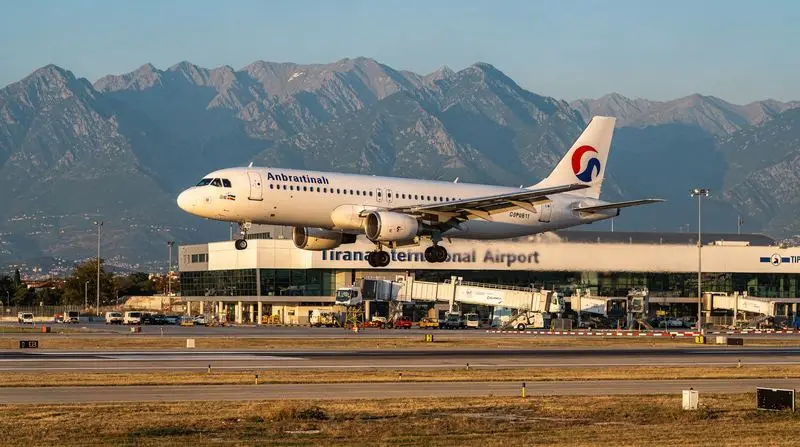
Arrive at Tirana International Airport. The airport is approximately 17 km from the city center — book a private transfer (EUR 25-35) or use the Rinia bus service into town.
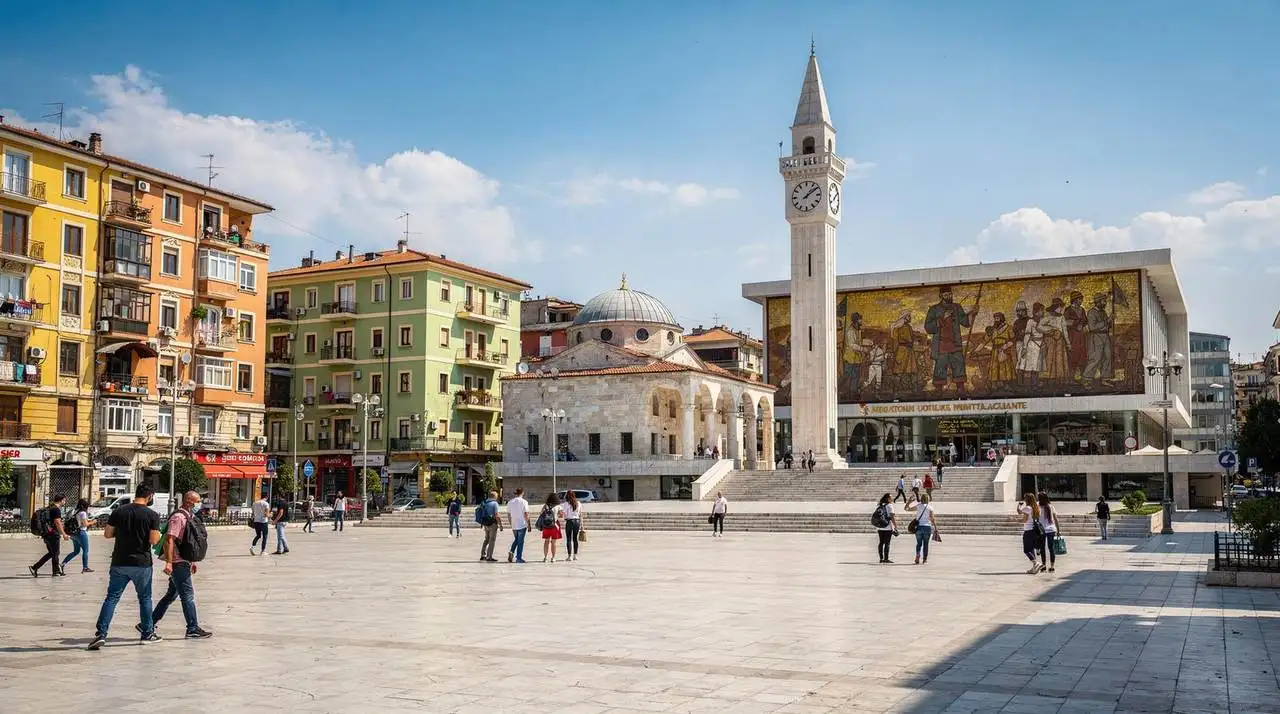
Spend the afternoon walking the city center: Skanderbeg Square, the Et’hem Bey Mosque, the National History Museum facade, and the Blloku neighborhood for coffee and people-watching. The Pyramid of Tirana — the communist-era monument turned urban park — is worth visiting for context.
Join a Tirana walking tour in the late afternoon to gain immediate context on the communist legacy and the city’s transformation since 1991.
Evening dinner in Blloku — try tave kosi (the national lamb and yoghurt dish) or fërgësë Tiranë (the peppers and cottage cheese specialty). Budget 1,500-2,000 ALL per person with drinks.
Day 2: Tirana — Museums and Cultural Depth
Morning: BunkArt and National History Museum
The BunkArt 1 or BunkArt 2 (choose one — they cover different aspects of the communist secret police state and Enver Hoxha’s bunker system, EUR 4-7 each). Then the National History Museum (700 ALL, allow 2 hours) for the full sweep from Illyrian to modern Albanian history.
Afternoon: City Walk and Pazari i Ri
The New Bazaar (Pazari i Ri) for the best street food in the capital: byrek, roasted peppers, fresh cheese, grilled meats. Assemble a lunch from market vendors for EUR 3-4.
Walk south through the city — the colourful residential street facades (a post-communist art initiative by Mayor Edi Rama), the student quarter, and the lake promenade at the Artificial Lake park.
Evening: Food Tour
Join the Tirana food tour with meals included — an excellent way to cover multiple restaurants and dishes in a single evening with a local guide who explains the cultural context.
Day 3: Tirana to Shkodra
Morning: Drive North
The A2 expressway connects Tirana to Shkodra in under 2 hours (approximately 110 km). Collect your rental car or take the early bus from Tirana’s northern terminal (400 ALL, departures roughly hourly).
Arrive in Shkodra mid-morning. Check into a guesthouse near the lake or the old town.
Afternoon: Shkodra’s Heritage
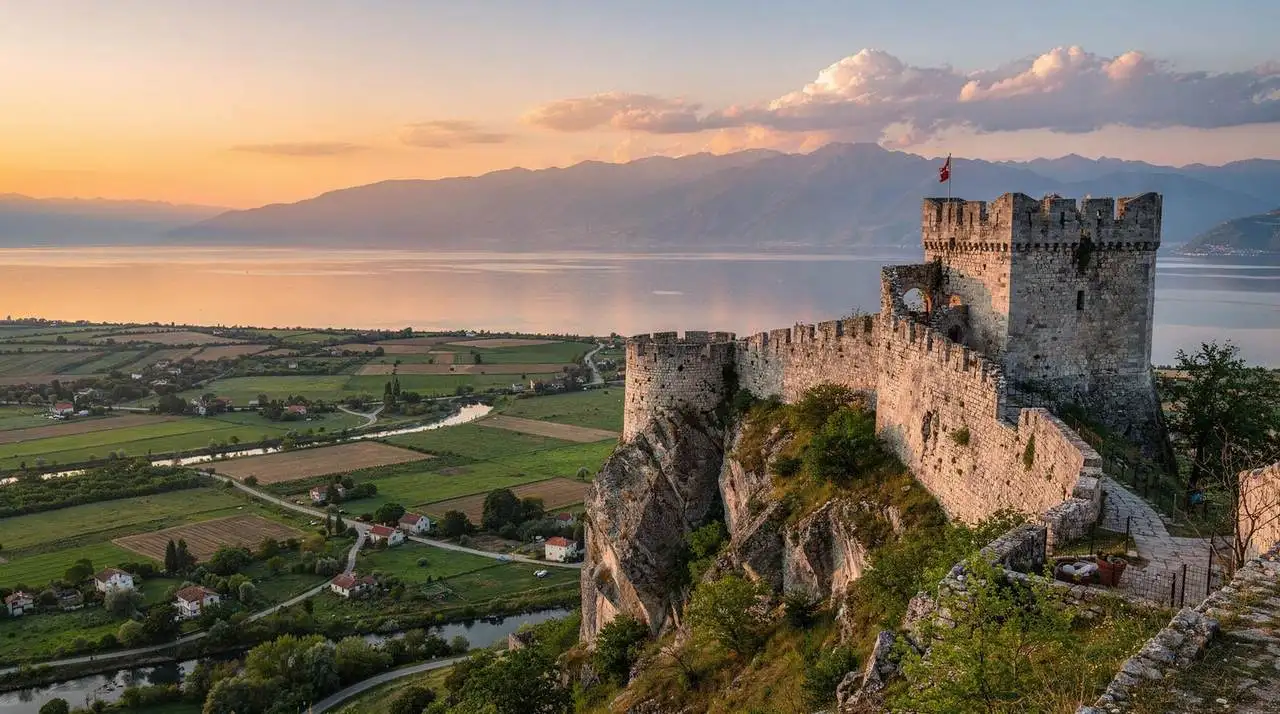
Rozafa Castle is the dominant landmark — an Illyrian fortress built on a steep rock above the confluence of three rivers with panoramic views over Lake Shkodra and the northern Albanian plains. Drive or walk to the top; entry 300 ALL.
The Marubi National Photography Museum in the old city houses 150 years of Albanian documentary photography from the Marubi dynasty of photographers. One of the finest photography museums in the Balkans. Entry 500 ALL, allow 90 minutes.
Evening: Lake Shkodra
The lake promenade at sunset is one of northern Albania’s great views. The enormous lake (368 km²) turns copper at dusk with the Albanian Alps reflected in the still water. Fresh lake fish (krap — carp, or koran — the endemic Lake Ohrid trout where available) is the local speciality for dinner.
Day 4: Lake Shkodra, Local Villages, and the Montenegro Border
Morning: Lake Villages
The Albanian shore of Lake Shkodra has traditional villages accessible by rough road or, more atmospherically, by boat. The village of Shiroka is a short drive from Shkodra and has a waterfront promenade with lake fish restaurants popular on weekends.
The Shala River feeds into the lake from the north — the turquoise river gorge known as the “Maldives of Albania” is one of Albania’s most photographed natural sites. A boat trip up the Shala from the lake is possible in summer.
Afternoon and Evening: Cross into Montenegro
The Han i Hotit border crossing is approximately 30 km north of Shkodra. It is the most scenic route into Montenegro, passing through the dramatic limestone canyon of the Morača River. The crossing is generally quick for EU, UK, and US passport holders — border formalities are straightforward for both countries.
The alternative is the Muriqan-Sukobin crossing on the coast road, which passes through lower ground and is more direct for reaching the Montenegrin coast. Both crossings are functional and open 24 hours.
Drive into Montenegro and make for Podgorica (approximately 1 hour from Han i Hotit) or continue directly to Lake Skadar (Skadarsko Jezero in Montenegrin) for a late afternoon boat excursion on the Montenegrin side of the lake before heading to the capital.
Day 5: Podgorica — Montenegro’s Underrated Capital
Montenegro’s capital is often skipped by travelers rushing to the coast. This is a mistake. Podgorica is a young, affordable city with good restaurants, a walkable center, and genuine local life.
Key Sights
The Old Town of Stara Varoš — the small Ottoman-era quarter with a clock tower and mosque. The Millennium Bridge over the Morača River. The Cathedral of the Resurrection of Christ — a massive contemporary Orthodox cathedral. The Ribnica confluence — where two rivers meet below a ruined medieval fort.
Museum of Montenegro (Crnogorski muzej): The national museum complex in the old capital Cetinje (45 minutes from Podgorica) is worth a morning visit for those interested in Montenegrin history and the extraordinary saga of the mountainous principality that resisted Ottoman conquest for centuries.
Evening in Podgorica: The dining and drinking scene has improved significantly. The Stara Varoš and riverside areas have good restaurants serving Montenegrin cuisine (which shares much with Albanian mountain food: grilled meats, kajmak cream cheese, prosciutto, lake fish).
Day 6: Podgorica to Kotor
Morning: Drive to the Bay
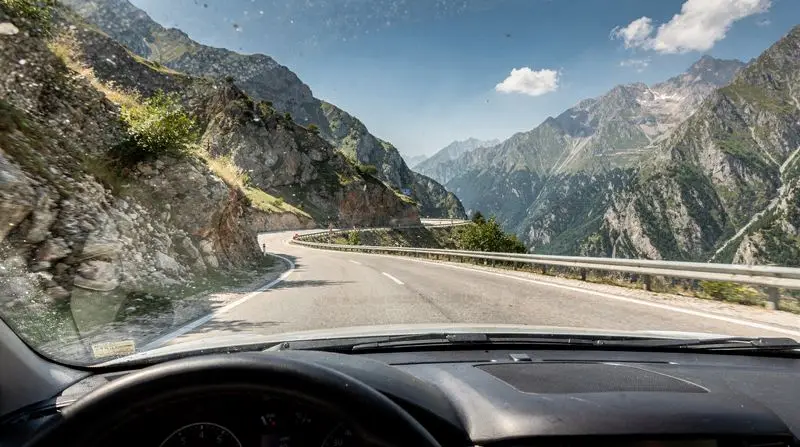
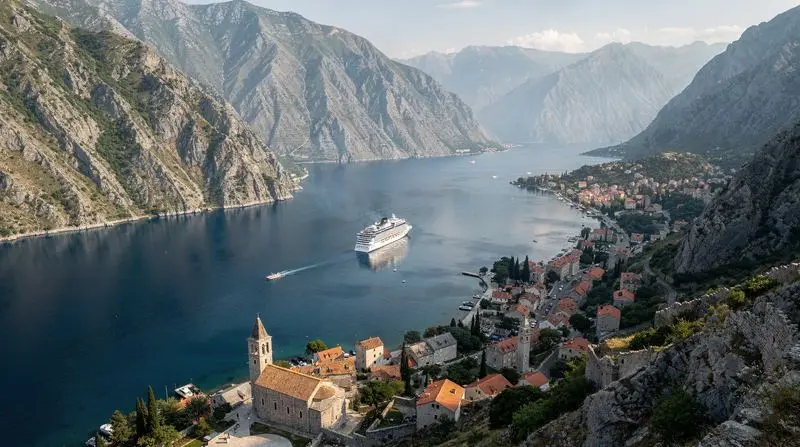
The drive from Podgorica to Kotor (approximately 80 km via the main road, or longer via Cetinje and the Lovćen National Park scenic route) is beautiful. The descent from the Montenegrin plateau into the Bay of Kotor — a drowned canyon more often described as a fjord — is one of the most dramatic drives in the Balkans.
The Bay of Kotor (Boka Kotorska) is enclosed by mountains on all sides, its surface reflecting the surrounding limestone peaks. At certain angles, it looks like a Scandinavian fjord transposed to the Mediterranean.
Afternoon: Kotor Old Town
Kotor’s medieval old town is UNESCO World Heritage — a perfectly preserved Venetian walled city with intact medieval walls, narrow stone streets, Baroque churches, and the remarkable Cathedral of Saint Tryphon (1166). The walls are walkable for extraordinary views over the bay and city (entry approximately €8, 2-3 hours to complete).
Check into accommodation in or near Kotor old town. Prices in Montenegro are significantly higher than Albania — budget accordingly.
Evening: Old Town Exploration
Kotor’s piazzas, the church squares, and the waterfront promenade under the walls are atmospheric in the evening when day visitors have departed. The old town is small enough to cover completely on foot in an evening walk.
Day 7: Kotor, Perast, and the Bay
Morning: Perast and the Islands
Drive or take a water taxi 12 km along the bay to Perast — a tiny Baroque town built on a narrow strip of waterfront by wealthy Venetian sea-captains. The most perfectly preserved Baroque settlement in the eastern Adriatic. Boat trips from Perast reach the two iconic islands in the bay: Sveti Đorđe (a Benedictine monastery on a natural island) and Gospa od Škrpjela (Our Lady of the Rocks — an artificial island built over centuries by local fishermen bringing stones from the bottom).
Afternoon: Bay Circumnavigation
The full circuit of the Bay of Kotor by car or boat passes through Herceg Novi (at the bay entrance), Bijela, Tivat, and around the inner bay. Tivat has the Porto Montenegro luxury yacht marina — interesting as architecture even if not your travel style.
Evening: Dinner in Kotor
The old town has good quality restaurants. Fresh sea bass and sea bream (brancin and orada) are the staples. Local wines from the Montenegrin mainland (Vranac red, Krstač white) are worth trying.
Day 8: Budva and the Montenegrin Riviera
Morning: Drive to Budva
Budva is 30 km south of Kotor along the coast — approximately 45 minutes by car. The Montenegrin Riviera here is developed and busy in summer, with beach resorts, apartment blocks, and considerably more infrastructure than the Albanian Riviera.
Budva Old Town: Another excellent Venetian-era walled city, smaller than Kotor but dramatically positioned on a peninsula. The medieval walls walk is free and gives extraordinary views. The Church of Saint Ivan and the Archaeological Museum in the old town cover the city’s layered Illyrian, Roman, Byzantine, and Venetian history.
Afternoon: Beaches
Budva has several beaches: Mogren beach (the best, reached by walking through the old town) and Slovenska plaža (the main town beach). Sveti Stefan — the iconic islet connected to the mainland by a sandbar — is 5 km south of Budva. The islet itself is now a luxury hotel complex (Aman resort) and not open to non-guests, but the view from the roadside above is one of the most reproduced images of Montenegro.
Evening: Budva Nightlife
Budva in summer has the most developed nightlife on the Montenegrin coast. If the itinerary runs in shoulder season, the old town restaurants are quieter and more pleasant. The old town’s narrow streets at night, lit by stone lanterns and restaurant candlelight, are genuinely beautiful.
Day 9: Return to Albania via Lake Shkodra
Morning: Coastal Drive South
The drive from Budva toward the Albanian border runs along the Montenegrin coast — Bar (with its medieval old town, Stari Bar, inland from the modern port) is worth a stop for an hour. The ancient olive trees of Bar are among the oldest in the world — some dated to over 2,000 years.
Cross back into Albania at the Muriqan-Sukobin border crossing on the coast (easiest for this direction) or return via Han i Hotit (more scenic).
Afternoon: Lake Shkodra and Return to Shkodra
Re-enter Albania and reach the Albanian shore of Lake Shkodra. The afternoon light on the lake is different from morning — the mountains to the east catch the afternoon sun and the surface of the lake takes on golden tones.
Stop at the lakeside village of Shtoji or Shiroka for a lake fish lunch or late afternoon coffee. Both villages are beloved by Albanians for weekend lake outings and have a very local atmosphere.
Return to Shkodra for a final night. The city feels different on return — more familiar, and the contrast with Montenegro’s polished tourism infrastructure makes Albania’s rawer authenticity more perceptible.
Day 10: Shkodra to Tirana
Morning: Final Shkodra Sights
Anything missed on the way north — the Marubi Museum, the city’s Ottoman-era bazaar area, a morning walk through the residential neighborhoods with their characterful pre-communist buildings.
Have coffee at one of the old town’s traditional cafes. The Albanians in Shkodra, historically the most Catholic-influenced city in the country, have a strong coffee culture with distinct regional character.
Afternoon: Drive to Tirana
The A2 back to Tirana takes under 2 hours. Return your rental car. Depending on your flight time, the afternoon allows for any final Tirana shopping, the Pazari i Ri for provisions, or a final Blloku dinner.
Practical Information
Visas and Border Crossings
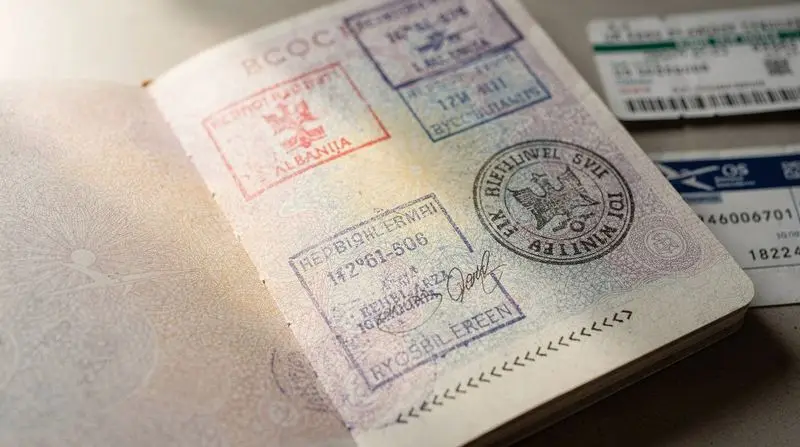
Citizens of EU, UK, USA, Canada, Australia, and many other countries enter both Albania and Montenegro without visas. The border crossings are functional for these nationalities with just a passport. Montenegro is also not an EU member (though it is an EU accession candidate), so EU passport holders cross as regular nationals.
The Albania visa requirements guide covers entry formalities.
Currency
Albania uses the Albanian Lek (ALL). Montenegro uses the Euro (EUR) despite not being an EU member — this simplifies budgeting significantly. Have both currencies: Lek for the Albanian sections, Euro throughout Montenegro and for the border crossing areas.
Driving Across the Border
Rental cars from Albanian agencies can generally cross into Montenegro — confirm with your rental company before booking. Some budget agencies restrict cross-border travel; reputable agencies allow it with proper documentation. Your rental agreement should explicitly allow Montenegro travel. See the driving in Albania guide for general car rental advice.
Price Comparison
Albania is consistently cheaper than Montenegro by a factor of 1.5-2x. Montenegro is relatively expensive by Balkan standards, particularly on the coast in summer. Budget accordingly — your Albanian sections will be significantly cheaper than the Montenegrin sections. The Albania vs Montenegro comparison guide covers this in detail.
Best Season
May-June and September-October are ideal. July and August are busy and hot on both coastlines. Montenegro’s Kotor gets very crowded in peak summer (cruise ships anchor in the bay regularly). Albania’s sections are comparatively quieter year-round.
Why This Combination Works
The genius of the Albania-Montenegro combination is contrast. After two days in Tirana absorbing communist history, bunker museums, and the still-raw energy of a city reinventing itself, the drive north through the Lake Shkodra landscape grounds you in the natural character of the western Balkans.
Montenegro’s polished beauty — Kotor’s perfect Venetian stonework, Perast’s Baroque waterfront, the bay’s extraordinary geography — provides a different kind of satisfaction. It is curated, beautiful, and well-organized in a way that Albania is not yet. Some travelers prefer it; others feel it has been packaged in a way that reduces discovery.
The return to Albania brings the contrast into focus. Shkodra’s slightly rough edges, the lake villages, the Rozafa Castle ramparts at sunset — after Montenegro’s polish, these feel more honest. Most travelers who do this combined itinerary come away with a deeper appreciation of both countries for having seen them together.
Frequently Asked Questions About the Albania-Montenegro Itinerary
Is it difficult to cross the Albania-Montenegro border by car?
The border crossing is straightforward for EU, UK, and US passport holders. Queue times vary by season — in peak summer, expect 20-40 minutes at Han i Hotit or Muriqan. Out of season, crossings are typically very quick. Ensure your rental car agreement explicitly permits Montenegro travel.
Do I need local currency in Montenegro?
Montenegro uses the Euro, which simplifies budgeting. You do not need to obtain a separate currency — just use Euro cash and cards as normal. ATMs are available in all Montenegro cities.
How does the cost of the Montenegro section compare to Albania?
Montenegro costs approximately 1.5-2 times more than Albania. Accommodation, restaurants, and activities are all noticeably more expensive on the Montenegrin coast. Budget EUR 80-120/day per person (mid-range) for the Montenegrin coastal section versus EUR 40-70/day for the Albanian sections.
Can I do this itinerary without a rental car?
Yes, but with more complexity. Buses connect Tirana to Shkodra (frequently), and Shkodra to Podgorica (via the border). Kotor and Budva are connected by bus from Podgorica. However, the Lake Shkodra villages, the Perast boat trips, and the flexibility to stop along the Bay of Kotor are much more accessible with a car. Public transport is feasible for the backbone route but limits exploration.
Money and Connectivity Across the Border
Carry Albanian Lek for the Tirana and Shkodra sections and switch to Euro once you cross into Montenegro — Montenegro uses the Euro despite not being an EU member, which simplifies budgeting considerably compared to some other cross-border Balkan routes. The Albania currency and money guide covers ATM networks on the Albanian side; Montenegro’s ATMs are reliable in all the towns on this route. For mobile data, an Albanian SIM won’t roam usefully once you cross — a Balkan-region eSIM is the simplest fix if you want continuous coverage; see the Albania eSIM guide for options that work across both countries.
Packing and Practical Extras for a Coastal Two-Country Trip
This itinerary stays largely at low altitude and coastal climate throughout, which simplifies packing compared to routes that add a mountain crossing. Bring smart-casual clothing for Kotor and Budva evenings, where restaurant and bar culture is noticeably more polished than in Albania, alongside comfortable walking shoes for the considerable amount of old-town cobblestone walking in both Kotor and Budva. A light rain layer is worth packing even in summer — the Bay of Kotor’s mountain-enclosed geography can produce sudden localised showers that clear as quickly as they arrive. If you’re driving, keep a printed copy of your rental agreement’s cross-border clause accessible, since Montenegrin border officials occasionally ask to see it.
Why the Bay of Kotor Draws Comparisons to a Fjord
The geological framing that makes Kotor so photogenic is worth understanding before you arrive: the bay is technically a submerged river canyon (a ria) rather than a true glacially-carved fjord, but the visual effect — steep limestone walls rising directly from still water — is close enough that the fjord comparison sticks in most travel writing. Arriving by the Cetinje/Lovćen route rather than the more direct main road adds roughly 30–45 minutes but delivers the single best viewpoint of the whole bay from above, where the full drowned-canyon shape becomes clear in a way it never quite does from water level.
Lake Shkodra, by contrast, is a shallow freshwater lake with none of Kotor’s dramatic verticality, but its own appeal — golden light, reed-lined shores, and a much slower pace — makes it a deliberate contrast rather than a lesser version of the same idea. Seeing both within the same trip, a few days apart, gives a useful sense of how differently water and mountains combine across a relatively small stretch of the western Balkans.
How This Compares to a Kosovo or North Macedonia Pairing
Albania pairs naturally with several neighbours, and Montenegro is arguably the most scenically dramatic option thanks to the Bay of Kotor, but it’s also the most expensive of the combinations. If budget matters more than polish, the Albania and North Macedonia itinerary covers a similarly lake-centred route (Ohrid instead of Shkodra/Kotor) at roughly half the Montenegro-section cost. If mountain culture and hiking matter more than coastal scenery, the Albania and Kosovo itinerary trades the Adriatic coast for the Accursed Mountains and Rugova Valley. All three share the Tirana opening days, so the choice really comes down to whether you want sea, lakes, or peaks as the contrast to Albania.
Where to Go Deeper Before You Leave
The Albanian half of this route rewards a little preparation. The Tirana destination guide and the Shkodra destination guide cover the two bases where you will spend most of your Albanian nights, and the Lake Shkodra guide explains the shoreline villages you pass on the way back. If you want a stay with local character in the north, the where to stay in Shkodra guide is a good place to start, and the best restaurants in Shkodra will help you plan the lake fish dinners mentioned above.
If you land in Tirana late or want to avoid the bus on arrival, the airport transfers guide for Tirana lays out the options. For the days spent behind the wheel, the car rental guide and the border crossings guide are worth reading together, since the cross-border clause in your rental agreement matters as much as the road itself.
Travellers with a few extra days in Albania can pair this route with the 10 days complete itinerary or add a coastal leg from the Albanian Riviera road trip. For a first-time visitor, the things to know before visiting Albania is a useful companion read.