Albania and Kosovo in 10 Days: The Complete Two-Country Itinerary
Albania and Kosovo share a language, a cultural heritage, a mountain landscape, and a historical identity that makes them natural companions on a single itinerary. More than 90% of Kosovo’s population is Albanian-speaking, and the cross-border connections — family, trade, cultural exchange — have always been more significant than the political line on the map. Travelling both countries together gives a richer and more complete picture of Albanian culture, history, and contemporary life than either destination offers alone.
The itinerary runs a logical arc: Tirana (Albania’s capital), Shkodra (the northern gateway), then across the border to Kosovo for Prizren (the most beautiful city in Kosovo), Pristina (the capital), and Peja (gateway to the Rugova Valley). From Peja, the route loops back into Albania through the mountains — descending into Valbona Valley and crossing over to Theth before returning to Tirana.
The result is a 10-day journey that combines urban culture and history, dramatic mountain landscapes, warm hospitality, and the experience of watching how a shared cultural identity expresses itself differently across two very different political contexts.
| Where | Tirana → Shkodra → Prizren → Pristina → Peja → Valbona → Theth |
| Duration | 10 days |
| Cost | Guesthouses EUR 25–50/night in both countries |
| Getting around | Bus and shared taxi; private taxi for the Peja-Valbona mountain crossing |
| Best time | May–June or September–October — the mountain days need snow-free trails |
| Currency | Albanian Lek in Albania, Euro in Kosovo — carry both |
Practical Overview: Entry, Currency, and Logistics
Albania: EU citizens enter visa-free with an ID card. Non-EU travellers with most Western passports enter visa-free for up to 90 days. Currency: Albanian Lek (ALL), though EUR is widely accepted. See the Albania travel budget guide for costs.
Kosovo: Most Western passport holders enter visa-free. Note that Kosovo is not universally recognised — if your country does not recognise Kosovo as independent, you may face complications. Importantly, a Kosovo entry stamp in your passport can cause issues at some border crossings (notably Serbia). If this concerns you, research the current situation before travel. Currency: Euro (EUR) is Kosovo’s official currency.
The Albania-Kosovo border: The main crossing for this itinerary is between Shkodra/Hani i Hotit and Prizren direction, or via the Morina/Qafë Morinë crossing near Kukës. Current crossing procedures are straightforward for EU and most Western travellers. Bus services connect Shkodra to Prizren and Tirana to Pristina.
Language: Albanian (Shqip) is spoken in both countries. In Kosovo, Serbian is an official second language and some Kosovars speak it. English is increasingly widespread among younger people in both countries, particularly in cities.
Route Overview
Days 1-2: Tirana (Albania) Day 3: Tirana → Shkodra (Albania) → Prizren (Kosovo) — cross the border Day 4: Prizren (Kosovo) Day 5: Prizren → Pristina (Kosovo) Day 6: Pristina + day trip to Prizren or Peja Day 7: Pristina → Peja/Rugova (Kosovo) Day 8: Peja → Valbona Valley (Albania) — cross back into Albania Day 9: Valbona → Theth (hike or vehicle) Day 10: Theth → Shkodra → Tirana (return)
Days 1-2: Tirana — Albanian Capital
Begin in Tirana — the city that best represents Albania’s post-communist transformation. From the pastel-coloured buildings that Mayor Edi Rama painted to distinguish districts during the grey early post-communist years, to the BunkArt nuclear shelter museums that document the Hoxha era, to the Blloku district (formerly reserved for the communist elite, now the city’s most fashionable neighbourhood), Tirana is a city of remarkable contrasts.
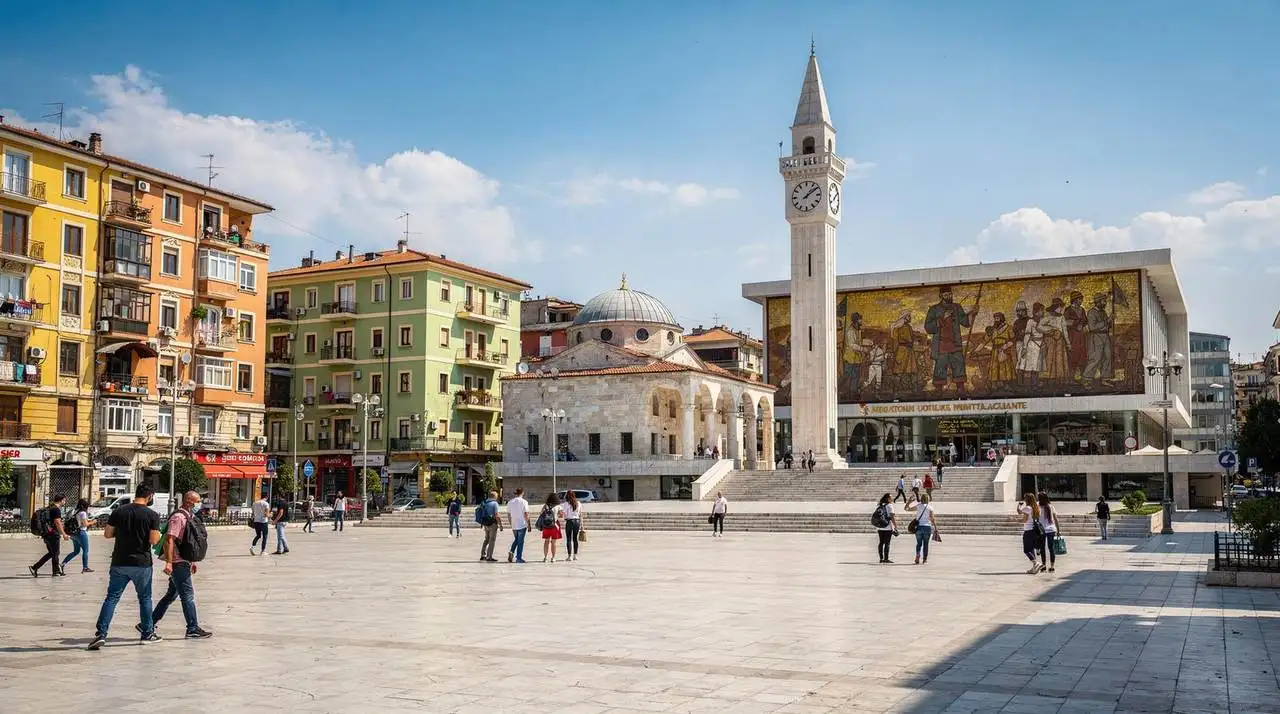
Day 1: Arrive and explore Skanderbeg Square, the National History Museum (with its extraordinary Socialist Realist facade mosaic), and the Et’hem Bey Mosque. Walk the Grand Boulevard — Albania’s answer to Paris’s Champs-Élysées, built by Mussolini’s architects during the Italian occupation. Dinner in the Blloku.
Day 2: BunkArt 2 in the morning (the city-centre nuclear bunker museum is the most accessible of the two BunkArt sites). The Pyramid in the afternoon — Enver Hoxha’s bizarre pyramid mausoleum, now repurposed as a youth arts and technology centre. The National Gallery of Arts for an overview of Albanian visual culture.
Use Day 2 also to organise the onward journey: book the Tirana-to-Prizren bus, or arrange a private transfer to Shkodra where cross-border buses depart.
The 1-day trip to Pristina and Prizren from Tirana is an excellent option if time is very limited — a guided round-trip to both Kosovo cities from Tirana in a single day. However, the itinerary here gives you three days in Kosovo for a much richer experience.
Day 3: Tirana to Shkodra to Prizren — Crossing Into Kosovo
Depart Tirana by bus or shared furgon to Shkodra (2 hours). From Shkodra, buses and shared taxis run to the Kosovo border and onward to Prizren (approximately 3-4 hours total from Shkodra, including the border crossing).
The border crossing at the northern Albanian-Kosovo border is straightforward for most Western travellers. Passport control, vehicle document checks (if in a rental car — check your rental agreement about cross-border use), and a short wait. Albanian police and Kosovo border guards typically process the crossing in 20-40 minutes.
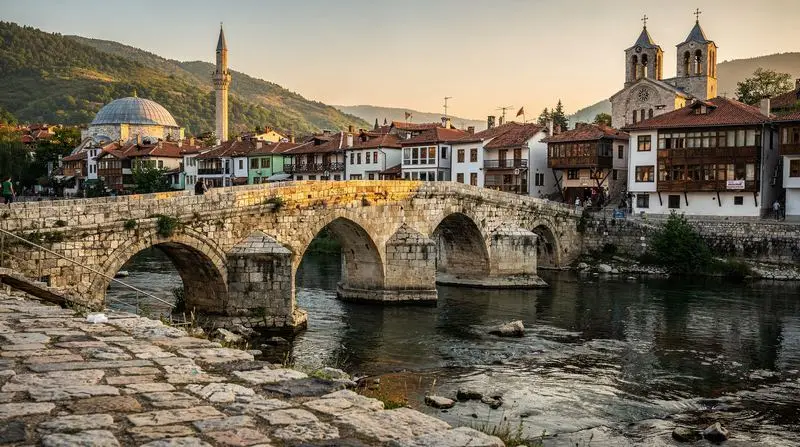
Arrive in Prizren by early afternoon. Prizren is often called the most beautiful city in Kosovo — and for good reason. The old town sits below a hilltop Ottoman castle, with the Bistrica River running through a canyon of Ottoman stone bridges, hammams (bathhouses), mosques, and Serbian Orthodox churches. The skyline is one of the most photogenic in the Western Balkans.
Prizren afternoon and evening: Walk the bazaar (čaršija/çarshia), find the Sinan Pasha Mosque, cross the old stone bridge, and climb to the castle for views over the entire city. The riverside restaurant strip serves kafes (coffee), Kosovar wine and beer, and traditional food. The Kosovar kitchen has significant overlap with Albanian food — grilled meats, byrek, dairy — with Turkish influence more pronounced in some dishes.
Accommodation in Prizren: A range of guesthouses and small hotels cluster in the old town, many with views of the castle. Budget options start around EUR 25-35 per night.
Day 4: Prizren Full Day
Prizren rewards a full day. The city has enough content — religious architecture, museums, street culture, food — to fill two days comfortably.
Morning: The League of Prizren Museum is essential for understanding Kosovo’s history — the League of Prizren (1878) was the first major Albanian national political organisation, founded here in response to the Congress of Berlin that threatened to partition Albanian-inhabited lands. The building and documentation are excellent.
The Albanian community history: Prizren is one of the historic centres of Albanian cultural identity, and visiting during any community event — festival, celebration, market day — intensifies the experience.
Afternoon: The restored Ottoman hammam (bathhouse) is one of the best-preserved in the region, now functioning as an art gallery. The Bishops’ Residence and the Church of Our Lady of Ljeviš (a UNESCO-listed medieval church) represent the pre-Ottoman Prizren.
Evening: The riverfront restaurants and cafes are at their most atmospheric after dark. Kosovar hospitality has the same warmth as Albanian besa — expect coffee pressed on you, conversation offered freely, and the sense of being welcomed.
Day 5: Prizren to Pristina
Bus or shared taxi from Prizren to Pristina (approximately 1.5-2 hours). Pristina is a compact capital city that has been transformed by post-war international investment and a young, energetic population — nearly half of Kosovo’s population is under 25.
Pristina first impressions: The city is not conventionally beautiful — Soviet-era apartment blocks, construction cranes, and chaotic traffic define the immediate impression. But beneath the surface is a city of genuine vitality: excellent coffee (Kosovar coffee culture rivals Albanian in seriousness), a lively nightlife scene, and a political energy that reflects a country still defining its identity.
Must-see in Pristina:
- Kosovo Museum: The national history and ethnography collection, covering the full arc from prehistoric to modern
- Newborn Monument: The installation marking Kosovo’s 2008 independence declaration, repainted annually with a new theme — one of the most photographed monuments in the Balkans
- National Library: Architect Andrija Mutnjaković’s 1982 building — one of the most controversial pieces of architecture in Southeast Europe, covered in domes and mesh caging. You either love it or hate it.
- Mother Teresa Square: The main pedestrian boulevard, named for the Albanian-origin saint born in Skopje
Evening: Pristina’s restaurant scene is the most internationally varied in Kosovo. The Rradhomë area near the Grand Hotel has concentrations of good restaurants and bars.
Day 6: Pristina — Museums and the Rugova Connection
A second day in Pristina covers the remaining highlights and allows exploration of the city’s contemporary culture.
Morning: The Ethnographic Museum in the Emin Gjiku complex — a beautifully preserved 18th-century Ottoman residential complex with period furnishings and displays on Kosovo Albanian traditional culture. The contrast with the modern city outside is striking.
Afternoon: The Museum of Kosovo’s National Liberation contains detailed documentation of the 1998-99 conflict that led to Kosovo’s independence — important context for understanding the contemporary country.
Alternative — Day trip to Peja: If the second Pristina day feels like too much city time, take a morning bus to Peja (Peć in Serbian), the gateway to the Rugova Valley (see Day 7). Arriving a day early gives more time in this excellent area.
Day 7: Peja and the Rugova Valley
Bus from Pristina to Peja (approximately 1.5-2 hours). Peja is Kosovo’s second largest city — smaller and more relaxed than Pristina, with a remarkably intact old bazaar and one of the most important religious sites in the Western Balkans at its edge.
The Patriarchate of Peć: A complex of four Serbian Orthodox churches and a monastery, the Patriarchate dates to the 13th century and served as the seat of the Serbian Orthodox Church for several hundred years. The frescoes inside the church complex are extraordinary — among the finest medieval Christian art in the Balkans. The site operates as an active monastery with a small monastic community.
Rugova Valley and Canyon: The Rugova Valley north of Peja is a dramatic limestone canyon that has been developed as a hiking and adventure area. The Via Ferrata di Rugova is one of Kosovo’s most impressive recent adventure infrastructure investments. Day hikes into the canyon from Peja are accessible without a car.
Evening in Peja: The old bazaar (Çarshia e Pejës) is one of the most authentic markets in the region — not yet fully touristified, with working craftspeople alongside food vendors and cafes.
Day 8: Peja to Valbona — Back Into Albania
The mountain crossing from Kosovo back into Albania brings the itinerary full circle — returning to Albanian territory through the same mountain range where the Peaks of the Balkans trail runs.
From Peja, take a bus or shared taxi south toward the Kosovo-Albania border crossing. The standard route goes via the Qafë Morinë border crossing north of Kukës, and then south through the Valbona Valley. Alternatively, some transport goes directly from Peja to Gusinje (Montenegro border area) and then into Albania through the Valbona Valley direction.
The logistics of this crossing are less frequently done than the major border crossings and require asking locally in Peja for current transport options. A private taxi from Peja to Valbona is often the most practical solution — approximately EUR 50-70 for the vehicle, covering the distance in 2-3 hours through spectacular mountain scenery.
Arrive in Valbona Valley in the afternoon. The contrast between urban Kosovo and the remote Albanian Alpine valley is immediate and striking. Check into a guesthouse and enjoy the silence.
Day 9: Valbona to Theth
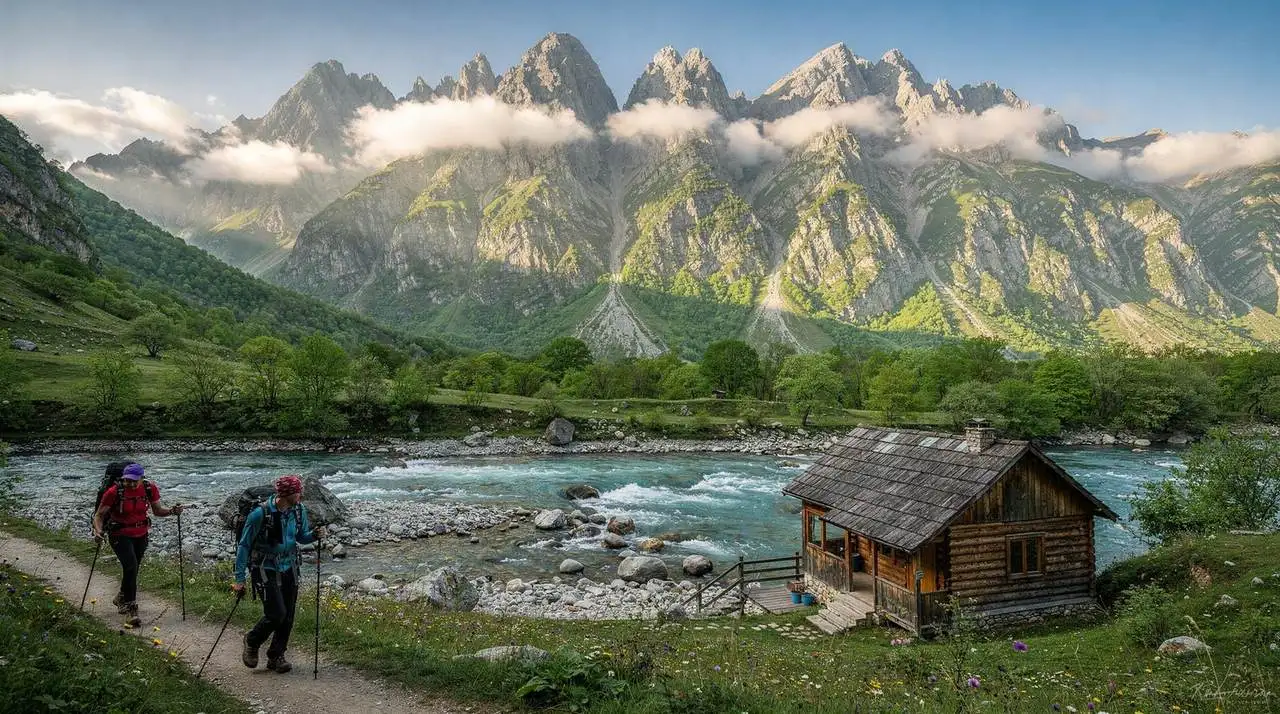
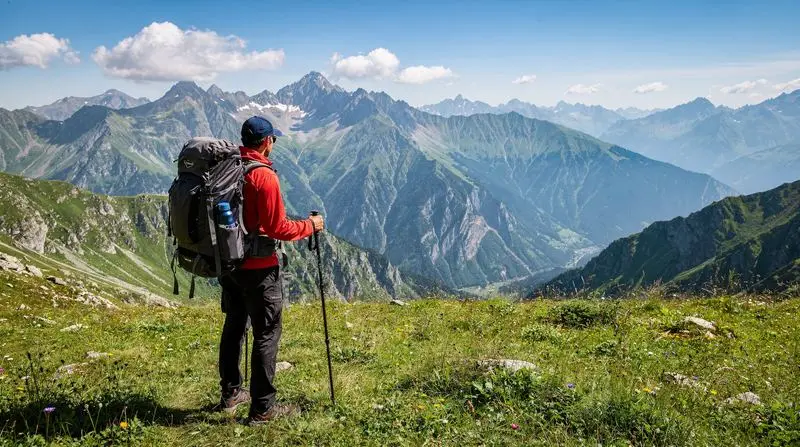
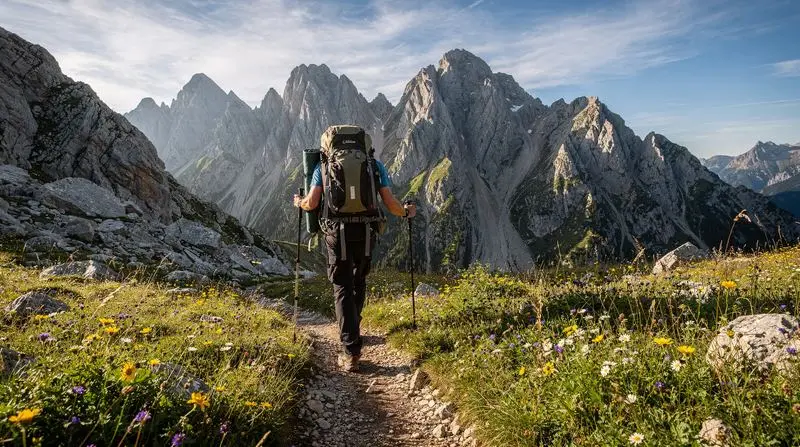
The classic Valbona-to-Theth crossing over the mountain pass (18km, 6-8 hours) — one of the best day hikes in the Balkans. See the Albanian Alps hiking guide for full route details.
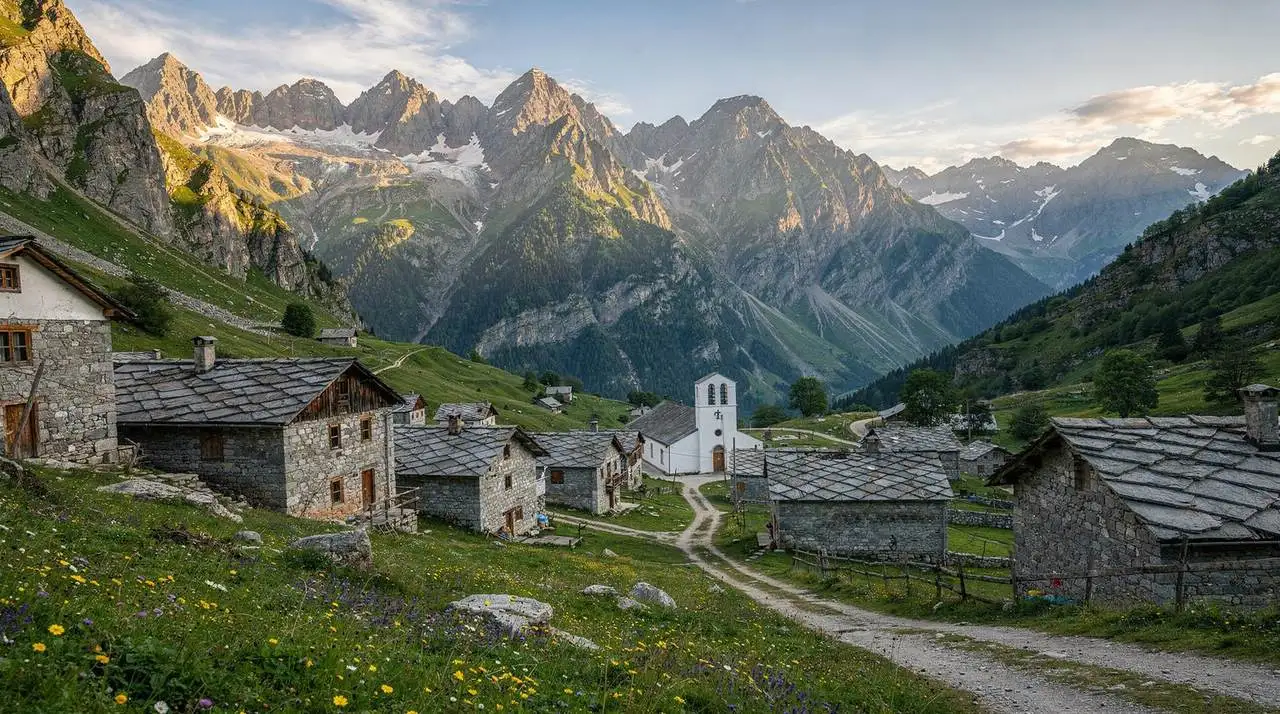
The crossing gains 1,200 metres to the Valbona Pass at 1,793 metres, with panoramic views of the Prokletije peaks in both directions from the top. The descent into Theth arrives in one of the most beautiful mountain villages in Europe.
Theth guesthouses serve the kind of meal that only makes sense at the end of a long hiking day — enormous, multi-course, home-made, with fresh bread, local cheese, and slow-cooked lamb. The evening at the communal guesthouse table is typically one of the most sociable of the entire trip.
Non-hikers: arrange a 4WD vehicle transfer via the mountain track — ask at your Valbona guesthouse the evening before. If you would rather have the logistics handled for you, the 3-day Valbona-Theth pass trip in the Albanian Alps covers this same crossing as an organised tour.
Day 10: Theth to Shkodra to Tirana
Morning furgon from Theth departs around 07:00 — confirm exact time with your guesthouse. The journey to Shkodra takes 2-3 hours over the mountain road.
From Shkodra, buses run regularly to Tirana (2 hours). Arrive in Tirana with time for a final meal and airport transfer.
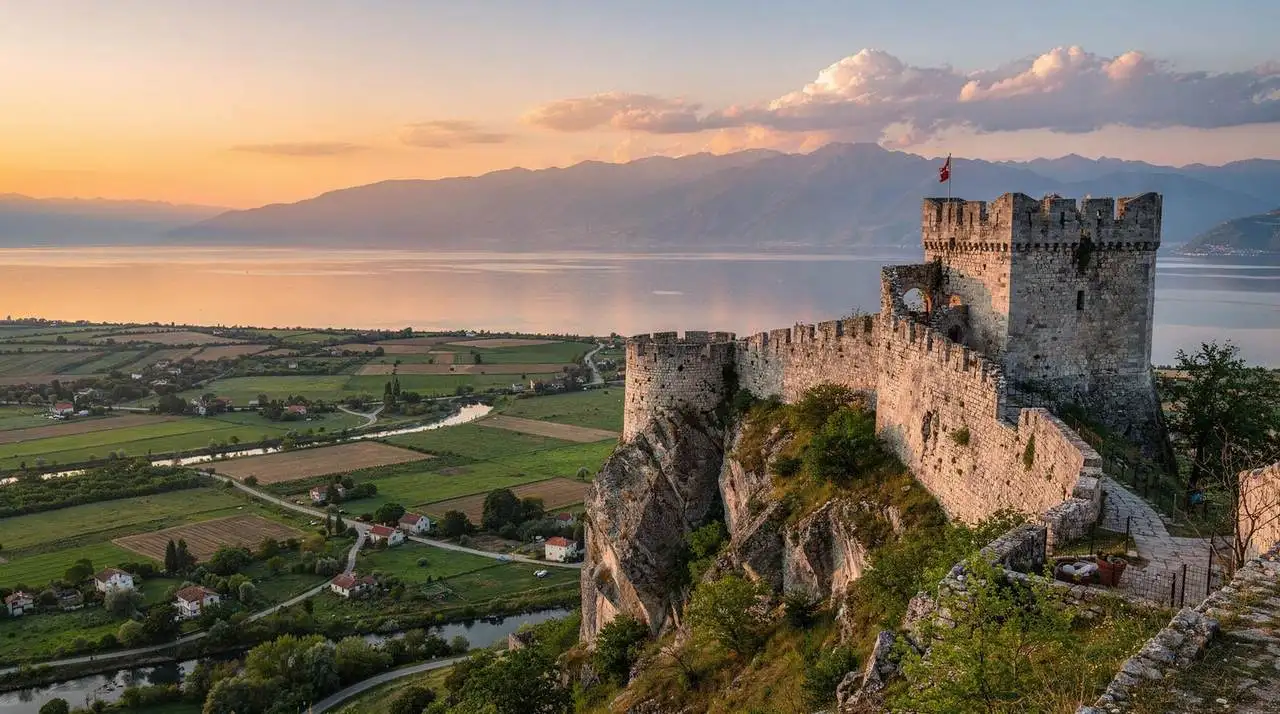
If departure is not until the following day, a night in Shkodra is worth considering — the city’s evening xhiro (promenade) along Kole Idromeno Street, the lakeside restaurant area at Shiroka (20 minutes by taxi), and the Rozafa Castle are all rewarding.
Essential Information
Kosovo Stamp Warning
If you plan to visit Serbia after Kosovo, be aware that a Kosovo entry stamp in your passport may cause difficulties at the Serbian border — Serbia does not recognise Kosovo’s independence and may refuse entry to those who have entered Kosovo from Albania or from the Kosovo border directly. If Serbia is on your itinerary, plan the sequence carefully or ask at the Kosovo border about the possibility of not stamping your passport (this is reportedly available at some crossings, though not guaranteed).
Currency
Kosovo uses the Euro (EUR). Albania uses the Albanian Lek (ALL) but EUR is widely accepted. Have local currency available for small purchases, furgons, and market stalls.
Getting the Timing Right
This itinerary is best in May-June or September-October — pleasant temperatures throughout, no snow on the Valbona Pass, and reduced crowds compared to July-August peak season. The mountain sections (Days 8-10) should not be attempted with snow on the ground.
Accommodation Budget
Guesthouses in Kosovo are comparable in price to Albanian guesthouses — EUR 25-50 per night for a double room, less in budget hostels. Prizren and Peja have the best guesthouse options for the character-over-comfort traveller.
Frequently Asked Questions About the Albania-Kosovo Itinerary
Do I Need a Separate Visa for Kosovo?
Most Western passport holders can enter Kosovo visa-free. The situation depends on your specific nationality — check the Kosovo Ministry of Foreign Affairs current list. EU citizens enter with an ID card or passport.
Is Kosovo Safe to Travel?
Yes. Kosovo is one of the safer destinations in Southeast Europe for international travellers. The 1998-99 war ended over 25 years ago, and the country has been stabilised with significant international peacekeeping and development support. Normal travel precautions apply.
Can I Rent a Car in Albania and Drive It Into Kosovo?
This depends on your rental company. Many Albanian rental agencies prohibit cross-border driving or require specific insurance supplements. Check your rental agreement carefully before crossing. International rental companies (Sixt, Enterprise, Hertz) operating from Tirana airport typically have more flexibility than local operators.
How Do Albanians and Kosovars Feel About Each Other?
The relationship is one of deep cultural connection and genuine warmth. Kosovo’s Albanian community has very close family, linguistic, and cultural ties with Albania proper. There is also a degree of gentle rivalry and differentiation — Kosovars consider themselves distinctly Kosovar, not merely Albanians. Expect warm reception as a traveller exploring both countries.
Is the Valbona-Theth Crossing Possible Without Hiking?
Yes. A 4WD vehicle route over the mountain track connects Valbona and Theth. It is not comfortable — the track is rough and steep — but it is feasible. Arrange through your Valbona guesthouse. The vehicle option takes approximately 1.5-2 hours versus the 6-8 hour hiking option.
Money, Data, and Practical Extras
Carry both currencies from the start: Albanian Lek for the Albanian legs, Euro for the whole of Kosovo. ATMs are reliable in Tirana, Shkodra, Prizren, and Pristina, but Valbona and Theth have none — withdraw what you need before leaving Peja for the mountain crossing. The Albania travel budget guide has a detailed daily-cost breakdown that applies reasonably well to the Kosovo legs too, given the comparable price levels.
Mobile data doesn’t roam cleanly between the two countries on every plan — check with your provider or consider a Balkan-region eSIM (see the Albania eSIM guide) so offline maps and translation apps keep working through the border crossings, which matters most in the more remote Peja-to-Valbona mountain section where signage is limited.
Packing for Cities and Mountains in the Same Trip
This itinerary swings between polished urban days in Pristina and rough mountain days around Valbona and Theth, which makes packing slightly more demanding than a single-climate trip. Bring one set of reasonably presentable clothes for city evenings (Pristina and Prizren both have a lively, dressed-up bar and restaurant culture), alongside proper hiking boots, a rain shell, and a headtorch for the mountain section — day-to-day guesthouses in Valbona and Theth have basic facilities and occasionally patchy electricity. The Albania packing list covers the mountain-specific gear in more detail; for the Kosovo city days, pack lighter and prioritise comfortable walking shoes for cobblestones in Prizren’s old town.
What Sets Prizren Apart From Albanian Old Towns
Travellers who’ve already spent time in Berat or Gjirokastra sometimes wonder if Prizren will feel repetitive. It doesn’t. Prizren’s mix of Ottoman mosques, a Serbian Orthodox church complex, and a restored hammam gives it a more layered religious architecture than either Albanian UNESCO city, reflecting Kosovo’s more complex 20th-century history. The Bistrica River running directly through the old town, crossed by multiple stone bridges, also gives Prizren a different physical geography from the hillside cities of southern Albania — it reads more like a small Ottoman river town than a fortress city. Visiting both, in sequence, sharpens the differences rather than blurring them together.
Comparing This Route to a Single-Country Trip
Travellers short on time sometimes ask whether it’s better to do Albania and Kosovo separately rather than combined. The honest answer: combining them is worth the extra logistics if you have a full 10 days, because the shared-language, shared-culture contrast (urban Kosovo vs. rural Albanian Alps) is genuinely illuminating. If you have less time, a single-country trip focused on the Albanian Alps hiking guide region, or the 14-day Albania itinerary covering the south instead, both deliver a more complete experience of one country rather than a rushed sample of two.