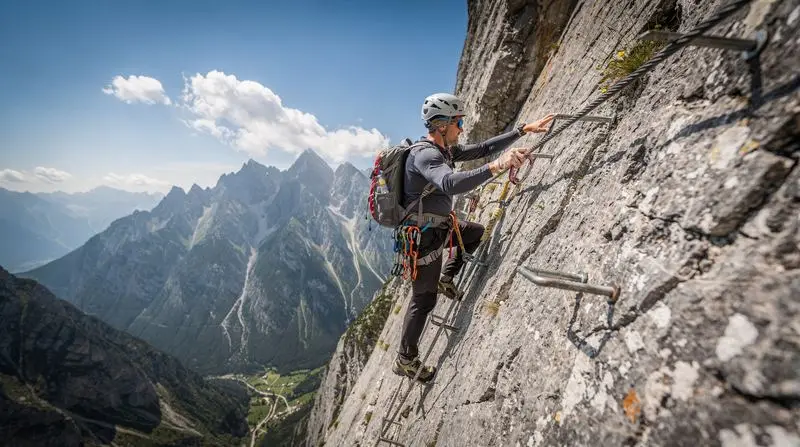
Via Ferrata in Albania: Iron Paths Through the Albanian Alps
Via ferrata — mountain routes secured with iron rungs, cables, and stemples driven into rock faces — is the adventure activity that bridges hiking and rock climbing. It allows people without formal climbing technique to access dramatic vertical terrain with the security of fixed protection. In the Albanian Alps, where vertiginous limestone walls, dramatic ridge traverses, and sweeping mountain views define the landscape, via ferrata routes offer a natural and thrilling way to experience the mountains on their own terms.
Albania’s via ferrata scene is developing, newer and less extensive than the established networks of the Italian Dolomites or Austrian Alps, but genuine and growing. Several routes are now established near Theth and in the broader Prokletije mountain region, with new installations planned as the Albanian government and local tourism development bodies invest in adventure tourism infrastructure in the north.
This guide covers the established routes, how to access them, what gear you need, which operators offer guided options, and how to combine via ferrata with the other exceptional outdoor experiences the Albanian Alps offer.
| Where | Near Theth; developing near Valbona and the Peaks of the Balkans |
| Best time | June through September |
| Difficulty | Moderate to committing; no climbing experience needed |
| Gear | Via ferrata lanyard, harness, helmet — hire locally or bring your own |
| Duration | 2-4 hours (canyon routes) to 5-7 hours (mountain wall routes) |
What Is Via Ferrata?
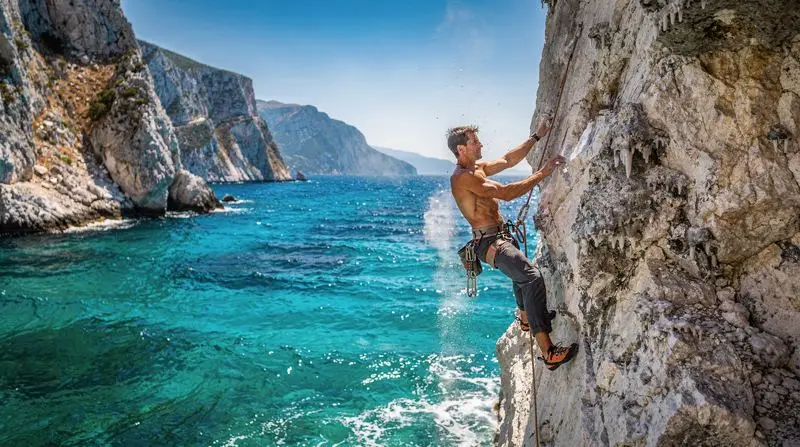
For those new to the activity: a via ferrata (Italian for “iron path”) is a mountain route equipped with a series of iron rungs, cables, and sometimes wooden or metal ladders bolted directly into the rock face. Participants clip a dedicated via ferrata lanyard (with energy-absorbing components) to the fixed cable as they ascend — this catches a fall without the full shock load of an unprotected climbing fall.
The key distinction from rock climbing is that via ferrata requires no technical climbing skills and no rope management knowledge. The fixed protection does the work. What it does require is a head for heights, reasonable upper body strength, and the fitness to maintain physical exertion over a sustained period.
Difficulty gradings vary by route but typically run from D (difficile/difficult) through to TD (très difficile/very difficult) and ED (extrêmement difficile), based on sustained difficulty, exposure, and length.
Via Ferrata Near Theth
Theth is the hub of outdoor adventure in the Albanian Alps, and it is the most accessible starting point for via ferrata activity in Albania. The cliffs surrounding the Theth Valley include several sections equipped as via ferrata.
The Theth Canyon Route
A via ferrata section runs through part of the Theth Canyon — the dramatic limestone gorge that the Shala River has carved below the village. The route follows the canyon walls above the river, using fixed cables and iron stemples where the path becomes a vertical wall. The canyon itself is one of the most scenic natural features in the Albanian Alps, and the via ferrata adds a physical dimension to what would otherwise be a straightforward gorge walk.
The canyon section is relatively accessible — it begins near the village and does not require an extended mountain approach. Combined with the famous waterfall above Theth, a canyon via ferrata day is an excellent full-day programme that also takes in the Theth waterfall.
Mountain Wall Routes
Above the canyon floor, longer via ferrata routes access the steeper limestone walls above the valley. These routes gain significant elevation and offer the most dramatic exposure in the Albanian via ferrata scene. Some sections are genuinely committing — narrow ledge traverses and vertical iron rungs above long drops require comfort with exposure.
The private Theth tour including the waterfall and Blue Eye provides a guided introduction to the Theth area for those who want logistics and local knowledge handled, before tackling via ferrata activities independently.
Via Ferrata Near Valbona
The Valbona Valley is surrounded by the highest peaks in Albania, including Maja Jezercë at 2,694 metres — the tallest point in Albania and one of the highest in the Balkans. The limestone walls of the Valbona peaks have via ferrata potential that is partially developed.
Current via ferrata development near Valbona is less extensive than Theth. Some sections of fixed protection exist on routes leading toward higher terrain, primarily as safety aids on otherwise hiking-grade routes rather than full via ferrata installations.
The most reliable approach for via ferrata near Valbona is to hire a local mountain guide through your guesthouse — they will know current conditions, any new installations, and the routes on which fixed protection is reliable. Guesthouses in Valbona, particularly those that cater to outdoor visitors, are connected to the local guide network.
The Peaks of Balkans Region
The Peaks of the Balkans trail traverses terrain where via ferrata development is ongoing. Several sections of the cross-border trail that involves exposed rocky terrain have been equipped with basic fixed protection in recent seasons. The route from the Albanian side toward the Kosovo border at altitude has some assisted sections.
This is not via ferrata in the full sense — it is more the use of fixed cables and occasional iron stemples to make otherwise difficult path sections safe for walkers. But for those combining the Peaks of the Balkans trek with dedicated via ferrata activity, the combination creates an excellent multi-day adventure programme.
Essential Via Ferrata Gear
Via ferrata requires specific equipment that cannot be substituted with general climbing or hiking gear:
Via ferrata set (lanyard): A Y-shaped energy-absorbing lanyard with two carabiners. This is the non-negotiable piece of kit — a standard climbing harness with regular carabiners is not adequate for via ferrata use because it cannot absorb the shock load of a factor-1 fall onto a fixed cable. Buy or hire specifically for via ferrata.
Harness: A standard sport climbing harness works for via ferrata. Comfort matters — some routes take several hours, and a badly fitting harness becomes miserable.
Helmet: Mandatory. Rockfall from other climbers above is a real hazard, and the helmet protects against any head impact on fixed metalwork.
Gloves: Via ferrata-specific gloves (thin enough to maintain grip on cables while protecting hands from steel cable abrasion) are highly recommended. Thick gloves reduce dexterity; no gloves result in painful rope burns.
Hiking boots: Approach shoes or stiff hiking boots with good grip. Via ferrata involves scrambling on rock as well as the iron sections — proper footwear matters.
Backpack: Small daypack (20-25 litres) for water, food, extra layers, and first aid. Keep it light — a heavy pack affects balance on exposed sections.
Via ferrata hire in Albania: Equipment hire specifically for via ferrata is available at some Theth guesthouses that cater to adventure activities. Availability is not guaranteed — bringing your own via ferrata set is the safer option if this is a key activity goal.
Difficulty and Fitness Requirements
Via ferrata routes are graded, but even easy routes require a basic level of fitness and an absence of severe vertigo:
Physical requirements:
- Ability to pull yourself up iron rungs using upper body strength
- Core stability for sustained upright positions on exposed sections
- Fitness to maintain exertion for 3-6 hours depending on route length
- Basic scrambling ability for approach sections
Mental requirements:
- Comfort with exposure (steep drops below you)
- Ability to problem-solve movement on vertical terrain
- Confidence using the via ferrata lanyard correctly (clipping each carabiner alternately past anchor points)
Not required:
- Rock climbing experience
- Rope management skills
- Belaying techniques
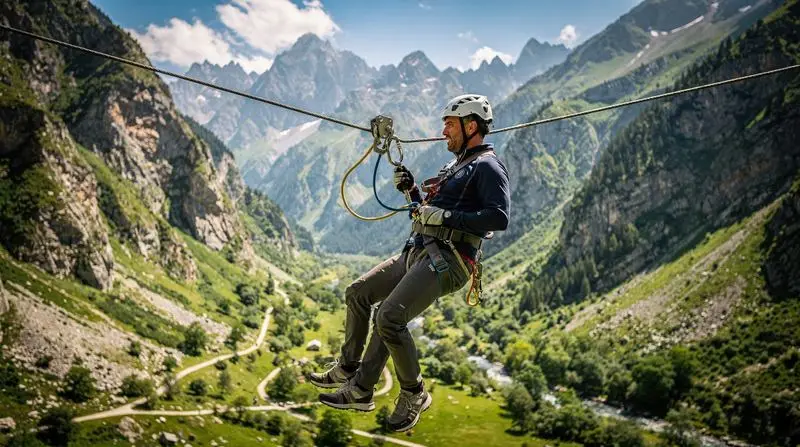
For those who find even the idea of exposure challenging, the zip line in Theth offers a high-adrenaline mountain experience that involves no climbing or vertical terrain navigation.
Guided Via Ferrata in Albania
Guided via ferrata options in Albania are developing. The main providers are local adventure tourism operators and guesthouse networks in Theth and the broader Shkodra-north region.
Benefits of guided via ferrata:
- Equipment hire included (resolves the gear problem)
- Local guide knows route conditions (fixed cables can deteriorate; local knowledge is current)
- Safety oversight for those new to via ferrata technique
- Rescue capability if something goes wrong in a remote location
Finding guides:
- Ask directly at Theth guesthouses — the well-established ones (particularly those that market themselves to outdoor tourists) have guide connections
- Shkodra-based adventure tour operators sometimes offer day trips to Theth including via ferrata
- Online tour platforms list some Albanian Alps adventure day tours that include via ferrata elements
Best Season for Via Ferrata in Albania
June through September is the optimal via ferrata window in the Albanian Alps. Snow has cleared from routes, weather is most stable, and daylight hours are long.
October is possible for lower-altitude routes but higher mountain via ferrata carries increasing risk of early snow and rapidly deteriorating conditions.
May can work on south-facing routes at lower altitudes, but snow lingers on shaded faces and north-facing walls into mid-May.
November to April: Via ferrata in the Albanian Alps is not appropriate — snow, ice, and short days make the fixed protection dangerous rather than helpful.
Combining Via Ferrata with Other Albanian Alps Activities
The Albanian Alps offer such a concentration of outstanding outdoor activities that via ferrata naturally fits into a multi-activity itinerary:
Day 1: Arrive in Theth via Shkodra. Explore the village, swim in the waterfall pool. Day 2: Via ferrata on the canyon or mountain wall route. Full day. Day 3: The classic Valbona-Theth hike over the Valbona Pass — best done after acclimatisation. Day 4: Zip line and rest day in Theth. Day 5: Transfer to Valbona for valley exploration. Day 6: Peaks of the Balkans first stage, or return to Shkodra.
This programme combines the main physical adventures of the Albanian Alps in one concentrated stay. If you would rather have the Day 3 pass crossing and transfers organised for you, the 3-day Valbona-Theth pass trip through the Albanian Alps is one guided way to do it.
The Broader Context: Adventure Tourism in the Albanian Alps
Albania’s government and EU development programmes have identified adventure tourism in the Albanian Alps as a priority economic sector. Investment in trail infrastructure, signage, and activity development (including via ferrata) is ongoing. The sector has grown substantially since 2018 and continues to expand.
For visitors, this means the situation improves each year: more established routes, better documented, with more professional guiding options. Those visiting now encounter a destination at an exciting point in its development — established enough to be accessible, early enough to feel genuinely untouched.
The hiking in the Albanian Alps guide provides comprehensive coverage of the broader mountain walking network that complements via ferrata activity.
What Makes the Albanian Alps Routes Distinctive
Unlike the heavily engineered via ferrata networks of the Dolomites, Albania’s routes retain a rawer, less manicured character — fewer signposts, less standardized grading, and a genuine sense of exploring terrain that has not been fully packaged for mass tourism. This is part of the appeal for experienced via ferrata enthusiasts seeking something less crowded than Western Europe’s established circuits, but it also means the margin for error is narrower and local guiding matters more here than it might elsewhere.
Cost of Via Ferrata in Albania
Compared with the well-established via ferrata networks of the Dolomites or the Austrian Alps, Albania is genuinely inexpensive. A guided half-day via ferrata excursion near Theth, including equipment hire, typically runs EUR 40-70 per person, while a full-day mountain wall route with a guide costs EUR 70-120 depending on group size and route difficulty. Independent hikers who already own via ferrata gear can do the canyon route at no cost beyond accommodation and transport to Theth.
For comparison, equivalent guided via ferrata days in the Dolomites often run EUR 150-250, making Albania a genuinely budget-friendly entry point into the sport for travelers who want to try it before investing in a more established Alpine trip. Combine the activity cost with a stay at a Theth guesthouse (EUR 20-35 per person including meals) for a full picture of what a via ferrata day in the Albanian Alps actually costs.
Who Via Ferrata in Albania Suits Best
This is a genuinely good fit for adventurous hikers who want more physical intensity and exposure than the standard Theth-Valbona hike offers, without committing to full technical rock climbing. It is less suited to complete beginners with a fear of heights, or to travelers on a tight one- or two-day Albanian Alps visit, since via ferrata routes take a full day and are best combined with at least one rest day either side. Families with older, confident children can find suitable canyon-level routes, while the mountain wall routes are better reserved for adults and experienced teenagers comfortable with sustained exposure.
Frequently Asked Questions About Via Ferrata in Albania
Do I Need Climbing Experience for Via Ferrata?
No. Via ferrata is specifically designed for people without rock climbing experience. The fixed iron protection means you do not need rope management skills or climbing technique. You do need a specific via ferrata lanyard and harness, basic fitness, and comfort with heights.
Where Can I Hire Via Ferrata Equipment in Albania?
Equipment hire for via ferrata is available at some Theth guesthouses and through adventure tour operators in Shkodra. Availability is not guaranteed year-round — contact your accommodation in advance to confirm gear availability, or bring your own via ferrata set from home.
Are the Via Ferrata Cables Well Maintained?
Route maintenance standards in Albania are improving but are not yet at the level of Austrian or Italian via ferrata networks. Before committing to any section of fixed cable, test it with bodyweight before trusting it fully. Guided trips are advisable precisely because local guides know current maintenance status.
How Long Does a Via Ferrata Route Take?
Shorter canyon routes near Theth take 2-4 hours. Full-day mountain wall routes take 5-7 hours including approach. Plan for full days and carry adequate water, food, and warm layers.
Is Via Ferrata in Albania Suitable for Children?
Older children with reasonable fitness and no fear of heights can enjoy via ferrata. The minimum age generally recommended for via ferrata internationally is around 8-10 years depending on the child. Adult supervision at all times is mandatory, and children need correctly sized via ferrata sets — full-size adult equipment does not fit safely on small bodies.