Scams and Tourist Traps in Albania: What to Watch For
Albania is one of the safest countries in Europe for personal safety — violent crime against tourists is extremely rare and the Albanian tradition of hospitality (besa) means that most interactions with locals are genuinely warm and helpful. The Albania customs and etiquette guide gives more context on the cultural values that make scamming guests deeply unusual. However, like any developing tourism destination, there are opportunistic practices that target inexperienced visitors. Knowing what to watch for is half the battle.
The scams described in this guide are real but not widespread. Albania is far from a scammer-heavy destination compared to more heavily touristed parts of Europe. Most Albanians are honest, direct, and genuinely want visitors to have a good experience. This guide exists not to create alarm but to give you the knowledge that protects you from the minority of situations where you might be taken advantage of.
| Main risks | Taxi overcharging, ATM DCC, drink price markups |
| Airport taxi fair price | Around EUR 25-30 to central Tirana |
| Best fix | Bolt app in Tirana; always agree a price first elsewhere |
| Currency exchange | Only licensed offices — never street changers |
| Overall safety level | High — violent crime against tourists is rare |
Taxi Overcharging
Taxi overcharging is the most common way visitors to Albania lose money unnecessarily. It affects primarily:
- Tirana airport arrivals
- Central Tirana to tourist destinations
- Beach areas in summer
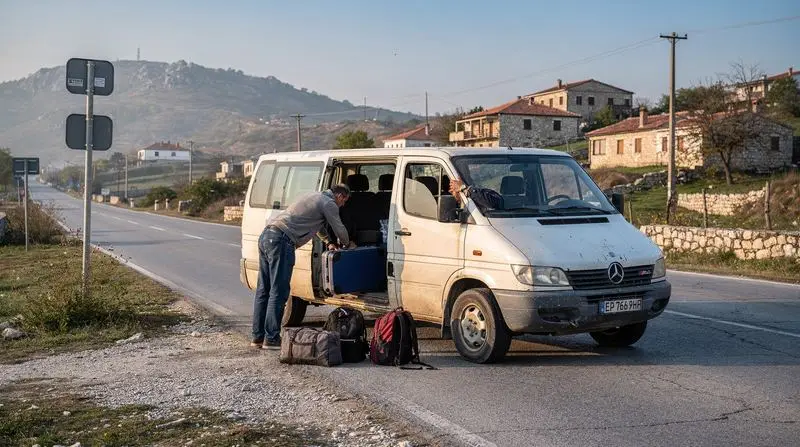
How it works: Unlicensed or opportunistic drivers approach you before you reach official taxi ranks. They quote a “special price” or simply don’t mention a price at all, driving you to the destination and then naming an inflated figure. Common targets are travelers arriving at Tirana International Airport who don’t know what the correct fare to the city is.
The correct fares (approximate 2025-2026): See the Albania currency guide to understand Albanian Lek amounts.
- Tirana Airport to city center: 2,500-3,000 ALL (EUR 25-30). The legitimate licensed price. Anything over 4,000 ALL is overcharging.
- Within central Tirana: 200-400 ALL for most short trips
- Tirana to Durres: 3,000-4,000 ALL by negotiated private taxi
- Saranda city center short trips: 200-400 ALL
How to avoid it:
- Use Bolt (the ride-hailing app) in Tirana — this is the cleanest solution. The fare is metered, the driver is rated, and you pay a known price. See the Albania public transport guide for full Bolt guidance.
- At the airport, use the official airport transfer service or pre-book through a reliable operator. Tirana airport transfer booking removes the taxi negotiation entirely.
- Always agree a price before getting into any unmetered taxi. Say “Sa kushton deri te…?” (How much to…?). If they won’t name a price, walk away.
- If a driver approaches you proactively at an airport or tourist site offering transport, be especially cautious — this is often a signal of inflated pricing.
What to do if overcharged: If you reach your destination and a driver names an unreasonable price, state calmly what you understood the fare to be. Most disputes resolve without drama. Having the correct note ready and handing it over confidently (“kjo është çmimi i rënë dakord”) works well. Screaming matches are rare and generally unnecessary.
Currency Exchange Scams
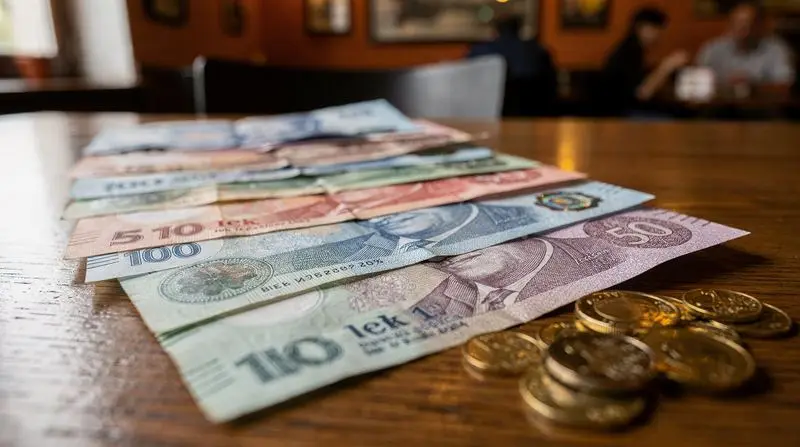
Albania has legitimate exchange offices (biro këmbimi) throughout Tirana and major cities. However, a small number of unofficial money changers and some airport exchange booths engage in deceptive practices.
The classic street changer scam: A person approaches you near a tourist site or bus station offering to change money. They show you a favorable rate. During the counting-out of notes, through sleight of hand, notes are palmed or replaced with lower denominations. You walk away with significantly less than you were owed.
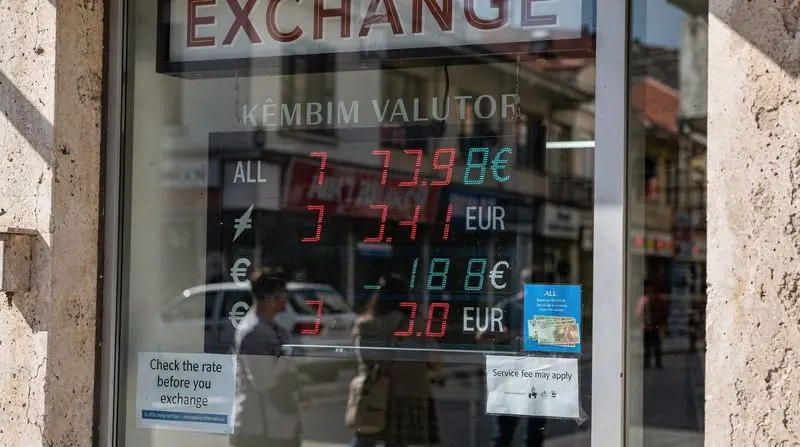
How to avoid it: Never change money with individuals on the street. Only use licensed exchange offices (look for official signage, a physical premises, a printed rate board). In Tirana, the exchange offices along the Rruga e Kavajës corridor and in Blloku are reputable.
Airport exchange rates: Not a scam per se, but Tirana Airport exchange offices consistently offer 3-5% worse rates than city center offices. This is a standard airport premium. Change a small amount at the airport for immediate needs and use city offices for the bulk of your exchange.
The fake note trick: Extremely rare in Albania, but worth knowing: some counterfeit Albanian 5,000 ALL notes circulate. Albanian bank tellers can check; you can also examine security features. If you are given any note that feels wrong (weight, print quality), question it immediately.
Best practice: See the Albania currency and money guide for how to find the best exchange rates and avoid all the common pitfalls.
Restaurant Drink Price Tricks
This is perhaps the subtlest and most frequently encountered tourist trap in Albanian restaurants, particularly at tourist-zone establishments in Saranda, Dhermi, and Berat.
How it works: Your waiter brings an expensive imported beer, premium mineral water, or specific spirits without confirming your order, or without mentioning the price. The bill contains items at significantly above standard prices. Drinks brought “complimentary” with meals sometimes appear on the bill.
Specific variations:
- Ordering “water” and receiving expensive imported mineral water rather than local water or tap (the Albania tap water guide covers what is safe to drink)
- Ordering “beer” and receiving premium imported beer at 3-4x the price of local Albanian beer
- Ordering a spirit by type (e.g., “whisky”) and receiving a top-shelf brand at premium pricing
- A basket of bread appearing on the bill as a charged item
How to avoid it:
- Ask for the menu before ordering drinks and check drink prices
- Specify Albanian beer by name (Korça is the major local brand): “Birë Korça, ju lutem”
- Ask for local mineral water (Glina or Tepelena) rather than European brands
- If bread or olives arrive uninvited, ask “A është falas?” (Is this free?) before eating
- Review the bill line by line before paying. Errors — genuine or otherwise — do occur.
If something wrong appears on the bill: Point it out calmly: “Mendoj se ka një gabim këtu” (I think there’s a mistake here). In most cases this resolves quickly. The establishment does not want a scene.
ATM Dynamic Currency Conversion (DCC)
This is a bank/ATM industry practice, not a local scam as such, but it costs many Albania visitors significant money every year.
How DCC works: When you use a foreign bank card at an Albanian ATM, the machine may ask: “Would you like to be charged in EUR/GBP/USD rather than ALL?” or “Accept this exchange rate?” This is dynamic currency conversion. The ATM (or its bank) converts the transaction to your home currency at a rate that is typically 3-7% worse than your card’s actual exchange rate.
Always choose to be charged in ALL (Albanian Lek). This lets your own bank apply its exchange rate, which is almost always better. When an ATM asks which currency, choose the local currency every single time.
Additional ATM caution:
- Use ATMs attached to or inside bank branches rather than freestanding machines in tourist areas
- Check for card skimmers (loose, unusual attachments around the card slot — give it a firm wiggle)
- Albanian ATMs charge a withdrawal fee (typically 200-400 ALL). Using a Revolut, Wise, or Starling card eliminates your home bank’s international fee portion.
Fake or Low-Quality Tour Operators
As Albania’s tourism has grown, so have informal “tour operators” — individuals who advertise tours via flyers in hostels, social media, or direct approach at bus stations — without proper accreditation, insurance, or consistent quality.
What goes wrong: Travelers pay for a full-day tour, agree to meet at a specific time, and the driver arrives late, takes unexpected detours to commission-paying shops, rushes through sites to fit in more stops, uses an unsafe vehicle, or in rare cases doesn’t show up at all.
How to identify trustworthy operators:
- Use reputable booking platforms where reviews are verified. GetYourGuide, Viator, and well-established booking sites show genuine feedback.
- Established tours with hundreds of reviews are reliable indicators of consistency.
- Ask your accommodation for recommended guides and drivers — guesthouses and hostels with their reputation at stake recommend operators carefully.
Recommended verified tour options:
Tirana walking tour with verified reviews Tirana food tour with included meals Verified Saranda area day tourThe Commission-Shop Driver
A specific sub-type of the tour operator issue: a private driver or local “guide” who offers cheap transport to multiple sites but builds in stops at specific shops, restaurants, or craft markets where they receive a commission.
Signs to watch for:
- Driver insists on stopping at a specific souvenir shop “just to look”
- Restaurant recommendation comes with suspiciously enthusiastic insistence
- Driver speaks very highly of one specific business unprompted
This is not necessarily malicious — commission arrangements are a normal part of guide economics in many countries — but it can mean your time and choices are being shaped by someone else’s financial interest rather than your own.
How to handle it: Simply decline politely. “Nuk dua të ndaloj, faleminderit” (I don’t want to stop, thank you). A good driver will accept this. A driver who argues or creates pressure is acting inappropriately.
Overpriced “Tourist Menus” at Beach Restaurants
On the Albanian Riviera during summer peak season, some beach restaurants operate what are effectively two menus: one for regulars and one for tourists, with prices several times higher for the same items.
What to expect at legitimate prices:
- Grilled sea bream (koce/levrek): 600-1,200 ALL per portion at reputable restaurants
- Local salad (sallatë): 200-300 ALL
- House wine carafe: 400-600 ALL for 500ml
- Beer: 150-300 ALL
Prices 3-4x these figures at a basic beach restaurant are a signal to look elsewhere or negotiate.
Best approach: Look at where locals are eating. Ask for the price of specific items before ordering rather than ordering first. Restaurants with printed menus and visible pricing are always preferable.
Misleading “Free Wi-Fi” Hotspots
A minor issue but worth noting: some public Wi-Fi hotspots in tourist areas are honeypots for credential theft. Using a VPN on public Wi-Fi is standard digital hygiene. See the Albania digital nomads guide for cybersecurity recommendations.
Border Crossing “Fee” Requests
At some land border crossings, visitors have reported individuals — sometimes in unofficial-looking uniforms — asking for a “processing fee,” “environmental fee,” or similar payment before or after the official checkpoint.
There are no legitimate fees payable to individuals at Albanian border crossings. Official crossing fees (if any) are paid at official cashier windows with receipts. Any person requesting cash payment on a personal basis at a crossing is attempting a scam. Politely decline and proceed to the official checkpoint. See the Albania border crossings guide for what to actually expect.
What Albania Is NOT: Dispelling Myths
It is important to say clearly: Albania is not a high-scam destination. The issues described in this guide affect a small minority of visitors, typically those who are not informed going in. Many visitors complete entire Albania trips without experiencing a single questionable interaction.
Violent crime against tourists is rare. Pickpocketing, while present in crowded areas (Tirana’s Pazari i Ri market, busy Riviera beaches), is far less common than in Western European capitals like Rome, Barcelona, or Prague. Albanians who see a tourist in difficulty are far more likely to help than to exploit.
The overriding reality of travel in Albania is one of extraordinary hospitality, genuine curiosity about foreign visitors, and a strong cultural ethic against taking advantage of guests. The besa tradition — an Albanian code of honor rooted in centuries of mountain culture — means that most Albanians find the idea of scamming a guest deeply shameful.
Travel with awareness, not anxiety.
Booking Scams and Fake Listings
As Albanian tourism has grown online, fake or misleading accommodation listings have appeared on major booking platforms.
The “photos not matching” listing: A guesthouse or apartment is advertised with professional photos that turn out to be stock images or photos of a completely different property. On arrival, the actual accommodation is significantly inferior.
How to protect yourself:
- Read recent reviews carefully — look for specific details that confirm the photos are real
- Google the address and use Street View to verify the building matches
- Book through established platforms (Booking.com, Airbnb) that have dispute resolution processes
- For expensive bookings, email the property directly to confirm specific features
Phone SIM scam: In rare cases, people near airports or tourist sites offer to “help” set up a local SIM card and end up charging significantly above the market rate or signing you up for a contract you didn’t understand. Buy SIM cards only from official mobile operator shops (Vodafone Albania, Telekom Albania, or ONE). See the Albania eSIM guide for legitimate mobile options. For airport arrival guidance, see the Tirana airport transfers guide.
Overfriendly Strangers and “I Will Show You Around”
In some tourist destinations worldwide, the “overfriendly local who insists on showing you around” ends with an expectation of payment for “guiding services” or being steered to specific shops. This is far less common in Albania than in heavily touristed destinations. The Albania customs and etiquette guide explains the genuine hospitality culture.
In Albania this is much rarer than in, say, Morocco or Egypt — the tradition of genuine hospitality means most people who offer to help you are actually just being hospitable. However, it does occasionally occur in highly tourist-frequented spots.
Reading the situation: A local who approaches you, asks where you are from, chats for a few minutes, and then says goodbye is just being friendly. A local who insists on accompanying you for an extended period, steers you repeatedly toward specific shops, and eventually mentions payment is in different territory.
The simple response: “Faleminderit, por dua të shëtis vetëm” (Thank you, but I want to walk alone). This is politely definitive.
Using Reputable Tour Operators
The most effective protection against tour-related disappointments is using verified, reviewed operators. Pre-booking through established platforms means you have reviews, cancellation policies, and dispute resolution available.
Tirana walking tour with verified reviews Pre-booked Tirana airport transferWhat Locals Actually Think About Tourist Pricing
It is worth understanding the Albanian perspective on pricing for tourists. A significant part of the population views some tourist pricing differential as legitimate — the logic being that visitors from Western Europe, the US, or Australia have significantly higher purchasing power than locals, and charging them more is a reasonable market response.
This is not unique to Albania — it happens in varying degrees throughout the developing world. The question is where legitimate market pricing ends and exploitative practice begins.
Legitimate: Restaurants in tourist areas charging more than equivalent restaurants serving only locals. Higher-end guesthouses in popular destinations. Transport in remote areas with limited alternatives.
Problematic: Active deception (false exchange rates, hidden menu items, undisclosed fees). Refusing to show prices before service. Adding charges not discussed in advance.
The distinction is disclosure. If prices are visible and understood before you commit to a service, you are in the realm of market pricing. If prices are obscured, changed, or misrepresented, you are in the realm of a scam.
Scam Prevention Mindset Summary
The most effective scam-prevention tool is not a detailed mental checklist but a simple habit: clarify prices and terms before committing to any service.
- Before getting into a taxi: “How much to [destination]?”
- Before ordering at a restaurant: glance at menu prices
- Before changing money: note the displayed rate on the board
- Before booking a tour: read reviews, check what is included
- At an ATM: choose local currency when offered a choice
This single habit eliminates the vast majority of tourist traps in Albania — and in every other destination you will ever visit.
Scam Risk by Location
Scam risk in Albania is not evenly distributed — it concentrates in specific settings rather than being a general country-wide concern. Airports and their immediate taxi ranks are the single highest-risk touchpoint, since arriving travelers are unfamiliar with fair prices and often tired after a flight; this is where pre-booking an airport transfer removes the negotiation entirely. Beach resort towns during peak July-August season see the most restaurant price inflation, simply because turnover is high and repeat business matters less to seasonal operators than in a town locals return to year-round. Bus stations and border crossings occasionally attract informal “helpers” who offer unsolicited assistance for a fee — polite firmness is the standard, effective response in all these settings.
By contrast, smaller towns, guesthouses, and family-run restaurants away from the main tourist circuit see almost none of this. The scams described throughout this guide correlate strongly with tourist density and are largely absent once you move beyond the handful of high-traffic spots — a useful frame for calibrating vigilance rather than applying the same level of caution everywhere.
Common Albania Scams at a Glance
| Scam type | Typical loss | Best prevention |
|---|---|---|
| Taxi overcharging | EUR 10-30 | Use Bolt in Tirana; agree price elsewhere |
| ATM dynamic currency conversion | 3-7% of transaction | Always choose to be charged in ALL |
| Restaurant drink markup | EUR 3-10 per drink | Ask prices before ordering; specify local brands |
| Street currency exchange | Significant, varies | Only use licensed exchange offices |
| Fake/informal tour operators | Full tour cost | Book through GetYourGuide/Viator or reviewed operators |
First-Time Visitor Checklist
For anyone arriving in Albania for the first time, a short pre-departure checklist covers the practices that prevent most of the issues described in this guide: install Bolt before you land for Tirana transport; withdraw a first batch of Lek from a bank-attached ATM and always select “charge in ALL”; keep a mental note of the approximate airport-to-city fare (EUR 25-30) so an inflated quote is obvious immediately; and book your first night or two of accommodation through an established platform with reviews rather than an unsolicited street offer. None of this requires special vigilance once it becomes habit — it is the same low-effort awareness that serves well in any unfamiliar destination.
Reporting and Recourse
Should something go wrong, Albania has functional channels for recourse, even if the process is less polished than in Western Europe. The tourist police in Tirana and major coastal towns handle visitor-specific complaints and are generally responsive, particularly for anything involving licensed businesses like taxis, hotels, or registered tour operators. For card fraud or unauthorized ATM charges, contacting your bank immediately — ideally within the same day — gives you the best chance of a successful dispute. Keeping receipts, noting vehicle license plates, and taking photos of posted prices before a dispute arises all strengthen your position if you do need to escalate. The Albania travel tips guide and Albania safety guide both cover the wider practical safety picture beyond scams specifically.
Frequently Asked Questions About Scams in Albania
Is Albania safe for tourists?
Yes, Albania is broadly safe. Personal safety risks are low and violent crime targeting tourists is rare. The main risks are opportunistic financial practices — taxi overcharging, currency exchange shortcuts, restaurant bill errors — rather than anything more serious.
How do I avoid taxi scams in Albania?
Use the Bolt app in Tirana for all urban rides. Outside Tirana, always agree the price before getting in any unmetered taxi. The correct Tirana airport to city fare is approximately EUR 25-30. Anything significantly above this is overcharging.
Is ATM dynamic currency conversion a big deal?
Yes — it can cost 3-7% on every transaction. Always choose to be charged in ALL (Albanian Lek) when an ATM asks which currency. This applies everywhere internationally, not just Albania.
Are there any neighborhood-specific scam hotspots in Tirana?
The areas around Skanderbeg Square, the Blloku area on weekend nights, and the Pazari i Ri market have the highest concentration of tourist visitors and thus the highest likelihood of encountering opportunistic practices. Standard urban awareness applies.
What should I do if I am scammed in Albania?
For significant amounts, report to the Albanian Police (emergencies: 129, tourist police available in major cities). For taxi disputes, document the licence plate. For card fraud, contact your bank immediately. Review the Albania travel tips guide for general safety guidance. In most situations, a calm direct conversation with the establishment resolves the issue without escalation.