Tipping in Albania: The Complete Guide
Tipping culture in Albania occupies an interesting middle ground. It is not the obligatory 15-20 percent expected in North America, nor is it the firmly-declined-with-a-smile gesture of Japan. Albania sits somewhere in between: tipping is appreciated, sometimes expected in tourist-heavy contexts, and always done in cash. Understanding the local norms saves embarrassment and ensures the people who serve you well feel properly acknowledged.
This guide is part of a broader series covering Albanian money and customs. See the Albania currency and money guide, the Albania customs and etiquette guide, and the Albania travel budget guide for the complete financial picture.
This guide breaks down every tipping scenario you will encounter in Albania — restaurants, cafes, taxis, tour guides, hotel staff, spa workers, and more — with practical guidance on amounts, timing, and the cultural context behind each.
| Restaurants | 5-10%, cash only, hand it to your server |
| Taxis | Round up the fare |
| Tour guides | EUR 5-10/person half-day, EUR 10-15 full-day |
| Hotel staff | EUR 1-2/night housekeeping, EUR 1/bag porters |
| Currency | Lek or euros both accepted; never card |
The Cultural Context of Tipping in Albania
Albania’s tipping culture has evolved rapidly alongside its tourism sector. A decade ago, tipping was rare and largely confined to high-end Tirana restaurants serving international clientele. Today, tipping at restaurants and for guided tours is increasingly normal, especially in tourist centers like Saranda, Berat, Tirana, and along the Albanian Riviera.
Several factors shape how tipping works here:
The hospitality tradition (besa and mikpritja): Albanian culture places enormous weight on hospitality. Hosts — whether a restaurant owner or a mountain family offering coffee — often genuinely do not want payment and may feel insulted by attempts to tip in some informal contexts. Reading the situation matters more than applying a fixed rule.
Service industry wages: Hospitality wages in Albania are low by Western European standards. A waiter in Tirana might earn EUR 400-600 per month. Tips meaningfully supplement income. In tourist zones during summer, tips from international visitors can double monthly earnings.
Cash economy: Albania remains heavily cash-based. Tips left on a card are often not passed to staff in smaller establishments. Physical Lek or euros handed directly to the person who served you is the right approach.
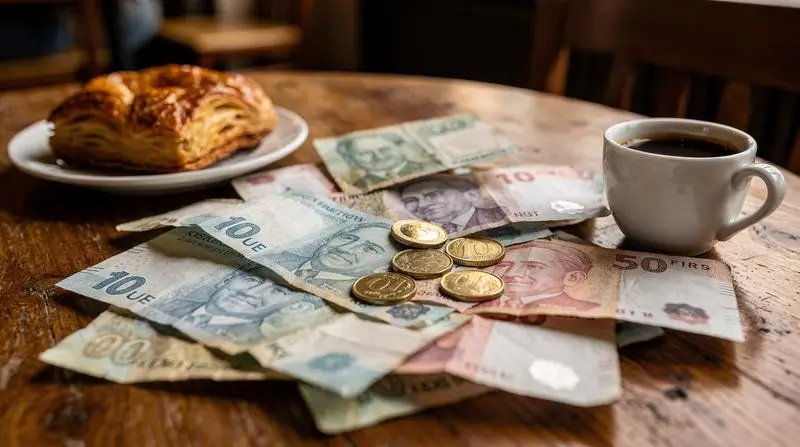
The euro vs. Lek question: In tourist areas, a small euro tip (EUR 1-2) is often received with particular appreciation, as staff can use euros easily or exchange them favorably. In non-tourist areas, tipping in Lek is more appropriate.
Tipping at Restaurants
Restaurants are the primary tipping context for most visitors to Albania.
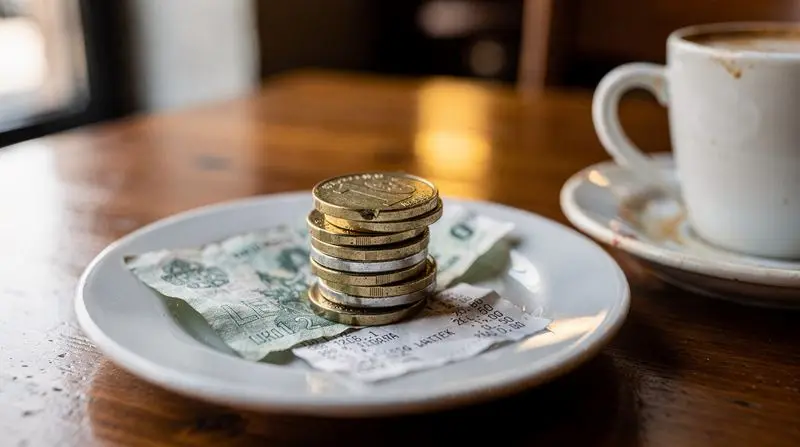
Standard restaurants and tavernas (rrestorante, taverna): The norm is 5-10 percent of the bill. Round up to a sensible number rather than calculating precisely. On a 1,200 ALL bill, leaving 1,400 ALL (rounding up by roughly 200 ALL, about EUR 2) is perfectly appropriate and warmly received.
How to tip at restaurants: Do not add a tip to a card payment and assume it will reach the waiter — in many Albanian restaurants, card tips disappear into the till. When paying cash, leave the tip physically on the table or hand it to your server directly with a “Faleminderit” (thank you). If paying by card, bring a small amount of cash specifically for the tip.
Tourist restaurants in Saranda, the Albanian Riviera, or Berat: These establishments serve primarily international visitors and tip expectations are higher. Leaving 10% is the comfortable norm. Staff at these restaurants often speak English and are accustomed to the practice.
High-end Tirana restaurants: At the city’s upscale dining venues — Mrizi i Zanave’s urban outpost, Era, Mullixhiu — 10% is standard. Some include a service charge (check the bill). If service is exceptional, 15% is not unusual.
Family-run guesthouses and small konaks: Here the lines blur. Dinner at a family guesthouse feels more like eating in someone’s home, because it often is. Leaving a tip (EUR 2-3 per person for a meal) feels natural. Alternatively, buying a bottle of local raki as a gesture, or leaving a glowing review on Google Maps or Booking.com, is received with equal warmth.
Breakfast included in accommodation: No expectation to tip for included breakfast. However, if staff have been particularly attentive — keeping coffee topped up, bringing extra bread, accommodating allergies — a small amount (EUR 1-2) is a nice gesture.
Tipping at Cafes and Bars
Traditional cafes (kafene): The old-school Albanian kafene — often a male-dominated social hub serving espresso and raki — does not have a tipping culture. Prices are very low (40-80 ALL for espresso, roughly EUR 0.40-0.80). Rounding up is the most natural gesture: if your coffee costs 60 ALL and you have a 100 ALL note, saying “keep the change” (mbajeni kusur) is appreciated but not expected.
Modern espresso bars and specialty coffee: Tirana has a thriving third-wave coffee scene. At specialty cafes like Komiteti, Onufri, or trendy Blloku spots, rounding up is appreciated. A tip jar is often visible; dropping in 50-100 ALL (EUR 0.50-1) is common.
Cocktail bars and nightlife venues: At Tirana’s cocktail bars, leave EUR 1 per round or round up the total. Bar staff work long hours and a direct tip on the bar is well received. Do not expect service charges to be passed along automatically.
Beer gardens and outdoor terraces during festivals: No formal tip expectation, but leaving change from your order on the table is standard practice.
Tipping Taxi Drivers
Official taxis: The simplest approach is to round up to the nearest convenient number. A fare of 350 ALL? Leave 400 ALL. A fare of 750 ALL? Leave 800 ALL. This rounding-up gesture is universally understood and appreciated.
Bolt and ride-sharing apps: The Albania public transport guide covers ride apps in detail. The scams guide explains how to recognize fair versus inflated taxi fares. Bolt operates in Tirana and offers in-app tipping after rides. Tipping EUR 0.50-1 in the app is a nice gesture for a good journey.
Long-distance private drivers: For hired drivers covering full days — to Berat, to the Riviera, or across borders — EUR 5-10 as an end-of-day tip is appropriate. A full-day driver who navigated mountain roads, waited patiently, and shared local knowledge deserves acknowledgment beyond the agreed fare.
Airport transfers: For shared shuttle transfers, tipping is not expected. For private transfers, EUR 2-3 is a considerate gesture, especially if the driver helped with luggage.
Tipping Tour Guides
Tour guides represent the clearest and most universally understood tipping context in Albania.
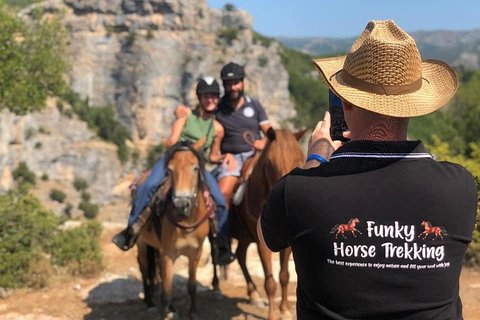
Half-day guided tours: EUR 5 per person is the starting point for a satisfying half-day tour. If the guide was exceptional — deeply knowledgeable, personable, went beyond the script — EUR 8-10 per person is fitting.
Full-day guided tours: EUR 10 per person is the standard expectation for a well-executed full-day tour. For outstanding guides on a group tour, EUR 15 is not excessive.
Private guides: For a private full-day guide, EUR 15-25 total (not per person) depending on the quality of the experience. If the guide arranged special access, interpreted sites in depth, or genuinely transformed your understanding of Albania, err toward the higher end.
Multi-day guides: For guides accompanying multi-day treks or tours, EUR 10-15 per day per guide is appropriate. Tip at the end of the final day with a genuine expression of thanks.
How to tip a guide: Hand the tip directly to the guide privately, not in front of the group. A handshake while passing an envelope or folded notes is the most common method. Doing it at a moment when it won’t embarrass the guide or create awkward dynamics with others in the group is good social sense.
For excellent guided options, consider:
Tirana walking tour with expert local guide Full-day tour from Tirana to BeratTipping Hotel Staff
Housekeeping: Leave EUR 1-2 per night on the pillow with a note (or at checkout with “for the room”). This is the most frequently skipped tip in any country and arguably the most meaningful for the staff involved.
Porters and bellhops: EUR 1 per bag is standard at larger hotels. For particularly heavy or numerous bags, EUR 2 per bag.
Concierge: For significant help — securing difficult restaurant reservations, arranging transport, genuinely solving problems — EUR 3-5 is appropriate. For basic directions or recommendations, a warm thank-you is sufficient.
Reception staff: No tip expected for standard check-in and check-out service. If a receptionist went well out of their way (upgrading your room, resolving a serious problem, staying late to help), a EUR 3-5 note with a genuine thank-you acknowledges the effort.
Spa and wellness staff: EUR 2-5 for a massage or treatment, given directly to the therapist in cash.
For travelers on a longer stay, the Albania digital nomads guide covers service culture and tipping expectations for extended visits.
When Not to Tip in Albania
There are situations where tipping is unnecessary, awkward, or potentially misconstrued:
Street food stalls: Buying a byrek (savory pastry) or a grilled corn cob from a street vendor — no tip. Prices are already at the floor.
Small grocery stores and mini-markets: No tip culture exists here.
Formal government or public services: Absolutely not. This crosses into territory that could be perceived as a bribe.
When someone refuses: Albanian hospitality sometimes means a host will firmly refuse payment of any kind for food or drink they offered. Do not press the matter. Accept graciously, say Faleminderit, and reciprocate in another way if possible (a gift, a future return visit).
Family home stays: In genuine family stays in rural areas (for example in Theth or the Valbona Valley), tipping in the direct Western sense can feel transactional in a way that clashes with Albanian hospitality norms. Bringing a gift (fruit, wine, something from your home country), contributing toward groceries, or simply giving a heartfelt thank-you is often better received.
How to Handle the “No Change” Situation
A common scenario: you pay for a 250 ALL coffee with a 500 ALL note and the server says they have no change. This is sometimes genuine (small establishments genuinely run out of small notes), occasionally a grey area.
Your options:
- Accept it as a generous tip (250 ALL is about EUR 2.50 — decide if the service warranted it)
- Ask if they can break a note elsewhere (the neighboring shop often can)
- Offer to pay by card if available
If this happens repeatedly at the same establishment, it may be a deliberate practice. Most Albanian hospitality workers are entirely honest — do not assume bad faith from a single incident.
See the scams and tourist traps guide for a fuller discussion of situations that are genuinely exploitative versus normal Albanian commerce.
Practical Tips for Tipping in Albania
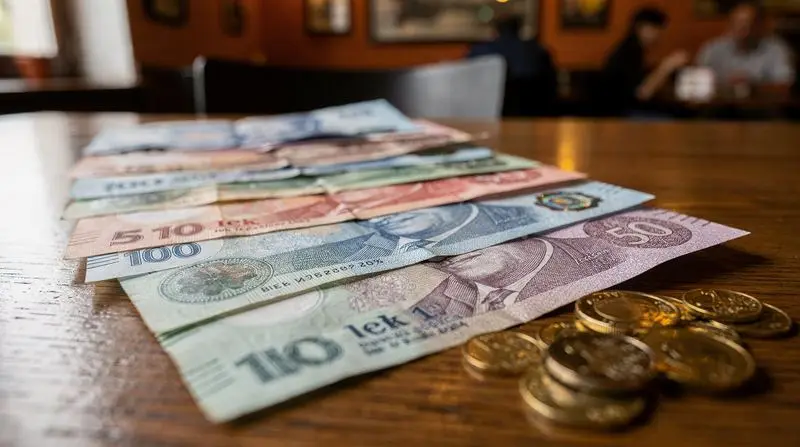
Carry small notes: Ask for a mix of 200 ALL and 500 ALL notes at ATMs when possible. The 5,000 ALL note is nearly impossible to tip with and hard to break.
Keep a tip stash in a separate pocket: When paying a large restaurant bill, you don’t want to be fumbling through all your cash trying to separate tip from payment money.
Euros are the universal second currency: A EUR 2 coin or small note works perfectly as a tip anywhere in the tourist circuit. Many Albanian hospitality workers find euros easy to use for personal travel or savings.
The words to know:
- “Mbajeni kusur” — keep the change
- “Ky është për ju” — this is for you (when handing a direct tip)
- “Shërbimi ishte i shkëlqyer” — the service was excellent
Tipping during off-season: If you travel in winter when tourist volumes are low (the Albania in December guide covers what to expect), tipping is especially meaningful. Workers who stay year-round in resort towns often face months of minimal income.
Review tipping: Increasingly, a five-star Google or TripAdvisor review is seen as a form of tipping — particularly for small family businesses where reputation drives bookings. After an excellent meal at a family konak, asking the owner “Can I leave you a Google review?” and doing it on the spot (showing them the completed review) means as much as a cash tip.
For more on navigating money in Albania, see the Albania currency and money guide and the Albania travel budget guide.
Tipping at Boat Tours and Water Activities
The Albanian Riviera has a growing sea-based tourism sector — boat tours along the coastline, snorkeling excursions, kayak rentals, and sailing trips.
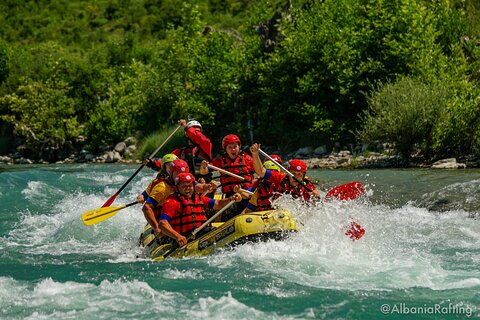
Boat tour crew: For shared group boat tours of 3-6 hours, EUR 3-5 per person for the crew is appropriate. For private boat charters for the day (typical cost EUR 100-200 for the whole boat), EUR 10-20 total for the captain and deck hand is reasonable. Albanian boat operators are not accustomed to consistent tipping from tourists and will be genuinely pleased by it.
Snorkeling and diving guides: As with walking tour guides, EUR 5-10 per person for a good diving or snorkeling experience.
Kayak and paddle board rental staff: Casual equipment rental doesn’t carry a tipping expectation. But if staff helped you significantly — gave instruction, went out of their way to find you equipment — a small gesture is appreciated.
Albanian Riviera boat tours from HimaraTipping Etiquette at Albanian Weddings and Celebrations
If you are invited to an Albanian wedding or celebration — which can happen to travelers who make genuine connections — the tipping culture is different.
Albanian weddings involve a specific tradition of giving money as a gift. Guests typically give cash in an envelope to the couple, announced by the wedding MC. As a foreign guest, ask a local friend what amount is appropriate — it varies significantly by region, family wealth, and setting. Anywhere from EUR 30-100 per couple is common.
This is not “tipping” in the service sense but a form of reciprocal gift-giving that is deeply embedded in Albanian social custom.
Regional Differences in Tipping Culture
Albania’s tipping culture is not uniform across regions:
Tirana: Most cosmopolitan; tipping at restaurants, bars, and for tours is most established here. International visitors have created the expectation.
Saranda and the Riviera: Heavily tourist-influenced, tipping is expected and common. Summer workers from throughout Albania and diaspora return workers are accustomed to tourist tipping.
Shkodra: A major city but less tourist-heavy. Tipping is less universal. Locals may wave off a tip in casual settings.
Mountain regions (Theth, Valbona, Permet area): The hospitality-as-culture dynamic is strongest here. Tipping in traditional guesthouses is appreciated but can sometimes feel slightly incongruous with the “you are a guest in our home” atmosphere. Read the room — a sincere thank-you can matter as much as cash.
Gjirokastra and Berat: As UNESCO heritage tourism towns, these places have a more developed tourist economy and tipping is increasingly normal.
Tipping in the Context of Responsible Tourism
Tourism in Albania is growing rapidly. The decisions visitors make about spending — including tipping — have a real impact on local income distribution. A few considerations:
Tip the person, not the system: In smaller establishments, ensure your tip reaches the actual worker. Leaving cash on the table in a small family restaurant directly benefits the family. Adding a service charge to a card payment at a larger establishment may or may not be distributed.
Support small over large: The small family guesthouse, the independent guide, the local taverna — these are the enterprises where tipping has the most direct impact. International chain hotels have their own labor structures; the local guesthouse owner cooking your breakfast will feel a EUR 2 tip more meaningfully.
Beyond tipping: In rural Albania, non-monetary contributions matter enormously. Leaving a Google review (genuinely — take 2 minutes to do it on-site), recommending the establishment to fellow travelers, and buying local products all contribute to sustainable local tourism economies in ways that matter beyond cash tips.
Seasonal workers: Many workers in Riviera beach areas, mountain guesthouses, and tourist restaurants are seasonal employees who work intense summers then have limited income the rest of the year. A generous tip in peak season genuinely helps these workers manage the off-season gap.
How Tipping Interacts with Bargaining
Albania has some bargaining culture in markets and informal settings (souvenir prices, some street food, market produce). It is worth noting that bargaining and tipping are on different psychological tracks:
When you bargain: You negotiate a lower price before the transaction. When you tip: You add a voluntary amount after receiving good service.
These two things do not contradict each other. You can and should negotiate a fair price for a souvenir, then separately choose whether to tip your guide or waiter. The idea that tipping negates your right to negotiate price, or vice versa, is a confusion that doesn’t serve anyone well.
The rule of thumb: bargain where bargaining is normal (crafts, markets, some taxi fares), and tip where service warrants it (restaurants, guides, hotel staff). They are different contexts with different norms.
Tipping and the Growing Card Payment Economy
Albania’s card payment infrastructure has expanded significantly in Tirana, Saranda, and the main Riviera resorts over the past few years, and this shift has direct implications for tipping. As more restaurants and hotels adopt modern point-of-sale systems, some now offer a formal “add tip” prompt on the card terminal — a genuine improvement over the old assumption that card tips vanish into the till. However, this feature is inconsistent: many establishments, particularly smaller family-run restaurants and guesthouses, still process card payments through basic terminals with no tip function at all. The safest practice, even as card infrastructure improves, remains carrying cash specifically earmarked for tips. If a terminal does prompt for a tip and you use it, it is worth confirming with the server afterward — a quick “a shkon kjo tek ju direkt?” (does this go directly to you?) — since practices around distributing card tips among staff vary by establishment and are not standardized the way they increasingly are in Western Europe.
Tipping for Long Stays and Digital Nomads
Travelers settling into Albania for weeks or months — a growing group given Tirana’s rising profile as a budget-friendly base, covered in the Albania digital nomads guide — develop different tipping habits than short-stay tourists. Regulars at a coworking cafe or a neighborhood restaurant often build informal relationships where tipping becomes less about a fixed percentage and more about periodic generosity: a larger tip at the end of a month-long stay, a gift at a favorite konak before moving on, or simply becoming a well-known and appreciated regular whose custom itself is valued. For coworking spaces, tipping is not expected, but bringing coffee or snacks to share with staff on a slow day is a well-received gesture in Tirana’s smaller, more personal spaces. If you are basing yourself in one city for an extended period, consistency matters more than any single generous tip — staff remember reliable, respectful customers.
Tipping Group Tours and Multi-Guide Experiences
Multi-day organized tours that involve a driver, a guide, and sometimes a separate local specialist at individual sites raise the question of how to split tips fairly. The general convention: tip the main guide the bulk of the daily amount (EUR 10-15 per day as noted above), and give the driver a smaller separate amount (EUR 5-8 per day) if driving and guiding are handled by different people. If a site-specific local expert joins briefly — for example a castle caretaker who provides additional context at Gjirokastra — a small individual tip of EUR 2-5 is a thoughtful gesture, though not obligatory since they are not part of your core tour team. Tour operators occasionally suggest a pooled end-of-trip tip that the lead guide then distributes; this is a legitimate and simple approach if you would rather not calculate individual amounts yourself.
What Changed in Recent Years
Albania’s tipping culture has shifted noticeably even in the last few seasons as tourist numbers have grown. A decade ago, tipping outside Tirana’s upscale restaurants was rare; today it is close to standard practice in any establishment that regularly serves international visitors, including smaller towns like Himara and Ksamil that saw comparatively little tourism until recently. This shift means older advice about Albania being a “no tipping culture” is increasingly outdated for tourist-facing businesses, even though it remains broadly true in non-tourist, everyday Albanian life. Visitors who read older travel forums or outdated guidebooks should recalibrate: a small tip in tourist-oriented restaurants and for tour guides is now a normal, expected part of the transaction rather than an unusual gesture.
Frequently Asked Questions About Tipping in Albania
Is tipping expected in Albanian restaurants?
Tipping is appreciated but not mandatory. In tourist-area restaurants, 5-10% has become a comfortable norm. In local non-tourist restaurants, rounding up or leaving small change is sufficient. Staff will never make you feel awkward for not tipping, but a tip is always welcomed.
Should I tip in euros or Albanian Lek?
Both are fine in tourist areas. In rural areas and local cafes, Lek is more appropriate. Euros are readily accepted by hotel and tour guide staff. Either way, always tip in cash — card tips rarely reach the worker.
How much do you tip a tour guide in Albania?
EUR 5-10 per person per day is the standard range. For a half-day group tour, EUR 5 per person. For a full-day private guide, EUR 15-25 total. Tip directly at the end of the experience.
Do taxi drivers expect tips in Albania?
Rounding up the fare is standard and always appreciated. Formal tipping expectations are lower than at restaurants — simply leaving the change from a fare is the common practice, not a percentage calculation.
Is it rude not to tip in Albania?
No. Unlike in North America, not tipping in Albania will not cause offense or create an awkward situation. The practice is voluntary. That said, tipping well is one of the easiest ways to contribute positively to the people who make your trip memorable.