Traveling Albania Without a Car: The Complete Transport Guide
Albania is not a country that has organized itself around the assumption of tourists without vehicles. The transport network developed organically — filling gaps left by the collapse of communist-era railways, adapting to geography, and responding to where people actually need to go. The result is a patchwork system that is genuinely functional once you understand how it works, but confusing and opaque if you arrive expecting European-style integrated transport.
This guide covers everything: furgons, intercity buses, urban buses in Tirana, the Bolt ride-hailing app, coastal ferries, the Lake Komani experience, and how to plan a complete Albania itinerary without renting a car.
| Main mode | Furgon (shared minibus), departs when full |
| Typical intercity cost | 400-1,500 ALL (EUR 4-15) depending on distance |
| Urban Tirana | Bolt app, city buses (40 ALL/ride) |
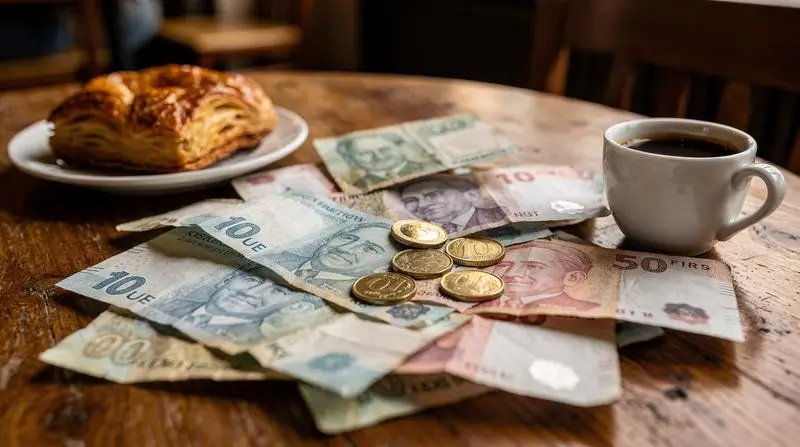
| Payment | Cash (Lek) only for furgons/buses |
| Best time to travel | Early morning (07:00-10:00) for fastest departures |
Understanding the Furgon: Albania’s Real Transport Backbone
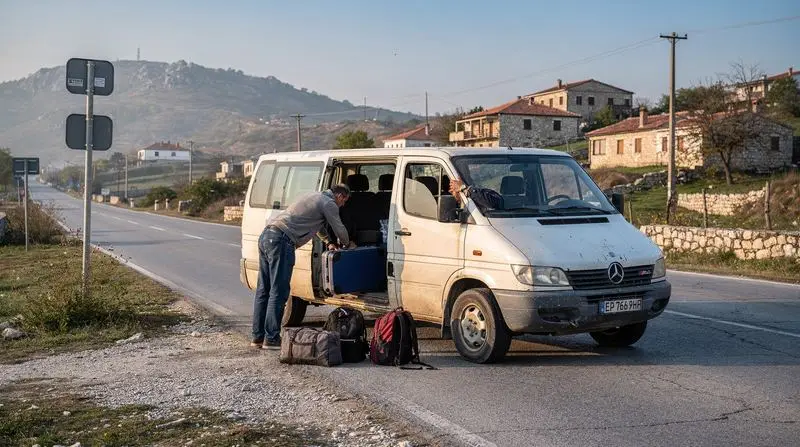
The furgon is the single most important word in Albanian transport. It means a shared minibus — typically a Mercedes Sprinter or similar van seating 8-16 passengers — that operates informal shared-taxi routes throughout the country.
How furgons work: Furgons depart when full, not to a fixed timetable. You go to the departure point (usually a specific corner, parking lot, or informal terminal near the city’s main bus station), you ask which furgon goes to your destination, you get in, and you wait until it fills with passengers. When full, it departs.
The “when full” model means:
- In the morning (06:00-10:00), furgons fill quickly and you are on your way fast
- In the afternoon, you may wait 30-60 minutes for the van to fill
- For some remote routes, you may be the passenger who brings it to capacity and prompts departure immediately, or you may wait an hour
Costs: Furgons are remarkably cheap.
- Tirana to Shkodra: approximately 500-700 ALL (EUR 5-7)
- Tirana to Vlora: approximately 700-900 ALL (EUR 7-9)
- Tirana to Berat: approximately 400-600 ALL (EUR 4-6)
- Shorter regional routes: 200-400 ALL typically
Pay the driver or conductor in cash (Albanian Lek). Always have small notes.
Where to find furgons in Tirana: Tirana has no single unified bus terminal. Instead, furgons and buses to different directions depart from different points:
- North (Shkodra, Kosovo, Montenegro): Near the Zogu i Zi roundabout / northern terminal area
- South (Vlora, Saranda, Gjirokastër, Berat): Terminal near the Sheshi Shqipëria or south Tirana departure zones
- East (Elbasan, Korçë, Pogradec): Eastern departure area
The exact locations shift occasionally. Your accommodation can confirm the current departure point for your specific destination. This is essential to ask at your guesthouse or hostel before you set out.
Luggage on furgons: Bags go in the back or on roof racks. Large backpacks fit without issue. Pay a small additional amount (50-100 ALL) for oversized bags if asked.
Communication: Drivers and conductors rarely speak English. Have your destination written in Albanian (or on your phone) to show them. A Google Translate photo of your destination name is perfectly serviceable.
Intercity Buses
For longer routes or those where more comfort and predictability are worth the slightly higher price, Albania has intercity bus services that operate to rough schedules.
Main intercity bus routes:
- Tirana-Shkodra: Multiple departures daily, 2-2.5 hours, approximately 600-800 ALL
- Tirana-Vlora: Multiple departures, 2.5-3 hours, approximately 700-1,000 ALL
- Tirana-Saranda: 1-2 departures in the morning, approximately 4.5-5 hours, 1,200-1,500 ALL
- Tirana-Gjirokastra: 4.5-5 hours, approximately 1,200-1,500 ALL
- Tirana-Korçë: 3-3.5 hours, approximately 800-1,100 ALL
- Tirana-Pristina (Kosovo): Multiple operators, 5-6 hours, approximately 2,000-2,500 ALL
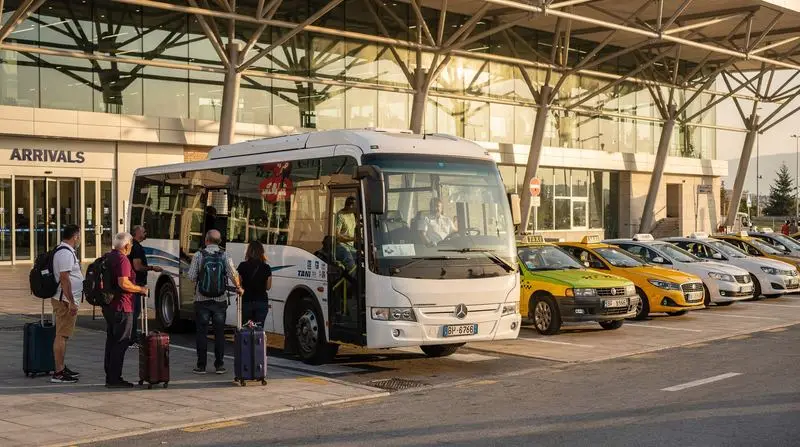
Bus terminals in Tirana: Again, different companies and routes use different departure points. The main “Autostacioni i Jugut” (South Bus Station) handles many southern routes. International buses to Kosovo, Macedonia, and other Balkan countries mostly depart from terminals in the Kombinat or nearby areas. Ask locally or check with your accommodation for the current location.
Booking intercity buses: Most Albanian intercity buses do not have online booking systems. You either show up at the terminal and purchase a ticket, or ask your accommodation to arrange it. Some international routes (Tirana-Pristina, Tirana-Skopje) have slightly more organized booking.
Bus comfort: Intercity buses range from comfortable modern coaches (some Tirana-Saranda services) to aged minibuses. Air conditioning in summer is not guaranteed. Bring water — see the tap water guide for what to carry.
Urban Transport in Tirana
Tirana has grown dramatically and its urban transport has evolved with it.
City buses: Tirana operates a growing city bus network. Fares are 40 ALL (around EUR 0.40) per journey, paid with an electronic transport card (available at kiosks) or small cash. The network covers most districts. Maps are available on the Tirana municipality website and through apps like Google Maps (transit layer works reasonably well in Tirana).
Bolt: The single most practical urban transport tool for visitors to Tirana. Bolt is an Estonian ride-hailing app (similar to Uber) that operates throughout Tirana. You:
- Download the Bolt app
- Register a payment method (card or cash)
- Request a ride to your destination
- Pay the metered fare at the end
Bolt fares in Tirana are low — most city-center rides cost 200-400 ALL. The driver has a rated history, you have a map showing the route, and there is no negotiation required. This is the recommended option for airport transfers, evening transport, and any journey where you want simplicity. See the airport transfers guide for Tirana Airport specifics.
Taxis: For areas outside Bolt’s coverage or when the app has no available drivers, licensed taxis are available. Always agree on the price before the journey. See the scams guide for taxi overcharging awareness.
E-scooters: Electric scooter hire is available in central Tirana. Multiple operators provide QR-code activated scooters on city streets. Good for short distances in the flat central area.
Walking: Central Tirana is walkable. Skanderbeg Square, the Blloku area, the National Museum, and most central hotels are within comfortable walking distance of each other. Tirana’s pedestrianized streets have improved dramatically.
The Lake Komani Ferry: Albania’s Most Spectacular Transport
This is not merely transport — it is one of the most beautiful journeys in the entire Balkans.
What it is: A car/passenger ferry that traverses the Komani reservoir, a narrow glacially-carved fjord-like passage in the northern mountains. The approximately 2-hour ferry journey from Komani to Fierza takes you through dramatic mountain scenery that is inaccessible by road.
Practical details:
- Ferries depart Komani at approximately 09:00 daily (confirm locally)
- Cars, motorbikes, and foot passengers all take the same ferry
- Return ferry from Fierza departs early morning
- The journey is approximately 2 hours
- Cost: approximately 700-1,000 ALL per passenger
- Getting to Komani: Take a furgon from Shkodra to Fierza landing (approximately 2 hours), often requiring a connection. Many visitors combine the Lake Komani ferry with a trip to Valbona for trekking to Theth.
The practical backpacker route: Tirana → Shkodra (furgon) → Komani (van) → Lake Komani ferry → Fierza → Bajram Curri → Valbona → Trek to Theth → Shkodra → Tirana. This is the classic northern loop and entirely doable by public transport.
Coastal Ferries: Durres to Italy
Albania’s main port at Durres operates regular ferry services to:
- Bari, Italy (approximately 9-10 hours)
- Ancona, Italy (approximately 16-18 hours)
- Trieste, Italy (seasonal)
Operators: Adria Ferries, GNV, and others serve these routes. Booking in advance online is recommended for summer, particularly for vehicles.
Passenger experience: Modern car ferries with cabin options, restaurant, and lounge areas. Overnight crossings make efficient use of time.
The Saranda-Corfu connection: A small passenger ferry runs between Saranda and Corfu (Kerkyra) in Greece. Multiple crossings per day in peak season, fewer in winter. Journey time approximately 35 minutes. A popular day trip option — see organized tours:
Day trip from Saranda to CorfuGetting Around the Albanian Riviera
The Albanian Riviera presents particular transport challenges because the coastal road (the SH8) winds through dramatic terrain and public transport is irregular.
Furgons on the Riviera: There are furgon services between Saranda, Himara, and Vlora, but frequency is limited (often one or two per day in each direction). In peak summer, there are more options.
Shared taxis: Along the Riviera, shared taxis supplement furgons. These operate similarly — you pay a per-seat rate and travel with other passengers.
Walking between beaches: Some Riviera beaches are accessible on foot from villages (Dhermi, Palasa, Jale). The terrain is hilly and distances can be deceptive — check actual walking times before setting out in summer heat.
Scooter and bicycle hire: In Himarë and Saranda, scooter rental is available in summer. This gives flexibility along the coastal road that public transport cannot match.
Boat tours: For coastal exploration, boat tours from Saranda and Himarë provide access to beaches and coves unreachable by land:
Albanian Riviera boat tour from HimaraGetting Between Major Cities: Route-by-Route Summary
Tirana to Berat: Furgon or bus from south Tirana terminal, approximately 2 hours, 400-600 ALL. Multiple departures morning and afternoon. Berat is an excellent day trip from Tirana too. Alternatively:
Organized day tour from Tirana to BeratTirana to Shkodra: Well-served furgon route, 2-2.5 hours, 500-700 ALL. Departs from northern Tirana. Multiple options daily.
Tirana to Gjirokastra: Longer journey, approximately 4.5-5 hours. One or two morning buses. 1,200-1,500 ALL. Scenic road through the Permet and Tepelena areas.
Tirana to Saranda: The longest main route. Morning bus, approximately 5 hours via the coastal highway. Book the day before if possible. 1,200-1,500 ALL.
Tirana to Pogradec/Ohrid border: Furgon via Elbasan junction, approximately 3-3.5 hours. Or organized tour:
Day tour from Tirana to North MacedoniaSaranda to Gjirokastra: Furgon, approximately 2.5 hours, several options daily.
Shkodra to Bajram Curri (north): Furgon, approximately 3-4 hours through mountain roads. Essential for Lake Komani ferry and Valbona access.
Planning Tips for Car-Free Albania Travel
Always ask your accommodation: Hotel and guesthouse staff know the current departure points, timings, and which furgons are most reliable. This beats any online resource for current local knowledge.
Carry cash: All local transport is cash only. Lek is essential. See the Albania currency guide for ATM and cash management tips.
Early start pays off: Furgons and buses are most frequent and full earliest in the morning (07:00-10:00). Starting early means faster departures and more options.
The overnight bus option: For long routes (Tirana-Saranda, Tirana-Gjirokastra), some operators run overnight departures arriving early morning. This saves a night’s accommodation but requires comfort with basic overnight bus conditions.
Flexibility is your friend: Car-free Albania travel requires accepting that schedules are fluid. Build buffer days into your itinerary. A day that “should” involve a simple furgon connection can occasionally take longer. Embrace it — the extra time invariably involves an unexpected conversation, a roadside meal, or a view that wasn’t in the plan.
Apps that help: Google Maps transit data works in Tirana. For intercity routes, the Bolt app is essential. Albanian transport apps (like “FlixBus Albania” if it extends there) are worth checking closer to your travel date as the market is developing.
International Bus Routes from Albania
Albania is well connected to neighboring countries by international bus services. These are more organized than domestic routes, with set schedules and (increasingly) online booking.
Tirana to Pristina, Kosovo: Multiple operators daily. Journey approximately 5-6 hours. One of the busiest international routes due to the large Albanian diaspora in Kosovo and Kosovo Albanians visiting Albania.
Tirana to Skopje, North Macedonia: Via the Qafë Thanë border crossing. Approximately 5-6 hours. Lake Ohrid is visible en route. Several operators run this route.
Tirana to Athens, Greece: Long-haul (approximately 9-11 hours). Night buses available. Uses the Kakavija border crossing. Useful for travelers combining Albania and Greece.
Tirana to Podgorica, Montenegro: Via Hani i Hotit. Approximately 4-5 hours. Multiple daily options. The Tirana-Sarajevo route via Montenegro and Bosnia also exists, taking 10-12 hours.
Tirana to Istanbul, Turkey: Long-haul international route (approximately 20 hours). Operates several times per week. For those combining Albania with Turkey.
Saranda to Athens: Bus services operate this route, connecting the southern Riviera directly southward. Check schedules locally in Saranda.
Booking international buses: Unlike domestic routes, international buses often have actual booking systems. Ask at the terminal for the operator’s phone number and reserve a seat a day in advance for peace of mind on popular routes.
Driving in Albania: A Brief Note for Car-Free Travelers
This guide is focused on car-free travel, but understanding the driving context helps explain why some routes are easier or harder by public transport.
Albania’s road network has improved enormously since 2000. The SH1 from Tirana to Shkodra, the SH4 to Berat and south, and the SH8 coastal highway to Saranda are all in good condition. Mountain roads to places like Theth and Valbona are unpaved in sections and require 4WD or high-clearance vehicles.
The reason some remote destinations are difficult by public transport is not that furgons refuse to go — it is that vehicle access itself is limited by road quality. If you want to reach remote mountain villages independently without a driver, the furgon from the nearest hub (Shkodra for Theth, Bajram Curri for Valbona) takes you as far as the road quality allows.
Car rental is worth considering if you have 10+ days and want to cover the country comprehensively. Albania is small enough that you can drive from Tirana to Saranda in 4.5 hours on a good road. See the Albania travel tips guide for driving-related guidance.
Transport and Organized Tours: When to Book vs When to Wing It
Car-free Albania travel benefits from mixing independent transport with organized day tours for specific destinations.
Best done independently by furgon or bus:
- Tirana to Shkodra
- Tirana to Berat
- Saranda to Gjirokastër
- Saranda to Ksamil (just 15-20 minutes)
- Tirana to Durres
Best done with an organized tour:
- Tirana to Berat (if you want a guide and don’t want to navigate independently)
- Saranda area: Blue Eye + Butrint + Ksamil in one day
- North Macedonia day trip from Tirana (requires border crossing logistics)
- Albanian Riviera boat tour (cannot be done independently without boat rental knowledge)
The combination approach — independent travel for main corridors, organized tours for complex multi-stop days — gets the best of both worlds: flexibility and efficiency.
Accessibility of Transport in Albania
A note for travelers with mobility considerations: Albania’s transport infrastructure presents real challenges for wheelchair users or those with limited mobility.
Furgons: Step-up entry into minibuses, no wheelchair accessibility. Not suitable for wheelchair users without assistance.
Intercity buses: Some modern coaches have slightly better accessibility, but purpose-built wheelchair-accessible vehicles are rare.
Tirana city buses: The newer additions to Tirana’s bus fleet have low-floor entry, but the full network is mixed.
Bolt taxis: Standard sedan cars. Can be used by travelers who can transfer in/out of a vehicle independently. Some Bolt drivers have SUVs or larger vehicles.
For comprehensive guidance on traveling Albania with mobility limitations, the Albania accessible travel guide covers transport and accommodation options in detail.
Transport Safety Tips
Albanian roads and drivers have improved significantly over the past decade. The road death rate has declined as road quality improved and traffic enforcement increased. That said, some safety awareness is warranted:
Furgon safety: Albanian furgon drivers are generally experienced. Mountain roads require concentration. Seatbelts are fitted to most vehicles and should be worn. If a driver seems impaired or dangerously fast, speak up or get out at the next stop.
Night travel: Long-distance night travel on mountain roads carries additional risk. Minimize night driving in remote areas if possible. Major intercity routes (Tirana-Shkodra, Tirana-Durres) are fine at night.
Road quality awareness: Google Maps routing in Albania is generally reliable but occasionally suggests roads that are technically passable but poorly surfaced. The northern mountain roads (Theth access road, Valbona access road) require 4WD high clearance. If a local tells you a road is difficult, believe them.
In case of breakdown: Albanian furgon drivers know their vehicles well and typically fix minor issues roadside. For rental cars, your hire company emergency number is the primary contact.
Planning Transport for Large Groups
Traveling Albania in a group of 6 or more people has specific implications for transport choices:
Furgons for groups: A group of 4-6 people can often hire a furgon driver for a half-day or full-day private journey at a negotiated rate. This gives a private vehicle at furgon-adjacent prices. Ask at your accommodation for a reliable driver recommendation.
Private minibus: For groups of 8-15, private minibus hire is efficient. Day rates are approximately EUR 80-150 depending on distance. Split among a group, this is cost-effective and gives maximum flexibility.
Organized group tours: GetYourGuide and similar platforms have small-group tours with capped participant numbers. For groups who want organized without the rigidity of a private charter, these provide a middle option.
Tirana walking tour for small groupsCombining Public Transport with Organized Excursions
Even committed independent travelers benefit from mixing in an organized day now and then, particularly for destinations where public transport connections are weak or the day involves multiple stops. Saranda’s south-coast cluster (Blue Eye, Butrint, Ksamil, Lekuresi Castle) is a good example — reachable independently but far more efficient as an organized loop given how the sites are spread out. See the best day trips from Saranda guide for the independent versus organized comparison by destination.
For travelers based in Tirana without a car, the best day trips from Tirana guide breaks down which excursions (Kruja, Berat, Dajti) work well by furgon and which are genuinely easier with an organized tour.
Furgon and Bus Etiquette
A few unwritten rules make furgon travel smoother. Offer your seat to elderly passengers without being asked — this is standard practice and noticed when absent. Keep large bags on your lap or between your feet if the roof rack is full rather than insisting on space. Pay the driver directly as you board or when you disembark, not in advance unless asked. If you need to get off before the final stop, say “ktu, ju lutem” (here, please) clearly a little before your stop — drivers do not always announce stops. Tipping is not expected on furgons or buses.
Seasonal Variation in Transport Frequency
Furgon and bus frequency changes noticeably with the season. In July and August, routes to the Riviera and major tourist towns run far more often, sometimes near-hourly on the busiest corridors (Tirana-Saranda, Saranda-Himara). Outside peak season, particularly November through March, some Riviera routes drop to one or two departures a day, and a few remote connections pause altogether. If traveling in the shoulder or winter months, confirm current frequency with your accommodation rather than relying on summer schedules found online. The Albania in winter guide covers seasonal transport realities for off-peak travel in more detail.
Frequently Asked Questions About Albania Public Transport
Is Albania easy to travel without a car?
It is manageable but requires planning and flexibility. Furgons reach almost everywhere. The main limitations are frequency (not hourly services on most routes) and the need to show up at departure points without advance booking. Start early and be flexible.
How much does public transport cost in Albania?
Very little. A long intercity furgon ride (3-4 hours) costs EUR 5-10. Short urban rides are EUR 1-3. Albania is one of the cheapest countries in Europe for transport costs.
Does Bolt work outside Tirana?
Bolt primarily operates in Tirana. In other cities (Shkodra, Vlora, Saranda), taxis are the equivalent — negotiate the price before getting in.
Can I buy bus tickets in advance in Albania?
Most local furgon and bus services do not offer advance booking. For international routes (Tirana-Pristina, Tirana-Skopje), some operators sell tickets online. For domestic routes, show up at the terminal.
Is it safe to travel by furgon in Albania?
Yes, furgons are the standard transport for Albanians and have been for decades. Drive quality varies — Albanian mountain roads require attention. Most drivers are experienced and careful. Seatbelts should be worn when available.