Albania Olive Oil Trail: Ancient Groves, Mill Visits, and Harvest Season
Albania’s olive oil is one of the country’s best-kept gastronomic secrets. While Greek, Italian, and Spanish olive oils dominate international markets and most travelers’ awareness, Albania has been producing olive oil from ancient groves for thousands of years — and the quality of cold-pressed extra virgin oil from the Himara coast, the terraced hillsides of Borsh, and the Berat valley can stand alongside the finest production from anywhere in the Mediterranean.
The country has approximately 14 million olive trees, many of extraordinary age. The Riviera region around Himara and Borsh is home to trees estimated at 1,500-2,000 years old — gnarled silver-barked specimens producing small quantities of intensely flavored oil from olives that have never been modified for industrial efficiency. The olive oil from these groves is not Albanian by origin — it predates the Albanian nation itself, connecting to a Mediterranean agricultural tradition stretching back to ancient Illyria.
This guide covers Albania’s main olive oil regions, how to visit mills and farms during and outside harvest season, tasting experiences available to visitors, and how to bring quality Albanian olive oil home.
| Best regions | Himara, Borsh, Berat valley |
| Harvest season | October-December |
| Typical price (direct from producer) | Around EUR 4-8 per litre |
| Best way to visit | Ask directly at village guesthouses or markets |
| Bringing it home | Pack in checked luggage; check import limits |
If you are still shaping the wider trip, the Himara destination page, the Borsh destination page and the Berat destination page cover the three bases this trail revolves around, while the Albanian food guide places olive oil within the country’s everyday cooking.
Understanding Albanian Olive Oil
The Albanian Olive Varietals
Albania’s olive groves contain a mix of native varietals, some found nowhere else in the world, alongside varietals shared with neighboring Mediterranean countries. The most important:
Kalinjot: The native varietal of the Himara region, believed to be ancient and producing oil of distinctive character — slightly bitter, peppery finish, with a greenish tint when fresh-pressed. Kalinjot olives are small-fruited with high polyphenol content, which means the oil has both strong flavor and excellent health properties. It is not cultivated commercially outside Albania.
Kokërrmadhe (Albanian for “large kernel”): A larger-fruited varietal found in the Berat valley and central Albania. Produces milder, rounder oil with lower bitterness — more accessible for palates accustomed to Italian or Spanish olive oil.
Ulliri i Jugut (“Southern Olive”): A generic descriptor covering various southern Albanian coastal varietals. Produces oil ranging from mild to intensely flavored depending on harvest timing and processing.
Pendolino and Mission: These internationally common varietals appear in newer commercial plantings, particularly in the Fier plain, where industrial-scale production is more developed.
Cold Pressing and Traditional Production
The quality difference in Albanian olive oil comes largely from traditional small-scale production methods. Many Riviera and Berat valley producers use stone mills (mulli i vjetër — old mill) or modern cold-press equipment on a small scale, processing olives within 24-48 hours of harvest. The cold-press process, maximum 27 degrees Celsius, preserves polyphenols, volatile aromatics, and the full flavor spectrum that heat-extracted or chemically processed oils destroy.
Visiting a traditional Albanian olive mill during harvest season is an extraordinary sensory experience: the heavy smell of olive paste, the golden-green stream of first-press oil, the warm flat bread (bukë misri) that locals dip into fresh oil straight from the press. It is one of the most direct encounters available anywhere in the Mediterranean with ancient agricultural tradition still in daily practice.
The Olive Oil Regions
Himara and the Northern Riviera Groves
The Himara district — stretching from Palasa in the north to Dhermi and down to Himara town itself — contains some of the most extraordinary ancient olive groves in Europe. The terraced hillsides above the coastal road are covered in olive trees whose scale and age stop visitors in their tracks.
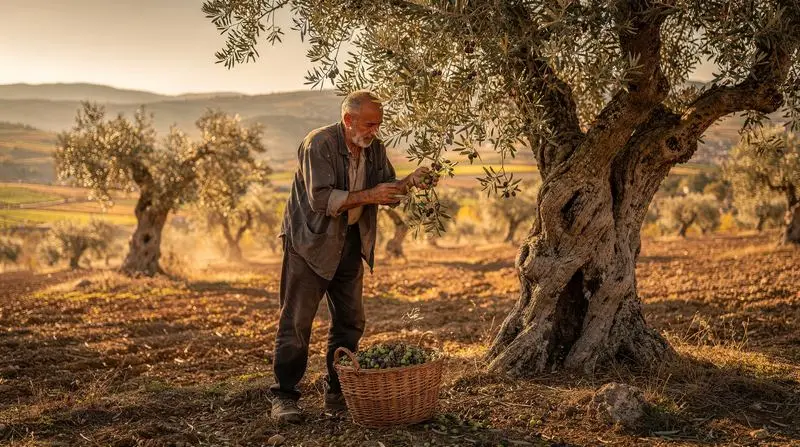
These are not orderly orchard plantings. The trees grow in the rocky limestone terrain with minimal intervention, their roots reaching deep into ancient terraces built and maintained across generations. Many are too gnarled and wide-trunked to harvest mechanically — olives are still hand-gathered by local families each autumn, spread onto nets beneath the trees, beaten from branches with long poles.
The oil produced from Himara’s ancient groves has been increasingly recognized at international olive oil competitions in recent years, and small-batch producers are beginning to develop export and direct sales to visitors. The best place to find and purchase this oil is directly from producers in the villages above Himara — Llazarat, Kudhës, and the hamlets scattered across the hillsides — or at the small village shops and family-run guesthouses in the area.
Anyone planning a base here will find the where to stay in Himara guide useful, and the best restaurants in Himara are a good place to taste the local oil on a plate after a day among the terraces. Dhermi, covered on its own destination page, sits at the northern edge of the same olive-covered slopes.
What to visit: The olive terraces above Himara town are accessible on foot or by car on rough tracks. Early morning light on the ancient trees is exceptional for photography — silvery grey bark against the blue sea below provides compositions found nowhere else in Europe.
Borsh and the Southern Riviera
Borsh, a village about 20 km south of Himara, claims to have the largest olive grove in Albania — over 3,000 donums (approximately 300 hectares) of terraced olive trees on the hillside above the beach, stretching from near sea level up to 400 metres elevation. Many of these trees are several hundred years old at minimum; some are considerably older.
The Borsh olive oil is produced in small quantities by village families and sold directly. The village has a small population year-round (many young people have left for Tirana or abroad), but the olive harvest brings extended families back each autumn. The harvest season atmosphere in Borsh — nets spread under trees, families working together, the smell of olive paste from the village mill — is among the most vivid and accessible agro-tourism experiences on the Riviera.
Mill visits in Borsh: The village mill processes the local harvest. Visitors who arrive during harvest season (October-December) and express genuine interest can often observe the pressing process — Albanians are exceptionally hospitable to curious visitors, and this interest in their traditional practices is welcomed rather than intrusive. Ask at the village center or at guesthouses in the area.
Berat cooking classes often incorporate local olive oil into the curriculum — working with Albanian ingredients including fresh cold-pressed oil is a natural part of learning Albanian cooking.
Berat Valley and Surroundings
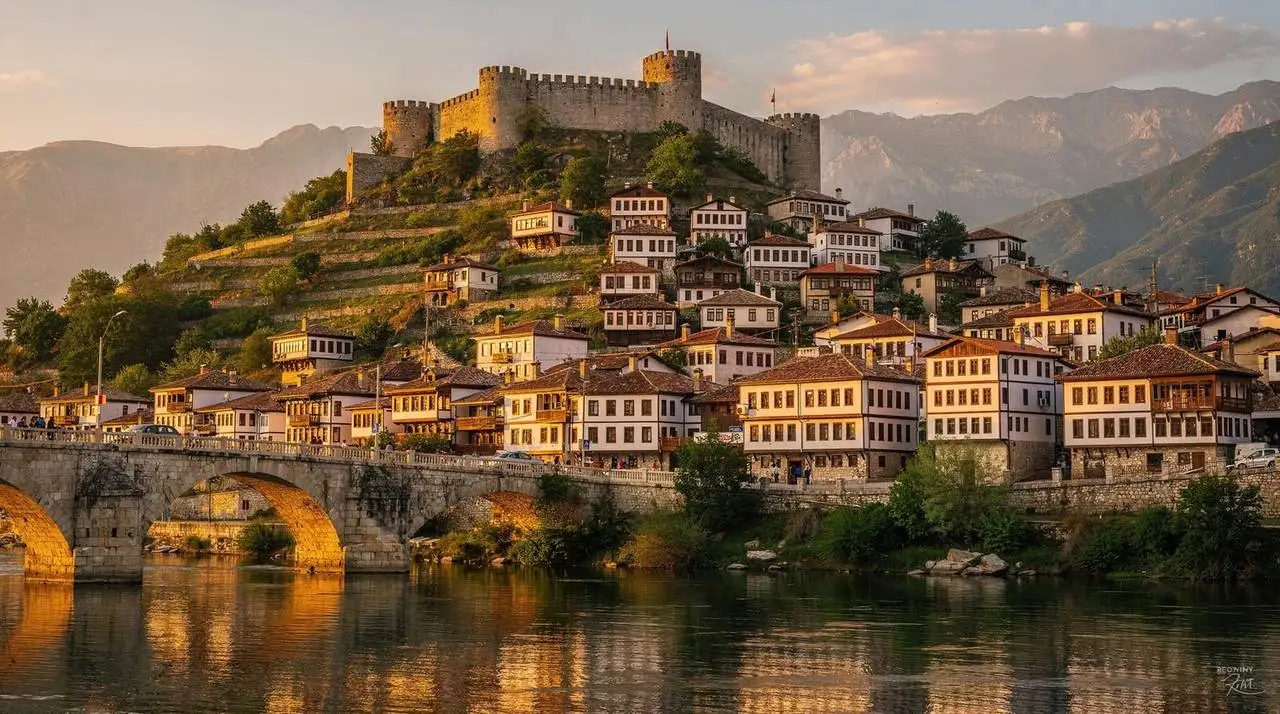
Berat’s valley — the Osum River valley surrounded by terraced limestone hillsides — is a significant olive oil production area with more accessible infrastructure for visitors than the remote coastal groves.
The Berat region produces large quantities of olive oil, some of which supplies commercial brands, alongside small-producer oil sold directly from farms and at the town market. The olive varietals here (primarily Kokërrmadhe) produce milder, rounder oil than the intense Himara coastal production.
What to visit in Berat: The terraced hillsides visible from anywhere in the town are olive-planted; the landscape context of olive cultivation is ever-present. Farm stands along the roads into Berat sell local olive oil directly. The Berat market has producers selling unlabeled bottles and canisters of their own oil — the best value and often the best quality option.
For a deeper olive oil experience in Berat, guesthouses in the Gorica neighborhood (old town across the river) can connect visitors with local families who produce oil. See the Berat destination guide for accommodation and navigation.
Fier and the Lowland Commercial Production
The Fier plain in central-western Albania has significant commercial-scale olive cultivation — more industrial in character than the mountainous coastal groves but producing large volumes that supply both domestic consumption and some export. This is not a destination for tourism-oriented mill visits, but understanding that Albania has both artisan and commercial production scales helps in assessing what you are buying when purchasing Albanian olive oil.
Permet and the Zagoria Valley
The Permet area in southeastern Albania, while less famous as an olive region than the coast, has olive cultivation in its lower valleys and produces oil alongside its famous figs, walnuts, and other specialty products. The Zagoria region around Permet has developing agro-tourism that includes olive oil as part of a broader local food experience.
The Albania dark tourism guide crosses through this region on the Gjirokastra route, and visiting Permet fits naturally into a southern Albania itinerary.
Harvest Season: October to December
The Albanian olive harvest runs approximately October through December, with timing varying by altitude, microclimate, and olive varietal. Coastal lowland olives at Borsh and Himara typically begin in October. Higher altitude and later-ripening varietals extend into November-December.
What Happens During Harvest
Harvest in traditional Albanian olive cultivation is a family and community event. Nets are spread beneath trees. Olives are beaten from branches using long flexible poles (shkopi) — a technique unchanged from ancient practice. Harvested olives are carried in traditional wicker baskets or modern plastic crates to collection points, then transported to the local mill.
At the mill, olives are:
- Washed and sorted to remove leaves and debris
- Ground into paste by stone or hammer mill
- Kneaded (malaxation) to encourage oil droplets to coalesce
- Pressed — cold in traditional and quality commercial operations, below 27 degrees Celsius
- Separated by centrifuge — oil from water and solid material
- Filtered (optionally) and stored in stainless steel or dark glass
First-press oil from the day’s harvest is shared among family members and mill workers — fresh, intensely green-gold, with the full volatile aromatics that dissipate in the weeks after pressing. Tasting freshly pressed Albanian olive oil alongside warm bread is a definitive food memory.
Experiencing the Harvest as a Visitor
The best ways to experience harvest season:
Agrotourism stays: Several family guesthouses in Himara, Borsh, and the Berat valley accept guests during harvest season and actively involve them in harvesting activities. Picking olives in an ancient grove for a morning, then watching the pressing process, then eating lunch with the family — this is the complete experience that no organized tour can manufacture. The agrotourism stays guide covers how to find these accommodation options.
Village visits: Arriving in Borsh or Himara villages during October-November and showing genuine interest leads, in the Albanian hospitality tradition, to informal invitations. Be curious, respectful, and willing to participate rather than observe passively.
Cooking classes: Cooking classes in Berat (and increasingly in Tirana) that use local seasonal ingredients during autumn incorporate fresh olive oil naturally. The Berat cooking class experience connects directly to the regional agricultural identity of which olive oil is central.
Market purchases: Autumn markets in Berat, Himara, and the Permet area have fresh olive oil for sale at the lowest prices of the year. An unmarked dark bottle of first-press oil from a market vendor costs EUR 4-8 per litre — a fraction of comparable quality in Western European specialty stores.
Tasting Albanian Olive Oil
Appreciating quality differences in Albanian olive oil, like wine tasting, involves some vocabulary and technique:
Color: Fresh extra virgin Albanian oil (particularly Kalinjot from Himara) is deep gold-green. Color lightens with age and oxidation — a very pale yellow oil may be past its best, though color is not a definitive quality indicator.
Aroma: Fresh oil should smell green, grassy, and intensely olive-like. Specific varietal characteristics: Kalinjot has an herbal, slightly bitter green quality; Kokërrmadhe is rounder and more buttery. Flat, musty, or rancid smells indicate poor quality or old oil.
Taste: High-quality extra virgin Albanian oil has three characteristics prized by olive oil professionals: fruitiness (the positive olive flavor), bitterness (on the back of the tongue — a sign of high polyphenol content, not a flaw), and pungency (a peppery sensation at the back of the throat — also a sign of quality polyphenols).
Finish: Good oil has a clean finish with lingering warmth from the pungency. Oil that tastes flat after swallowing, or that leaves a greasy coating, is of lower quality.
A comparative tasting — buying small quantities from two or three different producers and tasting alongside bread and perhaps fresh tomato — is both educational and genuinely enjoyable. This is an entirely natural thing to request from market vendors or guesthouse owners in the producing regions.
Buying Albanian Olive Oil
Where to Buy
Directly from producers: The best quality and lowest prices. Producers in Borsh, Himara, and Berat valley farms sell from their properties. No formal shop front — approach, show interest, ask about their oil.
Village markets: Market days in olive-producing towns during and after harvest. Producers set up with their bottles and canisters. Prices are very low (EUR 4-8 per litre for excellent oil).
Tirana New Bazaar: The food market section has several vendors selling labeled Albanian olive oil. Quality is more consistent than unlabeled farm product but prices are higher (EUR 8-15 per litre).
Specialty food shops: A handful of Tirana specialty food shops sell curated Albanian olive oil from named producers with proper labeling. These are the best option for gifts — the packaging is presentable and the provenance is certified.
Supermarkets: Albanian supermarket olive oil is produced at commercial scale and is typically cheaper but less interesting than artisan production.
Bringing Oil Home
Olive oil travels well in checked luggage — pack bottles in zip-lock bags and wrap in clothing. A 1-litre bottle weighs approximately 900g and takes minimal space. Carry-on limits apply to liquids over 100ml, so check luggage is necessary for quantities worth buying.
Consider buying: a 1-litre bottle of Himara Kalinjot for personal use (EUR 8-12 from a good vendor), a 500ml decorative-labeled bottle for gifting (EUR 10-20 from a Tirana specialty shop), and some locally bottled herb-infused oil (thyme, rosemary) if available.
Gift-Worthy Options
Several producers have developed attractive packaging for the growing gift and export market:
- Labeled bottles with variety and region identification
- Gift sets combining olive oil with Albanian honey, herbs, or raki
- Olive wood products (spoons, bowls) alongside oil
The shopping and souvenirs guide covers Albanian food products as souvenirs in more detail.
Olive Oil Tourism Itinerary
A suggested three-day olive oil trail route:
Day 1 — Berat Valley: Arrive Berat. Morning walk through olive terraces above Gorica. Afternoon visit to local farmer selling oil (ask your guesthouse for an introduction). Evening cooking class using local olive oil.
Day 2 — Himara: Drive south via the Riviera road. Stop at ancient terraced groves above Dhermi. Continue to Himara. Visit village above Himara town for direct producer contact. Overnight in Himara.
Day 3 — Borsh: Continue to Borsh. Visit the terraced grove. Speak to the mill operator if harvest season (October-December) or the village guesthouse owner otherwise. Return north via Saranda or continue south to Gjirokastra.
This route fits naturally into any southern Albania itinerary and adds food tourism depth to what might otherwise be pure sightseeing. The Albania in Autumn guide covers the October-November season in more detail, including harvest season conditions.
Once the olive oil stops are done, the route continues naturally toward Saranda and Gjirokastra, and the Albanian Riviera road trip itinerary shows how to link the coast with the rest of the south. For hands-on learning beyond Berat, the cooking classes guide lists other places where fresh oil is part of the lesson.
Frequently Asked Questions About Albania Olive Oil
When is the olive oil harvest season in Albania?
The main harvest season runs from October through December, with timing varying by altitude and varietal. Coastal lowland groves at Borsh and Himara typically begin in October. Higher altitude and later varietals may extend into December. October-November is the ideal time to visit if you want to experience active harvesting and fresh-press tasting. Outside harvest season, you can still buy Albanian olive oil directly from producers and at markets, but the active harvest atmosphere is specific to autumn.
Where can I visit olive oil mills in Albania?
The most accessible mill experiences are in Borsh (the village has a traditional mill processing the community harvest) and in small farms above Himara. During harvest season (October-December), visiting these facilities is generally possible through direct village contact and the Albanian tradition of hospitality to curious visitors. Berat valley farms also produce oil but with less accessible tourist infrastructure. Cooking classes in Berat incorporate local olive oil and provide a more structured tasting experience.
How does Albanian olive oil compare to Italian or Greek olive oil?
Albanian olive oil from ancient coastal groves — particularly Kalinjot varietal from the Himara region — is genuinely comparable to high-quality Greek or Italian extra virgin oil in its polyphenol content, flavor complexity, and sensory characteristics. It is less known internationally and therefore underpriced compared to equivalent quality Italian or Greek oil. The main quality difference is in production consistency — small Albanian producers lack the standardization of large Mediterranean producers, so quality varies between batches and producers in ways that larger industrial production does not.
Can I take Albanian olive oil home?
Yes. Olive oil can be packed in checked luggage for air travel. Carry-on liquids restrictions (100ml per container) apply to hand luggage. A 1-litre bottle packed carefully in clothing in checked luggage travels without issue. Customs regulations for olive oil import are generally permissive for personal quantities (typically up to 5 litres) in most Western countries — check your destination country’s import rules for food products if bringing larger quantities.
What does high-quality Albanian olive oil taste like?
High-quality Albanian extra virgin oil — particularly from the Kalinjot varietal of Himara — has a deep gold-green color when fresh, an intensely grassy and herbal aroma, and three classic characteristics of good olive oil in the mouth: fruitiness, bitterness (on the back of the tongue), and pungency (a peppery sensation in the throat). These are quality indicators, not flaws. The oil from ancient trees has particularly high polyphenol content, which intensifies both the bitterness and the health properties. Mild, flat, or odorless oil is not high-quality Albanian olive oil regardless of its price or label.
How much Albanian olive oil can I legally bring home?
Rules vary by destination country, but most Western countries permit personal quantities of olive oil (commonly up to around 5 litres) without formal import documentation — check your specific destination’s customs rules for food products before travelling with larger quantities. Within the EU, personal quantities for non-commercial use generally pose no issue at all.
Is Albanian olive oil organic?
Much of it is organic in practice, if not certified. Small-producer groves in Himara, Borsh, and Skrapar are typically farmed with minimal or no chemical intervention simply because that has always been the tradition, but formal organic certification is uncommon among small family producers due to cost and bureaucracy. If certified organic matters to you specifically, ask directly — some of the newer specialty-shop producers in Tirana do carry formal certification.
Olive Oil and the Family Travel Angle
An olive grove or village mill visit is a genuinely engaging activity for children — picking olives, watching them turn into oil within hours, and tasting the result on fresh bread is a hands-on lesson that resonates more than most museum visits. Families travelling with children during harvest season can often join a picking morning informally through a guesthouse introduction, at no cost beyond the goodwill of buying a bottle afterwards. See the Albania family travel guide for how this fits alongside beach and city time on a family itinerary.
What to Expect to Pay in Different Settings
| Where | Price per litre | Notes |
|---|---|---|
| Direct from a village producer | Around EUR 4-8 | Best value, often unlabeled |
| Village or town market | Around EUR 5-10 | Slightly more consistent quality |
| Tirana New Bazaar | Around EUR 8-15 | Labeled, more reliable provenance |
| Tirana specialty food shop | Around EUR 12-25 | Best for gifting, curated producers |
| Supermarket | Around EUR 5-9 | Commercial-scale, less distinctive |
Pairing Olive Oil Tourism With Wider Food Tourism
Olive oil is one strand of a broader Albanian food tourism scene worth building a trip around. The Albanian wine guide covers the vineyards of the Berat region, where wine tasting pairs naturally with a valley olive oil visit on the same day. The Albania food tours guide covers structured culinary experiences in Tirana and Berat that often incorporate olive oil tasting alongside other regional specialties, and the vegetarian Albania guide is useful context for how central olive oil is to Albanian vegetable-forward cooking, particularly in the south.