Shopping and Souvenirs in Albania: The Complete Buyer’s Guide
Albania does not have the same souvenir industrial complex that saturates more heavily touristed Balkan destinations. What it does have is better: a craft tradition that remains genuinely alive, bazaars that have operated continuously for centuries, and products — filigree silver, hand-knotted kilims, copper work, olive oil, raki — that are specific to this place and made with real skill. The challenge for visitors is knowing where to find the authentic among the imported, understanding fair price ranges, and navigating the pleasures and occasional pressure of bazaar shopping.
This guide covers what to buy, where to buy it, what to pay, and how to approach bargaining and quality assessment across Albania’s most important shopping destinations.
| Best single destination | Kruja Bazaar |
| Top buys | Filigree silver, handwoven kilims, raki, olive oil |
| Typical week’s shopping budget | Around EUR 100-200 (moderate) to EUR 300-600 (enthusiast) |
| Payment | Cash (Lek) — cards rarely accepted at bazaar stalls |
| Bargaining | Expected in bazaars; not in fixed-price shops |
What to Buy: Albanian Craft and Specialty Products
Filigree Silver Jewelry
Albanian filigree is among the finest in the Balkans and represents one of the country’s most distinctive craft traditions. Filigree — intricate decorative work made from twisted fine silver wire — has been produced in Albanian workshops for centuries, particularly in the Shkodra region and among Kosovo Albanian craftsmen.
Traditional filigree pieces include:
- Bracelets with elaborate twisted and soldered wire patterns
- Earrings ranging from small simple studs to elaborate chandelier designs
- Necklaces and pendants with geometric or floral motifs
- Brooches in traditional Albanian patterns
- Decorative items: boxes, frames, figurines
Quality ranges enormously. Genuine handmade filigree from skilled craftsmen — where you can see the hand-soldering, slight irregularities, and weight of solid silver — is worth significantly more than mass-produced imitations. The best filigree is found in Shkodra’s old craft workshops, in Kruja’s bazaar from established silversmiths, and in a handful of Tirana craft shops.
What to pay: Small genuine filigree earrings: 1,500-3,000 ALL (EUR 15-30). Bracelets: 3,000-8,000 ALL (EUR 30-80). More elaborate pieces: 8,000-25,000 ALL (EUR 80-250). Prices at tourist-oriented bazaar stalls will be lower but the work will often reflect that difference.
What to look for: Weight (solid silver is heavier than silver-plated base metal), visible hand-soldering in the wire joints, slight asymmetries that indicate handwork rather than casting. Ask whether the piece is marked with a silver hallmark — genuine silver should carry one.
Handwoven Kilims and Rugs
Albanian kilims are flat-woven rugs in geometric patterns produced on hand looms, particularly in the regions around Berat, Elbasan, and the southern highlands. They represent a weaving tradition that connects to Ottoman and earlier Illyrian textile practices.
Traditional kilim designs use geometric patterns — diamonds, zigzags, crosses, stylized floral forms — in natural dyed wool. Colors are typically deep reds, blues, blacks, and creams. A genuine hand-knotted or hand-woven kilim has visible irregularities in its pile, slight variations in dye lot between sections, and a weighted, supple feel. Machine-made imitations are stiff, perfectly regular, and feel synthetic.
Albanian kilims come in several sizes: small decorative pieces (roughly 50x80 cm) suitable as wall hangings or table covers; medium pieces (roughly 100x150 cm) for room use; and large floor pieces (150x250 cm and up). The larger pieces are increasingly rare and expensive as the number of practicing weavers declines.
What to pay: Small decorative kilim: 2,000-6,000 ALL (EUR 20-60). Medium kilim: 6,000-18,000 ALL (EUR 60-180). Large antique kilim: 20,000-80,000 ALL (EUR 200-800) and above. Shipping large kilims is possible — several bazaar vendors in Kruja and Gjirokastra have experience wrapping and shipping to European addresses.
Where to buy: Kruja Bazaar has the best selection of kilims for sale to tourists, with multiple vendors and comparative shopping possible. The Gjirokastra Bazaar has good-quality pieces with fewer vendors but more knowledgeable sellers.
Albanian Raki
Raki is the national spirit — a fruit brandy produced from grapes, plums, mulberries, or walnuts depending on region and season. Albanian raki is double-distilled, typically 40-55 percent alcohol by volume, and consumed as both a welcome drink and a digestif in Albanian homes and restaurants.
The best raki is home-produced by families with multi-generational distilling traditions. Commercial raki varies in quality, but several distilleries have been developing export-quality products over the past decade. Buying raki for export has some practical considerations: liquids in carry-on luggage are restricted on flights, so purchase at the end of your stay for checked luggage, or buy from airport duty-free shops which often carry local brands.
Recommended commercial brands: Skenderbeg (the most widely distributed Albanian raki), Gjergj Fishta, and various regional craft distilleries. Museum-bottled or specially labeled versions make good gift items.
What to pay: A standard 500ml bottle of good commercial raki: 600-1,200 ALL (EUR 6-12). Premium or aged raki: 1,500-4,000 ALL (EUR 15-40). Home-produced raki sold informally from farms and guesthouses: often priced lower and frequently better quality than commercial products.
Albanian Olive Oil
Albania’s olive groves — concentrated in the southern regions around Himara, Borsh, the Berat valley, and the Allowed region — produce olive oil of genuine quality that remains largely unknown outside the country. Cold-pressed extra virgin olive oil from traditional varietals, particularly the Kalinjot olive native to the Himara region, has distinctive flavor profiles that olive oil connoisseurs find interesting.
Albanian olive oil is significantly cheaper than equivalent Italian or Greek products of comparable quality. Buying directly from producers — possible in the villages along the Riviera, at farm stands near Berat, and at the New Bazaar in Tirana — guarantees freshness and provenance in a way that commercial bottling does not.
What to pay: A 1-litre bottle of good quality local olive oil: 400-900 ALL (EUR 4-9). Artisan cold-pressed oil in labeled gift packaging: 800-2,000 ALL (EUR 8-20). Direct from producer: often the lowest prices and highest quality simultaneously.
Practical note: Olive oil can be packed in checked luggage for flights. Buy oil toward the end of your stay and wrap bottles carefully to prevent breakage.
Copper Work and Metalwork
Albania’s coppersmith tradition — particularly centered in Shkodra and Gjirokastra — produces decorative and functional objects that make distinctive souvenirs: coffee sets, trays, pitchers (ibrik), bowls, and decorative plates, all worked and engraved by hand.
The traditional Albanian coffee service — a small copper tray with an ibrik (long-handled coffee pot) and small cups — is one of the most practical and beautiful souvenir options. It is actually used in Albanian homes, not merely decorative, and survives the transition to European kitchens well.
What to pay: Small copper ibrik: 1,500-3,000 ALL (EUR 15-30). Complete coffee service: 4,000-10,000 ALL (EUR 40-100). Decorative engraved plates: 1,000-4,000 ALL (EUR 10-40).
Where to buy: Gjirokastra Bazaar has the most active coppersmith presence, with working craftsmen in some shops. Kruja Bazaar also has copper goods. Tirana’s New Bazaar has a limited selection.
Albanian Ceramics
Traditional Albanian ceramics — wheel-thrown and hand-decorated pottery from workshops primarily in the Durrës area and scattered across the south — include practical vessels, decorative plates, and small figurines. The most distinctive are pieces using traditional patterns with a blue-on-white or earth-tone palette.
More contemporary ceramic artists working with traditional motifs produce more sophisticated work sold in Tirana galleries and craft shops rather than bazaars. For gifts that are both decorative and specific to Albania, ceramics occupy a good middle ground between the obviously tourist-oriented and the expensive craft pieces.
What to pay: Small decorative ceramic piece: 500-2,000 ALL (EUR 5-20). Larger decorative bowls or plates: 2,000-6,000 ALL (EUR 20-60). Artisan studio work: 5,000-20,000 ALL (EUR 50-200).
Food Products
Beyond olive oil and raki, Albania produces several food products worth bringing home:
Ajvar: The roasted red pepper relish that is ubiquitous in Balkan cooking — Albania produces excellent versions, typically sold in glass jars. 200-600 ALL (EUR 2-6).
Mountain honey: Albanian mountain honey — particularly from the Zagoria region and northern Albania — has distinctive flavor from wildflower nectar. 600-1,500 ALL (EUR 6-15) for a jar from markets or farm stands.
Dried herbs and teas: Mountain sage (sherebelë), oregano, wild thyme, and various herbal tea blends from Albanian highlands are sold in markets and herb shops. Good for gifting — light, distinctive, and genuinely local. 100-400 ALL (EUR 1-4) per bag.
Nuts and dried fruits: Walnuts, hazelnuts, and dried figs from Albanian orchards are sold at market stalls throughout the country.
Where to Buy: Albania’s Best Shopping Destinations
Kruja Bazaar
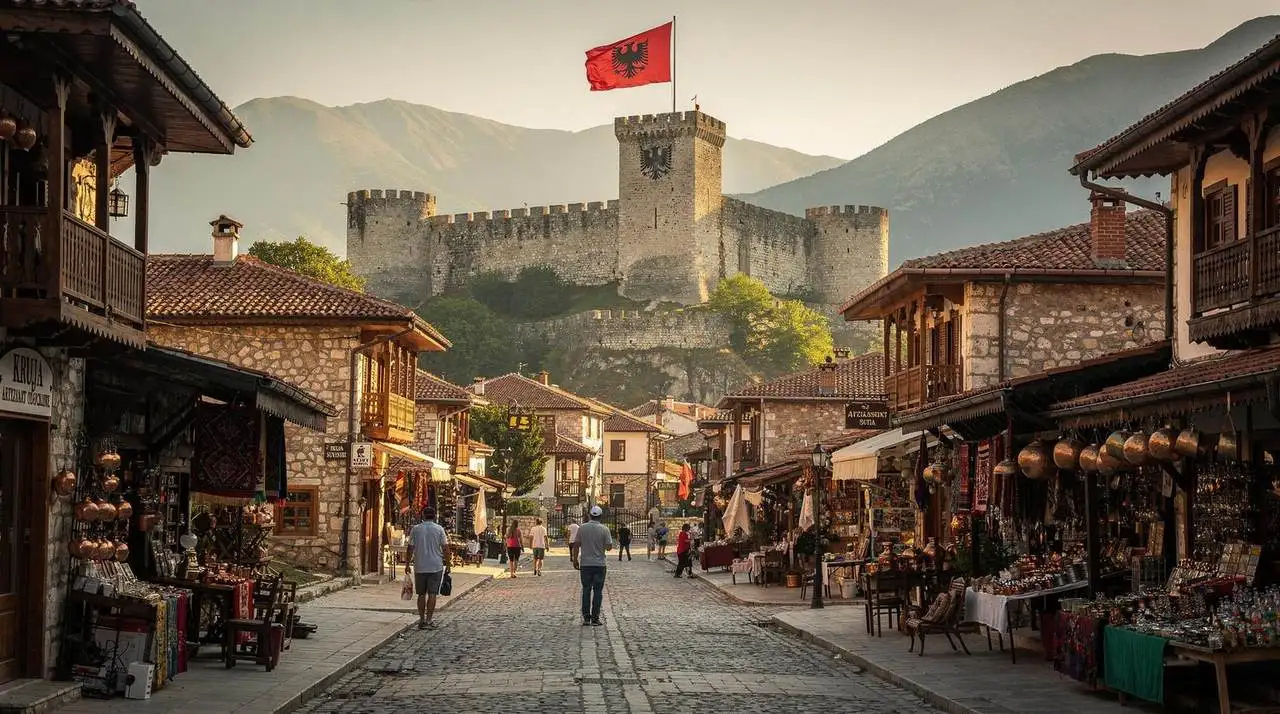
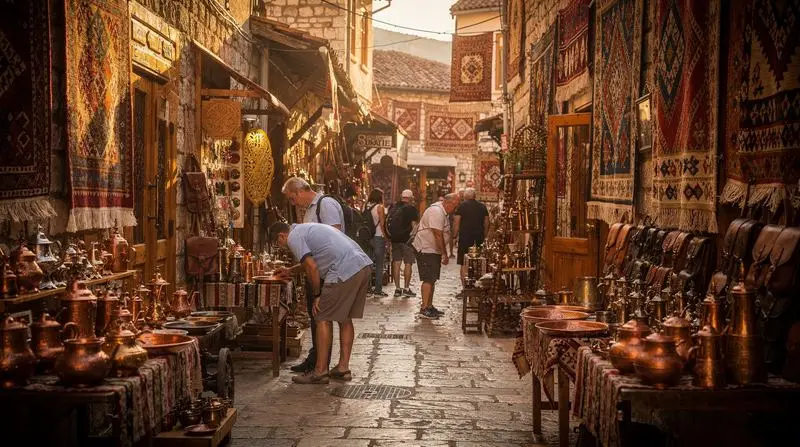
Kruja’s Old Bazaar is Albania’s premier shopping destination and one of the most atmospheric bazaars in the Balkans. Located in the old town below the castle — itself reached via a winding road from the modern town below — the bazaar has been operating as a market center for centuries. Today it runs along a cobbled street lined with wooden-fronted Ottoman-era shops selling handicrafts to both tourists and local buyers.
The density of shopping options in a compact, walkable setting makes Kruja ideal for comparison shopping. You can see the same category of goods — kilims, copper work, filigree, ceramics — at multiple vendors within a hundred metres, developing a feel for price ranges and quality differences before buying.
Kruja Bazaar is best visited mid-morning on a weekday when vendors are fully set up but before coach tour groups arrive. Kruja is a straightforward day trip from Tirana (approximately 40 minutes by car or bus), and the castle and Skanderbeg Museum justify the visit beyond shopping alone. If you would rather not arrange transport yourself, a guided option such as the Kruja Castle and Old Bazaar tour from Tirana covers both the castle and the bazaar in one outing.
What to buy in Kruja: Kilims (best selection in Albania), filigree jewelry, copper work, traditional Albanian clothing items (including the qeleshe — the white felt skullcap worn by northern Albanian men), embroidered textiles, and a wide range of more tourist-oriented souvenir items.
Bargaining: Expected and normal in Kruja Bazaar. Opening prices are typically set 30-50 percent above where vendors expect to sell. Counter-offering at 50-60 percent of the asking price and settling somewhere in between is the standard dynamic. Walk-away tactics frequently work if you have seen comparable items elsewhere. See the bargaining section below for more detail.
Gjirokastra Bazaar
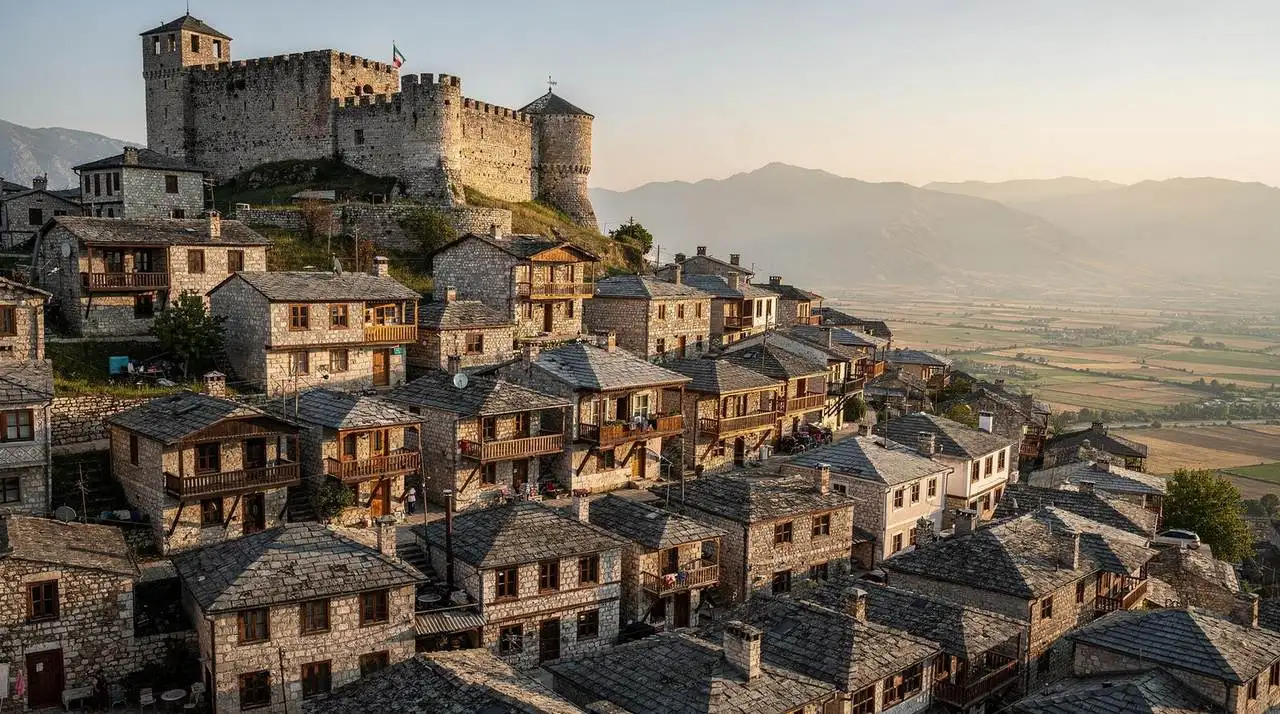
Gjirokastra’s bazaar occupies the lower old town and is smaller and more focused than Kruja. It tends toward higher quality and more locally produced goods, as the tourist volume is lower and vendors serve a mix of tourist and local demand. The coppersmith and metalwork tradition is particularly strong here, and the bazaar retains more of the working craft character that Kruja has partially lost to souvenir commerce.
The physical setting is extraordinary: Ottoman stone buildings, steep cobbled lanes, and the looming presence of the castle above. Shopping in Gjirokastra feels more like discovery than commerce. Prices are generally comparable to or slightly lower than Kruja for equivalent goods. See the Gjirokastra destination guide for broader context.
What to buy in Gjirokastra: Copper work (best quality available), traditional textiles, carved wooden items (jewelry boxes, decorative objects), local food products including southern Albanian cheeses and olive products.
Shkodra Old Bazaar
Shkodra has a less tourist-oriented bazaar that operates primarily as a working local market. The filigree silver tradition is stronger here than anywhere in Albania — Shkodra has been a center of silversmithing for centuries, and a handful of working ateliers still produce genuine hand-made filigree.
Finding these workshops requires some navigation in the old bazaar area around the clock tower and the streets leading toward it. The tourist infrastructure is lower than Kruja or Gjirokastra, which means prices tend to be lower and bargaining norms are slightly different — closer to market negotiation than tourist bartering.
What to buy in Shkodra: Filigree silver jewelry (the best quality and authentic craft tradition), local food products from the Shkodra market, traditional northern Albanian craft items.
Tirana’s New Bazaar (Pazari i Ri)
The New Bazaar in central Tirana is a combination food market and craft/souvenir area rebuilt and reopened in 2016-17. It is the most convenient shopping option for visitors based in Tirana who do not have time for a day trip to Kruja or Gjirokastra.
The food market section — fresh produce, meat, cheese, honey, olive oil, herbs, and specialty products — is excellent. The craft and souvenir section has a curated selection of kilims, ceramics, raki, olive oil, and other specialty products. Prices are slightly higher than the bazaars for comparable goods, but the quality control is better — fewer low-quality imports mixed in. To discover the city’s markets and craft districts with a local guide, consider joining one of the walking tours in Tirana that include bazaar stops.
What to buy at New Bazaar: Fresh and packaged food products (olive oil, honey, herbs, cheese), local raki and wine, ceramics, and a selection of handicrafts. Good for last-minute food souvenir purchases before leaving Tirana.
Bargaining: How It Works in Albanian Markets
Bargaining is expected in traditional bazaars (Kruja, Gjirokastra, Shkodra) and at craft vendors in markets. It is not expected in shops with fixed-price signage, supermarkets, or restaurant settings.
General principles:
- The initial asking price is typically 30-60 percent above the expected selling price for tourist-oriented goods
- Entering a conversation without any intention to buy and bargaining extensively is considered poor etiquette
- If you genuinely want an item, make a sincere counter-offer rather than a derisory one
- Walking away is always an option and frequently brings a revised offer
- Buying multiple items from the same vendor is a natural basis for asking a better price
- Paying in cash (Albanian Lek) is preferred and sometimes earns a small additional discount
- Being friendly, curious about the craft, and respectful of the vendor’s time produces better outcomes than aggressive negotiation
What not to do: Do not bargain seriously for something you have no intention of buying. Do not be rude or dismissive about prices or the vendor’s work. Do not photograph items without asking.
Shopping Practical Notes
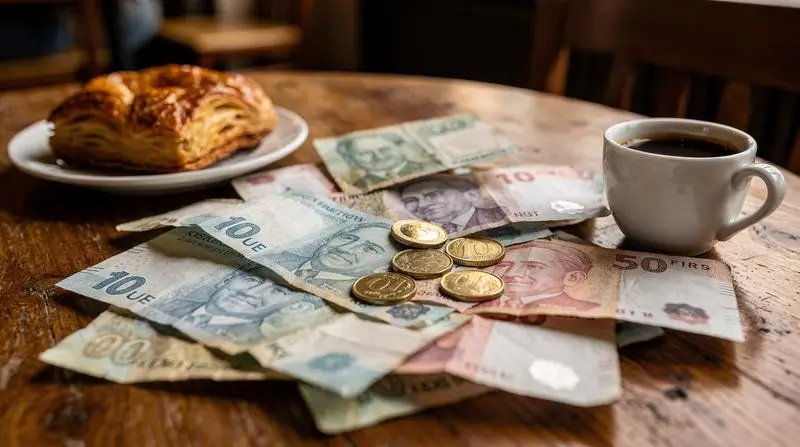
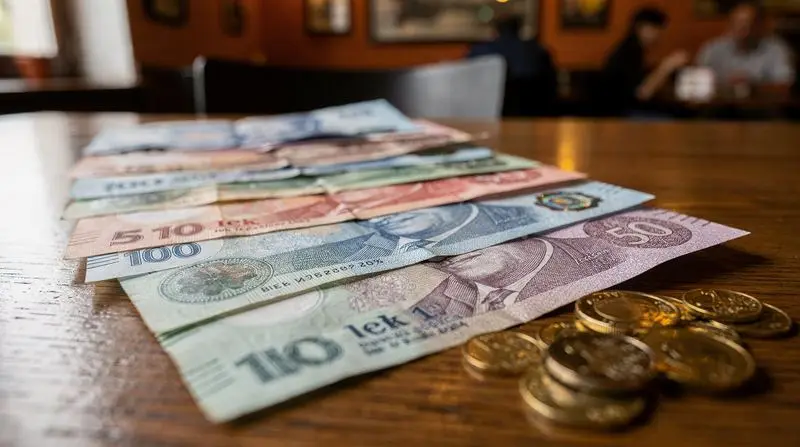
Currency: Always have Albanian Lek (ALL) for market and bazaar shopping. Cards are not accepted at most bazaar stalls. The Albania currency guide has ATM and exchange information.
Quality checks: For filigree, check the silver hallmark. For kilims, look at the back of the pile — hand-knotted kilims have a specific irregularity on the reverse that machine-made pieces do not. For olive oil, ask when it was pressed — good artisan oil is typically from the most recent harvest season (October-December).
Carrying purchases home: Large kilims can be rolled and either carried as additional luggage or shipped. Ask vendors about shipping options — several experienced Kruja vendors can arrange international freight. Raki and olive oil go in checked luggage. Copper and ceramic items need padding.
Receipts: For valuable items, asking for a receipt is reasonable and protects against export declaration issues for expensive handicrafts.
VAT refund: Albania has a VAT refund scheme for non-EU travelers purchasing over a certain threshold. In practice, it is rarely practical for the types of purchases most travelers make — ask at larger shops if relevant.
The Albania Travel Budget Shopping Context
Factoring shopping into your Albania budget: a reasonably enthusiastic souvenir buyer — picking up a kilim, a filigree piece, several bottles of raki and olive oil, and some food products — might spend EUR 100-300 on gifts and personal purchases. This is genuinely affordable by European standards and represents substantial Albanian craft output. The craft economy in bazaar towns like Kruja and Gjirokastra depends heavily on tourist purchasing; buying well-made genuine pieces rather than the cheapest available is directly supportive of the artisan traditions that make these places worth visiting.
Timing Your Shopping Trip
Shopping in Albania’s bazaars is meaningfully better at certain times than others. Mid-morning on a weekday — after vendors have fully set up but before the coach tour groups descend around midday — offers the calmest browsing and the most attentive, unhurried vendor interactions, particularly at Kruja, which sees the heaviest day-tripper traffic of any Albanian bazaar. Autumn, during and just after the grape harvest (September-October), is the best season for buying raki and olive oil directly from producers, since both are freshly pressed or distilled and prices tend to be at their most favorable before the winter markup. Late in a trip, rather than early, is generally the better time to buy: you will have a clearer sense of comparative pricing across the towns you’ve visited, and food products like olive oil and raki benefit from being packed as close to departure as possible.
Shipping Larger Purchases Home
For visitors drawn to a large kilim or a substantial piece of copper work that won’t fit easily in luggage, several experienced vendors in Kruja and Gjirokastra have handled international shipping before and can wrap and post directly to European addresses, though costs and delivery times vary by vendor and destination. It is worth asking specifically about this before buying rather than assuming it is available — not every stall offers it, and the ones that do typically charge based on weight and destination. Keep a photo of the piece and any paperwork the vendor provides in case questions arise at customs on the receiving end.
Food Souvenirs and Where They Fit in Your Trip
Many of the best things to bring home are edible, and they pair naturally with the rest of a trip. If raki is on your list, the Albanian raki guide explains how it is made and served, which helps you judge what you are buying. Olive oil shoppers will enjoy the olive oil trail guide, which points to the groves and producers where buying direct is easiest. For a wider sense of what to taste before choosing what to carry home, the Albanian food guide and the Albanian wine guide are useful companions.
Shopping Destinations Compared
| Bazaar | Best for | Vendor density | Bargaining intensity |
|---|---|---|---|
| Kruja | Kilims, filigree, widest selection | High | Standard tourist bargaining |
| Gjirokastra | Copper work, higher-quality pieces | Moderate | Slightly gentler |
| Shkodra | Filigree silver (best tradition) | Low | Closer to local market pricing |
| Tirana New Bazaar | Food products, convenient last stop | Moderate | Mostly fixed prices |
Supporting the Craft Economy
A meaningful share of Albania’s bazaar economy in towns like Kruja and Gjirokastra depends directly on tourist purchasing, and the difference between a genuinely handmade piece and a cheap import matters beyond quality alone — it determines whether the money you spend supports a working craft tradition or an imported novelty item sold alongside it. Vendors are generally upfront if you ask directly whether a piece is locally made or imported; the price difference reflects real labor and material cost, and paying it is part of what keeps filigree, kilim weaving, and coppersmithing viable trades for the next generation of Albanian artisans rather than folk crafts kept alive only in museums.
Other Towns Worth a Browse
Beyond the main bazaars, smaller towns reward a slow wander with a few craft and food stalls. Shkodra is the natural base for the filigree workshops mentioned above, and Berat sits in a region with a long weaving tradition, so it is worth asking about kilims there too. Travelers heading to the coast can look for olive oil in villages around Himara. If your time is short, the Tirana day trips guide shows how to fit a bazaar visit into a single outing.
Combining Shopping with Sightseeing
None of Albania’s best shopping destinations exist purely as shopping stops — each sits within a destination worth visiting regardless. Kruja pairs its bazaar with the castle and Skanderbeg Museum; Gjirokastra is a UNESCO old town in its own right, with the bazaar forming just one part of a full day’s exploration; and Tirana’s New Bazaar sits a short walk from Skanderbeg Square and the city’s museums. Building a shopping stop into a broader day of sightseeing rather than a dedicated shopping trip is both a more efficient use of time and, generally, a better experience — bazaar browsing rewards an unhurried pace rather than a rushed checklist visit. For visitors planning where shopping fits into a wider itinerary, the Albania bucket list guide and hidden gems guide both help place these bazaar towns in context.
Frequently Asked Questions About Shopping and Souvenirs in Albania
What is the best souvenir to buy in Albania?
Albanian filigree silver jewelry and handwoven kilims are the most distinctive and highest quality souvenirs. If you want something smaller and more practical, a bottle of local raki or cold-pressed olive oil carries genuine Albanian provenance and quality. Copper coffee sets are a functional and beautiful option for those with checked luggage. The best single shopping experience is Kruja Bazaar, where all these categories are available in one atmospheric location.
Is bargaining expected in Albanian bazaars?
Yes, bargaining is expected and normal in traditional bazaars like Kruja, Gjirokastra, and Shkodra. Starting prices in tourist-oriented stalls are typically set significantly above the expected selling price. Counter-offering at around 50-60 percent of the asking price and negotiating from there is the standard approach. Fixed-price shops, supermarkets, and restaurants do not bargain. Being friendly and respectful during the negotiation process produces better results than aggressive pressure.
Where is the best place to buy kilims in Albania?
Kruja Bazaar has the best selection of Albanian kilims, with multiple vendors allowing price and quality comparison. Gjirokastra Bazaar has fewer vendors but tends toward higher quality pieces with more genuine local provenance. When assessing quality, look at the reverse of the pile — hand-woven kilims have visible irregularities on the back that machine-made pieces do not.
Can you buy genuine Albanian raki as a souvenir?
Yes, and it is one of the best food souvenirs. Commercial brands like Skenderbeg are widely available in supermarkets and liquor stores. Better quality is often found at the New Bazaar in Tirana or directly from guesthouses and farms in the countryside. For flights, raki must go in checked luggage (liquids over 100ml are not permitted in carry-on) or purchased at airport duty-free on departure.
How much should I budget for shopping in Albania?
A moderate shopping budget is EUR 100-200 for a typical week-long trip. This covers a small kilim or textile piece (EUR 30-80), a piece of filigree jewelry (EUR 20-60), several bottles of raki and olive oil (EUR 20-40), and assorted food products and small items (EUR 20-40). Visitors specifically coming for craft shopping might budget EUR 300-600. Prices in Albanian bazaars are genuinely lower than comparable craft goods in Western European markets.