Dark Tourism in Albania: The Complete Guide to Historical and Communist-Era Sites
Albania offers some of Europe’s most compelling and least visited dark tourism experiences. The legacy of Enver Hoxha’s 46-year communist dictatorship — one of the most extreme isolationist regimes in the 20th century world — is embedded in the physical landscape of the country in ways that cannot be ignored: 175,000 bunkers dot every beach, mountain pass, and city suburb; the infrastructure of surveillance and repression has been converted into extraordinary museums; remote prison camps sit in mountain valleys largely unchanged from the day they were abandoned.
Unlike dark tourism destinations that rely on historical reconstruction or museum display of removed objects, Albania’s dark tourism landscape is inseparable from the actual sites where history occurred. The bunkers are still in the fields where they were built. Spaç Prison is still in the mountains where prisoners were held. The House of Leaves is still in the same building where phone lines were tapped and mail was opened. This physical continuity gives Albanian dark tourism an authenticity and emotional weight that is rare.
This guide covers the major sites, how to visit them, what to know beforehand, and how to approach this type of travel ethically and meaningfully.
| Where | Tirana (Bunk’Art 1/2, House of Leaves, Pyramid), Spaç (Mirdita), Gjirokastra |
| Cost | around 500-1,000 ALL per museum |
| Time needed | 1 full day for central Tirana; extra day for Spaç |
| Getting there | Dajti cable car for Bunk’Art 1; car needed for Spaç |
| Best combined with | Gjirokastra’s castle and Hoxha birthplace |
What Is Dark Tourism and Why Albania?
Dark tourism — visiting sites associated with death, tragedy, atrocity, or the darker chapters of human history — has a legitimate and important place in how individuals and societies engage with the past. Visiting Auschwitz, the Cambodian Killing Fields, or Ground Zero is not voyeurism; it is bearing witness, processing collective memory, and ensuring that what happened is not forgotten.
Albania’s dark tourism offer sits primarily in the category of communist-era political repression — the systematic imprisonment, surveillance, torture, and execution of citizens by their own government. This history is relatively recent (ending in 1991), directly affecting people still alive, and actively being processed by Albanian society through the opening of archives, museum development, and ongoing political debate. Visiting as a tourist means engaging with living history, not archaeological abstraction.
The country has invested significantly in memorializing this period with intelligence and honesty — Bunk’Art 1 and 2 and the House of Leaves are internationally recognized as among the best historical museums in the Balkans.
The 175,000 Bunkers
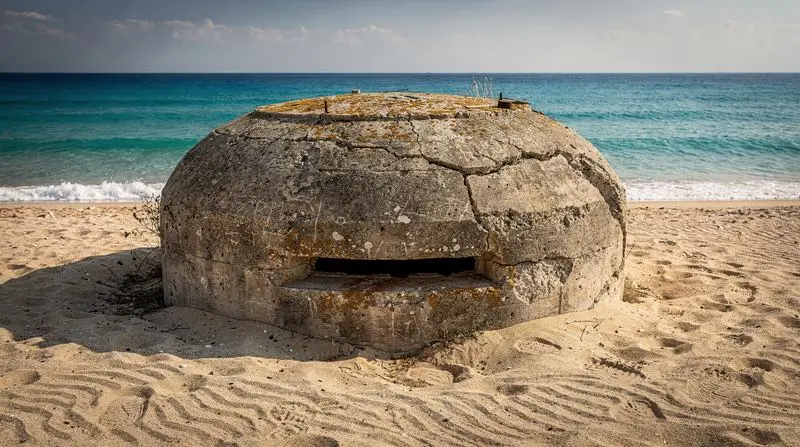
No introduction to Albanian dark tourism can begin anywhere other than the bunkers. Ordered by Enver Hoxha between 1967 and 1986 as a defense against perpetual imagined invasion, approximately 175,000 concrete bunkers were constructed across Albania — one for every 4 citizens of a country of 3 million people.
The standard QZ pillbox design is a low domed concrete structure with a forward-facing firing slit, built to be bomb and machine-gun proof. Larger variants include artillery emplacements, underground command posts, and extensive tunneled complexes. The construction program consumed enormous national resources and was justified by Hoxha’s conviction that Albania — simultaneously hostile to the United States, the Soviet Union, Yugoslavia, and China at various points — faced imminent multi-directional military threat.
The bunkers were never used for their intended military purpose. Many have been demolished in the post-communist development boom; many more were sealed and abandoned; a significant number survive in various states of decay, overgrowth, and repurposing.
Finding Bunkers
Part of the dark tourism experience of Albania is simply traveling through the country and encountering bunkers in unexpected contexts:
Beach bunkers: Along the Riviera between Vlora and Saranda, bunkers appear directly on beaches — half-buried in sand, converted into storage or occasional cafe use, used as informal gathering spots. The sight of a concrete military fortification in the middle of a beautiful beach is a specifically Albanian experience. Notable beach bunker concentrations: the beach at Dhermi, the approach beaches to Himara, and various points along the southern Riviera.
Mountain bunkers: The Llogara Pass road passes several bunkers visible from the road. The mountain approaches to Shkodra, the north of the country along the Kosovo border, and the approaches to Gjirokastra all have significant bunker concentrations.
Urban bunkers: In Tirana and other cities, bunkers are embedded in parks, gardens, and roadsides — sometimes painted, sometimes used as informal storage, sometimes simply sitting amid urban development. Tirana’s suburbs have numerous examples.
Agricultural bunkers: The lowland plains around Fier, Shkodra, and Korça have bunkers distributed across farmland — arranged in defensive patterns, now simply obstacles that farmers plough around.
The Tirana Communist Albania tour with Bunk’Art Museum provides structured context for understanding the bunker program alongside the museum experience.
Bunk’Art 1: The Nuclear Bunker on Mount Dajti
Bunk’Art 1 is the most dramatically sited dark tourism attraction in Albania. Located inside Mount Dajti above Tirana — accessible via the Dajti Express cable car — it occupies a vast underground complex built between 1978 and 1986 as the regime’s nuclear survival bunker for the Albanian government and Politburo.
The Complex
The underground facility has 106 rooms spread across five levels, connected by reinforced concrete tunnels. It was designed to house Enver Hoxha, his Politburo, and essential government staff through a nuclear exchange or conventional military attack. The cost of construction was enormous relative to Albania’s GDP. The facility was equipped with independent power generation, communications infrastructure, air filtration systems, and living quarters — a self-contained government survival capsule.
It was used as a bunker exactly once — briefly, during the political unrest of 1991 as the communist system collapsed. It was then abandoned and sealed.
The Museum
Opened as a museum in 2014, Bunk’Art 1 uses the original tunnels and rooms to present a comprehensive history of Albanian communism from 1944 to 1991. The museum narrative traces the full arc of the Hoxha period: the partisan liberation, the consolidation of communist power, the successive alliances and breaks with Yugoslavia, the Soviet Union, and China, the years of complete international isolation, and the internal repression that sustained the regime.
The physical experience of the museum — cold concrete tunnels, preserved meeting rooms with original furniture, the confined and controlled atmosphere of the underground — adds emotional dimensions that conventional museum display cannot achieve. The Politburo meeting room is preserved with its original long table and chairs; the communications center retains its equipment; the sleeping quarters project the uncomfortable intimacy of enforced underground existence.
Practical information: Open Tuesday-Sunday approximately 09:00-17:00. Entry approximately 800 ALL. Access via Dajti Express cable car (operating from approximately 09:00 to sunset). Allow 2-3 hours inside the museum. The cable car ride itself — with panoramic views over Tirana toward the Adriatic — is worthwhile for the views alone.
The Dajti Mountain cable car and Bunk’Art 1 tour combines the cable car experience with the museum visit and includes transport from central Tirana.
Bunk’Art 2: The History of State Violence
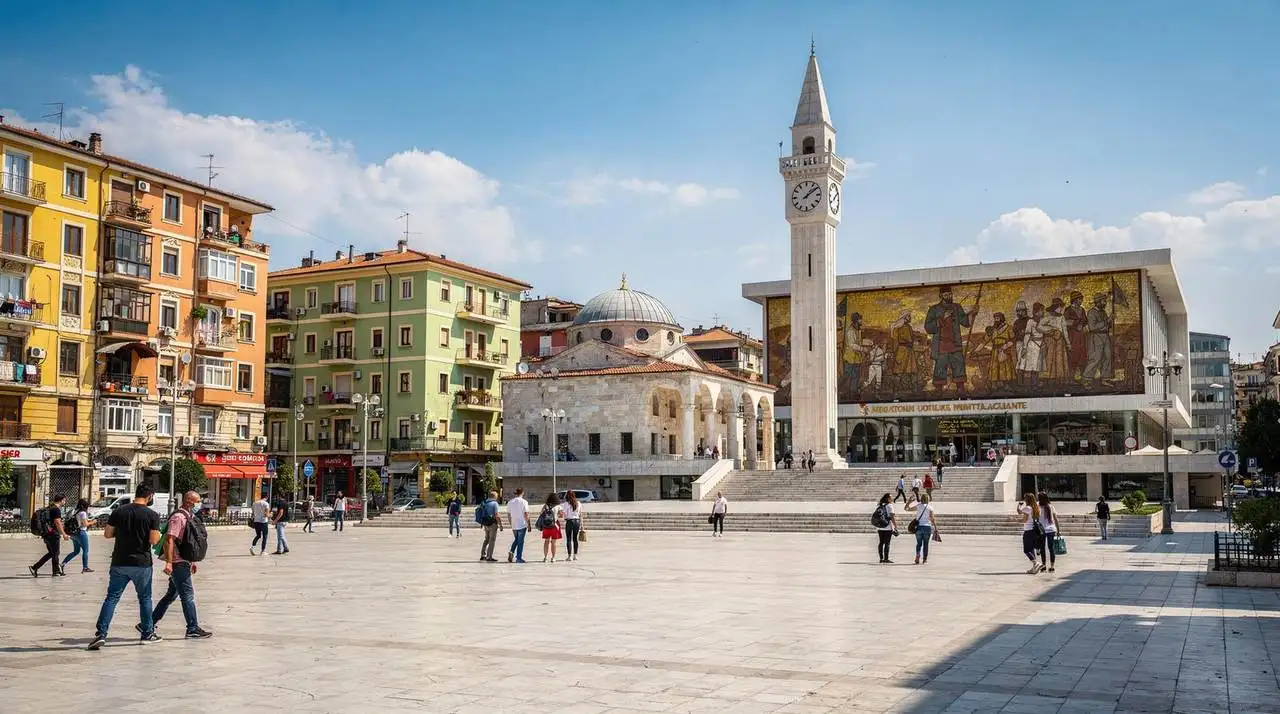
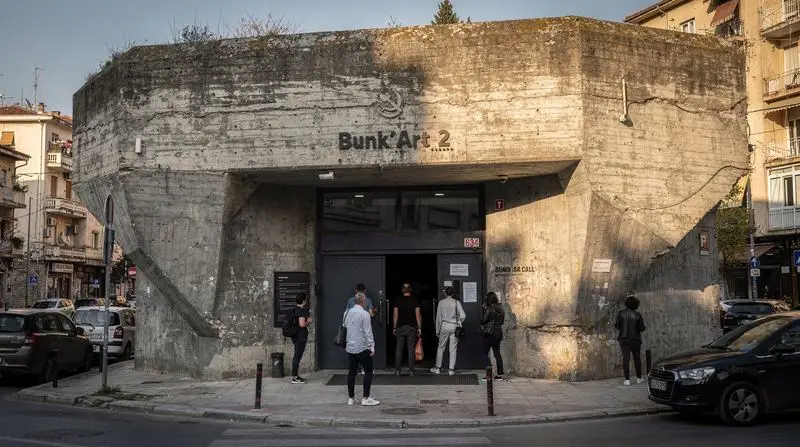
While Bunk’Art 1 covers the broad sweep of communist history in dramatic architectural surroundings, Bunk’Art 2 focuses specifically and unflinchingly on the state’s violence against its own citizens. Located in central Tirana beneath the Ministry of Internal Affairs on Skanderbeg Square, it occupies a nuclear shelter built for ministry staff.
The Exhibition
The permanent exhibition covers:
The communist takeover (1944-1946): The elimination of political opponents — non-communist resistance figures, democratic politicians, intellectuals — in the period immediately following liberation. Show trials, summary executions, and the establishment of the one-party state.
The labor camp system: Detailed documentation of the Albanian gulag — the network of labor camps including Spaç, Burrel, Tepelena, and others. Photographs, prisoner testimonies, and statistical documentation of the scale of imprisonment.
Religious persecution: Following the 1967 declaration of Albania as the world’s first atheist state, all 2,169 religious buildings were closed, repurposed, or destroyed. Religious figures — Muslim imams, Orthodox priests, Catholic clergy — were imprisoned, executed, or subjected to forced labor. The exhibition documents this specifically and with personal testimony.
The Sigurimi: The State Security Service’s operational methods, the informant network, and the effect of mass surveillance on social trust and individual life.
Internal party purges: Hoxha eliminated rivals and perceived threats within the Communist Party itself — the historical record of purges within the leadership is documented here.
The physical location: The fact that this museum sits beneath the very government building that administered much of this repression adds a disquieting, irreducible layer of meaning. You are in the basement of the apparatus itself.
Practical information: Located on Skanderbeg Square. Open Tuesday-Sunday approximately 09:00-17:00. Entry approximately 1,000 ALL. Allow 1.5-2 hours. Combine with Skanderbeg Square and the National History Museum facade mosaic.
House of Leaves: The Surveillance State Museum
The House of Leaves is Tirana’s most unsettling museum and arguably the most important site for understanding how the communist regime maintained control over its population. Located in a suburban villa in central Tirana — a former Italian-era building near the Blloku district — it served as the Sigurimi’s primary facility for technical surveillance operations from 1944 to 1991.
The History of the Building
This was the place where the infrastructure of surveillance was operated: where telephone calls were tapped and recorded, correspondence was opened and resealed, and the technical systems that penetrated Albanian private life were maintained. The villa’s relatively ordinary suburban character — hidden in a residential street rather than a prominent government complex — was itself part of the design. The surveillance state operated most effectively when it was invisible.
The Exhibition
The museum opened in 2017 and has been praised internationally for the quality of its curation. The permanent exhibition includes:
Surveillance equipment: Original wire-tapping devices, hidden cameras, recording equipment, and surveillance vehicles used by the Sigurimi in various eras. The display of actual operational equipment gives the exhibition a forensic quality — you are looking at the specific tools used to invade specific lives.
Operational scenarios: Reconstructed situations showing how surveillance was conducted in practice — the tap on a telephone line, the informant in a workplace, the opened letter, the monitored conversation.
The informant network: Perhaps the most disturbing aspect of the exhibition — documentation of how the Sigurimi built and maintained a network of informants embedded throughout Albanian society. Neighbors reported on neighbors, colleagues on colleagues, and in some cases family members on family members. The reach and density of this system shaped what Albanians were willing to say and to whom for decades.
Personal testimonies: Audio and video testimonies from individuals who were subjects of surveillance, who worked within the system, or who were imprisoned on the basis of Sigurimi information. These personal voices give human scale to the statistics and documents.
Practical information: Central Tirana, near Blloku. Open Tuesday-Sunday approximately 09:00-17:00. Entry approximately 500 ALL. Audio guides available in English. Allow 1.5-2 hours. Walking distance from Blloku district.
The Pyramid of Tirana
The Pyramid of Tirana is the most visible and most symbolically ambiguous monument of the Hoxha era. Built as a mausoleum and memorial museum for Enver Hoxha following his death in 1985, designed by his daughter Pranvera and her husband, it was at the time of construction the most expensive building in Albanian history.
The Pyramid’s post-communist life reflects the difficulty of what to do with monuments to discredited regimes. It was successively repurposed as an exhibition venue, a NATO military base during the Kosovo conflict, a television transmission facility, and an informal recreational space — famously, young Albanians climbed its slippery marble exterior for years, a symbolic and slightly subversive occupation of the monument by the generation that had grown up under and after communism.
A major renovation completed in 2022 converted the Pyramid into TUMO Tirana — a free digital education center for young people — while preserving the exterior and opening public terraces. The renovation was designed specifically to engage with the building’s history rather than erase it, making it a thought-provoking example of architectural reconciliation with a difficult legacy.
The Pyramid is free to access at ground level and provides a central Tirana reference point for the communist history circuit. The day trips from Tirana guide includes the Pyramid in a central Tirana itinerary.
Visitors who want the wider story of how the country got here will find it in the Albania history timeline, which places the Hoxha years in the long sweep of Albanian history. For other places where the past is preserved on site, the historical sites guide and the museums guide make natural companions to this circuit.
Spaç Prison Camp
Spaç is Albania’s most raw dark tourism site and the hardest to reach — both geographically and emotionally. Located in a remote mountain valley in the Mirdita region, approximately 2.5 hours by mountain road from Shkodra, it was Albania’s most notorious political prison and forced labor camp, operating from 1968 to 1991.
The History
Spaç was a copper and pyrite mine staffed entirely by political prisoners — intellectuals, religious figures, dissidents, anyone accused of anti-state activity, and many simply caught in the indiscriminate dragnet of a paranoid security apparatus. Prisoners worked the mine in conditions of systematic physical and psychological deprivation. Food was insufficient; medical care was minimal; the mine itself was dangerous. Political prisoners were deliberately assigned to the hardest physical labor as part of the punishment.
In 1973, a significant prisoner revolt occurred — one of the very few acts of collective resistance in Albania during the Hoxha years. Prisoners seized control of part of the facility. The regime’s response was rapid and violent. The revolt was suppressed, its leaders executed, and Spaç continued operating for another 18 years.
What Remains
Spaç has never been formally converted into a memorial or museum. It is a ruin — the mine buildings, guard towers, cell blocks, and industrial infrastructure deteriorating in the mountain valley without interpretation, without facilities, without managed access.
This is, paradoxically, what makes Spaç so powerful as a dark tourism site. There is no curation to mediate the experience. You approach the ruins on a rough mountain road, pass through the abandoned gates, walk among the collapsed buildings, and encounter the physical fact of what happened here in its raw, unmediated state.
Practical information: A vehicle with good ground clearance is necessary. The mountain road from Shkodra (via Rubik and Klos) takes approximately 2-2.5 hours. There are no facilities at the site. Bring water and food. Research the history beforehand — there is no interpretation on-site. Allow 1-2 hours at the site itself. Best combined with a Shkodra overnight stay.
If you are planning the northern leg, the Shkodra destination guide and the where to stay in Shkodra page help you choose a base before the long mountain drive. Driving conditions on remote roads are worth reading about in the driving in Albania guide.
The Gjirokastra Dimension
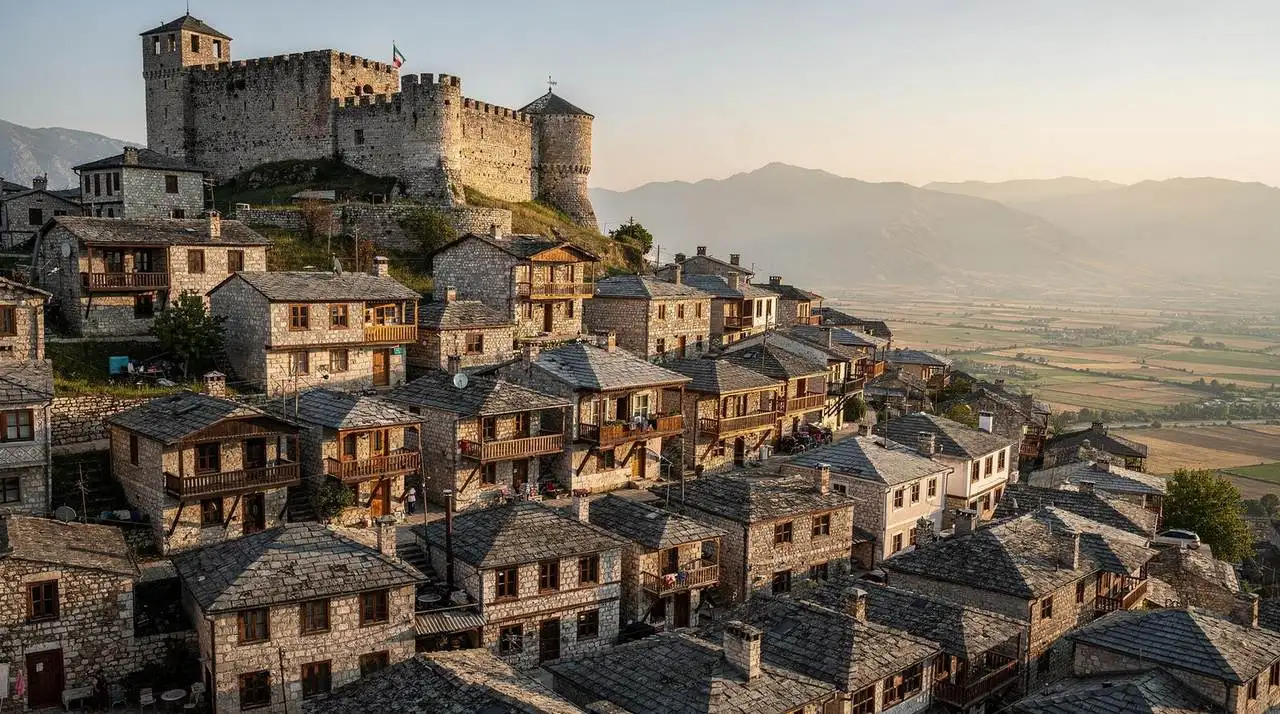
Gjirokastra — Enver Hoxha’s birthplace — adds a specifically biographical dimension to Albanian dark tourism. The UNESCO-listed Ottoman town carries communist-era history in several layers:
Hoxha’s birthplace: The family home, a traditional tower house in the upper town, was preserved as a museum during the communist era. It remains a significant site.
The castle as prison: Gjirokastra’s medieval castle served as a detention and execution site during the communist period. The castle museum now documents both medieval and communist-era history.
Communist-era architecture in context: Walking through Gjirokastra reveals the complex layering of Ottoman, Italian fascist-era (Albania was under Italian occupation in the 1930s-40s), and communist-era construction that characterizes the town.
The National Museum of Armaments: Located in the castle, it includes a captured American U-2 spy plane, one of several cold war aerial incidents that Hoxha used for domestic propaganda purposes. The Gjirokastra destination guide covers visiting logistics.
A Dark Tourism Itinerary for Albania
A five-day focused dark tourism itinerary:
Day 1 — Central Tirana: House of Leaves (morning), Pyramid of Tirana (midday), Bunk’Art 2 on Skanderbeg Square (afternoon). Walk through Blloku identifying the Hoxha villa location. Dinner in Blloku.
Day 2 — Bunk’Art 1 and Dajti Mountain: Dajti cable car, morning and early afternoon in Bunk’Art 1. Return to Tirana, visit National History Museum mosaic facade. Evening: Tirana contemporary life contrast.
Day 3 — Gjirokastra: Full day in Gjirokastra — Hoxha birthplace, castle museum and armaments, old town. Overnight in Gjirokastra recommended.
Day 4 — Gjirokastra to Berat: Morning in remaining Gjirokastra sites. Afternoon drive to Berat via the Permet region. Evening in Berat old town.
Day 5 — North to Spaç: Long day drive from Berat to Shkodra via Tirana, then continue toward Spaç for the afternoon visit. Overnight in Shkodra.
Ethical Considerations
Dark tourism done thoughtfully is a legitimate and valuable form of historical engagement. Done carelessly, it risks becoming voyeurism or, worse, a trivialization of real suffering.
Research before you go: Understanding the history before visiting — reading even one account of life under Albanian communism — means arriving with context that transforms what you see from backdrop to meaning.
Respect for survivors: The communist period ended in 1991. Many survivors, their children, and their perpetrators are still alive. The history is recent enough to be personal and tender. Approach these sites with the gravity they deserve.
Photography: Photography is permitted in most Albanian dark tourism sites and the sites themselves encourage documentation. What matters is attitude — photographing from genuine interest rather than dark spectacle.
The Albanian investment in memory: Albania has done serious, thoughtful work in converting the sites of repression into honest memorials. That work deserves respect and engagement rather than cursory tourism.
Joining a guided communist history tour in Tirana is one of the best ways to engage with this material, as a good guide provides personal and family historical connection to what you are seeing.
The communist history guide covers the full historical context in depth.
Budgeting a Dark Tourism Day
A full day covering House of Leaves, Bunk’Art 2, and the Pyramid of Tirana costs remarkably little given the depth of the material: entry fees together run around 1,500-2,000 ALL (roughly EUR 15-20), and the sites are close enough together that a taxi or Bolt between them adds only a few euros more. Adding Bunk’Art 1 requires the Dajti Express cable car, which is priced separately (check current fares, typically several hundred Lek each way) and adds half a day given the travel time and the size of the underground complex. Spaç, by contrast, has no entry fee at all — the cost there is entirely the transport (a rental car for the day, or a private driver for around EUR 60-100 from Shkodra) rather than admission.
Understanding the Broader History Before You Go
Arriving with even a basic understanding of Albania’s communist period transforms these visits from an abstract museum circuit into something with real weight. A few essential facts worth knowing beforehand: Enver Hoxha ruled from 1944 until his death in 1985, and the regime that followed continued largely unchanged until 1991; Albania broke successively with Yugoslavia, the Soviet Union, and China, ending the period in almost total international isolation; the 1967 declaration of state atheism closed or destroyed nearly every religious building in the country; and the labor camp and prison system, of which Spaç was the most notorious, imprisoned tens of thousands of Albanians for offenses as minor as listening to foreign radio. The communist history guide covers this in far more depth and is worth reading — even briefly — before visiting any of the sites described above.
Guided vs Independent Visits
Most of the major sites (House of Leaves, both Bunk’Art museums, the Pyramid) are entirely manageable independently, with English signage and audio guides available at several. Where a guide adds real value is context that the exhibitions themselves cannot provide — personal or family history, the wider political narrative connecting the sites, and answers to specific questions that placards don’t address. For Spaç in particular, given the complete absence of on-site interpretation, either extensive prior research or a knowledgeable guide is close to essential to get more out of the visit than a walk through unexplained ruins. A guided communist history tour from Tirana is a reasonable middle path for visitors who want context without committing to a fully organized multi-day itinerary.
Where to Stay for a Dark Tourism Focus
Central Tirana is the obvious base for the museum cluster (House of Leaves, Bunk’Art 2, the Pyramid), all within walking distance of Tirana’s main squares and the Blloku restaurant scene for evenings. For the Spaç leg specifically, an overnight in Shkodra breaks the drive sensibly and lets you combine the prison camp with Rozafa Castle and the northern lakes. Travellers building a full communist-history circuit around Gjirokastra as well should plan at least one overnight there — the Gjirokastra destination guide covers accommodation in the old town, much of which sits in restored Ottoman houses just streets away from the Hoxha birthplace museum.
Photography and Preparing Younger Travellers
Beyond the general ethical guidance above, a few practical notes for photographers and families specifically. Most museums permit photography without flash, and the sites themselves — designed as memorials rather than sensitive ongoing operations — generally welcome documentation as part of their educational mission. For families bringing older children, a short preparatory conversation about what they’ll see (imprisonment, surveillance, in some cases documentation of execution) sets expectations better than encountering the material cold; several parents report that framing the visit around “understanding what happened so it doesn’t happen again” gives children a constructive lens for processing difficult content.
Beyond the Big Sites: Smaller Traces of the Era
Away from the headline museums, communist-era traces surface throughout ordinary Albanian travel in smaller, less curated ways. Faded murals and mosaics with socialist-realist imagery survive on some public buildings outside Tirana. Former collective farm buildings, now repurposed or abandoned, dot the agricultural plains — a visible counterpart to the agrotourism revival happening in some of the same regions today. Older Albanians are often willing, sometimes eager, to share personal recollections of the period if approached respectfully — a guesthouse conversation over dinner can add more texture to the history than any museum placard, and is one of the most valuable ways to encounter this history while travelling.
Frequently Asked Questions About Dark Tourism in Albania
What is the best dark tourism site in Albania?
Bunk’Art 1 and the House of Leaves are the two most highly regarded — together they cover the national political history (Bunk’Art 1) and the intimate human experience of surveillance and repression (House of Leaves) in ways that are both historically rigorous and emotionally affecting. Spaç Prison Camp is the most powerful site in raw terms, but requires significant effort to reach and visits without interpretation. For a single-day introduction, the combination of House of Leaves and Bunk’Art 2 in central Tirana is the most time-efficient.
Can you visit Spaç Prison Camp in Albania?
Yes, Spaç is accessible to independent visitors. There is no formal admission process, no fee, and no facilities — it is a ruin in a remote mountain valley reached by a rough mountain road from Shkodra. A vehicle with good ground clearance is required. The drive takes approximately 2-2.5 hours from Shkodra each way. Bring your own food, water, and historical background reading. The absence of curated interpretation is part of what makes Spaç so impactful, but it means arriving informed is important.
How many bunkers are there in Albania?
Approximately 175,000 concrete bunkers were built in Albania between 1967 and 1986 under Enver Hoxha’s orders. This equates to roughly one bunker per four citizens in a country of 3 million people at the time. They appear across the entire country — beaches, mountains, farmland, city suburbs, road junctions. Many have been demolished, many have been repurposed, and many remain in various states of deterioration in the landscape.
Is Albanian dark tourism appropriate for children?
This depends on age and preparation. The Bunk’Art museums and House of Leaves deal with subjects — political violence, imprisonment, surveillance, execution — that require some maturity to process. For older children (12 and above) with parental guidance and age-appropriate preparation, these sites offer genuine historical education of a kind that cannot be replicated from textbooks. For younger children, the dark tourism circuit is probably not appropriate as a primary itinerary, though encountering bunkers in the landscape is unavoidable and can prompt valuable conversations.
How do I get to Bunk’Art 1?
Bunk’Art 1 is located inside Mount Dajti above Tirana and is accessed via the Dajti Express cable car. The cable car station is approximately 7 km from central Tirana by car (Bolt or taxi from the center costs approximately EUR 5-8 each way to the cable car station, or the cable car station is accessible by city bus). The cable car ride takes approximately 15 minutes and offers panoramic views over Tirana. The cable car operates from approximately 09:00 to near sunset — check current operating hours before planning your visit, as missing the last car means a very long walk down.