Agrotourism Stays in Albania: Farm Stays, Rural Guesthouses, and Agricultural Tourism
Albania’s agrotourism sector offers some of the most authentic and underappreciated travel experiences in the Balkans. The country’s agricultural heritage — still practiced in forms that disappeared from Western Europe a generation ago — combined with genuine family hospitality and landscapes of extraordinary beauty creates a category of travel that is simultaneously affordable, nutritionally revelatory, and culturally immersive.
Staying on an Albanian farm or in a rural guesthouse means waking to the sounds of livestock, eating food where you watched the olive oil being pressed or the cheese being made or the vegetables being harvested the same day. It means encountering Albanian hospitality in its most concentrated form — the host family that has invited you into their working life, not just their guest room.
This guide covers the main agrotourism regions, what farm stay experiences actually look like in practice, how to find and book them, what to expect in terms of facilities and food, and the seasonal calendar that determines when different agricultural activities are available to participate in.
| Where | Permet, Berat valley, Shkodra hinterland, Korça |
| Cost | around EUR 20-55 per person per night, full board |
| Best time | October-November (olive harvest), May-June (mountain areas) |
| Getting there | Own car or private driver strongly recommended |
| Booking | Mostly direct contact; some listings on Booking.com/Airbnb |
What Is Albanian Agrotourism?
The term agrotourism in Albania covers a spectrum from basic accommodation in a working farm family’s home to more developed rural guesthouse operations that combine agricultural activities with comfortable facilities and professional hospitality. The common thread is the agricultural context — you are staying in or near a working farm, and the farm’s activities, produce, and family life are integral to the experience.
Typical Agrotourism Stays
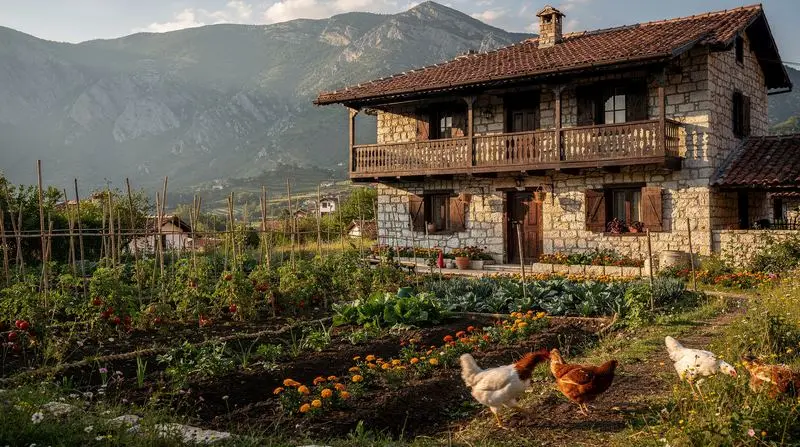
Family farm guesthouses: The most common Albanian agrotourism accommodation. A working family farm that has converted one or more rooms or a small guesthouse annex into accommodation. Meals are included — and are typically the highlight. Breakfast features homemade cheese, eggs from the farm’s chickens, honey, freshly baked bread, seasonal fruits. Dinner is a multi-course affair drawn from the farm’s larder and garden: grilled lamb, homemade wine, stuffed vegetables, walnut pastries. The cost is typically EUR 25-45 per person per night including all meals.
Converted barn and stone house stays: In the Berat, Permet, and Shkodra hinterland regions, abandoned stone barns and farm buildings have been converted to guest accommodation while retaining the agricultural context. These offer slightly more privacy than the family home room model while maintaining the farm setting.
Working farm participatory experiences: The most immersive type of agrotourism involves actual participation in agricultural work — olive harvesting in autumn, cheese-making with the shepherd family, beekeeping with local honey producers, wine harvesting in September. These are organized activities rather than just staying on a farm, and represent the fullest engagement with Albanian agricultural culture.
Mountain shepherd stays: In the higher reaches of the Albanian Alps and the Gjirokastra mountains, traditional shepherd families receive guests in their summer pasture dwellings (katundi). These are the most basic form of agrotourism — a wooden or stone shelter, communal sleeping, exceptional food, and immersion in a way of life almost unchanged from centuries past.
The Best Agrotourism Regions
Permet and the Zagoria Valley
Permet is arguably Albania’s most developed and celebrated agrotourism destination. The town sits on the Vjosa River in southeastern Albania, surrounded by the Zagoria valley and the dramatic Lengarica canyon. The region has cultivated an agrotourism identity over the past decade, with an increasing number of family farms offering accommodation, local wine tourism (Permet has a distinctive wine tradition), and participation in seasonal agricultural activities.
Why Permet? The combination of factors is unusual: extraordinary natural beauty (the Vjosa — one of Europe’s last wild rivers — the Lengarica canyon with its thermal springs, the mountain landscapes of the Zagoria), a strong local food tradition (Permet’s fig preserves, walnut-stuffed sweets, local wine, and mountain lamb are specifically celebrated), a community that has committed to tourism development without losing its agricultural character, and prices that remain very affordable.
What to do in Permet: Visit the thermal springs at Lengarica (a canyon with hot springs bubbling up from the river floor — extraordinary swimming). Walk or drive through the Zagoria valley villages — Çarçovë, Bënçë, Frashër. Visit local wine producers for tasting. Participate in seasonal activities: olive harvest (October-November), wine harvest (September), walnut gathering (October). The local market on specific weekday mornings sells farm produce directly.
Finding accommodation: Permet has a functioning agrotourism network. The town has a local tourism information point. Booking in advance is advisable for harvest season and summer weekends; walk-in availability is more common outside those periods. Several Permet farms and guesthouses appear on Booking.com; others require direct contact via phone or Facebook.
Price range: EUR 20-40 per person per night including all meals. This is genuinely one of the best accommodation values in Albania.
Berat Valley
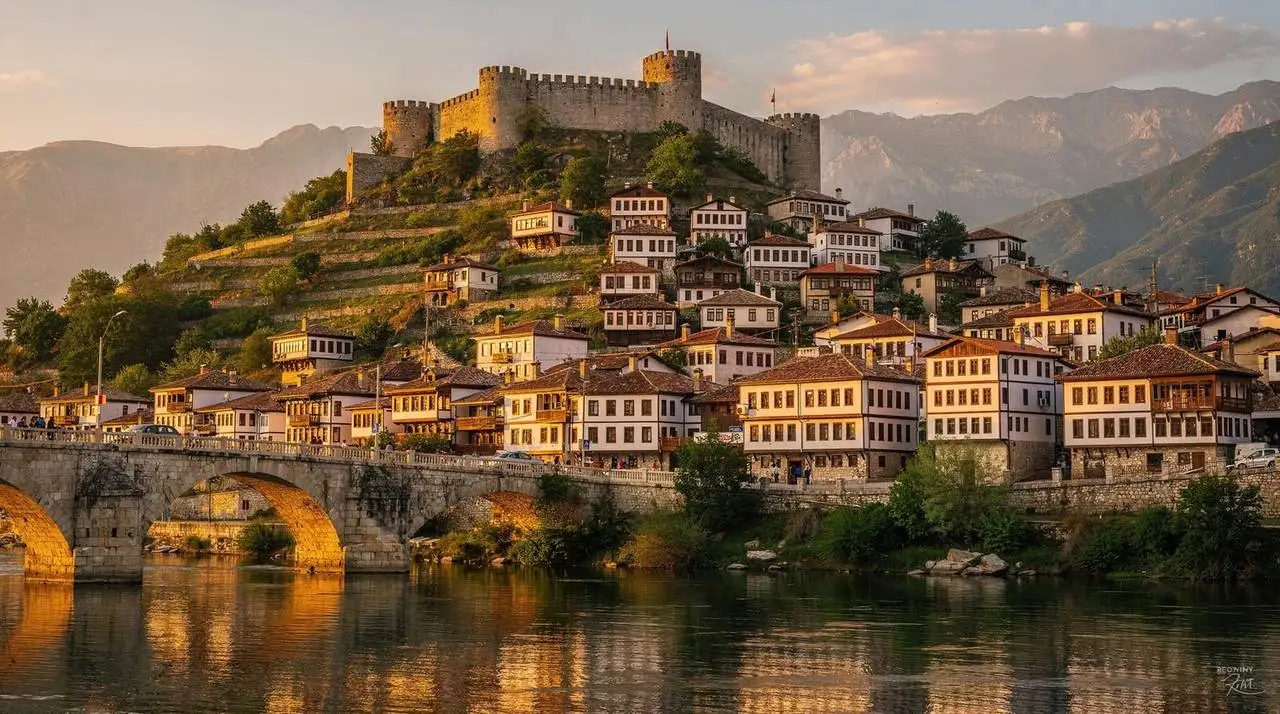
The Berat valley — the Osum River valley surrounded by olive-covered limestone hillsides — has an agrotourism offer centered primarily on olive culture and the extraordinary landscape. Berat’s UNESCO old town is the main draw, but the surrounding villages and farms offer the agricultural context that makes the region’s olive oil, wine, and cheese production comprehensible.
Agrotourism around Berat: Several farms in the villages above and below Berat receive guests. The accommodation ranges from basic room-and-board in a family home to slightly more developed guesthouses with private bathrooms. The food is consistently excellent — Berat valley lamb, olive oil from the family’s own trees, local wine, and homemade dairy products.
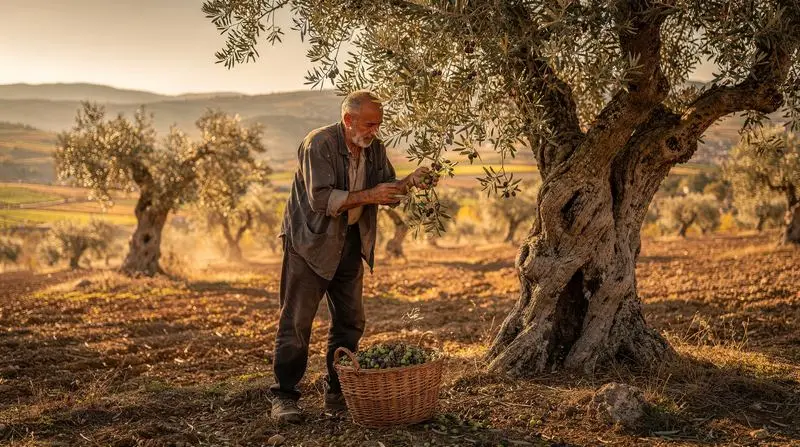
The olive oil connection: Berat is one of Albania’s primary olive oil producing regions. Staying on a working olive farm during harvest season (October-November) and watching or participating in the harvest and pressing process is one of the most memorable agricultural tourism experiences available in Albania. The Albania olive oil trail guide covers this in detail.
Cooking classes as agrotourism: Several Berat accommodations offer cooking classes that draw directly on farm produce — learning to make byrek (savory pastry), tave kosi (baked lamb with yoghurt), and other Albanian dishes using the day’s fresh produce. These are participatory food culture experiences as much as culinary instruction, and if your guesthouse doesn’t run one, you can join a cooking class in Berat instead.
Access from Berat: Agrotourism farms around Berat are typically 10-30 minutes by car from the town center. Having a vehicle, or arranging transport with your host, is practical for exploring the valley farms.
Shkodra Hinterland
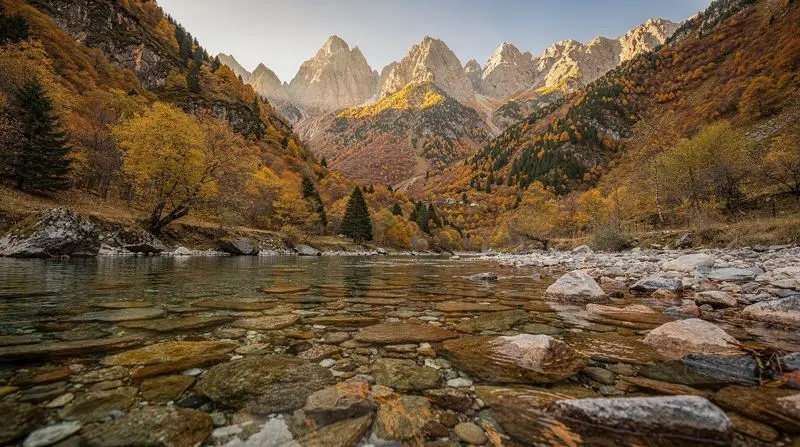
The hinterland east and north of Shkodra — toward the Albanian Alps, the Kiri River valley, and the mountain areas toward Valbona — has a long tradition of guesthouse hospitality closely tied to the mountain agriculture of the north. Here the agrotourism character is shaped by the northern Albanian highland culture: stone construction, strong traditions around meat and dairy, the besa hospitality code, and landscapes of severe mountain beauty.
What makes northern agrotourism different: The north has a more austere character than the south. The food is heavier and less varied (more meat and bread, less vegetable variety than Permet or Berat). But the hospitality is intense and the landscape drama is extraordinary. Staying in a mountain family home in the Kiri or Valbona valley area means entering a way of life that feels more distant from modern urban Albania than any southern agrotourism destination.
The guesthouse tradition in the Alps: Theth and Valbona have established family guesthouse networks (not quite the same as working farm agrotourism, but overlapping) that have been the primary accommodation for trekkers on the Peaks of the Balkans trail. Several of these guesthouses are genuine farms — maintaining livestock, producing cheese and butter, growing vegetables in mountain gardens — and guests are welcomed into this daily reality.
Finding accommodation in the Shkodra hinterland: The Albanian Alps Guesthouses association and various trekking operators maintain lists of accommodation in the mountain areas. For the broader Shkodra hinterland, less formal networks operate — the Albania Agrotourism Association (Shoqata e Agroturizmit) has a register of member properties.
Korça and the Southeast
The Korça plateau — southeastern Albania’s agricultural heartland, bordering North Macedonia and Greece — produces Albania’s most developed wine industry, significant apple orchards, and grain crops in a landscape quite different from the coastal mountains.
Wine tourism: Korça region is the center of Albanian commercial wine production, with vineyards including Kantina Korça and several smaller producers developing wine tourism. Vineyard stays and harvest participation exist, though this is a developing rather than established sector.
Apple orchards: The apple orchards of the Korça plateau are productive and distinctive — staying in a working orchard farm during harvest season (September-October) is available through several family properties.
Access: Korça is the primary regional center, approximately 3.5-4 hours from Tirana by car.
The Riviera Hinterland
The inland areas behind the Albanian Riviera — the olive-growing villages above Himara, Borsh, and Dhermi — combine the agricultural character of olive culture with proximity to the coast. Agrotourism stays in these villages are possible and provide a less commercialized alternative to Riviera beach accommodation.
Staying in a family home above Borsh during olive season (October-November) while having beach access an hour’s drive below combines two aspects of southern Albanian experience that most tourists encounter separately.
What to Expect: Facilities and Food
Facilities
Albanian agrotourism accommodation ranges from very basic to genuinely comfortable. Setting accurate expectations:
Basic level: Shared bathroom (clean, functional), simple private room, no air conditioning or heating beyond a wood stove, outdoor toilet in some traditional properties, no WiFi or very weak WiFi. These are typically the most affordable options (EUR 15-25 per person) and the most “authentic” in the sense of least modified for tourist comfort.
Mid-range: Private or semi-private bathroom, clean and simple private room, electricity with charging points, some warming system (wood stove or gas heater for mountain locations), basic WiFi (adequate for messaging, not for video calling). Most Permet and Berat valley agrotourism accommodation falls here. EUR 25-40 per person including meals.
Developed agrotourism: Private bathrooms, comfortable beds, hot water (essential — confirm this before booking in the mountains), often air conditioning in southern locations, reliable WiFi, sometimes a small terrace or garden area for guests. These are typically the more established guesthouses that have been operating for several years and have invested in guest facility quality. EUR 35-55 per person including meals.
The Food: The Reason to Come
In agrotourism, the food is not incidental — it is often the primary experience. Albanian farm cooking represents a direct connection between soil, season, and plate that has become rare in Western food culture.
What to expect on the table:
Breakfast: Homemade bread (bukë e shtëpisë) baked that morning, butter churned from the cow out back, cheese (gjizë or fresh white cheese), eggs from chickens you may have seen, honey from the farm’s beehives, seasonal fruit (figs in late summer, pomegranate in autumn, citrus in winter in the south), and coffee or mountain herbal tea.
Dinner: Multiple dishes served family-style. Expect at minimum: soup (supë), a main meat dish (lamb, goat, or chicken — from the farm), stuffed vegetables (peppers or grape leaves with rice and meat), salad from the garden, bread, and dessert (often walnut or honey pastry). Wine may be from the family’s own vines in grape-growing areas. Raki — home-produced fruit brandy — accompanies and follows the meal as welcome and digestif.
The flavor intensity of farm-direct Albanian food — olive oil pressed this season from trees outside the window, lamb that lived on mountain herbs, tomatoes harvested today — is a genuine shock for visitors accustomed to supermarket-sourced food. Many travelers report that eating in Albanian agrotourism contexts is among the most memorable culinary experience of their travels.
Activities and Participation
The most engaged agrotourism experiences involve active participation rather than passive observation. What is typically available:
Olive harvest (October-December, Berat valley and Riviera hinterland): Spreading nets, beating branches, collecting olives. Physical work, but accessible to most fitness levels. Can be combined with watching the pressing process at the village mill. See the Albania olive oil trail guide.
Grape harvest (September, Korça, Permet, and Berat areas): Cutting and collecting grapes for pressing. Shorter season than olives — typically one to two weeks in September.
Cheese-making (spring and early summer, mountain areas): In the Alps and mountain farms, watching or participating in the process of turning fresh milk into cheese and butter. Best in May-June when new season milk production is at its peak.
Bread baking: Many farm hosts offer an informal baking session — the preparation and baking of traditional Albanian bread in a wood-fired oven. Simple, hands-on, and directly usable as a skill.
Animal care: Feeding chickens, collecting eggs, assisting with livestock in very informal ways. Works well for families with children. Albanian farm hosts tend to be naturally accommodating of children’s curiosity about animals.
Walnut gathering (October): In the Zagoria and mountain areas, walnut gathering from natural walnut trees is an autumn activity that can be participated in.
Beekeeping: Several farms with beehives offer brief beekeeping introductions alongside honey tasting. No experience necessary; protective gear provided.
Finding and Booking Agrotourism in Albania
The booking infrastructure for Albanian agrotourism is improving but remains informal by Western European standards:
Albania Agrotourism Association (Shoqata e Agroturizmit): The primary organization promoting Albanian agrotourism has a website with member properties. The website is available in Albanian and English.
Booking.com and Airbnb: An increasing number of Albanian agrotourism guesthouses appear on these platforms, though coverage is still incomplete. The Airbnb Albania guide covers booking platform context.
Facebook groups: Albania Travel, Explore Albania, and regional tourism groups have current recommendations from recent travelers. Specific property names shared by recent visitors are more reliable than generic category descriptions.
Albanian travel agencies specializing in rural tourism: Several operators have developed itineraries specifically around agrotourism and can book accommodation as part of broader packages. You can also book a rural tour in Albania to pair guided countryside excursions with your farm stay.
Direct contact: Many farm guesthouses operate entirely through word of mouth and direct phone/WhatsApp contact. Numbers are sometimes posted in local tourism offices or at regional visitor information points in Permet, Berat, or Shkodra.
On arrival: In Permet particularly, walking into the town and asking at the local information point or café produces reliable current recommendations. The agrotourism community in Permet is active and well-networked.
Seasonal Calendar
Different agricultural activities make different seasons most rewarding:
May-June: New season’s milk and dairy, spring vegetables, wildflower landscapes, beekeeping activity, comfortable temperatures for mountain areas. Best overall season for mountain agrotourism.
July-August: Fig season begins, peak summer conditions on the Riviera. Hot for physical agricultural work. Good for beach-combined agrotourism stays in the Riviera hinterland.
September: Grape harvest (Korça, Permet, Berat). Beginning of agricultural autumn. Excellent weather.
October-November: The prime agrotourism season — olive harvest across the southern regions, walnut gathering, apple orchards (Korça), pomegranate harvest. Cooler weather makes agricultural participation comfortable. One of the best periods for the Permet and Berat regions generally. See the Albania in Autumn guide.
December-February: Minimal agricultural activity, fewer guests. Some farm guesthouses close or reduce operations. For visitors who specifically want a quiet winter rural retreat, this off-season has a particular quality — empty landscapes, wood fires, slower pace.
Practical Information
What to bring: Comfortable work clothes if you want to participate in activities. Layer up for mountain areas even in summer. Cash (Albanian Lek) — most farm guesthouses do not accept cards. The Albania currency guide covers cash access.
Language: English is spoken in more tourist-oriented agrotourism guesthouses. In more remote and traditional settings, Albanian only. Basic Albanian courtesy phrases are extremely appreciated. A translation app on your phone helps.
Families with children: Albanian agrotourism is especially well-suited to families. Children are genuinely welcomed, farm environments provide natural stimulation, and Albanian families are characteristically warm and inclusive with visiting children.
Dietary needs: Agricultural tourism in Albania is meat-heavy. Vegetarians and vegans should discuss their needs explicitly before arriving — Albanian farm hosts are accommodating but may need advance notice to prepare meals without meat. The vegetable side dishes in Albanian farm cooking are excellent; ensuring these form the main meal rather than the accompaniment requires communication.
Seasonality at a Glance
| Season | Highlight | Weather | Crowds |
|---|---|---|---|
| May-June | Dairy, spring vegetables, beekeeping | Mild, comfortable in mountains | Low |
| July-August | Fig season, Riviera-combined stays | Hot, humid on coast | Moderate-high on Riviera |
| September | Grape harvest (Korça, Permet, Berat) | Warm, stable | Low-moderate |
| October-November | Olive harvest, walnuts, apples | Cool, ideal for farm work | Moderate (best overall) |
| December-February | Quiet season, raki and cheese aging | Cold, wet in mountains | Very low |
Choosing a Region: A Quick Comparison
| Region | Best for | Facility level | Price (per person/night, full board) |
|---|---|---|---|
| Permet | First-time agrotourism, wine, thermal springs nearby | Basic to mid-range | around EUR 20-40 |
| Berat valley | Olive culture, cooking classes, easy UNESCO pairing | Mid-range | around EUR 25-45 |
| Shkodra hinterland / Alps | Traditional mountain hospitality, trekking base | Basic | around EUR 20-35 |
| Korça and the southeast | Wine tourism, apple harvest | Mid-range | around EUR 25-45 |
| Riviera hinterland | Combining olive culture with beach access | Basic to mid-range | around EUR 20-40 |
First-Time Guest Checklist
A short list of things worth confirming before you arrive, especially for first-time agrotourism guests who aren’t sure what to expect:
- Ask what meals are included — full board (breakfast and dinner) is standard; lunch is often extra unless specified.
- Confirm the bathroom situation — private, shared, or communal — if this matters for your comfort level.
- Check whether the property has heating or air conditioning appropriate for your travel season; mountain properties in particular can be cold outside summer.
- Ask about WiFi honestly — “we have WiFi” can mean anything from fast fibre to a weak signal that barely loads a browser.
- Clarify arrival logistics — many farms are down unmarked side roads; get a pin location or precise directions, not just a village name.
- Mention dietary needs when booking, not on arrival, particularly for vegetarian or allergy requirements.
Agrotourism for Families and Groups
Farm stays suit families particularly well — see the Albania family travel guide for the broader picture of travelling with children in the country. Beyond the animal-feeding and bread-baking activities already mentioned, most hosts are happy to adjust the pace for younger guests: shorter participation windows, an afternoon at the farm rather than a full excursion, and meals timed around children’s schedules rather than the standard late Albanian dinner hour.
For groups of friends or multi-generational travel, several agrotourism properties in the Berat and Permet areas can accommodate 6-10 guests across multiple rooms, which brings the per-person cost down further and turns the stay into a genuinely social occasion around one long table.
Related Reading for Rural Stays
If the farm-stay idea appeals but you want to compare it with other rural options, the broader agrotourism in Albania guide sets out the wider picture. Travellers heading to the mountains may also want the guesthouses in the Albanian Alps guide, while those drawn by the food side of the experience will find more context in the Albanian food guide and the Albanian wine guide. For a gentler base with more services before or after your farm stay, the Berat destination page and the Permet destination page describe what each town offers.
Getting There Without Your Own Car
Most agrotourism farms sit well outside the reach of Albania’s furgon network (see the buses and furgons guide for how it works, or the car rental guide if you decide to drive), but that doesn’t rule out a car-free visit. The usual workaround is taking a furgon or bus to the nearest town — Permet, Berat, or Shkodra — and arranging with the host in advance for a pickup, which many are happy to do for a modest fee or sometimes for free if you are staying multiple nights. Ask about this explicitly when booking rather than assuming it is available. A private driver hired for the day is the other reliable option, particularly useful if you want to combine the farm visit with sightseeing along the way rather than treating it as a separate trip.
Combining a Farm Stay With the Rest of Your Trip
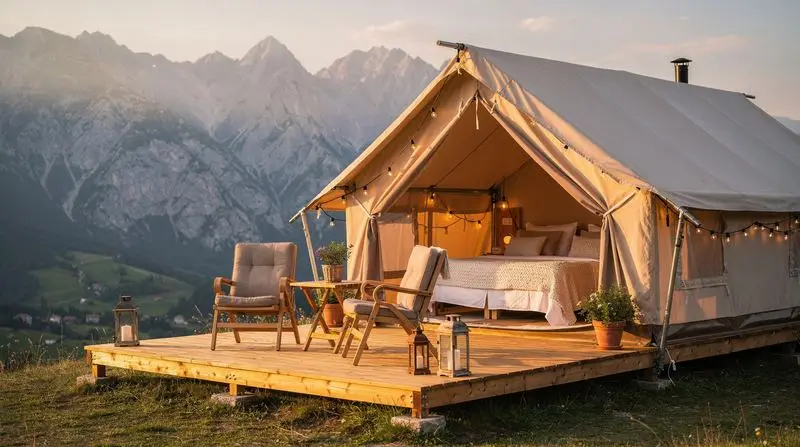
A farm stay rarely works as a standalone destination — it is best treated as two or three nights woven into a wider route. Permet pairs naturally with the Vjosa valley and a Riviera stretch further south; Berat pairs with Tirana on one side and Gjirokastra on the other. If you are also interested in wine, the Albanian wine guide covers the Berat and Korça producers in more depth, and if glamping-style comfort with a similar rural setting appeals more than a family homestay, the Albania glamping guide covers that alternative.
Frequently Asked Questions About Agrotourism in Albania
What is the best region for agrotourism in Albania?
Permet is the most developed and celebrated agrotourism region in Albania, combining extraordinary natural scenery, a strong local food and wine culture, established accommodation options, and a community committed to quality rural tourism. Berat valley is the best for olive oil culture specifically. The Shkodra hinterland and Albanian Alps offer the most traditional mountain farm experience. Korça is best for wine tourism and harvest activities.
How much does an Albanian farm stay cost?
Most Albanian agrotourism guesthouses charge EUR 20-40 per person per night including all meals (breakfast and dinner). This is genuinely one of the best hospitality values in Europe — for EUR 25-35 per person you get a private room, homemade breakfast, a multi-course dinner with local meat, vegetables, wine, and raki, and often unlimited tea, coffee, and snacks through the day. More developed properties with private bathrooms and better facilities run EUR 35-55 per person.
Can I participate in farming activities during an agrotourism stay?
Yes, particularly during the relevant seasons. Olive harvesting (October-November in the Berat valley and Riviera hinterland), grape harvesting (September in Korça and Permet), cheese-making (spring and early summer in mountain areas), and bread baking are all activities that most agrotourism hosts welcome visitors to participate in. The key is arriving during the relevant season and expressing genuine interest — Albanian hosts respond extremely well to curiosity about their work.
Is agrotourism in Albania suitable for families with children?
Albanian agrotourism is exceptionally well-suited to families. Albanian culture is famously warm toward children, farm environments provide natural play and exploration opportunities, and the multi-generational family guesthouse model means children are integrated naturally into the household social life. Feeding chickens, collecting eggs, watching animals, and basic kitchen participation are natural activities for farm-staying children. Families report agrotourism stays as among the most memorable experiences for children traveling in Albania.
How do I find and book Albanian agrotourism accommodation?
The booking process is less formalized than in Western European agrotourism markets. The Albania Agrotourism Association maintains a register of member properties. Booking.com and Airbnb have incomplete but growing coverage of farm guesthouses. Facebook travel groups (Albania Travel, Explore Albania) provide current traveler recommendations. Direct contact via phone or WhatsApp is common for smaller operations. In Permet — the most developed agrotourism hub — arriving and asking locally is entirely viable.