Albania in November: Autumn Closes, Winter Approaches
November is a transitional month in Albanian travel — not quite the mild autumn of October, not yet the winter calm of December and January. The rainy season has properly arrived, temperatures have dropped to the 10-16°C range, and a significant portion of the coastal infrastructure has closed for the winter. The Albanian Riviera in November is essentially empty of tourists, the beach bars are shuttered, and the resort towns have returned to being ordinary Albanian coastal communities.
What November does offer — and offers generously — is the authentic, unhurried experience of a country going about its normal life without any tourist overlay. The cities are fully functional, the cultural attractions are open, the food is excellent and cheap, and the olive harvest season brings a particular agricultural and culinary richness to the southern lowlands and coastal hinterland that no other month provides.
| Where | Tirana, Berat, Gjirokastra, and the olive-growing hinterland around Vlora |
| Cost | Among the lowest of the year, 40-50% below summer peaks |
| Time needed | 5-7 days for a cultural and culinary circuit |
| Getting there | Fly into Tirana; furgons and main highways run normally |
| Best time of day | Midday for warmth; short daylight, roughly 7am-5pm |
November Weather in Albania
Temperatures in November average 11-14°C in Tirana and the coastal lowlands, with colder conditions at elevation. The northern mountains typically see their first serious snowfall in November, and the southern highlands have cold nights that drop close to freezing at altitude. The Albanian Alps guesthouses that haven’t already closed by late October are shutting down through November.
Rainfall increases significantly in November, continuing the pattern established in late October. The Albanian autumn and winter are genuinely wet — the country’s Mediterranean and Balkan climate patterns combine to produce substantial precipitation from November through February. Overcast days and rain showers are the norm rather than the exception, though November also produces clear sunny periods, particularly in the south, when the weather can be surprisingly pleasant.
The far south — the Saranda area, the southern Riviera coast — is the mildest part of November Albania. Temperatures here occasionally reach 16-17°C on clear afternoons, and the combination of winter light, empty beaches, and the Mediterranean landscape can be genuinely beautiful. Walking the Saranda waterfront in November, with the Ionian Sea pewter-grey under a low sky and no other visitors in sight, is an experience with its own particular quality.
The Olive Harvest
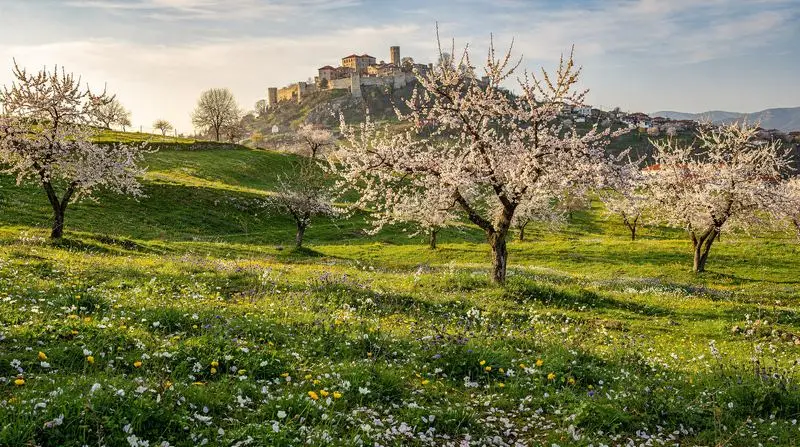
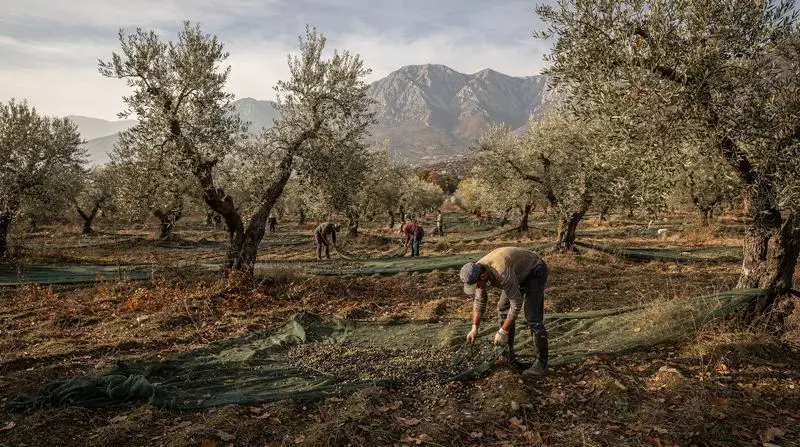
November is the peak month for the olive harvest in Albania, and for travelers interested in food, agriculture, and authentic seasonal experiences, this is November’s principal attraction. The olive groves of the south — concentrated in the Vlora region, the Fier lowlands, the hinterland behind the Riviera coast, and the valleys around Gjirokastra — are harvested through November in operations that range from traditional hand-picking by family groups to larger mechanized collections.
The process of visiting an olive harvest in Albania is informal by the standards of organized agritourism. Driving through the olive-growing regions in November, stopping at groves where you see family groups at work, and asking to observe (Albanians are generally delighted to share what they are doing with interested visitors) provides a direct connection to agricultural traditions that have continued here for thousands of years.
The olive oil production that follows the harvest involves traditional stone presses (makineri) at small local mills, and the freshly pressed oil — bright green, intensely fruity, and almost nothing like the oxidized olive oil sold in bottles — is available directly from producers in November and early December. Buying a liter or two of freshly pressed Albanian olive oil is one of the great food souvenirs of an autumn visit.
The best area for olive harvest observation is the hinterland between Vlora and Fier in the coastal lowlands, and the valleys south of Gjirokastra toward the Greek border. Both areas have significant olive-producing traditions and accessible grove roads.
Cultural Sightseeing in November
The cultural program in November is almost completely unaffected by the season. Museums, UNESCO old cities, castle complexes, and archaeological sites are all open and significantly quieter than any summer month.
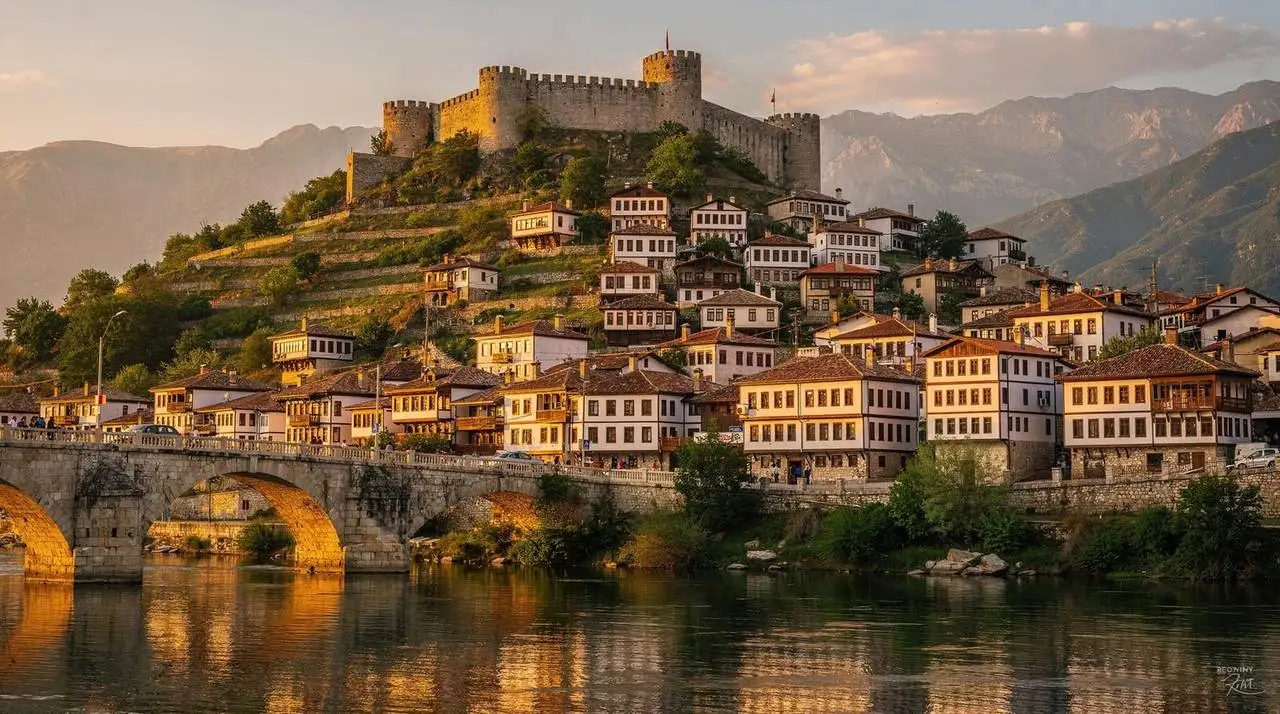
Berat in November has an atmosphere of genuine historical depth. Without the crowds that arrive from spring through September, the castle complex and the Mangalem quarter are experienced almost as they would have been centuries ago: quiet, slightly austere, dramatically positioned above the valley. The Onufri Museum’s Byzantine icons, the churches of the castle area, and the ethnographic museum in the lower town all deserve unhurried attention that November uniquely makes possible.
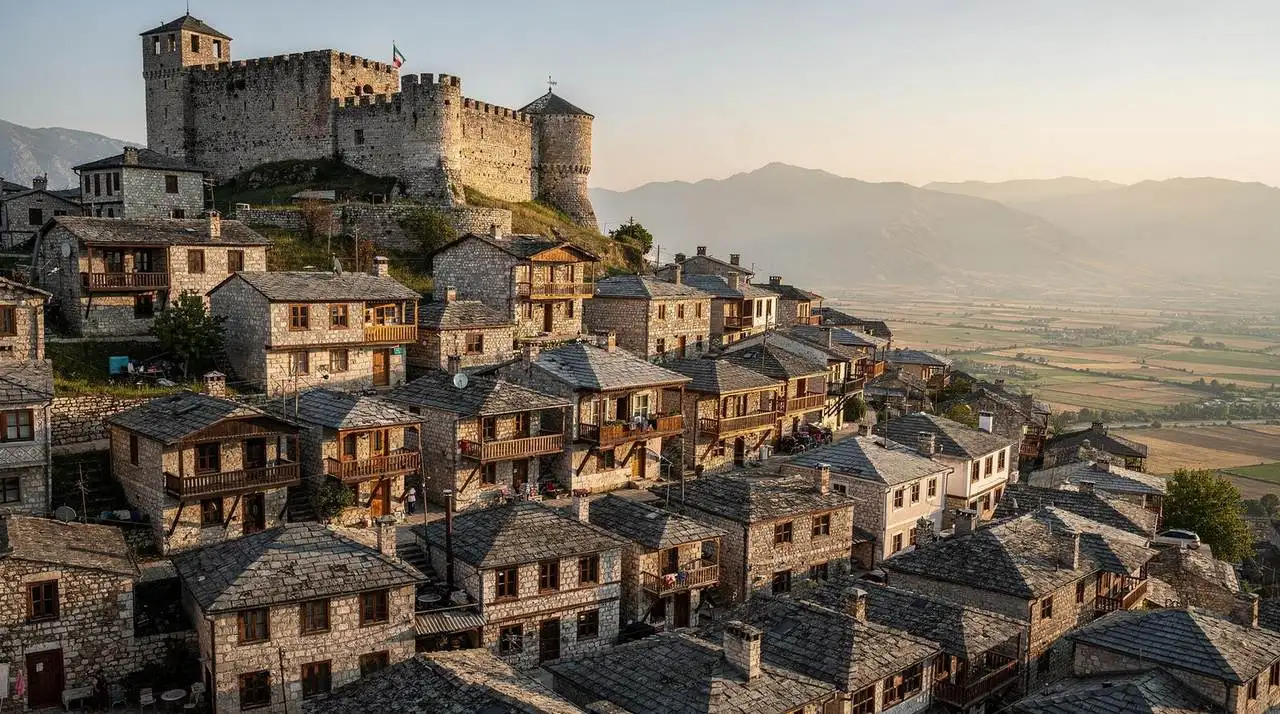
Gjirokastra in November takes on the character of its stone architecture most fully. The city has always had something stern and historical about it — the massive castle, the Ottoman-era houses with their towers, the views down the Drino valley — and November’s grey skies and empty streets lean into this character rather than contradicting it. Spending a November day in Gjirokastra’s old quarter, walking the cobbled lanes and having the castle viewpoints entirely to yourself, produces a very different memory from the summer version.
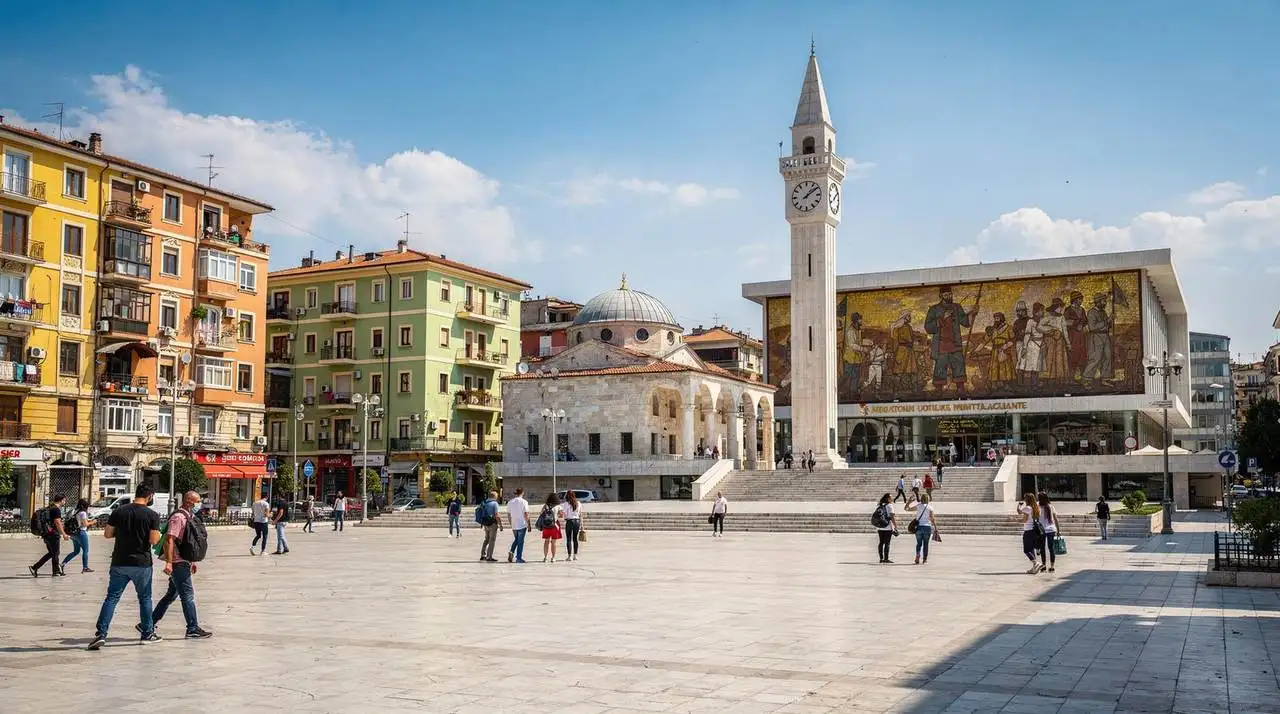
Tirana in November is fully operational and culturally active. The theater season, gallery openings, and cultural events that the summer suppressed have returned, and the city’s cafe culture (year-round by definition) provides warm refuge on wet days. The BunkArt museums, the National History Museum, and the National Art Gallery are all excellent in November conditions — minimal queues, maximum time for proper engagement. For useful context on the communist-era sites, a guided communist Albania tour with the Bunk’Art museum works well on a wet November day.
November Food and Markets
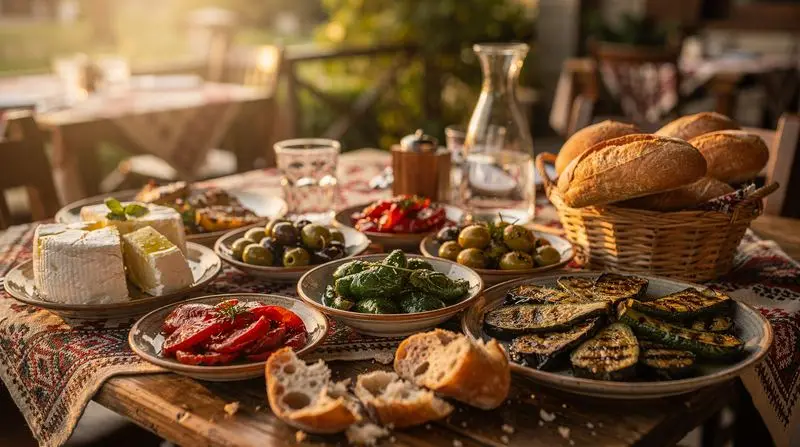
November’s food culture has a particular richness in Albania. The autumn produce is still coming in from the farms: the last tomatoes (preserved as paste and sauces), the root vegetables that characterize Albanian autumn cooking, stored peppers and pickled vegetables prepared through October, and the fresh walnuts and dried figs that appear in baked goods and on market stalls.
The New Bazaar in Tirana in November has a different selection from the summer abundance: smaller and more concentrated, but often of excellent quality. Fresh seasonal mushrooms appear when the weather has been wet — a significant event in Albanian cooking, where wild mushrooms are used in several traditional preparations. The cheese selection thickens in autumn, as cheeses aged since spring reach maturity.
Albanian national independence days fall in late November. November 28th is Flag Day (Dita e Flamurit) — the anniversary of Albanian independence in 1912 — and November 29th is Liberation Day. The public holidays and associated events give the end of November a mild festive character that lifts the grey-season atmosphere slightly.
Independence Day Celebrations
Flag Day on November 28th is the most emotionally significant national holiday in the Albanian calendar. Independence Day in 1912 established the Albanian nation after centuries of Ottoman rule, and the anniversary is observed with genuine feeling across the country. Tirana’s Skanderbeg Square hosts a ceremony and cultural events. Albanian flags — the red double-headed eagle on black — appear on buildings and public spaces across the country.
Visiting Albania around Independence Day provides a window into Albanian national identity and the historical narrative that Albanians carry about their place in the region. The celebrations are not manufactured for tourists; they reflect genuine historical consciousness.
Southern Albania in November: The Mild Option
The far south of Albania — Saranda, Butrint, and the southern Riviera coast — offers the mildest version of November in the country. The Mediterranean influence keeps temperatures here 2-3°C warmer than Tirana and the inland areas, and clear November days can be genuinely pleasant for walking, sightseeing, and even sitting at seafront cafes in the afternoon sun.
Saranda in November is a very different city from its summer self: the promenade is quiet, most beach-facing restaurants are closed, but the town itself functions normally with local cafes, year-round restaurants, and the charm of a small Albanian coastal city going about its daily life without any tourist layer. The ferry connection from Corfu to Saranda continues operating in November, making it possible to combine Greek islands travel with an Albanian stop even in the off season.
Butrint National Park near Saranda is open year-round and in November offers an exceptional visit: the ancient ruins surrounded by the last of the autumn vegetation, the lagoon in its winter state, and complete solitude. The park receives a tiny fraction of its summer visitor numbers in November, and the opportunity to spend an hour at the Greek theater or the Roman forum entirely alone is one of the more moving archaeological experiences available in Europe.
What Is Closed in November
Beach facilities and resort infrastructure along the Albanian Riviera are largely closed in November. Most beach bars, sunbed operations, and beach-facing restaurants have shut for the winter. Accommodation in the smaller Riviera towns is significantly reduced. Some restaurants in tourist-focused areas close or reduce their hours.
The Albanian Alps guesthouses and mountain tourism infrastructure close in October or early November. The Theth and Valbona valley communities are largely empty of tourists by mid-November.
November Coffee Culture and City Life
In November, Albanian cities retreat into the warm-interior cafe culture that defines the off-season. The passegiata (xhiro) continues in the early evening — Albanians walk and meet regardless of weather — but the duration shortens as the temperature drops, and the cafe becomes the primary social venue. Spending a November evening in Tirana’s Blloku neighborhood, moving between cafes and watching the city’s social life conduct itself in the warm light of the establishments around you, is one of the more authentic Albanian urban experiences available.
The Albanian coffee culture is described at length in our coffee guide. November’s particular version of it emphasizes the cafe as refuge and social anchor: when the beach is closed, the mountains are inaccessible, and the short days limit outdoor sightseeing, the cafe is where Albanian daily life happens, and visitors who embrace this find it one of the most rewarding parts of an off-season visit.
Raki and November Warmth
November is raki season in a cultural sense. The new raki distilled from the autumn grape harvest is appearing on tables across Albanian homes and in traditional restaurants, and the spirit’s warming properties are genuinely appreciated as the temperature drops. The tradition of offering raki to guests intensifies in the cold months — there is something completely coherent about being handed a small glass of fresh raki in a warm Albanian kitchen while rain falls outside.
If you are visiting Albanian homes or staying in traditional guesthouses (bujtina) in November, raki will feature prominently in the hospitality offered. Understanding its cultural role, described in detail in our raki guide, helps appreciate why it is offered rather than treating it simply as an alcoholic drink.
November Day Trips and Excursions
Day trip options in November are reduced but not eliminated. The UNESCO cities of Berat and Gjirokastra remain fully accessible and at their most atmospheric in November’s grey light and empty streets. The road conditions are manageable on the main highways throughout the month.
The Apollonia archaeological site near Fier — one of Albania’s most important ancient Greek cities, with a remarkably intact Roman odeon and extensive ruins in a setting of olive groves and rolling hills — is excellent in November. The combination of the ruins, the autumn olive harvest visible in the groves around the site, and the near-complete absence of other visitors creates a contemplative experience of real quality.
Shkodra in November has its own distinct winter character. The northern city’s large lake (Lake Shkodra, shared with Montenegro) is at its winter level, the castle visible across the water, and the old pedestrian street of Rruga Kole Idromeno — with its cafes, galleries, and the cultural activity that gives Shkodra its reputation as Albania’s most intellectually serious city — is operating at full pace for residents if not for tourists.
November in Tirana: Culture and Urban Life
Tirana in November is one of the best versions of the capital for visitors who are interested in culture rather than beach and outdoor activities. The city’s cultural institutions are running their autumn programs: the Albanian National Theater produces its first new-season productions, the gallery spaces of the city have their autumn exhibitions, and the general intellectual energy that characterizes Tirana’s younger professional class is visible in the cafes, bookshops, and cultural events.
The new produce of the season appears at the New Bazaar: winter squashes, late-season grapes and persimmons, freshly roasted chestnuts from street vendors, and the beginning of the citrus season that brings southern Albanian lemons and mandarins to market. A morning at the bazaar in November provides a genuinely different food experience from any summer visit.
The BunkArt museums, the National History Museum, and the National Art Gallery are all excellent in November. The context of a quieter, colder city makes the engagements with Albania’s complicated history — the communist period, the Hoxha regime, the post-1991 transition — feel more relevant and immediate than they do in summer when tourism creates a surface of normality over the historical depth beneath.
What to Pack for November
November requires waterproof footwear, a warm mid-layer, and a waterproof outer layer. The same winter preparation as December and January applies from mid-November onward. A light layer that can be added in the south on mild November afternoons completes the picture.
For the full month-by-month overview of Albanian travel, see the best time to visit Albania guide. The Albanian food guide provides context for understanding the olive harvest and November’s seasonal food culture.
November in the Albanian Cities
While coastal and mountain tourism winds down in November, the cultural cities reward a visit in ways that summer crowds prevent:
Tirana in November is at its most local. The tourist cafes are quieter, the cultural institutions are fully active, and the city reveals its everyday character rather than its summer performance. The National Theatre, the National Opera and Ballet, and various gallery spaces run their autumn-winter programs from November. Dinner reservations at the city’s best restaurants are effortless. The Blloku neighborhood’s bar scene shifts to indoor, warming atmospheres.
Berat in November is extraordinary for photographers. The early winter light on the Ottoman stone houses creates images impossible in summer’s harsh sun. The castle district in November morning fog — the city emerging from mist as the fog lifts — is one of the most photogenic scenes in the Balkans. The tourist-season guesthouses may have closed, but a few family-run places remain open and offer some of the best guesthouse hospitality of the year to their smaller number of guests.
Gjirokastra in November is the most atmospheric of any month. The blue-grey stone city in November drizzle, with smoke rising from wood fires inside the Ottoman tower houses, approaches the visual atmosphere of a historical photograph. The castle is accessible (bring a jacket), the bazaar is quiet, and the handful of restaurants that remain open serve warming Albanian winter food to a clientele almost entirely of locals.
Shkodra in November has its particular appeal in the quality of the light over Lake Shkodra, which can be dramatically atmospheric in late autumn when low cloud sits on the mountains above the lake. The Rozafa Castle in November afternoon light is worth a visit.
November Practical Guide
What is open: All major museums and cultural sites in Tirana are open year-round. City restaurants and cafes in Tirana, Berat, and Gjirokastra maintain reduced but functional opening hours. Thermal baths are fully open — November is a primary thermal bath season.
What is closed or reduced: Most coastal resort restaurants and bars. Many mountain guesthouses. Some Riviera hotels. The Koman Lake ferry continues, but the Theth road may have intermittent closures from late November depending on snowfall.
Getting around in November: Furgons between major cities run year-round. Bus connections from Tirana to the main cities (Berat, Gjirokastra, Shkodra, Saranda) are reliable throughout November. Driving is straightforward on lowland and coastal routes; mountain roads should be approached with awareness of early snowfall. See the buses and furgons guide for current schedules if travelling without a car.
Budget in November: November prices are among the lowest of the year, second only to January and February. Hotel rates are 40-50 percent below summer peaks. A comfortable mid-range Albania trip in November costs significantly less than the same quality level in any summer month.
Packing for November: Waterproofs are essential. A warm mid-layer and a windproof outer layer are necessary in the evenings and in the mountains. Waterproof footwear for the cobblestone streets of Berat and Gjirokastra in November rain is strongly recommended. The Mediterranean sun still warms the afternoon on clear days, so a packable lighter layer gives flexibility.
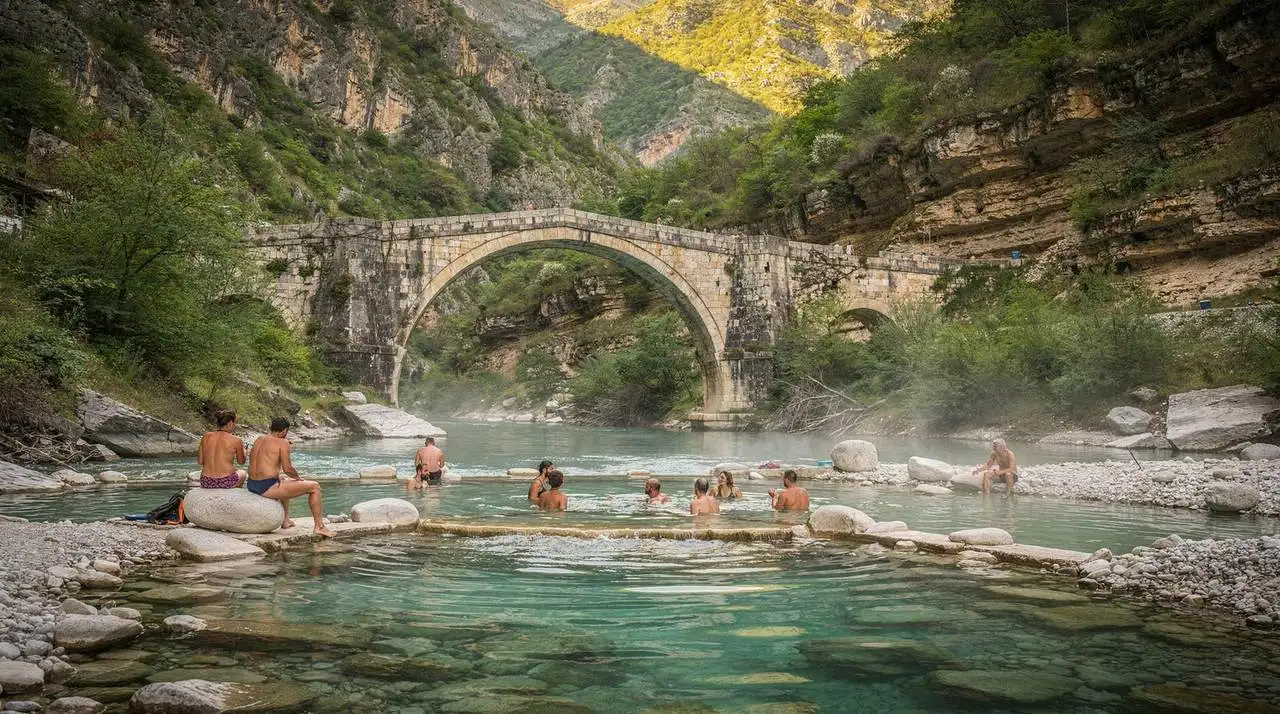
The thermal baths at Benja near Permet are at their best in November — warm soaking pools in a gorge setting, with almost no other tourists. This is one of the finest November activities in the country:
This guided Benja thermal baths experience from Permet includes transport and context for one of southern Albania’s most atmospheric natural sites. Cost approximately EUR 20-35 per person.
November vs October vs December
November sits between two more forgiving months. October still has warm afternoons, some coastal facilities open, and a genuine autumn-colour appeal in the mountains and UNESCO cities. December brings the Korça Christmas market and Tirana’s festive atmosphere to compensate for the cold. November has neither October’s lingering warmth nor December’s festive lift — it is Albania at its plainest, which is precisely its appeal for travellers who want the olive harvest, empty museums, and genuine local life without any seasonal event shaping the trip.
A Realistic November Itinerary
A well-paced November trip runs 5-7 days: two nights in Tirana for the museums and cafe culture, a night or two in Berat for the castle in autumn light and a chance to see the olive harvest in the surrounding hills, and a stop in Gjirokastra for its most atmospheric season. A day trip to the Benja thermal baths near Permet or the Apollonia archaeological site near Fier rounds out the circuit. This route stays on the main highways and avoids the mountain passes that are beginning to close for winter by late November.
Frequently Asked Questions About Albania in November
Is November too rainy to enjoy Albania?
November is genuinely one of the wetter months, but rain tends to come as showers rather than sustained downpours, and the cultural cities — Berat, Gjirokastra, Tirana — are well suited to a mix of museum time and shorter outdoor windows between showers. The far south around Saranda stays noticeably milder and drier than the rest of the country.
What makes November worth visiting despite the closures?
The olive harvest is the standout reason — driving through the groves of the Vlora-Fier hinterland during harvest season and tasting freshly pressed oil directly from small producers is a genuinely rare travel experience. Combined with empty UNESCO cities, rock-bottom prices, and Independence Day celebrations on November 28th, November rewards travellers whose priority is authentic culture over guaranteed sunshine.