Albania Expat Guide: Everything You Need to Know About Living in Albania
Albania is attracting a growing number of foreign residents — retirees drawn by low costs and Mediterranean climate, digital nomads extending stays into semi-permanent residency, entrepreneurs spotting opportunities in a fast-developing economy, and some returning Albanian diaspora alongside entirely new arrivals from Western Europe and beyond. The country offers a combination of low living costs, EU accession trajectory, 90-day visa-free access for most Western nationals, and a culture of hospitality toward foreigners that makes the initial settling period easier than in many destinations.
This guide covers the practical realities of expat life: residency permits, banking, healthcare, schooling, monthly budgets by city, and the social integration experience that most Albania relocation guides fail to address honestly.
| Visa-free stay | 90 days per 180-day period (most Western passports) |
| Comfortable couple budget | around EUR 1,300-2,100/month (Tirana) |
| Residence permit processing | around 2-6 weeks |
| Best base for infrastructure | Tirana (schools, healthcare, banking) |
| EU accession status | Candidate country, negotiations ongoing |
The Case for Albania
Albania is not for everyone, and being realistic about the challenges alongside the genuine advantages helps set appropriate expectations. The case for Albania as an expat destination:
Low cost of living: A comfortable life in Tirana — private apartment, eating well, socializing, gym, occasional travel — runs EUR 1,200-1,800 per month for a couple. This compares with EUR 3,500-5,000 for comparable quality of life in Western European capitals.
EU accession trajectory: Albania is an EU candidate country. Accession is a multi-year process, but the direction of travel — institutional reforms, legal alignment with EU frameworks — affects everything from banking to property rights to infrastructure investment in ways that favor long-term residents.
Safety: Albania has low violent crime rates by European standards. Foreign residents consistently report feeling personally safe in both urban and rural environments. The cultural emphasis on hospitality (besa — the Albanian code of honor and trust) extends to how foreigners are treated.
Climate: Mediterranean climate in the south and coast; continental conditions in the north and mountains. Tirana has approximately 2,400 hours of sunshine per year. Winters are mild by northern European standards (average January lows around 3-5 degrees Celsius in Tirana).
Accessibility: Tirana International Airport has direct connections to many European cities. The country’s small size means any destination within it is reached in 1-3 hours.
Nature access: Extraordinary landscapes — beaches, mountains, lakes, rivers, and UNESCO heritage sites — accessible within an hour or two of any major city.
Residency Permits
The 90-Day Visa-Free Window
Most Western passport holders (EU, UK, USA, Canada, Australia, and others) can enter and remain in Albania for 90 days within any 180-day period without a visa. Since Albania is not in the Schengen Area, these 90 days are entirely separate from the Schengen allowance — a significant practical advantage for those managing multiple European bases.
Many short-term expats and extended visitors operate within the 90-day allowance, leaving for a neighboring country briefly (typically Greece or North Macedonia) to reset the clock. This “visa run” approach is technically compliant but not a substitute for proper residency if you intend to stay long-term.
Temporary Residence Permit
For stays beyond 90 days, a temporary residence permit (leje qëndrimi e përkohshme) is required. The categories most relevant to non-working expats:
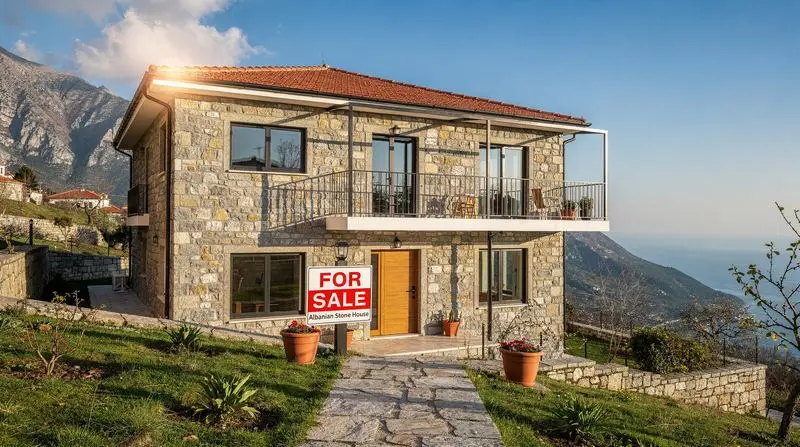
Property ownership: Foreigners who own property in Albania can obtain a residence permit linked to that ownership. See the Albania real estate for foreigners guide for property purchase details.
Employment: Those working for Albanian-registered companies or with local employment contracts can obtain work-linked residence.
Business registration: Registering a business (including a one-person consulting company) in Albania provides a basis for residence permits. Albania’s business registration process has been streamlined and can be completed in a few days.
Retirement / passive income: Albania does not yet have a formally defined retirement visa category, but the general residence permit on grounds of “sufficient means of support” is available for those with demonstrable income from pensions, investment, or foreign employment.
Process: Applications go through the National Registration Center (QKB) or the relevant local government office. Required documents typically include passport, proof of accommodation, proof of financial means, health insurance, and category-specific supporting documents. Processing times vary but are typically 2-6 weeks. Having a local lawyer or agent assist with the first application is strongly recommended — the paperwork requirements change and an experienced agent navigates this more efficiently.
Duration: Temporary permits are typically granted for 1 year initially, renewable. After five years of documented continuous residence, permanent residence becomes available.
Working Legally in Albania
EU accession progress is bringing Albanian labor law closer to EU standards. Foreign nationals working for foreign employers remotely (digital nomads) operate in a legal grey zone — technically requiring work authorization that in practice is rarely enforced. Those working for Albanian-registered companies need a work permit linked to their residence permit. Consulting the Albania digital nomads guide for the current remote work visa situation is advisable.
Banking for Expats
Albanian banking has improved substantially in recent years but remains more complex than banking in EU countries. Key points:
Local Bank Accounts
Opening a local bank account without a residence permit is difficult — most Albanian banks require a tax identification number and proof of registered address, which are linked to residence permit status. After obtaining a residence permit or registering a business, account opening is more straightforward.
Main banks serving expats:
- Raiffeisen Bank Albania — the largest foreign-owned bank in Albania, English-speaking staff in major branches, most expat-friendly
- Credins Bank — good mobile banking, competitive for local transfers
- BKT (Banka Kombetare Tregtare) — widespread ATM network
- OTP Bank Albania (formerly Societe Generale) — another option with reasonable English service in Tirana branches
Account opening requirements: Passport, residence permit or registration certificate, tax identification number (NIPT for businesses, NID for individuals), and proof of address (utility bill or rental contract).
Managing Without a Local Account
Many shorter-term expats manage without a local bank account using:
Revolut and Wise: Both work well in Albania. Wise in particular handles Albanian Lek conversions efficiently. ATM withdrawals with Revolut or Wise cards from Albanian ATMs (Raiffeisen, BKT, Credins machines are most reliable) incur minimal fees compared to standard bank cards.
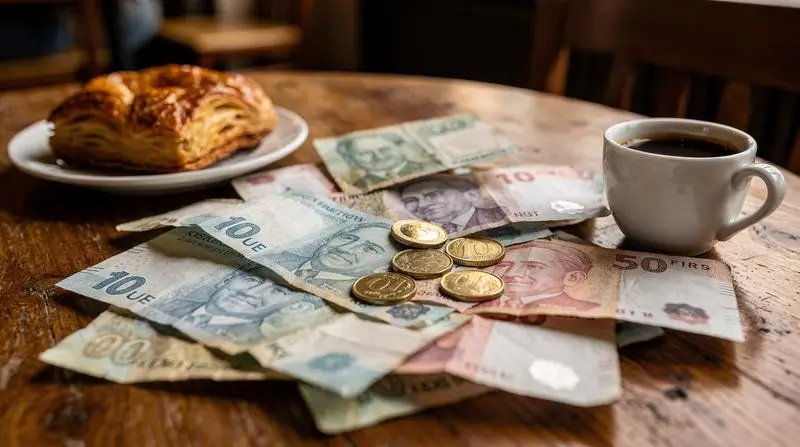
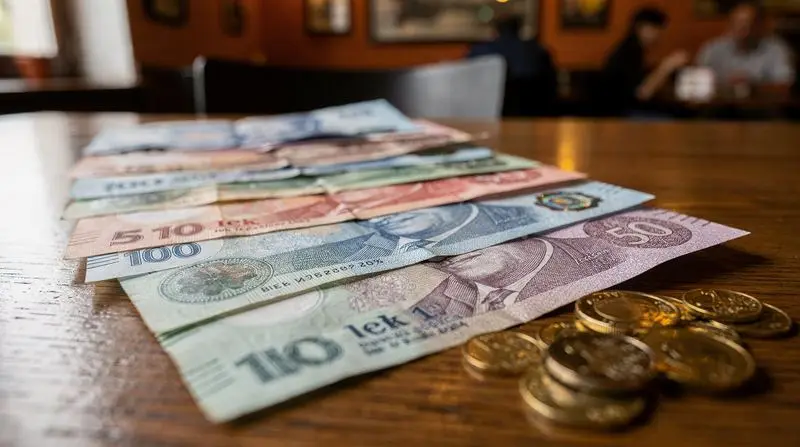
Cash management: Albania remains substantially cash-based outside central Tirana. Having adequate Lek cash is essential for market shopping, guesthouses in rural areas, and services that do not accept cards. The Albania currency guide covers ATM and cash exchange details.
Taxes
Albania taxes individuals on Albanian-source income at a progressive rate. The tax situation for foreign nationals with foreign income living in Albania depends on residency status, tax treaties, and the source of income. Albania has double taxation treaties with a number of countries. Consulting an Albanian tax advisor before establishing long-term residency is important — this is not an area for DIY navigation.
Healthcare for Expats
The Public System
Albania’s public healthcare system, while improving, is not at Western European standards. Public hospitals are under-resourced, facilities are variable, and the practical experience of using the public system as a foreigner without language fluency is difficult. Most expats rely primarily on private healthcare.
Private Healthcare in Tirana
The American Hospital Tirana: The primary medical facility for expats and foreign residents. English-speaking throughout, internationally trained doctors in many specialties, equipment at Western European standard. A GP consultation costs approximately EUR 30-50. Specialist consultations EUR 50-100. Emergency and inpatient care available. Located in central Tirana.
Hygeia Hospital: Another private hospital option in Tirana with good facilities and some English-speaking staff.
Specialist clinics: Private specialist practices in cardiology, ophthalmology, dermatology, and other specialties operate throughout Tirana. Quality is variable — asking the expat community for current recommendations by specialty is more reliable than cold searching.
Dental care: Albanian dental care is of genuinely good quality and dramatically cheaper than Western Europe. A check-up costs EUR 20-30. Major treatments — implants, crowns, bridges — run 50-70 percent below Western European prices. This is not merely cheap dentistry — quality in Tirana’s better private clinics is high and many medical tourists specifically come for dental work.
Healthcare Costs and Insurance
Expats should carry private international health insurance. The American Hospital and private specialists accept major international insurance providers. Out-of-pocket costs for routine care are low enough (EUR 30-100 for typical consultations) that minor expenses are manageable directly; major hospitalization or emergency care is where insurance becomes critical.
Recommended insurance approach: International health insurance from providers covering Albania (Cigna, Allianz Care, AXA PPP International all work) rather than relying on travel insurance. For EU expats, EHIC/EHSS cards cover emergency EU-standard treatment in EU countries — but Albania is not yet EU, and these cards have limited applicability.
Medications: Tirana pharmacies are well-stocked for common medications. Bring a supply of any specialized prescription medications, as specific brands may not be available locally.
International Schools and Education
Tirana International Schools
For expats with school-age children, Tirana has several international school options:
Tirana International School (TIS): The longest-established international school in Albania, offering an American curriculum from pre-K through Grade 12. English-language instruction throughout. Located in a dedicated campus in the Tirana suburbs. Accredited by the Middle States Association. Annual fees approximately EUR 8,000-15,000 depending on grade level.
QSI International School of Tirana: Part of the Quality Schools International network, offering American curriculum and accreditation. Serves pre-K through Grade 9 in Tirana. Fees comparable to TIS.
Green Park School: A newer bilingual (Albanian-English) school offering an international curriculum approach. Lower fees than the fully international schools and caters to both expat and affluent local families.
British Curriculum option: As of 2025-2026, there is limited British curriculum international schooling in Tirana — most English-language international options follow the American curriculum framework. Families specifically needing IB or IGCSE pathways should verify current offerings before making relocation decisions.
Beyond Tirana
International schooling options outside Tirana are very limited. Families with school-age children requiring international education should plan to base themselves in Tirana.
Local schools: Albanian state schools are free and well-regarded for academic rigor, particularly at secondary level. However, instruction is in Albanian, and settling non-Albanian-speaking children into local schools requires significant language integration effort. Some expat families with young children pursue local schooling with private Albanian language tutoring — this works well for younger children who acquire language quickly, less so for secondary-age students.
Cost of Living by City
Tirana
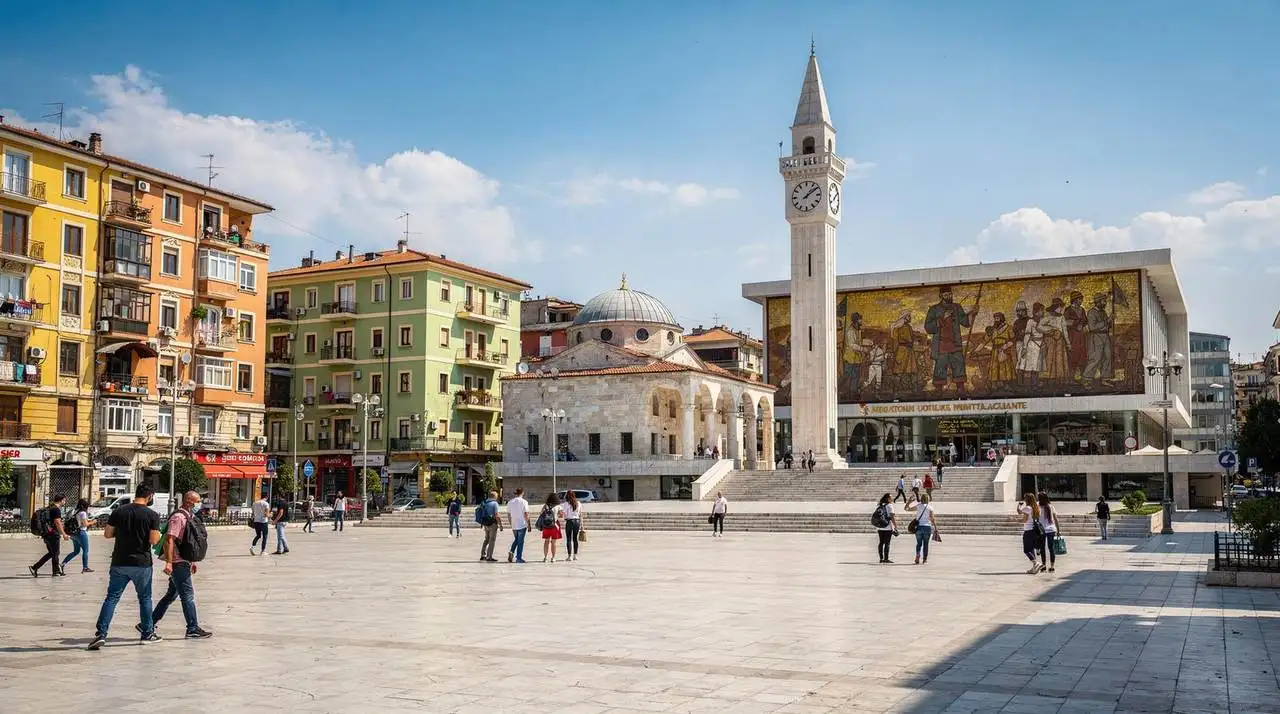
Tirana is the most expensive Albanian city and the only one with full expat infrastructure. It is also still affordable by Western European standards.
Typical monthly budget for a couple (comfortable, not austere):
- Two-bedroom apartment (Blloku or central area): EUR 600-900
- Utilities (electricity, water, internet, heating): EUR 80-150
- Groceries (mix of local market and supermarket): EUR 250-400
- Eating out (2-3 restaurant meals per week): EUR 150-250
- Transport (Bolt, occasional taxis, no car): EUR 60-100
- Healthcare (gym, dental checkup, occasional GP): EUR 50-100
- Entertainment, culture, socializing: EUR 100-200
- Mobile phones: EUR 30-50
Comfortable couple budget: EUR 1,320-2,150 per month
For a single person, the figures scale down — a comfortable single-person Tirana life runs EUR 900-1,400 per month.
Car ownership adds EUR 100-200 per month in fuel, parking, and insurance, but is optional in central Tirana where Bolt (ride-hailing) is cheap and effective.
Saranda
Saranda is cheaper than Tirana outside summer peak season, when accommodation prices spike substantially. As a year-round expat base, it is most affordable from October to May.
Typical couple monthly budget (outside summer):
- Two-bedroom apartment: EUR 400-700
- Utilities: EUR 70-120
- Groceries and eating out: EUR 300-500
- Transport (limited public options, car very useful): EUR 100-200
- Entertainment: EUR 80-150
Year-round Saranda couple budget: EUR 950-1,670 per month
Saranda lacks Tirana’s international school options, healthcare infrastructure (the local hospital is adequate for emergencies but not specialist care), and professional community. It is best suited to retirees, writers, and remote workers who prefer coastal living over urban amenity.
Shkodra
Shkodra is northern Albania’s largest city and significantly cheaper than Tirana. The expat community is small, international infrastructure (schools, private hospitals) is very limited, but the city itself is genuinely pleasant and has a distinctive cultural character — the historical connection to Venetian and Austrian influence gives it a different feel from Tirana.
Couple monthly budget: EUR 800-1,300
Accommodation is very affordable (two-bedroom apartment EUR 300-500), and the city has improving cafe and restaurant options. The main limitation for expats is the absence of English-language international services.
Berat and Gjirokastra
These UNESCO old town cities are of interest to expats specifically attracted to historical living environments and a slower pace of life. Both have small expat communities — typically writers, artists, retirees — who have settled in old town properties.
Cost of living: Very low. A comfortable life in Berat or Gjirokastra costs EUR 700-1,100 for a couple per month. Accommodation — including properties in the old town areas — can be rented at EUR 200-400 per month for spacious apartments.
Trade-off: Very limited international infrastructure. Healthcare requires travel to Tirana for anything beyond emergency care. No international schools. The expat community is tiny. Albanian language becomes much more important outside Tirana.
Internet and Remote Work Infrastructure
For expats working remotely, home fiber internet in Tirana is genuinely good — most central apartments have access to 100+ Mbps fiber connections from Digicel, ABCom, or ALBtelecom, typically costing EUR 15-25 per month. Coworking spaces have expanded in Tirana in recent years, offering hot-desk and dedicated-desk options for those who prefer working outside their apartment. Outside Tirana, fiber availability drops off, particularly in Berat, Gjirokastra, and rural areas, where connections are more variable — worth testing before committing to a longer lease if reliable video-call-quality internet is essential to your work.
Cost of Living Comparison by City
For a quick side-by-side view before reading the detailed breakdowns above, here is how a comfortable couple’s monthly budget compares across Albania’s main expat bases:
| City | Comfortable couple budget/month | Infrastructure | Best suited to |
|---|---|---|---|
| Tirana | EUR 1,320-2,150 | Full (schools, hospitals, banking) | Families, professionals, first-time expats |
| Saranda | EUR 950-1,670 | Limited outside summer | Retirees, remote workers wanting coastal life |
| Shkodra | EUR 800-1,300 | Minimal international services | Budget-focused, culturally curious residents |
| Berat / Gjirokastra | EUR 700-1,100 | Very limited; Tirana trips needed | Writers, artists, slow-living retirees |
Pets and Relocating with Animals
Bringing pets to Albania is straightforward for most Western travelers: dogs and cats need a valid rabies vaccination, an EU-format pet passport or equivalent veterinary health certificate, and microchip identification, broadly aligned with EU pet travel standards even though Albania itself is not yet an EU member. Airlines vary in their pet policies, so check cargo versus cabin rules with your specific carrier well in advance. Once in Albania, veterinary care is available in Tirana and other major cities at costs well below Western Europe, though the range of specialist veterinary services narrows outside the capital.
Safety, Language, and Daily Life Basics
Foreign residents consistently rate Albania as safe — see the Albania safety guide for the full picture on crime rates and practical precautions, which apply to long-term residents much as they do to visitors. On language, most new arrivals get by initially on English in Tirana and pick up basic Albanian gradually; the Albania language basics guide is a practical starting point before you commit to formal lessons. Retirees specifically considering Albania should also weigh the Albania seniors guide for accessibility and healthcare considerations relevant to an older expat population, and anyone drawn by the country’s affordable private healthcare and dental care should look at the Albania medical tourism guide for how that market intersects with long-term resident healthcare options.
Social Integration
Albania’s besa culture — the traditional code of honor, hospitality, and reciprocal trust — extends naturally to how foreigners are received. Expats consistently report that Albanians are curious, welcoming, and generally kind to foreign residents in ways that make initial integration surprisingly positive.
Language: Albanian is a complex language with no close relatives in the European linguistic family. Learning it from scratch takes significant effort. In Tirana, English is widely spoken in professional and commercial contexts, Italian in older generations (Italian media was widely received even during communist isolation), and German or Greek among the diaspora returnees. Outside Tirana, English proficiency drops significantly, and some Albanian becomes important for quality of life.
Expat communities: The Tirana expat community is active and accessible through Facebook groups (Albania Expats, Tirana Expats), regular social events, and a handful of internationally oriented bars and restaurants. The community is smaller than Lisbon or Tbilisi — which means less social competition for the same social infrastructure but also a smaller pool of potential connections.
Cultural notes: Albanian hospitality means that initial social connections often move quickly from acquaintance to genuine relationship. Invitations to Albanian homes are common, meals are extended affairs, and the expectation of reciprocal hospitality is real. Engaging with this culture rather than staying within the expat bubble produces richer integration and better quality of life.
Religious diversity: Albania is one of the most religiously mixed and tolerant countries in the Balkans — Muslim majority but with significant Orthodox Christian, Catholic, and Bektashi communities living in genuine coexistence. The communist declaration of atheism paradoxically reduced religious sectarianism, and Albania’s religious tolerance is widely noted as a genuine cultural asset.
Practical Expat Setup Checklist
On arrival and in the first month:
- Register your address at the local Civil Registry office if planning to stay beyond 90 days
- Obtain a tax identification number (NID — number for individuals)
- Arrange private health insurance if not already covered
- Open a Wise or Revolut account for initial financial management
- Join the Albania Expats Facebook group and identify relevant social communities
- Find an Albanian language teacher — even basic phrases improve daily life significantly
- Connect with a local lawyer and accountant for any residency permit or business registration needs
The Albania digital nomads guide covers the shorter-stay version of this checklist for those who are testing Albania before committing to longer residence.
Frequently Asked Questions About Expat Life in Albania
Is Albania safe for foreign residents?
Albania is genuinely safe for foreign residents by European standards. Violent crime targeting foreigners is very rare. Petty theft exists in crowded areas but is not at the level of Western European capitals. The cultural code of hospitality (besa) historically extended protection to guests, and modern Albania retains this characteristic in practice. Female expats, LGBTQ+ residents, and solo travelers all report Albania as comfortable in practical terms, though social attitudes in rural areas are more conservative than in Tirana.
How difficult is it to get a residence permit in Albania?
For those with a clear basis — property ownership, employment, or business registration — the residence permit process is manageable but bureaucratic. Using a local lawyer or registered agent for the first application is strongly recommended. The process typically takes 2-6 weeks after documents are submitted. The requirements have been streamlined as part of EU accession preparations but still involve multiple agencies. The renewal process each year is simpler than the initial application.
What are the best neighborhoods to live in Tirana as an expat?
Blloku is the most popular expat neighborhood — trendy, central, dense with cafes and restaurants, walkable. It has the highest rents (EUR 500-900 for a two-bedroom apartment). The neighborhoods around Blloku — Kombinat, Brryli — are quieter, cheaper (EUR 350-600 for two bedrooms), and 15-20 minutes walk from the social center. The area around the artificial lake and Parku i Madh (Grand Park) is popular with families for the green space access. Central area near Skanderbeg Square is convenient but noisier and less residential in character.
Is healthcare adequate in Albania for expats?
Private healthcare in Tirana is adequate for most expat healthcare needs. The American Hospital and several well-regarded private clinics handle routine, specialist, and emergency care for the foreign community. Costs are significantly lower than Western Europe. The public system is not at Western European standard and most expats avoid it for non-emergency care. Private international health insurance is essential. For complex specialist conditions requiring European-standard care, Tirana is improving but some conditions may require treatment in Greece, Italy, or elsewhere.
How much does it cost to live comfortably in Albania as an expat?
A comfortable single-person life in Tirana runs EUR 900-1,400 per month including rent, food, transport, healthcare, and entertainment. A couple lives comfortably for EUR 1,300-2,100 per month. These figures can be reduced significantly by living more simply (cooking most meals, living outside the center) or increased by a Western-equivalent lifestyle. Outside Tirana, costs are 20-40 percent lower. Albania is genuinely one of the most affordable expat destinations in Europe.
Can retirees get a long-term visa in Albania?
Albania does not yet have a dedicated retirement visa, but retirees typically qualify for a residence permit under the “sufficient means of support” category, using pension income or investment income as proof of financial means. The process runs through the standard temporary residence permit application, and a local lawyer or agent is strongly recommended for the first application. See the Albania seniors guide for accessibility and healthcare considerations specific to older expats.
Is it easy to make friends as an expat in Albania?
Most expats report that initial social connections form faster in Albania than in many European countries, thanks to the besa hospitality culture and a relatively small, accessible expat community, particularly in Tirana. Facebook groups (Albania Expats, Tirana Expats) and regular meetups provide an easy entry point, and engaging with Albanian neighbors and colleagues — rather than staying entirely within the expat bubble — tends to produce richer, faster integration. Outside Tirana, expat communities are smaller, so effort toward local language and relationships matters more.