Buying Property in Albania as a Foreigner: The Complete Guide
Albania is attracting serious interest from foreign property buyers — partly drawn by low prices compared to the rest of Europe, partly by the country’s EU accession trajectory which promises value appreciation, and partly by the genuine lifestyle appeal of the Riviera and the cultural attraction of cities like Tirana, Berat, and Gjirokastra. The legal framework for foreign property ownership is relatively permissive, prices are still very affordable by European standards, and the country’s development trajectory suggests that early buyers may see substantial appreciation.
But Albanian real estate also comes with genuine risks: title complications from the complex post-communist land restitution process, limited buyer protection compared to EU property markets, variable quality in new construction, and a market where professional due diligence is essential. This guide covers the legal framework, the buying process, current price ranges by region, and the risk management approach that protects foreign buyers.
| Can foreigners buy? | Yes for apartments/buildings; agricultural land restricted |
| Transaction costs | Around 5-8% of purchase price |
| Cheapest region | Gjirokastra/Berat old towns, Borsh (Riviera) |
| Most expensive | Ksamil, central Tirana |
| Process time | Around 4-12 weeks |
Can Foreigners Buy Property in Albania?
The short answer is yes — with some important distinctions by property type.
Apartments and Buildings
Foreigners can purchase apartments, houses, commercial properties, and buildings in Albania without restriction. There are no nationality-based limits on urban residential or commercial property purchase. The legal title to structures (as opposed to the land underneath them) is generally cleaner and the conveyancing process more straightforward for apartments in purpose-built blocks.
Land
The situation for agricultural and undeveloped land is more complex. Albanian law historically restricted foreign ownership of agricultural land, and while changes have been made over the years as part of EU accession preparation, some restrictions remain. EU citizens have progressively improving rights under accession agreements. Non-EU foreigners face more restrictions on agricultural land specifically.
In practice, most foreign buyers purchase:
- Apartments in Tirana, Saranda, or Riviera towns
- Coastal development properties (apartments in new builds along the Riviera)
- Old town houses (particularly in Gjirokastra and Berat) — these involve the building structure, with land title being a more complex question
- Commercial properties in urban areas
For any land-related purchase outside a standard apartment, legal advice specific to the property and the buyer’s nationality is essential.
Registration and Title
All property purchases must be registered with the National Registration Center (ZRPP — Zyra e Regjistrimit të Pasurive të Paluajtshme). Title deeds (certifikata e pronësisë) are issued through this agency. The quality of the title register has improved substantially over the past decade but historical complications from communist-era nationalization and subsequent restitution processes mean that some properties carry title disputes or unclear ownership histories.
The Buying Process
Step 1: Property Search
Foreign buyers typically access the Albanian property market through:
Online portals: Merrjep.al and Indomio.al are the main Albanian property listing platforms. International platforms including Properstar and some European portals carry Albanian listings. Most listings are in Albanian — translation tools are necessary for non-Albanian speakers.
Local real estate agents: Licensed real estate agents (broker/ndërmjetës) operate in Tirana, Saranda, Vlora, and other property markets. Quality and professionalism varies significantly. Working with agents who have clear professional credentials and demonstrable experience with foreign buyers is important. Agent commissions in Albania are typically 2-3 percent of the sale price, paid by either buyer or seller or split between them — clarify this at the outset.
Direct networking: In smaller markets (Riviera villages, Gjirokastra old town), properties are often sold informally without listing agents. The expat community (via Albania Expats Facebook groups) and local contacts are the best source for these opportunities.
Step 2: Due Diligence
This is the most critical phase for foreign buyers, and where the risk of problems is concentrated. Due diligence must be conducted by an Albanian-licensed lawyer (avokat) and should cover:
Title search: Verification that the seller has clean, unencumbered title to the property. Check the ZRPP register for the current registered owner, any mortgages or charges, any pending legal actions, and the history of title transfers.
Planning status: For buildings in historic centers (Gjirokastra, Berat), verify heritage protection status and what modifications are permitted. For new construction, verify building permits and compliance with planning approvals.
Construction quality: For new or recently constructed properties, a structural survey by an independent engineer is advisable — Albania has had issues with construction quality in the rapid development period since 2010.
Outstanding utilities: Confirm there are no outstanding debts on water, electricity, or communal building charges that would transfer to the buyer.
Land/building separation: Particularly for older properties and houses, clarify whether the purchase includes clear title to the land underneath the building or only to the structure. This distinction matters for legal security.
Restitution claims: Properties that were nationalized during the communist period and not fully restituted can carry residual claims. A proper title search should identify these, but it requires specific checking.
Step 3: Preliminary Agreement
Once due diligence is satisfactory, a preliminary sale agreement (kontratë paraprake) is signed. This typically involves a deposit payment (10-30 percent of the purchase price) and sets the terms, timeline, and conditions for the final sale. The preliminary agreement should be drafted or reviewed by your lawyer, not simply provided by the seller’s agent.
Step 4: Notarization
All Albanian property transfers must be notarized by a public notary (noter). The notary verifies the identity of parties, the legal capacity to sell, and the absence of obvious title problems. The notary’s role is not the same as full independent buyer’s legal advice — it is a formal procedural verification. You need both a notary and your own independent lawyer.
Costs at notarization: Notary fees in Albania are typically 0.3-0.5 percent of the declared property value. Transfer tax is payable at this stage.
Step 5: Registration
After notarization, the transfer must be registered with the ZRPP within the timeframe specified by law. Your lawyer should manage this process. Registration costs are nominal. Without registration, the transfer is not legally effective against third parties.
Total Transaction Costs
Plan for total transaction costs of approximately 5-8 percent of the purchase price:
- Notary fee: 0.3-0.5 percent
- Transfer tax: 3 percent (residential) or variable for commercial
- Agent commission: 2-3 percent (if used)
- Legal fees: EUR 500-2,000 depending on complexity
- Survey/inspection: EUR 200-500
- ZRPP registration: nominal
Property Price Ranges by Region
Tirana
Tirana is the most expensive Albanian property market and the one with the best-developed professional infrastructure for buyers and sellers. The capital’s property market has been one of the fastest appreciating in the region over the past decade.
Central areas (Blloku, Sauk, center):
- New construction apartment: EUR 1,200-2,500 per square metre
- Older communist-era apartment (renovated): EUR 700-1,200 per square metre
- Older communist-era apartment (unrenovated): EUR 500-900 per square metre
- A two-bedroom apartment in Blloku (70-90 sqm): EUR 100,000-220,000
Suburban areas:
- New construction: EUR 900-1,500 per square metre
- Older stock: EUR 500-900 per square metre
New developments in peripheral areas: Several large new residential developments are being built in Tirana’s outer suburbs and the Tiranë e Re (New Tirana) urban extension area. Prices are lower (EUR 800-1,400 per sqm) but locations are less convenient for daily life without a car.
Tirana rental yield: Typical gross rental yields for well-located Tirana apartments run 4-7 percent per year, which compares favorably with Western European yields of 2-4 percent.
The Albanian Riviera
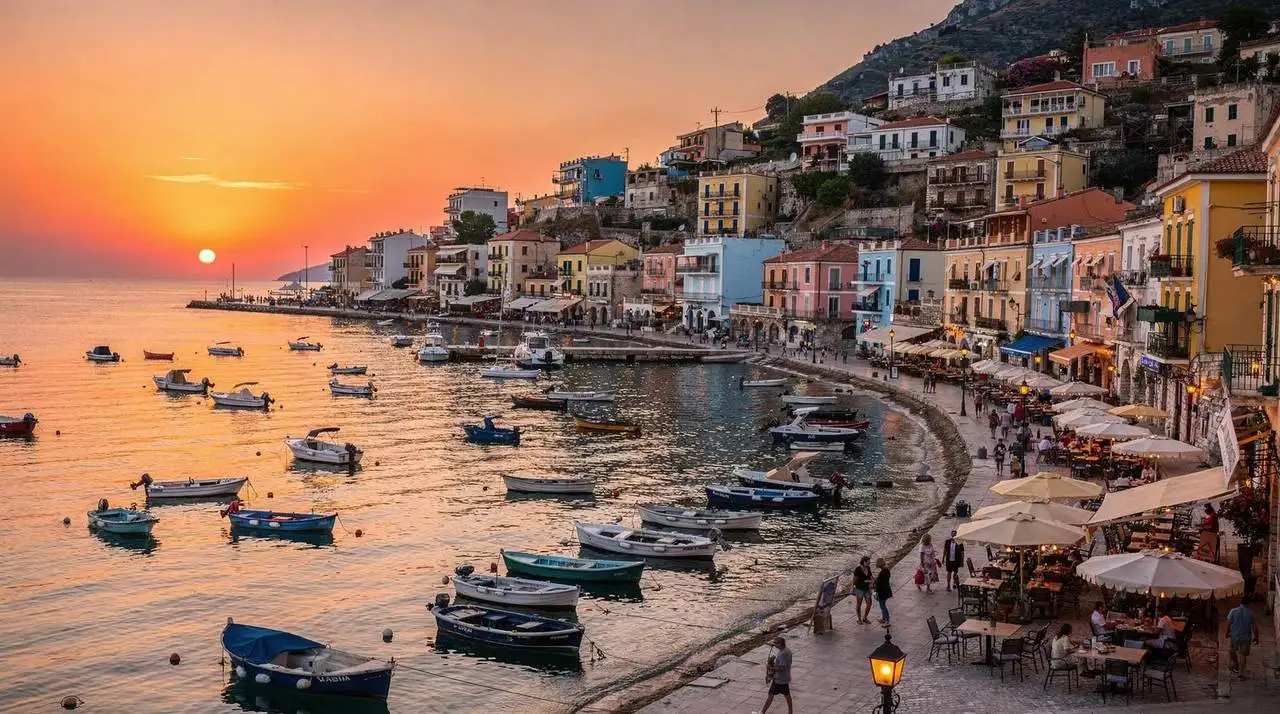
The Riviera — the coastline from Vlora south to the Greek border — is the most dynamic property market in Albania. Several factors drive this: the extraordinary natural beauty of the limestone coastline and turquoise water, increasing international tourism, infrastructure improvement (road works, services), and very low prices compared to comparable Mediterranean coastlines in Greece, Italy, or Croatia.
Saranda: Saranda is the most developed Riviera town and the one with the most active property market. New construction has been rapid, and quality varies significantly.
- New apartment (sea view, good location): EUR 1,200-2,500 per sqm
- New apartment (inland, newer areas): EUR 800-1,400 per sqm
- Older stock: EUR 600-1,000 per sqm
- A two-bedroom apartment with sea views: EUR 90,000-200,000
Ksamil: The small resort village south of Saranda with some of the most beautiful beaches. Very popular with Albanian domestic buyers and attracting international interest. Prices have risen sharply in the past 5 years.
- Apartment near beach: EUR 1,500-3,000 per sqm
- New construction: EUR 1,200-2,500 per sqm
Himara and Livadh: More rugged, less developed than Saranda. The old village of Himara above the coast has properties in traditional stone architecture. Good value compared to Saranda.
- Saranda-style apartments: EUR 800-1,500 per sqm
- Older village properties: EUR 300-800 per sqm (often requiring significant investment)
Dhermi and Palasa: Increasingly popular with international buyers. Beautiful beach locations, improving road access. Limited supply means prices have appreciated significantly.
- New apartment: EUR 1,000-2,500 per sqm
- Villa plots (where available): EUR 50,000-200,000+ depending on size and views
Borsh: One of the quietest and most beautiful Riviera villages. Still largely undiscovered by the property market — lower prices, more authentic character, but also less infrastructure.
- Properties: EUR 500-1,200 per sqm depending on type and condition
Gjirokastra and Berat Old Towns
The UNESCO-listed old towns of Gjirokastra and Berat offer a very different type of property purchase — traditional Ottoman stone houses and tower houses, some in extraordinary states of architectural preservation, at prices significantly below comparable heritage properties in Greece, Italy, or France.
The appeal: Properties in these old towns are genuinely architecturally significant — multi-story stone construction, traditional layouts with courtyard gardens, extraordinary views. They attract buyers interested in restoration projects, cultural tourism (rental to visitors), and heritage living.
The complications: Heritage protection means modifications require permissions. Old town properties often have complicated title histories. Renovation of traditional stone construction is specialized and expensive. Some properties have partial communal ownership issues from post-communist period.
Price range:
- Small old town house (restoration required): EUR 20,000-60,000
- Partially restored house: EUR 50,000-120,000
- Fully restored house: EUR 100,000-300,000+
- Gjirokastra properties tend to be slightly cheaper than equivalent Berat properties due to lower tourism volumes
For serious buyers interested in these properties, working with a specialist in Albanian heritage property (rare but existing) is valuable. The Gjirokastra destination guide provides context for understanding the town.
Investment Considerations
Why Albania Real Estate Now?
The investment case for Albanian property rests on several factors:
EU accession: When Albania joins the EU — a question of when, not if, though the timeline remains uncertain — property values are expected to appreciate significantly as property rights become more certain, financing becomes easier, and European buyers have direct access. Historical precedent from Romania, Bulgaria, and Croatia suggests significant appreciation when smaller Balkan countries enter the EU.
Tourism growth: Albanian tourism has grown substantially every year for the past decade. The Riviera in particular is increasingly discovered by European tourists priced out of Greece and Croatia. Short-term rental yields on Riviera properties are strong in peak season.
Infrastructure investment: Road improvements, airport expansion, improved utilities — the infrastructure catch-up that all EU candidate countries undergo is underway in Albania and increases the habitability and value of Riviera and interior properties.
Early mover advantage: Albania’s property prices remain well below comparable Mediterranean destinations. The window of very low Riviera prices is not indefinitely open as discovery accelerates.
Risks to Manage
Title risk: The most significant risk in Albanian property purchase. Requires proper professional due diligence — not optional.
Developer risk: In new construction, developer insolvency during construction is a risk in a market with limited consumer protection. Buying from completed developments or established developers with track records reduces this risk.
Currency risk: Property is priced and sold in EUR in practice, minimizing EUR exchange rate risk. Albanian Lek fluctuations affect operating costs for landlords.
Liquidity: Albanian property is less liquid than established European markets. Selling in Tirana is more straightforward than selling in rural areas.
Legal complexity: Albania’s legal system is improving but is not yet at EU member state standards for property rights protection. This means that professional legal guidance is more important, not less, than in established EU markets.
Working With Albanian Property Professionals
Lawyers: Always engage an independent Albanian-licensed property lawyer separate from the seller, the agent, and the notary. Legal fees of EUR 500-2,000 for a standard purchase are a small cost relative to the risks avoided. The Albania Expats community can recommend lawyers experienced in foreign buyer transactions.
Accountants: For rental income or investment structures, an Albanian accountant familiar with expat taxation is important.
Property managers: For Riviera rental properties, a local property management company handles short-term rentals, maintenance, and the practical management that distant ownership requires. Several operate in Saranda and the Riviera. Management fees typically run 15-25 percent of rental income.
The Albania expat guide covers the broader context of living and working in Albania for those making the transition from property purchase to residence.
Financing
Mortgages for foreign nationals from Albanian banks are possible but currently difficult in practice — most Albanian banks require local income, tax history, or substantial collateral for non-residents. Cash purchases are the norm for foreign buyers.
Albanian mortgage interest rates are higher than Western European rates (typically 4-7 percent for residential mortgages). For buyers requiring financing, arranging funds in their home country (home equity release, personal loans at lower European rates) before purchasing Albanian property is more practical than seeking Albanian bank financing.
Taxes on Property Ownership and Rental Income
Owning Albanian property carries ongoing obligations beyond the purchase price. Annual property tax is modest by European standards, calculated on the property’s registered value and paid to the local municipality. For owners renting out property — a common strategy on the Riviera and in Tirana — rental income is taxable in Albania, and most foreign owners also need to consider tax treatment in their home country depending on any double-taxation treaty. An Albanian accountant experienced with foreign owners, as noted above, is worth engaging early rather than after the first tax season catches you unprepared.
Buying for Lifestyle vs Buying for Investment
Foreign buyers in Albania generally fall into two categories, and the right approach differs meaningfully between them. Lifestyle buyers — often purchasing a Riviera apartment or a Gjirokastra or Berat old town house for personal use and occasional rental — should weight character, views, and personal enjoyment more heavily than pure yield calculations, while still doing full legal due diligence. Investment buyers focused on rental yield should prioritize Tirana or Saranda apartments in established, professionally managed buildings, where liquidity and rental demand are strongest and title histories tend to be cleaner than village or old town properties. Mixing the two mindsets — buying a romantic but title-complicated old house and expecting investment-grade liquidity — is where many foreign buyers end up disappointed.
Renting Before Buying
For buyers unfamiliar with Albania, renting for a season before purchasing is a sound, low-cost way to test a neighborhood, confirm seasonal noise and crowd levels (particularly relevant on the Riviera in peak summer), and build local relationships with agents and lawyers before committing capital. The Albania expat guide covers the practicalities of longer stays, and where to stay in Tirana or Saranda guides are a reasonable starting point for identifying which specific area suits you before house-hunting begins.
Frequently Asked Questions About Property in Albania for Foreigners
Can a foreign national buy property in Albania?
Yes. Foreign nationals can buy apartments, houses, and commercial properties in Albania without restriction. Some limitations apply to agricultural land, and these vary by the buyer’s nationality. EU nationals have improving rights under accession agreements. For all property types, proper legal due diligence and notarized registration is essential, and working with an independent Albanian property lawyer is strongly recommended.
What are typical property prices in Albania?
Tirana’s central areas range from EUR 700 to 2,500 per square metre depending on age, location, and quality. The Albanian Riviera ranges from EUR 800 to 3,000 per square metre with significant variation by location — Saranda and Ksamil being the most expensive, smaller coastal villages significantly cheaper. Old town properties in Gjirokastra and Berat can be found for EUR 20,000-60,000 for properties requiring restoration, up to EUR 300,000 for fully restored heritage houses.
Is buying property in Albania a good investment?
Albania’s EU accession trajectory, growing tourism, and significant price gap compared to comparable Mediterranean destinations make the investment case genuine. Properties with strong short-term rental potential on the Riviera earn gross yields of 6-10 percent in peak season. The main risks — title complications, developer reliability, market liquidity — can be managed through proper due diligence but should not be ignored. Early buyers in emerging markets take on more risk but with corresponding opportunity.
What is the buying process for property in Albania?
The process involves: property search (online or through agents), due diligence by an independent Albanian lawyer (title search, planning verification), preliminary agreement with deposit, notarization by a public notary, and registration with the National Registration Center (ZRPP). Transaction costs total approximately 5-8 percent of the purchase price. The process typically takes 4-12 weeks from finding a property to completing title transfer.
Are there risks specific to Albania that foreign buyers should know about?
The main risks are: title complications from incomplete post-communist land restitution (manageable through proper legal due diligence), developer insolvency in new construction (reduced by buying completed properties from established developers), variable construction quality (reduced by independent structural surveys), and limited liquidity compared to established European markets. None of these risks is unique to Albania, but they require more active management than buying in an established EU property market. Working with an experienced, independent Albanian property lawyer is the single most important risk mitigation step.