The hike from Theth to Valbona is one of those routes that appears on travel lists accompanied by words like “legendary” and “life-changing” and “the best day hike in the Balkans.” We try not to set ourselves up for disappointment by reading too much of that kind of language before an experience. But we had read it, and we walked the Theth-Valbona pass with expectations that were, frankly, inflated.
The hike met them. We are slightly embarrassed to admit this, but it met every one of them and then found a few more to meet that we had not anticipated.
| Distance | 16-18km one way, ~900m elevation gain to the pass |
| Time | 5-7 hours total, split roughly 3-4hrs up, 2-3hrs down |
| Cost | Organised 3-day trip from Shkodra around €150-250/person incl. transport & 1 night |
| Best time | Late June through September |
| Fitness needed | Reasonable — steep sections, especially the Theth-side descent |
Getting There: The Logistics Matter
The hike connects two valleys in the Albanian Alps — Theth, accessible from Shkodra via a long, rough mountain road, and Valbona, typically reached from Fierza at the end of the Koman Lake ferry. This means the full experience involves getting yourself to one valley, hiking across the pass, and continuing to the other — a multi-day adventure rather than a simple day trip.
We used an organized three-day trip that handled the transport and logistics: a Valbona to Theth Albanian Alps three-day trip from Shkodra that included transport to Valbona via Koman, an overnight stay in the valley, the hike across the pass, and a night in Theth before the drive back. For a first visit to this area, we strongly recommend this approach: the roads are challenging, the transport connections are not always reliable, and having someone manage the pieces lets you focus entirely on the experience itself.
That said, experienced independent hikers do this route alone regularly. The trail is reasonably well-marked and the guesthouses in both valleys are easy to book and excellent value. Our hiking in the Albanian Alps guide covers everything you need for an independent approach, including current guesthouse recommendations, trail conditions by season, and the transport connections between valleys.
The Journey to the North: Reaching Shkodra
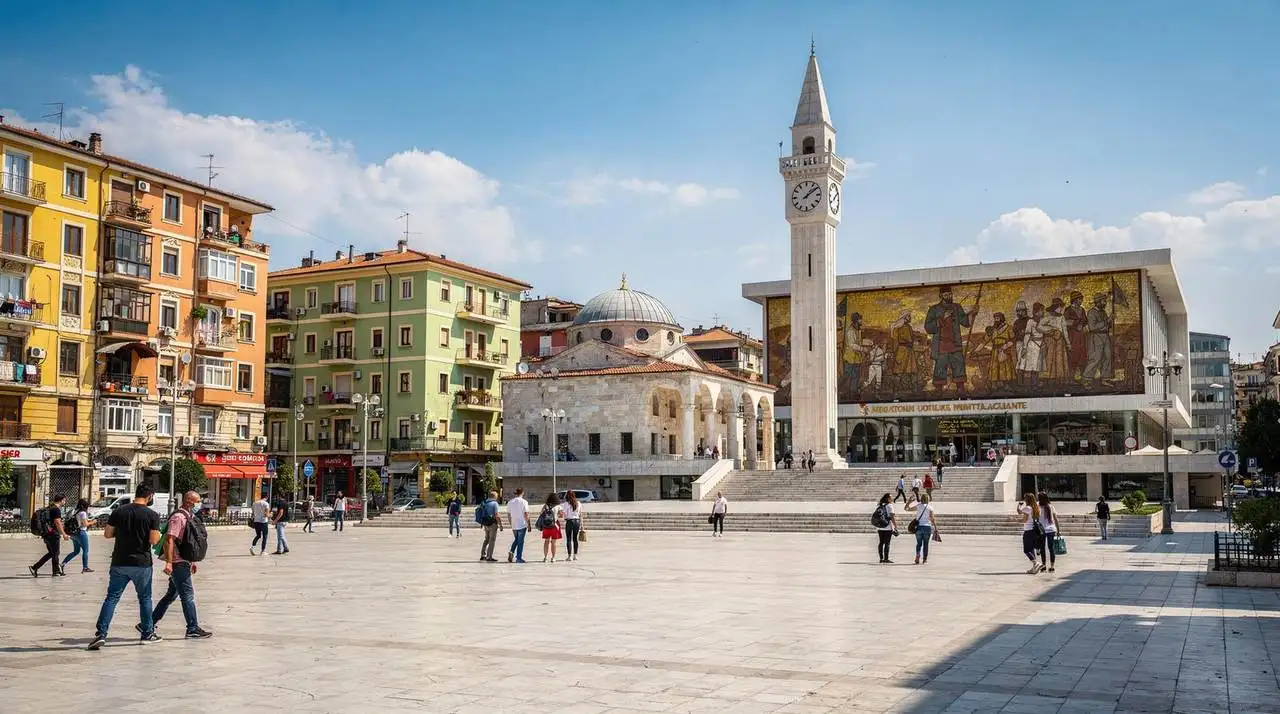
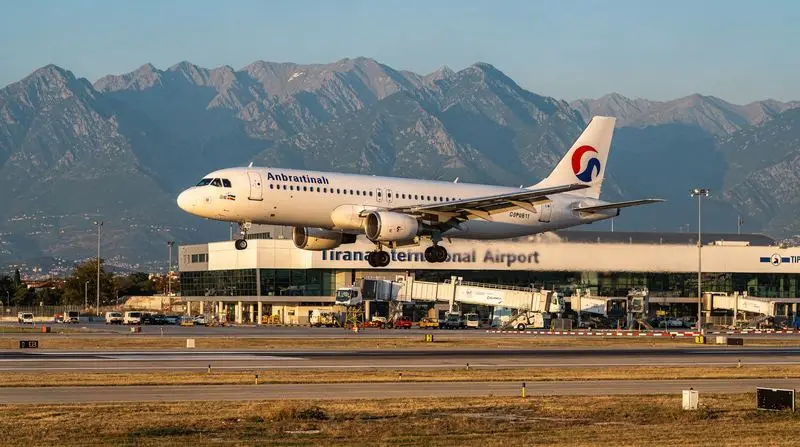
If you are flying into Tirana and planning a northern Albania itinerary around this hike, the route is straightforward. Tirana to Shkodra is roughly two hours by bus, and Shkodra is the natural launch point for both the Koman Lake ferry and the mountain roads into Theth. Plan to spend at least one night in Shkodra before heading further north — the city has its own considerable appeal, including the Rozafa Castle above the lake and an old bazaar that is worth a morning’s exploration.
From Shkodra, if you are taking the Koman ferry route to Valbona, the departure is at the dam at 9am, which means a very early start from the city. Our how to get to Albania guide covers the practical transport chain from Tirana to Shkodra to the Albanian Alps, including current bus and furgon options.
Valbona Valley: The Night Before
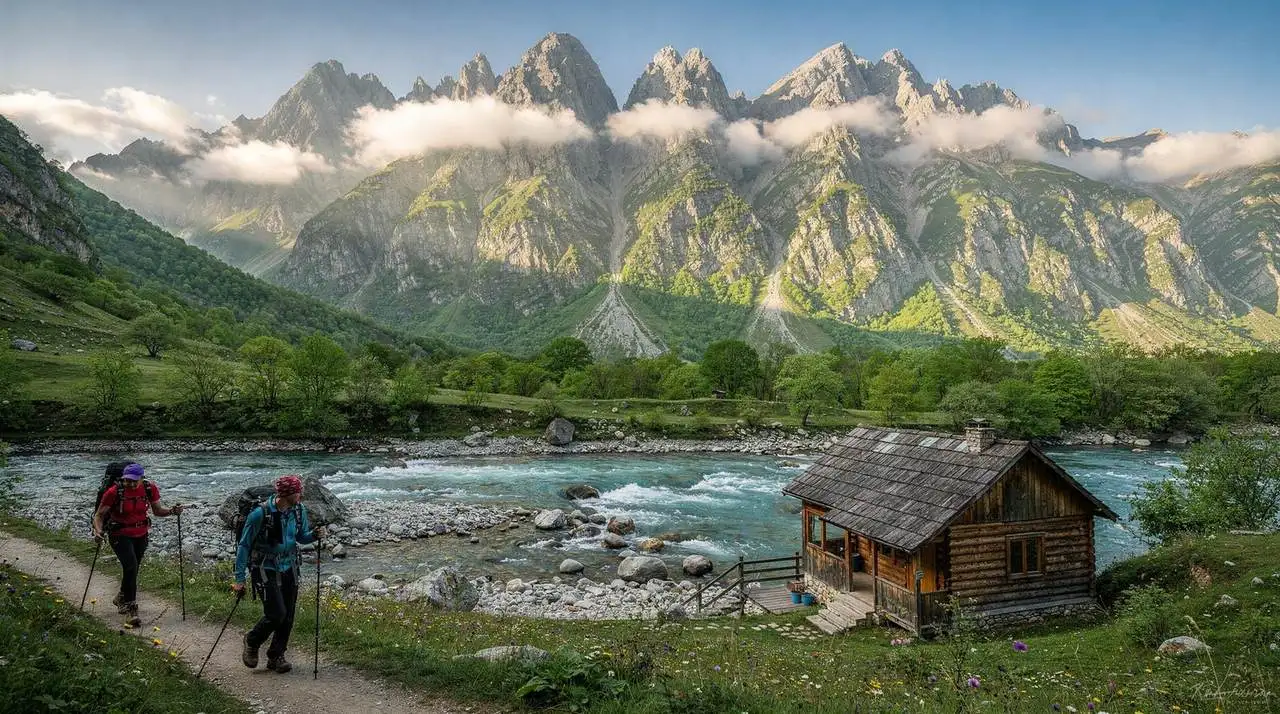
We arrived in Valbona on the first day via the Komani Lake and Shala River boat tour from Shkodra and a minibus connection from Fierza, reaching the valley in the early afternoon. Valbona is a collection of small villages and scattered guesthouses in a long U-shaped glacial valley, flanked by limestone peaks that in early September were already developing patches of snow on the highest faces. The Valbona River runs clear and cold down the center of the valley. The air smells of pine, cold water, and something clean and high-altitude that has no precise name.
Our guesthouse was a family operation: a two-story stone house with a vegetable garden, a wood-fired kitchen, and a host who had lived in this valley his entire life and whose family had been offering accommodation to hikers for about fifteen years. Dinner was served at a communal table: lamb, roasted vegetables, fresh bread, mountain cheese, a bottle of homemade wine that was rougher than anything we would normally choose and perfect for the context.
The conversation over dinner was between our group, two German hikers, and a Swiss couple who had been walking through the region for a week. Our host joined periodically to explain things and occasionally to correct misconceptions about Albanian history with a directness we found entirely charming. We went to sleep with the sound of the river and woke to the sound of birds and the smell of coffee and bread.
Preparing for the Day: What to Pack
Before we describe the hike itself, a word on preparation — because arriving unprepared in the Albanian Alps is not a trivial mistake. The trail crosses an exposed ridge at nearly 1,800 meters, and the weather can change dramatically even in summer. Morning sunshine does not guarantee an afternoon without cloud, rain, or wind.
We carried: two liters of water each (there are streams on route but bring your own to start), a packed lunch from the guesthouse, a rain jacket, an extra warm layer, and trekking poles. The poles proved invaluable on the descent, which is steep and loose in places. Footwear with ankle support is essential — trail shoes at a minimum, proper hiking boots preferred. The guesthouse provided us with trail information and told us the approximate time to the pass, which is useful for pacing.
Start early. Leaving by 7am or 7:30am means reaching the pass before the heat of the day and arriving in Theth with plenty of afternoon light. Starting at 9am or later pushes the descent into the hottest part of the day and compresses the time you want to spend at the top.
The Hike: What to Expect
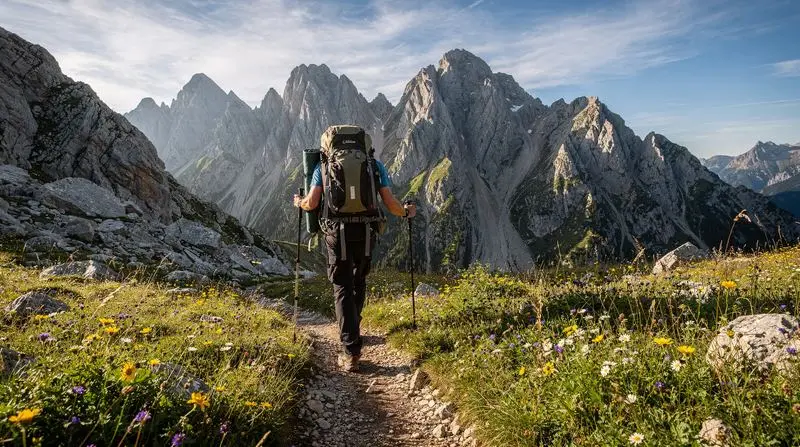
The trail leaves from the upper end of the Valbona Valley and climbs steadily toward the Valbona Pass at approximately 1,800 meters. The ascent takes three to four hours depending on pace and fitness. The descent into Theth takes another two to three hours.
Total distance is roughly 16 to 18 kilometers. The elevation gain is significant — around 900 meters from the valley floor to the pass — and the descent is steep in sections, particularly on the Theth side. This is not a casual walk. It requires a reasonable level of fitness and appropriate footwear. Trekking poles are useful on the descent.
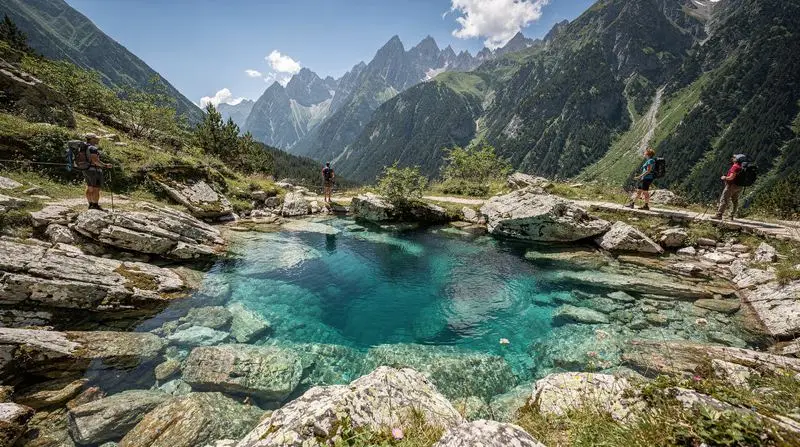
The terrain changes continuously. The lower section of the ascent goes through beech forest, cool and dim, the trail a mix of roots and stone. As you gain height, the forest thins and the views begin to open. By the time you are in the upper alpine section — above the tree line, on the open limestone slopes below the pass — the scale of the surrounding landscape becomes fully apparent.
The Albanian Alps at this height have a quality that is hard to find elsewhere in Europe: genuinely wild, genuinely remote, and on a September weekday, genuinely uncrowded. We passed perhaps fifteen other hikers across the entire day. The silence — broken only by wind, occasional birds, and the distant sound of cowbells from livestock on the high pastures — was the kind that requires adjustment. City-trained ears keep expecting noise and find instead an absence so complete it almost sounds like something.
The Pass
The Valbona Pass itself is the moment the hike becomes fully itself. You crest the ridge and the world doubles: behind you, Valbona stretches south between its peaks; ahead of you, the Theth valley drops away toward the village you can see far below, surrounded by mountains on three sides. The view in both directions is the kind that produces involuntary noise — a gasp, a word, something that escapes before you have decided to say it.
We sat at the pass for forty minutes. We had planned to sit for ten. The mountains on the Theth side are somehow sharper than the Valbona peaks — more aggressive, more vertical, the limestone towers above the valley cutting the sky with a deliberateness that feels almost architectural. Cloud shadows moved across the slopes below. A hawk hung in the updraft without moving.
There is a small stone-walled shelter at the pass where hikers have been leaving notes and small offerings for years. We read some of them. “Best day of my life” appeared with remarkable frequency, and we found ourselves inclined, despite every instinct for irony, to agree.
The Descent to Theth
The path from the pass to Theth is steeper and more demanding than the ascent. The trail drops through loose scree and then into a dramatic narrow gorge before opening into the forested lower valley. Take your time on this section. The views justify stopping every hundred meters.
Theth itself is a revelation after the effort of the descent: a cluster of traditional houses along a fast river, a fifteenth-century church with a distinctive round bell tower, a famous stone “lock-in tower” that was used historically during blood feuds, and a waterfall — the Blue Eye of Theth, technically its own swimming hole — that is an ideal end to a long day. The water is cold beyond reason and the experience is bracing in the most complete sense.
Our guesthouse in Theth had a terrace looking toward the cliffs that frame the northern end of the valley. We sat there as the light faded, eating yet another very good meal, and felt the specific satisfaction of physical exhaustion combined with having been somewhere extraordinary. It is a particular and excellent combination.
Theth: Worth Staying an Extra Day
If your schedule allows, we strongly recommend building in a second night in Theth rather than leaving immediately after the hike. The valley has walks of its own — to the waterfall, up toward the canyon — and the village has a character distinct from Valbona that rewards a day of unhurried exploration.
The Grunas Canyon walk, a short loop from the village, passes through beautiful gorge scenery and takes two to three hours at a gentle pace. The Theth church and the lock-in tower are both within easy walking distance of the main guesthouses. And simply sitting in the village, watching the light change on the surrounding peaks, is not the waste of time it might sound — it is the point of being here.
Theth is also the starting point for the reverse version of the hike if you want to do the route in the opposite direction — Theth to Valbona across the same pass. Some hikers prefer the Theth-to-Valbona direction because the ascent is more gradual from the Theth side, though we found the Valbona side more dramatic. Our Theth-Valbona hike guide covers both directions with detailed logistics.
Guesthouses in the Two Valleys
Both Valbona and Theth are served by family-run guesthouses rather than hotels, and the standard is generally excellent for what it is: simple rooms, home-cooked communal dinners, and hosts who know the trail conditions better than any app. Our guesthouses in the Albanian Alps guide covers current options in both valleys and how far ahead to book them in peak season.
What We’d Do Differently Next Time
Looking back, the one change we would make is building in a rest day in Shkodra before the early Koman departure rather than arriving the same day we flew into Tirana. The jet lag plus the early ferry start plus the hike the following day compounded into a level of tiredness that took some of the edge off our enjoyment of the pass itself, which deserved fresher legs than we gave it. We would also pack slightly lighter — we carried more than we needed for a single overnight in Valbona, and the extra weight mattered on the steep sections. Small adjustments, but the kind of thing that is easy to get right once someone else has already made the mistake for you.
Other Ways to Experience the Alps
If the full crossing is more than your schedule or fitness allows, the Albanian Alps offer other ways in. Our via ferrata in Albania guide covers a different kind of mountain challenge in the same region, and the Peaks of the Balkans trail guide is worth reading if this one crossing leaves you wanting a longer multi-day route through Albania, Montenegro, and Kosovo. For winter visitors, Albania snowshoeing covers a cold-season alternative to the summer hike described here.
Wildlife and What You Might See
The Albanian Alps support a surprising range of wildlife given how little formal management the area has, and part of the appeal of a slow, quiet hike like this one is the chance encounters it allows. We saw golden eagles working the thermals above the pass, heard but did not see what our guesthouse host insisted was a wolf somewhere up the valley overnight, and passed enough grazing livestock on the high pastures to remind us that this landscape is still a working one, not a preserved diorama. If wildlife is a specific interest, our birdwatching in Albania guide covers the raptors and other species you are most likely to encounter in this part of the country, particularly along the exposed ridgelines near the pass.
Where This Fits in a Broader Albania Itinerary
The Albanian Alps experience — Shkodra, Koman Lake, Valbona, the pass, Theth — is a self-contained north Albania itinerary that can stand alone or be combined with the rest of the country. Our 14-day Albania itinerary integrates the northern mountains with the southern coast and the historic interior cities, giving you a structure for seeing both faces of the country in a single trip.
For visitors who want only the mountains, three to four days in the north is the minimum that does justice to the area. For the full picture of Albania — Tirana, Berat, the Riviera, the Albanian Alps — two weeks is the ideal. The country is small enough that it is all genuinely feasible in that time, and diverse enough that no two days feel the same.
The Honest Assessment
If you have any love for mountain landscapes and any tolerance for a strenuous day’s walking, do this hike. It is genuinely among the finest one-day mountain experiences in Europe, and we say this having walked in the Dolomites, the Tatras, the Pyrenees, and various Swiss valleys.
What makes it different from those experiences is the wildness. The Albanian Alps have not been managed, signposted, and developed into something domesticated in the way that the popular European mountain ranges have been. The trail is marked, the guesthouses are good, and the logistics are manageable — but the landscape itself still feels raw and ungoverned in a way that the Alps and Dolomites largely do not.
Go in late June through September. Allow three days minimum — one night in Valbona, the day of the hike, one night in Theth. Use a guide or organized transport for the first visit to save the logistical energy for the walk itself.
You will understand when you get to the pass why people keep writing the words “best day” in a stone shelter on a mountain in northern Albania.