Albania’s Tourism Boom: We Need to Talk About It
The numbers are in, and they are remarkable. Albania welcomed approximately 4.7 million visitors in the first part of 2025 — a figure that would have seemed fantastical even five years ago for a country that spent four decades in near-complete isolation. Tourism revenue has surged. New hotels and restaurants are opening at a pace that is difficult to track. International media attention — which was already significant — has intensified further.
| 2025 visitor total | Around 4.7 million in the first part of the year |
| Most changed | Tirana, Ksamil, Saranda |
| Least changed | Northern Alps, inland south |
| Book ahead now | Summer flights, Riviera stays June-September |
| Mid-range budget | Around 80-120 euros/day for two |
We have watched this boom unfold in real time, visiting Albania multiple times a year, talking to locals, guesthouse owners, and fellow travellers. Our view on what this means for someone planning their first or fifth Albania trip is nuanced. This post is our attempt to give you an honest, practical picture.
What Is Driving the Numbers
Several forces converged to produce 2025’s visitor surge, and understanding them helps you plan around the consequences.
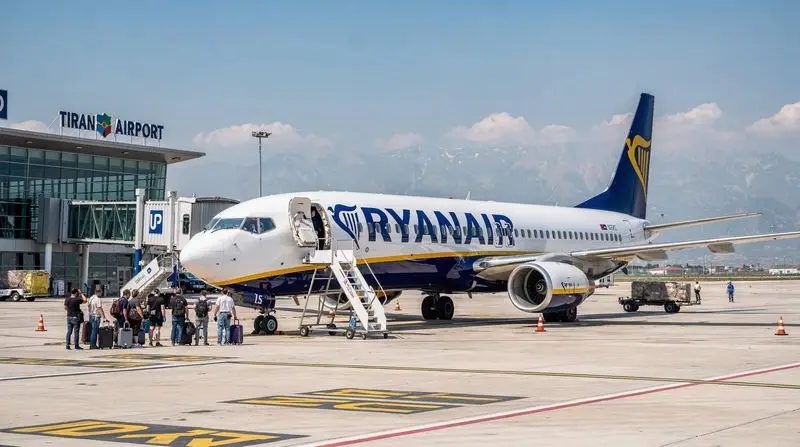
New flight routes continue to be the single biggest driver of increased visitor numbers. Multiple new direct connections from UK, German, French, and Scandinavian cities made Albania accessible to a large category of travellers for whom it was previously a two-stop journey. The budget airline expansion accelerated rather than plateaued. If you can now fly direct from Manchester, Stockholm, or Lyon to Tirana for under 100 euros, the calculation changes for a very large number of people. Our how to get to Albania guide tracks current routes and booking advice.
Word of mouth and social media have played a role that is difficult to quantify but impossible to ignore. Albania has been algorithmically visible in travel content for several years now. The combination of dramatic scenery, low prices, and genuine authenticity generates the kind of content that travels well online, and the feedback loop is powerful: more visitors create more content, which creates more visitors.
Albania’s EU candidacy has also had a subtle effect. As Albania moves closer to European integration, it becomes more legible and less intimidating to travellers who might have previously categorised it as “complicated.” This is somewhat ironic — the Albania that was genuinely interesting to adventurous travellers is precisely the one that felt slightly off the beaten track — but it reflects a real shift in perception.
What Has Actually Changed on the Ground
We want to give you specifics, because general statements about “more tourists” are not useful for planning.
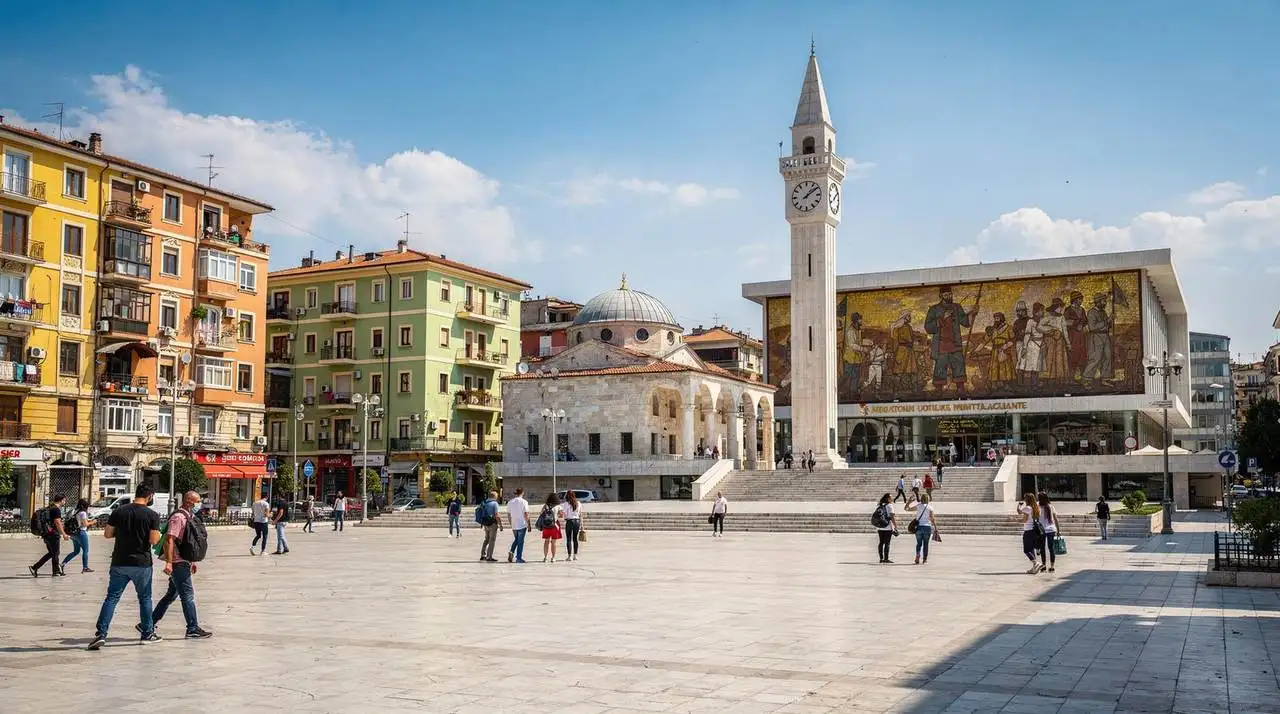
Tirana has changed the most in qualitative terms. The capital now has a restaurant and nightlife scene that would not embarrass a mid-sized Western European city. The quality of coffee, food, and accommodation has risen considerably. There are co-working spaces, international events, a genuine arts scene. Tirana is no longer a destination for the adventurous traveller who enjoys roughing it — it is a legitimate city break destination.
To understand what Tirana is now, and how it got here, a communist Albania tour with BunkArt museum visit provides the historical context that makes the present transformation meaningful. Walking through the BunkArt tunnels and then through the Blloku neighbourhood gives you the full arc of what this city has lived through.
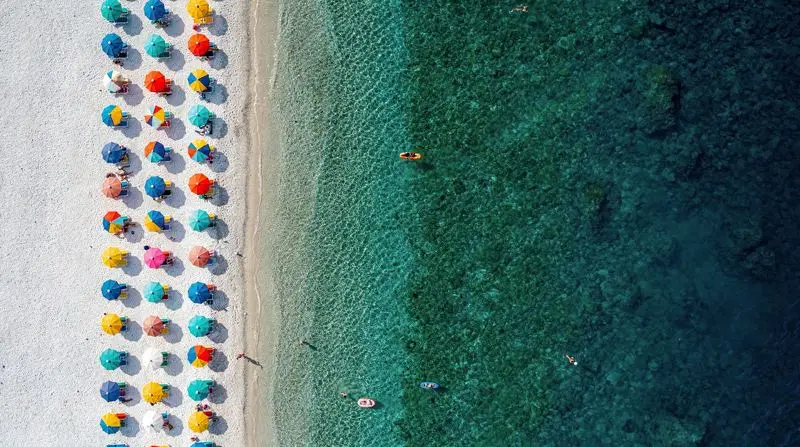
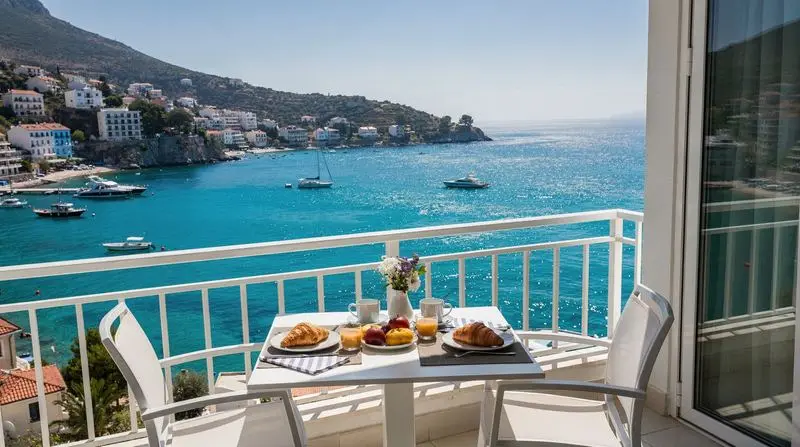
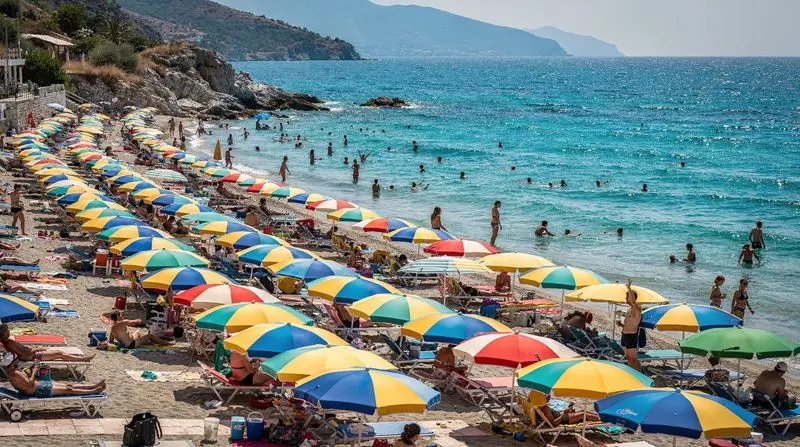
The Riviera in July and August is now genuinely crowded. We cannot state this more plainly. Ksamil in peak season has queues for the best beach spots, traffic on the main road that backs up for kilometres, and accommodation that books out months in advance. Saranda has expanded significantly — more hotels, more restaurants, more everything — and feels noticeably more like a developed resort than it did three years ago. If you want the wild, empty-beach Albania experience on the Albanian Riviera, you need to visit outside of July and August, or go to beaches that require more effort to reach.
The mountain north has changed less dramatically, though the Theth-Valbona trail now attracts enough hikers in peak season that you will genuinely meet other people on the route. Guesthouses in both villages book up weeks in advance in July and August. The addition of more accommodation options means availability is less of a crisis than it was, but the spontaneous “just show up” approach no longer works reliably.
The Silver Lining: Infrastructure Has Improved
More visitors means more money, and some of that money has gone into genuine improvements. This is a real silver lining.
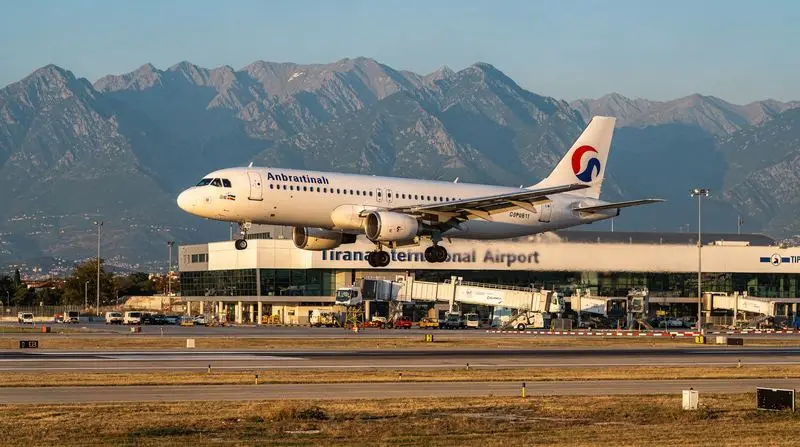
Road quality on major routes has improved. Several airport expansions and upgrades are underway or completed. The variety of accommodation options has widened at every price point — there are now genuinely good budget hostels, solid mid-range boutique hotels, and luxury options that did not exist five years ago. Restaurant quality has risen across the board as competition has intensified and kitchen standards have been raised to meet international expectations.
Healthcare infrastructure in tourist areas has improved modestly. Information services — tourist offices, English-language signage, online booking systems for attractions — have developed considerably.
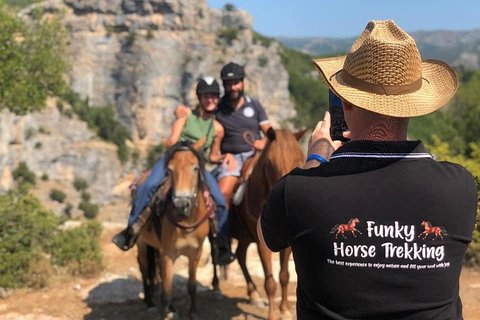
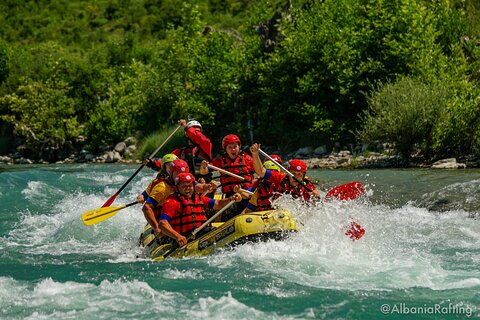
The guided tour and activity market has professionalised significantly. A guided Tirana walking tour in 2025 is a well-organised, well-led experience that would compare favourably with equivalent city tours in Western Europe. The same is true of the boat tours, the archaeological site guides, and the mountain hiking operators.
What This Means for Your Trip: Practical Adjustments
Based on everything we have seen in 2025, here is what we would tell a friend planning their first Albania trip:
Book flights early. This is not optional advice anymore. Summer flights fill up. For July and August, we are talking about booking three to four months in advance for the best options and prices. Spring and autumn are still more flexible but are growing busier each year.
Book coastal accommodation in advance. For the Riviera in June-September, book at least two months ahead. The best places fill first, and last-minute options are increasingly limited to expensive or inferior rooms.
Reconsider peak season on the coast. Our honest advice is that May-June and September-October now offer a significantly better experience on the Riviera than July-August. You get excellent weather, swimmable sea, much lower crowds, and meaningfully lower prices. If your schedule is flexible, shift your dates. Our Albanian Riviera road trip itinerary is structured for shoulder season and covers the coast at its most rewarding.
Use organised day tours strategically. For the most popular southern attractions — the Blue Eye, Butrint, Ksamil — an organised day tour is now more efficient than trying to arrange transport independently, particularly in peak season when availability of taxis and transfers tightens. A Best of Saranda day tour covering Blue Eye, Butrint, Ksamil, and Lekuresi Castle combines the essential southern sights in a single organised day — particularly useful if you have limited time or are arriving without a rental car.
Embrace the lesser-known north. The Albanian Alps and the Shkodra region still have the feeling of genuine discovery. Visitor numbers are growing but remain manageable. Accommodation is available without months of advance booking outside peak weeks.
Explore inland. The interior of Albania — the Permet valley, the Osumi Canyon, Elbasan, Pogradec, the Macedonian border lake region — sees a fraction of the coastal visitor numbers. It also contains some of the most interesting cultural and natural landscapes in the country. Consider dedicating part of your itinerary to places that do not appear in every “top 10 Albania” list. Our 14-day Albania itinerary balances coast, mountains, and interior.
How 2025 Compares to Neighbouring Booms
Albania’s growth is dramatic, but it is not happening in isolation. Montenegro and North Macedonia have both seen their own visitor surges over the same period, and the comparison is instructive for anyone deciding where to put their travel budget this year. Our Albania vs Montenegro guide and Albania vs North Macedonia guide both cover the current price and crowd trade-offs in detail. The short version: Albania is still catching up on infrastructure but remains meaningfully cheaper and, outside the Riviera peak weeks, less crowded than either neighbour.
What Locals Actually Think
We would be doing this topic a disservice without mentioning the mixed local reaction. Many guesthouse owners and restaurant families we have spoken to in the mountain villages and along the Riviera are genuinely grateful for the income after decades of economic hardship. But there is also visible frustration in the most affected towns — rising rents in central Tirana that price out longer-term residents, and a sense in places like Ksamil that development has outpaced the community’s ability to shape it. Both things are true simultaneously, and neither cancels the other out.
Where the Boom Has Not Reached Yet
It is worth being specific about what “boom” does not mean. Large parts of the country are barely touched by the visitor surge. Korca in the east, the towns around Lake Ohrid on the Albanian side, and much of the agricultural interior see a small fraction of coastal visitor numbers and function largely as they did five years ago. If the crowding described above sounds unappealing, our off the beaten path guide is the practical answer — it points toward exactly the places this boom has not reshaped.
The Price Question
We know this is what many of you actually want to know. The answer is yes, prices have risen, but no, Albania is not expensive. A realistic 2025 mid-range budget for two people is 80-120 euros per day including accommodation, meals, and activities — roughly double what you might have spent in 2018, but still significantly below comparable experiences in Greece, Croatia, or Montenegro.
Budget travel remains very possible. Street food, market shopping, local restaurants, guesthouses run by families rather than boutique hotel operators — all of these keep costs down to 40-60 euros per day for two. The high end of the market has also grown considerably: there are now genuinely luxurious options that would cost several hundred euros per night.
The value proposition remains strong. Albania is still one of the best-value destinations in Europe for the quality of experience it offers. Our Albania travel budget guide has the current price breakdown for all spending categories.
Our Bottom Line
Albania’s tourism boom is real, it is continuing, and it means your trip requires more planning than it would have three years ago. It does not mean Albania is ruined — that narrative is as lazy as it is premature. The country remains extraordinary. The mountains are still wild. The food is still exceptional. The people are still among the most hospitable we have encountered anywhere. The history is still rich, the scenery is still dramatic, and the sense that you are somewhere genuinely different from the Western European mainstream is still intact.
But the window for spontaneous, show-up-and-figure-it-out travel in the most popular areas is narrowing. Plan a bit more, book a bit earlier, and consider timing and destination choices more carefully than you might have needed to previously.
The Albania safety guide addresses the common pre-trip concerns, and how to get to Albania covers the practical logistics of arrival. Do that, and Albania in 2025 is still one of the best places in Europe to spend your travel time.