What Albanians Actually Want You to Know
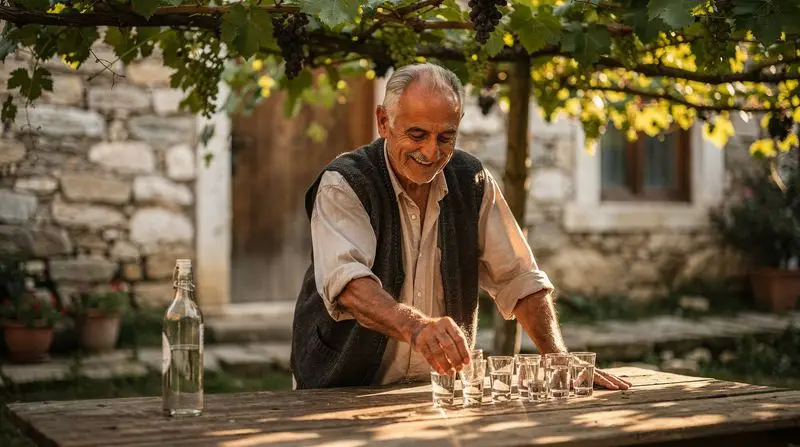
Over the years we have spent a lot of time in Albania, and we have had a lot of conversations. With guesthouse owners who stay up late to talk about history. With taxi drivers who turn off the meter after an hour and just talk. With university students in Tirana coffee shops who want to know what the outside world thinks of their country. With farmers in the Permet valley who pull out a bottle of raki and sit you down whether you planned to stop or not.
We have been asking Albanians, formally and informally, what they wish visitors knew. What misconceptions bother them. What they want celebrated. What they want corrected. These are their answers, filtered through our interpretation, and offered to you as honestly as we can manage.
| Learn | Five words of Albanian — “faleminderit” (thank you) goes a long way |
| Accept | Offered coffee, raki, or a seat at the table — declining feels like rejection |
| Avoid | Fixed pre-trip assumptions from outdated 1990s news coverage |
| Best habit | Eat where Albanians eat, go beyond Saranda and Ksamil |
”We Are Not the Country You Saw in the News in the 1990s”
This comes up more than anything else. The images that shaped international perception of Albania — the boat crises, the pyramid scheme collapse, the political chaos of 1997 — are almost thirty years old. Albanians who are now in their thirties and forties lived through those events as children. Albanians under thirty did not live through them at all.
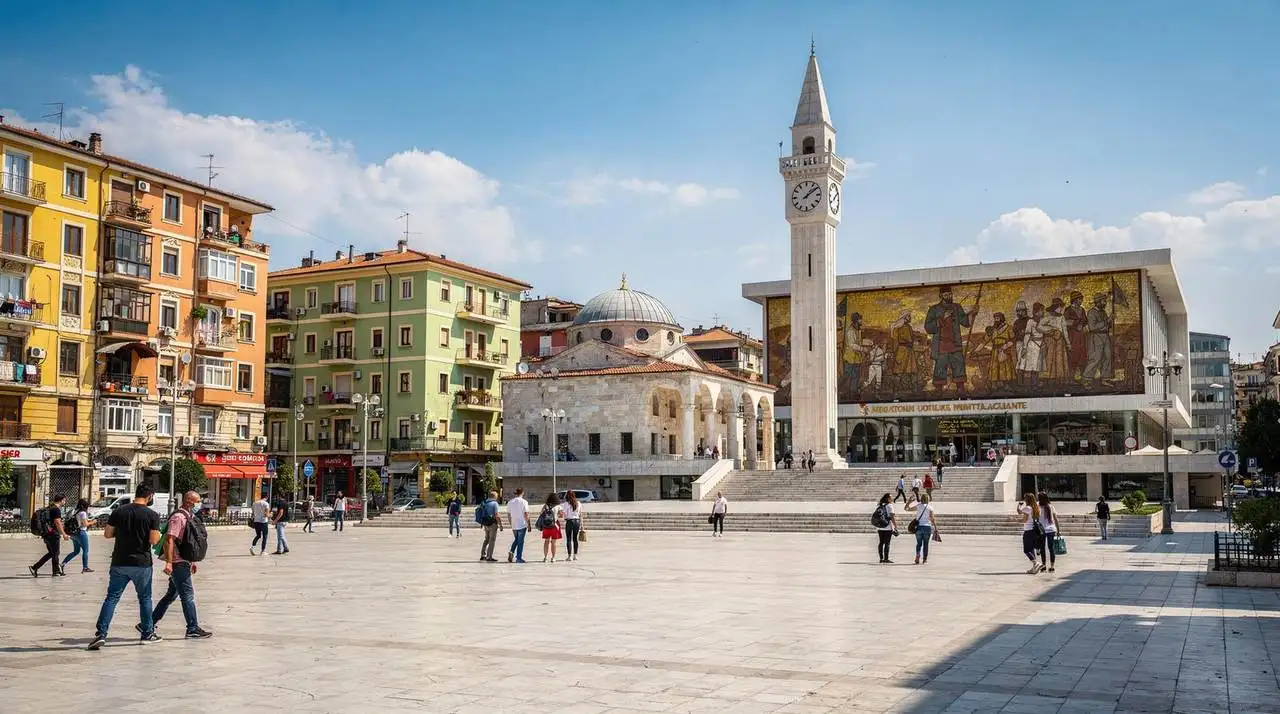
The country has changed beyond recognition since then. Tirana is a functioning, vibrant European capital. The roads are mostly paved. The supermarkets are full. The hospitals work. The schools work. The coffee shops are excellent. Every time a visitor arrives in Tirana with a vague apprehension born of thirty-year-old news footage, they feel it — and they find it faintly insulting.
This does not mean Albania is without problems. Corruption, emigration, and uneven economic development are real and ongoing issues that Albanians discuss openly and critically. But these are problems within a functioning country, not symptoms of a failed state. The distinction matters.
If you have concerns about safety before visiting, our Albania safety guide addresses the common questions directly with current information.
”Besa Is Real”
Besa is an Albanian concept that has no perfect English translation. The closest is “word of honour” or “oath of fidelity” — the principle that a promise made must be kept, that a guest welcomed is a guest protected, that your word is the most important thing you have. It runs through Albanian culture like a structural principle rather than just a value: it shaped the kanun law codes of the mountain communities, it saved Jewish refugees during World War II (when Albanian families sheltered Jews under the obligation of besa), and it governs hospitality practices that visitors still encounter every day.
When an Albanian says “you are welcome in my home,” they mean it completely. When they offer to help you find somewhere or fix something or sort out a problem, they will follow through even at significant inconvenience to themselves. When they make a promise, they keep it.
Understanding besa changes how you experience Albanian hospitality. It is not performance or commercial friendliness — it is the expression of something much older and more serious. The appropriate response is not to take advantage of it but to honour it: be a guest worth having, keep your own commitments, and reciprocate the trust that is extended to you.
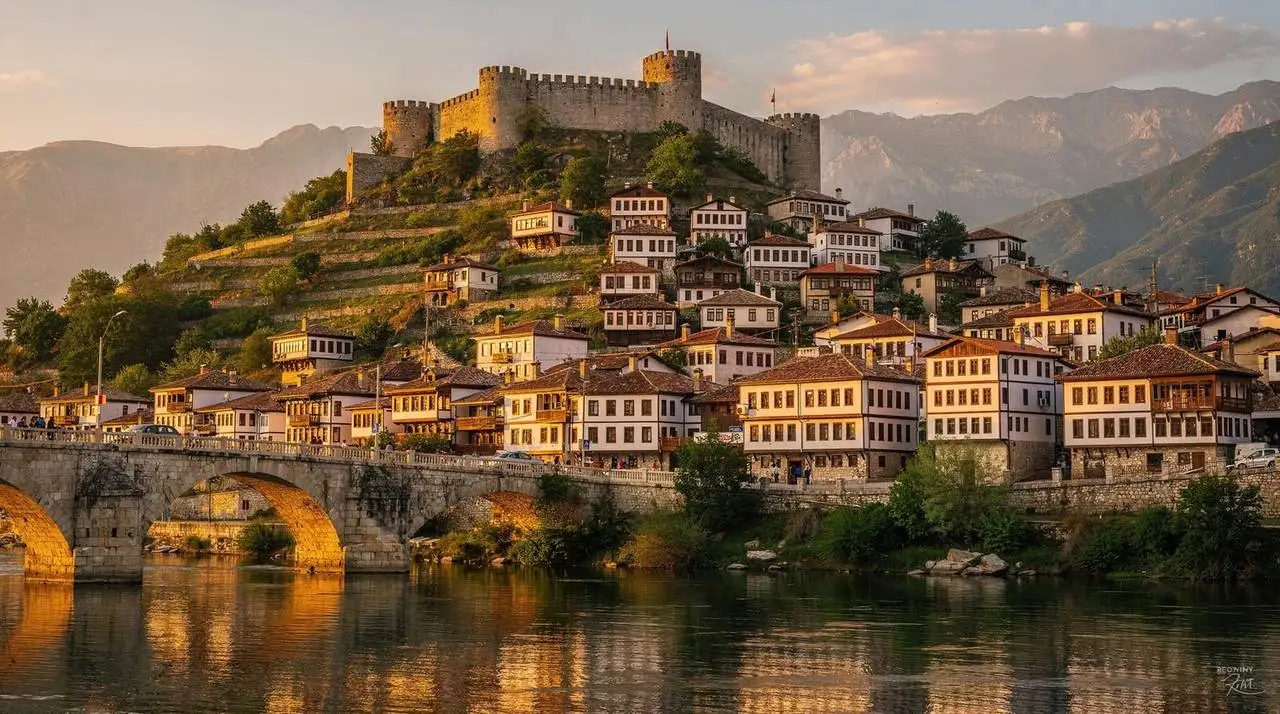
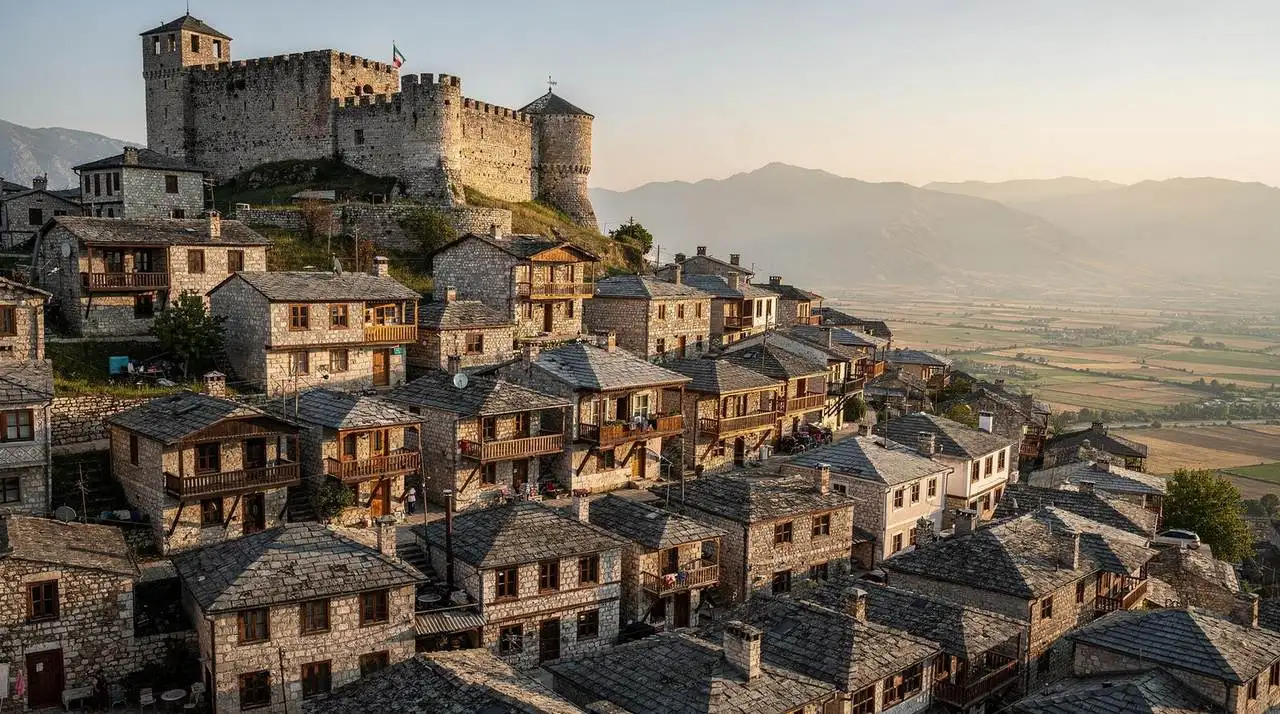
The guesthouse owners in Berat, Gjirokastra, and the mountain villages of Theth who embody besa most completely are the ones who will turn an ordinary trip into something you carry with you for years.
”Try to Learn Five Words of Albanian”
Albanians are genuinely moved when visitors make any attempt to speak Albanian. This is partly because the language is so difficult — an isolated Indo-European language with almost no cognates for speakers of Romance or Germanic languages — that any attempt represents obvious effort. It is also because language is deeply tied to identity in Albania, which spent decades when even speaking Albanian on the radio was an act of political resistance.
You do not need more than five words. “Faleminderit” (thank you) alone will get you further than you might expect. “Mirëmëngjes” (good morning), “si jeni” (how are you), “shumë mirë” (very good/well), and “ju lutem” (please) round out a basic set that will open doors.
The attempt is what matters. The pronunciation will be wrong. This is fine. Albanians do not expect perfect pronunciation from foreign visitors — they expect the gesture of having tried. The smile that a correct “faleminderit” produces across the country is one of the best things about traveling here.
”Don’t Ask Us to Explain Our Religious History in One Sentence”
Albania is frequently described as a “Muslim majority country” and left at that. This is not wrong exactly, but it profoundly misrepresents what religion actually means in Albanian social life.
Albania has a Muslim majority, a significant Orthodox Christian population primarily in the south, a Catholic minority primarily in the north, and a Bektashi community (a branch of Sufi Islam) centred in Tirana. It also has a strong tradition of religious syncretism — families with mixed religious backgrounds, celebrations that cross religious lines, and a secular national identity that predates and transcends any single religious affiliation.
Enver Hoxha declared Albania the world’s first atheist state in 1967 and closed all religious institutions for over two decades. The religious identity that Albanians practise today is layered: partly inherited, partly reconstructed after the communist period, partly genuine belief, and partly cultural marker rather than observance.
When you visit Albania, you will find mosques and Orthodox churches and Catholic cathedrals often within a few hundred metres of each other. You will find that many Albanians who identify as Muslim drink alcohol. You will find that Christmas and Eid and Orthodox Easter are all noted. This is not confusion or contradiction — it is the expression of a genuinely distinctive religious culture that does not fit neatly into any external category.
”The Food Is Better Than You Expect”
This one surprises us slightly because we have been talking about Albanian food for years — but apparently the message is still not fully out. Albanians themselves are acutely aware that their cuisine is not celebrated internationally in the way that Greek, Turkish, or Italian food is, and they find this unjust.
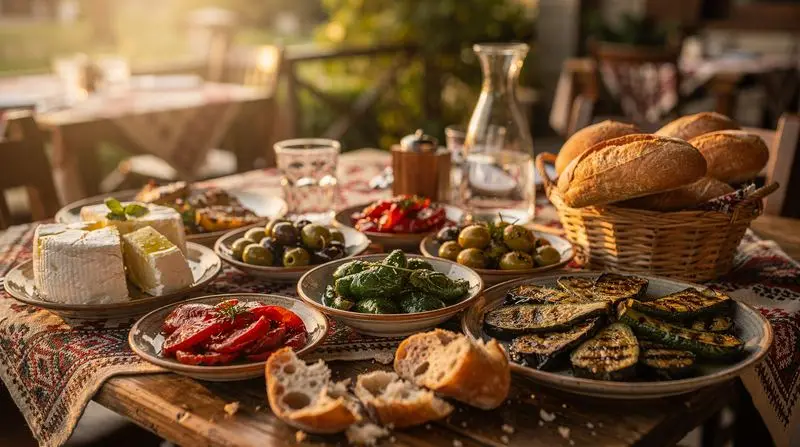
They are right to. The lamb dishes, the byrek, the fergese, the extraordinary dairy products, the fresh fish along the coast, the wild herbs that appear in mountain cooking — Albanian food is genuinely distinctive and consistently excellent. The Albanian food guide covers the detail, but the experience is better than any guide can convey.
The specific thing Albanians want visitors to do: eat in places where Albanians eat. Not in restaurants with translated tourist menus and stock photographs of the dishes. In the places where the entire clientele is Albanian, where the menu may not have English, where you may need to point at what someone else is eating and say “that, please.” These are where Albanian food actually lives.
A food tour in Tirana is the fastest way to find these places on a first visit. A Tirana food tour with meals included takes you into the markets, the traditional restaurants, and the neighbourhood spots that local knowledge unlocks. Consider it an investment in understanding what you are eating for the rest of the trip.
”The Mountains Are Not Just a Backdrop”
The Albanian Alps and the mountain interior of the country are not scenery. They are home — to communities that have maintained their way of life through centuries of difficulty, that have distinct cultures, languages in some cases, and a relationship to the landscape that visitors only begin to understand if they stay long enough.
When you hike in the Albanian Alps, you are not walking through a national park in the abstract sense. You are walking through someone’s village, past someone’s farm, over paths that someone’s grandfather made. The appropriate way to experience this is slowly, with respect, and with a willingness to stop when someone invites you in. They will invite you in. Accept.
The Koman Lake ferry journey, the Theth-Valbona hike, the villages of the northern mountains — these are not adventure tourism in the packaged sense. They are encounters with communities that are genuinely happy to be known.
”We Notice When Visitors Explore Beyond the Obvious”
The Albanians we have spoken to are invariably pleased when visitors go somewhere unexpected — Permet rather than only Saranda, the Osumi Canyon rather than only Butrint, the villages of the interior rather than only the coastal resorts. It signals that the visitor has done their research and has genuine curiosity rather than just a checklist.
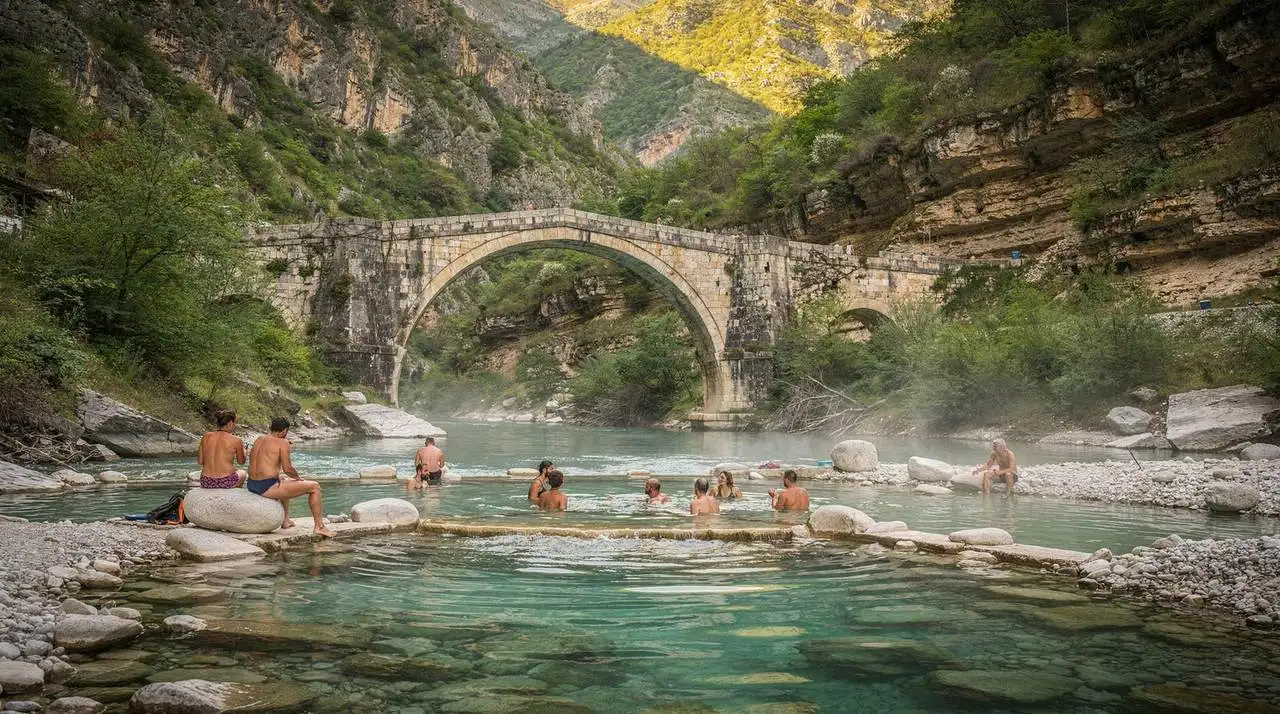
The places that appreciate visitors most are often the ones that see fewest. A visit to Permet — with its extraordinary thermal baths, its Vjosa riverside setting, and its local food culture that Albanians themselves celebrate — means more to the local economy and to the local community than another tourist at Ksamil. The Benja thermal baths experience near Permet is one of the best things in southern Albania that most visitors have never heard of.
Our 7-day south itinerary is built around going beyond the obvious stops, and it is consistently the itinerary that visitors report finding most rewarding.
”We Notice When You Come Back”
This is perhaps the thing that moved us most when Albanians told us about it. Tourism in Albania is still personal enough that when visitors come back — not just to the country but to the same town, the same guesthouse, the same cafe — it means something. It is noticed. It is remembered. It is talked about.
The Albanian economy of hospitality runs on relationships, not transactions. The visitor who comes once and writes a review online is appreciated. The visitor who comes back and asks after the owner’s daughter who was studying architecture last year is something more — they are a connection, a small piece of proof that Albania is worth knowing.
We come back all the time. Every time, it matters. We encourage you to make Albania a place you return to rather than a destination you tick off a list. The version of the country you get on a return visit, when you already know some people and some places and some words of Albanian, is richer and more real than anything available on a first trip.
Berat, Gjirokastra, Permet — the places that reward return visits most powerfully are the smaller ones where you become, after two or three visits, something close to a known quantity. That is when Albania really opens up.
”Furgons Are Part of the Culture, Not Just Transport”
Several Albanians made a point we had not fully appreciated before: the furgon system — the informal, driver-owned minibus network that connects almost every town — is not simply cheap transport. It is a genuinely social institution, one where the driver knows regular passengers, where a seat might be held for someone running late, where conversations start between strangers because the ride is long enough and the setting informal enough to invite them. Visitors who default straight to a rental car or a private transfer miss this entirely. Taking a furgon at least once, even for a short hop, is one of the more honest ways to experience how Albanians actually move through their own country. Our buses and furgons guide covers the practical logistics of finding and using them.
”Ask About the Kanun If You’re Curious — Most of Us Are Glad to Explain”
The Kanun of Lekë Dukagjini, the customary law code that governed the northern mountain communities for centuries, comes up more than visitors expect once a conversation with an older Albanian, particularly in the north, gets going. It is not simply historical trivia — besa, hospitality obligations, and family structure in parts of northern Albania still carry its imprint, even where the formal legal code has long been replaced by the modern state. Albanians we spoke to in Shkodra and the mountain villages near Theth generally welcomed genuine questions about it, seeing curiosity as respect rather than intrusion, provided it comes without exoticising judgment. It is a good example of the deeper layer beneath Albania’s famous hospitality — worth asking about if a conversation naturally opens the door.
”Do Not Compare Us to Our Neighbours Too Quickly”
A few people made this point carefully, aware it could sound defensive but wanting it said anyway: Albanians are proud of their distinct identity and slightly weary of visitors who frame the country primarily through comparisons — “like Greece but cheaper,” “the new Croatia,” and similar shorthand. These comparisons are meant kindly and are often accurate as budget signals, but they flatten a culture and history that stands on its own. A more welcome framing, several people suggested, is simply asking what makes a place Albanian rather than reaching for the nearest familiar reference point. It costs nothing and is noticed.
Practical Notes for Being a Good Guest
A few things that will make your interactions with Albanians more rewarding:
Accept hospitality when offered. When someone offers you coffee, raki, or a seat at their table, accept. Declining politely once is fine; declining repeatedly creates awkwardness. Albanian hospitality is not casual and refusing it too firmly can feel like rejection.
Ask questions with genuine interest. Albanians are not a shy people when it comes to explaining their country, their history, and their culture. A genuine question gets a genuine answer, often at considerable length. Bring curiosity.
Understand the pace. Albania does not operate on a northern European schedule. Lunch is long. Dinner is late. The afternoon is for resting. If your itinerary requires military precision, the friction will be your own.
Walk tours with local guides. The single most reliable way to understand a new place is through someone who lives there. A guided Tirana walking tour gives you immediate access to the kind of local knowledge that builds context for everything else you experience in the country.
The One Thing They All Said
Every Albanian we asked this question to eventually said some version of the same thing: come with an open mind and without assumptions. Do not arrive with a fixed picture of what Albania is and try to fit what you see into it. Let the place tell you what it is.
This is advice that applies to travel generally. In Albania specifically, it is especially important because the country is genuinely surprising — more complex, more warm, more historically rich, and more alive than almost any advance picture of it suggests.
Come. Be surprised. Come back.